Confessions of Faith and Reason

IMG_0444.JPG

Confessions of faith – or confessions of reasons for having faith – seem to be more and more common in recent times. A few weeks ago we had Daily Telegraph columnist and blogger, Tim Stanley, telling us “If you have to choose between being liberal and being Christian, choose Christian”, and going on to explain why.

More recently we had Ross Douthat, columnist with the New York Times, in the wake of hostile Catholic and pseudo Catholic reaction to his expressed concerns about the Synod of Bishops, feeling the need to explain to us “Why I am a Catholic”.

This is good. Catholics need clarity. These upfront declarations are giving us some of this clarity.

Stanley’s reflections were on the back of the revelations about ex-bishop Conry’s pitiable affair and subsequent fall, coupled with the then-approaching aforementioned synod on the family.

He observed the prevalent temptation to focus on the human, sometimes frail aspects of the Church and drew on the wisdom of a priest-blogger whom he admires greatly, Fr. Alexander Lucie-Smith, who urges us to do the opposite.

Fr. Lucie-Smith’s sentiments on the issue, Stanley observes, apply to all Christians (and Jews, and Muslims etc): while the secular world obsesses about political division within the Church, what really matters is the “theological reality” of its mission.

In this mission, the priest says, One needs to distinguish… between a group of people who are united sociologically (for want of a better word) and a group of people who are united in Christ, which is a theological reality. Unity in Christ is something we are always on the way to achieving, if we were not constantly impeded by our sins. Thus we should be in a constant state of repentance for our sins, in that they frustrate the unity that Christ prayed for and which He bequeathed us on Calvary.

Stanley adds: The Catholic Church will always have its troubles. The solution is prayer and putting one’s faith in the Holy Spirit.

The Reformation is, of course, he continued, a reminder of the fragility of the Church. The resilience of Catholicism in Britain today shows its ability to withstand anything – and grow from strength to strength. Its greatest threat is a general decline in belief (aided by the mistakes of clerics) and the emergence of a new anti-religious consensus that discourages commitment to the divine. But perhaps it’s best not to think of this as a crisis but as a challenge to believers. 

This was written in the same week that Louise Mensch made her confession of a conflicted faith in a moving piece in The Spectator about her own struggle to reconcile her private and spiritual life – and her deference to Catholic Church teachings on the sacraments of marriage and the Eucharist.

Stanley remarks on how difficult this is to do, and to talk openly about, in this liberal world in which we now cohabit with people embracing all sorts of heterodoxy. But do it we must – and if we are to be true to our beliefs about what really matters, we really only have one choice. He quotes Fr Lucie-Smith again:

If you have to choose between being liberal and being Catholic, choose Catholic… This is the true fault line: those who believe in the Body of Christ and our vocation to belong to it through baptism, and those who believe the Church needs to catch up with the world, and other such dreary clichés. St Paul had to put up with a lot of them, because he writes: “Do not conform yourselves to this age but be transformed by the renewal of your mind, that you may discern what is the will of God, what is good and pleasing and perfect” (Rom 12:2). 

Stanley concludes: Pray to have the strength not to conform but to be who you truly are. Which is a sinner saved by Grace.

Ross Douthat, for his part put his confession in this nutshell:

I am a Catholic for various contingent reasons (this is as true of converts as of anyone else), but on a conscious level it’s because I am a mostly-faithful Christian who is mostly convinced that Roman Catholicism is the expression of Christianity that has kept faith most fully with the early church and the words of Jesus of Nazareth himself.

That’s a pretty useful nutshell, although it doesn’t make any reference to the vital role of grace in that “because”.

He elaborated a little on the basis of a point made in a talk by Cardinal George Pell, – recently of Sydney and now of the Roman curia, — that the search for authority in Christianity began not with pre-emptive submission to an established hierarchy, but with early Christians who “wanted to know whether the teachings of their bishops and priests were in conformity with what Christ taught”.

This, Douthat said, is crucial to my own understanding of the reasons to be Catholic: I believe in papal authority, the value of the papal office, because I think that office has played a demonstrable role in maintaining the faith’s continuity, coherence and fidelity across two thousand years of human history. It’s that role and that record, complicated and checkered as it is, that makes the doctrine of papal infallibility plausible to me.

There is a wealth of ignorance about the Faith of the Catholic Church out there. The more conversations like this that we have the better chance there is that we will escape from this pit and will become Catholics who will be who they “truly are”. A source of that liberating truth is the Catechism of the Catholic Church, a source with the stamp of approval of that Magisterium in which the early Christians, and later Christians like Douthat, Stanley, Mensch et al, found and continue to find reassurance that what we believe is “what Christ taught”. Why would you choose anything else?

Gathered to give witness

Every hour of every day millions of human beings give witness to their belief and trust in the God of Abraham, the God of Isaac and the God of Jacob – and have done this for millennia of which we really do not know the exact number. But on some occasions this statement is made in a public manner which is so powerful and so palpable that it imprints itself on human consciousness in a way that makes one wonder how the warriors of modern atheism can withstand it.
One of these took place last Saturday (September 27) in a large open space on the outskirts of Madrid when an estimated 200,000 people, representing people from over 80 countries around the globe, listened to and responded to a sublime rendering of The Lord Is My Shepherd in the Mass for the Beatification of Bishop Alvaro del Portillo.
As a spectacle this was a truly astounding sight, as the congregation gathered for the Mass stretched as far back as the eye could see along the improvised esplanade, and seemed to merge into the four giant towers which now dominate Madrid´s landscape. But it was not just a spectacle. This event had deep resonances, as all beatification ceremonies have, which reminded this giant congregation of all that is central to their Christian faith.
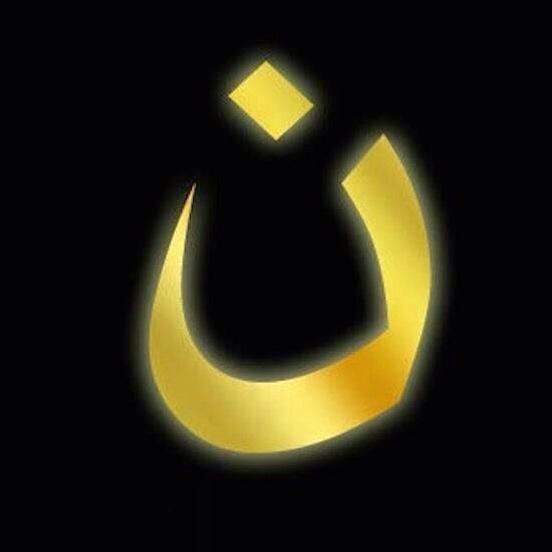
But while this ceremony, this celebration, reminded these people of many things about the life of an ordinary man, a priest, who sought and attained sanctity in the course of his life in this world, it also reminded them of one very particular and painful reality in our world today. As we read and hear every day of the horrific persecution and martyrdom of thousands of Christians in the turmoil of the Middle East, we are reminded that this is no new story and that Christians have been suffering and dying for their faith in every millennium, in every century, in every decade of the Christian Era.
The Venerable Alvaro del Portillo, whose Beatification Mass this was, was a man who lived his faith and lived for his faith up to the time of his peaceful death in 1994. He was also a man who lived through the years of persecution of Catholics during the Spanish Civil War and who at one point was threatened with summary execution when a gun was put to his head, simply because he was a Catholic.
Fr. Alvaro del Portillo – who had worked as an engineer before becoming a priest – was the right-hand-man of St Josemaría Escrivá, the founder of Opus Dei. Having worked by his side from the mid 1930s to the latter’s death in 1975, Fr Alvaro, later a bishop, became the new head of what was to become the Prelature of Opus Dei by decree of St John Paul II in 1982.
On the morning of August 13, 1936, soldiers entered the apartment block in which the del Portillo family lived. They raided the apartment above, looking for Cristino Bermudez, the son of an officer in the Nationalist army. Bermudez was not at home but, when his wife tried to escape and hide in the del Portillo apartment, it was also raided and occupied until such time as Bermudez arrived home. Bermudez was arrested, taken away and shot. Alvaro’s father, Ramón was also arrested and taken to prison, but escaped execution.
As the persecution in Madrid intensified, and when simply to be known as a practising and devout Catholic amounted to a death sentence, Alvaro left the family home and went into hiding, eventually taking refuge in the Finnish Embassy. This, however, proved to be no protection and when the military raided the Embassy in December of that year, Alvaro and other refugees were arrested and imprisoned.
Speaking of this experience in later life Alvaro said, “I had never been involved in any political activity and I was not a priest, or a monk, or even a seminarian. I was an engineering student. I got thrown in jail just because I came from a Catholic family. By then I was already wearing glasses, and one of the guards came up to me – his name was Petrof – and he put a pistol to my temple and said, ‘You’re wearing glasses – you must be a priest.’  He could have killed me at any moment…. It was terrifying”.
In later years Fr. Alvaro, apart from his administrative and pastoral work in Opus Dei, was called on by the Holy See to work as a consultor to several Congregations of the Curia and was active on a daily basis in the work and deliberations of the Second Vatican Council. Then, in 1975, was elected to succeed Josemaría Escrivá as head of Opus Dei and in the years that followed saw the expansion of the Prelature into several countries of Eastern Europe and also in the Far East. He visited Ireland on several occasions.
In March, 1994 he celebrated his 80th birthday. Friends had given him the present of a few days in the Holy Land, and – in what is seen by many as an extraordinary gift of Providence to him – he celebrated his last Mass in the Church of the Last Supper in Jerusalem on March 22, 1994. He died in the early hours of March 23, back in Rome to where he had returned the evening before.
Later that day, in an extraordinary step for a Pope, St John Paul II went to pray beside his mortal remains. The booklet produced for the occasion of the Beatification recounts his words when Fr. Javier Echevarría, who would be Bishop Alvaro’s elected successor, thanked the Pope for the honor of his visit, he said, “Si doveva, si doveva,” meaning, I had to do it, I had to do it, recognizing his contribution to the life of the Church.
The Feast of Blessed Alvaro will be celebrated on 12 May, the anniversary of his First Holy Communion.
A version of this article appeared in today’s print edition of The Irish Catholic newspaper.
Learn more about Blessed Álvaro del Portillo at www.alvarodelportillo.org.