“Silence” – the novel

silence-978144729985101

Indeed “there’s a divinity that shapes our ends”. Could it be that there is something providential behind the movement out of the literary shadows of Shusaku Endo’s novel, Silence, which is now being effected by its translation into the medium of film by Martin Scorsese? The film was released in the US last week and is being released in Europe today (Friday 30 December).

This novel is extraordinarily relevant to our time and to the story of faith and religion in the modern world. It is a novel about persecution, about compromise of principles, about apostasy and mercy, about heroism and cowardice. All of these are central to the harrowing tale at the centre of Endo’s Silence, considered to be his masterpiece by many.
mi_21110195914215663

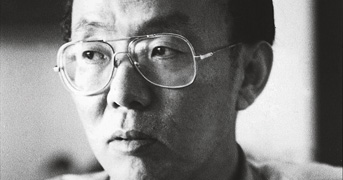
Endo was a Catholic. In his life he mirrored the eternal conflict of the believer with the world, the world which does not know God. This is the conflict which Romano Guardini refers to when he writes of the “true light” of Christ “showering radiance on everyone who comes near him.”  But, the great German theologian says, “if that person is ‘seeing’ in the worldly sense, something in him is willed to seek the world and himself rather than the Messiah. His eye is fixed on world and self and remains so.”

In Endo’s life this conflict was very much set in the context of his native Japan – a country and a culture which had for centuries determinedly set its face against Christ and God, opting instead for the world as seen through the vision of the Buddha. But the context of his Japan is now the context of every Christian in the Western world – a world which has set out either to reject God and persecute believers, or which seeks to redefine God in its own image. The “Silence” of the title of Endo’s novel is the apparent failure of God to speak and act in the face of human suffering, injustice and  persecution. But this silence is really the test of faith, a test which ultimately separates those who see the “true light”, or “hear” the true voice of God, from those who do not – with glorious consequences for some and tragic consequences for others.

In his introduction to the novel Endo wrote of its genesis:

For a long time I was attracted to a meaningless nihilism and when I finally came to realize the fearfulness of such a void I was struck once again with the grandeur of the Catholic Faith. (Silence xx) But this brought him to another problem, that of “the reconciliation of my Catholicism with my Japanese blood”.

The great question for him, one that is at the heart of the brutal persecutions depicted in the novel, is how to resolve the conflict which the Western trappings of the universal truth of Christ’s teaching presented to the guardians of Japanese culture and tradition.

The novel reveals the murderous bewilderment of the Japanese cultural elite when confronted with the success of the Christian missionaries in the sixteenth century. There was, on their part, a terrible and utterly flawed identification of the universal message of Christ with the cultural values of the agents who brought that message.

What makes the novel so relevant to the world today is that the universal truth of the message is again in conflict with the cultural elites – this time with the modernist and post-modernist and post-truth values increasingly dominating our consciousness and our culture.

On the one hand there is rejection and, where power makes it possible, persecution of Christians. On the other hand there is the tendency to modify the teaching to suit the new self-image of mankind which is now being absorbed and disseminated by contemporary cultural elites. This is the equivalent of the “swamp” which Endo saw in Japan, absorbing and distorting the essential truth brought by the missionaries. He described it as a swamp that “sucks up all sorts of ideologies, transforming them into itself and distorting them in the process” (Silence, xix). This, of course, is the perennial tightrope which truth always has to walk in any and every process of inculturation.

This is the issue at the heart of the novel on one level.

silence

On another parallel level Endo tells the sad story of the personal faith of individuals. Two of the three priests central to the story apostasize. The one who keeps protesting about God’s silence eventually hears a voice which he takes to be the voice of Christ. The voice tells him to trample on the image, the public sign his persecutors demand. “You may trample. You may trample. I more than anyone know of the pain in your foot. You may trample. It was to be trampled on by men that I was born into this world. It was to share men’s pain that I carried my cross.”

But the denouement of the novel, from the hell on earth in which his soul, if not his body, has to go on living for thirty more years, shows us that it is his own, or another voice which he hears, not the voice of God. The suffering Japanese Christians, whom he fooled himself into thinking that he was acting out of mercy towards, went on suffering – and he even acquiesced in that suffering. His efforts at self-justification have all the hall-marks of torturous self-delusion.

The Silence of the novel is not the silence of men, it is the silence of God; it persists. Like the history of Christian martyrdom teaches – no matter how hard this is to understand – the ways of God are not the ways of man. The mercy of God is not the mercy of man. The heroes of this novel, Fr. Garrpe, Monica and the other Japanese martyrs depicted knew this; the anti-heroes of this novel, Ferreira and Rodrigues, did not know this. Martyrs down through history know this; the world does not know this.

On this level I doubt very much if the film is going to achieve much clarity. Martin Scorsese talks of it in terms of his personal journey – a journey which took him form a Catholic Italian upbringing in New York, through The Last Temptation of Christ, to this and beyond. For Liam Neeson it may be similar, this time from an Ulster Catholic upbringing to, who knows what? We shall have to leave that to another judgement.

In a recent interview Neeson is quoted as saying that the movie’s exploration into faith and its theme of standing up for what you believe in made him examine where doubt fits into religion.

“The other component of faith that [director] Martin Scorsese explores in the film is doubt. They’re both [together],” he says. “And I think it is a God-given component. If we have this free will to question and if one believes in God, I think you celebrate that.” Really? The freedom we have to doubt is God-give. The doubt is our contribution.

Neeson added that one doesn’t have to be religious to appreciate the film’s message. “We all (have) faith in something whether it’s faith in a marriage or relationship or faith in your work,” he explains. “It can be applied to anything.” That all sounds a little too much like an echo from the “swamp” which pained Endo so much.

But Neeson is not reading the novel. He may be reading Scorsese’s script. On a personal level it is about faith and fear, rather than faith and doubt. The nemesis of the apostates is not that they doubted, or apostatized because of doubt. The key to their tragedy was the weakness of their faith in the face of a demand to deny divinity. In the end the heroism of their activity in spreading the faith was insufficient when that faith was put to the ultimate test, that of accepting God in his silence. The focus of the novel  – in the case of three of the characters, Rodrigues, Ferreira and the Japanese peasant, Kichijiro, – is on the destructive power of this weakness which brought them to their doom, their living hell.

Endo has been rightly compared to Graham Greene and Flannery O’Connor in his preoccupations and the paradoxes he uses to explore them. He is also that very unique thing, a Catholic writer from an Asian culture. As such his work must stand, in spite of its complexity, its paradoxical character and its consequent risk of misinterpretation, as an essential link in the long and troubled history of the evangelization of the Far East, and Japan in particular.
Epiphany in Trafalgar Square – beyond ‘Beyond Caravaggio’

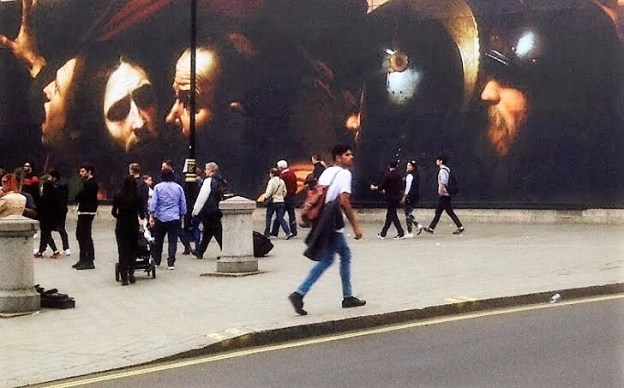
An image has been haunting me for months. It was captured – or, I should say, it captured me – one September evening in Trafalgar Square. It evoked a strange sensation of timelessness, as though 2000 years had been transcended in a moment. Somehow, that historic moment of betrayal in a garden in Jerusalem in 33 AD, was present again in that iconic London meeting place in 2016 – and nobody seemed to care too much. Everyone seemed to be looking the other way. An emblem of our age?

img_1079-2

A few days before the scene depicted by Caravaggio, the subject of the painting prophesied the terrible fate which was going to befall his city within a generation. And it did happen. The Temple was razed to the ground and the streets ran with blood.

Perhaps I should have blessed myself and prayed that this city I was now strolling through, this pivot of the modern world, would be spared a similar fate. I didn’t – even though the stones of Palmyra had recently been strewn around the Mesopotamian desert and the women of Aleppo were weeping – and continue to weep – for themselves and for their children. This morning’s paper tells us that the battle for this city is over but  fears are mounting because of reports that Syrian troops or allied Iraqi militiamen were shooting people in apartments and on the streets.

The forces of militant Islam, I thought to myself, have already proven themselves no less interested in inflicting death and destruction on this city. The same great evil which was at the root of that act of betrayal, in that distant garden, is also the source of today’s horrors, is at the heart of every war.

That face, looking across Trafalgar Square, is a penetrating representation of the face of the one Person who really knows what this evil is, that its origin is a creature of enormous power and that the this creature is the irreconcilable enemy of both God and man.

That look of pity, mixed with dismay – “do you betray me with a kiss” – stopped me in my tracks. I sensed – and know – that this look is eternal. Caravaggio’s spellbinding capture of that look reminds us that each one of those figures strolling before the image is the object of the infinite love behind that gaze. A few moments before, some of them were singing and dancing on this very spot in one of those spontaneous pieces of street theatre you stumble across in this very special place.

Behind that look is the knowledge that, as Romano Guardini observed, “there is more than the mere possibility of evil as the price of human freedom; more than the inclination to evil, fruit of individual or collective (inherited) sin. Jesus recognizes a personal power that fundamentally wills evil: evil per se. It is not satisfied by the achievement of positive values through wicked means; does not simply accept the evil along with the good. Here is something or someone who positively defies divinity and attempts to tear the world from God’s hands—even to dethrone God. God being who he is, this is possible only by leading the world into apostasy and self-destruction.”

Given the look in those eyes one could not but long and long that these wayfarers might know more than they seemed to know; that they might only connect the prophetic words of that betrayed God-man with our world and its sometimes terrible predicaments. We know that human kind cannot bear very much reality and we know that singing and dancing are good for the soul – as does he, – but even just a little recognition of the divine inter-connectedness of all things would surely help?

This momentary musing on a London pavement was occasioned by the National Gallery’s use of a protective hoarding at the Gallery to advertise the ‘Beyond Caravaggio’ exhibition currently being held there to great acclaim. This is the first major exhibition in these islands to explore the influence of Caravaggio on the art of his contemporaries and followers.

After the unveiling of Caravaggio’s first public commission in 1600, artists from across Europe flocked to Rome to see his work. Seduced by the pictorial and narrative power of his paintings, many went on to imitate their naturalism and dramatic lighting effects.

Bringing together exceptional works by Caravaggio’s and the Italian, French, Flemish, Dutch, and Spanish artists he inspired, ‘Beyond Caravaggio’ examines the international artistic phenomenon known as Caravaggism.

This exhibition is a collaboration between the National Gallery, London, the National Gallery of Ireland, and the National Galleries of Scotland. The exhibition continues in London until 15 January. It then moves to Dublin where it opens on 11 February and continues until 14 May – after which it then goes to Scotland.

The image on display in the square is a detail from Caravaggio’s The Taking of Christ, 1602. This painting is on indefinite loan to the National Gallery of Ireland from the Jesuit Community, Leeson St., Dublin, who acknowledge the kind generosity of the late Dr Marie Lea-Wilson who gave them this masterpiece as a gift.

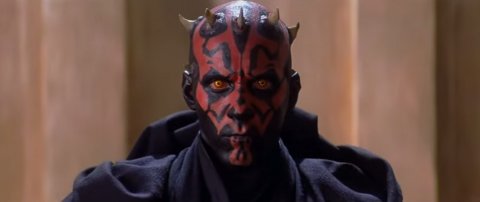
No Phantom Menace – the real thing

the-phantom-menace1final

It is difficult to pick up any left-leaning newspaper, magazine or journal in the weeks since Donald Trump stunned the world, without finding another wounded progressivist warrior licking his or her wounds. For some – without stretching the analogy too far – the scene is reminiscent of that in Book I of Paradise Lost where Lucifer is trying to pull his forces together to devise a strategy for a new war on the victorious Enemy.

For the American Democratic Party and its faithful it is imperative that they now do this. But prior to taking such action an exercise of self-examination is called for. What must we now do, they ask each other, to get their long revolution back on track. Some are still at the scapegoat stage – who among ourselves has done this? Why? Others are calling for an assessment of the tactics of the enemy. How did the Right win this battle? What nefarious trickery did they use to vanquish us in such a humiliating way?

A writer in The Guardian last week goes down this road, setting the whole thing in a wider context of what she sees and the Right’s general chicanery. Moira Weigel’s long article, Political correctness: how the right invented a phantom enemy, purports to take us through the history of this monster and show us that no such phenomenon really exists.

The line of argument really misses the point. It may be true that, as she says, “most Americans had never heard the phrase ‘politically correct’ before 1990, when a wave of stories began to appear in newspapers and magazines.” She traces the progress of what then became an explosion of awareness. As far as she is concerned it all began in that year with New York Times reporter Richard Bernstein’s article, “The Rising Hegemony of the Politically Correct.”

Following the publication of that article, in the remainder of that year, the term is used more than 700 times across media. The next year it makes 2500 appearances and 2800 in 1992.

So what? Phrases that catch the imagination are nothing new. Just because they hit the media jackpot does not mean that they are phantoms – that they do not represent something inimical to a culture. A phrase is just a phrase. The deep and all-pervasive cultural reality behind this little phrase is what matters. This reality is something that has been in the cultural mix of America and the West for more than a century.

As a phrase, the earliest use of the term came in 1936, according to the Merriam-Webster dictionary. POLITICALLY CORRECT:  conforming to a belief that language and practices which could offend political sensibilities (as in matters of sex or race) should be eliminated.

But forget the label. Cut to the chase. Political correctness is just one weapon in the armoury of a broader movement which launched itself on the world in a new incarnation at the beginning of the 20th century. Political correctness as we now know it embodies nothing more or less that then the Ten Commandments of the New Morality, manifested in the libertarian antics of 1920s in America. It also represents the cultural Marxist’s approach to ethics in the earlier decades of the 20th century. The influence of Freud was also a powerful factor in the evolution of this new code of behaviour for the human race, a subversion of existing Judaeo-Christian moral standards.

What started then is still going on in those strands, libertarian and Marxist, interlocking more than ever after the fall of the Soviet bloc.

Throughout most of the 20th century the progress of the New Morality was marked by consolidation and subversion. Then, in the 21st century, the offensive against the rival morality began in earnest. Conservatives responded to this offensive and in doing so identified many of the fundamental tenets of the movement with those already labelled as ‘politically correct’.

But in the end who cares what they are called? The substance of the morality is what matters – on both sides. Both sides offer radically different visions of the good life, the purpose of life and the nature of the society which will best serve it.

Weigel dates the conservative kickback to the late 1980s, when, she maintains, a well-funded conservative movement entered the mainstream with a series of improbable bestsellers that took aim at American higher education. The first, by the University of Chicago philosophy professor Allan Bloom, came out in 1987. “For hundreds of pages, The Closing of the American Mind argued that colleges were embracing a shallow ‘cultural relativism’ and abandoning long-established disciplines and standards in an attempt to appear liberal and to pander to their students. It sold more than 500,000 copies and inspired numerous imitations.”

Were they really fighting a phantom menace? Hardly, if you give any credence at all to the Marxist, neo-Marxists of the New Left, and the libertarian warriors of the early and mid-tweentieth century.

Professor Robert George of Princeton, in a recent post, recalled the words of the Italian communist and cultural Marxist, Antonio Gramsci, in 1915:

Socialism is precisely the religion that must overwhelm Christianity. … In the new order, Socialism will triumph by first capturing the culture via infiltration of schools, universities, churches and the media by transforming the consciousness of society.

th_cultural20hegemony_gramsci
Enter a caption

Antonio Gramsci

Who can say he was wrong, Professor George asks? What are kids being taught (formally and informally) in schools and universities about sexuality, marriage, the taking of life in the womb? What messages on these and other social issues do the mainstream media send in a thousand subtle—and sometimes not so subtle—ways? In which direction have the mainline churches gone? Is there any doubt that a ‘transformation of consciousness’ has occurred? Whose moral doctrines are preached by liberal religious organizations, those of traditional Christianity and Judaism? Or those of secular liberalism or socialism, now dressed up in the garb of religion?

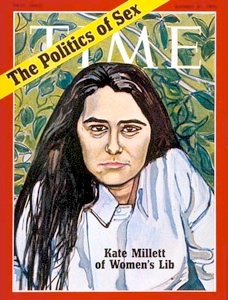
For Raymond Williams, doyen of the New Left in the 1960s – with his scholarly and beguiling books, Culture and Society and The Long Revolution – culture was the whole gamut of ways in which people thought, felt and acted. In terms of the Marxist’s ambition, culture was what had to be transformed and its transformation would bring about the transformation – or as they would see it – the freeing of man from the multiple slaveries to which he had been subjected, the slaveries articulated by feminists like Kate Millet in that decade.

km_time1

Millet’s younger sister, Mallory, in her later years recalled: During my junior year in high school, the nuns asked about our plans for after we graduated. When I said I was going to attend State University, I noticed their disappointment.  I asked my favorite nun, “Why?” She answered, “That means you’ll leave four years later a communist and an atheist!”

What a giggle we girls had over that. “How ridiculously unsophisticated these nuns are,” we thought. Then I went to the university and four years later walked out a communist and an atheist, just as my sister Katie had six years before me.

A chastened Mallory Millet wrote of this two years ago in an article entitled, Marxist Feminism’s Ruined Lives in which she recounts the horror she witnessed inside the women’s “liberation” movement. In 1969 she was invited by her sister to a “consciousness-raising-group” – in the language of the opposing morality this would doubtless be a “conscience-forming group. Present were 12 university educated women. The chair opened the meeting with a back-and-forth recitation of the Catechism of this new religion:

“Why are we here today?” she asked. “To make revolution,” they answered.

“What kind of revolution?” “The Cultural Revolution,” they chanted.

“And how do we make Cultural Revolution?” “By destroying the American family!”

“How do we destroy the family?” “By destroying the American Patriarch,” they cried exuberantly.

“And how do we destroy the American Patriarch?” “By taking away his power!”

“How do we do that?” “By destroying monogamy!” they shouted.

“How can we destroy monogamy?” “By promoting promiscuity, eroticism, prostitution and homosexuality!” came the plain, unvarnished and shocking answer.

Western society was to be deconstructed and to do that, they argued, they needed to invade every American institution.  All must be permeated with ‘The Revolution’.

That included the media, the educational system, universities, high schools, school boards, etc.; then, the judiciary, the legislatures, the executive branches and even the library system. The Gramsci programme was well and truly under way.

Millett’s books captivated academia and soon ‘Women’s Studies’ courses were installed in colleges across the nation.  Some phantom!

Weigel protests that the growing opposition, “these crusaders against political correctness” are every bit as political as their opponents. She quotes Jane Mayer’s book, Dark Money: the Hidden History of the Billionaires Behind the Rise of the Radical Right, published earlier this year, which asserts that Bloom and others were funded by networks of conservative donors – particularly the Koch, Olin and Scaife families – who had spent the 1980s building programmes that they hoped would create a new “counter-intelligentsia”.

How dare they, is the implication. It is just not fair. But surely every revolution deserves its counter-revolution?

Weigel accuses the conservatives of committing the fallacy of cherry-picking anecdotes and caricaturing the subjects of their criticism.  They complained that other people were creating and enforcing speech codes, while at the same time attempting to enforce their own speech codes. Their writers designated themselves the arbiters of what conversations or political demands deserved to be taken seriously, and which did not. They contradicted themselves in the same way: their authors continually complained, in highly visible publications, that they were being silenced.

Clearly they were not being silenced, but that was not, is not, for want of the Left’s efforts – and these efforts continue unabated. Robert George has just had to come to the defence of Professor Anthony Esolen, a colleague in another university.

I have always thought highly of Providence College, he writes. But the College has recently brought shame on itself by its shocking mistreatment of one of its most accomplished scholars and finest teachers: Professor Anthony Esolen.

Professor Esolen’s crime? Sharply criticizing identity politics and the “diversity” ideology it has generated at Providence and at colleges and universities across the country. The administration, faculty, and students should be thoughtfully considering and engaging Professor Esolen’s criticisms. If, upon reflection, they do not find them to be sound, they should respond in the currency of academic discourse—reasons, evidence, arguments—not by attempting to isolate, stigmatize, and marginalize him for stating dissenting opinions.

What we have here is a clash of cultures within Western civilization which is ultimately far more important than the clash being fought out in the Middle East. Are lives being lost in this clash? Yes they are; millions of them in the persons of the unborn being deliberately killed in the wombs of their mothers. Millions more are being wounded in the persons of the victims of the war on marriage and the destruction of the family.

This is no phantom; this is hard and bitter reality. Two moralities are locked in deadly combat and if those on the side of Judaeo-Christian civilization may ultimately see themselves at one with the Magi as imagined by T. S. Eliot, while they live in this dispensation they have no option but to engage in combat with the menace confronting them.

We returned to our places, these Kingdoms,

But no longer at ease here, in the old dispensation,

With an alien people clutching their gods.

I should be glad of another death.