Relishing James Joyce

james-joyce-bw-portrait-billboard-1548

He is special, very special. Don’t doubt it. He was at times raw but I don’t think he was obscene – and you can read prudently. If you walk through the streets of Dublin and its suburbs today, and enter into the minds and hearts of those you encounter, you will find the same authentic humanity as he portrayed – humour, falleness, ignorance and beauty which he laid before us from a century ago.  And while it will be Irish it will also be universal.

What follows, from the Paris Review, is one person’s simple illustration of why and how the literary world remains in awe of him.

Joyce was good. He was a good writer. He makes me grumpy a lot, especially Ulysses, but he was good. There are at least twenty irresistible qualities to Ulysses. At or near the top of the stack, at least for me, is the way he traffics in what I call “hyperrealistic unnecessaries.”

Shakespeare was like that, too. Sprinkled all through his plays are these exchanges that are not at all essential to the plot but that “ring true” in some surprising way, causing one to turn ’em over and over in one’s mind, pleasurably.

FIRST PLAYER
But who, O who, had seen the mobled queen?

HAMLET
The “mobled” queen?
 
POLONIUS
That’s good. “Mobled queen” is good.


Moreover, the fact that the whole thing turns on the word “mobled” raises the pitch well into the “exquisite” range. (The best Simpsons episodes are full of this kind of thing, as well.)

But to return to Joyce: the unnecessary bits that are just so perfect are everywhere in Ulysses. I want to unpack one of them from my favorite chapter (chapter 1), for the benefit of American readers who have absolutely no idea how traditional British money works. Here is the passage:


—Have you your bill? We had better pay her, Mulligan, hadn’t we?

 Stephen filled again the three cups.

—Bill, sir? she said, halting. Well it’s seven mornings a pint at twopence is seven twos is a shilling and twopence over and these three mornings a quart at fourpence is three quarts is a shilling. That’s a shilling and one and two is two and two, sir.

Buck Mulligan sighed and, having filled his mouth with a crust thickly buttered on both sides, stretched forth his legs and began to search his trouser pockets.

—Pay up and look pleasant, Haines said to him, smiling.

Stephen filled a third cup, a spoonful of tea colouring faintly the thick rich milk. Buck Mulligan brought up a florin, twisted it round in his fingers and cried:

—A miracle!

He passed it along the table towards the old woman, saying:

—Ask nothing more of me, sweet. 

All I can give you I give.

Stephen laid the coin in her uneager hand.

—We’ll owe twopence, he said.

—Time enough, sir, she said, taking the coin. Time enough. Good morning, sir.

Every little dot of that is excellent. Mulligan’s sigh. Haines’s smiling banality. The woman’s “uneager” hand. But my purpose here, this morning, is to explain the bill. Her unpunctuated rigmarole of numerical spangablasm is, for me, the crown jewel in this passage, the main reason I remember it.

ls
Sandycove and its Martello Tower, the scene of chapter one.

But first, a little backstory. Like all other Americans with literature Ph.D.s, I have had the old British monetary system explained to me a hundred times. But the thing is hopeless. Bobs, tanners, groats, florins, crowns, guineas—there’s quite a few too many of these. Also, there is the error of thinking the pound is the basic unit. Nothing costs a pound; everything costs a shilling.

For me, the only solution was to go to coin shops and purchase actual specimens of the key items mentioned above. Graduate students of America, listen to me! Go online and buy yourself an eighteenth-century shilling. Pay whatever they want. If you simply stare at a shilling (it’s a handsome coin) for long enough, a lot of your anxieties will relax. As Isaac Watts says: “Let Induftry and Devotion join together, and you need not doubt the happy Succefs.”

But let’s revisit what Mother Grogan (or whatever her name is) says.

Well it’s seven mornings a pint at twopence is seven twos is a shilling and twopence over and these three mornings a quart at fourpence is three quarts is a shilling. That’s a shilling and one and two is two and two, sir.

Let us not make this any more complicated than it needs to be. Here are the essentials. A shilling is twelve pence. A florin is two shillings. Thus,—

(a)  A pint of milk for each of seven mornings, at twopence a pint, is fourteen pence (“a shilling and twopence over”).

(b)  But these three most recent mornings, they’ve had quarts of milk, which go for four pence each (naturally, since a quart is two pints). Three quarts x four pence = twelve pence, i.e., a shilling.

Having calculated (b), she adds (a) to it: [a shilling, for the quarts] + [“one and two,” i.e. a shilling and twopence, for the pints] = [“two and two,” i.e. two shillings and twopence].

Mulligan gives her a florin (= two shillings)—that’s why they still owe twopence.

Got it? You’d probably better read the last few paragraphs over again. Concentrate.

Now, obviously the reader is not supposed to follow the original any better than Mulligan does. Indeed the iggskwizzitness of the passage is bound up in the fact that this humble, uneducated woman thinks rings(for a moment anyway) around these supposedly superior young men. And she does so without aggression or victory, or anything else. She’s mainly wary of them.

Just the same, it bothered me for years, knowing that the novel’s original readers were not nearly as flummoxed as I was. I mean, you’re supposed to be bewildered, but not rendered utterly helpless.

Splendidly, the reader of the present note now understands the passage as well as anyone alive. Until forgetting sets in, your mind has achieved union, not with that of James Joyce but with that of Mother Grogan, or whatever her name was.

Gratia Domini nostri Iesu Christi cum omnibus.

Paglia’s “Presentism” and the spread of Chicken Little hysteria

chickenlittle-480

Camille Paglia is a contemporary social and cultural critic who defies categorisation by any terms which our simplistic modernism has at its disposal. This is what makes her so interesting – and important.

Mark Bauerlein who is senior editor of First Things describes her as “an idiosyncratic mix of liberal and conservative convictions—or perhaps we should say that she, like any person of serious understanding, has an intellectual makeup more complex than our current political simplicities can absorb.”

He doesn’t try but he does observe that there is one profound traditionalist point that she maintains repeatedly, and it is one of the first truths of the conservative disposition.
She announced it, he explains, a few months back in an interview with the New York Observer. The very first question asked her about comparisons between President Trump and Adolf Hitler, to which she replied: “‘Presentism’ is a major affliction—an over-absorption in the present or near past, which produces a distortion of perspective and a sky-is-falling Chicken Little hysteria.”

Ignorance of history, ignorance about the conditions of humanity in past ages, is crippling the minds of milennial in Paglia’s view. She is appalled by how little history young Americans actually possess.

Paglia believes there is a causal connection between young Americans’ ignorance of history and their dim view of present conditions. At a conference in Oxford, Paglia stated again, in response to a student who criticized her and others for telling youths not to be so sensitive and snowflaky, “There is much too much focus on the present.” Thanks to the (presumed) sensitivity of modern youth, Paglia says, students have not had a “realistic introduction to the barbarities of human history . . . . Ancient history must be taught . . . . I believe in introducing young people to the disasters of history.”

When people judge the present solely in present terms, not in relation to the past, diversity becomes not the pursuit of knowledge of other cultures, religions, and civilizations. It becomes, Paglia says, a “banner” under which we presume to “remedy” contemporary social sins. At that point, we should realize, education has turned into indoctrination.

That’s not what education is supposed to do, she continues. Education is about “opening the great past . . . . More knowledge, more hard knowledge.”

She argues that we have allowed the classroom to devolve from the pursuit of knowledge to the pursuit of “cures” for social problems. That approach is “wrong,” Paglia insists, a job for social welfare agencies, not postsecondary learning. We should return to the vision of education as the “abstract and detached study of the past and of the global present.”

Daring to ask a question – paying a high price

illiteracy-is-bondage

If illiteracy is bondage, the moral variety is even more so. The moral illiteracy of our age is astounding. It is revealed yet again in an Irish context in the controversy surrounding a well-known radio journalist, George Hook, who found himself suspended from his job for asking a simple question with insufficient delicacy. In fact, the delicacy was not the real issue. It was that he asked the question at all.

But what exactly did he say? In the context of a rape charge involving a drunken threesome he had no doubt that, if guilty, the rapist had committed a horrible crime. However, Hook’s undoing was that he then had the temerity to ask a universal question, “But is there no blame now to the person who puts themselves in danger?

Mr Hook also said: “There is personal responsibility because it’s your daughter and it’s my daughter. And what determines the daughter who goes out, gets drunk, passes out and is with strangers in her room and the daughter that goes out, stays halfway sober and comes home, I don’t know. I wish I knew. I wish I knew what the secret of parenting is.

“But there is a point of responsibility. The real issues nowadays and increasingly is the question of the personal responsibility that young girls are taking for their own safety.”

Noeline Blackwell, CEO of a Rape Crisis Centre, said Mr Hook’s comments were problematic, wrong, and entirely irresponsible. “When someone is raped the only person responsible is the rapist.”

Chris Donoghue, the group political editor at Communicorp, a media company that owns the station Hook works for, tweeted about his colleague saying, “Someone needs to go to town on Hook. It’s disgusting.”

A day or two later he tweeted again saying: “Thanks for msgs, I’m not trying to be a hero or outspoken. It’s a basic thing for everyone to stand for. Rape is never a victim’s fault.”

This is moral illiteracy – showing a total and wanton ignorance of the rational concept of moral culpability, or lack of it.

Put simply and taken out of the sordid context of rape, if I see a “Beware of the dog” sign and, after ignoring it, get badly bitten, at best I am a fool, at worst I am morally culpable of negligence relating to my bodily integrity. If I get into a car with a drunk behind the wheel do I not have to ask myself some questions about my common sense, my moral sense and certainly my sense of responsibility with regard to my own safety and well-being? If my companion drives off the road I will not have perpetrated that act but my injuries – possibly my death – will be a witness to my gross imprudence as well as to the driver’s criminality. Perhaps the moral ignorance which makes people think otherwise comes from the widespread equating of legality with morality.

Camille Paglia, Laura Kipnis, cultural critics and feminists who talk a lot of sense  about drinking on campus have made themselves very unpopular with the moral illiterates.

“If you’re to going drink 11 ounces of liquor, that’s destructive on a lot of levels. In terms of self-protection, you just cannot know what’s going to happen when you’re comatose,”  Kipnis argues in her new book, Unwanted Advances: Sexual Paranoia Comes to Campus. She also makes the point: “To say that women don’t have to be part of the solution is almost perverse.”

Paglia’s new book, Free Women, Free Men: Sex, Gender, Feminism, reprises previously published essays. A professor of humanities and media studies at the University of the Arts in Philadelphia, she suggests less boozing and more “take-charge attitude” might spare young women from rape – or what she described in a 2014 Time article as “oafish hookup melodramas arising from mixed signals and imprudence on both sides.”

Then we had an older and a wiser Chrissie Hynde, founding member of the rock band The Pretenders telling us in her 2015 memoir Reckless that she’d been raped by a biker gang member at the age of 21. The moral illiterates found it incomprehensible that  the singer blamed herself for “playing with fire,”

Poor George Hook thought he might get away with adding his tuppence-worth of moral wisdom to all that. Little did he know the depth of ignorance he would have to contend with as the moral illiterates bayed for his blood and attempt to destroy his career with relish?


Courtesy of the New York Times, a reminder of the day that’s in it and some thoughts of gratitude for the life of a good man – whether or not you think his works should be seen as among the treasures of the twentieth century.

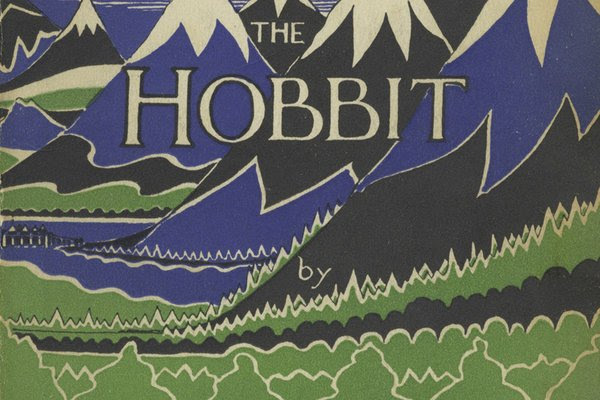
“The Hobbit,” by J.R.R. Tolkien, was published 80 years ago this week.

The book, and the follow-up trilogy “The Lord of the Rings,” gave Sept. 22 as the birthday of the two greatest hobbit heroes, Bilbo Baggins and, 78 years later, Frodo. Fans celebrate it as Hobbit Day.

Tolkien himself designed this dustjacket for the first edition of “The Hobbit.”


Bonhams, via Agence France-Presse/Getty Images

Tolkien said he had first written about the invented being on an exam he was correcting while an Oxford professor. He later told a friend, the poet W.H. Auden, “I did not and do not know why.” His inspired scrawl — “In a hole in the ground there lived a hobbit” — became the opening of his endlessly popular epic.

A British letter-writer wondered if the hobbits were modeled after “little furry men seen in Africa” and pointed out a “Hobbit” fairy tale from 1904. “My hobbit did not live in Africa, and was not furry, except about the feet,” Tolkien said.

He told The Times in 1967 that the hobbits were inspired by the people of Sarehole, England, where he grew up. The Oxford English Dictionary included “hobbit” in the 1970s, attributing it to him.

In 1971, two years before his death, Tolkien reflected: “Oh what a tangled web they weave who try a new word to conceive!”

Charles McDermid contributed reporting.

_____


NYT Morning Briefing is published weekdays at 6 a.m. Eastern and updated all morning. Browse through past briefings here.

Mission impossible?

dome-of-ascension-from-southwest-tb012603205-bibleplaces
Here…”early one spring morning…”

Some encouraging words for Christians who might be feeling beleagured just now by the forces which they might feel are ranged up against them in the world at large – either in hi-jacked democratic institutions or in a full-scale onslaught on life and limb.

“Mission impossible: No other expression can summarize the command given to a small group of people on the Mount of Olives, early one spring morning at the dawn of the Christian era: ‘You will receive power when the Holy Spirit comes upon you, and then you will be my witnesses not only in Jerusalem but throughout Judea and Samaria, and indeed to the ends of the earth’ (Acts: 8). Christ’s last words had all the appearance of insanity. Neither rich nor learned nor influential, how were those simple people
from this lost corner of the Roman empire supposed to carry to the whole world the message of a recently executed man?

“Within the span of three hundred years, a large part of the Roman world had converted to the Christian way of life. The doctrine of the Crucified had conquered the persecutions of the powerful, the contempt of the learned, and the hedonist’s resistance to moral demands. Christianity is today the world’s greatest spiritual force. Only God’s grace can explain it. But his grace has worked through men and women who lived up to the mission they received.”

Blessed Alvaro del Portillo

The delusions of twenty-first century man

n_westall
This…

6e95faca
…or this?
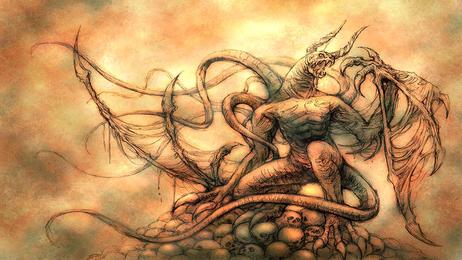
There is no harm in being afraid of the Devil – except in one sense. The sense in which people are afraid to be heard talking about him, lest they be thought of as some kind of medieval freak.

Cardinal Robert Sarah engaged in debate recently with Fr. James Martin S.J. on the issue of the latter’s alleged soft-peddling of Catholic teaching on sexual morality. In an article in America about the differences between the two men, it is noted, not approvingly, that Cardinal Sarah is on record saying that homosexuality and radical Islam are two major threats to the family and are “demonic”. The cardinal’s position on the first issue – as is that of any Catholic in tune with their Church’s teaching – is as he puts it in his Wall Street Journal op-ed article with which Martin takes issue.

In that article the cardinal said that while experiencing attraction to people of the same sex is not in itself sinful, same-sex relations are “gravely sinful and harmful to the well-being of those who partake in them”.

“People who identify as members of the LGBT community are owed this truth in charity, especially from clergy who speak on behalf of the church about this complex and difficult topic,” Cardinal Sarah added.

He went on to praise the example Catholics who experience same-sex attraction but live according to Church teaching, citing Daniel Mattson and his book “Why I Don’t Call Myself Gay: How I Reclaimed My Sexual Reality and Found Peace.”

“These men and women testify to the power of grace, the nobility and resilience of the human heart, and the truth of the church’s teaching on homosexuality,” the cardinal said.

Reactions to any judgement by Sarah that  “the father of lies” is responsible for the state we are in and the threat we face will broadly fit into two types. Someone who believes that the Devil is an existing creature, going about like a raging lion seeking whom he may devour – as St. Peter described him – will sit down and think seriously about the implications of the statement. Is it some fictive narrative or is it a fact – as Sarah maintains it is? If a fact, what are its implications? If not, how should they argue their case against it?

Someone for whom “demonic” is just one more term of abuse, with its origins in superstition, the response will be different. For that person this is an outrageous label, the only effect of which is to make other people distrust, fear and probably hate what it has been pinned on. If those in this position have no interest in trying to understand what someone like Sarah believes to be the actual conditions of the real world, then they can only respond to him by abusing him in turn – or just ignoring him as a deluded freak.

We have here a radical cultural and religious divide of the most fundamental and dangerous kind.

Denis Donoghue, Ireland’s greatest gift to the world of literary criticism, touches what may be the root of this chasm in one of his books. It is in a passing observation in the context of a wider theme but it speaks to our current discontents.

Interpretations of Milton’s Paradise Lost still divide literary critics. But one of them in particular seems to put us on a track which has a great deal to do with our fear – or lack of it – of the Devil. This is the one which reads Satan as the hero of the poem. For Donoghue this is a false reading but one, nonetheless, which has seeped into our literary culture with perverse consequences. Beguiled by this false reading, a reading in which Satan is just another metaphor for our conflicted tragic selves, they deny the existence of the real spirit which others know to be the ultimate source of all human misery.

The corrupting consequence of this false reading is that, paraphrasing Donoghue, we read the world under the sign of Satan-as-tragic-hero in Paradise Lost. In doing so we miss, in a sense, the woods for the trees – the woods being Devil himself, the trees just being his beguiling works and pomps. Donoghue comments on the misreading as follows:

Some critics find the thrill of Satan’s eloquence exemplified again in Byron’s Cain. The particular moment of satanism that is found irresistible comes in Book V of Paradise Lost when Satan, who has evidently been reading Stevens, rounds upon Abdiel, who has been insisting that Christ was God’s agent in the Creation. As always, Satan is a spoiled brat:

That we were formed then say’st thou? and the work
Of secondary hands, by task transferred
From Father to his Son? Strange point and new!
Doctrine which we would know whence learnt: who saw
When this creation was? Remember’st thou
Thy making, while the Maker gave thee being?
We know no time when we were not as now;
Know none before us, self-begot, self-raised
By our own quick’ning power, when fatal course
Had circled his full orb, the birth mature
Of this our native heav’n, ethereal sons
Our puissance is our own.

Satan’s claim to have begotten himself is nonsense. Adam deals with it adequately and silently when he tells of his own birth and addresses the sun:

Tell, if ye saw, how came I thus, how here?

Not of myself; by some great Maker then,

In goodness and in power preeminent.”


But Blake, Hazlitt, and a formidable rout of critics have sent themselves into an altitudo of eloquence under the sway of Satan’s vanity. Harold Bloom is the most susceptible of these critics, and in Ruin the Sacred Truths and The Western Canon he quotes Satan’s boast as if it should be taken seriously. Bloom and his associates in this line of interpretation are the bad angels of criticism, exhibiting their own forms of angelism, the desire to transcend the human scale of experience in a rage for essence. They want to be rid of the world of fact, the opaque burdens of history and society, and to fly upon wings of their own devising. As critics, they thrive on weightlessness.


“Our puissance is our own.” Now what does all that remind you of? Man as the measure of all things. Man, who can be the architect of his own nature and essence. Man, made in the image of himself and capable of moulding that image in whatever way he wants. Man the Satanic Angel.

The error of these critics – apart from their misinterpretation of Milton’s own Faith – is also the great error of our age. The denial of the reality that is the Devil leaves us all at sea with the problem of evil. It also drains the concept of sin of all its meaning, giving it a meaning which makes nonsense of our sense of injustice and of the need for salvation – for we know neither that which we need to be saved from nor that which we are saved for. Without this knowledge we have not a hope in Hell of understanding what the problem is with Islamic fundamentalism, with the abuse of our sexual nature – nor any basis on which to build the foundations for a moral life. Without this we flounder in a sea  of relativism and our feeble efforts to be just more often than not end up perpetuating injustice. The delusions of Satan in Paradise Lost – in the passage quoted – are the delusions of “liberated” 21st century man.

quote-to-admire-satan-in-paradise-lost-is-to-give-one-s-vote-not-only-for-a-world-of-misery-c-s-lewis-69-19-75