Christopher Nolan’s Dark Knight trilogy and the meaning of heroism

Part Two  of a three part series, examining the work of film director Christopher Nolan.
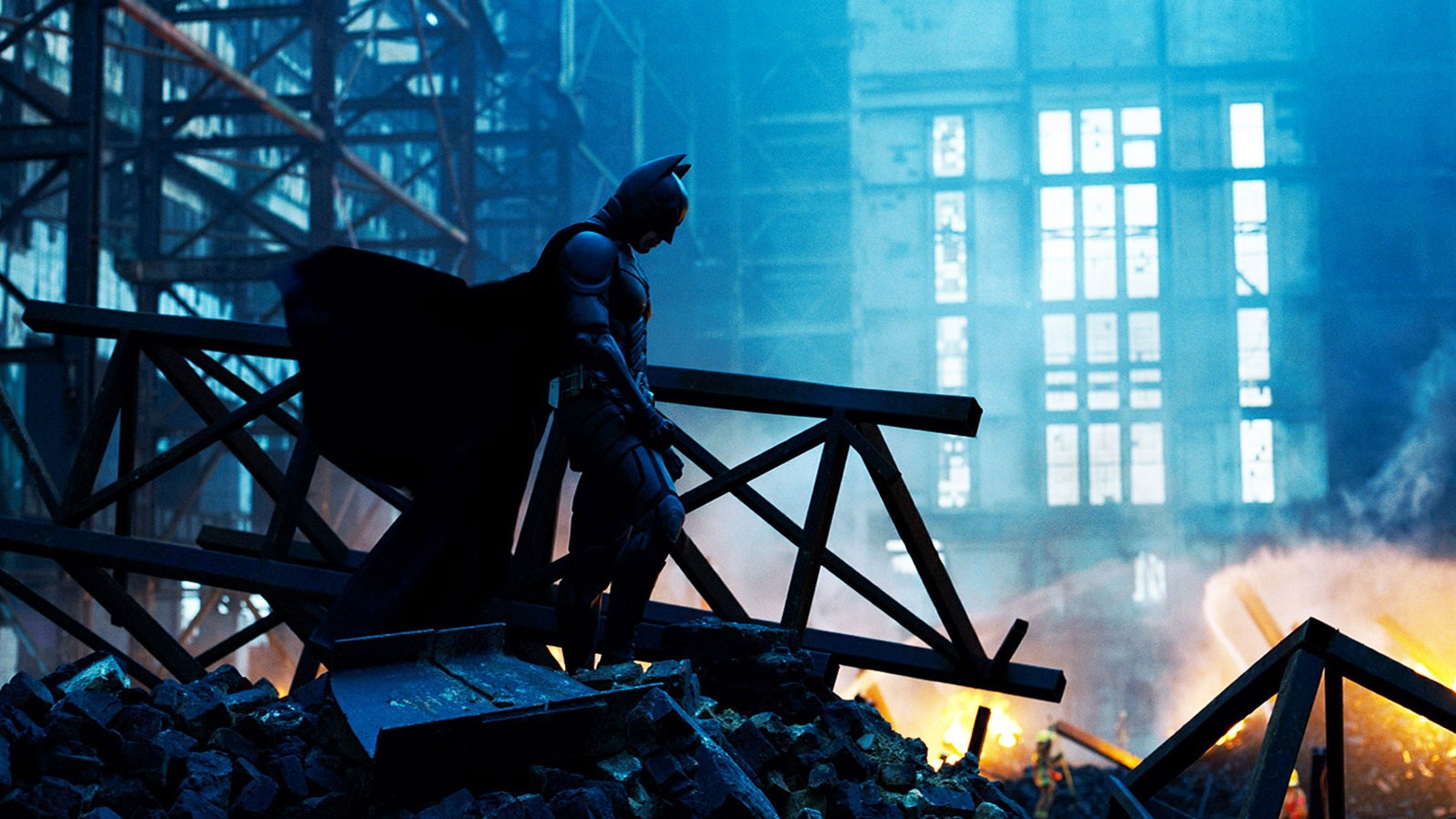
Each one of Christopher Nolan’s films is about much more than it seems to be concerned with on the surface. After Memento Hollywood was probably still thinking of it as a flash in the pan. They showed little interest in offering him a remake of a Norwegian original they had in their sights for adaptation and which he was pitching. Eventually, with the help of Steven Soderberg and George Clooney, they relented and he got the job, which involved the intimidating challenge of directing Al Pacino, Robin Williams and Hilary Swank – all of whom had already won Oscars. The result was Insomnia. On the surface it is a thriller about hunting down the killer of a teenage girl in Alaska but under the surface it is a probing examination of the troubled conscience of the cop (Pacino) whose tragedy is the heart of the story. The sleepless condition of the cop in ‘the land of the midnight sun’ has all the echoes of Macbeth’s troubled soul as he cries out for a merciful sleep that is now denied him.

Insomnia grossed more than $113 million worldwide against a production budget of $46 million. The film received critical praise and after that there was no more hesitation in Hollywood. He tells it like this.  “I got one of those calls, like ‘You wouldn’t be interested in this, but, you know, nobody can figure out what to do with Batman,” he recalls. But he was interested and immediately pitched to them what he could do with Batman.

Batman Begins was born in that moment and changed the fortunes of the superhero genre forever – well for at least two decades.

“I didn’t want to treat it as a comic book movie. Everything we did was about being in massive denial that there was such a thing. Batman Begins and The Dark Knight go to massive lengths to do that. By the time we got to The Dark Knight Rises, there indeed was a superhero genre – The Avengers came out the same summer and then it grew and grew after that.

“The superhero genre as it exists now, that’s just a given. At the time, we were simply making action films that aspired to stand alongside any kind of action film. We were trying to make epics.”

The trilogy is not part of the superhero genre as we now know it – and perhaps loath it – but it created the space for that genre’s resurrection, for better or worse.

I have found no comments by Nolan about Todd Phillips’ The Joker. I think that figures. Phillips’ The Joker is the character’s origin story. Nolan’s Joker has no explicit origin story. We just know that he is a ‘Lord of Misrule’ and master of Chaos with echoes straight from Milton’s Paradise Lost

Nolan is very personal when he talks about the character.

“He’s just ‘I’m just going to tear it down because f**k it.’ He doesn’t even care about why he’s doing it. He’s that out there. It’s a very real force of human nature, and it’s not one that I have. I’m afraid of that in myself. I’m afraid of that side of human nature. 

“The Joker is what I’m afraid of more than anything, more than any of the villains, these days particularly, when you feel civilization is very thinly lined. All three films, we did with a real truthfulness of our intentions. What do we worry about? What am I actually afraid of? What’s the worst thing the villain could be doing? I don’t have that anarchic impulse, I really don’t. I’m much more controlled. I’m afraid of that in myself. I feel like I carefully used it as the engine of the movie, but I was afraid of it the whole time I was making the film.”

Nolan is very conscious of mankind’s capacity for corruption and has talked about how heroes can easily turn into villains.

“Watching Lawrence of Arabia with the kids at the weekend, and it absolutely presents Lawrence as this vain, false icon, but what people take away is the iconography. That scene where he goes back for the guy in the desert, it’s an amazingly rousing moment. Afterward, they give him the robes and he becomes this icon.  That moment feels sincere but afterward you see him admiring his reflection in the blade of his dagger.”

In this Nolan clearly sees the seed of pride and vanity seeping into the soul of a character who might have been a great man but ends up being corrupted by the first of all the deadly sins, the sin of Satan himself.

“A lot of great films are like this. The Dark Knight films absolutely believe in heroism, but what they say is, true heroism is invisible. That’s the kind of heroism that people aspire to but almost never live up to, in my experience.” 

Nolan emphatically does not want to be read ideologically. But that does not mean that he is someone sitting on a fence.

“I’ve had conversations with friends of mine and am asked about why I don’t make a film about the things I care about politically and I always say, ‘Well, because it doesn’t work.’ You can’t use narrative to tell people what to think. It never works. People just react against it… It doesn’t mean you don’t care about something, or that it doesn’t mean anything to you, but you have to be neutral or objective in your approach. You can’t tell people what to think; you can only invite them to feel something.“

We come back here to Nolan’s instincts.  Benign humanitarian instincts – are the underlying framework for the values in all his films. The trilogy ends with a quotation read over an empty grave. Alfred reads the last words of Sidney Carton from A Tale of Two Cities of which The Dark Knight Rises is essentially a retelling. 

The self-sacrifice of Carton, one of the most inspiring acts of heroism in literature, is replicated in the heroism of a flawed Bruce Wayne. ““It is a far, far better thing that I do, than I have ever done; it is a far, far better rest that I go to than I have ever known.”

Ross Douthat of The New York Times wrote:

“Across the entire trilogy, what separates Bruce Wayne from his mentors in the League of Shadows isn’t a belief in Gotham’s goodness; it’s a belief that a compromised order can still be worth defending, and that darker things than corruption and inequality will follow from putting that order to the torch. This is a conservative message, but not a triumphalist, chest-thumping, rah-rah-capitalism one: It reflects a “quiet toryism” rather than a noisy Americanism, and it owes much more to Edmund Burke than to Sean Hannity.”

Released on July 18, 2008, The Dark Knight took in $238 million in its first week, $112 million in its second, $64 million in its third, before receiving boosts from overseas as it opened in England, Australia, and the Far East. By October, it was closing in on $1 billion. Then it leveled out, but slowly playing in theaters right through until March of the following year, when it received the further boost of eight Oscar nominations. The Dark Knight Rises also topped $I billion.

Which all goes to show that a mass audience is not necessarily an alien arena for ideas and serious exploration of values when a team of artists and competent technicians – very competent – present them to us. Nolan’s ensemble is just such a team.

End of Part two
CHRISTOPHER NOLAN AND THE QUEST TO UNDERSTAND

This post, the first of a three part series, examines the work of film director Christopher Nolan.

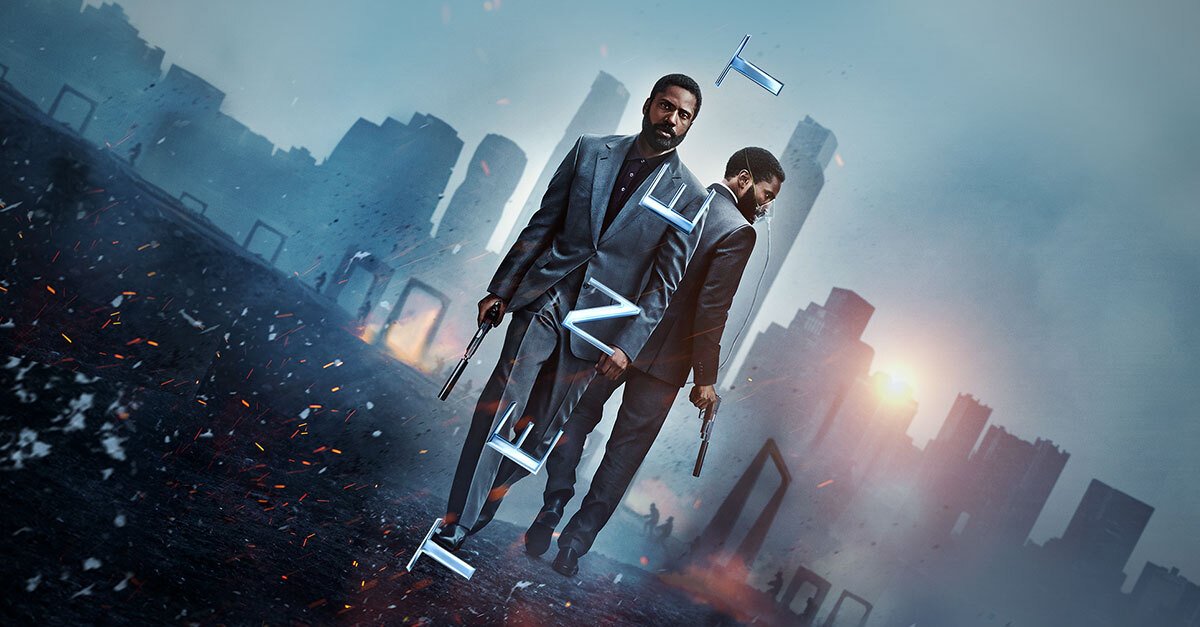
TENET was Christopher Nolan’s eleventh feature film, released to cinemas on the reopening of theatres after the pandemic restrictions were lifted in the US. Like other Nolan films – but even more so – it left many audiences scratching their heads with its very challenging interpretation of our relationship with time, space and technology. Nolan takes no prisoners when it comes to making demands on his audience. His motto is no less than this: “The only thing you can do is trust your initial instincts. You just have to say ‘This is what I’m making. This is what I’m doing. This is why I wrote this script.’ It is going to work. Just trust it.”

In all eleven films, not one of them has failed to repay that trust for anyone who really takes his oeuvre seriously. In a certain way, for anyone who places that trust in Nolan’s instincts, every one of explorations – for that is what they are – replicates the history of his first Hollywood release, Memento.

Tom Shone, in his fascinating study of Nolan, built around occasional interviews with him over practically the entire span of his career, tells the story of Memento’s creation and release.

Memento is a story, told backwards, of a man who after an assault in which his wife was murdered, has lost his short term memory. He is now hunting the perpetrator of the crime. 

After two years pitching Memento to studios and distributors, eventually getting it filmed grudgingly, it was finally released into eleven theatres. It took in $352,243 in its first week. Then word about it got around and in the second week it was in fifteen theatres, where it took in another $353,523. 

Among the distributors who had initially turned the film down, Shone tells us, was Harvey Weinstein’s Miramax. Smelling the coffee they then tried to buy the film. But now, in its third week, it was in seventy-six theatres, taking in $965,519. “Miramax could only watch as the film took off, spending four weeks in the top ten, sixteen in the top twenty, eventually playing in 531 theatres, a larger number of venues than even Jaws played in during the summer of 1975.” The film eventually made £40 million and got two Oscar nominations. They were a heady two years for Nolan, his brother Jonathan who had collaborated with him on the film, and his wife Emma Thomas who became his long-term producer.

After that came Insomnia and with that Hollywood’s “trust” in Nolan’s instincts – helped by his own canny and careful playing of the whole Hollywood machine – was no longer much of a problem. It just became a story of onwards and upwards. The next decade and a half saw this team making such blockbusters as Batman BeginsThe Dark Knight (2008), Inception (2010), Interstellar (2014), The Dark Knight Rises and Dunkirk (2017), between them earning $4.7 billion worldwide.

Michael Mann (HeatThe Last of the Mohicans), one of the dominant directors in Hollywood in the 1990s, says of Nolan, “He works within the system here in a very commanding way. He has large ideas. He invented the post-heroic superhero. He came up with an idea for a science-fiction heist inside the moving contours of a dreaming mind and he had the boldness and audacity to have that singular vision and make it happen. I think that the reason he has such a great response and great resonance with people is because he operates very much in the present, in the now. He’s tuned into the reality of our lives, our imagination, our culture, how we think, how we try to live. We’re living in a post-modern, post-industrial world with decaying infrastructure. Many feel disenfranchised. Seclusion is difficult. Privacy is impossible. Our lives are porous. We swim in a sea of interconnectedness and data. He directly deals with these intangible but very real anxieties. The quest to understand that and to tell stories from there, that is a central motivator for him, I think.”

The late British director Nicolas Roeg (Walkabout) said Nolan worked in the commercial arena and yet there’s something very poetic about his work. They’re marvellously disguised. Memento has this backward-running time scheme, and yet you automatically find yourself applying the situation to oneself, to one’s daily life, which is very strange.”

“Poetic” is a key element in Nolan’s work and this reflects the influence other poets of cinema and one great poet of the twentieth century have had on his work.

Echoing something that Michaelangelo is supposed to have said, Nolan maintains that “I’m definitely a subscriber to the school of thought that when the writer is working, or the filmmaker is working, it’s because you’re uncovering something, like the sculptor carving something away because it was always there.”

Nolan feels that what he does “is based more in artifice and abstraction and theatricality. I feel more of a craftsman than an artist…. I think there are filmmakers who are artists. I think Terrence Malick is an artist. Maybe it’s the difference between saying ‘are you using it to express something purely personal, that comes from inside that you’re just trying to get out there, or are you trying to communicate with people, and tap into their expectations and their experience.’” 

I doubt this distinction. Nolan and these film-makers are both poets and artists – or as Andrei Tarkovsky would have put it, “sculptors in time”.  For Nolan, Malick’s The Thin Red Line is one of the best films ever made. Tarkovsky’s Mirror was one of the influences, particularly in its theme of parent-child relationship, in the making of Interstellar. The only difference between Nolan and other great artists sculpting in time is that he can draw mass audiences to his work.

One of the most impressive things about Nolan as a person is how he never loses sight of the really essential things about our life in this world. 

He observes that “The Prestige was an important film in terms of work-life balance because we’d just had our third child and Emma, even though she loved the project, was quite keen to step back and not be as involved. She wanted to be able to take more of a backseat.” In fact she did not need to. They worked it out as a family. The Prestige was about two obsessive Victorian magicians who ruined their lives and their families because of their obsession. Everything that Nolan – or I should say the Nolans – has done connects with life and living our lives in this world.

Family again became an issue while making The Dark Knight. “The family were around for an enormous amount of the film, but Emma was pregnant with Magnus at the time. The last two months, I think, I was in England, finishing the film, and they had to be back here. I was able to be present for Magnus’s birth; I flew over, but I had to go right back to England and carry on the film. I spent about two months there. To this day, I think that’s the longest I’ve been away from them. I remember thinking, I know it’s more fun when we’re all together and we can do the thing together. That’s why we keep it as a family business. We were learning how to balance those things.”

Nolan communicates with his audience on the basis that it knows the truth: the world is simple. But it also knows its miseries. He sets out to make them wonder at that dichotomy. It would be depressing – if one were to go down Sartre’s existential rabbit hole. He doesn’t. “The reason it’s not”, he says, “is we want the world to be more complicated than it is. It’s pleasurable, because what it’s really saying is there’s more to this place than meets the eye. You don’t want to know the limits of your world. You don’t want to feel this is all there is. I make films that are huge endorsements of the idea that there’s more to our world than meets the eye.” 

That is exactly what poets try to do. 

T. S. Eliot has been one of the poetic and cultural influences in his life. Referring to Four Quartets, Eliot’s very Christian masterpiece about time and memory, he reflects, “I come back to that one a lot: 

Footfalls echo in the memory  

Down the passage which we did not take  

Towards the door we never opened  

Into the rose-garden. 

“It’s very cinematic. All of Eliot is. I think I first encountered Eliot through  Apocalypse Now, where Brando reads parts of The Hollow Men. When I first watched that film, I was so fascinated by that sense of madness and enigma. Then later I read The Waste Land, which absolutely confounded me. I love that poem.”

Nolan’s family and educational background is Catholic and Christian. He attended a thoroughly Catholic prep school run by Josephite priests, who ran a series of seminaries and boarding schools as far afield as the Democratic Republic of the Congo. That was followed by pre-university years boarding in an up-front Anglican high school. 

“At the time, it’s like you’re a bunch of kids and they’re the enemy,” says Nolan. “It’s like they’re trying to make you take it seriously and praying, and you’re sort of naturally reacting against that, not in any intellectual way or anything, but I come from that era, the seventies, when there wasn’t any doubt in anybody’s mind that science was supplanting religion.”

Significantly he adds, “Of course, now I’m not sure that’s the case. That seems to have shifted somewhat.” A transition in faith not unlike that of Eliot himself.

In the next post, I hope to look at some of the work Nolan has left us with so far, and in particular to show that those who find themselves bewildered by aspects of it should not be. But before we do that, we need to clarify one thing about Nolan’s use of images and concepts from science in the unfolding of the metaphors with which he shows us the world in which we live, or, scarily, might live. 

In The Divine Comedy, Dante describes Hell, Purgatory and Heaven to us in images created by him using the analogies available to him and his readers in his time. Both he and they knew that those supernatural realities were nothing, are nothing, like his description of them. His visions of them, however, still help us to understand our flawed nature, who we are and what may be in store for us in eternity. 

Nolan, in the imagery he offers us which asks us to think about time, space, the workings of the human mind does not purport to be anything other than reasonably consistent approximations of the science of those things. They are not scientific treatises. I think  people’s bewilderment to a great degree comes from thinking of them as such. The poverty of our poetic imagination in this modern – or postmodern – world often kills our capacity to see the truth of so much of what Nolan the poet-filmmaker is saying to us.

We eagerly await the release this Summer of his latest film, Oppenheimer, which will doubtless give us much more than a simple retelling of the story of the Manhattan Project.

This is a slightly modified version of an article published in the current issue of Position Papers.