Truly great thoughts…

  
Today’s Back Back Story, courtesy of The New York Times encourages us to get out and walk more.
“All truly great thoughts are conceived by walking.”

That quotation by the philosopher Friedrich Nietzsche was included in a Stanford University study in 2014 that showed how walking can fuel creative thought.

It’s no mystery that walking enhances health. But researchers have found that it also improves the flow of oxygen to the brain, helping with mental awareness and memory.

Today is National Walking Day, and many cities are participating. The annual event was introduced by the American Heart Association about 10 years ago because people, it says, spend too much time sitting in front of screens at work and home.

Regularly placing one foot in front of the other, ideally briskly, for at least 30 minutes a day can offset that inactivity and reduce the risk of obesity, heart disease and stroke. And more good news: Researchers have found that walkers are most likely burning more calories than they think.

There is a lot of advice out there about the types of shoes to buy, how to stretch and the pros and cons of activity trackers.

But no philosophizing is needed to figure out the first step: Get off your behind.

I’m now off for a brisk walk.

A raw deal for some?

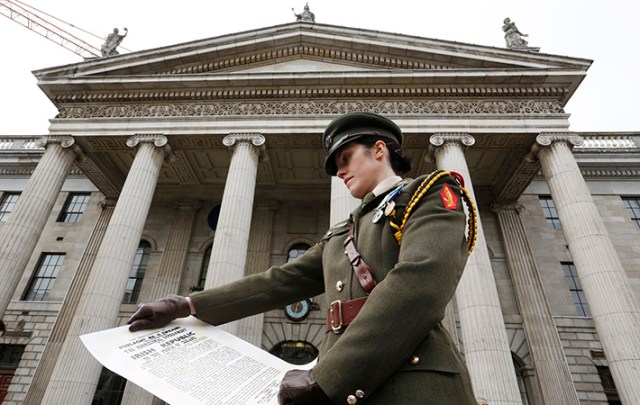
5/4/2015. Easter Rising Commemorations

The symbolism and the irony were striking. This was the day which Irish people gathered in their thousands, probably over one hundred thousand of them, to commemorate the rebellion which Northern Irish unionists saw and resisted as the violent harbinger of Rome Rule on the island of Ireland.

Nevertheless, as Irish Catholics searched through their native broadcast channels for a transmission of the Easter message Rome’s ruler, Pope Francis, to the city and the world, Urbi et orbi, they failed to find one. The message was ignored by the Irish broadcast media this morning. Anyone who wanted to see and hear it had to go to the Internet service provided by that quintessential British medium, the Daily Telegraph.

If the aspirations of those men and women in 1916 was at heart Catholic – and for not a few of them it was an important part of the mix in their hot heads – it has surely now proved to be an abysmally fruitless one. The policy decisions of Ireland’s broadcast media certainly seem to underline the apostate stance now being vaunted by Ireland’s establishment. If the hearts and minds of the Irish people are not quite there yet we cannot say. But if they are not it is no fault of the country’s mainstream media and the sheepish political class which dances to their tune.

On Irish television this evening, at a prime viewing time for young and old, one of Ireland’s national television channels is broadcasting a film called The Queen of Ireland, a transvestite romp fronted by the sometimes-man-sometimes-woman, Rory O’Neil a.k.a. Panti Bliss. Another Irish television channel broadcast its post gay marriage referendum analysis/celebration programme from his/her gay bar in the centre of Dublin last year. This is the face of Ireland’s insurrection one hundred years on. It cannot be said for sure that everyone celebrating on the streets this weekend knows that this may be what is being celebrated. But it is certainly at the heart of the ambivalence of some about the whole elaborate event.

Up north in the six counties of Northern Ireland, faithful Protestant Christians look on and wonder how their forebears go it so wrong. Either way, they are probably thinking, we are better off not to be associated with that lot. They are thankful that they kept their allegiance to a jurisdiction which is tolerant and happy to provide as fair a service as it can to all its citizens – in broadcasting and in other fields . Meanwhile, Catholics in the res publica which comprises the rest of the island wonder, quietly, if they got a bit of a raw deal 100 years ago.

Given their experience this morning, as they searched through their native broadcast channels for the message of peace from the Vicar of Christ in Rome, maybe there weren’t many other conclusions they could come to?

The death penalty “does not do justice to the victims, but foments vengeance”

splash

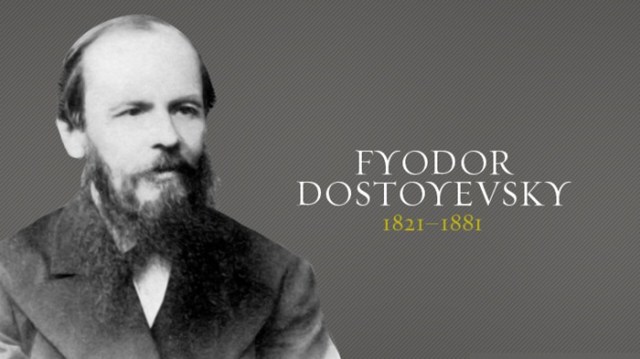
“Justice will never be reached by killing a human being”, Pope Francis, quoting Dostoevsky,  tells campaigners for the end of the death penalty.

In this letter to the President of the International Commission Against the Death Penalty, Federico Mayor, he outlines loudly and clearly the Christian case against the state’s taking on itself the right to end the life of human beings as a punishment or a way of doing justice to the victim of a crime. He writes in the letter:


The Magisterium of the Church, beginning with Sacred Scripture and the centuries-old experience of the People of God, defends life from conception until natural death, and supports full human dignity in as much as image of God (Cf. Genesis 1:26).

Human life is sacred because from its beginning, from the first instant of conception, it is fruit of the creative action of God (Cf. Catechism of the Catholic Church, n. 2258), and from that moment, man, the only creature God loves for itself, is the object of personal love on the part of God (Cf. Gaudium et spes, 24).

Life, especially human life, belongs to God alone. Not even the murderer loses his personal dignity and God himself makes himself its guarantor. As Saint Ambrose teaches, God did not want to punish Cain for the murder, as He wants the repentance of the sinner, not his death (Cf. Evangelium vitae, 9).

On some occasions it is necessary to repel proportionally an aggression underway to avoid an aggressor causing harm, and the necessity to neutralize him might entail his elimination: it is the case of legitimate defense (Cf. Evangelium vitae, 55). However, the assumptions of legitimate personal defense are not applicable to the social milieu, without risk of distortion. Because when the death penalty is applied, persons are killed not for present aggressions, but for harm caused in the past. Moreover, it is applied to persons whose capacity to harm is not present but has already been neutralized, and who find themselves deprived of their freedom.

Today the death penalty is inadmissible, no matter how serious the crime of the condemned. It is an offense against the inviolability of life and the dignity of the human person that contradicts God’s plan for man and society and His merciful justice, and it impedes fulfilling the just end of the punishments. It does not do justice to the victims, but foments vengeance.

For a State of Law, the death penalty represents a failure, because it obliges it to kill in the name of justice. Dostoevsky wrote: “To kill one who killed is an incomparably greater punishment than the crime itself. Killing in virtue of a sentence is far worse than the killing committed by a criminal.” Justice will never be reached by killing a human being.

The death penalty loses all legitimacy given the defective selectivity of the criminal system and in face of the possibility of judicial error. Human justice is imperfect, and not to recognize its fallibility can turn it into a source of injustices.

With the application of capital punishment the condemned is denied the possibility of reparation or amendment of the harm caused; the possibility of Confession, by which man expresses his interior conversion; and contrition, gateway of repentance and of expiation, to comer to the encounter of the merciful and healing love of God.


As I expressed in my allocution of last October 23, “the death penalty implies the denial of love to enemies, preached in the Gospel. All Christians and all men of good will are obliged not only to fight for the abolition of the death penalty, legal or illegal, and in all its forms, but also for prison conditions to be better, in respect of the human dignity of the persons deprived of freedom.”

67444

The full text of the letter is here.


Et tu Disney?

julius-caesar-assassination

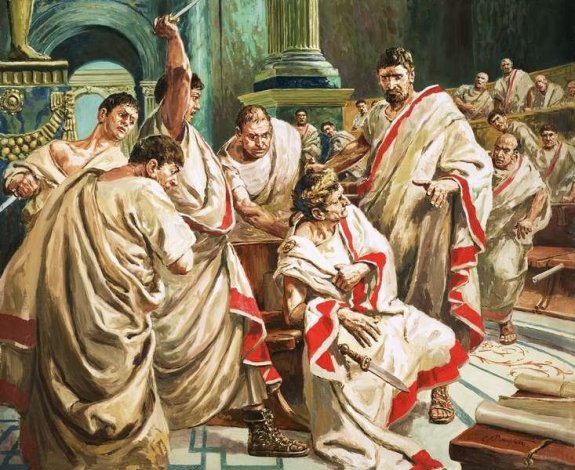
Christians truly are at a head-scratching moment as they confront the drift of the modern secular world. Drift indeed may be a too gentle a phenomenon to describe what is bearing down on them. It is much more like a deluge and so much so that not a few of them must be contemplating building an Ark. They have wished for better for this world, have worked for its configuration to a model of our species’ true nature but now appear to have their backs against the wall.  They continue living in this secular society hoping for peaceful coexistence with those who do not see our nature or our world in the same way as they do. With each day that passes this hope is challenged more and more.

For decades now there has been concern and debate among believing and conscientious Christians about their representation in the legislative assemblies of the Western world. In jurisdictions stretching from the United Kingdom, through Ireland, France and Spain to the United States and Canada, national and federal chambers have one by one enshrined laws which contravene central moral principles of their faith.

These legislatures have now set out on a path to recalibrate their respective societies according to the fundamental principles of an anthropology alien to much of what Christians both rationally and religiously know and believe to represent the true nature of the human species.Today the political establishment seems to be turning its back on the Christian ethics which for 1700 years have been advancing as the standard behind our laws.

But this is not really their biggest problem. The first Christian communities on the planet lived under such regimes, managing a level of coexistence which enabled them to survive, thrive and evangelise – barring sporadic episodes of paranoid persecution. The forces which from time to time set out to destroy them were for the most part inept and dysfunctional. The Edict of Milan in 313 brought the political establishment to its senses and outlawed intolerance against Christians.

Now in the 21st century, through a creeping process in the legislatures of formerly Christian countries across the globe, the notional Edict of Milan has been revoked and the right of Christians to practice and live by the principles of their religion is now no longer being tolerated. This, of course, has happened before, but never in a way in which it is happening now.

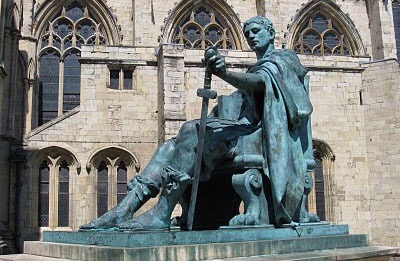
Within a few decades of the death of the Emperor Constantine, his successor,  Julian, tried to reverse the Edict. For that abortive attempt he is known in history as Julian the Apostate. Then came the armies of Islam which wiped out Christianity in half the known world, and threatened to do so in the other half. Nearer to our own time the French Revolution sent thousands of Christians to their deaths. Then in the last century the twin scourges of Marxism and Nazi ideology did the same.

church-donetsk-reuters

On all those occasions the challenge was met and the threat subsided.

But now it is different. In our age there is a new element. It would seem that the grass roots have been to a degree, transformed. Add to this the sad trend among the political classes of abandoning any pretension to leadership. They seem to be followers of fashion and are now turning their backs on Christian values because that is the way they think the wind is blowing. They unashamedly leave their consciences at the door when they enter legislative assemblies. Christians are being regularly told now that they are on the wrong side of history.

The character of the modern state compounds the problem for Christians. In 313 the Roman Empire may have covered the lion’s share of the known world. Despite, however, the impression of power it has left us with, its totalitarian reach was minuscule in comparison with the reach modern governments have into our lives.  We tolerate this totalitarianism because it is accepted as democratic – up to a point – and is seen to be “in our best interests”.

Is it either? This is now the question that is preoccupying many of us, Christians or not. This question takes us away beyond the Christian-secular debate. Nevertheless, the essential issue, which many see affecting our lives, is at the heart of the predicament of the Christian in the modern 21st century world. A tyrannical populism, driven by ambiguously democratic forces, now seems rampant in the public square. A formerly benign Leviathan, called up to help secure the common good, has now gone native. The threat he poses to the believing Christian is exemplified in the news this week – reported in Time magazine and elsewhere – about big business’ latest foray into the culture wars. Time tells us:

Disney says it will not film in the state of Georgia if a bill, which critics say would effectively legalize discrimination based on sexual preferences, becomes law. Gov. Nathan Deal has until May 3 to sign or veto the Free Exercise Protection Act, which protects faith-based organizations that refuse to provide services that would violate their beliefs—such as performing gay marriages, according to the Los Angeles Times.

Add to this what we remember of the relentless drive of big media and internet corporations which successfully pushed the political establishment to legalise same-sex marriage over the past few years and we have every right to ask what has happened to the democratic process.

The answer may be simple. These unelected corporations in their turn, like the politicians, are responding to a populist new reading of the nature of our species. They are driven by the market and they are reading the bottom line – follow the money.

Christians look on in dismay as all this unfolds. Not only are their values being disregarded. Their personal freedom, their freedom of association and their freedom of conscience is being threatened and increasingly denied. The consciences of the Little Sisters of the Poor, the future of the work they undertook to dedicate their lives to for the love of their God and the good of mankind is now in the hands and at the mercy of eight judges of the US Supreme Court. Should the Court decide in their favour – and I wouldn’t want to bet on it – there will be outrage and cries for their blood.

What Christians see before them is a population subverted by a reading of our nature which distorts and destroys what they see as some of the most precious truths about humanity. Not only has that happened but that same popular will is now seeking to tyrannically impose that vision of humanity on all. Coexistence is not on offer  – and it is not just being denied by Disney.

What Christians are now asking is where did this reading of our nature come from? How did it take hold? German author Gabriele Kuby asks all these questions in her book, The Global Sexual Revolution: Destruction of Freedom in the Name of Freedom – now translated into English. In summary, her argument is this:

The core of the global cultural revolution is the deliberate confusion of sexual norms. It is the culmination of a metaphysical revolution as well–a shifting of the fundamental ground upon which we stand and build a culture, even a civilization. Instead of desire being subjected to natural, social, moral, and transcendent orders, the identity of man and woman is dissolved, and free rein given to the maximum fulfilment of polymorphous urges, with no ultimate purpose or meaning.

Kuby surveys gender ideology and LGBT demands, the devastating effects of pornography and sex-education, attacks on freedom of speech and religion, the corruption of language, and much more. From the movement’s trailblazers to the post-Obergefell landscape, she documents in meticulous detail how the tentacles of a budding totalitarian regime are slowly gripping the world in an insidious stranglehold. Here on full display are the re-education techniques of the new permanent revolution, which has migrated from politics and economics to sex.

Kuby’s work advocates one viable response, not just for the Christian, but for all interested in the true good of humanity. It is essentially a call to action for all to redouble their efforts to preserve freedom of religion, freedom of speech, and in particular the freedom of parents to educate their children according to their own beliefs, so that the family may endure as the foundation upon which any healthy society is built.

And where does all this leave the ordinary Christian who conscientiously wants to live and practice the mandate he or she considers they have received from Christ and which is summarised neatly in the Catechism of the Catholic Church, (900):

Since, like all the faithful, lay Christians are entrusted by God with the apostolate by virtue of their Baptism and Confirmation, they have the right and duty, individually or grouped in associations, to work so that the divine message of salvation may be known and accepted by all men throughout the earth. This duty is the more pressing when it is only through them that men can hear the Gospel and know Christ. Their activity in ecclesial communities is so necessary that, for the most part, the apostolate of the pastors cannot be fully effective without it.

The chances are it will leave them in prison. Kuby’s book enumerates more than one case where it has done so.

But Christian culture is not dead, or even dying. It is taking stock and – although wrong responses are never off the option list which may be presented for action – it will survive and thrive.

From the earliest days of the history of their Faith, the Christian community was assailed by opposing forces, from within as well as from without. It will never, it seems, be otherwise. Each struggle in which they have had to engage has presented new challenges, new issues and new dangers, or at least new variations on old dangers. On every occasion solutions have been hammered out and victory has lead it to new and even richer landscapes. Believing Christians may have to scratch their heads a little more but they do not doubt that they will also prevail in the struggles they face today.

(Updated on 26 March with the following sentence from the original draft. It is in the third paragraph and was inadvertently committed from the first posting:  Today the political establishment seems to be turning its back on the Christian ethics which for 1700 years have been advancing as the standard behind our laws. )

What might have been…

What might have been…but for an assasin’s bullets, is suggested in a ‘Back Story’ in the Daily Briefing newsletter from the New York Times:

President Obama is the first sitting U.S. president to visit Cuba in nearly 90 years.

The milestone gives us a chance to delve into the diplomatic archives.

It turns out that the Kennedy administration explored the possibility of normalizing relations.

In an Oval Office recording on Nov. 5, 1963, the president can be heard discussing a plan to send his U.N. delegate, William Attwood, to Havana for a secret meeting with Fidel Castro. That was two-and-a-half years after the failed Bay of Pigs invasion.

In September, Castro’s ambassador to the U.N. had told Attwood that the Cuban leader was interested in opening back-channel communications.

Kennedy encouraged Attwood to explore talks — delicately. He suggested Attwood be pulled off the government payroll so that the White House could deny in the event of a leak that official talks had taken place.

Attwood then called an aide to Castro and asked the Cubans to provide an agenda for the talks.

“The ball is now in Castro’s court,” said a top-secret memo summarizing the exchange. Around the same time, on Nov. 18, 1963, Kennedy gave a speech in Miami that signaled the potential for normalization.

Four days later, the president was dead — along with hopes for a new beginning for ties with Cuba.

Your Morning Briefing is published weekdays at 6 a.m. Eastern and updated on the web all morning.

The revolution which transformed the world

Constantine the Great

We look back at the classical world and classical civilization with glasses that are a little too rose-tinted. Myths were at the foundation of that world – myths about men as well as myths about gods. Myths are still at the foundations of our conception of that world.
Mary Beard, Professor of Classics in Cambridge, in her new work, SPQR: a History of Ancient Rome, prefaces the book by emphasising how ancient Rome is still important. She certainly convinces us. But there are many things that are important but boring. Boring, Rome is emphatically not. This is a fascinating book for all sorts of reasons and on all sorts of levels. One of Beard’s achievements in S.P.Q.R. is to unravel those myths for us and to puncture our own mythical conceptions about the events and the heroes of that time.
It is that rare thing, scholarly and readable, learned and light. It is a joy to read and a magnificent stimulus for reflection on both the origins and development of our own civilization as well as on the perennial threats to its survival which are active in our contemporary world.

This book will not endear you to the Romans, it may even horrify you. It is not that there were not people there trying to do their best, striving for some kind of justice. There were. One of the abiding impressions you get from the book is a sense of mankind’s long, painstaking and faltering journey towards the rule of law in our world.

But one of the questions which haunts us as we make our way through this revision of our cosy and benign view of the Roman world is this: what would our modern world be like today if the radical revolution which was the conversion of this world to Christianity had not taken hold?

Richard Dawkins – in one of his wiser reflections some years ago, in the middle of a diatribe against the Christian Faith – expressed some concern about what might replace Christianity if his wishes for it came true. Well he might, given some of the evidence we have from mankind’s more recent efforts to create godless utopias.

The thought which this book prompts, however, is even more radical. What kind of civilization could faltering mankind ever have achieved had it not been for the emergence of the Christian Faith to take centre-stage in that evolution. The Roman world, even with its ameliorating Greek influences, was devoid of the radical goodness which the Christian message holds. While classical civilization had elements which that message was capable of taking and transforming, it could never have produced that transformation from within its own resources.

Mary Beard helps us to look back to this world with a cold eye and there we see what a floundering and inhumane world it was in which to live – and truly alien to the spirit of the ages, even in their rawest expressions, which followed the leavening of the mass by Christianity.

Beard’s narrative approach is very different from what we are used to in the writing of ancient history. While the approach is generally chronological she deliberately eschews the tracing of cause and effect in the story. She concentrates instead on giving us insights into the mentality of the people, the life-style and the mores prevailing over her 1000 year span. In this we do not get blow by blow accounts of political or military action but get a real feel for how political life worked in a militarised state – or did not – as well as what it was like to be a family, a mother, a child in that world.

She recounts the attitude to and the fate of children in the womb: “One letter, surviving on papyrus from Roman Egypt, written by a husband to his pregnant wife, instructs her to raise the child if it is a boy, but ‘if it is a girl, discard it’. How often this happened, and what the exact ratio of the victims was, is a matter of conjecture, but it was often enough for rubbish tips to be thought of as a source of free slaves.” Was this the ancient world’s version of Planned Parenthood (capitals deliberate)? Is there not just a little more than a echo of this in the current controversies surrounding that American state-funded organization?

As for poverty and destitution, the Roman world was truly dark. The sources don’t give a great deal of evidence. The reason for that, Beard tells us, is clear. “First, those who have nothing leave very few traces in the historical or archaeological record. Ephemeral shanty towns do not leave a permanent imprint in the soil; those buried in unmarked graves tell us much less about themselves than those accompanied by an eloquent epitaph. But second, and even more to the point, extreme poverty in the Roman world was a condition that usually solved itself: its victims died.” What there was by way of some social provision for the needy, the “corn dole”, was for the needy within a “privileged group of about 250,000 male citizens in the first and second centuries CE.”

No one in the Roman world, she tells us, “seriously believed that poverty was honourable – until the growth of Christianity… The idea that a rich man might have a problem entering the kingdom of heaven would have seemed as preposterous to those hanging out in our Ostian bar as to the plutocrat in his mansion.”

Political life operated in a pretty brutal and murderous way, family life would have had its moments but was a very different reality from what we think of as ideal family life today. It may have taken centuries, even a millennium or more for much of what we experience today to become the norm for us, but we should have no illusions about where it all began. Its beginning is to be found in the words of Christ, “suffer little children to come unto me…”, and in the articulation of Christ’s teaching in the words of St. Paul about husbands loving their wives, wives loving their husbands, the sanctity of marriage, and much else.

What shocks us not a little in reading this book is the realization that although we see some of the elements of our own civilization in the world Beard lays before us, we realize how radical and necessary was the peaceful Christian revolution to bring us from there to where we are today. It also helps us ask ourselves the question – what will we lose if we abandon the principles of that revolution as the West is now doing wholesale? It was not until Roman society began to be impregnated by the values of the Judaeo-Christian ethic that the Roman world and Roman law flourished as the framework for western civilisation.

Christians have not always lived up to the standards set by Christ. Benedict XVI has often stressed that profound changes in institutions and people are usually the result of the saints, not of the learned or powerful: “Amid the vicissitudes of history, it has been the saints who have been the true reformers, who have so often lifted mankind out of the dark valleys into which it constantly runs the risk of sinking back again and have brought light whenever necessary “.

So it was in Rome. As Beard recounts in the conclusion of her book, “after periods of coordinated persecution of the Christians in the later third century CE, the universal empire decided to embrace the universal religion (or vice versa). The emperor Constantine…, the first Roman emperor to formally convert to Christianity was baptised on his deathbed. Constantine did, in a way, follow the Augustan model of building himself into power, but what he built was churches.” Her narrative ends just before that event, with the reign of Caracalla.

Casting this kind of a cold eye on Rome is not to denigrate it. It is just important to tell it as it is, as it was. Beard concludes: “We do a disservice to the Romans if we heroise them, as much as if we demonise them. But we do ourselves a disservice if we fail to take them seriously – and if we close our long conversation with them.” We might add that knowing the truth about what we have left behind us is important as an incentive to help us to maintain and treasure what we have. Part of the value of this book is that it does just that.

Addendum (March 24th)

George Weigel wrote in a post on Easter in First Things this week:

The grittiness of Lent, and the “intransigent historical claims” without which Easter makes no sense at all, should remind us that Christianity does not rest on myths or “narratives,” but on radically changed human lives whose effect on their times are historical fact. Within two and a half centuries, what began as a ragtag gang of nobodies from the civilizational outback had so transformed the Mediterranean world that the most powerful man in that world, the Roman emperor Constantine, joined the winning side. How did that happen?

It didn’t happen because of better myth-making. It happened because those first Christians met a young rabbi who promised that, should they believe in him, each of them would become “ a spring of water welling up to eternal life” [John 4.14]. Then came what seemed complete catastrophe: his crucifixion. But they met that teacher again as the Risen Lord Jesus Christ, and were infused by his Spirit. And after that, they didn’t sit around in the “presence of the question mark; rather, they told the truth of what they had “seen and heard” [cf. 1 John 1.1].

And thereby changed the world.

Modernity laid bare I: ‘the history of a man’s soul’

photo-31-554x500

Have we been duped by modernity? Was the rise of Christianity in its first age an easier project than its restoration or rejuvenation in the modern age may be? In an age when technical and scientific knowledge has such a capacity to bamboozle humanity with the idea of irreversible progress, can the light of faith ever again penetrate this darkness?

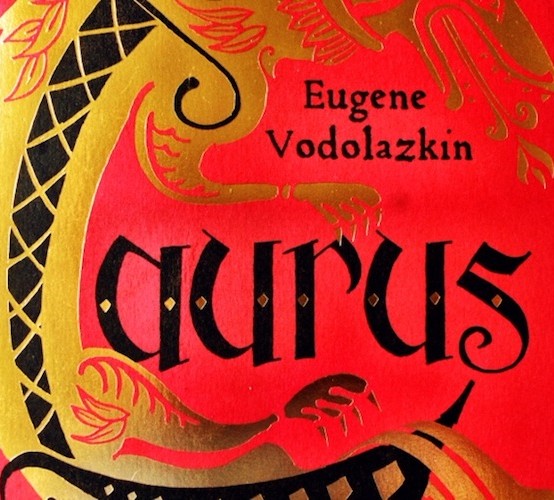
Yes, it can. And how it might do so, how it will do so, is the preoccupation and theme of a Russian historian and novelist whose book, Laurus, is taking the literary world by storm.

Already a best-seller in its country of origin where it was published in 2013, this novel by Evegeny Vodolazkin, has now been translated into English. Its first edition has been sold out and a new printing – my local bookshop tells me – will not be available in Europe until May. Laurus has already been translated into more than twenty languages worldwide. It became a literary sensation when published in Russia and won its two major literary awards in that year. This, Vodolazkin’s second novel (though his debut in English), captures religious fervour in fifteenth-century Russia, tracking the life of a healer and “holy fool” it is described by some as a postmodern synthesis of Bildungsroman, travelogue, hagiography and love story.

Set in the late Middle Ages, its protagonist, Arseny, born in 1440, was raised near the Kirillov Monastery, about three hundred miles north of Moscow. He becomes a renowned medicine man, faith healer, and prophet who “pelted demons with stones and conversed with angels.” He makes a pilgrimage to Jerusalem. He takes on new names, depending on how he will next serve God. The people venerate his humble spirituality. In Laurus, its New Yorker reviewer tells us, Vodolazkin aims directly at the heart of the Russian religious experience. He may, but he does much more than that.

It is truly astounding that just a few decades after Russia’s emergence from the bitter wilderness of soviet atheism, a voice and a spirit like this can speak to us with such authority, spiritual sensibility and wisdom. It surely shows us that mankind, even caught in the grip of atheistic modernity, is redeemable.

Rod Dreher says of this novel that it makes you want to enter into contemplative prayer after reading from its pages. “It induces an awareness of the radical enchantment of the world, and of the grandeur of the soul’s journey through this life toward God. It is so strange and mystical and … well, to call a novel ‘holy’ is too much, but Laurus conjures on every page an awareness of holiness that is without precedence in my experience as a reader.”

He fears that by saying that, he will make the novel sound pious and devotional. It is not. “This is an earthy novel, filled with the sounds, smells, violence, superstition, and fanaticism of the Middle Ages. The achievement of Vodolazkin, who is a medieval historian by vocation, is to make this faraway world come vividly to life, and to saturate it with mystical Orthodox Christianity, such that even the leaves of the trees are enchanted.”

So taken was Dreher by this novel when he read it, that he contacted the 51 year-old author by telephone at his home in St. Petersburg in early November, and spent nearly two hours in conversation.

In his account of that conversation the first surprise comes in their first exchange about the geo-political problems which seem to be preoccupying the people of their respective countries just now. Dreher, an American, asked the Russian, “Do you believe that problems of the modern world can be solved by political means?” the answer was polite but clear – almost to the point of not being polite:

“I don’t do politics. If a journalist asks me for my political views, I answer normally that I have no political views. As a Christian, I deal with each event separately, and I try to judge it from a Christian point of view, of right and wrong.

“I have a theory – well, theory sounds too serious, but I have an idea. Each phenomenon has different dimensions or, better, levels, and the political level is not the highest one. I am certain that the reasons of social events lie in the human soul. It is a concrete soul, where grows aggression, and this aggression echoes with the aggression in other souls.”

Vodolazkin has what we would probably call, borrowing from his own terminology, a personalist view of history.

“I suppose nobody believes that Archduke Franz Ferdinand’s death in Sarajevo is the reason for the First World War. Everything was ready for the explosion; the assassination was the spark. Or, consider the Russian Revolution, in 1917. Normally, history books tell us that it was a very difficult situation in Russia – there was hunger, starvation, and so forth. But we had much more difficult situations than that [before] in Russia, and did not have a revolution.

“The reason of these events is the united energy of individuals.  … We have to work with individual human beings, and their souls. My position is one of Christian personalism. The main thing we can do to fight this evil is to pray… To do something politically is not so effective. Politics is a result of the situation we have in our souls.”

For him, after the Providence of God, culture is the real catalyst for change. Except for what he describes as “the gathering of the Holy Spirit”, culture is for him the second most important work that we can do. He cites one of his teachers, the historian and scholar, Dmitri Sergeyevich Likhachov, who wrote that the main thing that justifies the existence of a nation is its culture.

Laurus is an exploration of the human condition in our own time but looked at with the wisdom of the people of another time. In truth, It reveals the deep humanism of the Middle Ages. For Vodolazkin this age was much more humanistic than modernity.

“The massacres we have seen in the 20th century, no one in the Middle Ages could have imagined. Despite what you might have heard, a human life was estimated very highly in the Middle Ages. When they say that humanism appeared only in modernity, it is not true.”

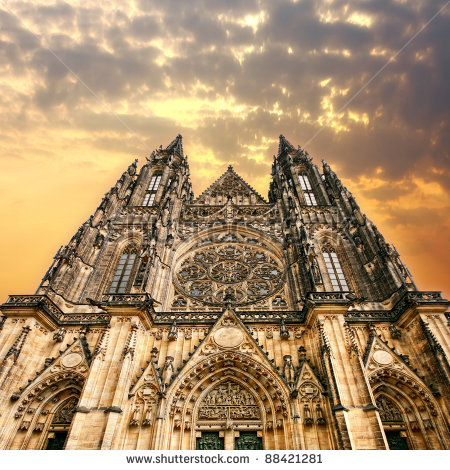
stock-photo-the-gothic-cathedral-in-prague-88421281
A humanism which reached for heaven

He explains how it was a special kind of humanism. The humanism of modernity sees the human being as the measure of all things, but medieval people were convinced that this measure was given by God. It’s an essential difference. Echoing his great compatriot Alexander Solzynitsyn’s critique of the Renaissance, and the subsequent moves to put man at the centre of the universe in the Enlightenment, he says that  in modernity the human being is at the top of the hierarchy. In the Middle Ages, at the top of the hierarchy was God. “In our post-Christian society, God very often is not present in our life at all.”

In a seminar in London last Autumn Vodolazkin described Laurus in this way: “To quote Lermontov,” he said, “it is ‘the history of a man’s soul’.” The book’s subtitle is, intriguingly, “a non-historical novel”. He is quick to dissociate himself from historical fiction. It is ultimately “a book about absence,” he said, “a book about modernity”. “There are two ways to write about modernity: the first is by writing about the things we have; the second, by writing about those things we no longer have.”

(End of Part I)

Modernity laid bare II: the beetle on the road to Munich


eugenevodolazkin-laurus-authorphoto1-554x349

Evegeny Vodolazkin was born and raised in the Soviet era. For him studying the Medieval history and literature was a way to escape from the gulag that was Societ Russia, a kind of emmigraton. Medieval history was the only piece of reality where the Soviet mentality was absent in the 1980s when he was growing up.

His parents were agnostics and he was not baptized as a child. It was a period of my personal paganism, he says. “As a child, I asked someone, some unknown person, to help me, please. When I was 16 I was baptized. A movement inside me led me to that point. Where did it come from? When I was 14 or 15, I discovered death”. Little children, he says, know that death exists, but they don’t believe it concerns them. They think that a death is a personal misunderstanding, or something that happens to this particular person who died. At that moment he says he experienced a terrible fear – not that he would die and cease to be, but rather that everything is pointless without God.

In the Soviet Union in those years after his conversion it was prohibited for young people to visit church. Doing so constituted a huge risk and would be regularly punished by expulsion from university. He was undeterred by this and describes it as his secret life. He felt like one of the early Christians.

He is intrigued by the response to Laurus. Some critics have described it as a postmodern novel. He disputes this because for him postmodernism is just a game that plays with quoting literature of the past, but has no grounding in anything real.

He sees a new literature now being born. It has, he says, many, many features of the Middle Ages in its structure. Modernity he thinks, quoting Nikolai Berdyaev, the great Russian religious and political philosopher, is in its end days as a cultural epoch.

Berdyaev says people in the Middle Ages were not so individualistic as people in modernity. Modernity developed our appreciation of individuality and that in itself was not a bad thing. But now, we are entering a time when our appreciation another set of values is growing, values which are ultimately more important than individuality.

For Vodolazkin it is now time to think about the destination, and not just about the journey. This is a central theme in Laurus. If the way leads nowhere, it is meaningless. He recalls a film released in Russia during the perestroika period. It was called Repentance, by the Georgian director Tengiz Abuladze . It’s a movie about the destruction wrought by the Soviet past. The last scene of the film shows a woman baking a cake at the window. An old woman passing on the street stops and asks if this way leads to the church. The woman in the house says no, this road does not lead to the church. And the old woman replies, “What good is a road if it doesn’t lead to a church?”

So a road as such is nothing, Vodolazkin argues. It is really the endless way of Alexander the Great, whose great conquests were aimless. “I thought about mankind as a little curious beetle that I once saw on the big road from Berlin to Munich. This beetle was marching along the highway, and it seemed to him that he knows everything about this way. But if he would ask the main questions, ‘Where does this road begin, and where does it go?’, he can’t answer. He knew neither what is Berlin, nor Munich. This is how we are today”.

He sees us as essentially duped by technical and scientific knowledge. This leads us to believe that we can solve every problem in life, he says. That for him is a great illusion. Technology has not solved the problem of death, and it will never solve this problem. The illusion is that everything is clear and known to us. Medieval people, 100 percent of them believed in God – were they really so stupid in comparison to us? he asks.

Laurus reveals in a powerful way how, for medieval people, God was the most important thing about life. It shows as well that the second most important thing was Time. While in terms of years spent on this earth, medieval people lived rather short lives, in other terms life was very, very long, because they lived with their minds in eternity. For them life did not end when their time on earth ended. Their days on earth were part of a greater whole. “Every day is an eternity in the church, and all that surrounded these people. Eternity made time very long, and very interesting.  Their life was very long because they had as part of daily life this vertical connection, the connection to the divine realm, a connection that most of us in modernity have lost.”

He is puzzled by the fact that liberals and conservatives both liked his book. “I tried to say with it that there is another way to live: the way of the saints. It is not an easy way to walk, but maybe we can walk alongside it”. He says he is not trying to teach people in his book. His only purpose is to show us what this other way looks like.

With a little note of doubt as to whether people will understand what he s really saying, he thinks that maybe it was easier to see the truth about things in the first ages of Christianity than it is now in our post-Christian culture. “Nobody knew about Christianity back then. These people, these first Christians, brought the fire of a new faith, of a new religion. Now everyone thinks they know everything.

This is a book of great complexity, with archaic flourishes which sometimes baffle the reader but are all part of the meaning of the whole. According to one reviewer, “Laurus cannot be faulted for its ambition or for its poignant humanity. It is a profound, sometimes challenging, meditation on faith, love and life’s mysteries.”

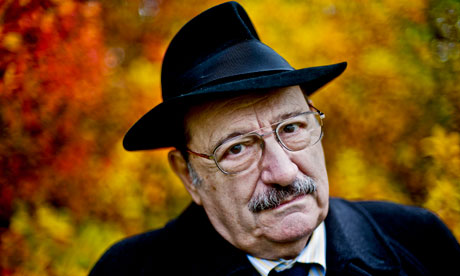
umberto-eco-007
The late Umberto Eco

But while the book itself is one phenomenon, the other is Evegeny Vodolazkin himself. It is not a little ironic that he should make his appearance in our culture at the juncture in time when another – to whom he has been compared – should have left us. Umberto Eco preoccupied himself with many of the things with which Vodolazkin does – but came to very contrary conclusions. Eco remained with the beetle on the road to Munich. Vodolazkin transcended the road and helps us see both the origin and the destination of everything that gives that road its purpose.  The New Yorker reviewer said that Vodolazkin aims directly at the heart of the Russian religious experience. He does, but he does much more than that. He goes to the heart of the hunger for religion in every soul.


Bringing down the house?

campaign_2016

Donald Trump is leading his nearest rival, Ted Cruz, by a massive 42% to 20% in the latest poll from South Carolina, where the second primary takes place tomorrow. The other Republican contenders are trailing behind .  Hillary Clinton, on the other hand seems to be, for the moment, overturning Bernie Sanders’ victory in New Hampshire.

Clinton has the support of 59% of likely Democratic primary voters in South Carolina, which is a lead that has narrowed slightly from last month, according to CBS and reported in Time magazine. The former Secretary of State’s voter base consists largely of black voters, while Sanders, who leads among white voters and young voters, is behind Clinton with 40%, the poll shows.

What is happening? According to Simon Heffer in last Saturday’s London Daily Telegraph , it is all Barak Obama’s fault. In words I would not like to report directly he puts it this way.

Since George HW Bush left office in 1993 America has been ruled by a spin-obsessed Lothario, a dangerous halfwit and a clever incompetent. They all bore the imprimatur of their respective party machines. For much of America, Barack Obama is the last straw. He is the creator of Donald Trump and Bernie Sanders. If one of them becomes president – and I wouldn’t rule it out – and the world doesn’t like it, they know whom to blame.

Heffer looked back to the high emotions which were running riot across America in November 2008 when the news of Obama’s victory was spreading. They ranged from the barely concealed sourness and anger evident on Fox News to the state of almost convulsive ecstasy gripping the avowedly liberal network, MSNBC.

For many a miracle-worker had arrived in the White House. One inspired cartoonist had drawn a picture of the building and its pond on the front lawn. At the edge of the pond was a conspicuous sign, ‘Please do not walk on the water’.

One of the TV channels interviewed a woman outside her run-down house. She was in tears while telling the interviewer what the victory meant for her. “I now know,” she sobbed, “that my house won’t be foreclosed on.” Heffer hoped she was right, but still had to conclude that the evidence of the seven years since Obama the miracle-worker took office suggests she may have been disappointed.

I had seen Obama at the primaries, Heffer wrote, and at the Democrat Convention. I had waited for him to speak intelligently about the state of America and how he would put it right, but I waited in vain. The cliché at the time, which became more relevant later, was about how he campaigned in poetry but would govern in prose. Some prose can be magnificent: but not his.

He admits that Obama is clever and has a way with words: but his words contained little. He entranced audiences, first in his own party – which is why he beat Hillary Clinton, arrogant and boring then as now, for the nomination – and then in the wider electorate. John McCain – old, white, Republican and with the media’s hate figure, Sarah Palin, as his running mate – didn’t have a prayer.

The sobbing woman was white and middle-aged. The constituency which was most ecstatic about the arrival of the miracle-worker, the poor blacks, have been even harder done by. He cites an instructive article in the latest New Yorker, about evictions in Milwaukee, a city that is 40 per cent black. There, despite having been elected on a platform promising to end the misery of evictions, an industry now exists to service evictions – courts, lawyers, removal men, bailiffs – and operates full-time, dealing with masses who cannot pay their rent, or their mortgages.

Heffer says that while he doesn’t know Milwaukee, he is familiar with cities such as Baltimore, Newark and Trenton, which have square miles of squalor.

The racial tensions, which he as a black president was expected to heal have not lessened. Ferguson is still smouldering and trigger happy cops seem to turn up everywhere. There is no sense that law enforcement has become anymore user friendly that it ever was – and he clearly is getting nowhere on the issue of gun control. Add to all this, the feeling that his foreign policy is inept and worse. He has, Heffer says, largely removed America from international conversations.

After the disastrous interventions in the Islamic world after 2001 it is quite right it should think more deeply about such expeditions: but that does not mean the superpower’s global responsibility can be abdicated completely. The Kerry intervention in Syria last week was typically, and tragically, late. Mr Obama’s international legacy is the repulsive sight of Vladimir Putin, whom he underestimated, ruling the roost, the barbarians of Isil (for dealing with whom he had no strategy) and a Europe mired in introspection.

At this point, enter Donald Trump. For many, given this scenario, he is a fantasy knight in shining armour. Heffer notes, after ‘The Donald’s’ triumph in New Hampshire last week, how many of his voters complained of feeling that America was being kicked around in the world. A great nation that is being forced to confront its global impotence is one for whom the bombastic Mr Trump holds inevitable appeal; and an America with such deep-seated social and economic problems is one that will look to Bernie Sanders. After all, everything else has been tried, so why not what he calls “democratic socialism”?

The Obama era is almost over – but his legacy is a far cry from what was expected from him in those days when he too was the knight in shining armour. While America may have limply recovered from the financial collapse of 2008, it had relatively little to do with him. The sector dealt with the cycle like it has been doing off and on for two centuries and more. He does not seem to have done much to help America – and the rest of us who are dependent on its fortunes – to cope any more effectively with the next crisis which may be just around the corner. That this task may fall to one of the heirs-not-yet-apparent who are leading in their respective polls is indeed a worrying prospect. If his most abiding legacy is, as Heffer says, the creation of a space in which these two political aberrations have been able to thrive and capture the most powerful office on earth then we have reason to worry.

Heffer says that when he is gone no one will miss him, least of all the one-time allies who feel he has spurned them. He has, he says, made America much less relevant. That may be so, but looking around us at the world we live in today, we may well have reason to rue the irrelevance of a democracy which has done so much in the past to make the world a better place and, twice in the last century, lead it away from two horrific tyrannies.

Power over life and death – a matter of conscience


As we write there are thousands of Irish children, already existing but awaiting birth, who do not have any votes in Ireland’s general election which takes place on 26 February. But the Irish Constitution does recognize their right to life. The outcome of this election will determine whether children like them in the future will continue to be guaranteed this right to life.

As readers of Garvan Hill will be aware, it is, among other things, a blog which defends the right to life of all human beings.

This has nothing to do with party politics as such, it has to do with a proposal which should not be on the agenda of any political party – the removal from the Irish Constitution of the provision protecting the life of human beings, children in their mothers’ wombs awaiting their birth.

What the link below provides is the result of the Irish Pro Life Campaign’s research as to which candidates in the coming general election are explicitly committed to maintaining this protection. As you will see, many have not given information one way or the other.

For  each elector with a proper understanding of where and when human life begins – and modern science, not to mention the evidence of our own eyes, should leave us in no doubt about that – there must surely be a moral obligation to confront candidates personally with the question about where they stand on this issue. Until there is an assurance that they will not remove the guarantee of this right for unborn children, how could one in conscience  vote them into a position of power?

Above you will see a beautiful video from Ireland’s Pro Life Campaign and a comprehensive guide to the position – or non-position – of candidates in Irish electors’ respective constituencies on this vital issue.

Your Vote Matters – Use it to protect human life https://youtu.be/xCZIwx18QP0 via @YouTube