Winners and losers in American justice system

interview-david-daleiden-r
Indicted: David R. Daleiden

A grand jury in Houston, Texas, that was investigating accusations against Planned Parenthood related to the sale of human organs and body parts of aborted babies has instead indicted two abortion opponents who made undercover videos of the organization.

All this sounds ominously reminiscent of the legal system which America and the world have been watching in operation over he past two months in Netflix’s Making a Murderer. As nearly everyone in the world now knows, Steven Avery spent 18 years in jail fro a crime he did not commit. Then, when he tried to get compensation for this miscarriage of justice from those responsible he found himself charged and convicted for murder by the same agencies which put him away in the first case.

The haunting thought at the back of the mind of anyone with a sense of justice and respect for due process who watched that series was “If it happened in Wisconsin, why would we think that it might not happen elsewhere.”

Well, maybe here it is again. David R. Daleiden will need a very good lawyer the escape the clutches of this system about which Bob Dylan sang over 40 years ago in outrage about what he saw as the fitted-out conviction of the boxer, Rubin ‘Hurricane’ Carter.

Couldn’t help but make me feel ashamed to live in a land
Where justice is a game.

The New York Times reports on the indictment today:

Prosecutors in Harris County said one of the leaders of the Center for Medical Progress — an anti-abortion group that made secretly recorded videos purporting to show Planned Parenthood officials trying to illegally profit from the sale of fetal tissue — had been indicted on a charge of tampering with a governmental record, a felony, and on a misdemeanor charge related to purchasing human organs.

That leader, David R. Daleiden, 27, the director of the center, had posed as a biotechnology representative to infiltrate Planned Parenthood affiliates and surreptitiously record his efforts to procure tissue for research. Another center employee, Sandra S. Merritt, 62, was indicted on a felony charge of tampering with a governmental record.

The record-tampering charges accused Mr. Daleiden and Ms. Merritt of making and presenting fake California driver’s licenses, with the intent to defraud, for their April meeting at Planned Parenthood in Houston.

Abortion opponents claimed that the videos, which were released starting in July, revealed that Planned Parenthood was engaged in the illegal sale of body parts — a charge that the organization has denied and that has not been supported in numerous congressional and state investigations triggered by the release of the videos.

The district attorney, Ms. Devon Anderson, said in a statement yesterday that grand jurors had cleared Planned Parenthood of any wrongdoing. She declined to provide details about the case against Mr. Daleiden and Ms. Merritt, including any documents or evidence presented to the grand jury, citing state law on the secrecy of grand jury proceedings.

“As I stated at the outset of this investigation, we must go where the evidence leads us,” Ms. Anderson said. Which is more or less exactly what the prosecutors in the case of Steven Avery said in Making a Murderer.

But, no more than Steven Avery did, Mr. Daleiden is not taking this lying down. He issued a statement on Monday night, pointing out that the organization which exposed the practices of Planned Parenthood, the Center for Medical Progress, “uses the same undercover techniques that investigative journalists have used for decades in exercising our First Amendment rights to freedom of speech and of the press, and follows all applicable laws. We respect the processes of the Harris County district attorney, and note that buying fetal tissue requires a seller as well. Planned Parenthood still cannot deny the admissions from their leadership about fetal organ sales captured on video for all the world to see.”

Nor are the pro-life politicians and officials of the State of Texas wilting either. The Times report tells us that Republican Gov. Greg Abbott said on Monday that the inspector general of the state’s Health and Human Services Commission and the Texas attorney general’s office will continue investigating Planned Parenthood’s actions.

“Nothing about today’s announcement in Harris County impacts the state’s ongoing investigation,” Mr. Abbott said in a statement. “The State of Texas will continue to protect life, and I will continue to support legislation prohibiting the sale or transfer of fetal tissue.”

The state attorney general, Ken Paxton, said in a statement: “The fact remains that the videos exposed the horrific nature of abortion and the shameful disregard for human life of the abortion industry. The state’s investigation of Planned Parenthood is ongoing.”

Lt. Gov. Dan Patrick, in a statement on Monday, played down the significance of the indictment, saying the recent anniversary of the Roe v. Wade decision was “a solid reminder of the over 50 million innocent lives that have been lost to abortions.”
He added, “I will never be deterred from standing up to fight to protect the unborn.”

For the pro-life activists in America and further afield the situation will to some extent be viewed as a win-win scenario. The aberration of selling the body parts of human beings killed in their mothers wombs in a manner confessed here will be in the public eye even more than it has been. The American justice system will also remain in the spotlight as will anyone who tries to play it like a game, fast and loose.

Hope for the powerless?


irish_parliament

Ireland’s parliament – Dáil Eireann

For most of the time ordinary people don’t want power. They just want to get on with their lives. Democracy relieved them of dictatorial, aristocratic and oligarchic abuses of power. In our democratic age we expect that all we have to do is choose, every few years, reasonable, just and capable people to look after our public affairs for us – and all will be well. That seems to be enough power to keep us going. But something radical has now happened. We do not seem to be in this comfortable place anymore.

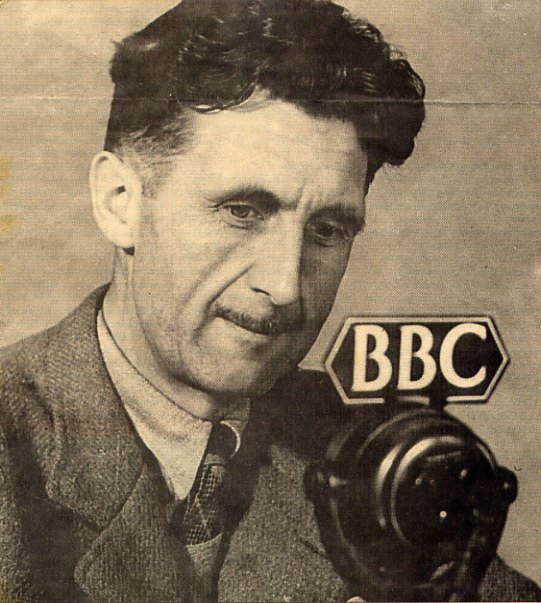
David Brooks reflected on “powerlessness” in a column in the New York Times last week, relating it to an essay by George Orwell reflecting on an incident in his time as a colonial policeman in Burma back in the 1930s.

“In his essay”, Brooks tells us, “nobody feels like they have any power. The locals, the imperial victims, sure didn’t. Orwell, the guy with the gun, didn’t feel like he had any. The imperialists back in London were too far away.” He thinks this is the way much of the world is today, with everyone afflicted with a widespread sentiment that power is somewhere other than where you are.

Suddenly, we are not so sure that anything we think, say or do matters anymore. If it did why do I have to suppress this sense of fear and loathing every morning as I make my way to work past the Irish parliament and the offices of the prime minister of my country?

Brooks, writing in the American context, speaks of the confusion he sees right across the social and political spectrum where every group feels it is being hard done by in the system. A Pew Research Center poll asked Americans, ‘Would you say your side has been winning or losing more?’ Sixty-four percent of Americans, with majorities of both parties, believe their side has been losing more.

“Sometimes”, Brooks says, “when groups feel oppressed, they organize by coming up with concrete reform proposals to empower themselves.” He cites the Black Lives Matter movement as an example of this kind of response.

orwellbbc

George Orwell

Here in Ireland some people afflicted by this “powerlessness” syndrome hope that new political parties might give some respite. Others despair even of that when they look at the options that new fledgling parties provide. They hope that the wave of independent  non-party representatives expected in the next Irish parliament – the general election for a new Dáil will take place in about five weeks from now – will at least throw up something to relieve their pain and their anxiety. Others just look on this as a vain hope, convinced that what they see as a mildly to severely corrupt political and media establishment will manipulate the system to keep themselves in power.

Brooks thinks that “the feeling of absolute powerlessness can corrupt absolutely. As psychological research has shown, many people who feel powerless come to feel unworthy, and become complicit in their own oppression. Some exaggerate the weight and size of the obstacles in front of them. Some feel dehumanized, forsaken, doomed and guilty.”

The ultimate stand of the hopeless is a defiant but pointless one and is made when they feel overwhelmed by isolation and atomization. Having lost all trust in their own institutions, they respond to powerlessness with pointless acts of self-destruction. Brooks cites what is happening in the Palestinian territories as a classic example. “Young people don’t organize or work with their government to improve their prospects. They wander into Israel, try to stab a soldier or a pregnant woman and get shot or arrested — every single time. They throw away their lives for a pointless and usually botched moment of terrorism.”

In the United States today, on a macro level, everyone seems to be scratching their heads and asking themselves how this particular electoral cycle leading to the election of their 45th President got so crazy. On a micro level they are agonizing over the strange dysfunction of their legal and law enforcement system which two Columbia University journalism graduates have exposed in their riveting documentary series on Netflix, Making a Murderer.

For Brooks the first is a perversion brought about by feelings of powerlessness. As regards the second, no one seems to have any answers. It all ends up compounding the despair.

Brooks sums up the American dilemma: “Americans are beset by complex, intractable problems that don’t have a clear villain: technological change displaces workers; globalization and the rapid movement of people destabilize communities; family structure dissolves; the political order in the Middle East teeters, the Chinese economy craters, inequality rises, the global order frays, etc.”

Irish citizens seldom agonize over all of these issues – because they don’t expect their chosen representatives to have to deal with them. Our hapless and helpless representatives had to rely of an international troika of the European Commission, the International Monetary Fund and the European Central Bank to dig it out of the mess they let the country fall into in the mid 2000s. The smug way in which the current political establishment now claims credit for the troika’s vigilance in having guided us to a reasonably safe haven fools some but angers others.

Is Ireland safe from the horrors of the unsafe verdicts and law enforcement shenanigans portrayed in Making a Murder? Irish radio last week was debating whether the dreadful scenario presented in the series could happen in their blessed land. Indeed it could – and from time to time there have been suspicious signs that something like it has.

On the political front, thirty-eight percent of the Irish electorate looked on in dismay last year as a united phalanx of political and media forces effectively consigned the already badly wounded natural institution of marriage to the rubbish heap of history by effectively redefining it out of existence. In the previous year the same coordinated forces took the first step in removing from Ireland’s laws and constitution the right to life of unborn children. It is now building up forces again to complete this work and get Ireland to join the world club of states which judicially take the lives of millions of innocent human beings every year. Ireland legislators will do this again with the help of hand-picked lackeys to form “expert groups” and “citizen forums”, the modern equivalent of the packed juries of former times which put the veneer of justice on the killing willed their masters.

The citizens who see these developments as catastrophes feel as powerless as victims confronted by an alien force from they know not where. Their fear is compounded by the fact that this force comes in the form of a human agency whose framework of values is totally out of sync with everything they know about human nature, human dignity and natural justice.

The consequences of the exercise of power by this agency – or agencies either under their control or influence – are the cause of the loathing that they feel. Among these consequences are the slaughter of the unborn, the termination of lives considered “limited”, whether youthful or aged, the destruction of family and the redefinition of human nature itself by the adoption of a crazy gender ideology.

Some but not all of these things have arrived in Ireland. But they surely will and the feeling of powerlessness to do anything about it in the face of an entrenched alien force is breeding despair. How ironic is this in the very year in which Ireland’s people “celebrate” the centenary of the rebellion which led to their winning independence from Britain?

For more than 700 years Ireland was subject to the British Crown. For much of three centuries of that era, up to the later part of the 18th century, her people suffered bitter and lethal persecution for adhering to the principles of their Catholic Faith. There are many who now fear that the Irish political and media establishment’s adherence to new definitions of humanity contrary to their Faith will usher in an new era of persecution.

In Ireland’s history, constitutional change and violent rebellion, sometimes one, sometimes the other, were resorted to as a way of rectifying injustice and of bringing persecution to an end. The hope is that the former will be the means of choice this time to restore to the powerless their democratic voice in the face of something which at times does not look too far removed from a new tyranny.

In looking for a solution to the problem in his country Brooks argues:

To address these problems we need big, responsible institutions (power centres) that can mobilize people, cobble together governing majorities and enact plans of actions. In the U.S. context that means functioning political parties and a functioning Congress.

Those institutions have been weakened of late. Parties have been rendered weak by both campaign finance laws and the Citizens United decision, which have cut off their funding streams and given power to polarized super-donors who work outside the party system. Congress has been weakened by polarization and disruptive members who don’t believe in legislating.

If we’re to have any hope of addressing big systemic problems we’ll have to repair big institutions and have functioning parties and a functioning Congress. We have to discard the anti-political, anti-institutional mood that is prevalent and rebuild effective democratic power centres.

david-brooks

David Brooks

So it may be for America – although I doubt it. In the Irish context is a party like Renua the solution? Or will it be the Social Democrats, or Sinn Fein? I doubt it even more. Why? Because none of these parties have anything of the vision of mankind which has in it the core truths which would enable it to frame consistent policies – social, political or economic – which will meet the needs of our nature and the aspirations which arise from that very nature. Some individuals within these movements have such a vision but these are dismissed by the establishment as “sanctimonious” dreamers. But these are the only hope that the powerless have. The fact is that there is no coherent collective voice in evidence yet which convinces the powerless that there is an alternative vision by which their country might be wisely and justly governed.

Until there is this substance in those currently hollow shells which pass for policies among all these alternatives, any new solution to our powerlessness will be fruitless. Until then the political and moral bankruptcy of our time will continue to plague us.

The Empire Strikes Back?

paul-edited

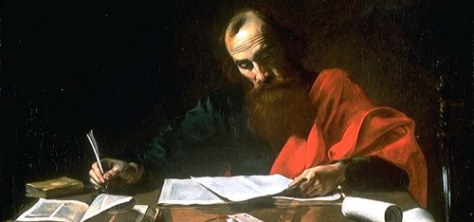
Even if one considered it as another magnificent literary artifact, one among many other great letters from the ancient world, surely the perennial prophetic ring of this would signal that it is different. Why does this letter lead us to ask some overwhelming questions, what is it all about, why was it written and how does it mean something to us today, making millions of people read it again and again?

It is St. Paul writing to the Roman Christians about “the remnant of Israel” whose companions they are. All those who have, down through the ages and in our own age, doggedly tried to remain true to the graces given to them are part of this same remnant.

“I ask, then,” St. Paul wrote, “has God rejected his people? By no means! I myself am an Israelite, a descendant of Abraham, a member of the tribe of Benjamin. God has not rejected his people whom he foreknew.”

He then talks about Elijah and how in his frustration this prophet pleaded with God to punish the faithless Israelites.  Elijah moaned to his God, “Lord, they have killed your prophets, they have demolished your altars, and I alone am left, and they seek my life”. But God was having none of it, telling him, “I have kept for myself seven thousand men who have not bowed the knee to Baal.”

“So too”, Paul then reminds the Romans, “at the present time there is a remnant, chosen by grace,” His words surely resonate with meaning for our own time when he says, “Israel failed to obtain what it sought. The elect obtained it, but the rest were hardened, as it is written,   ‘God gave them a spirit of stupor, eyes that should not see and ears that should not hear, down to this very day.'”

Christians today, faced with the accumulation of pseudo-wisdom in which modernity and post-modernity prides itself, can be reminded and encouraged by these words that come from God’s revelation to mankind. They remind us that this “spirit of stupor” has been mankind’s constant affliction and an ever-present threat to happiness and well-being, earthly as well as eternal. But from both history and in the unfolding of this same revelation we know that this spirit of stupor has never prevailed – no more than the gates of hell have – and never will.

We need this encouragement – and may need it more if the fears of people like New York Times columnist, Ross Douthat, are even partially realized. As readers of this column in Position Papers and the Garvan Hill blog will know, even to the point of trying the patience of some, I pay a good deal of attention to Mr. Douthat and generally find myself in agreement with him.

At the end of last year he delivered the Erasmus Lecture in New York, an event sponsored by the magazine, First Things. The lecture, entitled A Crisis of Conservative Catholicism, was published in the magazine last month.

Now there is no doubt but that there are people who are by their disposition conservative. Although it is a corruption of the true meaning of the word, by this it is generally meant that they have an aversion to change. As such this is an unhelpful term when we are looking at those whom Douthat was addressing in his lecture – essentially Catholics with a strong commitment to the defined teaching of the Catholic Church as it has developed over two millennia. Faithful Catholics are not averse to change as such. They first ask “what is changing?” and then decide their stance, for or against.

Leaving aside the baggage which this term brings with it, the lecture itself has provoked a lively debate among Catholics in America. Douthat himself has now begun to respond to some of those who have taken issue with his analysis of the situation of the Catholic Church in what is now called “the era of Pope Francis”.

Essentially he is saying – regardless of the actual teaching of Pope Francis – that the movement within the Church which in the past identified with what was called the “spirit of the Second Vatican Council”, and which some would say paid little attention to the actual teaching of that Council, has now got a new lease of life.  Not only that, but this movement is now threatening to destabilize the unity and orthodoxy established painstakingly in the Church during the past two pontificates. This for many was well illustrated by all the shenanigans – still going on – surrounding the two recent synods on the family.

Extrapolating from Douthat’s analysis, it is as though the opening of the windows of the Church which was attributed to St. John XXIII is now paralleled by Pope Francis’s commitment to an evangelization of the peripherary. One reading of history says that the post-conciliar moment was seized on by heterodox theologians to pursue an agenda not consistent with the actual teaching of the Council. A reading of the current moment is that the same is happening again in the open atmosphere of Pope Francis’ papacy. Heterodox elements are fighting hard to regain ground lost over the past thirty-five years.

One response to the Douthat’s lecture, in two installments, came from Professor John Martens in the Jesuit magazine, America. Martens is a professor in St. Thomas University in Minnesota. Although he was not among them, this institution was well represented among the signatories to an outrageous and arrogant letter sent to the New York Times questioning the paper’s editorial judgment and the columnist’s right to be commenting at length on Catholic theological issues.

Douthat, in his response to Martens, talks about the fears provoked in him by the implications he draws from the latter’s championing this newly revitalized heterodox movement. Having read what he describes as Professor Martens’ “learned, sincere, respectful response to my columns” he says

“We clearly have some religious common ground, but in other ways the professor and I just seem to occupy very different belief structures, very different places on the continuum of Christianity — and the distance is great enough that our differences can feel less like an intra-Catholic argument and more like a kind of inter-denominational dispute.

“Thus my sudden fears for the church’s unity, in the years of Francis and under papacies to come. Divisions there will always be, but these divisions are simply deeper than I had (fondly? naively?) imagined. And nothing in Catholic history suggests that the church is exempt from Jesus’s warning about a house divided or from the consequences when those divisions can no longer be denied.”

Those words about being on “very different places on the continuum of Christianity” are reminiscent of a passing remark made by Joseph Ratzinger – written while he was still just that – in his little autobiographical volume, Milestones: Memoirs 1927-1977. In it he was reflecting on those early years of the Second Vatican Council and the development of his own ideas, rubbing shoulders with other priest-theologians involved in the Council as advisors. Among these was Fr. Karl Rahner. Rahner was one of those who very definitely went with the flow of the “spirit of Vatican II”, indeed many would say was at the head of the flow. Ratzinger wrote in that book of his gradual realization that he and his colleague, Rahner, were theologically on different planets.

karlrahner104_v-ardfotogalerie

Fr. Karl Rahner

In the era of St. John Paul II and his successor, now no longer Joseph Ratzinger but Pope Benedict XVI, one of those two planets seemed to have receded to an outer orbit of the Church. It would now seem, for better or worse, to be back in play in the history of Catholicism again.

Clearly and emphatically we have not reached the “End of History”, neither for Christianity nor for any other dimension of our lives. With the advance of the nones in the Christian world – those who in surveys about religious affiliation profess themselves as belonging to no denomination, – we may be looking at a coming struggle between two claimants to the title of “remnant of Israel”.

Drawing solace and strength from the words of St. Paul, while we do not know how the true remnant will win the day, we do know that the true remnant will be the victor. That remnant will be found in neither the Conservative camp nor in the Liberal camp – it will just be Christian, conservative and liberal as their Faith prescribes, and it will be One, Holy, Catholic and Apostolic .

Don’t worry, yet…

donald-trump-portrait

For anyone worrying about the world falling into the hands of this man, courtesy of the United States of America’s electorate, the message in today’s New York Times is, don’t – yet.

There is no doubt but that Donald Trump’s run for the Republication nomination as a candidate in November’s election has made it – so far -one of the most bizarre in recent memory. It will also make it at least the subject of an important footnote in polling textbooks in the future.

The Times’s editorial observer helpfully explains, however, why we don’t need to worry about it at this early stage of the race. It has all to do with the vagaries of polling. In real terms Trump’s dramatic showing in the polls is about as good an indicator of what is likely to happen as are the leaves at the bottom of your tea cup.

Read her well sourced analysis here and don’t lose confidence in the reasonably good sense of American Republicans. What we can hope for from the totality of the US electorate in November is a more moot question.

A way forward for a Christian Ireland?

celtic_cross_knock_ireland

There are many in Ireland today – and indeed more beyond her shores – who see a formerly Catholic country where religion is now decidedly on the back foot.

Last year her people, in a popular vote consigned the Christian definition of marriage and the natural definition of conjugality to the rubbish heap. In the previous year the country’s elected parliament compromised the life of unborn children by a law permitting abortion in certain circumstances, rejecting the moral guidance of Ireland’s Catholic hierarchy in the process. The same Government is now in the process of neutering the Christian churches and hobbling them in their traditional roles in the country’s education system. Just last month the left-wing Minister for Education announced that she was going to abolish a rule by which faith schools devote 30 minutes per day to the subject of religion in the school timetable.

Against this wave of secularization there has been some resistance, heroic at times but ultimately, to all appearances, ineffective. The redefinition of marriage in the name of equality – a false concept of equality which without a blush of embarrassment insists on proclaiming things which are different to be the same and demanding that they be treated in the same way – will have far-reaching consequences. In its aftermath many are now anticipating the prosecution of those who beg to differ. Ireland’s justice system is now administered by a government department entitled the Department of Justice and Equality – the self-same flawed concept of equality now enshrined in the country’s constitution.

Ireland now may well be in the throes of a new religious reformation, driven by a secularist State and acquiesced in by a lax and apathetic population.  Ireland’s people might resist this if it were awake but does not do so because in all probability it does not really comprehend what is going on. It acquiesces because it has succumbed to the mantra of “Ireland must move with the times”, not recognizing that what is going on is a subversion of the Christian faith which has characterized the soul of Ireland for more than 1500 years.

Tom Holland, the English scholar and popular historian has asserted that “Liberalism is essentially Christianity-lite, and you can include atheism and secularism in that bracket too—these are basically Christian heresies. The ethics involved are really New Testament ones.” It would seem that Christian Ireland has now fallen victim to this latest wave of religious reformation while still thinking of itself as Christian or Catholic – just about. Those driving this “reformation” will soon be forcibly imposing their doctrines on all, not with the bloody ferocity of the State-led ideologies of former times but not any less draconian for all that.

Those Christians in Ireland who wish to hold on to the “Faith of Our Fathers” but who are now being marginalized by the Irish State must be asking themselves what hope is there of a new “counter reformation” as their ancestors did in the 16th century?

But perhaps Ireland’s Christian people and their leaders could do worse than look across the Celtic Sea for inspiration. There they might find a model for a revival of the faith in their land, the only antidote to the poisonous ideology now seeping into its political life and culture.

In France, the First Daughter of the Catholic Church, there is now talk of a Catholic Revolution. In Paris, on October 30 last, the iconic Le Figaro ran the headline “La révolution silencieuse des catholiques de France.” The article described how what the paper called France’s néocatholiques are now forming a new generation of leaders in the nation’s political, cultural, and economic debates.

America’s Catholic World Report noted, in commenting on the Le Figaro story:

Significantly, the new Catholics’ idea of dialogue isn’t about listening to secular intellectuals and responding by nodding sagely and not saying anything that might offend others. Instead, younger observant Catholics have moved beyond—way, way beyond—what was called the “Catholicism of openness” that dominated post-Vatican II French Catholic life. While the néocatholiques are happy to listen, they also want to debate and even critique reigning secular orthodoxies. For them, discussion isn’t a one-way street. This is a generation of French Catholics who are, as Le Figaro put it, “afraid of nothing.”

(These peple)  are… skilled at bringing the insights of Catholic orthodoxy to bear in fresh and powerful ways. Certainly, la bien-pensance (political correctness) continues to suffocate French cultural life. That culture also remains dominated by a left that tends to label its critics as “un reactionaire” or anything to which the word “phobic” can serve as a suffix. The point, however, is that Catholics in the public eye are increasingly unintimidated by this. That’s a mindset which French secular thinkers are simply unused to encountering.

All this will be uncomfortably familiar to the Irish who tried to resist the tsunami of media and political orthodoxy which persuaded – if that’s not too neutral a term – 62% of the Irish electorate into accepting gay “marriage” last May. Not since the aftermath of Ireland’s Civil War in the first half of the 20th century did such acrimony result from a political campaign as did in this case. But if the brave French can resist and overcome the intimidation which their laicist ideology has generated perhaps the Irish can do the same.

What is happening in France? Catholic World Report traces this development over the past 50 years, noting how remarkable the change has been in French Catholicism since the Second Vatican Council.

In the years immediately following the Council, it says, there was a turn to the left among some French Catholics, especially clergy. This resulted, for instance, in an emphasis upon Catholic-Marxist dialogue and weakened resistance to changes in France’s abortion laws. Such trends were matched by some of the worst progressivist experimentation within the universal Church, whether in terms of liturgy, pastoral practice, or how one approached the modern world. Many men left the active priesthood, while others, including the Jesuit editor of the prominent journal Études, exited the Church altogether.

By the late 1970s in France, things had degenerated to the point whereby the well-known Jesuit philosopher Gaston Fessard, openly criticized the social statements issued by the French episcopate in that decade, effectively accusing it of being an unwitting fellow-traveller with the French left and endorsing its ideological program and wider tendencies to distort the faith into socialist, even Marxist ideology.

Nothing quite as bad as this happened in Ireland. Or perhaps it did. Ireland did not fall victim to Marxist ideology but it did fall to a consumerist hedonism. It largely turned a blind eye to the Catholic Church’s moral teaching on sexuality and many its clergy were no exception. The sexual scandals, deviant and abusive or not, rocked the population’s trust in the clergy and filled the ammunition dumps of the anti-Catholic politicians and the media for decades of warfare against the Church. The Catholic World Report article speaks of “low-energy Catholicism” in France of 70s. By the year 2000 Ireland’s Catholicism could not be described as anything else. But, CWR asserts, with reference to France:

It was into this atmosphere of “low-energy Catholicism” that a man whose nickname was ‘le bulldozer’ was appointed first bishop of Orléans and then archbishop of Paris in 1981. Called by one biographer ‘le cardinal prophète’, the late Jean-Marie Lustiger was anything but typical. The son of two secular Jews—one of whom was murdered in Auschwitz—Lustiger converted to Catholicism as a teenager during World War II and entered the seminary after the war. As chaplain at the Sorbonne’s Centre Richelieu and then parish priest at a suburban Paris church, Lustiger led particularly dynamic ministries that attracted the attention of people in the bishop-making business. These included Saint John Paul II. He would have noted Lustiger’s ancestral roots in Polish Judaism. More generally, John Paul was looking for men who could shift French Catholicism out of the accomodationist rut into which he believed it had fallen—a point the Pope made clear during his first visit to France in 1980 when he pointedly asked: “France, Fille aînée de l’Eglise, es-tu fidèle aux promesses de ton baptême?” (France, eldest daughter of the Church, are you faithful to the promises of your baptism?).

Upon becoming archbishop, Lustiger didn’t stop upending things in Paris. Whether it was opening his own seminary and new schools, starting Catholic radio and television stations, or creating venues and opportunities for himself and other Catholics to engage and argue with secular thinkers, Cardinal Lustiger presented a different way for Catholics to interact with French society. A critic of progressivism and Lefebvrism (which he saw as two sides of the same problem), Lustiger’s agenda was that of John Paul II and Benedict XVI: one that recognized there was no going-back to a pre-Vatican II, non-existent golden age, but that was also clear-eyed about just how dysfunctional much of modernity was turning out to be.

Perhaps most importantly, Lustiger attracted many vocations. Often called La génération Lustiger, many of these priests have assumed leadership in significant dioceses and subsequently adopted a distinctly Lustigerian-style. This breaks decisively with the diffident, ever-so-anxious-not-to-give-offense mentality that once prevailed among the French episcopate, which gave the impression of having read too much Karl Rahner in the 1970s and not much else since.

And now, it seems, the post-Lustiger bishops are shaking up French Catholicism. While not aggressive, they still refuse to be overawed by secular France. They are described as free of the disease of clericalism and they happily empower lay people to spread the Gospel. They are primarily interested in one thing: the Church’s central business: i.e., evangelizing and finding creative ways of doing so. It’s a model replicated by many young French priests. Not surprisingly, their parishes and ministries are the ones attracting people, converts, and vocations. Are there not signs that something similar may be beginning to happen in Ireland? In Ireland there may be hope that it might happen more quickly than in France where 200 years of secularist heresy – to borrow Tom Holland’s thinking – has been corroding the deposit of its Christian faith. Ireland’s secularism is probably only skin deep and the infra-structure of the Church has only begun to be attacked by the State. The vast majority of Ireland’s people are baptized Christians.

Put this into perspective relative to France, where only about 56 percent of the total population has been baptized Catholic and where weekly Mass-going Catholics are about 6 percent of the overall population. Ireland’s Catholic practice, while declining sharply among the young and while also harbouring a good number of practitioners of what the French call “catholicisme zombie”, is still considerably stronger than that. The most recent reliable survey shows that 42.1% of Catholics in the Republic of Ireland attend Mass once per week.

Le Figaro maintains that the momentum in French Catholicism is with the néocatholiques. Liberal and lax Catholicism has faded into lapsed status and has failed as any kind of serious religion. The same process is at work in Ireland. As Cardinal Robert Sarah has said in a recent book, it is really a matter of “God or nothing”. Now, in France, the God option is increasingly subscribed to. If you attend Sunday Mass in Paris, for example, Le Figaro says, it’s hard not to notice the growth in numbers attending middle-class and working-class parishes, but also, as one French commentator, Pascal-Emmanuel Gobry points out, you notice just how many Mass-goers are married couples with young children.

It is again noted by Catholic World Report that in recent years there has been much talk about the Church as a field-hospital. It’s true that the French Church finds itself providing much help to the many people damaged by the culture of cynicism, economic statism, self-loathing, and hedonism bequeathed by France’s May 1968 generation.

The generation of Irish politicians now quietly exiting the Irish public square into retirement are from the exact same era. It is they who, by and large, have left Ireland’s social policies in the secularist mess in which they now rest – bequeathing to future generations the crowded Accident and Emergency department of social problems which policies encouraging divorce, single parenthood, ambiguous marriage laws etc, always bequeath. That this happened on the watch of some of them was the result of their apathy. For an influential minority it was deliberate. As they do so they clap themselves on the back and consider that they have achieved their goal of modernizing their backward country.

But it is not over yet.

The new Catholics in France, it seems, are now entering an era in which they recognize that no-one is supposed to remain perpetually in a field-hospital. They are saying good-bye to mediocre Catholicism and seem to have chosen, according to the view of Catholic World Report, to live out what Benedict XVI suggested would be Western European Catholics’ role for the foreseeable future: a creative minority—one that imaginatively engages culture from an orthodox Catholic standpoint in order to draw society closer to the truth, instead of meekly relegating Catholics to the role of bit-players in various secular-progressive agendas.

There are signs of a leadership emerging among Irish Catholics with a similar vision, some who really are determined that the country will not descend into that graveyard of the Faith, Christianity-lite. These are those who believe and take to heart the words of St. Paul in his letter to the beleaguered Romans of his day:

No, in all these things we are more than conquerors through him who loved us. For I am sure that neither death, nor life, nor angels, nor principalities, nor things present, nor things to come, nor powers, nor height, nor depth, nor anything else in all creation, will be able to separate us from the love of God in Christ Jesus our Lord.

 

Crisis? What crisis?

In the English-speaking world, over the past half-century, the proportion of students studying humanities at university has hardly changed. True, as one might expect, in the US, the United Kingdom and Australia, there have been fluctuations and important changes in educational demographics, most importantly more women going to college. The crude picture is this: in 1971, humanities students outnumbered business students; now it’s the other way around. But in 1971 there were also about 50 per cent more business majors than science majors; now there are about 250 per cent more.
So relative to business, both the sciences and the humanities have fallen behind since 1971, and the sciences much further. Since the 1980s, however, the gap between the humanities and business has, in fact, shrunk, while the gap between the sciences and business continued to grow. And, very importantly, the rapid expansion of higher education in the world over the past couple of generations means that, in absolute numbers, more people are studying the humanities than ever before.

The question is why humanists have not been able or willing to recognise their own sustained success.

Read more http://pocket.co/soc52u?cta=1.

Opening a treasure chest or dumbing down?

fantasia_a_l

Before video tape recorders came along it was the masterpiece that was very hard to see. But was it a masterpiece or just a dumbing down of great music on the back of Disney animation?

In a short online piece today courtesy of the New York Times we are reminded that Walt Disney’s Fantasia is 75 years old this month.

The movie, the Times tells us was Walt Disney’s most artistically ambitious feature. It was “dreamed up to bring highbrow masterpieces to everyone.” It didn’t succeed, at first. It cost the equivalent of $39 million and it was only after repeated releases over decades that it finally recouped its costs.

Like all approaches to classical music which concentrate on the “good bits” of the masterpieces of the repertoire, it is ultimately disappointing – little better than what Old Spice did for Carmina Burana or what Hamlet cigars did for Bach’s Orchestral Suite No. 3 in D major. On wonders how many people hearing any of these actually ever found their way to the originals in all their glory?

Fantasia features unrelated segments set to music performed by the Philadelphia Orchestra.
“Sorcerer’s Apprentice,” accompanying an 1897 composition by Paul Dukas, features Mickey Mouse as a wannabe magician.
Animation for “The Rite of Spring,” composed by Igor Stravinsky, tells the story of evolution.
And “Dance of the Hours,” from the opera “La Gioconda,” becomes a comic ballet performed by animals.

When the film finally arrived in video tape format it was an immediate bestseller among school teachers who saw it as a way of awakening an interest in great music in their pupils. There is not much evidence that it helped in any way to stem the tide of inane pop which was already swamping musical taste across the globe. Reaching the higher reaches of any great mountain requires effort and stamina. The same applies to the great works of literature, drama and music. Funny pictures and soft options are not enough. Pretending that they are is in fact selling out on the things of real value in our culture, those things which will really enrich our lives and cultivate our sensibilities at the deepest level.

Is there a bigger story behind this?

What “an open, honest and under-oath detailed description of what goes on during state-of-the-art legal abortion” revealed in the Kermit Gosnell trial in Pensylvania, but which no Irish news outlet has ever printed or broadcast, is openly spelled out in the pages of the pro-abortion Irish Times today.

That story, in the Irish context, may be even more significant than the abortion story itself. Has the editor of the Irish Times cracked the stranglehold which his pro-abortion staff have held the paper in for more than a decade? Might we now get other media to follow suit and give the Irish people the honest discussion on this issue which they have been denied to date?

The article comes from two journalists, a husband and wife film-making team based in Los Angeles. They are  Phelim McAleer and Ann McElhinney and write of their experiences watching the trial of Gosnell. This was a trial ignored by Irish media – and a good deal of international media as well – because it did not flow with the politically correct current which sweeps our media along its biased way.

In their article they tell us that it was not primarily the crimes of Gosnell which shocked anyone who spent time at the trial. It was the evidence from legitimate abortion providers describing to the court what their daily practices involved.

It was the industrial scale of the abortion industry that shocked the jury and spectators who gasped (the only time during a horrific trial) when Dr Charles Benjamin matter of factly stated he had performed over 40,000 abortions. They write:

We were always fairly disinterested in abortion. And by “disinterested” we mean we never thought much about it but, when we did, believed it was an unfortunate but probably necessary part of modern life.

And as such we would have agreed with those who have called in The Irish Times and elsewhere for more honesty and openness about abortion in the belief it would lead to a more liberal abortion regime in Ireland.

However, our recent experience would suggest that campaigners might want to rethink this strategy if they want Irish people to support a campaign to repeal the eighth amendment. .

We are making a movie and writing a book about Dr Kermit Gosnell – described by ABC News as “America’s biggest serial killer”. Gosnell was a Pennsylvania abortion doctor who performed illegal abortions past the state’s 24-week limit. His abortion “technique” was to have the babies born alive and then to stab them to death with scissors.

His case led many people, investigators, lawyers and jury members to hear for the first time the reality of abortion, illegal and legal, and how it affected them might surprise those calling for more honesty surrounding the procedure.

A pro-choice prosecutor told us how she and her female co-worker were amazed that the legal limit in Pennsylvania was 24 weeks: “That’s six months” she remembers blurting out as they read the statue for the first time. Then they discovered that PA wasn’t an outlier.

In several US states you can have, and people do have, abortions up to the day of delivery.

But the evidence that shocked the most was the evidence that was supposed to reassure the most.

To highlight Gosnell’s illegality, prosecutors decided the jury should hear from “good abortionists”.

In other words just what those campaigning to repeal the eighth amendment to the constitution are demanding – an open, honest and under-oath detailed description of what goes on during state-of-the-art legal abortion.

It was the industrial scale of the abortion industry that shocked the jury first. They gasped (the only time during a horrific trial) when Dr Charles Benjamin matter of factly stated he had performed over 40,000 abortions.

An arm or a leg

Dr Karen Feisullin was also called to describe what a legal abortion looked like. The jury and many in the courtroom shifted uncomfortably as they heard about “tools going up into the uterus and basically pulling parts out . . . an arm or a leg or some portion of that”.

And those were the easy, early abortions. For later procedures, Dr Feisullin explained the foetus was so well-formed that it couldn’t be ripped apart in the uterus. It was normally removed – through the birth canal – completely intact. But, as Feisullin explained, a baby born at 23 weeks has a 40-50 per cent chance of surviving. To avoid a live baby coming out during an abortion, the doctor demonstrated how, before the abortion, a poison – potassium chloride – was injected through the woman’s stomach directly into the baby’s heart. This would stop the heartbeat, allowing the foetus to be pulled out intact.

Dr Feisullin was asked what would happen if she missed the heart and the baby was born alive.

She explained that the live baby would be covered with a blanket and given “comfort care”.

You could see the genuine puzzlement of people in the court about what “comfort care” was until Dr Feisullin cleared up any confusion.

“You . . . really just keep it warm, you know. It will eventually pass,” she said.

Steve Volk, a Philadelphia-based journalist for an alternative newspaper who described himself as comfortably pro-choice before the trail, said that, as Dr Feisullin spoke, his fellow reporters all checked if they had heard correctly.

Dehydration and neglect

Was it really standard medical practice to let a baby die of dehydration and neglect if an error was made during an abortion? It was and they were shocked.

Local journalist JD Mullane, who interviewed many of the key players, confirmed our research that the trial changed many minds and shook assumptions.

“Almost everyone . . . who spent significant time at the Gosnell trial was less pro-choice at the end. This change was probably because they were for the first time hearing about the reality of abortion from experts under oath . . .

“They had to tell the truth and they had to tell it in detail,” he said.

Out of the shadows

Those seeking to remove the constitution ban on abortion believe the best way to do it is to bring it out of the shadows in the hope that when people hear the details, they will support the liberalisation of abortion in Ireland.

Two years ago, we might have agreed with them.

But our experience of the Gosnell case is that anyone who has learned more about the reality of abortion – the pullings apart of the foetus, the injecting of poison into the heart, the “comfort care” – has come away with only negative feelings about the procedure.

It may be a case of be careful what you wish for.

Quick reversal

The Week (Europe) reports a bad week for “official figures”, after the body responsible for university funding in England had to admit to an embarrassing blunder: this summer, the HEFCE claimed that 82% of students from state schools achieved a first or upper second class degree, compared to only 73% of those from independent schools. But it has now been forced to admit that it got the figures the wrong way around.

Reflections on Ireland’s Long Revolution Part 3

Regime Change or Revolution?

Be wary of commemoration. Be careful about what you celebrate. Not only may they be perniciously divisive but they may also grossly distort the truth which should first and foremost be the guide to authentic freedom and the ground on which we build our lives and our communities. When we commemorate what we call the Irish Revolution we should know that it was not really a revolution – certainly not at the time. It was a rebellion against the authority of the state and a rejection of its legitimacy. Those who rebelled were undeniably revolutionary in their intent – although their revolutionary agendas were not uniform.

While Ireland’s 1916 rebellion ultimately achieved regime change, for most of the century nothing else of a very radical nature happened. Ireland remained much the same culturally. The flowering of Irish literature, drama and the burning commitment to a Gaelic Ireland which had flourished in the two decades prior to the rebellion were in fact never matched again in the century which followed. In fact the new regime ultimately alienated many from the ideal of a Gaelic Ireland by seeking a compulsory imposition of Ireland’s native language on the people. Ireland is much less Gaelic at the beginning of the 21st century than she was at the beginning of the 20th. That is tragic. She is quintessentially Irish, no less now than she was then, although that Irishness is now heavily influenced and characterised by Anglo-American culture. Meanwhile, her Gaelic soul is on life-support.

Politically, Ireland continued to be ruled and administered through the time honoured institutions it had inherited from the old regime. That was no bad thing. They are the institutions, the machinery of state, that are envy of most of the world. In terms of political life, for many decades Ireland stagnated in the strait-jacket of the enmities generated in its post-rebellion Civil War. Only now, in the 21st century, does there seem to be any hope of escape from that. Escape to what? That remains a moot question.

For most of the 20th century the new Irish State sought to assert her sovereignty in the world and for a number of the early decades sought somewhat ineptly to do so economically. That came to an end with another Act of Union, union with the evolving entity which is now the European Union. Clearly there were differences between the terms and conditions which applied under this Act and the Act of 1801. Just as the terms and conditions of that first Act had evolved into a more benign character by 1900, so also the terms and conditions of our union with Europe are of a new order as well. By 1916 Home Rule for Ireland had been put on the statute books.

The modern British state has evolved by Burkean principles for more than two centuries. Its mode of change was and remains evolutionary and constitutional. This was not good enough for the Irish.  The Irish insurgents took the law into their own hands in a way which would be an anathema to that greatest of Irishmen, Edmund Burke.  The foolish violence which ensued, after the inept leader of the militants tried to call off the planned insurrection, begot more  and equally terrible counter-violence, including the foolish execution of the Insurrection’s leaders. Ireland has had to live with the consequences of that ever since.

One way or the other – and probably it had nothing to do with the act of rebellion in 19 16 – Ireland is now a society much closer to the mores and ideals of Rosamund Jacob, P.S. O’Hegarty and the Sheehy-Skeffingtons of that time. If it was a revolution, it really was a long revolution. What cannot be denied is that in what is now about to be celebrated there is much of the tragic – not least the loss of almost 6000 lives between its inception and its celebration 100 years later.

But human history will never be devoid of tragedy. How could it be otherwise if what Christian theology and divine revelation tell us is true? We are a fallen nature and on the level of nature much of what we touch does not turn to gold. This may be denied by the Jacobs and the O’Hegartys of the New Ireland – of whom there are now many more among us. That does not make it any less true.

Commemorate? Yes, perhaps. There was nobility and heroism in the lives of many of those who sought to carve a different identity for their country than the one they found it had in their time. Celebrate their actions and all their consequences? That path seems more problematic. Commemoration allows for a level of questioning of the wisdom of those we commemorate? Celebration seems not to do so.

Concluded