The evil that men do…

mao_zedong_quote

The evil that men do lives after them; the good is oft interred with their bones. But in too many cases there is not even a modicum of good to accompany those bones. So, it seems, it was with Mao Zedong, the “father” of modern China.

Just last week we were again reminded of the evil influence of this man and how that evil still lives among us when, heroically, Katy Morgan-Davies, enslaved since birth in Britain by her Maoist-inspired cult leader father, said she forgave him after a judge condemned him to die in jail for his decades of abuse in which he had robbed her of “family, childhood, friends and love”.

Aravindan Balakrishnan was found guilty of horrific assaults against two female followers and false imprisonment and child cruelty against his daughter.

At Southwark Crown Court, Judge Deborah Taylor said: “You were ruthless in your exploitation of them. You engendered a climate of fear, jealousy and competition for your approval. The judge said Balakrishnan had treated his daughter like “a project”.

A project? Therein lies the pernicious influence of Mao Zedong, the man whose dedication to a utopian project was pursued at the cost of the lives of more than 45 million of his countrymen.

Yet this man, of whose ideology Balakrishnan is a micro representation, inspired some of Western Europe’s most famous intellectuals for some of the seminal decades of the last century, the 1960s and 1970s. In fact recent studies reveal that in its essence Mao’s legacy was as brutal and his personal life was as vicious as that of the man who was last week condemned to spend the rest of his life behind bars.

Mao was not only the man who set China on her ruthless totalitarian path. He was also the man whose ideology has inspired his successors to continue to pursue social and population control policies which seem set to plunge China into a demographic catastrophe. Furthermore, in his personal life he was a voracious and utterly abusive predator of the women in his life – and there were multitudes of them. He would put Caligula to shame.

A review in the Times Literary Supplement of a recent biography of a Belgian writer who died in 2014 reminds us that:

 In the 1960s and 70s, a nation that saw itself as the most sophisticated on earth fell under the spell of the greatest mass murderer in history. Mao Zedong had admirers in many places, but only in France did his appeal stretch beyond small bands of revolutionaries. The cream of the progressive intelligentsia – from Jean-Paul Sartre to Michel Foucault, Roland Barthes and Jean-Luc Godard – as well as pillars of the conservative establishment enthused about him. André Malraux was Mao’s most fulsome eulogist. Alain Peyrefitte, another Gaullist grandee, published a bestseller in 1973 arguing that under Mao’s stewardship China was destined for greatness. President Valéry Giscard d’Estaing called Mao a “beacon” for humanity.

Pierre Boncenne, the author of the biography of this Belgian, Simon Leys, tells us that he should be remembered as one of the earliest voices to be raised against the adulation of this tyrant. He tells us of the moment when Leys was first alerted to the atrocities perpetrated by Mao. He was pursuing his day job, the study of Chinese art and literature in Hong Kong when a car bomb exploded outside his apartment and killed a famous critic of Mao. This was 1967 and this was just one atrocity of the many that made up Mao’s Cultural Revolution.

Within a year of that explosion students were on the streets in Paris, London, Dublin and other cities around the world, accompanied by some of the aforementioned intellectuals, acclaiming Mao Zedong as a hero for our times. It was too much for Leys. He wanted to put the record straight and began the first of the three books he published between 1971 and 1976 – Chairman Mao’s New Clothes. Then he followed with, Chinese Shadows and Broken Images. In these books he told the story of the atrocities of the Cultural Revolution as he saw them unfold, exposing the naivety of Mao’s Western acolytes.

Boncennes’ biography, Le Parapluie de Simon Leys , tells us that while some acclaimed the books, they made little impact on the Western cult of Mao. The TLS review summarises the moment when the penny finally dropped:

Their public shaming did not come until Leys’s first television appearance in May 1983. Other guests on France’s prestigious cultural show Apostrophes that evening included Maria-Antonietta Macciocchi, who was promoting her unrepentant autobiography of a Mao fan. Leys took the opportunity to tell the Red Guards of the Left Bank to their faces what he had been thinking of them for so long. “I think idiots utter idiocies just as plum trees produce plums – it’s a normal, natural process. The problem is that some readers take them seriously”, he said. “The most charitable thing you can say about [Macciocchi’s book] On China is that it is utterly stupid; because if you did not accuse her of being stupid, you would have to say she’s a fraud.”

Sales of Macciocchi’s book plummeted after the show – which ironically she appeared on to promote.

The reviewer tells us that Leys’ writing on the subject still repays reading because of his power to tell simple truths. Forty years on, researchers have shed light on key episodes and updated the death toll – as high as 45 million for the Great Leap Forward of 1958–61 alone – but few, he says, have painted the overall picture with such limpidity and depth. “Leys brings not just factual but moral clarity to the story of Maoism. His notes on a hellish utopia and the fascination it can exert make him a significant figure of anti-totalitarian literature.”

True religion, G. K. Chesterton wrote, was a way of stopping the mind from spinning out of control and of anchoring it in reality. This appealed to Leys, who was a devotee of G.K. and also a devout Catholic. In his view the political monstrosities of the twentieth century were rooted in a failure to acknowledge reality and this was particularly true of Maoism, which stated the absolute supremacy of the leader’s will: if you followed Mao’s teachings, – and remember how many students in the 60s and 70s were intrigued by his “Little Red Book” – anything was possible. Imagine and design your project and pursue it to the death, the deaths of millions if necessary. For Leys the sophisticates of the West who refused to pay attention to real events, lost in their abstract thoughts, idiotically surrendered themselves to one of the greatest evils the world has ever seen.
On worthy rants

9781740512787

Garvan Hill has in the recent past been accused of going on a rant about something – I can’t remember exactly what it was but you may well find more than one rant in past posts.

The TLS (Times Literary Supplement) in a review back in 2004 took up the theme of rants in the context of a book which the reviewer described as an example of the genre.

Literature has a blood sport, he wrote, it is the rant. The genre is simple enough: take a well-worn topic, define it vaguely, and stuff it full of straw. And then let fly. Like some Garvan Hill rants, it seemed a worthy one.

The rant in question is a book called Death Sentence. This had nothing to do with capital punishment but it had to do with another kind of punishment – the punishment inflicted by the kind of thing which now passes for “the language of public life: the language of political and business leaders and civil servants”.

This has decayed so much, Don Watson (the book’s author) believes, that “rarely in history have sensible human beings found it so hard to say simple things”. Instead of telling their customers that they can now use electronic transactions, banks inform us: “As part of the electronic delivery strategy the vision (is) to enable customers to transact low face value commoditised financial markets instruments electronically and seamlessly”.

Now if that is not a sentence murdering a simple idea, what is?

Watson ‘s villain is the corporate world. This monster is among us and is spreading a debased managerial language around the globe. It began in the business world, he believes, but is now bludgeoning its way into public organizations which are swallowing this half-baked language whole. Welfare agencies, for example, are now trying to keep up to date by writing about “outcomes” for their customers. Museums are “preferred providers of educational experience”, hospitals develop “best-practice scenarios”, and even universities – which should be among the foremest guardians of the mission of language to help us make sense of our lives – are proclaiming that they “enhance capability gaps to empower continuous….blah, blah, blah”. That was 2004. Nothing much has improved in 2016.

The TLS review is here and the book is Death Sentence: The Decay of Public Language by Don Watson

“A political hit job – or what is this?”

Of course, since what follows comes to us via Fox News, a segment of Garvan Hill readers may say, “They would say that, wouldn’t they?” Does that mean it shouldn’t be listened to? No. A true liberal will rejoice in the very existence of Fox News – even though they may disagree with everything they hear and see on it. What a dire totalitarian media world America would have without it. If you want to know what it is like to live in that kind of world, come to Ireland.

Courtesy of the pro-life website LifeSite News’ feature, The Pulse, we have this report:

January 28, 2016 (NewsBusters) — Reacting to the news that the filmmakers related to the Center for Medical Progress (CMP) would be indicted on criminal charges in the Planned Parenthood baby parts scandal, Monday’s Kelly File concluded with host Megyn Kelly and senior judicial analyst Judge Andrew Napolitano excoriating the liberal Harris County, TX prosecutor for enacting “a political hit job” on the pro-life figures that exposed the massive scandal.

megyn_kelly_810_500_55_s_c1
Megyn Kelly

Kelly began with a summary of what transpired late Monday and Napolitano first commented that what people should take away from the development was simply “that a political prosecutor has injected herself in a very serious issue about whether or not Planned Parenthood was profiting from the abortion of babies by selling body parts.”

After explaining how the investigation was originally called for by pro-life Republican Lieutenant Governor Dan Patrick, the Harris County prosecutor was supposed “to investigate whether or not these tapes were real” and “[w]as Planned Parenthood really offering to sell body parts and did they, in fact, reference parts they sold the body parts?”

While he maintained that those who watch any of the CMP videos are free to make their own conclusions: 

I submit that if you watch them, you will conclude that they did sell parts and were willing to sell them in the future. So the prosecutor investigates this and she decides to present a case to a grand jury. We haven’t see the grand jury transcript yet but we will. Not charging Planned Parenthood with selling body parts but charging the journalists who were testing Planned Parenthood with participating in an actual conspiracy to sell body parts. 

The FNC analyst added that the indictment made little sense to him since the charges brought are “crimes of intent” and “[y]ou have to intend to commit this crime.”

Kelly wondered if it “sound[ed] like a political hit job” and Napolitano shot back: 

Absolutely this is a political hit job. You used to practice law. I used to be on the bench. We both know a skilled prosecutor can get a grand jury to indict anything. The favorite phrase is you can get a grand jury to indict a ham sandwich if you want. There’s no judge. There’s nobody there on the other side. We won’t know what this prosecutor told the grand jury unless and until there’s an actual criminal trial. 

The transcript of the segment from FNC’s The Kelly File on January 25 can be found below.

FNC’s The Kelly File
January 25, 2016
9:53 p.m. Eastern

MEYGN KELLY: Developing tonight, a Texas grand jury bringing criminal charges recommending them against the filmmaker who shot a series of hidden camera videos targeting Planned Parenthood. David Daleiden — that’s a name I can never pronounce that — the founder of the Ceeter for Medical Progress was indicted on charges of tampering with a government record and purchase and sale of human organs, he was the undercover guy making the videos. Another colleague of his was also charged, Planned Parenthood was not charged. Joining me now, Fox News senior judicial analyst, Judge Andrew Napolitano. Judge, what does this mean? 

JUDGE ANDREW NAPOLITANO: This means that a political prosecutor has injected herself in very serious issue about whether or not Planned Parenthood was profiting from the abortion of babies by selling body parts. Here’s the back story. The lieutenant governor, the new lieutenant governor of Texas, Dan Patrick is a very, very serious pro-life advocate, was before he was lieutenant governor, is now. He asked this prosecutor to investigate whether or not these tapes were real. Was Planned Parenthood really offering to sell body parts and did they, in fact, reference parts they sold the body parts?

KELLY: Which they deny. 

NAPOLITANO: Which they deny and anybody that watches the tapes can come to their own conclusion. I submit that if you watch them, you will conclude that they did sell parts and were willing to sell them in the future. So the prosecutor investigates this and she decides to present a case to a grand jury. We haven’t see the grand jury transcript yet but we will. Not charging Planned Parenthood with selling body parts but charging the journalists who were testing Planned Parenthood with participating in an actual conspiracy to sell body parts. 

KELLY: Meanwhile, they didn’t actually want to buy any body parts at all. It was a sting.

NAPOLITANO: No, of course not and these are what we call crimes of intent. You have to intend to commit this crime. You can’t just utter the words, so if a journalist says to Planned Parenthood, are interested in selling body parts? That journalist now has to worry about being indicted for suggesting a crime. 

KELLY: So, does this sound like a political hit job or what is this. 

NAPOLITANO: Absolutely this is a political hit job. You used to practice law. I used to be on the bench. We both know a skilled prosecutor can get a grand jury to indict anything. The favorite phrase is you can get a grand jury to indict a ham sandwich if you want. There’s no judge. There’s nobody there on the other side. We won’t know what this prosecutor told the grand jury unless and until there’s an actual criminal trial. 

KELLY: This is fascinating. Looking forward to getting a look at this complaint. Judge, great to see you.

Reprinted with permission from News Busters.


Small pharma takes on the state

banner

Can a state force pharmacists to prescribe abortion-inducing drugs at the expense of their religious beliefs? This is the central issue in a case the US Supreme Court may agree to hear in its next term.

In 2007, the State of Washington passed a law requiring all pharmacies to deliver “all lawfully prescribed drugs or devices” in a timely manner to all customers. This “Delivery Rule” contains several exemptions such as business or convenience reasons for not stocking certain drugs, but there is no exemption for religious objections.

A small family-run grocery store and pharmacy in the state was investigated by the  Pharmacy Quality Assurance Commission for refusing to stock any form of abortifacient, such as Plan B. The Stormans family, which owns the store, cites religious beliefs as its justification for refusing to stock abortifacient drugs. The Stormans believe that by dispensing these drugs, they would be aiding in the destruction of human life, directly contradicting their Christian faith.

Although the Stormans’ store does not carry Plan B, if a customer requests it, employees provide a list of local pharmacies and drug stores that carry the drug, even going so far as to call other pharmacies to confirm that the drug is in stock.

Abortion activists were not happy with this and began sending test shoppers to the store. They then filed complaints with the Pharmacy Quality Assurance Commission after they received a referral rather than a filled prescription. This led to an investigation, and the store was threatened with losing its pharmacy license.

How long will it be before the newly emboldened and militant pro-abortion activists in Ireland begin targeting Irish pharmacists to deprive them of their right to exercise their religious beliefs? Probably not until they see the outcome from their battle to deny the unborn their right to life enshrined in the Republic’s constitution and in a more limited way in the statute law of Northern Ireland.

In the US case, the Stormans defended their rights by filing suit against the State of Washington, arguing that the Delivery Rule violates the First Amendment’s Free Exercise Clause, among other claims. The federal district court vindicated their right and ruled in favour of the Stormans. However, the pro-abortion activists wanted their pound of flesh and pushed for an appeal. On appeal, a three-judge court panel reversed the district court decision. Now the Stormans have petitioned the Supreme Court to review their case, which the Court should consider sometime in March.

More detail on this story here.

On a lighter note…

v0_master
Horace Walpole

Courtesy of the New York Times daily ‘Briefing’, Garvan Hill would like to share this serendipitously discovered piece of cultural information.

It’s easy to create new words by adding the suffix “-gate” or “-iness” to it. (See Stephen Colbert’s truthiness.)
What Horace Walpole, a British member of Parliament, did in a letter written on this day in 1754 was a bit more creative.
He wrote to a friend of a word he conceived to describe what happened to three princes he read about in a fairy tale. The brothers were constantly discovering things by accident.
The fairy tale’s name? “The Three Princes of Serendip.” The word he came up with, of course, was serendipity.
“Three Princes” was a Persian tale and “Serendip” was an old name for Sri Lanka, the island nation off India’s coast that served as the royals’ home.
In Walpole’s letter, he described as an aha moment while browsing a book: “This discovery, indeed, is almost of that kind which I call Serendipity, a very expressive word.”
Slinkys and chocolate chip cookies — both of which we’ve written about in recent Back Stories — are just two inventions that were discovered serendipitously.

“Game on” in Texas

Here is a footnote to the ‘win-win’ potential mentioned in the post yesterday on the indictment of David Daleiden in Texas. Time magazine notes:

Prosecutors could still opt not to try Daleiden, or seek a plea bargain with attorneys. But in a way, a splashy trial would generate precisely the sort of publicity that Daleiden has sought to draw to a once-arcane issue.

“Whether or not the case goes to trial depends on how much of a martyr he wants to be,” said Schaffer. As for Daleiden, he seemed to signal his appetite for a fight in an email to TIME after Planned Parenthood filed its suit earlier this month.

“Game on,” he wrote.

Winners and losers in American justice system

interview-david-daleiden-r
Indicted: David R. Daleiden

A grand jury in Houston, Texas, that was investigating accusations against Planned Parenthood related to the sale of human organs and body parts of aborted babies has instead indicted two abortion opponents who made undercover videos of the organization.

All this sounds ominously reminiscent of the legal system which America and the world have been watching in operation over he past two months in Netflix’s Making a Murderer. As nearly everyone in the world now knows, Steven Avery spent 18 years in jail fro a crime he did not commit. Then, when he tried to get compensation for this miscarriage of justice from those responsible he found himself charged and convicted for murder by the same agencies which put him away in the first case.

The haunting thought at the back of the mind of anyone with a sense of justice and respect for due process who watched that series was “If it happened in Wisconsin, why would we think that it might not happen elsewhere.”

Well, maybe here it is again. David R. Daleiden will need a very good lawyer the escape the clutches of this system about which Bob Dylan sang over 40 years ago in outrage about what he saw as the fitted-out conviction of the boxer, Rubin ‘Hurricane’ Carter.

Couldn’t help but make me feel ashamed to live in a land
Where justice is a game.

The New York Times reports on the indictment today:

Prosecutors in Harris County said one of the leaders of the Center for Medical Progress — an anti-abortion group that made secretly recorded videos purporting to show Planned Parenthood officials trying to illegally profit from the sale of fetal tissue — had been indicted on a charge of tampering with a governmental record, a felony, and on a misdemeanor charge related to purchasing human organs.

That leader, David R. Daleiden, 27, the director of the center, had posed as a biotechnology representative to infiltrate Planned Parenthood affiliates and surreptitiously record his efforts to procure tissue for research. Another center employee, Sandra S. Merritt, 62, was indicted on a felony charge of tampering with a governmental record.

The record-tampering charges accused Mr. Daleiden and Ms. Merritt of making and presenting fake California driver’s licenses, with the intent to defraud, for their April meeting at Planned Parenthood in Houston.

Abortion opponents claimed that the videos, which were released starting in July, revealed that Planned Parenthood was engaged in the illegal sale of body parts — a charge that the organization has denied and that has not been supported in numerous congressional and state investigations triggered by the release of the videos.

The district attorney, Ms. Devon Anderson, said in a statement yesterday that grand jurors had cleared Planned Parenthood of any wrongdoing. She declined to provide details about the case against Mr. Daleiden and Ms. Merritt, including any documents or evidence presented to the grand jury, citing state law on the secrecy of grand jury proceedings.

“As I stated at the outset of this investigation, we must go where the evidence leads us,” Ms. Anderson said. Which is more or less exactly what the prosecutors in the case of Steven Avery said in Making a Murderer.

But, no more than Steven Avery did, Mr. Daleiden is not taking this lying down. He issued a statement on Monday night, pointing out that the organization which exposed the practices of Planned Parenthood, the Center for Medical Progress, “uses the same undercover techniques that investigative journalists have used for decades in exercising our First Amendment rights to freedom of speech and of the press, and follows all applicable laws. We respect the processes of the Harris County district attorney, and note that buying fetal tissue requires a seller as well. Planned Parenthood still cannot deny the admissions from their leadership about fetal organ sales captured on video for all the world to see.”

Nor are the pro-life politicians and officials of the State of Texas wilting either. The Times report tells us that Republican Gov. Greg Abbott said on Monday that the inspector general of the state’s Health and Human Services Commission and the Texas attorney general’s office will continue investigating Planned Parenthood’s actions.

“Nothing about today’s announcement in Harris County impacts the state’s ongoing investigation,” Mr. Abbott said in a statement. “The State of Texas will continue to protect life, and I will continue to support legislation prohibiting the sale or transfer of fetal tissue.”

The state attorney general, Ken Paxton, said in a statement: “The fact remains that the videos exposed the horrific nature of abortion and the shameful disregard for human life of the abortion industry. The state’s investigation of Planned Parenthood is ongoing.”

Lt. Gov. Dan Patrick, in a statement on Monday, played down the significance of the indictment, saying the recent anniversary of the Roe v. Wade decision was “a solid reminder of the over 50 million innocent lives that have been lost to abortions.”
He added, “I will never be deterred from standing up to fight to protect the unborn.”

For the pro-life activists in America and further afield the situation will to some extent be viewed as a win-win scenario. The aberration of selling the body parts of human beings killed in their mothers wombs in a manner confessed here will be in the public eye even more than it has been. The American justice system will also remain in the spotlight as will anyone who tries to play it like a game, fast and loose.

Hope for the powerless?


irish_parliament

Ireland’s parliament – Dáil Eireann

For most of the time ordinary people don’t want power. They just want to get on with their lives. Democracy relieved them of dictatorial, aristocratic and oligarchic abuses of power. In our democratic age we expect that all we have to do is choose, every few years, reasonable, just and capable people to look after our public affairs for us – and all will be well. That seems to be enough power to keep us going. But something radical has now happened. We do not seem to be in this comfortable place anymore.

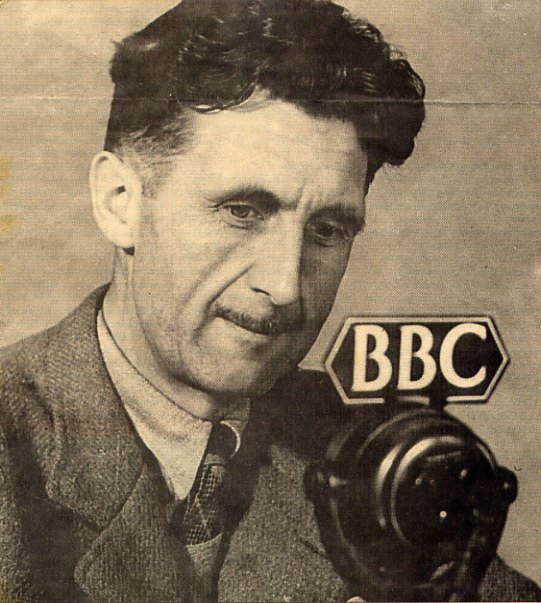
David Brooks reflected on “powerlessness” in a column in the New York Times last week, relating it to an essay by George Orwell reflecting on an incident in his time as a colonial policeman in Burma back in the 1930s.

“In his essay”, Brooks tells us, “nobody feels like they have any power. The locals, the imperial victims, sure didn’t. Orwell, the guy with the gun, didn’t feel like he had any. The imperialists back in London were too far away.” He thinks this is the way much of the world is today, with everyone afflicted with a widespread sentiment that power is somewhere other than where you are.

Suddenly, we are not so sure that anything we think, say or do matters anymore. If it did why do I have to suppress this sense of fear and loathing every morning as I make my way to work past the Irish parliament and the offices of the prime minister of my country?

Brooks, writing in the American context, speaks of the confusion he sees right across the social and political spectrum where every group feels it is being hard done by in the system. A Pew Research Center poll asked Americans, ‘Would you say your side has been winning or losing more?’ Sixty-four percent of Americans, with majorities of both parties, believe their side has been losing more.

“Sometimes”, Brooks says, “when groups feel oppressed, they organize by coming up with concrete reform proposals to empower themselves.” He cites the Black Lives Matter movement as an example of this kind of response.

orwellbbc

George Orwell

Here in Ireland some people afflicted by this “powerlessness” syndrome hope that new political parties might give some respite. Others despair even of that when they look at the options that new fledgling parties provide. They hope that the wave of independent  non-party representatives expected in the next Irish parliament – the general election for a new Dáil will take place in about five weeks from now – will at least throw up something to relieve their pain and their anxiety. Others just look on this as a vain hope, convinced that what they see as a mildly to severely corrupt political and media establishment will manipulate the system to keep themselves in power.

Brooks thinks that “the feeling of absolute powerlessness can corrupt absolutely. As psychological research has shown, many people who feel powerless come to feel unworthy, and become complicit in their own oppression. Some exaggerate the weight and size of the obstacles in front of them. Some feel dehumanized, forsaken, doomed and guilty.”

The ultimate stand of the hopeless is a defiant but pointless one and is made when they feel overwhelmed by isolation and atomization. Having lost all trust in their own institutions, they respond to powerlessness with pointless acts of self-destruction. Brooks cites what is happening in the Palestinian territories as a classic example. “Young people don’t organize or work with their government to improve their prospects. They wander into Israel, try to stab a soldier or a pregnant woman and get shot or arrested — every single time. They throw away their lives for a pointless and usually botched moment of terrorism.”

In the United States today, on a macro level, everyone seems to be scratching their heads and asking themselves how this particular electoral cycle leading to the election of their 45th President got so crazy. On a micro level they are agonizing over the strange dysfunction of their legal and law enforcement system which two Columbia University journalism graduates have exposed in their riveting documentary series on Netflix, Making a Murderer.

For Brooks the first is a perversion brought about by feelings of powerlessness. As regards the second, no one seems to have any answers. It all ends up compounding the despair.

Brooks sums up the American dilemma: “Americans are beset by complex, intractable problems that don’t have a clear villain: technological change displaces workers; globalization and the rapid movement of people destabilize communities; family structure dissolves; the political order in the Middle East teeters, the Chinese economy craters, inequality rises, the global order frays, etc.”

Irish citizens seldom agonize over all of these issues – because they don’t expect their chosen representatives to have to deal with them. Our hapless and helpless representatives had to rely of an international troika of the European Commission, the International Monetary Fund and the European Central Bank to dig it out of the mess they let the country fall into in the mid 2000s. The smug way in which the current political establishment now claims credit for the troika’s vigilance in having guided us to a reasonably safe haven fools some but angers others.

Is Ireland safe from the horrors of the unsafe verdicts and law enforcement shenanigans portrayed in Making a Murder? Irish radio last week was debating whether the dreadful scenario presented in the series could happen in their blessed land. Indeed it could – and from time to time there have been suspicious signs that something like it has.

On the political front, thirty-eight percent of the Irish electorate looked on in dismay last year as a united phalanx of political and media forces effectively consigned the already badly wounded natural institution of marriage to the rubbish heap of history by effectively redefining it out of existence. In the previous year the same coordinated forces took the first step in removing from Ireland’s laws and constitution the right to life of unborn children. It is now building up forces again to complete this work and get Ireland to join the world club of states which judicially take the lives of millions of innocent human beings every year. Ireland legislators will do this again with the help of hand-picked lackeys to form “expert groups” and “citizen forums”, the modern equivalent of the packed juries of former times which put the veneer of justice on the killing willed their masters.

The citizens who see these developments as catastrophes feel as powerless as victims confronted by an alien force from they know not where. Their fear is compounded by the fact that this force comes in the form of a human agency whose framework of values is totally out of sync with everything they know about human nature, human dignity and natural justice.

The consequences of the exercise of power by this agency – or agencies either under their control or influence – are the cause of the loathing that they feel. Among these consequences are the slaughter of the unborn, the termination of lives considered “limited”, whether youthful or aged, the destruction of family and the redefinition of human nature itself by the adoption of a crazy gender ideology.

Some but not all of these things have arrived in Ireland. But they surely will and the feeling of powerlessness to do anything about it in the face of an entrenched alien force is breeding despair. How ironic is this in the very year in which Ireland’s people “celebrate” the centenary of the rebellion which led to their winning independence from Britain?

For more than 700 years Ireland was subject to the British Crown. For much of three centuries of that era, up to the later part of the 18th century, her people suffered bitter and lethal persecution for adhering to the principles of their Catholic Faith. There are many who now fear that the Irish political and media establishment’s adherence to new definitions of humanity contrary to their Faith will usher in an new era of persecution.

In Ireland’s history, constitutional change and violent rebellion, sometimes one, sometimes the other, were resorted to as a way of rectifying injustice and of bringing persecution to an end. The hope is that the former will be the means of choice this time to restore to the powerless their democratic voice in the face of something which at times does not look too far removed from a new tyranny.

In looking for a solution to the problem in his country Brooks argues:

To address these problems we need big, responsible institutions (power centres) that can mobilize people, cobble together governing majorities and enact plans of actions. In the U.S. context that means functioning political parties and a functioning Congress.

Those institutions have been weakened of late. Parties have been rendered weak by both campaign finance laws and the Citizens United decision, which have cut off their funding streams and given power to polarized super-donors who work outside the party system. Congress has been weakened by polarization and disruptive members who don’t believe in legislating.

If we’re to have any hope of addressing big systemic problems we’ll have to repair big institutions and have functioning parties and a functioning Congress. We have to discard the anti-political, anti-institutional mood that is prevalent and rebuild effective democratic power centres.

david-brooks

David Brooks

So it may be for America – although I doubt it. In the Irish context is a party like Renua the solution? Or will it be the Social Democrats, or Sinn Fein? I doubt it even more. Why? Because none of these parties have anything of the vision of mankind which has in it the core truths which would enable it to frame consistent policies – social, political or economic – which will meet the needs of our nature and the aspirations which arise from that very nature. Some individuals within these movements have such a vision but these are dismissed by the establishment as “sanctimonious” dreamers. But these are the only hope that the powerless have. The fact is that there is no coherent collective voice in evidence yet which convinces the powerless that there is an alternative vision by which their country might be wisely and justly governed.

Until there is this substance in those currently hollow shells which pass for policies among all these alternatives, any new solution to our powerlessness will be fruitless. Until then the political and moral bankruptcy of our time will continue to plague us.

The Empire Strikes Back?

paul-edited

Even if one considered it as another magnificent literary artifact, one among many other great letters from the ancient world, surely the perennial prophetic ring of this would signal that it is different. Why does this letter lead us to ask some overwhelming questions, what is it all about, why was it written and how does it mean something to us today, making millions of people read it again and again?

It is St. Paul writing to the Roman Christians about “the remnant of Israel” whose companions they are. All those who have, down through the ages and in our own age, doggedly tried to remain true to the graces given to them are part of this same remnant.

“I ask, then,” St. Paul wrote, “has God rejected his people? By no means! I myself am an Israelite, a descendant of Abraham, a member of the tribe of Benjamin. God has not rejected his people whom he foreknew.”

He then talks about Elijah and how in his frustration this prophet pleaded with God to punish the faithless Israelites.  Elijah moaned to his God, “Lord, they have killed your prophets, they have demolished your altars, and I alone am left, and they seek my life”. But God was having none of it, telling him, “I have kept for myself seven thousand men who have not bowed the knee to Baal.”

“So too”, Paul then reminds the Romans, “at the present time there is a remnant, chosen by grace,” His words surely resonate with meaning for our own time when he says, “Israel failed to obtain what it sought. The elect obtained it, but the rest were hardened, as it is written,   ‘God gave them a spirit of stupor, eyes that should not see and ears that should not hear, down to this very day.'”

Christians today, faced with the accumulation of pseudo-wisdom in which modernity and post-modernity prides itself, can be reminded and encouraged by these words that come from God’s revelation to mankind. They remind us that this “spirit of stupor” has been mankind’s constant affliction and an ever-present threat to happiness and well-being, earthly as well as eternal. But from both history and in the unfolding of this same revelation we know that this spirit of stupor has never prevailed – no more than the gates of hell have – and never will.

We need this encouragement – and may need it more if the fears of people like New York Times columnist, Ross Douthat, are even partially realized. As readers of this column in Position Papers and the Garvan Hill blog will know, even to the point of trying the patience of some, I pay a good deal of attention to Mr. Douthat and generally find myself in agreement with him.

At the end of last year he delivered the Erasmus Lecture in New York, an event sponsored by the magazine, First Things. The lecture, entitled A Crisis of Conservative Catholicism, was published in the magazine last month.

Now there is no doubt but that there are people who are by their disposition conservative. Although it is a corruption of the true meaning of the word, by this it is generally meant that they have an aversion to change. As such this is an unhelpful term when we are looking at those whom Douthat was addressing in his lecture – essentially Catholics with a strong commitment to the defined teaching of the Catholic Church as it has developed over two millennia. Faithful Catholics are not averse to change as such. They first ask “what is changing?” and then decide their stance, for or against.

Leaving aside the baggage which this term brings with it, the lecture itself has provoked a lively debate among Catholics in America. Douthat himself has now begun to respond to some of those who have taken issue with his analysis of the situation of the Catholic Church in what is now called “the era of Pope Francis”.

Essentially he is saying – regardless of the actual teaching of Pope Francis – that the movement within the Church which in the past identified with what was called the “spirit of the Second Vatican Council”, and which some would say paid little attention to the actual teaching of that Council, has now got a new lease of life.  Not only that, but this movement is now threatening to destabilize the unity and orthodoxy established painstakingly in the Church during the past two pontificates. This for many was well illustrated by all the shenanigans – still going on – surrounding the two recent synods on the family.

Extrapolating from Douthat’s analysis, it is as though the opening of the windows of the Church which was attributed to St. John XXIII is now paralleled by Pope Francis’s commitment to an evangelization of the peripherary. One reading of history says that the post-conciliar moment was seized on by heterodox theologians to pursue an agenda not consistent with the actual teaching of the Council. A reading of the current moment is that the same is happening again in the open atmosphere of Pope Francis’ papacy. Heterodox elements are fighting hard to regain ground lost over the past thirty-five years.

One response to the Douthat’s lecture, in two installments, came from Professor John Martens in the Jesuit magazine, America. Martens is a professor in St. Thomas University in Minnesota. Although he was not among them, this institution was well represented among the signatories to an outrageous and arrogant letter sent to the New York Times questioning the paper’s editorial judgment and the columnist’s right to be commenting at length on Catholic theological issues.

Douthat, in his response to Martens, talks about the fears provoked in him by the implications he draws from the latter’s championing this newly revitalized heterodox movement. Having read what he describes as Professor Martens’ “learned, sincere, respectful response to my columns” he says

“We clearly have some religious common ground, but in other ways the professor and I just seem to occupy very different belief structures, very different places on the continuum of Christianity — and the distance is great enough that our differences can feel less like an intra-Catholic argument and more like a kind of inter-denominational dispute.

“Thus my sudden fears for the church’s unity, in the years of Francis and under papacies to come. Divisions there will always be, but these divisions are simply deeper than I had (fondly? naively?) imagined. And nothing in Catholic history suggests that the church is exempt from Jesus’s warning about a house divided or from the consequences when those divisions can no longer be denied.”

Those words about being on “very different places on the continuum of Christianity” are reminiscent of a passing remark made by Joseph Ratzinger – written while he was still just that – in his little autobiographical volume, Milestones: Memoirs 1927-1977. In it he was reflecting on those early years of the Second Vatican Council and the development of his own ideas, rubbing shoulders with other priest-theologians involved in the Council as advisors. Among these was Fr. Karl Rahner. Rahner was one of those who very definitely went with the flow of the “spirit of Vatican II”, indeed many would say was at the head of the flow. Ratzinger wrote in that book of his gradual realization that he and his colleague, Rahner, were theologically on different planets.

karlrahner104_v-ardfotogalerie

Fr. Karl Rahner

In the era of St. John Paul II and his successor, now no longer Joseph Ratzinger but Pope Benedict XVI, one of those two planets seemed to have receded to an outer orbit of the Church. It would now seem, for better or worse, to be back in play in the history of Catholicism again.

Clearly and emphatically we have not reached the “End of History”, neither for Christianity nor for any other dimension of our lives. With the advance of the nones in the Christian world – those who in surveys about religious affiliation profess themselves as belonging to no denomination, – we may be looking at a coming struggle between two claimants to the title of “remnant of Israel”.

Drawing solace and strength from the words of St. Paul, while we do not know how the true remnant will win the day, we do know that the true remnant will be the victor. That remnant will be found in neither the Conservative camp nor in the Liberal camp – it will just be Christian, conservative and liberal as their Faith prescribes, and it will be One, Holy, Catholic and Apostolic .

Don’t worry, yet…

donald-trump-portrait

For anyone worrying about the world falling into the hands of this man, courtesy of the United States of America’s electorate, the message in today’s New York Times is, don’t – yet.

There is no doubt but that Donald Trump’s run for the Republication nomination as a candidate in November’s election has made it – so far -one of the most bizarre in recent memory. It will also make it at least the subject of an important footnote in polling textbooks in the future.

The Times’s editorial observer helpfully explains, however, why we don’t need to worry about it at this early stage of the race. It has all to do with the vagaries of polling. In real terms Trump’s dramatic showing in the polls is about as good an indicator of what is likely to happen as are the leaves at the bottom of your tea cup.

Read her well sourced analysis here and don’t lose confidence in the reasonably good sense of American Republicans. What we can hope for from the totality of the US electorate in November is a more moot question.