Confessions of Faith and Reason

IMG_0444.JPG

Confessions of faith – or confessions of reasons for having faith – seem to be more and more common in recent times. A few weeks ago we had Daily Telegraph columnist and blogger, Tim Stanley, telling us “If you have to choose between being liberal and being Christian, choose Christian”, and going on to explain why.

More recently we had Ross Douthat, columnist with the New York Times, in the wake of hostile Catholic and pseudo Catholic reaction to his expressed concerns about the Synod of Bishops, feeling the need to explain to us “Why I am a Catholic”.

This is good. Catholics need clarity. These upfront declarations are giving us some of this clarity.

Stanley’s reflections were on the back of the revelations about ex-bishop Conry’s pitiable affair and subsequent fall, coupled with the then-approaching aforementioned synod on the family.

He observed the prevalent temptation to focus on the human, sometimes frail aspects of the Church and drew on the wisdom of a priest-blogger whom he admires greatly, Fr. Alexander Lucie-Smith, who urges us to do the opposite.

Fr. Lucie-Smith’s sentiments on the issue, Stanley observes, apply to all Christians (and Jews, and Muslims etc): while the secular world obsesses about political division within the Church, what really matters is the “theological reality” of its mission.

In this mission, the priest says, One needs to distinguish… between a group of people who are united sociologically (for want of a better word) and a group of people who are united in Christ, which is a theological reality. Unity in Christ is something we are always on the way to achieving, if we were not constantly impeded by our sins. Thus we should be in a constant state of repentance for our sins, in that they frustrate the unity that Christ prayed for and which He bequeathed us on Calvary.

Stanley adds: The Catholic Church will always have its troubles. The solution is prayer and putting one’s faith in the Holy Spirit.

The Reformation is, of course, he continued, a reminder of the fragility of the Church. The resilience of Catholicism in Britain today shows its ability to withstand anything – and grow from strength to strength. Its greatest threat is a general decline in belief (aided by the mistakes of clerics) and the emergence of a new anti-religious consensus that discourages commitment to the divine. But perhaps it’s best not to think of this as a crisis but as a challenge to believers. 

This was written in the same week that Louise Mensch made her confession of a conflicted faith in a moving piece in The Spectator about her own struggle to reconcile her private and spiritual life – and her deference to Catholic Church teachings on the sacraments of marriage and the Eucharist.

Stanley remarks on how difficult this is to do, and to talk openly about, in this liberal world in which we now cohabit with people embracing all sorts of heterodoxy. But do it we must – and if we are to be true to our beliefs about what really matters, we really only have one choice. He quotes Fr Lucie-Smith again:

If you have to choose between being liberal and being Catholic, choose Catholic… This is the true fault line: those who believe in the Body of Christ and our vocation to belong to it through baptism, and those who believe the Church needs to catch up with the world, and other such dreary clichés. St Paul had to put up with a lot of them, because he writes: “Do not conform yourselves to this age but be transformed by the renewal of your mind, that you may discern what is the will of God, what is good and pleasing and perfect” (Rom 12:2). 

Stanley concludes: Pray to have the strength not to conform but to be who you truly are. Which is a sinner saved by Grace.

Ross Douthat, for his part put his confession in this nutshell:

I am a Catholic for various contingent reasons (this is as true of converts as of anyone else), but on a conscious level it’s because I am a mostly-faithful Christian who is mostly convinced that Roman Catholicism is the expression of Christianity that has kept faith most fully with the early church and the words of Jesus of Nazareth himself.

That’s a pretty useful nutshell, although it doesn’t make any reference to the vital role of grace in that “because”.

He elaborated a little on the basis of a point made in a talk by Cardinal George Pell, – recently of Sydney and now of the Roman curia, — that the search for authority in Christianity began not with pre-emptive submission to an established hierarchy, but with early Christians who “wanted to know whether the teachings of their bishops and priests were in conformity with what Christ taught”.

This, Douthat said, is crucial to my own understanding of the reasons to be Catholic: I believe in papal authority, the value of the papal office, because I think that office has played a demonstrable role in maintaining the faith’s continuity, coherence and fidelity across two thousand years of human history. It’s that role and that record, complicated and checkered as it is, that makes the doctrine of papal infallibility plausible to me.

There is a wealth of ignorance about the Faith of the Catholic Church out there. The more conversations like this that we have the better chance there is that we will escape from this pit and will become Catholics who will be who they “truly are”. A source of that liberating truth is the Catechism of the Catholic Church, a source with the stamp of approval of that Magisterium in which the early Christians, and later Christians like Douthat, Stanley, Mensch et al, found and continue to find reassurance that what we believe is “what Christ taught”. Why would you choose anything else?

Gathered to give witness

Every hour of every day millions of human beings give witness to their belief and trust in the God of Abraham, the God of Isaac and the God of Jacob – and have done this for millennia of which we really do not know the exact number. But on some occasions this statement is made in a public manner which is so powerful and so palpable that it imprints itself on human consciousness in a way that makes one wonder how the warriors of modern atheism can withstand it.
One of these took place last Saturday (September 27) in a large open space on the outskirts of Madrid when an estimated 200,000 people, representing people from over 80 countries around the globe, listened to and responded to a sublime rendering of The Lord Is My Shepherd in the Mass for the Beatification of Bishop Alvaro del Portillo.
As a spectacle this was a truly astounding sight, as the congregation gathered for the Mass stretched as far back as the eye could see along the improvised esplanade, and seemed to merge into the four giant towers which now dominate Madrid´s landscape. But it was not just a spectacle. This event had deep resonances, as all beatification ceremonies have, which reminded this giant congregation of all that is central to their Christian faith.
But while this ceremony, this celebration, reminded these people of many things about the life of an ordinary man, a priest, who sought and attained sanctity in the course of his life in this world, it also reminded them of one very particular and painful reality in our world today. As we read and hear every day of the horrific persecution and martyrdom of thousands of Christians in the turmoil of the Middle East, we are reminded that this is no new story and that Christians have been suffering and dying for their faith in every millennium, in every century, in every decade of the Christian Era.
The Venerable Alvaro del Portillo, whose Beatification Mass this was, was a man who lived his faith and lived for his faith up to the time of his peaceful death in 1994. He was also a man who lived through the years of persecution of Catholics during the Spanish Civil War and who at one point was threatened with summary execution when a gun was put to his head, simply because he was a Catholic.
Fr. Alvaro del Portillo – who had worked as an engineer before becoming a priest – was the right-hand-man of St Josemaría Escrivá, the founder of Opus Dei. Having worked by his side from the mid 1930s to the latter’s death in 1975, Fr Alvaro, later a bishop, became the new head of what was to become the Prelature of Opus Dei by decree of St John Paul II in 1982.
On the morning of August 13, 1936, soldiers entered the apartment block in which the del Portillo family lived. They raided the apartment above, looking for Cristino Bermudez, the son of an officer in the Nationalist army. Bermudez was not at home but, when his wife tried to escape and hide in the del Portillo apartment, it was also raided and occupied until such time as Bermudez arrived home. Bermudez was arrested, taken away and shot. Alvaro’s father, Ramón was also arrested and taken to prison, but escaped execution.
As the persecution in Madrid intensified, and when simply to be known as a practising and devout Catholic amounted to a death sentence, Alvaro left the family home and went into hiding, eventually taking refuge in the Finnish Embassy. This, however, proved to be no protection and when the military raided the Embassy in December of that year, Alvaro and other refugees were arrested and imprisoned.
Speaking of this experience in later life Alvaro said, “I had never been involved in any political activity and I was not a priest, or a monk, or even a seminarian. I was an engineering student. I got thrown in jail just because I came from a Catholic family. By then I was already wearing glasses, and one of the guards came up to me – his name was Petrof – and he put a pistol to my temple and said, ‘You’re wearing glasses – you must be a priest.’  He could have killed me at any moment…. It was terrifying”.
In later years Fr. Alvaro, apart from his administrative and pastoral work in Opus Dei, was called on by the Holy See to work as a consultor to several Congregations of the Curia and was active on a daily basis in the work and deliberations of the Second Vatican Council. Then, in 1975, was elected to succeed Josemaría Escrivá as head of Opus Dei and in the years that followed saw the expansion of the Prelature into several countries of Eastern Europe and also in the Far East. He visited Ireland on several occasions.
In March, 1994 he celebrated his 80th birthday. Friends had given him the present of a few days in the Holy Land, and – in what is seen by many as an extraordinary gift of Providence to him – he celebrated his last Mass in the Church of the Last Supper in Jerusalem on March 22, 1994. He died in the early hours of March 23, back in Rome to where he had returned the evening before.
Later that day, in an extraordinary step for a Pope, St John Paul II went to pray beside his mortal remains. The booklet produced for the occasion of the Beatification recounts his words when Fr. Javier Echevarría, who would be Bishop Alvaro’s elected successor, thanked the Pope for the honor of his visit, he said, “Si doveva, si doveva,” meaning, I had to do it, I had to do it, recognizing his contribution to the life of the Church.
The Feast of Blessed Alvaro will be celebrated on 12 May, the anniversary of his First Holy Communion.
A version of this article appeared in today’s print edition of The Irish Catholic newspaper.
Learn more about Blessed Álvaro del Portillo at www.alvarodelportillo.org.

What gallery is he playing to now? This is futile posturing.

The president of Iran, Hassan Rouhani, is speaking at the UN now. He says “certain intelligence agencies have put blades in the hands of madmen” during a UN speech

He said that all those who played a role in “founding and supporting these terror groups must acknowledge their errors” and “apologise”.

“Extremism is not a regional issue that only the nations of our region have to grapple with; extremism is a global issue. Certain states have helped in creating it and are now failing to withstand it.

Currently our peoples are paying the price. Today’s anti-Westernism is the offspring of yesterday’s colonialism; today’s anti-Westernism is a reaction to yesterday’s racism.

“Certain intelligence agencies have put blades in the hands of madmen who now spare no one. All those who have played a role in founding and supporting these terror groups must acknowledge their error. They need to apologise not only to the past generations, but also to the next generation.”

He added: “The strategic blunders of the West in the Middle-East, Central Asia, and the Caucuses have turned these parts of the world into a haven for terrorists and extremists. Military aggression against Afghanistan and Iraq and improper interference in the developments in Syria are clear examples of this erroneous strategic approach in the Middle East.”

No word of apology from him or for his backing of various strands of fundamentalist terrorism across the region.

This kind of thing get us nowhere – except deeper into the hole of victimhood. It is what we have heard from Irish republicanism for decades and only when they stopped moaning and pointing fingers did we get some semblance of peace.

Ireland, is this can of worms really what you want?

IMG_0553.JPG

Ireland, in a matter of months from now, will be going to the polls on the issue of gay unions. The people will be asked by their Government – all the parties are in favour – to change the country’s constitution to allow it to change the meaning of marriage in law – if not in logic.

The people of Ireland have defied their Governments before and with great common sense have rejected proposals for constitutional change which ideologues in power have tried to manipulate them into making.

On this occasion – as indeed on others – the media is in bed with the ideologues. Will the people go along with the consensus on this occasion or will they take stock of the social devastation they are going to inflict on the country if this latest assault on human nature is given the green light?

The article below, essentially a “victim impact statement” from the Public Discourse website, is one which you are not likely to read in Ireland’s mainstream media, enslaved as it is to political correctness. More is the pity, for it gives a painful picture of the kind of can of worms which the gay revolution has opened up in our society. It would, it should, make any person think twice before going into a polling booth to say yes to the destruction of an institution which has served men, women and children so well for at least as long as human history has been recorded.

Every time a new state redefines marriage, the news is full of happy stories of gay and lesbian couples and their new families. But behind those big smiles and sunny photographs are other, more painful stories. These are left to secret, dark places. They are suppressed, and those who would tell them are silenced in the name of “marriage equality.”

I represent one of those real life stories that are kept in the shadows. I have personally felt the pain and devastation wrought by the propaganda that destroys natural families.

In the fall of 2007, my husband of almost ten years told me that he was gay and that he wanted a divorce. In an instant, the world that I had known and loved—the life we had built together—was shattered.

I tried to convince him to stay, to stick it out and fight to save our marriage. But my voice, my desires, my needs—and those of our two young children—no longer mattered to him. We had become disposable, because he had embraced one tiny word that had become his entire identity. Being gay trumped commitment, vows, responsibility, faith, fatherhood, marriage, friendships, and community. All of this was thrown away for the sake of his new identity.

Try as I might to save our marriage, there was no stopping my husband. Our divorce was not settled in mediation or with lawyers. No, it went all the way to trial. My husband wanted primary custody of our children. His entire case can be summed up in one sentence: “I am gay, and I deserve my rights.” It worked: the judge gave him practically everything he wanted. At one point, he even told my husband, “If you had asked for more, I would have given it to you.”

I truly believe that judge was legislating from the bench, disregarding the facts of our particular case and simply using us—using our children— to help influence future cases. In our society, LGBT citizens are seen as marginalized victims who must be protected at all costs, even if it means stripping rights from others. By ignoring the injustice committed against me and my children, the judge seemed to think that he was correcting a larger injustice.

My husband had left us for his gay lover. They make more money than I do. There are two of them and only one of me. Even so, the judge believed that they were the victims. No matter what I said or did, I didn’t have a chance of saving our children from being bounced around like so many pieces of luggage.

My ex-husband and his partner went on to marry. Their first ceremony took place before our state redefined marriage. After it created same-sex marriage, they chose to have a repeat performance. In both cases, my children were forced—against my will and theirs—to participate. At the second ceremony, which included more than twenty couples, local news stations and papers were there to document the first gay weddings officiated in our state. USA Today did a photo journal shoot on my ex and his partner, my children, and even the grandparents. I was not notified that this was taking place, nor was I given a voice to object to our children being used as props to promote same-sex marriage in the media.

At the time of the first ceremony, the marriage was not recognized by our state, our nation, or our church. And my ex-husband’s new marriage, like the majority of male-male relationships, is an “open,” non-exclusive relationship. This sends a clear message to our children: what you feel trumps all laws, promises, and higher authorities. You can do whatever you want, whenever you want—and it doesn’t matter who you hurt along the way.

After our children’s pictures were publicized, a flood of comments and posts appeared. Commenters exclaimed at how beautiful this gay family was and congratulated my ex-husband and his new partner on the family that they “created.” But there is a significant person missing from those pictures: the mother and abandoned wife. That “gay family” could not exist without me.

There is not one gay family that exists in this world that was created naturally.

Every same-sex family can only exist by manipulating nature. Behind the happy façade of many families headed by same-sex couples, we see relationships that are built from brokenness. They represent covenants broken, love abandoned, and responsibilities crushed. They are built on betrayal, lies, and deep wounds.

This is also true of same-sex couples who use assisted reproductive technologies such as surrogacy or sperm donation to have children. Such processes exploit men and women for their reproductive potential, treat children as products to be bought and sold, and purposely deny children a relationship with one or both of their biological parents. Wholeness and balance cannot be found in such families, because something is always missing. I am missing. But I am real, and I represent hundreds upon thousands of spouses who have been betrayed and rejected.

If my husband had chosen to stay, I know that things wouldn’t have been easy. But that is what marriage is about: making a vow and choosing to live it out, day after day. In sickness and in health, in good times and in bad, spouses must choose to put the other person first, loving them even when it’s hard.

A good marriage doesn’t only depend on sexual desire, which can come and go and is often out of our control. It depends on choosing to love, honor, and be faithful to one person, forsaking all others. It is common for spouses to be attracted to other people—usually of the opposite sex, but sometimes of the same sex. Spouses who value their marriage do not act on those impulses. For those who find themselves attracted to people of the same sex, staying faithful to their opposite-sex spouse isn’t a betrayal of their true identity. Rather, it’s a decision not to let themselves be ruled by their passions. It shows depth and strength of character when such people remain true to their vows, consciously striving to remember, honor, and revive the love they had for their spouses when they first married.

Our two young children were willfully and intentionally thrust into a world of strife and combative beliefs, lifestyles, and values, all in the name of “gay rights.” Their father moved into his new partner’s condo, which is in a complex inhabited by sixteen gay men. One of the men has a 19-year-old male prostitute who comes to service him. Another man, who functions as the father figure of this community, is in his late sixties and has a boyfriend in his twenties. My children are brought to gay parties where they are the only children and where only alcoholic beverages are served. They are taken to transgender baseball games, gay rights fundraisers, and LGBT film festivals.

Both of my children face identity issues, just like other children. Yet there are certain deep and unique problems that they will face as a direct result of my former husband’s actions. My son is now a maturing teen, and he is very interested in girls. But how will he learn how to deal with that interest when he is surrounded by men who seek sexual gratification from other men? How will he learn to treat girls with care and respect when his father has rejected them and devalues them? How will he embrace his developing masculinity without seeing his father live out authentic manhood by treating his wife and family with love, honoring his marriage vows even when it’s hard?

My daughter suffers too. She needs a dad who will encourage her to embrace her femininity and beauty, but these qualities are parodied and distorted in her father’s world. Her dad wears make-up and sex bondage straps for Halloween. She is often exposed to men dressing as women. The walls in his condo are adorned with large framed pictures of women in provocative positions. What is my little girl to believe about her own femininity and beauty? Her father should be protecting her sexuality. Instead, he is warping it.

Without the guidance of both their mother and their father, how can my children navigate their developing identities and sexuality? I ache to see my children struggle, desperately trying to make sense of their world.

My children and I have suffered great losses because of my former husband’s decision to identify as a gay man and throw away his life with us. Time is revealing the depth of those wounds, but I will not allow them to destroy me and my children. I refuse to lose my faith and hope. I believe so much more passionately in the power of the marriage covenant between one man and one woman today than when I was married. There is another way for those with same-sex attractions. Destruction is not the only option—it cannot be. Our children deserve far better from us.

This type of devastation should never happen to another spouse or child. Please, I plead with you: defend marriage as being between one man and one woman. We must stand for marriage—and for the precious lives that marriage creates.

Janna Darnelle is a mother, writer, and an advocate for upholding marriage between one man and one woman. She mentors others whose families have been impacted by homosexuality.

A different kind of odyssey

“And then?…and then?” Did any two words ever, outside of Sacred Scripture, communicate so effectively the vision of the transcendent as these two words do in the film Ida?

This Polish film, set in the middle of the bleak post-war communist era, with characters who are equally bleak, set against both an urban and rural landscape of unremitting grimness, reveals in all of that a light of truth embodied in its central character, Ida. This light dispels all the enveloping darkness as she walks to her destiny in its final scene.

The film, shot entirely in black and white, opens in the Spartan environs of a convent. A young novice is putting the final touches to a repainted statue of the Sacred Heart. We next see a group of novices carry the statue through the snow-covered courtyard of the convent and place it on its plinth in the centre of the yard. We next see them silently eating their frugal meal and then learn that the novices are about to take their vows sometime in the coming days. Before that, however, they are asked, Ida among them, to go back into the world for a few days reflection before making their final decision.

We follow only Ida on her journey and in the course of it we learn – and she learns – the shocking truth, from an aunt whom she had never met before, that she is Jewish and a holocaust survivor. Her parents were murdered and she, little more than a baby – in a manner we learn of later – was spared and was brought to a convent where she remained until this time. Her aunt, her mother’s sister, has her own very different story. She is a magistrate in the Polish courts and although the experience of cooperating with a brutal totalitarian regime has hardened and embittered her, she still has some shreds of humanity and familial loyalty left. Although totally uncomprehending of – and at times mocking – her niece’s faith and vocation, she helps her firstly cope with the shock of her discovery and then sets out with her to help her find how her parents died and where they are buried.

Their odyssey is one in which they each discover the depths of their souls, depths of disillusion and despair in one case, depths of an infinitely more sublime nature in the other. Ida returns to the convent and after some days of preparation for her reception to the order, in a moving prayer by the statue which we first saw her painting, she asks for forgiveness because she feels she is not ready. She is given time for further reflection.

Then an event, somewhat shocking, occurs which takes her out of the convent again and she meets a young man, a musician, whom she met on her earlier odyssey. They seem to fall in love but all is not as it seems. It is not as it seems because Ida has to get the answer to those two questions, “and then?…and then?” before any new road can be entered on. He cannot answer them for her and it is at this moment that we are left to answer the questions ourselves. I can say no more.

This is a wonderful and most unusual film, as rich as any you are likely to see in a long time. The acting is superb, the dialogue is sparse and the face of Ida (Agata Trzebuchowska) – for you never see much more than her face – communicates the meaning of much of what this film is offering us for reflection. Ross Douthat in the New York Times suggests that it will probably be the film of the year – even though it looks more like the film of 1962, possibly the year in which its story is set.

The film’s director is Pawel Pawlikowski. After the sudden death of his wife, it would appear that he hit a midlife crisis. So he returned to his native Warsaw from England where he lived – and made Ida. According to the Guardian, it is the film of his career.

The film has been selected as the Polish entry for the Best Foreign Language Film at the 87th Academy Awards.

De mortuis nil nisi bonum, but…

In a virtuous world human beings forgive each other. Some do so unconditionally even while they remain set up on by those they forgive. Others do so conditionally when forgiveness is asked for with repentance by those offending. The dividing line between them is probably the dividing line between heroic goodness and a more ordinary goodness. In the moral order forgiveness is obligatory. Forgetting is probably an optional extra.

Forgiveness, however, has no part to play in the recording of history and not forgetting is what it is all about. The honest recording of memory has its own moral imperative.

The death of Ian Paisley gives us an occasion to reflect on these two important moral obligations and in the torrent of words which his passing has provoked there are many lapses of both in evidence.

Let us begin by exhorting that he be forgiven, even though he never asked for forgiveness. But let us not eulogise. Let us do justice in recording honestly what he did, what he said, and note as accurately as we canwhat the dreadful consequences were of both.

There has been speculation since his death – and before his death – as to his motives for his actions in the last ten or so years of his life. Was he really a peacemaker or did he finally come to the conclusion that the road on which he had spent his life had come to a dead end? Was coming to terms with his enemies and getting what seemed the best deal possible all that he could do? Unless we get a personal diary, or a reliable personal account of a conversation revealing his intimate thoughts on the matter, we are unlikely to be able to answer this question. An important fact of history, however, is that he did, willingly or unwillingly, play a critical role in returning Northern Ireland to the tolerable normality which its people now enjoy. But another fact of history, unpalatable though it may be, is that it was he who played an absolutely central role in the whole process, from its very beginning, by which Northern Ireland descended into the abyss of civil war and remained there for over 30 years with the loss of over 3000 lives, many of them totally innocent.

This morning I took from a small archive of cuttings which I keep, an article about Ian Paisley which I wrote back in December 1968 or early 1969. Just then he was no more that moderator of the small fundamentalist Free Presbyterian Church of which he was the founder. I re-read this with some apprehension as to whether it would stand up as any kind of a prophetic anticipation of what was going to unfold in the years between then and now. On that count I am afraid it was mixed. On the other hand, it does stand as a permanent record of what this inflamatory man thought and said up to that time. When taken along with subsequent accounts of what he later did, it bears out the judgement that he was a key catalyst in provoking the suffering endured in Northern Ireland for those 30+plus years.

In the late 1960s, with the emergence of the Northern Irish Civil Rights Movement, a certain naive optimism led people to believe that rational politics, real economic opportunities, even simple pragmatism, would bring Ireland a more settled future in which North and South, Catholics and Protestants would live and work peacefully for the good of the whole people of Ireland. In 1968 the prime ministers of Northern Ireland and the Irish Republic met for the first time since the establishment of the two political entities back in the early 1920s. The symbolism of this, the mutual good intentions of Terence O’Neill and Sean Lemass, the two in question, lead Irish people to imagine what was heretofore unimaginable.  It looked like the end of Ireland’s own Cold War.

Our imaginations, however, did not comprehend the hidden power of Ian Paisley nor the law of unintended consequences which his unimaginable bigotry was going to unleash in the form of the resurgence of the Irish Republican Army which it provoked.

The simple chain of events which unfolded between 1965 and 1969, for which his leadership was the catalyst, set in train all the events which followed for the next 30 years. That chain was as follows: The rapprochement of North and South initiated by Sean Lemass and Terence O’Neill, combined with the peaceful pursuit of civil rights for Catholics in Northern Ireland, set Ian Paisley on the warpath; in doing so he mobilised the extreme Protestant elements in the province to oppose both O’Neill and the civil rights marches; violent clashes ensued while the Northern Irish police and its auxiliary force, the notorious “B Specials”, were clearly not only failing to protect peaceful protesters but were aiding and abetting those attacking them; at this point enter the IRA as a counter force to provide this protection;  with the two communities now at loggerheads, enter the British Army to try to keep them apart – which then becomes the number one target for the IRA. The Thirty Year War is now on. Things would not have gone down this road without the Paisley factor.

Back in December, 1968, in his Protestant Telegraph, he told his followers: “Essentially the ‘struggle’ in Ulster as we know it is a spiritual one. There are those in our province who suffer from guilty conscience; their attitude of mind is that we Protestants are invaders and have no right to be here. The Almighty does not make mistakes; He alone is infallible. Our presence in Ulster is no accident of history. We are a special people, not of ourselves but of divine mission.”

Does all that not sound a little like the ranting of the leader of the so-called Islamic State?

“Ulster”, Paisley continued, “is the last bastion of Evangelical Protestantism in Western Europe; we must not let drop the torch of Truth at this stage of the eternal conflict between Truth and Evil. Ulster arise and acknowledge your God.”

The arch enemy is, of course, the Roman Catholic Church, I wrote in that article in 1969. Allied to it Paisley saw the ecumenical movement of that time, and people like Terence O’Neill whom he saw as liberal unionists. The article continued: “The terror at the prospect of a liberalised and tolerant community which is reflected in the pages of the Protestant Telegraph is based on the fear that a liberalised community will bring about the destruction of the moral and religious standards of Bible Protestantism, the purity of its doctrine will be lost through the growth of tolerance. This is the basis of the intolerance of the Free Presbyterianism mentality.”

Paisley’s war required a myth. He had no difficulty embellishing the “Rome Rule” myth which already existed. “In 1955,” runs a Protestant Telegraph editorial, “Rome chose the IRA and guerrilla warfare as the means of achieving the goal. Today the process is not so blatant, but nonetheless dangerous; her current policy is peaceful penetration.” The Civil Rights Movement was categorised in this way: “The objects of the movement can be listed as follows: 1. To make evil seem righteous. 2. To display bloodstained Popery as democracy. 3. To show Irish republicanism as a British way of life.” It made little sense but it set the fires burning.

Terence O’Neill called him a dinosaur in the political campaign which followed within two months of those words being written. And so he was. But this dinosaur went on to bring O’Neill to his knees and then to found the political party which virtually wiped O’Neil’s Unionist Party off the political map. The religious rhetoric was toned down but that same fundamentalist religious spirit was at the heart of all that Ian Paisley did throughout his career.

Naively, in those months before the opposing floodgates of sectarian and republican violence opened, that article predicted that the end was then not far away for Ian Paisley, Ronal Bunting (his right-hand man at that time) and their movement. “There is a terrible hopelessness about the cause which they are supporting, and its whole basis is as relevant as the basis on which the (IRA) activists in the late 1950s were working” in their futile and furtive raids on border police stations. Hopeless it was, but that hopelessness did not prevent the chain of unintended consequences spinning out that dreadful story for another thirty years. The article concluded, “But although Paisleyism is doomed as the irrational movement that it is, it can still do grievous damage; it can wreck the political life of the province and the country with all the meaningless ferocity which any irrational monster can destroy the work of sincere and rational human endeavours.”

Paisleyism – he had added a new word to the lexicon of religion and politics – was doomed even though its remnants still persist. In his hearts of hearts Paisley himself may have accepted that.  In its virulent form, however, it lasted much longer than any of us ever dreamed it would back in 1968 or 1969. May he now rest in peace, at last.

‘The best portrayal of a good priest in decades’

IMG_0535.JPG

This review of Calvary, the acclaimed film by John Michael McDonagh, by Archbishop Charles Chaput is well worth reading – in the event that you had any doubts about going to see it.

“Calvary” is the kind of film that leaves a theater silent at the final credits. It’s not the silence of boredom or a morgue, but the silence of people collecting their emotions in order to breathe again.

Friends who’ve seen the film, some of them already two or three times, have noticed the same effect. From the first frame to the last, “Calvary” has an understated power – a blend of everyday pain, faith, despair, humor, candor, bitterness, and forgiveness – that brands itself onto the heart with spare simplicity. It’s also the best portrayal of a good priest in impossible circumstances I’ve seen in several decades.

Read the full review here.

Unmoved by this pitiless persecution?

IMG_0534.JPG

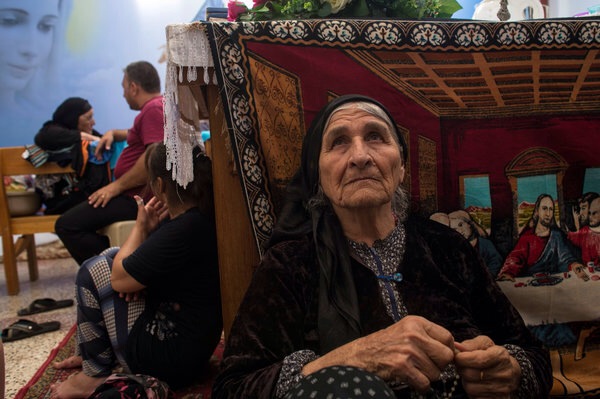
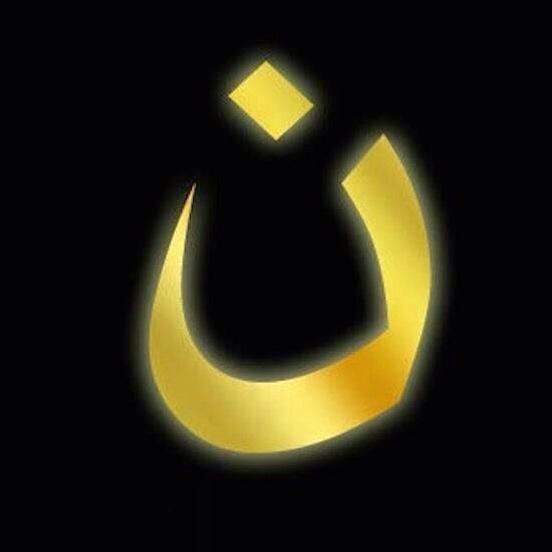
Ross Douthat in the New York Times pricks the conscience of Americans, supposedly citizens of one of the most Christian countries in the world, on their blindness to the fate of the Middle East’s Christians.

For decades, he writes, the Middle East’s increasingly beleaguered Christian communities have suffered from a fatal invisibility in the Western world. And their plight has been particularly invisible in the United States, which as a majority-Christian superpower might have been expected to provide particular support.

There are three reasons for this invisibility. The political left in the West associates Christian faith with dead white male imperialism and does not come naturally to the recognition that Christianity is now the globe’s most persecuted religion. And in the Middle East the Israel-Palestine question, with its colonial overtones, has been the left’s great obsession, whereas the less ideologically convenient plight of Christians under Islamic rule is often left untouched.

To America’s strategic class, meanwhile, the Middle East’s Christians simply don’t have the kind of influence required to matter. A minority like the Kurds, geographically concentrated and well-armed, can be a player in the great game, a potential United States ally. But except in Lebanon, the region’s Christians are too scattered and impotent to offer much quid for the superpower’s quo. So whether we’re pursuing stability by backing the anti-Christian Saudis or pursuing transformation by toppling Saddam Hussein (and unleashing the furies on Iraq’s religious minorities), our policy makers have rarely given Christian interests any kind of due.

Then, finally, there is the American right, where one would expect those interests to find a greater hearing. But the ancient churches of the Middle East (Eastern Orthodox, Chaldean, Maronites, Copt, Assyrian) are theologically and culturally alien to many American Catholics and evangelicals. And the great cause of many conservative Christians in the United States is the state of Israel, toward which many Arab Christians harbor feelings that range from the complicated to the hostile.

Read his full column here.

Footnote to a scandal

IMG_0532.JPG

It should be much more than a footnote to a scandal – but sadly that is the way it will be played by the media in Ireland and worldwide, where it wil probably not even make the footnotes.

Nine staff members who treated Savita Halappanavar before her death at Galway University Hospital have been disciplined, the Irish Health Service Executive confirmed today.

Commenting on the reports of disciplinary action, Cora Sherlock, Deputy Chairperson of Ireland’s Pro Life Campaign told it as it should be told, underlining the outrageous and shameless dishonesty of the Irish and international media’s abuse of a woman’s tragic death nearly two years ago.

“The tragic death of Savita Halappanavar was misused, massively and continuously,” Ms. Sherlock saiid, “by major players in politics and media who were more concerned with getting abortion legislation over the line than accurate reporting. Today’s report that nine members of staff who treated Ms Halappanavar before her death have been disciplined further confirms that this tragic case was never about the non-availability of abortion in Ireland at the time but the mismanagement surrounding Savita’s care.”

Ms Sherlock said “Those who pushed the distorted version of the story hardest from the start have never bothered to set the record straight in light of all the reports that have contradicted their initial presentation of the case. These journalists and politicians were happy to hard wire a false account of what happened into people’s minds and to this day they have no intention of disturbing their original narrative.

“The public discussion on abortion in Ireland at present is deeply dishonest and the reality of this has been shown most clearly in the way Savita’s tragic case was exploited and used to railroad through last year’s abortion legislation.”


Believe it or not, there is one good thing about Sin City

Robert Rodriguez’s Sin City 2 has been a commercial and a critical flop. That, probably, is no bad thing. It brings Frank Miller’s noir-ish, ultra-violent graphic novels to the big screen for a second time. The first Sin City was a huge box-office hit; now, nine years on, we must  roll up our sleeves, snap on our suspender belts, and return to that titillating place of permanent midnight, where men are men and women are mostly prostitutes, said Kevin Maher in The (London) Times. For another critic, what kills it is its repetitive and unengaging plot. For a film that tries very hard to shock with its “cartoonish sex and violence”, Sin City 2 is remarkably “dull”, and endurance test, he said.

But at least it has one good thing going for it, even if it is only its lurid billboard advertising we see. It is a reminder to us of what we like to forget. Sin is behovely, and all shall be well, and all manner of things shall be well – but only so long as we don’t forget that sin exists.

The world is divided by sin – not between sinners and non-sinners. We are all, each in our own way, sinners. The great divide now is between those who know that sin exists and those who deny its existence. Sin is behovely because the sense of sin is an essential part of our living the good life. It is nothing less than our sense of reality, part of our sense of the existence of God.

It is the modern age’s defining characteristic that it has lost the sense of sin – and it has lost this because it has lost its sense of reality, its sense of God. In little more than one generation – my generation – the rot began in earnest. It was there before, indeed the history of thought shows that it was always there, but in embryonic form. It has had a long gestation but with its birth we have been presented with a true monster.

I know parents of my generation, good people who firmly believe in God and who practice their religion devoutly and publicly. Their children, now adults, are also good people and a credit to their parents, their country. They have all the refinements – kindness, generosity, a sense of responsibility –  engendered in them by the civilization we have the privilege of being part of. But there is a difference between them and their parents. They do not believe.

Does it matter? Will they be any less good, kind, generous and responsible than their parents for all that? Possibly not. Indeed, by all accounts they may be more so. Their parents were good parents and gave them the milk on which they were nurtured, milk filled with the vitamins of their own faith and vision of man’s origin and destiny. But the one thing which many in this generation did not take from that nourishing milk was faith and a belief in God, their creator. The milk with which they nourished their own children in some way failed to be transmitted – on a scale not seen between any two generations in recorded history. If this is an exaggeration please cite chapter and verse to disprove it. Nor is it an exaggeration to predict some dire consequences of this failure.

No society that we know of in history has had the kind of flourishing which the societies marked by Christian civilization have had. It is in these societies and in this civilization that our ideas of the qualities of justice, equality, kindness, mercy and a sense of the unique value of a human life have evolved. They have evolved out of a living source, even when the reality of that source itself has been doubted. That source is the Judaeo-Christian religion.

The big question however, is how long can this flourshing last beyond the outright rejection of the source from which it springs. The result of the cultural chasm which has now opened up in the West is the unravelling of the entire fabric of societities founded on those values. What we call the “triumph of the West” is under threat. It is under threat  because its source and the ultimate vision which sustained it seems to have died in the minds hearts of those who have inherited it.

Has any civilization in history outlasted the force which gave it life? In the majority of cases those forces were undoubtedly physical and brutal. Walter Benjamin observed that there is “no document of civilization that is not at the same time a document of barbarism.” He is right in most cases but to lay this charge against Christian civilization is to ignore what is at the heart of this culture. Where brutality and barbarism accompanied the spread of Christian civilization it did so in contravention of its very essence. Invariably the barbarisms which afflicted Christian societies were eventually tamed by the beauty and power the Christian message, leaving us with the jewels we have in expressions of faith –  in art, music and literature –  and flowing out from those, the treasures of human expression in all those forms as well.

Will all this now survive the loss of faith, the loss of vision which was at their heart? The signs are not propitious. Art has become banal at best – think of those sickening banners we see hanging in churches – and at worst, nihilistic. Music, for the most part, has become incomprehensible and is a weak caricature of what it was. Literature, for the most part, speaks of little more than destruction, pessimism and death without redemption – when it is not wallowing in lust which it tries to pass off as love.

If these artefacts are the manifestations of contemporary civilization, what does it augur for the future human agents who will live, breathe and look for nourishment in that civilization?  What happens when those who look out from within a culture see nothing beyond the vision presented in these artefacts? Do we really think that the human spirit can flourish in this desert? Will each generation which follows the last not slide further and further into the abyss, as the residue of goodness which they have inherited becomes fainter and fainter?

If the vision of reality contained in these words of Saint Irenaeus of Lyons, written nearly 2000 years ago, shortly after the dawn of Christianity, is now not just ignored but vehemently denied and its adherents persecuted for believing it, the consequences cannot but be other than apocalyptic.

 It was not angels, therefore, who made us, nor who formed us, neither had angels power to make an image of God, nor anyone else, except the Word of the Lord, nor any Power remotely distant from the Father of all things. For God did not stand in need of these beings, in order to the accomplishing of what he had himself determined with himself beforehand should be done, as if he did not possess his own hands!

 For with him were always present the Word and Wisdom, the Son and the Spirit by whom and in whom, freely, he made all things, to whom also he speaks, saying, Let us make man after our image and likeness (Genesis 1:26), he taking from himself the substance of the creatures, and the pattern of things made, and the type of all the adornments in the world.

Deny this vision, reject this truth, live life according to that denial and surely things will fall apart, the centre cannot hold. Without this vision all we are left with is the misery of Sin City – and without even knowing that we should call it what it is.