Literature and life

You may or may not – yet – have read The Goldfinch, the new Donna Tartt novel. You may or may not even have read the post on this blog about the novel. But if you are at all interested in life, art, writing and mankind’s stuttering attempts to make sense of the human condition, look at and listen to this interview with Tartt.

Here she talks – and she does not give many interviews, it is said, – about this book, its purpose, its creation and what she hopes we as readers will get from it. She talks about books and the important part they can play in our lives. She talks about literature as philosophy and how it can teach without preaching the good life. Great literature and books are for her one of the great gifts in life. She talks about Dickens – to whom she is often compared – and the human and moral insight which abound in his work.

If you have not felt like taking up her 800 page opus up to this point this interview might make you change your mind.

An extract from the longer CBS  interview from which the Bloomberg segment was taken is here.

Here she talks about the book in Waterstones in London.


A bewildering and sad tale of deceit and betrayal

Bewildering is about the only word I can think of to describe my reaction to John Waters’ expose of the current state of what was – until recent times – Ireland’s most important newspaper as he describes the events which brought to an end his 24-year career with the The Irish Times. We knew it was bad – but we did not know it was this bad.

Waters lays it all bare in a six page account of his last few months’ experience on the payroll of the paper in the current issue of Village magazine. To most of us it would be a nightmare. Waters takes it in his stride but as he recounts the tale of deceit, dysfunction and betrayal one wonders how much longer a media operation of this kind can be among us. After reading his article we have to ask, on picking up any edition of this morning paper, what trust could we have in anything that appears in it.

Waters writes not to moan or to even vindicate himself, but rather to alert us to a danger which is lurking under the veneer of prestige, status and respectability which Irish media agencies are wearing but are wearing very thinly.

The back-story surrounding this event is the story of the libelling of Waters and others on a TV programme. They were groundlessly called homophobes. They took legal action and won substantial damages. There followed a heavily orchestrated media uproar in protest at the payments made in which all objectivity was thrown out the window. Waters writes in the article in Village:

“Anyone with the slightest concern for the health of Irish democracy must regard the deluge of hatred more or less stoked by the ‘Irish broadcaster’ and the Irish Times, and agitated in the lawless world of social media into a tsunami of bullying, with the utmost dismay.

“By far the most worrying aspect, however, is that, unless urgent action is taken by those with the power to take it, there may soon be no audible voice left to raise itself against the corrupted clamour of the unrecognised, unaccountable fifth column now directing every twitch and nuance of our public life. What is at issue is not, as some propose, the validity of any particular argument, but the capacity of the collective conversation much longer to accommodate any kind of argument at all.”

The tragedy is one with both communal and personal implications. This is, in the first instance, a drama in which we are probably witnessing the death of a national institution in the life of a small country. If the demise of the Irish Times is staring us in the face we know that it is not simply because of the undoubted economic and other difficult operating circumstances which make all media organisation vulnerable today. It will be because the paper has effectively become internally corrupted and the people who have been supporting it have lost their faith in it.

The last straw for Waters came when he found that he was personally betrayed by someone within the paper in nothing less than an Iago-style saga of deceit – smiling and smiling while all the time playing the villain on Twitter, foul mouthing and backstabbing Waters while dissembling friendship. It is a deeply disturbing and sad story.

Waters has now resigned from the paper – and that is more bad news for the paper for there were many who bought it simply because he was writing for it. He has done so with deep regret but “certain of the importance of protesting at the present drift of the newspaper towards an ideological orthodoxy that threatens its role as an esteemed journal of record and a bulwark of Irish democracy.”

So it was. So it can be again. But will it?

Most defenceless get their “day in court”

20140410-132818.jpg

This is a landmark day for One Of Us, the Europe-wide organisation set up to campaign for human life from its very first moment of conception. After 1.7 million European citizens signed a petition asking that the European Commission discontinue funding any activities that destroy human embryos the hearing was granted.

The hearings which are organised by the European Parliament’s Research, Legal Affairs and Development Committees took place un Brussels this morning.

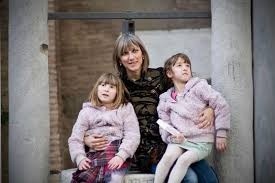
Italian Journalist and best-selling author, Costanza Miriano, sees the One Of Us campaign as part of the solution to Europe deeper moral problem in that it asserts “the claim before the European Union to recognize the rights of the child as a human being from the moment of conception. It does not touch areas that aren’t under the Union’s competence, like that of abortion, thus, no one can protest about the aggression of acquired ‘rights’. It calls for something very reasonable.”

Cora Sherlock, Deputy Chairperson of Ireland’s Pro Life Campaign said of this opportunity:

“These hearings which have come about because so many Europeans oppose activities which destroy human life, present an opportunity to challenge the false perception that pro-life groups are opposed to stem cell research. Nothing could be further from the truth. Pro-life groups are among the strongest advocates of stem cell research. What we oppose is research that destroys human life at its earliest stages.”

She continued:

“The fact is that we have seen huge advances in non-controversial adult stem cell research. All of the major medical breakthroughs in recent years have been in the area of ethically-sound research yet much of the hype has centred around embryonic stem cell research which destroys human life and has resulted in no significant medical or scientific advances.”

And she added:

“It is not just pro-life groups who are saying this. Companies like the US-based Geron Corporation which invested millions of dollars in destructive embryonic stem cell research programmes discontinued the research in 2011 because it was yielding no results.”

“The hearings today also help to bring some ethical focus to this debate. We must not destroy life to prolong life. Rather we must strive for cures we can all live with.”

20140410-133030.jpg
Costanza Miriano with two of her children

It may be ‘realpolitik’ but let us be generous and…

20140409-121705.jpg

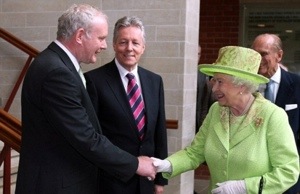
It may be ‘realpolitik’ but let us be generous and read it as magnanimity and forgiveness. Benedict Brogan of the Daily Telegraph summed it up this morning as follows:
“Last night was a historic one. One sight summed up the importance of the occasion – Northern Ireland’s deputy first minister Martin McGuinness donning evening wear and sitting down to a white-tie dinner of halibut and beef at the table of Her Majesty the Queen in Windsor Castle. The former IRA member was there to mark the visit to Britain of the Irish President Michael Higgins – the first time a head of the Irish state has been officially welcomed to Britain since his country became independent.

“It’s the closure of the circle that started with Queen’s landmark visit to Ireland in 2011, and underscores how entwined Great Britain and Ireland are. But it’s also particularly poignant as one of the moments of Mr Higgins’s visit will be when Her Majesty shows him the colours of the disbanded Irish regiments which hang in Windsor castle, which will serve as a reminder that the Irish fought gallantly in the First World War, and that in this centenary year this is a discreet but potent way for the Irish to move closer to dealing with a past that for a long time was hidden, ignored and treated as something shameful. It is to the Republic’s credit that great steps have been taken to acknowledge the sacrifice of thousands of Irishmen in the Great War, and that we are moving steadily to the point when the Republic’s ambassador, who has only recently started attending the Remembrance Day service at the Cenotaph, will be able to take part fully and lay a wreath.”

Am I right in thinking that one truth which gets completely lost when nationalism dominates – or even influences – our consciousness is that there are no bad peoples, there are only bad, half-good or good people? There are cultural influences among people which can create good or bad tendencies within groups of people, but ultimately changes for the better or otherwise only take place when they take root in people as invividuals.

What now challenges all of us living in these islands off the northwest coast of the continent of Europe is to live in our shared inheritance. This is an inheritance which has been forged over centuries in which our ancestors acted at times gloriously, at times wisely, at times shamefully. It was all there, and what we are today has been influenced by all that. But we do have a choice. While we cannot forget any of those things, and should not deny them, we can choose which of them is going to influence us more in the present and therefore in the future.

20140409-124606.jpg

Reflections on a sad and untimely death

People die every day and everyone is going to die someday. We all know that. Nevertheless, when those who die have lived in the public eye, a public response follows and the motive force behind that response is, while not unreasonable, certainly beyond reason. So let it be with Peaches Geldof. May she rest in peace.

Her father, a man with a big heart and a very good head for putting things together – and who put both at the service of the starving millions in Ethiopia – said of his second daughter: “Peaches has died. We are beyond pain.

“She was the wildest, funniest, cleverest, wittiest and the most bonkers of all of us.

“Writing ‘was’ destroys me afresh. What a beautiful child.

“How is this possible that we will not see her again? How is that bearable? We loved her and will cherish her forever.”

Bob, you will see her again.

We cannot judge you, we cannot judge your daughter, but we do know, in the light of a knowledge supported by reason and faith, “was” does not really cover the full story. You do not see it this way – but you might.

As of now we do not know the circumstances of your daughter’s leaving this world. And even when we do, what we will be told will not be all that there is to know. Only the God who created her with your help knows the full story and what we know about Him is that he is infinitely wise, all-knowing and all-merciful. That is a truth on which we can rest a great deal of hope. Talk to Him.

Just this morning, coincidentally with this sad event,  I read these words of a wise and good man, words which carry with them the authority of Him under whose inspiration you received your early education in Blackrock College in Dublin:

“Our infinite sadness can only be cured by an infinite love.

“But this conviction has to be sustained by our own constantly renewed experience of savouring Christ’s friendship and his message. It is impossible to persevere in a fervent evangelization unless we are convinced from personal experience that it is not the same thing to have known Jesus as not to have known him, not the same thing to walk with him as to walk blindly, not the same thing to hear his word as not to know it, and not the same thing to contemplate him, to worship him, to find our peace in him, as not to.

“It is not the same thing to try to build the world with his Gospel as to try to do so by our own lights. We know well that with Jesus life becomes richer and that with him it is easier to find meaning in everything. “

These words were given to us just last year by Pope Francis in his letter, The Joy of the Gospel.

Mozilla, Mozilla, what DO you stand for?

Some words of Pope Francis on Christian tolerance for Muslims receive a loud echo in a Fraser Nelson piece in today’s Daily Telegraph (London). Meanwhile across the Atlantic a newer kind of jihad takes off yet another head. Some weeks ago the defenders of the gay lobby mocked Ross Douthat of the New York Times when he expressed the controversial view that the gay marriage campaign seemed to be heading for certain victory and that no quarter was going to be given to those who opposed it. The news today seems to bear him out on at least the question of the campaign’s intention.

Nelson takes some pride in what he sees as the remarkable and admirable way in which – in spite of some horrific provocation – Britain has assimilated its imperial legacy of a significant Muslim population. It is a two-way street and the majority of the Muslim minority in the UK cohabits agreeably alongside a majority population whose way of life is still rooted in Christian values.

Would that another very militant minority were as accommodating to the Christian values of the majority with whom they live side by side.

The gay jihadis in the United States have now chopped off the head of Mozilla-Firefox with their creeping and creepy war on Christians and the Christian conscience. For them it’s “no peace, no quarter” for the adherents of a 2000 year-old religion who dare to hold by a belief that marriage should remain what they understand it to be, and the nature and purpose of human sexuality and the institution of the family requires it to be.

The Pope, in his exhortation, Evangelii Gaudium, has asked all Catholics to embrace with affection and respect Muslim immigrants to their countries in the same way that Christians hope and ask to be received and respected in countries of Islamic tradition. He entreated those countries to grant Christians freedom to worship and to practice their faith, in light of the freedom which followers of Islam enjoy in Western countries. Clearly work remains to be done in this area, but movement is in the right direction.

Christians and Muslims are deeply divided on matters of faith and the practice of their respective creeds. Yet the leaders in the mainstream of both faiths in the West have found a way to tolerance and respect for the freedom of conscience of each other’s followers.  No such tolerance is being offered by the gay jihadis who now have all the appearances of becoming one of the more sinister enemies of democracy in our world today.

In 2008, Brendan Eich gave money to oppose the legalisation of gay marriage in California, a mere $1,000. In a truly democratic world this should be no problem. Let the people decide. Let those of opposing views on the matter openly help along the argument which they feel carries the greater weight. This democratic right is outrageously denied by the gay jihad. “You will be punished in whatever way we feel you can be punished if you oppose us”, is their banner.

The Pope went on to exhort Christians to show a spirit of tolerance to Muslims, even in the face of violent opposition. Faced with disconcerting episodes of violent fundamentalism, he said, our respect for true followers of Islam should lead us to avoid hateful generalizations, for authentic Islam and the proper reading of the Koran are opposed to every form of violence. Elsewhere and unambiguously he has asked Christians to show the same spirit towards homosexual people.

Christians faced with persecution – and the treatment of Brendan Eich is nothing short of persecution – from gay activists across the Western world have the same spirit demanded of them. They will be as good as their word and seek to live by this spirit. But they cannot and will not ignore the voice of their conscience and accept a false understanding of human sexuality no matter how many governments, corporations and pressure groups seek to make them do so.

The Christian faith is not homophobic. It is against its deepest principles to hate or denigrate any human being. But it holds, and has held for thousands of years, as its Judaic sources have held, a belief and a reasoned view of what it is to be human – in all its dimensions. The late 20th century change to that “narrative” is a long way from offering any serious reasonable basis for a radical rejection of that position which is still accepted by the vast majority of human-kind. It is this that makes what is now going on, exemplified by the hounding out of his job of a gifted genius, so outrageous, even frightening. The echoes of the worst kind of totalitarianism known to the last century are unmistakable.

Fraser Nelson rejects the notion that there is a clash of civilizations on British soil today. What he says of Britain might also be said of Ireland.

Those who believe in a clash of civilisations, in which British values are pitted against those of the Muslim world, have not been short of examples in the past few days. The BBC reports on an “Islamic takeover plot” by hardliners to seize control of several Birmingham state schools. Two Morrisons workers are suing the supermarket for not being able to take holiday during Ramadan, after being told that they submitted their applications too late. Such stories do make the blood boil, and may lead the less charitable to ask if such people should move to a country that better reflects their prejudices.

But one hears such complaints rarely, and this is what marks us out in a Europe that is paranoid about Islam and identity. Britain is, through empire, the original multi-ethnic state. When Churchill was writing for The Daily Telegraph as a war correspondent, his criticism of the Afghan tribesmen was that their behaviour was un-Islamic. Then, the Queen had tens of millions of Islamic subjects and her ministers boasted of running the greatest Muslim power on earth.

The integration of Muslims can now be seen as one of the great success stories of modern Britain. While the Dutch and the French have huge troubles with integration, and are caught in agonised struggles about their national identities, Britain is marked out by the trouble that we are not having. Dig a little deeper, and the real story is the striking amount of harmony.

But where there is no sign of harmony is in the relentless campaign of a militant minority of homosexual people and their allies from the anti-Christian “liberal” establishment who want to expunge from Western society some of the most fundamental beliefs of the Christian faith about what it is to be human and how men and women should give expression to their sexual identities in a way that is moral.

A taste of the problem with Noah

20140402-151951.jpg

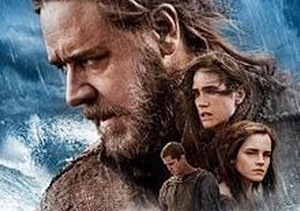
Darren Aronovsky’s Noah seems to have a few problems. Thank goodness the Pope did not engage with Russell Crowe’s tweet inviting him to a free screeinng.
Aronovsky is Jewishh and a professed athiest, relevant in a paradoxical kind of way in the context of this movie. To date he cannot be said to have anything like a masterpiece under his belt. His oeuvre seems to suggest that he is more interested in controversy than art. Pi was intriguing but fairly incomprehhensible. He also directed Mickey Rourke in The Wrestler and Natalie Portman in The Swan. Noah will certainly keep the controversy going.

America magazine has a bemused review which sums it up this way:
The degree to which Aronofsky is up to mischief should not be underestimated. Religious audiences are obviously a target for “Noah” and Paramount Pictures, which has been sweating about the movie since its early survey screenings, has gotten mixed messages back, at best. We wonder if those audiences, chosen to test the waters for a biblical epic that goes its own very eccentric way, picked up on some of the director’s more provocative moves: A visual sequence, for instance, over which Noah relates the Old Testament version of Creation, while at the same time the images are depicting a Big Bang scenario and the evolution of all life crawling out of the sea. Or, for that matter, the very obvious suggestion that, post-Flood, humanity replicates itself via incest. Aronofsky may not have produced a movie that will be thrilling the masses. But a discerning few will definitely be amused. Even appalled.

John Anderson is a film critic for Variety and The Wall Street Journal and a regular contributor to the Arts & Leisure section of The New York Times.
The full review is here

Pope Francis is number one in ‘Fortune’ magazine’s top leader list

pope francis (1)

Linkedin reports that Fortune has just published a list of the top 50 leaders inn the world today. At the top of the list was Pope Francis.

The world is at last beginning to look up. We can only hope that it will now listen as well.

Listen, for example, to this excerpt from Evangelii Gaudium, combining a quote from one of his recent predecessors:

“Without the preferential option for the poor, ‘the proclamation of the Gospel, which is itself the prime form of charity, risks being misunderstood or submerged by the ocean of words which daily engulfs us in today’s society of mass communications’. [Pope John Paul II]”. Note, “The prime form of charity”.
An excerpt from Fortune’s piece about the Pope seems to indicate that some are listening: “His hardest work lies ahead. And yet signs of a ‘Francis effect’ abound: In a poll in March, one in four Catholics said they’d increased their charitable giving to the poor this year. Of those, 77% said it was due in part to the Pope.”
Sorry for adding a drop to that ocean of words, but in this case it is surely worthwhile.


Thinking about it… Racism

The Help is not a great film but it is an honourable film and worth watching because it once again reminds us of things we prefer to forget – the banal injustice and ludicrousness of racism.

A few hours after watching it I was again reminded of it and its heroines when I read these words:

“The dignity of the human person and the common good rank higher than the comfort of those who refuse to renounce their privileges. When these values are threatened, a prophetic voice must be raised”
– Pope Francis, Evangelii Gaudium, Apostolic Exhortation

There are still many mountains to climb.

Obama and Pope Francis: an imagined conversation


“He can cause people around to the world to stop and perhaps rethink old attitudes and begin treating one another with more decency and compassion,” Obama said in an interview with the Italian daily Corriere della Sera before the his meeting with Pope Francis.

Obama being the man he is, believing what he believes, attacking his Catholic electorate in the very depth of their Christian consciences, one is tempted to decode this. It is hard to take.

We know where Obama’s sense of decency and compassion is taking America: abortion and the killing of millions of infants awaiting birth, the deconstruction of the institution of marriage, and an anthropology as bizarre as anything that might be generated by the logic of Humpty Dumpty. With apologies to Lewis Carroll – and to Pope Francis – perhaps this was part of their conversation:

“I don’t know what you mean by ‘marriage,’ ” Pope Francis said.
Obama smiled contemptuously. “Of course you don’t—till I tell you.”

“When I use a word,” Obama said, in rather a scornful tone, “it means just what I choose it to mean—neither more nor less.”
“The question is,” said Pope Francis, “whether you can make words mean so many different things.”
“The question is,” said Obama, “which is to be master—that’s all.”

Garvan Hill tries not to do cynicism. But sometimes the public face presented by men who are walking us all into a hell on earth makes it impossible to resist. I’m sorry. No, maybe I’m not.