The Spirit of the Maccabees

The history of the Jewish people tells the story of what is regarded as the first religious persecution of the Graeco-Roman world. This is the account of the ruthless, brutal but ultimately futile attempt by Antiochus IV to Hellenise the culture of the Jews by destroying their own religion. The biblical version of the story, contained in 1 and 2 Macabees, recounts an event which typifies the persecution at its height – the martyrdom of a widow and her seven sons who refuse to deny their God and submit to the self-styled god-ruler, Antiochus. The story of the persecution culminates with the eventual revolt against the persecution by the old priest, Mattathias and the subsequent war against the tyrant led by his son, Judas Maccabeus.

It is a story which resonates down through history, century after century, millennium after millennium. It still does so today. Pope Benedict XVI might well be a latter-day Mattathias when he recently exhorted his brother bishops of the United States of America to resist the encroachments of what he even suggests may be a new tyranny facing those who put a value on their religion to the extent that they see it as an essential part of their very way of being in this world.

When a culture attempts to suppress the dimension of ultimate mystery, and to close the doors to transcendent truth, it inevitably becomes impoverished and falls prey, as the late Pope John Paul II so clearly saw, to reductionist and totalitarian readings of the human person and the nature of society.

Pope Benedict, speaking to the US bishops on their recent visit to Rome, reflected on America’s historical experience of religious freedom, and specifically the relationship between religion and culture. At the heart of every culture, the Pope said, whether perceived or not, is a consensus about the nature of reality and the moral good, and thus about the conditions for human flourishing. In America, that consensus…was grounded in a worldview shaped not only by faith but a commitment to certain ethical principles deriving from nature and nature’s God. Today that consensus has eroded significantly in the face of powerful new cultural currents which are not only directly opposed to core moral teachings of the Judeo-Christian tradition, but increasingly hostile to Christianity as such.

Pope Benedict spoke to the bishops of the United States but he might equally have said this to all the bishops and all the Christians of the wider Anglo-world – Canada, Australia, New Zealand, Britain and Ireland. In all these countries a clear agenda is emerging from the dominant political classes which is not only seeking to “liberalise” laws and custom but is seeking to marginalise out of existence any who seek to live by and speak out in favour of another way, a way which they argue is the one which best serves mankind’s true flourishing.

Just recently in Ireland, a member of the Dáil (the country’s lower house of parliament), Aodhán Ó Ríordáin, said to be a ”major influence” on the Education Minister, Rory Quinn, spoke openly to The Irish Catholic newspaper, saying ”that religious ethos has no place in the educational system of a modern republic”. The remarks follow an accusation by the Labour Party that Catholic schools are breaking the law over enrolment policies in the way that they admit Catholic children to their classrooms.

Deputy Ó Ríordáin said  ”I see no reason for to give a faith-based school any protection” to ensure that it can fulfil its mission to provide a faith-based education in line with the denominational ethos of the school by way of an admissions policy.

Dr John Murray of Dublin’s Mater Dei Institute of Education said the Labour move amounted to an attempt to ”intimidate” the schools. ”It is nothing less than an attack on the religious freedom of denominational schools,” he said. Nor did he see it as just a Catholic issue: ”A curb on the enrolment policy of denominational schools would hit Church of Ireland schools particularly hard because Church of Ireland children are often a small minority in their own communities and if their schools couldn’t admit Church of Ireland children first, then they would face the prospect of having to turn away the very children they were established to serve,” he said.

Mr Ó Ríordáin’s views do nothing to reassure Christian denominations of the sincerity of Minister Quinn’s words a few months ago that ”religious education will have an important place in the future of education in Ireland”. Minister Quinn makes no secret of his atheistic secularism. In his view Ireland is a post-Christian society in the making – if not already made.

In some critical instances, of course, laws and constitutional roadblocks are thwarting this process – Ireland’s Constitution has so far successfully protected her society from abortion on demand. However, this remains constantly under pressure and the present Irish government’s recently established “expert” study group looking into the matter is now the focus of national and international media speculation as to whether or not the pro-abortion lobby will eventually succeed in getting the legislation it wants.

The remodelling of the Irish education system, a system which currently has a strong commitment to education in a context of religious faith, is another plank on the secularist platform.  There are more. All these planks are designed to chip away and erode the overall Christian cultural ethos of the society. The most sinister of all is probably the one to which the Pope himself refers in his address – the drive to push out of the public square anyone who speaks of ideas which connect in any way with their religious faith.

This agenda, for example, concedes no rights to a Church which, in Benedict’s words, alluding to Vatican II’s Gaudium et spes, not only proposes unchanging moral truths but proposes them precisely as the key to human happiness and social prospering (cf. Gaudium et Spes, 10). To the extent that some current cultural trends contain elements that would curtail the proclamation of these truths, whether constricting it within the limits of a merely scientific rationality, or suppressing it in the name of political power or majority rule, they represent a threat not just to Christian faith, but also to humanity itself and to the deepest truth about our being and ultimate vocation, our relationship to God.

The people driving this agenda have no time for the Pope’s justification of the Church’s defence of a moral reasoning based on the natural law and grounded on her conviction that this law is not a threat to our freedom, but rather a “language” which enables us to understand ourselves and the truth of our being, and so to shape a more just and humane world. Nor do they believe him when he says that the Church proposes her moral teaching as a message not of constraint but of liberation, and as the basis for building a secure future.

The Pope agues coherently that the Church’s witness is of its nature public: she seeks to convince by proposing rational arguments in the public square. The legitimate separation of Church and State cannot be taken to mean that the Church must be silent on certain issues, nor that the State may choose not to engage, or be engaged by, the voices of committed believers in determining the values which will shape the future of the nation.

Benedict XVI does not mince his words and has no qualms about describing what he sees as grave threats to the Church’s public moral witness presented by a radical secularism which finds increasing expression in the political and cultural spheres.

Of particular concern to him are the attempts he sees being made to limit the freedom of religion. In the American context he alludes to concerted efforts being made to deny the right of conscientious objection on the part of Catholic individuals and institutions with regard to cooperation in intrinsically evil practices. Others have spoken to me of a worrying tendency to reduce religious freedom to mere freedom of worship without guarantees of respect for freedom of conscience.

To help counter all this the Pope calls for an engaged, articulate and well-formed Catholic laity endowed with a strong critical sense vis-à-vis the dominant culture and with the courage to counter a reductive secularism which would delegitimize the Church’s participation in public debate about the issues which are determining the future of American society. His call can apply to all societies which have the right to call themselves genuinely democratic.

He concluded his address: No one … can ignore the genuine difficulties which the Church encounters at the present moment. Yet in faith we can take heart from the growing awareness of the need to preserve a civil order clearly rooted in the Judeo-Christian tradition, as well as from the promise offered by a new generation of Catholics whose experience and convictions will have a decisive role in renewing the Church’s presence and witness in American society. The hope which these “signs of the times” give us is itself a reason to renew our efforts to mobilize the intellectual and moral resources of the entire Catholic community in the service of the evangelization of American culture and the building of the civilization of love.

Things are unlikely to get as bad as they were when the Jewish people faced the forces of Hellinisation some 2200 years ago. Nevertheless the spirit of Mattathias and his sons, expressed in different ways and with different means, seems to be very much what the Pope is calling for  – and not just in America but right across the Anglo-world.

Green Shoots of Moral Recovery?

I was so glad to see Lucinda Creighton’s remarks as quoted by Michael Kelly in this piece. Although not a Party animal, I voted Fine Gael in the last election but the way the Labour Party has seemingly hijacked this Government on so many social, moral and educational issues is profoundly disturbing. To hear one voice of significance bucking the trend is somewhat reassuring. I am still deeply disturbed about the ideological direction in which the country is being taken. This ideology is hostile to what I think are the deepest values of the majority in our society. The sad thing is that this majority currently lacks serious leadership. Her words give a glimmer of hope that this might be changing.

www.catholicworldreport.com

“Ireland Stand Up” 96,000 postcards have been sent to Ireland’s prime minister protesting the closing of country’s Embassy to the Holy See. Michael Kelly

A Masterpiece Revisited

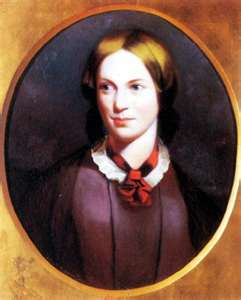
Charlotte Bronté

What treasures there are in great literature – and what a pity that so much of it is unknown and unexplored? I am revisiting Charlotte Bronte’s Jane Eyre and find myself astounded at some of the gems of human wisdom and spirituality you can find there. In chapter nine we have the awakening of the intimations of immortality and eternity in the ten-year-old Jane, as she confronts the experience of death for the first time.

Serious stuff. Perhaps it is not surprising that a very good friend should have queried my choice of Christmas reading. “Could you not have found something more cheerful for this time of year”, he asked? No doubt, the opening chapters make grim reading as Jane’s first person account – the first example of a child narrator in English literature, the second of which came five years later with Charles Dickens’ David Copperfield – of her horrific experiences as an unwanted child in the dreadful Reed household. But then, as the plot unfolds, a series of epiphanies reveal to Jane something of the true meaning of suffering and the beauties of humanity in a profoundly Christian way.

No one should regret choosing Charlotte Bronte’s masterpiece as Christmas reading – if only because of the spiritual depths of what is recounted in chapter nine.

Jane’s friend and confidant, fourteen-year-old Helen Burns, like herself abandoned to the not-so-tender mercies of the orphan school of Lowood, has been struck down with consumption. Many of the other children have fallen victim to a typhoid epidemic and classes are suspended. Some girls have already died. This all gives Jane – who has remained healthy – a chance to explore the grounds of the school and the surrounding woodland. But then she begins to think of the grimmer reality of which she is part. She says,

I was noting these things and enjoying them as a child might, when it entered my mind as it had never done before:-

‘How sad to be lying now on a sick bed, and to be in danger of dying!  This world is pleasant – it would be dreary to be called from it, and to have to go who knows where?’

And then my mind made its first earnest effort to comprehend what had been infused into it concerning heaven and hell; and for the first time it recoiled, baffled; and for the first time glancing behind, on each side, and before it, it saw all round an unfathomed gulf:  it felt the one point where it stood – the present; all the rest was formless cloud and vacant depth; and it shuddered at the thought of tottering, and plunging amid that chaos.

She then sees the doctor leaving the premises and discovers that he has been to see her friend Helen. When he leaves she asks the nurse how Helen is and is shocked to learn that not only is she very poorly but that the doctor has told them that “she’ll not be here long.”

This phrase, uttered in my hearing yesterday, would have only conveyed the notion that she was about to be removed to Northumberland, to her own home.  I should not have suspected that it meant she was dying; but I knew instantly now!  It opened clear on my comprehension that Helen Burns was numbering her last days in this world, and that she was going to be taken to the region of spirits, if such region there were.  I experienced a shock of horror, then a strong thrill of grief, then a desire – a necessity to see her; and I asked in what room she lay.

Her request to go to visit Helen is rebuffed and she is sent to bed after supper. But her determination to see her friend is undaunted and when all are asleep she decides to act on her impulse, rises and goes barefoot to the room where the sick girl is lying. The narrative continues:

I dreaded being discovered and sent back; for I MUST see Helen,–I must embrace her before she died,–I must give her one last kiss, exchange with her one last word.

Having descended a staircase, traversed a portion of the house below, and succeeded in opening and shutting, without noise, two doors, I reached another flight of steps; these I mounted, and then just opposite to me was Miss Temple’s room… 

Close by Miss Temple’s bed, and half covered with its white curtains, there stood a little crib.  I saw the outline of a form under the clothes, but the face was hid by the hangings:  the nurse I had spoken to in the garden sat in an easy-chair asleep; an unsnuffed candle burnt dimly on the table.  Miss Temple was not to be seen… 

“Helen!” I whispered softly, “are you awake?” She stirred herself, put back the curtain, and I saw her face, pale, wasted, but quite composed:  she looked so little changed that my fear was instantly dissipated.

“Can it be you, Jane?” she asked, in her own gentle voice.

“Oh!” I thought, “she is not going to die; they are mistaken:  she could not speak and look so calmly if she were.”

I got on to her crib and kissed her:  her forehead was cold, and her cheek both cold and thin, and so were her hand and wrist; but she smiled as of old.

“Why are you come here, Jane?  It is past eleven o’clock:  I heard it strike some minutes since.”

“I came to see you, Helen:  I heard you were very ill, and I could not sleep till I had spoken to you.”

“You came to bid me good-bye, then:  you are just in time probably.”

“Are you going somewhere, Helen?  Are you going home?”

“Yes; to my long home – my last home.”

“No, no, Helen!”  I stopped, distressed.  While I tried to devour my tears, a fit of coughing seized Helen; it did not, however, wake the nurse; when it was over, she lay some minutes exhausted; then she whispered –

“Jane, your little feet are bare; lie down and cover yourself with my quilt.”

I did so:  she put her arm over me, and I nestled close to her.

After a long silence, she resumed, still whispering –

“I am very happy, Jane; and when you hear that I am dead, you must be sure and not grieve:  there is nothing to grieve about.  We all must die one day, and the illness which is removing me is not painful; it is gentle and gradual:  my mind is at rest.  I leave no one to regret me much:  I have only a father; and he is lately married, and will not miss me.  By dying young, I shall escape great sufferings.  I had not qualities or talents to make my way very well in the world:  I should have been continually at fault.”

“But where are you going to, Helen?  Can you see?  Do you know?”

“I believe; I have faith:  I am going to God.”

“Where is God?  What is God?”

“My Maker and yours, who will never destroy what He created.  I rely implicitly on His power, and confide wholly in His goodness:  I count the hours till that eventful one arrives which shall restore me to Him, reveal Him to me.”

“You are sure, then, Helen, that there is such a place as heaven, and that our souls can get to it when we die?”

“I am sure there is a future state; I believe God is good; I can resign my immortal part to Him without any misgiving.  God is my father; God is my friend:  I love Him; I believe He loves me.”

“And shall I see you again, Helen, when I die?”

“You will come to the same region of happiness:  be received by the same mighty, universal Parent, no doubt, dear Jane.”

Again I questioned, but this time only in thought.  “Where is that region?  Does it exist?”  And I clasped my arms closer round Helen; she seemed dearer to me than ever; I felt as if I could not let her go; I lay with my face hidden on her neck.  Presently she said, in the sweetest tone –

“How comfortable I am!  That last fit of coughing has tired me a little; I feel as if I could sleep:  but don’t leave me, Jane; I like to have you near me.”

“I’ll stay with you, DEAR Helen:  no one shall take me way.”

“Are you warm, darling?”

“Yes.”

“Good-night, Jane.”

“Good-night, Helen.”

She kissed me, and I her, and we both soon slumbered.

When I awoke it was day:  an unusual movement roused me; I looked up; I was in somebody’s arms; the nurse held me; she was carrying me through the passage back to the dormitory.  I was not reprimanded for leaving my bed; people had something else to think about; no explanation was afforded then to my many questions; but a day or two afterwards I learned that Miss Temple, on returning to her own room at dawn, had found me laid in the little crib; my face against Helen Burns’ shoulder, my arms round her neck.  I was asleep, and Helen was…dead.

Her grave is in Brocklebridge churchyard:  for fifteen years after her death it was only covered by a grassy mound; but now a grey marble tablet marks the spot, inscribed with her name, and the word “Resurgam.”

Perhaps I am incurably sentimental but each time I read that passage it does not fail to move me. Coincidentally, just yesterday, I happened to read a passage in St. John of the Cross and I call on this Doctor of the Church to absolve me from such a charge with evidence of his words in his poem, Romance on the Gospel text “In principio erat Verbum,” regarding the Blessed Trinity:

“My Son, I wish to give you a bride who will love you. Because of you she will deserve to share our company, and eat at our table, the same bread I eat, that she may know the good I have in such a Son; and rejoice with me in your grace and fullness.”

“I am very grateful,” the Son answered; “I will show my brightness to the bride you give me, so that by it she may see how great my Father is, and how I have received my being from your being. I will hold her in my arms and she will burn with your love, and with eternal delight she will exalt your goodness”.

That the vision of Christian death given us by Charlotte Bronte should so closely mirror, I think, the vision of God’s love for humanity presented to us by St. John of the Cross is just one more discovered jewel in the untold wealth we have in great literature.

Distorted Images of the Real World

In the film, The Matrix, we explore the threat to our humanity by forces seeking to create a perfect world. It is a world in which men and women have been distorted beyond recognition into characters in a computer programme devoid of any real human qualities. With a little adjustment it is not as far-fetched as it might seem. In our own media-driven world we are already distorting the truth in an alarming way. Ireland’s national broadcaster has just incurred damages rumoured to be in the region of €2,000,000 for ruining the life of an innocent man, a Catholic missionary priest whom it portrayed as a rapist through the medium of its investigative flagship, Primetime Investigates. It all serves to remind us that we have a dangerous capacity to create something which at first serves our best interests and then allows it to become a distorting and all-consuming monster.

The television programme was presented last May and for most viewers it was simply driving another nail in the coffin of the battered reputation of the Roman Catholic Church in Ireland. Gross and unjust allegations were presented to the viewing public as journalistically verified fact and allowed to feed into and feed on a prejudice which has already been created by the constant focus of the media on the crimes and misdemeanours of a minority of Catholic priests

A few weeks ago the Iona Institute, an Irish think-tank focussing on religion and family in the Irish context, found that the majority view among Irish people now is that Catholic priests and religious are responsible for one in five instances of child abuse in the country. The reality is that one in 30 of such cases are perpetrated by this group. Now that is what we call distortion.

But the really alarming thing is that we seem to be quite prepared to live with this distorting mirror and fail to recognise the lethal nature of this cancerous growth within our society. There may be people who consider that the Roman Catholic Church is an institution that we would be better off without – but getting rid of it on the basis of a gross distortion of public opinion is probably not something even the liberal intelligentsia would advocate. Houston, we have a problem – and it is not just a problem of distorting the public image of the Catholic Church. It is a problem which distorts most of the things it touches and it is a problem endemic in the culture of news, news-gatherers and news organisations.

The now defunct Irish Press newspaper had as it motto, placed right under the masthead of the paper, The Truth in the News. I was very proud of that motto when I had the pleasure and privilege of training with and working as a journalist for that paper. Newspapers have a tendency to give themselves some rather meaningful if sometimes pretentious titles – The Guardian, The Daily Mirror, The Examiner, The Inquirer; Ireland even had The Impartial Reporter. At one time those certainly represented the good intentions of proprietors and journalists who tried to live by their implicit mottos of guarding the truth, reflecting the truth, examining and inquiring and impartially reporting without fear or favour. But to live and work by those principles of operation involved more than just reporting isolated facts. They were seen as expressing a commitment to present society with an honest and balanced view of itself. To do that the facts which were presented had to in some way be balanced within the context of a bigger picture. It is in this that we are now failing abysmally.

Essentially it is a “story” problem. News is gathered in the form of stories and without some story there is really little news. But the story is not an end in itself. The truth, the whole truth and nothing but the truth is the objective. When this is lost sight of then the story itself can become dangerous and distorting.

All this was brought home to me very recently on a very personal level when I had to spend eight days in the care of a big – very big – Dublin hospital to undergo surgery. A week before I was admitted I heard reported on television that the hospital was having big problems. Managerial decisions had to be imposed on it from outside by the Health Service Executive which runs the Irish health service. This, a little like the broadcasting debacle above, simply fed into a sense of the overall state of dysfunction which daily and nightly news reports of health service disasters has created among Irish people. We shrug our shoulders and ask ourselves why can’t these people get their act together and organise a decent system of health care for us?

Eight days in Dublin’s Adelaide/Meath Hospital in Tallaght gave me an entirely different perspective on Ireland’s much-maligned health service. News bulletins on Irish radio and television are seldom if ever without some damning report of another mal-function in one or other of the country’s hospitals – missing files, mis-diagnosed illness, and patients on trolleys for days on end – all giving an impression of near total systemic failure of the institutions entrusted with the care of the nation’s sick and sickly. The end result is an abiding impression of a health service from hell.

The truth is very different. In fact the hospital is a miracle of effective administration, of superbly professional nursing and medical care, of warmth, kindness and dedication. Except that it is not really a miracle. It is a perfectly natural phenomenon where good people go about their work showing a wonderful range of human qualities and virtues, day after day, week after week and month after month. What appalled me – to a point of anger – was the fact that out in the wider world there exists this parallel public impression of a health service in disarray. Saying this is not to deny that problems exist and are sometimes not dealt with as they should be. They do. But the distorting effect on public opinion which the emphasis these problems get in news reports is not just something regrettable, it is a travesty. In pursuing “the story” in the way they do news organisations are not mirroring reality at all, they are not guarding anyone’s interest, and they are fooling themselves if they think they are being impartial in what they do.

The solution to this injustice is not, of course, to ignore the problems. They must remain in focus. The solution is to widen the angle to bring in the bigger picture. Journalists must resist the inclination to spice up their stories by giving the impression that something terrible has happened, is happening or is about to happen. That clearly is part of the journalist’s instinct. But they cannot pursue it at the expense of the wider truth, the lives and integrity of ordinary people who dedicate themselves to something as beautiful and noble as this particular field of human endeavour is. It is not enough for the journalist to say that providing the bigger picture is not my job. Everyone is responsible for the truth.

The problem is a much wider one than just the health service and its institutions, or the churches and their institutions. For example, the constant reporting of crime and criminality without any attempt to give the public a feel for the overall context of the general level of well-being in our societies is another distortion and one with all sorts of consequences – creating fear, anxiety, depression and distrust – which can undermine the values by which we try to live.

The integrity of the world’s media organisations has taken a severe battering in recent times. News International’s phone-hacking scandal now being investigated by the Levenson enquiry in the UK, the Irish state broadcaster’s destruction of an innocent man’s life and reputation, are but two instances of a sorry saga. There will be more until such time as the culture surrounding the news industry begins to identify the deeper values which must underpin its service to humanity.

Ben Stein’s Confession – modifications and corrections

Yesterday evening’s post of Ben Stein’s Confession needs clarification. The basic message remains valid but the circumstances of its delivery got very muddled. What happened will be clear when you read the following: http://www.snopes.com/politics/soapbox/confessions.asp Please accept my apologies for the inaccuracies – but it is still worth passing on for reflection purposes.

Ben Stein’s Confession

Apparently the White House referred to Christmas Trees as Holiday Trees for the first time this year which prompted CBS presenter, Ben Stein, to broadcast this piece on his Sunday morning commentary on the network. I think it applies just as much to many countries as it does to America. It will certainly resonate in Ireland where the secular tail is waging the so-called Christian democratic dog in a ferocious way at present.

This is what Stein and recited on CBS Sunday Morning Commentary. He presented it as his “confession”.

My confession:

I am a Jew, and every single one of my ancestors was Jewish. And it does not bother me even a little bit when people call those beautiful lit up, bejewelled trees, Christmas trees. I don’t feel threatened. I don’t feel discriminated against. That’s what they are, Christmas trees.

It doesn’t bother me a bit when people say, ‘Merry Christmas’ to me.. I don’t think they are slighting me or getting ready to put me in a ghetto. In fact, I kind of like it. It shows that we are all brothers and sisters celebrating this happy time of year. It doesn’t bother me at all that there is a manger scene on display at a key intersection near my beach house in Malibu. If people want a crèche, it’s just as fine with me as is the Menorah a few hundred yards away.

I don’t like getting pushed around for being a Jew, and I don’t think Christians like getting pushed around for being Christians. I think people who believe in God are sick and tired of getting pushed around, period. I have no idea where the concept came from, that America is an explicitly atheist country. I can’t find it in the Constitution and I don’t like it being shoved down my throat.

Or maybe I can put it another way: where did the idea come from that we should worship celebrities and we aren’t allowed to worship God? I guess that’s a sign that I’m getting old, too. But there are a lot of us who are wondering where these celebrities came from and where the America we knew went to.

In light of the many jokes we send to one another for a laugh, this is a little different: This is not intended to be a joke; it’s not funny, it’s intended to get you thinking.

Billy Graham’s daughter was interviewed on the Early Show and Jane Clayson asked her ‘How could God let something like this happen?’ (regarding Hurricane Katrina).. Anne Graham gave an extremely profound and insightful response. She said, ‘I believe God is deeply saddened by this, just as we are, but for years we’ve been telling God to get out of our schools, to get out of our government and to get out of our lives. And being the gentleman He is, I believe He has calmly backed out. How can we expect God to give us His blessing and His protection if we demand He leave us alone?’

In light of recent events…. terrorists attack, school shootings, etc. I think it started when Madeleine Murray O’Hare (she was murdered, her body found a few years ago) complained she didn’t want prayer in our schools, and we said OK. Then someone said you better not read the Bible in school. The Bible says thou shalt not kill; thou shalt not steal, and love your neighbor as yourself. And we said OK.

Then Dr. Benjamin Spock said we shouldn’t spank our children when they misbehave, because their little personalities would be warped and we might damage their self-esteem (Dr. Spock’s son committed suicide). We said an expert should know what he’s talking about. And we said okay.

Now we’re asking ourselves why our children have no conscience, why they don’t know right from wrong, and why it doesn’t bother them to kill strangers, their classmates, and themselves.

Probably, if we think about it long and hard enough, we can figure it out. I think it has a great deal to do with ‘WE REAP WHAT WE SOW.’

Funny how simple it is for people to trash God and then wonder why the world’s going to hell. Funny how we believe what the newspapers say, but question what the Bible says. Funny how you can send ‘jokes’ through e-mail and they spread like wildfire, but when you start sending messages regarding the Lord, people think twice about sharing. Funny how lewd, crude, vulgar and obscene articles pass freely through cyberspace, but public discussion of God is suppressed in the school and workplace.

Are you laughing yet?

Funny how when you forward this message, you will not send it to many on your address list because you’re not sure what they believe, or what they will think of you for sending it.

Funny how we can be more worried about what other people think of us than what God thinks of us.

Pass it on if you think it has merit.

If not, then just discard it…. no one will know you did. But, if you discard this thought process, don’t sit back and complain about what bad shape the world is in.

My best regards, honestly and respectfully,
Ben Stein

Playboy at large…

Reading Charles Spencer’s recent Daily Telegraph review of “The Playboy of the Western World” – now running at the Old Vic in London – it is hard not to think of the Irish Taoiseach, Enda Kenny, and his gormless blustering. Spencer tells us that the action of the play turns on the character of Christy Mahon, who turns up at a rural pub in the wilds of Co. Mayo and announces that he is on the run after murdering his bullying father. Instead of condemning his action the locals fete him as a hero. Is this an image of Kenny laying into the Catholic Church and the Vatican, as the cheerleaders around him – and his left-liberal coalition partners in Government – coax him on.

“Christy is a most unlikely murderer,” Spencer continues, “a point marvellously made in Robert Sheehan’s gormless, gangling performance, but the acclaim of his new companions puts an unfamiliar swagger in his stride, especially when the spirited daughter of the house, Pegeen Mike, takes a shine to him.” For many Enda was a kind of hero when he blusteringly, and with gross exaggeration of his case, set about putting the Vatican in its place on behalf of the Irish people last July.

But the shine on Mr. Kenny’s performances may be beginning to become a bit scuffed as the reaction to his most recent hostile action against the Vatican – the barely concealed insult of closing the Irish Embassy to the Holy See – begins to generate a growing resentment. Even his own back-benchers are now questioning his judgement. One wonders if the dramatic denouement of the Playboy might not also be in store for Mr. Kenny. As Spencer notes of the fate in store for Christy Mahon: “Suddenly this perennial loser in life’s lottery discovers hope and confidence for the first time. Then, in one of the great comic coups of modern theatre, his father turns up with a bloody bandage round his head, and the play heads off in a startling new direction.” Mr. Kenny’s hopes and unwarranted popularity of recent months may meet a similar humiliating fate.

Talibanesque act of wanton destruction?

The Irish government’s decision to close its embassy to the Vatican has dismayed the few million Catholics in Ireland and many more around the world. Letters to the Irish print media in the past few days – from Ireland and further afield –  have expressed a mixture of anger and resentment at what many see as a small-minded attempt to further justify the petulant and intemperate attack made by the Irish Prime Minister (Taoiseach) Enda Kenny on the Holy See last July. Others see it as a more sinister volley in an ongoing campaign by the left-liberal wing of the Irish coalition government to further undermine adherence of Irish people to the Catholic faith.

John P McCarthy, Professor Emeritus of History, Fordham University, New York, (Irish Times, 5/11/11) puts his finger on what some see as the kernel of the issue when he suggests what he thinks is the real source of the Irish coalition government’s hostility to the Vatican:  “Might the Taoiseach’s rhetoric of last summer have emboldened the secular fundamentalism of some of his coalition partners?”

For another correspondent to the paper the decision smacks of a secularist  talibanesque act of wanton destruction of something of deep historic significance in the landscape of Ireland’s international relations. “The closing of the Irish Embassy to the Vatican… is, I suggest, a sad reflection on this Government’s sense of historical, cultural and religious values”, wrote Dr. John Cooney of Monaghan.

“It is one of our oldest embassies, having been established in 1929 on the creation of the Vatican State as a result of the Lateran Treaty with Italy and in the early days of our own Irish government. The Vatican had been one of the first entities to recognise the Irish State.” He continued: “At a time when countries such as Saudi Arabia, Indonesia and Pakistan are opening embassies to the Vatican, we, still a Christian country with a majority Roman Catholic population, welcoming also those of other faiths and none, chose to close ours. The fact that we are closing it now, after our Taoiseach’s unprecedented verbal attack on the Vatican, delivered in the Dáil, will be interpreted by most intelligent people both here and abroad as a further demonstration of our official contempt for the Vatican and indeed for the Roman Catholic Church of which it is the symbol and centre of the magisterium or official teachings of the church.”

Donal Deasy, writing from  Richmond in British Columbia, Canada, contrasts this decision with the Vatican’s decision to continue placing its nunciature to China and Taiwan in Taipei, Taiwan. “Taiwan is democratic. China is communist. While the vast majority of countries including Ireland have followed the dollar to Beijing, overlooking a few intangible human rights issues, the Vatican maintains a lonely but noble stand in defence of what some of us still consider to be priceless values.”

Ireland’s “paper of record”, The Irish Times, seeks to assure its readers that the Irish government’s decision is not an ideologically driven move. Not everyone is convinced.

People, it said, who seek to link the closure with an assault by the Labour Party on the Catholic Church and its control of national schools, have got it wrong. “Such ‘reds-under-the-bed’ language has little relevance.”

The Irish Times may be a paper of record but records cut a number of ways and the “B” side – or is it the “A” side – of this particular record shows clearly that The Irish Times is often little more than an apologist for the liberal secularist ascendancy which dominates Irish political life. People trust its judgement on many things, but this is one area where it consistently proves itself to be very suspect.

The paper admits that there is “little doubt the Cloyne report on clerical child sex abuse, highly charged exchanges between the Taoiseach and the Vatican concerning unwarranted interference in this State and the recall of the papal nuncio have all contributed to the closure of Ireland’s embassy to the Holy See. Difficult fiscal circumstances may have provided official justification for the decision but it overlaid a deep chill in relations between the Catholic Church and the Government.”

So far so good. But the paper’s religious affairs correspondent, Mr. Patsy McGarry, in his opinion piece the day after the announcement, provided its readers with a very tendentious account of events leading to this decision.

In his analysis he was  rather selective in his presentation of the facts of the case. For example, he stated (correctly) that the Murphy Commission, when investigating child abuse in the archdiocese of Dublin, wrote to the Vatican seeking relevant information. But he leads his readers to believe that the Vatican ignored this request. It didn’t.

The Vatican contacted the Irish Government upon receiving the request and asked the Government to ask the Murphy Commission to put its request through the normal diplomatic channels. When an Irish court writes for information to a foreign court, this is what happens.

Further on in his piece, Mr McGarry tells us, again correctly, that the Vatican described the Irish Church’s 1996 child protection guidelines as a “study document”. But he doesn’t tell us that this is how the Irish bishops themselves described it to the Vatican.

He also tells us of the Vatican’s “opposition” to the guidelines. This is an exaggeration.  The Congregation for Clergy, from which the Vatican response originated, had a reservation about mandatory reporting, just as the then Irish Government had.

Towards the end of his article Mr McGarry simply repeats the most lurid lines from the Taoiseach’s attack on the Vatican without substantiating the Taoiseach’s accusations and without giving any details of the Vatican’s measured and detailed rebuttal.

There are Irish people muttering now that they detect a concerted campaign in Irish political circles to de-couple Irish society from its allegiance to anything “Catholic” in its culture – , laws governing education, marriage, procreation, health, etc. For some, up until now, this has smacked of scare-mongering, a “reds-under-the-bed” mentality as the Irish times would have it. For many it is no longer so. Mr. Kenny’s July speech may have been a watershed moment in more ways than one. In it he proclaimed himself a “practising Catholic”. Some recall that King Henry VIII saw himself living and dying as a “practising Catholic”. Despite that he succeeded in tearing the Catholic heart out of England. He failed to do so in Ireland, and Ireland resisted his successors’ efforts to do so for 500 years. Will Enda Kenny – unwittingly, perhaps – succeed in doing what Henry VIII failed to do?

A Tale of Two Cities

A very short story in Dublin’s Irish Times this week probably said more about the great divide between the City of God and the earthly city in the world today than anything else I have read for a long time.  All the acres of print we have been reading surrounding the death – effectively his summary execution – of Muammar Gadafy was truly dispiriting in so many ways. If it wasn’t spewing out hatred and vengeance, like News International’s The Sun screaming at us, “That’s for Lockerbie” over a lurid picture of the dead dictator’s corpse, it was sanctimonious posturing on how that was not the way it should have been done. The dignity being moaned about was not the dignity of a dead human being but the dignity of the new state which had just been born.

A somewhat bemused Irish Times – Tuesday, October 25, 2011 – reported that a Catholic priest in North West Ireland actually prayed for Gadafy. Cronan Scanlon wrote, in the language of investigative journalism, “it has emerged” that former Libyan dictator Muammar Gadafy was prayed for at Mass in a Donegal church. “The prayers were said on Sunday in St Eunan’s Church, Raphoe, by parish priest Fr Dinny McGettigan (72). The popular priest surprised parishioners when he was praying for local people who had recently died. The last name he read out was that of Muammar Gadafy.”  Had the reporter been writing for one of Ireland’s tabloids it might well have described them as “shocked and horrified” rather than as merely surprised by what they heard.

Asked by a local newspaper afterwards why he had prayed for the “ruthless dictator” the priest told the reporter “I would pray for anyone, so I have no problem whatsoever praying for Muammar Gadafy.”

Asked if he thought it was all right to pray for the soul of a man who murdered, maimed and oppressed Libyan citizens for four decades, Fr McGettigan said. “That’s all the more reason to pray for him. They all need our prayers no matter who they are.”

But his parishioners were not shocked. They were edified and had no problem uniting themselves with the prayers of Fr. McGettigan. One of them told the reporter, who was clearly still trying to come to terms with this manifestation of Christian moral theology, “It bothered no one. Fr Dinny is a very Christian man and would pray for anyone. He was stabbed during a break-in at the parochial house 10 years ago. When the matter went to court, Fr McGettigan stood up and pleaded with the judge not to send the man to jail. That’s just the kind of person he is.”

Has the earthly city, in its relentless pursuit of justice and retribution, lost all sight of the bigger picture? Has our pursuit of justice become one-sided? Perhaps it is because of the culture of victimhood which has become so dominant? But it is more likely that it is simply – in Western society, and indeed in most civilizations which at one time carried within them a belief in immortality – the result of the loss of vision of our human condition as an eternal one: a troubled one here, potentially an untroubled one after our time here.

Christians have a principle of life which says, “love the sinner, hate the sin.” It is a principle which has many consequences – and one of them was exemplified by Fr. McGettigan. Sadly, it is not often that we seem to encounter it. Perhaps it is because we do not talk of or understand the real nature of sin anymore. We think only of illegality, criminality and injustices – and those only in a totally earthbound sense. Might it be that if we regained a sense of sin then our sense of victimhood might become a truer one?  The truth is that whenever injustices are perpetrated all are victims – the sinner as well as the sinned-against.  If that sense is pervasive then all will be perceived as in need – the sinned-against needs justice done on his behalf and the sinner needs redemption. The parishioners in a small town in North West Ireland were not as surprised by their priest as the World thought they might be because they probably thought the same way as he did. Muammar Gadafy – despite his terrible crimes – was a human being like themselves and redeemable like themselves. How could they not pray for that redemption and still call themselves Christians, they probably thought.

It was, as a footnote, interesting that three days after it appeared The Irish Times story got only 17 Facebook “likes” and 7 tweets. Only 10 readers thought the story worth sharing.

In Search of the Great Poem of the Earth

One of the fundamental characteristics of what we call “modernism”, that cultural shift in the way we see the world, ourselves and our condition, was the celebration of the ordinary – ordinary life, ordinary work, ordinary people and the ordinary things they do. Not everything about the “modern movement” – which began over 100 years ago – was a boon to humanity. For Christians one dimension of modernism made a total muddle of theology and bears a big share of the blame for the creation of that “desert of relativism” of which Pope Benedict XVI speaks. But surely a vision of the ordinary things of life, liberated from the realm of the hum-drum and the boring is something to rejoice in?

This positive dimension of our modern sensibility was taken up in a paper I read recently by an American professor teaching in Rome. Professor John Paul Wauck, speaking to a congress on Poetics and Christianity there, spoke of a change in how Christians now see ordinary life. He described this change as “a genuine revolution” in terms of ascetical theology and found it epitomised in the words of St. Josemaría Escrivá when he wrote that the Christian vocation, “consists in making heroic verse out of the prose of each day.” Those words, along with all his teaching, moved Blessed Pope John Paul II to proclaim Escrivá “the saint of the ordinary” on the occasion of his canonisation in 2002.

Wauck was, however, setting out to explore another dimension of modernity’s celebration of the ordinary – how this celebration in general, and this theological revolution in particular, seemed to have to struggle to make its way into literature. He set out to look at how literature and ordinary life stand in relation to one another, and more particularly, to look at how Christian faith might affect that relationship. “Ultimately,” he said, “the question I hope to raise is whether a change in how Christians see ordinary life could change the way we see, read and write literature.”

Professor Wauck seems to suggest that there is a conspiracy against the ordinary in a great deal of literature, and particularly in the classics, ancient and modern, against the celebration of the ordinary. This conspiracy is rooted in our apparent deep attraction to what we see as the heroic. He speaks ofthe tension between the thirst for the heroic, grand, ecstatic life and the reality of the life we actually live, with its humbler virtues.”  He quotes Charles Taylor (in his book, Sources of the Self, p.422):

We are in conflict, even confusion, about what it means to affirm ordinary life…. We are as ambivalent about heroism as we are about the value of the workaday goals that it sacrifices. We struggle to hold on to a vision of the incomparably higher, while being true to the central modern insights about the value of the ordinary life. We sympathize with both the hero and the anti-hero; and we dream of a world in which one could be, in the same act, both.”

To develop his point, Wauck draws on the work of the American writer, Walker Percy, a convert to Catholicism, quoting his biographer, Jay Tolson: “The horror of ‘dailiness’ is in fact the starting point for many of Walker Percy’s novels, and if it is not the central problem for many of Walker Percy’s works it is always at least one of the problems.”

“Tolson”, Wauck says, “uses the word ‘horror’ advisedly, for Percy does not mince words:

‘[A]s Einstein once said, ordinary life in an ordinary place on an ordinary day in the modern world is a dreary business. I mean dreary. People will do anything to escape this dreariness: booze up, hit the road, gaze at fatal car wrecks, shoot up heroin, spend money on gurus, watch pornographic movies, kill themselves, even watch TV. Einstein said that was the reason he went into mathematical physics.’”

 How many of us, when we pick up our papers to read the news, are drawn to the “great” events, the exceptional, the extra-ordinary? Is that not the definition of news? Not many of us have the insight which moved the Irish poet, Patrick Kavanagh to write his poem, “Epic”, written in late 1938:

I have lived in important places, times

When great events were decided : who owned

That half a rood of rock, a no-man’s land

Surrounded by our pitchfork-armed claims.


I heard the Duffys shouting “Damn your soul”

And old McCabe stripped to the waist, seen

Step the plot defying blue cast-steel –

“Here is the march along these iron stones.”


That was the year of the Munich bother. Which

Was most important ? I inclined

To lose my faith in Ballyrush and Gortin

Till Homer’s ghost came whispering to my mind.

He said : I made the Iliad from such

A local row. Gods make their own importance.

And so does God. The mite of the widow tossed into the Temple collection box looked like a very small and ordinary thing. It is now, for all mankind, a symbol of heroic detachment and sacrifice.

But for Kavanagh’s ordinary Monaghan farmers, fighting over scraps of land, this was warfare. In some ways fighting has raised the stakes in the human imagination, lifting our actions out of the realm of the ordinary and into the heroic. Wauck alludes to this when he again cites Percy’s observations about our struggle with the ordinary. “The apparent emptiness of ordinary  life is only intensified by our occasional tastes of the extraordinary, dramatic and heroic – nowhere more typically experienced, as Percy was keenly aware, than in that timeless feature of heroic literature, warfare.”

But if literature in general has had problems coping with the ordinary, literature in the context of Christian faith is where he finds the greatest challenge. The revolution in ascetic theology has still, he feels, to translate into the realm of Christian literature. He asks, “If Christianity offers an answer to the dilemma of ordinary life on the existential level, might it not also open up new possibilities for capturing the grandeur of ordinary life in literature?” The perception is that clearly it has not done so yet.

He illustrates the problem by quoting a letter from the non-believing American novelist, Shelby Foote, to Walker Percy who was his friend, in which he says: show me a Catholic writer who doesn’t write about doubt, putting God in scare-quotes, but instead handles religion with the matter-of-factness of Maupassant writing about sex. Certainly the oeuvre in Catholic Ireland’s substantial literary canon would seem to bear out the validity of that challenge.

But even in this Irish context, there are exceptions. The later novels of John McGahern – Amongst Women and That They May Face the Rising Sun – show not only a wonderful and delightful portrayal of the lives of simple and ordinary people in rural and small-town Ireland, but also show them in the simple practice of their Catholic faith. In these novels – written over the last years of McGahern’s life – there is the full spectrum of the faithful, the unfaithful, and those with doubts, but all are sympathetically and authentically presented in ways which do not diminish the glorious ordinariness of their lives and their communities.

However, that being relatively exceptional, Wauck’s speculations remain very pertinent.  “How might one, then, in practice,” he asks, “convey the heroism of ordinary Christian life? To appreciate the difficulty, consider, for example, the following point from The Way by Saint Josemaría Escrivá, the champion of sanctity in ordinary life:”

We were reading – you and I – the heroically ordinary life of that man of

God.  And we saw him struggle whole months and years (what an “accounting”

he kept in his particular examination of conscience!) one day at breakfast he

would win, the next day he’d lose…. “I didn’t take butter… I did take butter!”

he would jot down.

May we too – you and I – live our…. “drama” of the butter.

The protagonist of this little drama was an Irish Jesuit priest, Fr. Willie Doyle, who went on to die a more traditionally heroic death in the trenches of the Great War where he served as a chaplain in the British Army. It was, however, the “butter” drama of his daily interior struggle which appealed to Escrivá as an example for ordinary Christians in their own struggles to live lives pleasing to God.

John Paul Wauck speculates at the end of his lecture that perhaps it is not possible to directly portray the grandeur of an ordinary Christian life. “Perhaps the ordinary is not meant to be the subject of great Christian literature. I can think of no a priori reason why it has to be.

And yet, might it not be that, by and large, Christians simply haven’t tried to capture the drama of ordinary life? Are there really no heroes and villains, sorrows and joys, dangers and dramas to describe in day-to-day Christian existence, or are we simply refusing or failing to see them? We do, after all, in principle, believe that each Christian, every day, at home, in the office, on the street, is walking on a battlefield – a battlefield where the stakes are very high, higher even than mere life and death. That same Christian is also, at the same time, caught up in an extraordinary love story – a love affair with a God who is willing to die for him, Who gives Himself to him as food to eat every day. That same Christian is on a journey that will take him farther than Dante’s Ulysses ever dreamed of travelling.

I for one resist the idea that we are still living under the sign of Boileau (French poet of the 17th century),  who said that the mysteries of the faith are ‘too majestic to be represented in a work of art.’”

“The project that lies ahead of us” he suggests, “seems to have been glimpsed already by

Wallace Stevens (1879-1955), who wrote that “the great poems of heaven and

hell have been written, and the great poem of earth remains to be written.”

To put it another way: where, we might ask, is the Dante of this world? Surely,

it would be an odd thing for a Christian to maintain that Homer and Virgil have

exhausted what there is to say about the earth.”  Patrick Kavanagh would agree.

(John Paul Wauck studied renaissance history and literature at Harvard and lives in Rome, where he is a professor at the Pontifical University of the Holy Cross. His very substantial paper may be read at http://www.univforum.org/pdf/Life.pdf .)