Clinton campaign bigoted AND hypocritical?

LifeNews today reports on the fall-out surrounding the anti-Catholic bigotry which the latest wiki leak tranche of emails reveals about the Clinton campaign. Top Clinton officials are openly mocking Catholics, calling their faith “severely backwards.”
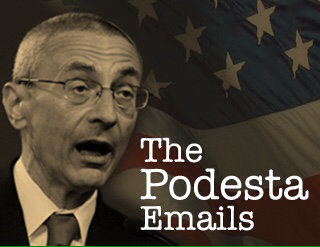

Yesterday, Wikileaks released transcripts of an email exchange entitled “Conservative Catholicism” between Clinton campaign chairman John Podesta, campaign spokesperson Jennifer Palmieri, and John Halpin, a staffer at the Clinton allied Center for American Progress.

In the email thread Halpin mocks News Corp CEO Rupert Murdoch and Robert Thompson, Managing Editor of Wall Street Journal, for raising their kids Catholic.
Halpin writes about these Catholics: “They must be attracted to the systematic thought and severely backwards gender relations and must be totally unaware of Christian democracy…”

Clinton spokesperson Palmieri agreed: “I imagine they think it is the most socially acceptable politically conservative religion. Their rich friends wouldn’t understand if they became evangelicals.”

Halpin replied: “Excellent point. They can throw around ‘Thomistic’ thought and ‘subsidiarity’ and sound sophisticated because no one knows what the hell they’re talking about.”

Brian Burch, the head of the pro-life group CathlicVote, is livid and is calling on these top Clinton campaign officticalials to be fired.

“Aside from their blatant bigotry and ignorance about the philosophy and social teachings of Catholicism, does anyone notice a pattern here?” he asked. “Hillary has already called half of her opponents’ supporters ‘a basket of deplorables’ and ‘irredeemable.’ Now we get a glimpse of what her staff and friends think about Catholics in particular: They mock Catholic converts. They ridicule Catholics for raising their kids Catholic. They call our faith ‘severely backwards.’”

“Make no mistake, had Clinton staff and allies spoken this way about other groups, they would be dismissed. Just imagine if Clinton’s spokesperson was caught calling prominent Muslims or Jewish converts frauds for embracing their faith and mocking them for doing so because it was socially acceptable,” Burch continued. “This morning we called on Jennifer Palmieri to resign immediately from the Clinton campaign.”

Even evangelical leaders like Raplh Reed of Faith & Freedom Coalition, are upset.

“I am deeply troubled by the emails within the Hillary Clinton presidential campaign that show senior campaign officials smearing and ridiculing Roman Catholics and evangelicals. This is anti-Christian bigotry, pure and simple. It is sad, offensive, and un-American,” he told LifeNews.com.

“It reveals a corporate culture at the Hillary Clinton campaign that tolerated the expression of bigoted and prejudicial views of people of faith. No one should be attacked because of their deeply-held religious beliefs, much less by senior officials of someone who aspires to the presidency,” he continued.

Reed concluded: “That Mrs. Clinton’s campaign chair was included in these emails and apparently raised no objection and made no correction to those in her employ is also profoundly disturbing. I call on Mrs. Clinton to apologize for this anti-Christian bigotry and discipline or otherwise make the changes necessary to remove this stain of anti-Christian bigotry from her campaign.”

Ideology has made fools of us

Professor Robert George of Princeton wants to get something straight in this maddeningly mad world of ours. Clearly something very serious has happened to our brains.

So let me get this straight. Threatening to prosecute Clinton, who plainly violated the law and should have been the subject of an FBI referral to the justice department recommending grand jury indictment, that’s bad. But prosecuting soldiers whose breaches of security requirements were far less egregious or potentially damaging, that’s good. And prosecuting flower arrangers or photographers who cannot in conscience contribute their artistic talents to celebrations of what their faith teaches are immoral relationships, that’s very good. And threatening to prosecute a film maker after falsely alleging that his film provoked a spontaneously formed mob to murder our ambassador and other fellow citizens in Libya, that’s very, very good. Have I got this right?


Everyone knows I regard Trump as loathsome and that I refuse to support him. (I have cursed the houses of both candidates so often that I trust no further cursing of houses is required for me to make my views of this election understood.) And even his supporters know that he says outrageous and often disgusting things (they’ve had to spend a lot of time trying to clean up after him). But let’s get some perspective here. He’s not threatening to prosecute Clinton for political crimes. That’s what happens in tin horn democracies as they slide back into dictatorships. People would rightly be outraged by that. He’s threatening to hold her to the same standards that everybody else is held to under the law–something the FBI and Obama Justice Department have refused to do. He’s threatening not to let her skate. Now prudentially, that might be a bad idea. The kind of prudence that caused President Ford to pardon Richard Nixon (at the price of Ford’s own political career) is perhaps called for here. Its an eminently debatable proposition. But let’s debate that, not feign outrage that Trump would threaten to prosecute Clinton for actual crimes (not political ones) that she actually committed.

A way to a better place for valuing human life?

Sally Phillips: “My son has Down’s syndrome – but I wouldn’t want to live in a world without it.” On her own documentary on the subject on BBC TWO on Wednesday night she told us why. It was compelling viewing.

It was funny, it was humane and one felt that if the whole question of the value of human lives in this world might be approached in this spirit we might all be in a much better place.

This report by Elizabeth Day, which appeared in the Daily Telegraph on the day of the screening, gives a flavour of the tone and character of the programme. Day told us:

The programme examines the issues around Down’s Syndrome with intellectual rigour but is also extremely moving, largely because of Phillips herself who made the decision to include Olly in the film. He emerges as a chatty, engaging and kind little boy who often has his younger siblings, Luke, nine, and Tom, four, in hysterics.

People aren’t fascinated by the things people with Down’s Syndrome can do better, which are: relate to people, be funny, be comfortable in their own bodies

When she told her younger children their older brother had Down’s Syndrome, Luke responded, ‘and have I got Up Syndrome?’, says Phillips. 

‘And then to Tom, I said, “You have to understand, sometimes Olly doesn’t understand and he gets angry.” And Tom said, “What, like Dad?”’

After the initial teary conversation in the hospital, she was expecting tragedy. Instead, she got comedy.

‘I suppose I always like absurd scenarios,’ she acknowledges. ‘I just started noticing that it was funny… So, for example, when Olly ran away wearing a Leo Sayer wigand outsized sunglasses in the shape of stars and you’re chasing him down the road barefoot, it’s: “Ok, this isn’t that different from work.”…I mean, he’s got great comic timing. He’s naturally incredibly funny. Always has been.’

Of course, Phillips and her husband were often intenselystressed or in denial during those first five years. Of course, it took a period of adjustment.

Naturally, it wasn’texactly what they had expected parenthood to be, and sometimes it required help from live-in nannies and grandparents (something which Phillips admits she is lucky to be able to afford). But, in other ways, it was better.

This was the report on MercatorNet following the screening.

For the wider world to have access to this wonderful programme we will have to wait for boradcasting organisations around the globe to sort out the rights agreements which currently deprive us of so much valuable broadcast material – and there isn’t much that is more valuable than this. YouTube to the rescue?

Ethical dilemmas in snooping and spooking

cropped

In the aftermath of one of the biggest coups brought about by investigative journalism in recent years, this autumn’s Dublin conference on the media is very timely. The coup, of course, was the Daily Telegraph’s exposé of corruption in the beautiful game. At a time when – as Fraser Nelson observed in a column in the same paper reflecting on the Telegraph’s sting – investigative journalism seemed to have taken a fatal hit from the forces of regulation, the Allardyce et al seedy revelations are effecting something of a resuscitation of the genre. The Cleraun Media Conference in Dublin, with an impressive line-up of contributors, seems to offer a great opportunity to take stock of where this sometimes nefarious, sometimes heroic, pursuit of a story is going.

“A few years ago”, Nelson observed, “Sam Allardyce might have found a little more sympathy for his complaint about having fallen victim to ‘entrapment’. When the Leveson Inquiry was in full swing, and newspapers were the subject of the Metropolitan Police’s largest-ever criminal investigation, journalism itself was in the dock. Politicians and celebrities whose indiscretions had once made front-page news – Hugh Grant, John Prescott, Max Mosley – were in full pursuit of their former tormentors. There seemed to be a new consensus: that the nosy press had gone too far and it was time to bring it under democratic (ie political) control.”

Nelson admits that Allardyce certainly was the victim of a sting, but one that stands as a classic example of what newspapers ought to be doing – and illustrates the importance of a vibrant, investigatory and free press.

The Cleraun conference looks at the whole genre in a wider context. The full title of the conference is Investigative Journalism on the Digital Frontier: New Sources, New Tools, New Technologies, New Audiences.

This is the 16th Cleraun Media Conference, a biennial event which has been running now for 30 years. It takes place on Friday – Sunday, 11 – 13 November 2016 at Chartered Accountants House, 47-49 Pearse Street, Dublin 2.

Speakers lined up are:

Carol Leonnig, Washington Post, Pulitzer Prize Winner in 2015 and 2014.

Declan Lawn, BBC Panorama & BBC NI Spotlight.

Alys Harte, BBC 3 File on Four.

Cécile Schilis-Gallego, International Consortium of Investigative journalists.

Matt Cooke, Google News Lab UK.

Eliza Mackintosh, Storyful UK.

George Carey, British documentary-maker.

Colin Coyle, Sunday Times.

Mark Coughlan, RTÉ Prime Time.

Mark Dooley, Irish Daily Mail.

Steve Dempsey, Sunday Independent.

Seán McCárthaigh, The Times.

Philip Gallagher, documentary director and producer.

Gerard O’Neill, Amárach Research.

Suzanne Kennedy, Newslinn.

The Programme, since the Cleraun series has adopted as part of its brief, the provision of supplementary resources for young journalists in Dublin’s media colleges, will include two “masterclasses” for them.

One will be given by with Carol Leonnig on investigative journalism and another by veteran investigator, George Carey, on producing an investigative documentary – featuring his recent and riveting investigation into the story of the spy, George Blake.

That the Cleraun conference casts its net over a wider area than the printed word is important. As Nelson points out, “When Margaret Thatcher was first elected, some 32 per cent of voters bought a newspaper. When the Leveson Inquiry started, it was 18 per cent. Now, it’s 12 per cent. About 5,000 fewer people will pick up a paper today than did last Friday. To hold a newspaper, to read it at the breakfast table or in the bath, is one of life’s greatest pleasures – but it’s an increasingly rare pleasure. The BBC is the hegemon, in the written word as well as the spoken: four times as many people get their news from its website than do from any newspaper.”

He adds that the enormous costs of investigative journalism – in an news and current affairs industry whose economic foundations are apparently disintegrating – mean that exposés of corruption are becoming rarer. This, he says, rather than an over-powerful press, ought to alarm politicians. Britain and Ireland are, by international standards, fairly in-corrupt countries. Only relentless scrutiny will keep them that way.

Investigative Journalism on the Digital Frontier: New Sources, New Tools, New Technologies, New Audiences. Twitter handle: @Cleraunmedia. Full details at www.cleraunmedia.com .

Monthly musings in ALIVE!


What liberals did to Venezuela

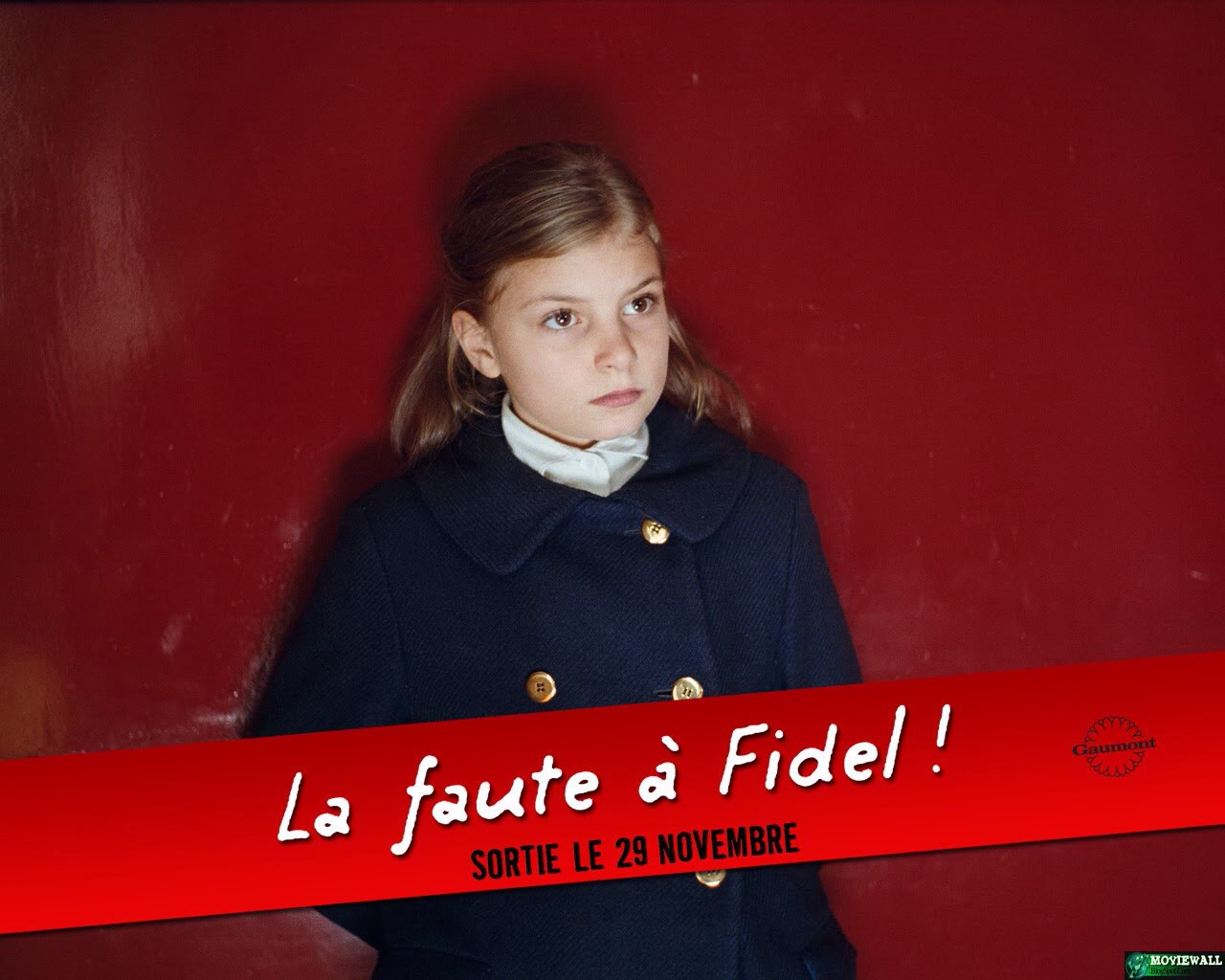
Blame It on Fidel, Fidel being Fidel Castro, is a film by Julie Gavras, daughter of the famous left-wing film director, Costa Gavras. She is more subtle than her father, but no less ideological. 

Made about ten years ago, and set in France, the film tells the story of two radical left-wing parents and Anna, their daughter. 

An intelligent and precocious little girl, Anna is mystified by and resentful of the sacrifices her father and mother make for the causes they espouse. 

Those sacrifices, including poverty and removal from the religion class where she excelled, bring suffering on her as well. 

Eventually, however, the influence of her parents prevails and she goes down the same radical road herself.

While Gavras’ ideology is clear the film is a touching and revealing study. It shows how a child’s mind and soul are influenced by her surroundings and by the adults among whom she lives and whom she loves. 

But the film works on two levels, the personal and the ideological. We watch it today, aware of what is going on in Venezuela, whose present woes can certainly be blamed on Fidel.

The country is on the brink of what commentators are calling “apocalyptic collapse” under its economically illiterate President, Nicolás Maduro. 

Even food is in desperately short supply; the murder rate in Caracas, the capital, is the world’s highest; and inflation may top 700% this year. 

The failure of the socialist policies of Hugo Chávez and his successor, Maduro, now stand exposed. Unbelieveably, despite all this, the cult of Chavismo is still strong. 

According to the Financial Times, Venezuela has the world’s largest oil reserves, and “should be a rich, modern nation.” 

Instead, after 17 years of “revolutionary rule” under Chávez and Maduro, it provides the “most extreme example” of the mismanagement that led to the downfall of leftist governments in Brazil and Argentina. 

But its problems go far beyond the economic illiteracy of its leaders, said Matt O’Brien in The Washington Post. 

Much of the money “redistributed” under Chávez went straight into of the pockets of the regime’s cronies, and drug dealing has flourished. These days, Venezuela is no better than a “gangster state”. 

Venezuelan Emiliana Duarte, writing in The New York Times, reflects: we were raised to believe that we lived in “the most stable democracy in South America. 

“Yet now I find myself in a country where mob lynchings are commonplace – 74 have been reported this year.”

Looking at little Anna 10 years on from Gavras’ story of her conversion to her parents’ radicalism, and looking back at those radicals of the late sixties, we wonder what they would make of Venezuela today, a product of all they stood for.

An end to meaningful political debate

Ireland is not a particularly radical country, despite last year’s referendum which changed the institution of marriage to include homosexual relationships. 

That vote was passed more on a wave of sentiment cooked up by a powerfully funded lobby and a notoriously biased media rather than by any thought-out radicalism. 

What is frustrating about Ireland, however, is that while it is at heart conservative, it is pathologically ashamed of being so. 

It has few conservative media voices and every political party is terrified of being called conservative.

And the country’s left-wing minority have organised themselves in the media so that conservative voices are excluded or sneered at or intimidated as soon as they speak.

All this is crippling our capacity for serious political thought and a meaningful political debate.

Political parties are not in themselves the problem, as many people complain. Edmund Burke argued in their favour.

They were not, he said, factions contending for their own particular advantage, but rather bodies of people united by a vision of the common good of the nation. 

Partisanship, he insisted, was beneficial, as it helped to organise politics into camps defined by different priorities about what was best for the country.

Parties as such are not our problem. Our problem is the poverty of our political thought and judgment – impoverished because it no longer has a basis for recognising what the common good of society is.

Learn from history or…

Historian Mary Beard has written a new book, S.P.Q.R., on her speciality, ancient Rome. It will not endear you to the Romans, and may even horrify you. 

Certainly they were trying to do their best, striving for some kind of justice. The book gives some sense of mankind’s long painstaking journey towards the rule of law. 

While we see some of the origins of our own civilisation there, we realise how radical and necessary was the Christian revolution to bring us to where we are today.

The book also reminds us of what we will lose if we abandon the principles of that revolution, as the West is now doing wholesale. 

Only when Roman society began to be transformed by the Christian faith did the Roman world and law flourish as the framework for western civilisation that it has become today. 

Until then it was a cruel world, dominated by selfishness and the pursuit of power and pleasure, filled with the seeds of its own destruction. 

History is full of warnings. We ignore them at our peril.

From the current issue of ALIVE! 

This is where we are but does anyone know what to do about it?


Today’s New York Times tells a story which, when you read between the lines, is not news about what has just happened. It is about what is going to happen. Add it to the story of a few days ago when British security chiefs warned us that their concern is not about whether that country will be subject to another terrorist assault, but when it will happen. The result you get when you tot up this sum is that we are under siege. Alarmism? No. Just alarm.

It is all the more alarming when we seem not to have the slightest notion of how to protect ourselves from an enemy whose ruthlessness, with each new atrocity, exceeds the one which went before. At the moment all we seem to hear from our governments are expressions of horror, condemnation, and outrage in which all the superlatives have been exhausted and sound banal.

Empty platitudes of defiance and promises of ‘no surrender’ are all we get by way of coherent policy – and they’re no policy at all. Where are the leaders who are going to deal with this? Where are the ideas about how to deal with this. If they do not emerge soon we are at the eve of destruction as the Roman world was in the face of the barbarian onslaught of the 5th and 6th centuries. In the world in which we live, given the pace at which things can move now, our destruction will be fast and furious to a degree which will make progress of the fall of the Roman Empire look like a snail’s pace.

The only policy the international community seems to have in place currently is that of defeating ISIS on the ground in the Middle East. How effective those policies are remains to be seen. ISIS now, however, has clearly opened up a second and far more deadly front – a front that is not a front at all but a lethal virus. It is this strategy that has us all at sea and through which so much havoc can be wreaked that it can truly destroy us.

The Times flagged its story this morning in its daily briefing newsletter with this:

Believing he was answering a holy call, Harry Sarfo left his home in the working-class city of Bremen last year and drove for four straight days to reach the territory controlled by the Islamic State in Syria.He barely had time to settle in before members of the Islamic State’s secret service, wearing masks over their faces, came to inform him and his German friend that they no longer wanted Europeans to come to Syria. Where they were really needed was back home, to help carry out the group’s plan of waging terrorism across the globe.

“He was speaking openly about the situation, saying that they have loads of people living in European countries and waiting for commands to attack the European people,” Mr. Sarfo recounted on Monday, in an interview with The New York Times conducted in English inside the maximum-security prison near Bremen. “And that was before the Brussels attacks, before the Paris attacks.”

Read more »

In Britain today we have an example of the futile gestures which passes for policy when it was announced and reported on Channel 4 News that:

Hundreds more armed police, with handguns and semi-automatic weapons, will be put on patrol around London’s major landmarks – as the Met police chief promised to help reassure the public and deter terror attacks.

The song remains the same


Britain is a trading nation, surely one of the greatest in the history of the world. Its empire was built on trade and not built initially on political ambitions. Once built, politics and political struggles had to feature, but they were not what it was all about. This may not have been true in the medieval era when feudal and dynastic forces were primarily in play – for example, the Angevin Empire, the reining in by Henry II of his feudal barons in Ireland and the Hundred Years War. But in the Modern era the driving forces were trading ambitions and explorations seeking more lucrative trade.

And so it still is today. The United Kingdom joined what is now the European Union – significantly it was still the European Economic Community then – for reasons of trade. That Community already had a political purpose in its DNA but Britain – perhaps naively – chose to ignore it, or think that this would really never come to anything. Britain has a political self-identity which means it would never allow itself to be politically subject to any alliance or coalition of European nations, even a benign one.

The satirical portrayal of Britain’s relationship with the European Union portrayed in the BBC’s Yes Prime Minister 30 years ago has more than a grain of truth in it.

So where is this trading nation now, in the aftermath of Brexit? Not very far, we might suspect, from where it wants to be or needs to be to keep itself on track as a leading trading nation in the world.

Brexit has now freed Britain from the political bonds which she saw relentlessly tightening on her by the well-intentioned semi-democratic – if we accept the standard definition of democracy – alliance which is the European Union. She may now say to herself, “now that’s done, and I’m glad its over”, and get on with what she does best – trading.

But will the sulking members of the European Union whose political bonds she has unceremoniously and shockingly severed now want to make life difficult for her. Will they want to punish, as some have threatened, her by thwarting her trading ambitions. Not likely, for the simple reason that to do so would be to make life difficult for itself. Sensible people do not usually bite off their noses to spite their faces.

While political union remains an ambition of the EU, it knows very well that such a union has no future if trading principles and economic well-being are neglected. The leaders of the Eu will now sit down with new Prime Minister Teresa May and her team-GB and hammer out a trading agreement which will be as much as possible like that which has been operating over the past 20 years and evolving for 40 years. For the EU to come to that negotiating table looking for revenge is the stuff of tabloid journalism. They will be looking for the best deal for them – and the best deal for them will be essentially “more of the same”. If an important component of your car’s engine breaks down you set about repairing it to get yourself moving again. You do not discard it in a fit of anger and hope for the best. You repair it. You may replace it with a better model – but you cannot ignore it.

The silly remark by Jean-Claude Junker, in response to Brexit, that “the British vote has cut off one of our wings, but we are still flying”  was wryly commented on by a letter-writer in the Daily Telegraph who said, “Presumably the direction is round and round in circles.” That would be about the height of it if Junker’s attitude were to prevail.

The Daily Telegraph reported speculation today – in the light of the bizarre economic growth figures reported for the Republic of Ireland yesterday – that Ireland  might be the hardest hit nation of the EU in the aftermath of Brexit. No, she won’t, for the very same reason that the EU will be looking for as little disruption as possible in trading arrangements between all the nations which up until now have made up the Union.

The only negative prospect for Ireland now is a political one. With the UK in the EU there was some hope of a brake on “ever closer union”. Now there is none. Ireland now is at risk of losing whatever was left of the sovereignty she won almost 100 years ago by exiting the United Kingdom. When she attached her carriage to the European Economic Community over 40 years ago, like Britain, she did not give much thought to loss of sovreignty. Since then, however, she has felt the gradual erosion of this and the tensions associated with it. That tension was manifested in two futile rejections of EU treaties – in both cases she was sent back to think again and on each occasion humbly submitted to the greater authority.

With the United Kingdom’s weighty and contrary carriage now politically uncoupled from the EU train, Ireland can expect to see a High Speed Rail transformation and find herself, sooner rather than later, coupled to a sovereign federal state. She may have to think about that and ask herself if this is what she really wants, as she currently celebrates the 100th anniversary of the rebellion which led to her decoupling from another Union.

Still unsurpassed?


Time for a little diversion again, courtesy of the New York Times online “Backstory” once more. Today they take us through the history of the sliced pan – or any other kind of loaf you like to mention.

Sliced bread is, of course, the benchmark for all good things. But it wouldn’t exist quite as we know it without Otto Frederick Rohwedder, a jeweler born on this day in 1880. 

His bread slicer produced the first package of machine-cut and wrapped bread 48 years later, on his birthday in 1928.

Bakers didn’t love the first version of Mr. Rohwedder’s invention, which he started working on in 1912. They feared the individual slices would quickly go stale. Mr. Rohwedder tried to ward that off by holding the loaves together with sterilized hairpins, but the pins kept falling out.
Finally, he added a step that automatically wrapped the bread, too. 

Eventually Wonder Bread bought a version of the machine.

Sliced bread was banned very briefly in 1943, to wide chagrin. The move was intended to control bread prices and save on wax paper during World War II. Headlines heralded the lifting of the two-month ban: “Housewives’ Thumbs Safe Again,” read one.

It wasn’t just housewives, though. In 1963, reporters noticed a Band-Aid on President John F. Kennedy’s finger and asked him what had happened.
Mr. Kennedy laughed and replied: “I cut my finger when I was cutting bread, unbelievable as it may sound.”

Amy Padnani contributed reporting.