Global warming or global amnesia – which is the bigger threat?

images-1

The catastrophe of our time which conventional wisdom identifies readily – even ad nauseam – is the calamity we are promised if we do not deal effectively with the causes and consequences of global climate change.  But there is an even greater catastrophe unfolding in our midst. It is nothing less than the wholesale destruction of the fabric of our civilization and it is far more threatening to the welfare of humanity than the natural changes to our climate.

Two reasons should assure us that global warming is not going to wipe out the human race. For one, that elusive force of nature, ‘political will’, seems now to be in harness to lead the charge against this threat. Secondly, human ingenuity, scientific and technological resourcefulness are all on our side to ensure that we will probably cope reasonably well with the effects of this unruly phenomenon.

Much more destructive of our fragile civilization than the climate-change denial everyone is getting so worked up about is the consignment of our wealth of human memory and tradition to the scrap-heap of history.

Surely one of the greatest malaises of our time is our failure to value our past? That failure is primarily the result of our self-inflicted ignorance. Everywhere around us we see public policy undermining that vital umbilical cord which links – or should link – successive generations of mankind down through the ages. The end result is a denial  which amounts to blindness – creating an empty black hole where there should be a vast reservoir of truth and wisdom. The consequences of such a radical denial cannot but be catastrophic.

It is not that we are unhappy to indulge our nostalgic sentiments with pastiche historical concoctions like Downton Abbey, or  the bizarre mindless faux historical narratives of Dan Brown. All this, some of it little more than vain fantasizing, without the foundation of truthful scholarship, without the training of young minds in the skills involved in the pursuit of historical truth, will at best  be nothing more than a superficial gloss. At worst it will be up there with the Wagnerian fantasies of Adolf Hitler, foundation stones for new tyrannies.

As veteran film-maker Ken Loach said recently, when asked about the popularity of British drama, such as Downton Abbey: “This rosy vision of the past…says, ‘Don’t bother your heads with what’s going on now, just wallow in fake nostalgia.’ It’s bad history, bad drama. It puts your brain to sleep.

“It’s the opposite of what a good broadcaster should do, which is stimulate and invigorate. You might as well take a Mogadon as watch it.”

What history must do – and include in that concept everything we know about archaeology and the study of historical literature and art – is unite us with the generations of men and women who have preceded us, not for a moment denying that among them we find the good, the bad and the ugly. The loss of intimacy with the minds of the past which is evident in the minds of the present must remind us of one thing. It must recall for us the hordes of barbarians who descended on the civilizations of the past – the Vandals, the Goths and the Huns on the Roman world, the Viking hordes invading the Celtic world, and in our own time, the Islamic jihadists and their destruction of the remnants of the ancient civilizations of the Middle East.

Just recently in Britain a campaign has had to be launched to prevent the removal of archaeology from the senior school curriculum. The subject is now joining art history and classical civilization in the school bin. Sir Tony Robinson, presenter of the serious television history programme, Time Team, is dismayed at the trend. “It feels like the Visigoths at the gates of Rome,” Sir Tony told the Guardian. “All these incredibly valuable and important subjects are being cast into the fire.”

At the heart of all this is a denial of the value of our knowledge of the past and of the traditions of of our ancestors. Denial of tradition is a denial of our humanity and it is at the heart of modern individualism, that ideology which is even more inimical to our common good than Communism was.

All this, in part at least, is a consequence of the neglect of history and its systematic removal from school curricula.

Dorothy Day, reflecting in the mid twentieth century on the loss of the sense of the past and the sense of their origins among young Americans, wrote, “Tradition! We scarcely know the word any more. We are afraid to be either proud of our ancestors or ashamed of them. We scorn nobility in name and in fact. We cling to a bourgeois mediocrity which would make it appear we are all Americans, made in the image and likeness of George Washington.” She regrets the loss of the sense of origin of the Irish, the Italian, the Lithuanian who have forgotten their birthplaces and “no longer listen to their mothers when they say, ‘when I was a little girl in Russia, or Hungary, or Sicily.’ They leave their faith and their folk songs and costumes and handcrafts, and try to be something which they call ‘an American’”.

G. K. Chesterton read the issue politically, interpreting the denigration of tradition as something alien in a true democratic heart. “Tradition is democracy extended through time. Tradition means giving the vote to that most obscure of all classes, our ancestors. Tradition is the democracy of the dead. Tradition refuses to submit to the small and arrogant oligarchy of those who are walking about.”

The enemies of tradition have probably always existed.  Their interventions in history have, for the most part, been violent ones. But it was not until the Enlightenment that they really took on an ideological character. In the culture war which their emergence sparked, Edmund Burke and Thomas Paine were the leading protagonists. Yuval Levin in his masterful book, The Great Debate: Edmund Burke, Thomas Paine, and the Birth of Left and Right, shows how the issue of tradition, its value and relevance, became the hinge on which the future character of our society and our world was going to turn – and is still turning.

Paine was a man who clearly believed, as he wrote in Common Sense, one of the seminal texts inspiring the American Revolution, that “we have it in our power to begin the world over again.”

For Burke such an idea was a dangerous anathema, because it ignored all the essential realities of our human nature. For him history was a process of clarification through experience, and political change is among its constant features. But if ignorance of history and tradition prevail in a society then such change is at a terrible risk of being chaotic and human suffering will be the consequence.

Yuval Levin sums up: “Paine seeks to understand man apart from his social setting, while Burke thinks man is incomprehensible apart from the circumstances into which he is born—circumstances largely the making of prior generations.”

“Burke expressly denies that we can look out for the needs of the future even as we reject the lessons and achievements of the past. Access to those lessons and achievements is one of the most crucial needs of the future, as he sees it, so the present-centered vision of the revolutionaries must involve betraying the future as much as the past: ‘People will not look forward to posterity, who never  look backward to their ancestors’”

“If ‘the whole chain and continuity of the commonwealth would be broken and no one generation could link with the other,’ Burke worries, then ‘men would become little better than the flies of a summer.’”

For Burke our links to our ancestors – through our knowledge of their history and the traditions which have come down to us from them – are “capital” to which the present and the future are entitled, the accumulated knowledge and practice of our forefathers. The radicals, Burke argues, seek “to deprive men of the benefit of the collected wisdom of mankind, and to make them blind disciples of their own particular presumption.” He therefore sees himself, Levin explains, as a defender of the present, not the past, and sees the revolutionaries as a threat to present happiness as well as to future order.

The radicals of the Eighteenth century, like Paine, wanted to start the world anew. The gender-bending radicals of our day, driven by the ideology of radical individualism are going even further. They, ignoring the wealth of human experience evident in the history of mankind, want to take our very nature and fashion it in the image of their own strange fantasies.

We might borrow a thought from Burke’s contemporary and fellow alumnus of Trinity College Dublin, Oliver Goldsmith, reading the concepts of history and tradition into his word, “pride”.

“Princes and Lords may flourish, or may fade:

A breath can make them, as a breath has made;

but a bold peasantry, their country’s pride,

When once destroyed can never be supplied.”

We live dangerously when we live without the benefit of the wisdom of our forebears, despite all their flaws and failures.

Human beings never seemed less logical

The Guardian in the past few days has been writing about “draconian laws that force women from both parts of Ireland to travel to Britain to access abortion”. What is this “draconian” law in the Republic of Ireland? It is an article in the country’s Constitution, mandated by two thirds of it population, which gives the right of life to children awaiting birth in their mothers’ wombs. What is draconian about that?

 Draconian might be much more accurately applied to all those laws across the world, legislated by enlightened men and women, which have accounted for the termination – no, not the termination of pregnancies – the termination of millions of lives over the past five decades. This is all in the name of so-called “choice”. It is a perverse world which talks so much about choice but never asks about the rights and wrongs of choices. It is of course the result of a prior perversion, that which sets up the individual as God, a God whose only guide to behaviour is its own will regardless of the value behind the whim, mood or preference which is guiding that will.

If you want to illustrate the injustice of regimes which allow the termination of unwanted children just look at Sally Philips again and her sad reflection on a country which now destroys any child in the womb which seems to belong to the Downs community. Just consider these before you make up your mind on whose side you stand on this issue. This is a community which is being exterminated by in the name of choice – all done by legislatures which paradoxically pride themselves as the protectors of the rights of minorities. Human beings never seemed less logical.

We are a doomed civilization if these are the laws we are going to live by. If the Guardian and the other forces seeking to drive our culture towards a new absolutism, the absolutism of the individual will, prevail, then we are on a short road to that state of nature where all lives will be “nasty, brutish and short”.

US Millennials are “the most pro-life generation in recorded history”

PParenthood

The forces of rampant individualism are currently battling  it out in Ireland with the politically unrepresented defenders of the civilization of life. At issue is the Article in the Irish Constitution which defends the life of unborn children. Meanwhile, the tide seems to be turning in the United States.

That euphemistically termed agent of megadeath, Planned Parenthood, has had a lot of public attention focused on it over the past year. David Daleiden set the ball rolling with his exposure of its practice of trading the body parts of the victims of abortion for big bucks. For his trouble, of course, they have shamelessly got their proxies to pursue him in the courts for alleged misdemeanours he may have committed in exposing them. Even if they win and send him to the lions, his exposures will not go away. The revolting record stands.

A few days ago, Ashley McGuire, a fellow of the Catholic Association, a think-tank at the forefront of the defence of human values in the United States, drew attention to a few uncomfortable realities facing Planned Parenthood. Time is not on the 100-year-old abortion giant’s side, she thinks.

Writing in The Hill, not to be confused with that other hill, Garvan Hill, she noted that while PP has no shortage of funds, it’s longer term future might not be so rosy.

The corporation is certainly flush, as a recent audit revealed that CEO Cecile Richards’ salary doubled to nearly one million dollars from a couple years ago. The half a billion dollars the corporation receives annually from the U.S. government certainly helps, as do the hundreds of thousands of abortions the chain performs annually, at a cost of up to $1,500 a pop.

And it certainly helps when the presidential candidate leading in the polls has sworn her allegiance to Planned Parenthood, even promising to repeal the Hyde Amendment, which bars the use of federal tax dollars for most abortions directly.

One can hardly blame Planned Parenthood for thinking it’s party time.

The icing on their cake was the Supreme Court’s recent decision in Whole Women’s Health, which struck down laws passed by duly-elected lawmakers in the wake of the Gosnell horrors, laws intended to hold abortion clinics to the same basic health and safety standards as any other walk-in health clinic.

Planned Parenthood lobbied against the safety regulations, putting itself quite literally, on the other side of women’s health.

But a closer look reveals many reasons for Planned Parenthood to be deeply concerned.

For starters, there is my generation.

Millennials are the most pro-life generation in recorded history. The last two decades saw a more than 10-point drop in the percent of young voters who think that abortion should always be legal, complemented by polling which finds young people are the most likely of any age category to believe that abortion should be illegal in all cases.

Then there is the poll done by NARAL (formerly National Abortion Rights Action League) which found that young voters who self-identify as pro-life are more than twice as likely as young pro-choicers to say abortion is an important issue when voting.

And then there is abortion itself — the rates for which are at the lowest level since groups began tracking it in 1973. Even the pro-abortion Guttmacher Institute was forced to acknowledge the downward trend spans “almost all states” and can’t simply be attributed to new state-level legal efforts to protect women and their babies.

And of those, there are many.

Just about every year breaks the record for the previous year’s number of state-level regulations affecting abortion practices. Those laws run the gamut, from banning late-term abortion, to requiring higher safety standards for abortion clinics, to outlawing abortions on the basis of sex or disability. These legal efforts speak volumes to what the people want — what Roe v. Wade cut down at the knees: a say in our nation’s abortions laws and more protections for women and children, not less.

Those desires were only inflamed by Planned Parenthood’s P.R. disaster when undercover footage released last year exposed a crass disregard at all levels of the corporation both for the unborn and for their mothers.

The amount of laughter heard throughout the videos as Planned Parenthood staff discuss dollar amounts and gruesome procedures is eerily unnerving. The trade of human body parts that was uncovered is still under federal congressional investigation, with lawsuits filed just last week by the Orange County District Attorney against two medical companies involved in the harvesting, transporting, and sale of body parts from Planned Parenthood’s clinics.

And then there is the inconveniently female nature of the pro-life movement, which jars with the rhetoric that opposition to abortion is somehow anti-woman. A lengthy article published on the feminist and pro-choice website Slate this week profiled the movement and its future, writing that the “future of pro-life activism is young, female, secular, and ‘feminist.’”

Indeed, the pro-life energy tracks that of other social justice movements in our nation’s history.

Over time, each of those movements swelled to the point that it became an unstoppable force, eventually piercing the nation’s conscience and stirring legislators to action. Just this year, polling found that an overwhelming majority of Americans find abortion to be “morally wrong” and that nearly 80 percent believe that our laws are capable of protecting both a mother and her unborn child

That’s bad news for Planned Parenthood.

And so they will no doubt celebrate the 100 years they have behind them, but they cannot hide from reality, which suggests that time is not on their side.

In addition to all that Ashley McGuire adverts to that might give Ms. Richards and her cohorts sleepless nights – and one wonders how they can have anything other than those anyway – there is the impending release of the the film, Gosnel, next year.

Doubtless the media will try to dampen down interest in this, as they did with the Gosnel trial itself, but one hopes that an adequate grassroots campaign will carry it through any barricades placed in its way by pro-abortion media.

T.S. Eliot reminded us that “human kind cannot bear very much reality.” Nevertheless, when the grim reality of everything surrounding the abortion industry is brought into the open light human kind cannot avoid facing it. Then, no longer being able to bear it, the shout will go up, “Enough! Stop this slaughter!”

The Clinton fifth column – what has really been going on, for a long time


The exposure of the Clinton campaign’s machinations to enlist the support of unwitting Catholics by subverting the authority of the Church continues to make waves.

Phil Lawler has noted Ross Douthat’s lengthy Tweetstorm of a few days ago —21 tweets in all—questioning whether it’s accurate to refer to the leaked emails from the Clinton campaign as evidence of “anti-Catholic” bigotry. Douthat—whom he observes is no friend of the Clintonite perspective—”makes a quick, convincing case that the reality is more complicated.”

We shouldn’t really be that surprised that his kind of thing goes on. It has been going on for two millennia. Even the Old Testament is full of it. Subvert the people, the rulers of the people, the prophets – and when you can’t subvert them imprison and kill them if you have to was always the path to religious rebellion. Every subversion of a religion accepted as the True Religion by a people begins with an internal rejection of authority. Secure such a rejection and you are on the pig’s back to full scale revolt.

The scale of what is now revealed as a result of the leaked emails should really be very helpful to all those Catholics who in their heart and head want to accept the authentic magisterium and authority of their Church. They really must go back to the simple and clear marks, which they learned to use as children, to identify  the Catholic Church – one, holy, catholic and apostolic. By extension, their aspiration to identify those same marks in themselves is the basis of their right to call themselves Caholics.

Lawler says that it’s not just that John Podesta, the Clinton campaign chairman at the center of the email exchanges, identifies himself as a Catholic. More important, Douthat notes, “the reality is that his vision is shared within Catholicism.” You will have no problem finding priests, religious, professors at Catholic universities—yes, and bishops—who defend the arguments that Podesta and his allies advance. So the public appearance of these emails offers (Douthat again) “a window into how the Catholic civil war is fought.” Lawler continues to itemise the process of subversion which has been going on.


We now know that Podesta helped to set up groups like Catholics United and Catholics in Alliance for the Common Good, hoping to swing Catholic opinion toward liberal positions, in opposition to clear Church teaching. Frankly that shouldn’t be too surprising; it’s been going on for at least 50 years. What’s more remarkable, really, is how smoothly staff members have moved between the US bishops’ conference and Podesta’s pet groups. Anne Hendershott supplied some details for Catholic World Report. Consider the personnel of one liberal front-group, Catholics in Alliance for the Common Good (CACG):


Alexia Kelley worked for the Catholic Campaign for Human Development before she became founding director of CACG. (She later moved to the Obama White House staff.)


John Gehring was assistant media director for the US bishops’ conference, then became media director for CACG, then moved over to Faith in Public Life.


Tom Chabolla also worked for the Catholic Campaign for Human Development, then joined the advisory board of CACG.


Francis X. Doyle, once the associate general secretary of the US bishops’ conference, became the treasurer-secretary of CACG.


Thus the CACG drew much of its leadership from within the staff of the US bishops’ conference. Presumably they held much the same views, and worked toward much the same goals, while they were employed by the American hierarchy. If they are “anti-Catholic,” then it seems “anti-Catholicism” has found sanctuary and support from our bishops. Make of that what you will.


Just don’t be surprised. If you are a Catholic, or an Orthodox Christian, an Anglican or a Lutheran, who believes that there has been a transmitted deposit of faith and teaching, be vigilant. The forces of modernist individualism, what they call progressivism, have no time for tradition or transmitted truth. They are not roaming around like a roaring lions – for the most part. They are treading the more subtle paths of sweetness and light – and not just in the United States.

Reacher redeemed

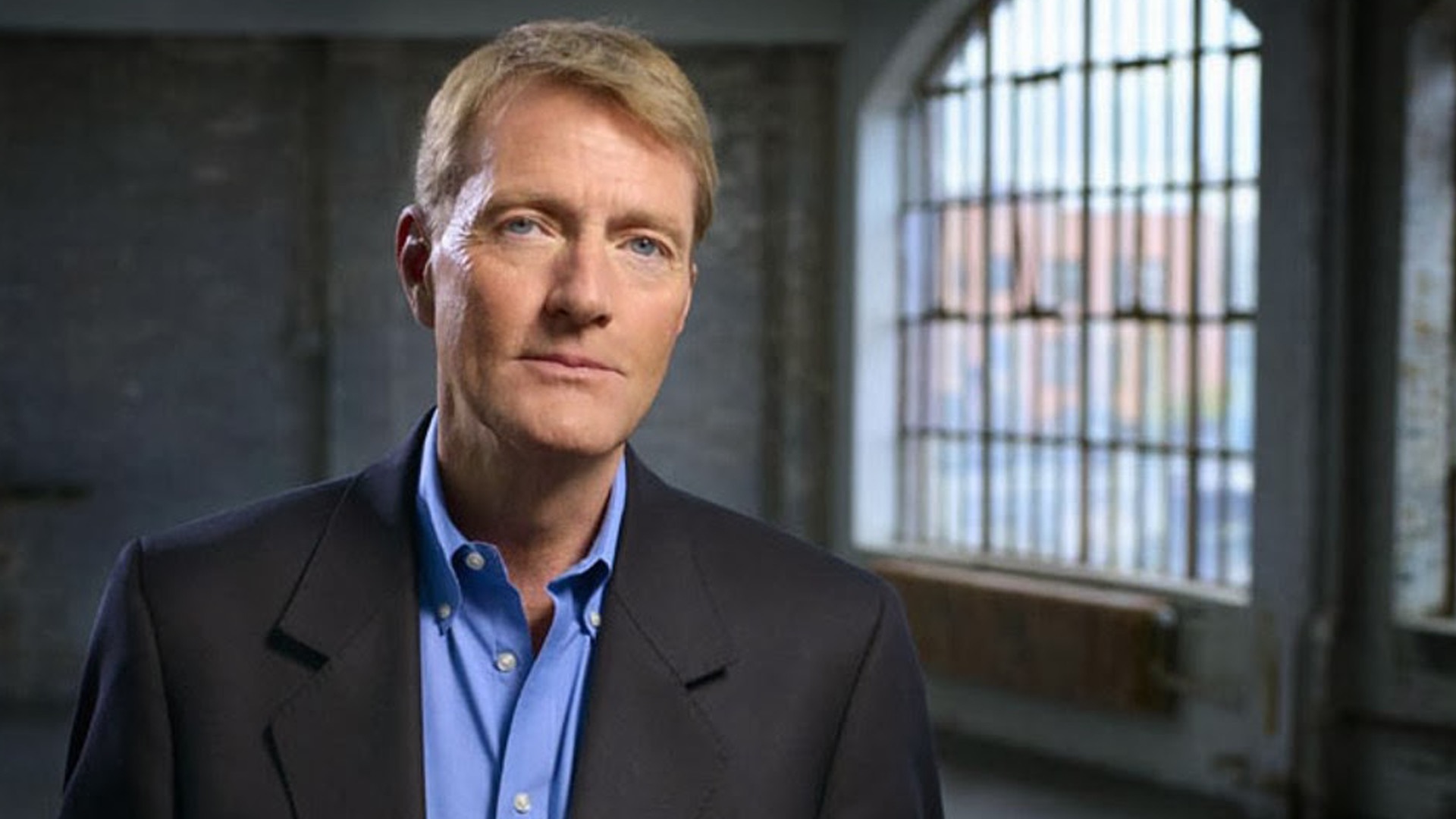
LEE CHILD

I haven’t read any Lee Child novels but a lot of my friends have. I post this from the Daily Telegraph by way of compliment to them. They have often seemed to be somewhat embarrassed by their enthusiasm about him and never recommended that I should read one. Perhaps they should have done. Maybe I’ll even try one now.

In the space of a few weeks there’s going to be both a new Jack Reacher film (starring Tom Cruise, out on Friday) and a new Jack Reacher book (out November 7). I doubt I’ll bother with the film; Cruise, as everyone knows, is ludicrously miscast. But I’ll definitely be reading the book.Lee Child’s thrillers are monstrously popular. They sell at the rate of a copy every 20 seconds. Admittedly not everyone’s a fan. “I can’t understand the mentality of one who is awaiting the next Lee Child,” Harold Pinter said. Sadly it’s a little too late to convert him. But for the benefit of anyone who shares the great man’s bafflement, I’ll try to explain.

I love the Jack Reacher thrillers because they remind me of childhood reading. By that, I don’t mean their language is so simple that a child could read it – although that’s certainly true. Then again, it’s also true of Ernest Hemingway, and that doesn’t make For Whom the Bell Tolls a bad book. Similarly, I don’t mean that Jack Reacher is a child’s idea of a hero – although that again is true, in the sense that he’s a big strong muscle-clad hardman who beats up the bad guys, shoots guns and invariably gets the girl.

What I mean by “childhood reading” is that the Jack Reacher books absorb me: absorb me the way books in childhood did. Remember how, when you were little, a story could swallow you whole: you fell headlong into it, like Alice falling into Wonderland. 

That doesn’t happen so much, when you grow up. Sure, you can love a book, you can admire it, you can be awed by its complexity and lyricism, you can feel enriched by its insights into the human condition. But it’s rare to be gripped so tightly that you become oblivious to all but your hunger to know what happens next.

More broadly, in fact, I’d say this is one of the main differences between childhood and adulthood. For hours on end, to the exclusion of all other thought, children can absorb themselves utterly in a single, simple pleasure: playing with Lego, painting a picture, building a dam in a stream, reading an adventure story. Adults lose that ability. We’re trapped in reality.

Ask Philip Larkin. His poem A Study of Reading Habits charts the way our attitudes to books change as we grow up. As children, we read ravenously, because books make us feel as if we are their heroes. (“It was worth ruining my eyes/ To know I could still keep cool,/ And deal out the old right hook/ To dirty dogs twice my size.” Jack Reacher fans will know that feeling.)

Novels for grown-ups, however, can be deflatingly realistic, a glum reminder of life’s disappointments. (“The dude/ Who lets the girl down before/ The hero arrives, the chap/ Who’s yellow and keeps the store/ Seem far too familiar.”) Which may be one reason so many adults lose patience with fiction. (“Get stewed:/ Books are a load of crap.”)

When you’re a child, you instinctively place your free hand over the final paragraphs of a chapter, to stop your eyes sneaking ahead and spoiling the surprise to come. I find myself doing that when I read a Jack Reacher. I can’t pay any higher compliment than that.

Clinton campaign bigoted AND hypocritical?

LifeNews today reports on the fall-out surrounding the anti-Catholic bigotry which the latest wiki leak tranche of emails reveals about the Clinton campaign. Top Clinton officials are openly mocking Catholics, calling their faith “severely backwards.”


Yesterday, Wikileaks released transcripts of an email exchange entitled “Conservative Catholicism” between Clinton campaign chairman John Podesta, campaign spokesperson Jennifer Palmieri, and John Halpin, a staffer at the Clinton allied Center for American Progress.

In the email thread Halpin mocks News Corp CEO Rupert Murdoch and Robert Thompson, Managing Editor of Wall Street Journal, for raising their kids Catholic.
Halpin writes about these Catholics: “They must be attracted to the systematic thought and severely backwards gender relations and must be totally unaware of Christian democracy…”

Clinton spokesperson Palmieri agreed: “I imagine they think it is the most socially acceptable politically conservative religion. Their rich friends wouldn’t understand if they became evangelicals.”

Halpin replied: “Excellent point. They can throw around ‘Thomistic’ thought and ‘subsidiarity’ and sound sophisticated because no one knows what the hell they’re talking about.”

Brian Burch, the head of the pro-life group CathlicVote, is livid and is calling on these top Clinton campaign officticalials to be fired.

“Aside from their blatant bigotry and ignorance about the philosophy and social teachings of Catholicism, does anyone notice a pattern here?” he asked. “Hillary has already called half of her opponents’ supporters ‘a basket of deplorables’ and ‘irredeemable.’ Now we get a glimpse of what her staff and friends think about Catholics in particular: They mock Catholic converts. They ridicule Catholics for raising their kids Catholic. They call our faith ‘severely backwards.’”

“Make no mistake, had Clinton staff and allies spoken this way about other groups, they would be dismissed. Just imagine if Clinton’s spokesperson was caught calling prominent Muslims or Jewish converts frauds for embracing their faith and mocking them for doing so because it was socially acceptable,” Burch continued. “This morning we called on Jennifer Palmieri to resign immediately from the Clinton campaign.”

Even evangelical leaders like Raplh Reed of Faith & Freedom Coalition, are upset.

“I am deeply troubled by the emails within the Hillary Clinton presidential campaign that show senior campaign officials smearing and ridiculing Roman Catholics and evangelicals. This is anti-Christian bigotry, pure and simple. It is sad, offensive, and un-American,” he told LifeNews.com.

“It reveals a corporate culture at the Hillary Clinton campaign that tolerated the expression of bigoted and prejudicial views of people of faith. No one should be attacked because of their deeply-held religious beliefs, much less by senior officials of someone who aspires to the presidency,” he continued.

Reed concluded: “That Mrs. Clinton’s campaign chair was included in these emails and apparently raised no objection and made no correction to those in her employ is also profoundly disturbing. I call on Mrs. Clinton to apologize for this anti-Christian bigotry and discipline or otherwise make the changes necessary to remove this stain of anti-Christian bigotry from her campaign.”

Ideology has made fools of us

Professor Robert George of Princeton wants to get something straight in this maddeningly mad world of ours. Clearly something very serious has happened to our brains.

So let me get this straight. Threatening to prosecute Clinton, who plainly violated the law and should have been the subject of an FBI referral to the justice department recommending grand jury indictment, that’s bad. But prosecuting soldiers whose breaches of security requirements were far less egregious or potentially damaging, that’s good. And prosecuting flower arrangers or photographers who cannot in conscience contribute their artistic talents to celebrations of what their faith teaches are immoral relationships, that’s very good. And threatening to prosecute a film maker after falsely alleging that his film provoked a spontaneously formed mob to murder our ambassador and other fellow citizens in Libya, that’s very, very good. Have I got this right?


Everyone knows I regard Trump as loathsome and that I refuse to support him. (I have cursed the houses of both candidates so often that I trust no further cursing of houses is required for me to make my views of this election understood.) And even his supporters know that he says outrageous and often disgusting things (they’ve had to spend a lot of time trying to clean up after him). But let’s get some perspective here. He’s not threatening to prosecute Clinton for political crimes. That’s what happens in tin horn democracies as they slide back into dictatorships. People would rightly be outraged by that. He’s threatening to hold her to the same standards that everybody else is held to under the law–something the FBI and Obama Justice Department have refused to do. He’s threatening not to let her skate. Now prudentially, that might be a bad idea. The kind of prudence that caused President Ford to pardon Richard Nixon (at the price of Ford’s own political career) is perhaps called for here. Its an eminently debatable proposition. But let’s debate that, not feign outrage that Trump would threaten to prosecute Clinton for actual crimes (not political ones) that she actually committed.

A way to a better place for valuing human life?

Sally Phillips: “My son has Down’s syndrome – but I wouldn’t want to live in a world without it.” On her own documentary on the subject on BBC TWO on Wednesday night she told us why. It was compelling viewing.

It was funny, it was humane and one felt that if the whole question of the value of human lives in this world might be approached in this spirit we might all be in a much better place.

This report by Elizabeth Day, which appeared in the Daily Telegraph on the day of the screening, gives a flavour of the tone and character of the programme. Day told us:

The programme examines the issues around Down’s Syndrome with intellectual rigour but is also extremely moving, largely because of Phillips herself who made the decision to include Olly in the film. He emerges as a chatty, engaging and kind little boy who often has his younger siblings, Luke, nine, and Tom, four, in hysterics.

People aren’t fascinated by the things people with Down’s Syndrome can do better, which are: relate to people, be funny, be comfortable in their own bodies

When she told her younger children their older brother had Down’s Syndrome, Luke responded, ‘and have I got Up Syndrome?’, says Phillips. 

‘And then to Tom, I said, “You have to understand, sometimes Olly doesn’t understand and he gets angry.” And Tom said, “What, like Dad?”’

After the initial teary conversation in the hospital, she was expecting tragedy. Instead, she got comedy.

‘I suppose I always like absurd scenarios,’ she acknowledges. ‘I just started noticing that it was funny… So, for example, when Olly ran away wearing a Leo Sayer wigand outsized sunglasses in the shape of stars and you’re chasing him down the road barefoot, it’s: “Ok, this isn’t that different from work.”…I mean, he’s got great comic timing. He’s naturally incredibly funny. Always has been.’

Of course, Phillips and her husband were often intenselystressed or in denial during those first five years. Of course, it took a period of adjustment.

Naturally, it wasn’texactly what they had expected parenthood to be, and sometimes it required help from live-in nannies and grandparents (something which Phillips admits she is lucky to be able to afford). But, in other ways, it was better.

This was the report on MercatorNet following the screening.

For the wider world to have access to this wonderful programme we will have to wait for boradcasting organisations around the globe to sort out the rights agreements which currently deprive us of so much valuable broadcast material – and there isn’t much that is more valuable than this. YouTube to the rescue?

Ethical dilemmas in snooping and spooking

cropped

In the aftermath of one of the biggest coups brought about by investigative journalism in recent years, this autumn’s Dublin conference on the media is very timely. The coup, of course, was the Daily Telegraph’s exposé of corruption in the beautiful game. At a time when – as Fraser Nelson observed in a column in the same paper reflecting on the Telegraph’s sting – investigative journalism seemed to have taken a fatal hit from the forces of regulation, the Allardyce et al seedy revelations are effecting something of a resuscitation of the genre. The Cleraun Media Conference in Dublin, with an impressive line-up of contributors, seems to offer a great opportunity to take stock of where this sometimes nefarious, sometimes heroic, pursuit of a story is going.

“A few years ago”, Nelson observed, “Sam Allardyce might have found a little more sympathy for his complaint about having fallen victim to ‘entrapment’. When the Leveson Inquiry was in full swing, and newspapers were the subject of the Metropolitan Police’s largest-ever criminal investigation, journalism itself was in the dock. Politicians and celebrities whose indiscretions had once made front-page news – Hugh Grant, John Prescott, Max Mosley – were in full pursuit of their former tormentors. There seemed to be a new consensus: that the nosy press had gone too far and it was time to bring it under democratic (ie political) control.”

Nelson admits that Allardyce certainly was the victim of a sting, but one that stands as a classic example of what newspapers ought to be doing – and illustrates the importance of a vibrant, investigatory and free press.

The Cleraun conference looks at the whole genre in a wider context. The full title of the conference is Investigative Journalism on the Digital Frontier: New Sources, New Tools, New Technologies, New Audiences.

This is the 16th Cleraun Media Conference, a biennial event which has been running now for 30 years. It takes place on Friday – Sunday, 11 – 13 November 2016 at Chartered Accountants House, 47-49 Pearse Street, Dublin 2.

Speakers lined up are:

Carol Leonnig, Washington Post, Pulitzer Prize Winner in 2015 and 2014.

Declan Lawn, BBC Panorama & BBC NI Spotlight.

Alys Harte, BBC 3 File on Four.

Cécile Schilis-Gallego, International Consortium of Investigative journalists.

Matt Cooke, Google News Lab UK.

Eliza Mackintosh, Storyful UK.

George Carey, British documentary-maker.

Colin Coyle, Sunday Times.

Mark Coughlan, RTÉ Prime Time.

Mark Dooley, Irish Daily Mail.

Steve Dempsey, Sunday Independent.

Seán McCárthaigh, The Times.

Philip Gallagher, documentary director and producer.

Gerard O’Neill, Amárach Research.

Suzanne Kennedy, Newslinn.

The Programme, since the Cleraun series has adopted as part of its brief, the provision of supplementary resources for young journalists in Dublin’s media colleges, will include two “masterclasses” for them.

One will be given by with Carol Leonnig on investigative journalism and another by veteran investigator, George Carey, on producing an investigative documentary – featuring his recent and riveting investigation into the story of the spy, George Blake.

That the Cleraun conference casts its net over a wider area than the printed word is important. As Nelson points out, “When Margaret Thatcher was first elected, some 32 per cent of voters bought a newspaper. When the Leveson Inquiry started, it was 18 per cent. Now, it’s 12 per cent. About 5,000 fewer people will pick up a paper today than did last Friday. To hold a newspaper, to read it at the breakfast table or in the bath, is one of life’s greatest pleasures – but it’s an increasingly rare pleasure. The BBC is the hegemon, in the written word as well as the spoken: four times as many people get their news from its website than do from any newspaper.”

He adds that the enormous costs of investigative journalism – in an news and current affairs industry whose economic foundations are apparently disintegrating – mean that exposés of corruption are becoming rarer. This, he says, rather than an over-powerful press, ought to alarm politicians. Britain and Ireland are, by international standards, fairly in-corrupt countries. Only relentless scrutiny will keep them that way.

Investigative Journalism on the Digital Frontier: New Sources, New Tools, New Technologies, New Audiences. Twitter handle: @Cleraunmedia. Full details at www.cleraunmedia.com .