Reflections on a sad and untimely death

People die every day and everyone is going to die someday. We all know that. Nevertheless, when those who die have lived in the public eye, a public response follows and the motive force behind that response is, while not unreasonable, certainly beyond reason. So let it be with Peaches Geldof. May she rest in peace.

Her father, a man with a big heart and a very good head for putting things together – and who put both at the service of the starving millions in Ethiopia – said of his second daughter: “Peaches has died. We are beyond pain.

“She was the wildest, funniest, cleverest, wittiest and the most bonkers of all of us.

“Writing ‘was’ destroys me afresh. What a beautiful child.

“How is this possible that we will not see her again? How is that bearable? We loved her and will cherish her forever.”

Bob, you will see her again.

We cannot judge you, we cannot judge your daughter, but we do know, in the light of a knowledge supported by reason and faith, “was” does not really cover the full story. You do not see it this way – but you might.

As of now we do not know the circumstances of your daughter’s leaving this world. And even when we do, what we will be told will not be all that there is to know. Only the God who created her with your help knows the full story and what we know about Him is that he is infinitely wise, all-knowing and all-merciful. That is a truth on which we can rest a great deal of hope. Talk to Him.

Just this morning, coincidentally with this sad event,  I read these words of a wise and good man, words which carry with them the authority of Him under whose inspiration you received your early education in Blackrock College in Dublin:

“Our infinite sadness can only be cured by an infinite love.

“But this conviction has to be sustained by our own constantly renewed experience of savouring Christ’s friendship and his message. It is impossible to persevere in a fervent evangelization unless we are convinced from personal experience that it is not the same thing to have known Jesus as not to have known him, not the same thing to walk with him as to walk blindly, not the same thing to hear his word as not to know it, and not the same thing to contemplate him, to worship him, to find our peace in him, as not to.

“It is not the same thing to try to build the world with his Gospel as to try to do so by our own lights. We know well that with Jesus life becomes richer and that with him it is easier to find meaning in everything. “

These words were given to us just last year by Pope Francis in his letter, The Joy of the Gospel.

Mozilla, Mozilla, what DO you stand for?

Some words of Pope Francis on Christian tolerance for Muslims receive a loud echo in a Fraser Nelson piece in today’s Daily Telegraph (London). Meanwhile across the Atlantic a newer kind of jihad takes off yet another head. Some weeks ago the defenders of the gay lobby mocked Ross Douthat of the New York Times when he expressed the controversial view that the gay marriage campaign seemed to be heading for certain victory and that no quarter was going to be given to those who opposed it. The news today seems to bear him out on at least the question of the campaign’s intention.

Nelson takes some pride in what he sees as the remarkable and admirable way in which – in spite of some horrific provocation – Britain has assimilated its imperial legacy of a significant Muslim population. It is a two-way street and the majority of the Muslim minority in the UK cohabits agreeably alongside a majority population whose way of life is still rooted in Christian values.

Would that another very militant minority were as accommodating to the Christian values of the majority with whom they live side by side.

The gay jihadis in the United States have now chopped off the head of Mozilla-Firefox with their creeping and creepy war on Christians and the Christian conscience. For them it’s “no peace, no quarter” for the adherents of a 2000 year-old religion who dare to hold by a belief that marriage should remain what they understand it to be, and the nature and purpose of human sexuality and the institution of the family requires it to be.

The Pope, in his exhortation, Evangelii Gaudium, has asked all Catholics to embrace with affection and respect Muslim immigrants to their countries in the same way that Christians hope and ask to be received and respected in countries of Islamic tradition. He entreated those countries to grant Christians freedom to worship and to practice their faith, in light of the freedom which followers of Islam enjoy in Western countries. Clearly work remains to be done in this area, but movement is in the right direction.

Christians and Muslims are deeply divided on matters of faith and the practice of their respective creeds. Yet the leaders in the mainstream of both faiths in the West have found a way to tolerance and respect for the freedom of conscience of each other’s followers.  No such tolerance is being offered by the gay jihadis who now have all the appearances of becoming one of the more sinister enemies of democracy in our world today.

In 2008, Brendan Eich gave money to oppose the legalisation of gay marriage in California, a mere $1,000. In a truly democratic world this should be no problem. Let the people decide. Let those of opposing views on the matter openly help along the argument which they feel carries the greater weight. This democratic right is outrageously denied by the gay jihad. “You will be punished in whatever way we feel you can be punished if you oppose us”, is their banner.

The Pope went on to exhort Christians to show a spirit of tolerance to Muslims, even in the face of violent opposition. Faced with disconcerting episodes of violent fundamentalism, he said, our respect for true followers of Islam should lead us to avoid hateful generalizations, for authentic Islam and the proper reading of the Koran are opposed to every form of violence. Elsewhere and unambiguously he has asked Christians to show the same spirit towards homosexual people.

Christians faced with persecution – and the treatment of Brendan Eich is nothing short of persecution – from gay activists across the Western world have the same spirit demanded of them. They will be as good as their word and seek to live by this spirit. But they cannot and will not ignore the voice of their conscience and accept a false understanding of human sexuality no matter how many governments, corporations and pressure groups seek to make them do so.

The Christian faith is not homophobic. It is against its deepest principles to hate or denigrate any human being. But it holds, and has held for thousands of years, as its Judaic sources have held, a belief and a reasoned view of what it is to be human – in all its dimensions. The late 20th century change to that “narrative” is a long way from offering any serious reasonable basis for a radical rejection of that position which is still accepted by the vast majority of human-kind. It is this that makes what is now going on, exemplified by the hounding out of his job of a gifted genius, so outrageous, even frightening. The echoes of the worst kind of totalitarianism known to the last century are unmistakable.

Fraser Nelson rejects the notion that there is a clash of civilizations on British soil today. What he says of Britain might also be said of Ireland.

Those who believe in a clash of civilisations, in which British values are pitted against those of the Muslim world, have not been short of examples in the past few days. The BBC reports on an “Islamic takeover plot” by hardliners to seize control of several Birmingham state schools. Two Morrisons workers are suing the supermarket for not being able to take holiday during Ramadan, after being told that they submitted their applications too late. Such stories do make the blood boil, and may lead the less charitable to ask if such people should move to a country that better reflects their prejudices.

But one hears such complaints rarely, and this is what marks us out in a Europe that is paranoid about Islam and identity. Britain is, through empire, the original multi-ethnic state. When Churchill was writing for The Daily Telegraph as a war correspondent, his criticism of the Afghan tribesmen was that their behaviour was un-Islamic. Then, the Queen had tens of millions of Islamic subjects and her ministers boasted of running the greatest Muslim power on earth.

The integration of Muslims can now be seen as one of the great success stories of modern Britain. While the Dutch and the French have huge troubles with integration, and are caught in agonised struggles about their national identities, Britain is marked out by the trouble that we are not having. Dig a little deeper, and the real story is the striking amount of harmony.

But where there is no sign of harmony is in the relentless campaign of a militant minority of homosexual people and their allies from the anti-Christian “liberal” establishment who want to expunge from Western society some of the most fundamental beliefs of the Christian faith about what it is to be human and how men and women should give expression to their sexual identities in a way that is moral.

A taste of the problem with Noah

20140402-151951.jpg

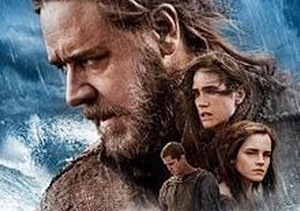
Darren Aronovsky’s Noah seems to have a few problems. Thank goodness the Pope did not engage with Russell Crowe’s tweet inviting him to a free screeinng.
Aronovsky is Jewishh and a professed athiest, relevant in a paradoxical kind of way in the context of this movie. To date he cannot be said to have anything like a masterpiece under his belt. His oeuvre seems to suggest that he is more interested in controversy than art. Pi was intriguing but fairly incomprehhensible. He also directed Mickey Rourke in The Wrestler and Natalie Portman in The Swan. Noah will certainly keep the controversy going.

America magazine has a bemused review which sums it up this way:
The degree to which Aronofsky is up to mischief should not be underestimated. Religious audiences are obviously a target for “Noah” and Paramount Pictures, which has been sweating about the movie since its early survey screenings, has gotten mixed messages back, at best. We wonder if those audiences, chosen to test the waters for a biblical epic that goes its own very eccentric way, picked up on some of the director’s more provocative moves: A visual sequence, for instance, over which Noah relates the Old Testament version of Creation, while at the same time the images are depicting a Big Bang scenario and the evolution of all life crawling out of the sea. Or, for that matter, the very obvious suggestion that, post-Flood, humanity replicates itself via incest. Aronofsky may not have produced a movie that will be thrilling the masses. But a discerning few will definitely be amused. Even appalled.

John Anderson is a film critic for Variety and The Wall Street Journal and a regular contributor to the Arts & Leisure section of The New York Times.
The full review is here

Pope Francis is number one in ‘Fortune’ magazine’s top leader list

pope francis (1)

Linkedin reports that Fortune has just published a list of the top 50 leaders inn the world today. At the top of the list was Pope Francis.

The world is at last beginning to look up. We can only hope that it will now listen as well.

Listen, for example, to this excerpt from Evangelii Gaudium, combining a quote from one of his recent predecessors:

“Without the preferential option for the poor, ‘the proclamation of the Gospel, which is itself the prime form of charity, risks being misunderstood or submerged by the ocean of words which daily engulfs us in today’s society of mass communications’. [Pope John Paul II]”. Note, “The prime form of charity”.
An excerpt from Fortune’s piece about the Pope seems to indicate that some are listening: “His hardest work lies ahead. And yet signs of a ‘Francis effect’ abound: In a poll in March, one in four Catholics said they’d increased their charitable giving to the poor this year. Of those, 77% said it was due in part to the Pope.”
Sorry for adding a drop to that ocean of words, but in this case it is surely worthwhile.


Thinking about it… Racism

The Help is not a great film but it is an honourable film and worth watching because it once again reminds us of things we prefer to forget – the banal injustice and ludicrousness of racism.

A few hours after watching it I was again reminded of it and its heroines when I read these words:

“The dignity of the human person and the common good rank higher than the comfort of those who refuse to renounce their privileges. When these values are threatened, a prophetic voice must be raised”
– Pope Francis, Evangelii Gaudium, Apostolic Exhortation

There are still many mountains to climb.

Obama and Pope Francis: an imagined conversation


“He can cause people around to the world to stop and perhaps rethink old attitudes and begin treating one another with more decency and compassion,” Obama said in an interview with the Italian daily Corriere della Sera before the his meeting with Pope Francis.

Obama being the man he is, believing what he believes, attacking his Catholic electorate in the very depth of their Christian consciences, one is tempted to decode this. It is hard to take.

We know where Obama’s sense of decency and compassion is taking America: abortion and the killing of millions of infants awaiting birth, the deconstruction of the institution of marriage, and an anthropology as bizarre as anything that might be generated by the logic of Humpty Dumpty. With apologies to Lewis Carroll – and to Pope Francis – perhaps this was part of their conversation:

“I don’t know what you mean by ‘marriage,’ ” Pope Francis said.
Obama smiled contemptuously. “Of course you don’t—till I tell you.”

“When I use a word,” Obama said, in rather a scornful tone, “it means just what I choose it to mean—neither more nor less.”
“The question is,” said Pope Francis, “whether you can make words mean so many different things.”
“The question is,” said Obama, “which is to be master—that’s all.”

Garvan Hill tries not to do cynicism. But sometimes the public face presented by men who are walking us all into a hell on earth makes it impossible to resist. I’m sorry. No, maybe I’m not.


A breath of fresh air

Costanza with her two daughters

Costanza Miriano’s  Woman, Get Married and Be Submissive – on being the perfect wife – has sold over 100,000 copies. The media, trying to be ironic, has branded it a Stepford Wives’ Guide.  The Stepford Wives being a 1972 satirical novel by Ira Levin – he of Rosemary’s Baby fame. That story concerns a young mother who begins to suspect that the frighteningly submissive housewives in her new idyllic Connecticut neighbourhood may be robots created by their husbands.

Miriano’s book includes advice to women and wives along these lines – and don’t take it too literally for she’s not beyond a bit of satire and irony herself to drive her points home:

“Women forget that they can’t have it all: working like a man and being at home like a woman. Power is not designed for women.”

Shocking? But before you pass judgement on that you have to take on board the fact that Costanza is a working journalist fighting it out with the best of them on an Italian television channel, writing best-sellers at home and “submitting” to her husband as both of them raise their four kids.

She has no problem whatsoever declaring, “We are not equal to men. When you have to choose between what he likes and what you like, choose in his favour.”  And this: “You must submit to him… When your husband tells you something, you should listen as if it were God speaking,”

As you might expect, a book expressing those ungarnished sentiments has also created a storm. An ultra politically correct Spanish government minister – a woman – wants it banned there. But apart from having a laugh all the way to the bank, Costanza is also having a good laugh at the simpletons who are misreading her book and her intentions. In summary she has done nothhing more than present us with a very sane and rich view of marriage in a guise so alien to the pc mores of today that it is ‘way-off-the-scale post-modern, a very refreshing antidote to the vacuous and poisonous Briget Jones of our time.

As yet we don’t have any of Miriano’s  four best-sellers in English translation. Her latest book is the other side of the coin that is Woman, Get Married and Be Submissive. It is a shot in the arm for the age of chivalry – 21st century-style. It is called Marry Her and Die for Her. What we do have, however, is her blog and that has an English language version on which you can read some extracts from her books. The Italian exuberance of the books is lost in translation but the excerpts do give some idea of the fresh and ultra-human, truly Christian-humanist ideloogy running therough what she has written.

One excerpt is a letter to a married friend whose wedding she attended with her own famiy. It was meant to be a letter written before the wedding, a kind of wedding gift, but chaos seems to have put an end to that intention. As it turnss out it seems the letter-writing had to wait a few years. She writes:

Dear Margherita, I had intended to come to your wedding with a beautiful letter for you – Holy Cow, I am the maid of honour!   

She digresses and in the process gives us some pen-pictures of her own children.

To be honest, the boys especially remember that fatal day (her friend’s wedding, we presume) because that was the day of the Roma F.C. vs. Sampdoria soccer game, which cost the “maggica” the Premier League Championship that year. What can you do with them? They are male, the basic model. Despite it, they are not rednecks, at least not yet. Bernardo is a model student, he can’t get less than an A at school, a little soldier always ready to carry out orders.

 Tommaso, a little less precise, called me the other night to ask me when the Teheran Conference was held – a historical episode totally unknown to me. The latest historical fact I knew was the fall of the Western Roman Empire. And, a few evenings ago: “Mom, what is dialectic materialism? I’m calling Dad if you’re not sleeping now” – I tried to scare him while I frantically browsed the Philosophy section of the encyclopaedia or the History handbook that I learned to keep close at hand, together with the fundamentals – like the West wing DVDs or Mother Speranza’s novena.

 But, belonging to the male gender, he also has an almost universal taint. His brain turns dumb when he sees a rolling ball. I know men who can be defined as normal, even as special as the one I married, that undergo a mutation at the starting whistle of a game and they instantly turn without batting an eyelid, from the violent films of Sam Peckinpah to La Signora in Giallorosso – a talk show on a local Rome TV -, from a re-reading of Dostoevsky’s The Idiot to Big Mario’s radio, losing any restraint. I’m only telling you, so that you can get ready, as you took one of the same species for yourself, and not for a weekend getaway, but for all of your life, until death do you part.

Then she ges to the meat of her letter, her “gift” to her fiend, Margherita.

It is the secret for a holy wedding, which is the same as saying a happy one. The secret is for a woman, in front of the man she chose, to take a step backwards. And, as you know me well, you also may well know this is not in my nature at all. I’m not exactly a docile person, but I have turned into one I believe, I hope, because I think this is what being a spouse means: to embrace, first of all.

 And you know that I, just like anybody, don’t like losing. I’ve been more than competitive at school, at university. Even more in sports…But when it comes to life as a couple, you have to compete in the opposite way: two steps backwards. And you must do it even when you don’t understand why, even when you’re convinced you have good reasons. In that very moment, perform an act of trust towards your husband. Get out of the logic of the world, “I want to get the better of him”, and enter the logic of God, who put at your side your husband, that saint who bears you after everything, and who, incidentally, is also a handsome guy. And if something he does is not fine with you, it is God Himself you have to confront, to begin with: get down on your knees, and most time you’ll solve everything.

 Luigi is the way God chose to love you and he is your way to heaven. When he says something, then you must listen to him as if God was talking to you; with full discernment, clearly, in wisdom and cleverness, of course, because he is a creature, but with respect, because he often sees more clearly than you do. Our vocation, whatever it is, is the source of our happiness. As the Russian Orthodox theologian, Pavel Evdokimov, says, if the objective end of the wedding is generating children, the subjective end is to generate ourselves. Margherita is not fully herself without Luigi!

 Can you realize how great and invaluable a thing you have in your hands? In this enterprise you just started, with the grace of God, you will generate yourself. “But how do you do that?” you asked on the phone some thousand times. Do I have to let him have the better of me even when he’s wrong? I say yes. In the first place because it seems to you that he’s wrong, and if, as we were saying, he’s the one who leads you to your wholeness, to your completeness, it is exactly when he thinks differently from you that you have to open up to him, and embrace him. It is exactly then that what he tells you has a precious meaning for you, it adds something, it makes you whole, makes you grow, lets you make a shift.

 If you just embrace what you agree with,  what you think, you are not married to a man, but to yourself. You must submit yourself to him. When you two must choose between what you like and what he likes, choose in his favour. And this is easy. When there’s a decision to take, and after you weighed the pros and cons the answer is still not clear, trust him, and let him have the last word. This is a little difficult sometimes. When it seems to you that his is completely wrong, for the the sake of both of you, even for the kids, maybe, still keep trusting his clearness of mind. This may seem to be an unbearable effort. You will be afraid, because abandoning your beliefs is scary. But you’re not jumping into the void; you’re jumping into his arms.

 You’ll see, I can swear on it, a man cannot resist a woman who respects him, recognizes his authority, who makes a sincere effort to listen to him, to let aside her own way of seeing things, who tramples on her ever-biting, teasing, failure-highlighting tongue (we’re very good at that, no doubt), who accepts to walk on paths that are extremely different from those she would naturally choose, just out of love.

 Day by day, he will start asking you what you think, what to do, which way your family should go. And this respect you achieve through respect, this devotion through submission. This is why, having finally won my husband’s respect, I now feel ready to calmly explain to him how greatly beneficial it would be to build a garden walk. And even when the fruits seem to be late, we Christians must know they are ripening. We are happy in hope, aren’t we? We know what happens to us is not to be measured on the world’s meter. We know any suffering, even a little one, produces sometimes mysterious, yet never lost, fruits, if accepted with love.

Later in the book, in a less than submissive mood, she writes:

Warning: the reading of what follows is strictly forbidden to my husband, and the noble words that follow apply to any wedding but mine.

She is about to consider the tragedy of broken marriages and other disasters of the kind.

But even a woman who is betrayed has a possibility to defend her love, which is in a serious life-endangering condition: she can remain faithful and keep on loving. It is a terrible storm, but not a shipwreck. It is a vase that breaks, and that will not be new anymore, but even if the signs of where it’s been glued are visible, it will hold until the end. We as women also defend life this way, flying its flag high even when everything seems lost.

 To forgive doesn’t mean to forget what happened. It is not refusing to look at the face of grief. It is not refusing to give it its importance because in the end the good and the bad are indistinguishable. It is not indifference. It is deciding to stem disorder, and to let the good win. The women who manage it are the stronger, the most capable of love, their shoulders are wider, and they are able to perform the miracle you need to overcome a betrayal.


The same cannot be said for men, because a man and a woman love in a different way: the woman with a specific love, capable of understanding originality. Man is fragile, and not always capable of understanding the differences between women. Only these, in the most painful, entangled and despairing situations can proclaim hope and stay up on their feet to give courage again to everybody.

But even without getting to the real, consumed, enacted, betrayal, to the menace of death to the relationship, there are many possible small betrayals.

 Even the wife of Robert Redford, – not the wrinkly director of Sundance, but the legendary man who made himself in ‘The Great Gatsby, – seeing him wandering about the house in underpants and unmatched socks, clinging to the remote control in front of a Lakers match, would probably be tempted to start exchanging messages with the young and good-looking greengrocer from West Hollywood. Even in these cases love works if you make a decision, and you don’t follow your emotions, your needs, your instinctual part.

 How sad are most contemporary films and books: a lamentation on nothingness, a boring tautology. They are a demonstration that by obeying your own selfishness you are unwell, you are disquieted and never satisfied. They are all about grains of wheat refusing to fall in the soil. They are celebrations of “I’m not like that,” or “I don’t feel that way.” Wojtyla told the couples he went camping with during summer: don’t say “I love you.” Say, “I participate with you in the love of God.” A very different kind of music.

Costanza Miriano appeared recently on BBC Newsnight, interviewed by a somewhat incredulous anchorwoman. How did she ever think that she would get away without enraging the worldwide sisterhood if she dared to proclaim that wives should be submissive to their husbands? Costanza explained, with the confidence that sales of 100,000 will give any writer, that submission meant being under someone, or something, in the sense that columns were under the upper structures of buildings and were their supports. These were the essential elements of a building without which any building would be worthless.


A health and safety alert to really take seriously

For Irish readers this is all about paid-up membership of the Vincent Browne/Fintan O’Toole club in The Irish Times. For anyone else it is also a terrific insight into what may be the number one malaise of our contemporary culture. It is currently online on Spiked-online.com.

As the shifting status of men and women plays itself out across society, it is all too easy to attribute men’s changing fortunes to some natural defect of masculinity, as if economic stagnation and decline was a natural phenomenon, like a comet hitting the earth and sealing the fate of the dinosaurs. It is equally tempting to believe that women are prospering because they are better suited to today’s conditions. Neither case is true. The tragedy is that no one benefits from the end of men and all that it implies: not men, not women and not society. What appears to be an equalising of men and women’s status is really the degradation of the human potential of both.

For men, it’s not merely that they no longer personify authority; their masculinity itself has become inherently problematic. It is blamed for everything from rape and violence to the lack of development in Africa. At best masculinity is said to make men too inflexible, at worst it creates dangerous emotional automatons cut off from themselves and one another, prone to see women as objects and predisposed toward sexual violence. Masculinity is increasingly regarded as something young boys must be educated out of: they must be taught not to rape.

By contrast, women are deemed inherently vulnerable. They are always at risk, be it of date rape by men who use alcohol as a weapon, or of developing an eating disorder brought on by images in fashion magazines.

These caricatures of men and women destroy the basis for equal partnership and mutual cooperation. When men are seen as useless or dangerous and women are thought likely to be undermined by men’s privilege, is it any wonder that marriage, the institution though which a life-long partnership between men and women took place, has become more trouble than it’s worth?

http://www.spiked-online.com/newsite/article/the_triumph_of_the_maternalists/14346#.Uy3uRKh_uSo

Blindly stumbling back to square one?

Sandra Bullock, in some desperation, uttered the complaint that “no one taught me how to pray” as she faced what looked like certain death in the film Gravity. Did she symbolize the present state of helplessness and hopelessness of Western civilization? But she did pray, and in doing that did she also show that in some way, when the human soul is confronted with what looks like the last space station, it can still be redeemed by the still small voice and what it whispers to it?

Arnold J. Toynbee once wrote that “Civilizations die from suicide, not by murder.” Toynbee is not currently the highly thought of historian that he once was but there is no doubt but that his ideas, ideas on the grand scale, can still remind us of some things we might prefer to forget. Civilizations do die.

Equally, cyclical theories of history are taken less seriously now than they once were. Nevertheless, they also often can have an ominous ring of truth about them. The phenomenal changes which the world has seen in material progress over the past half century – and indeed social progress, by some measures at least, –  have tended to lull the popular imagination into accepting something like a false sense of the inevitability of progress and a feeling that the job of history is simply to record that progress.

Some historians, perhaps a good few, still take a more open-ended view of history. But, like the economists who were wise enough – there were a few – to see the path of folly which lead to this century’s economic turmoil, we might wonder who is listening to them? There are still, fortunately, some social commentators who remind us of the all-important relationship between cause and effect, that ideas have consequences, and that mankind can regress as well as progress.

Ferdinand Mount wrote a very sobering book a few years ago. He called it  Full Circle and its central thesis was that something has happened to Western civilization which modern man finds very hard to accept – that our glorious, seemingly all-conquering Western civilization, in its flight from its Christian roots, may not actually be progressing but may in fact be regressing to its pre-Christian state. However, the idea of progress has now got such grip of the popular imagination that the modern mind refuses to acknowledge it.

This is blindness, a culpable and dangerous blindness which will lead to the death by suicide of what we call Western civilization. Mount’s Full Circle is a description of a process at work in which our society is heading back to where we started. To him it seems clear that the era in which we now find ourselves is one in which we foolishly clap ourselves on the back for being modern and liberated while we are in fact blindly stumbling back to square one. He does not predict that it is going to end in our civilization’s suicide but it should be more than clear that we are in terminal decline and are headed for our inevitable fall, destroyed by our  own navel-gazing excesses, just as surely as the old classical world was some 1500 years ago.

We pride ourselves in the Pax Americana which is now filtering out around the world. Yes, the world is now a more peaceful place than it has ever been. News media will always report wars and rumours of war so it may not always appear that most of us are at peace with each other more than at any time in recorded history. But don’t be deceived by this ‘peace’. The Pax Americana is no better an indicator of the health of our civilization than the Pax Romana was. The Pax Romana was in fact the calm before the storm in which the Roman Empire crumbled under the weight of its own decadence.

Mount presents us with a catalogue of the decadence of the present age, too lurid in some of its detail even to recount. It is remarkable how accurately it mirrors what went on in ancient Rome at the height of what seemed to be its imperial achievement of pacifying the world. Mount connects the dots for us. In our own ultra-modern preoccupations with health, the body beautiful, the body animal, the culinary arts, nature, fame and celebrity, the revolt against God and more, he sees parallels with the Roman baths, the circus, the Dionysian cults and the lip-service to the old gods whom no one believed in anymore.

The blindness we suffer from has been induced by the myth of progress. Mount at one point puts it like this:

“We are now hard-wired to expect history to deliver progress, jerky, flawed progress marred by horrors usually of our own making, but progress nonetheless. We look back primarily in order to see how far we have moved on. And one central element in that ever-growing sense of self-confidence was the gradual exclusion of religion from the picture. Man has wriggled free of the divine plan.” We no longer see ourselves, he says, as the creation of the mind of God but the product of natural development.

But as he sees it, we are, all the time, retracing our steps. Mount concludes his odyssey on an ambiguous note. He discusses Cicero’s reflections on the likely fate of Rome and the famous dream of Scipio in De Re Publica. Vision, Cicero held, and the need for vision is central to the preservation of civilization. Mount observes that “we have adopted some high principles from Athens and Rome: tolerance and civility and equality and democracy. And we have picked up some agreeable habits. But we seem to have mislaid Scipio’s dream. And the search parties are still out there looking for it.”

That is about as far as he seems to want to take it.

The fact is that the Romans lost it, and lost it in the same way in which we have lost it. When the worship of man – and all the self indulgence which follows on its heels – takes centre stage, civilization, as Solzhenitsyn  reminded us in his famous Nobel address, is on a short road to ruin by its own collective wilful decision. In a word, by suicide.

We may be witnessing the end of what we have called Western Civilization.  But we would be wrong to think that this means the end of all civilization. The heart of our civilization may have been torn from its body but its soul is immortal. That soul is Christianity.

Christian civilization is not co-terminus with Western civilization.  The civilization we have know in the West for a millennium and a half has been Christian in character. It will cease to be what history has known it as for those 1500 plus years when it ceases to be Christian. But Christian civilization itself will not cease to be – not so long as its values, way of life, live on in the millions throughout the world who bond together in it. As Mount suggests, from the vantage point of the end of this civilization, and as Cicero did from the vantage point of his decaying world, the abandonment of God,  religion and the vision of the transcendent is the fatal flaw.

However, against the relentless assaults of the civilization-without-god brigades which have been decade by decade transplanting a materialist heart into our civilization we have to consider the following. In a 2005 issue of The New Criterion, David Bentley Hart, author and Eastern Orthodox theologian teaching in Providence College, Rhode Island, took issue with the pessimism of the English writer, A. N. Wilson. Wilson’s view was that we are now living in the waning days of the Christian religion. “Here we are”, writes Bentley Hart, “living in an age when Christianity is spreading more rapidly and more widely than at any point in the two millennia of its history – throughout the global South and East – and yet, because the Church languishes in the sterile cultures of a small geological apophasis (with a few appertinent isles) at the western edge of continental Asia, Wilson concludes that the faith is in its death throes.”

The reality is that Christian civilization is in robust health. Furthermore is is fully alert to the slings and arrows which are being thrown at it and has within itself all the resources needed to counter the assault on a global scale, the scale on which we now live daily. A few centuries ago Christian civilization was much more dependent on its Western base than it is today. With the waning of the West, with its lemming-like pursuit of extinction – look only at what the culture of death and selfishness which is endemic in the West is now storing up for it on the demographic front – Christian culture will eventually reassert itself from those territories and those populations which have not lost the vision of the transcendental.

These words from the leader of the world’s Catholics speak to all Christians and all men and women who are prepared to raise their eyes above the merely material. They alert us to danger but they also point to a bright future:

 “The great danger in today’s world, pervaded as it is by consumerism, is the desolation and anguish born of a complacent yet covetous heart, the feverish pursuit of frivolous pleasures, and a blunted conscience. Whenever our interior life becomes caught up in its own interests and concerns, there is no longer room for others, no place for the poor. God’s voice is no longer heard, the quiet joy of his love is no longer felt, and the desire to do good fades. This is a very real danger for believers too. Many fall prey to it, and end up resentful, angry and listless. That is no way to live a dignified and fulfilled life; it is not God’s will for us, nor is it the life in the Spirit which has its source in the heart of the risen Christ.”

“Sometimes we are tempted to find excuses and complain, acting as if we could only be happy if a thousand conditions were met. To some extent this is because our “technological society has succeeded in multiplying occasions of pleasure, yet has found it very difficult to engender joy” [Pope Paul VI]. I can say that the most beautiful and natural expressions of joy which I have seen in my life were in poor people who had little to hold on to.”

These words come from the Catholic Church’s exhortation to all Christians to get out there and save our civilization by simply telling the truth about man – which Christian believe only they have in its fullness. They reminds us that we become fully human when we become more than human, when we let God bring us beyond ourselves in order to attain the fullest truth of our being. Christians, the Pope tells us, cannot but do this. “For if we have received the love which restores meaning to our lives, how can we fail to share that love with others?”

 “Goodness always”, he goes on to explain, ”tends to spread. Every authentic experience of truth and goodness seeks by its very nature to grow within us, and any person who has experienced a profound liberation becomes more sensitive to the needs of others. As it expands, goodness takes root and develops. If we wish to lead a dignified and fulfilling life, we have to reach out to others and seek their good.”

This is the force which drove the same embryonic civilization to pick up the pieces of the failed pagan civilization of ancient Greece and Rome after it abandoned “Scipio’s dream”, a dream so powerful that one thinks Cicero would have become a Christian had he had to opportunity to receive the grace to do so. The first Christians did so and gave the world a relatively glorious for 1500 years.

From the time of King David – and who knows how long before – the adherents of the Judaic-Christian faith have been contemplating these words and seeing their palpable truth lived out from generation to generation:

His kingdom is a kingdom of all ages, and all kings shall serve and obey him.

Why this tumult among nations, among peoples this useless murmuring?

They arise, the kings of the earth, princes plot against the Lord and his Anointed.

“Come, let us break their fetters, come let us cast off their yoke.”

 “Ask and I shall bequeath you the nations, put the ends of the earth in your possession.”

Who would be foolish enough to say that they will cease seeing it now? There may be limits to the cyclical theory of history, but don’t look for them in this quarter.