Ireland’s pro-life status under siege again

Minister James Reilly

The “Special Relationship” between Ireland and the United States of America acquired a new dimension this week. Up until now, leaving aside the much vaunted ancestral roots of recent US Presidents Obama, Clinton, Reagan and Kennedy, –  its most significant manifestation was in the critical and effective commitment of President Clinton and other US political leaders to the ending of the 30 Years War in Northern Ireland. That saved countless lives, but the new manifestation might save hundreds of thousands of lives.

A group of pro-life US legislators have now weighed in on the abortion issue in Ireland where a pro-abortion party in the Irish coalition government is threatening to overturn provisions in the Irish Constitution which prohibit the practice in the state. The letter, addressed to the Taoiseach (Prime Minister) Enda Kenny, is urging him and his Fine Gael Party, to reject calls to overturn the country’s explicit constitutional protections for the unborn

The letter, signed by 16 Republican and one Democrat member of the US Congress, said they were concerned that the expert group, appointed by Health Minister James Reilly to present a report on abortion, included some who are pro-choice.

“The absence of experts of known pro-life views and the presence of some of known pro-abortion views were especially noted,” say the members of Congress.

Among those who signed the letter is Doug Lamborn, a Republican from Colorado Springs. The letter is also signed by Trent Franks, a Republican Congressman from Arizona, who earlier this year sought to push through legislation that would ban abortions after 20 weeks of pregnancy in the District of Columbia. The only Democrat signatory is Dan Lipinski, from Chicago, who co-sponsored a bill to prevent women from obtaining abortions on health insurance unless they had been raped.

Pro-life campaigners are delighted with this intervention. For months they have been campaigning to get the Fine Gael Party to honour is election promise not to allow legislation for abortion in the State. The pressure to do so is coming primarily – but not exclusively – from the Labour Party which is in coalition with Kenny’s Party. The Health Minister, who is a Fine Gael member, is widely suspected of being pro-abortion.

The letter from the US Congressmen raised questions about the government’s expert group, assembled by the Health Minister to make a recommendation on how to respond to a European Court of Human Rights ruling that Ireland must “clarify” its law. On the appointment of its members there was grave concern about the pro-abortion record of some of the members of the group. The letter said, “The composition of the expert group seems predisposed to issue recommendations that infringe on the right to life, rather than a simple clarification.” The 17 Congressmen say Ireland is “an example to the world” in refusing to create legalized abortion.

While a certain amount of huffing and puffing can be expected from pro-abortion politicians about what may be described as interference in Irish internal affairs, it will be difficult to sustain in the light of the very positive outcomes of such “interference” which brought the peace process to such a satisfactory conclusion. Besides, the language of the intervention is courteous and persuasive and leaves little room for complaints of arrogance.

Pro-life activists in Dublin allege that Health Minister Reilly has revealed his own pro-abortion bias by appointing the former head of Ireland’s equivalent of Planned Parenthood as the new head of Ireland’s Health Service Executive. He is Tony O’Brien, former Chief Executive of the Irish Family Planning Association (IFPA) which is an affiliate of International Planned Parenthood, the largest abortion provider in the world.

Niamh Uí Bhriain, of the Life Institute, welcoming the US Congressmen’s intervention said that, “Obviously those who have lived with the effects of Roe v. Wade for 40 years realise the enormity of the mistake Ireland would make if our government moves to legalise abortion.”

The Irish government, still trying to extricate the country from the economic disasters which have followed the near-collapse of its banking system would rather not have to deal with this issue but the European Court decision, brought about by very targeted legal actions funded by the pro abortion activists, leaves it with no alternative.  The opposition party, Fianna Fail, sees in this an opportunity to splinter the coalition in which ideological positions already offer ample grounds for conflict. It has said it will oppose any changes to the law. The Labour Party, junior partner in the coalition, is the only party that openly supports and promotes legalised abortion.

The drafting of the report of the expert group set up by the government is currently in its final stages. If this report does not offer as one of the options for settling the ECtHR demands, the holding of a new referendum on the Constitution which will give the Irish people the right to decide the matter then the political consequences could be far reaching. The possibility of the fall of the government and a general election cannot be ruled out. In economic terms this is the last thing anyone wants.
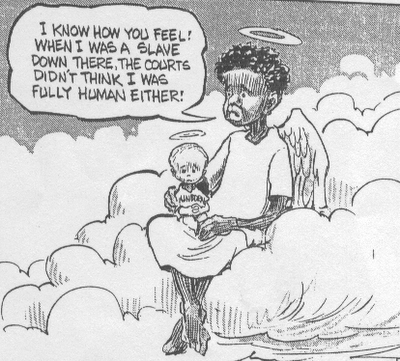
The unborn child – personal property disposable at will?

Intelligent people can sometimes surprise us – with their utter folly. Take, for example Eric J. Segall. One can assume that Segall is an intelligent man because he is a law professor at Georgia State University. In mid-May, in an article in the Los Angeles Times, Professor Segall was discussing the probability of a backlash if the United States Supreme Court forces a change on the American people in line with President Obama’s recent “evolution” in the matter of gay rights. That change might well do more damage than good to the future of gay rights and other important causes, he argued.

Professor Segall’s main argument did make some sense. He was saying that changes forced through by the Supreme Court were not such a good idea. Congress, he said, was the better forum to effect change in a democratic society. But it was where he began to cite the precedents for this that his credibility broke down. To compare, confuse, to even suggest that there was even a remote similarity between the abolition of slavery and the campaign of self-indulgent adults with same sex-attraction looking for pseudo rights was astounding.

“By way of comparison,” he said, “at the time the Supreme Court invalidated bans on interracial marriage in 1967, 16 states prohibited whites and blacks from marrying, and there were few organized political movements devoted to defending the racism behind the anti-miscegenation laws.”

Not to see the essential difference between a battle to overcome an inhuman prejudice such as racism and an issue where those opposing change are doing so on the basis of the integrity of the conjugal relationship between a man, as he is biologically, and a woman, as she is biologically, simply beggars belief.

But that was the least of his folly. Roe V. Wade was then dragged into the equation and identified as a “progressive change” in the same way as civil rights battles of the 19th century – presumably including the abolition of slavery – and child labour laws in the early 20th century were progressive.

Arguing that legislation was a better way of effecting change than judicial activism, he holds the view that the Supreme Court’s 1973 decision in Roe V. Wade that abortion was a fundamental right protected by the 14th Amendment, set off a very undesirable anti-abortion movement. That decision overturned most state laws on the issue and “less than a decade later, the Moral Majority and the Christian right had become major forces in American politics.” How dreadful.

“I am a strong supporter of abortion rights, and if a woman’s right to choose had been truly secured by Roe, maybe the backlash would have been worth it. But poor women today still have a difficult time obtaining abortions, and burdensome regulations on abortion are proliferating every year.”

Regardless of the pros and cons of legislative as opposed to judicial activism, what seems preposterous in all this is that people like Professor Segall now think there is a parallel between the struggle of the African American against racism, and the system of slavery out of which it grew, and the assertion that yet-to-be-born, but actually living-in-the-womb, human beings are expendable at will. The frightening moral blindness involved here makes them incapable of seeing that the rights claimed by pro-abortionists are parallel with the very rights claimed by slave owners over the lives of the slaves whom they regarded as their personal property.

The slave trade in America accounted for the deaths of millions of African Americans. It is estimated that 11 to 15 million of those who were brought into America as slaves died unnatural and untimely deaths. That does not take account of the millions more who died in subsequent generations after the abolition of the Atlantic slave trade and before the abolition of slavery in North America. This carnage was defended for decades on the basis of property “rights”. The deaths of the yet-to-be-born resulting from the abortion trade, defended by pro-abortionists in the name of the “right” to choose, is much more accurately quantifiable. In the US it is reckoned to be 53 million since the Rove V. Wade decision.

Harriet Beecher Stowe in pre-Civil War America grappled with the conundrum of how her fellow-men, freedom loving citizens of her country, could justify the carnage, the destruction of life and the denial of freedom to other human beings which slavery entailed.

In Uncle Tom’s Cabin, she observed,

“Scenes of blood and cruelty are shocking to our ear and heart. What man has nerve to do, man has not nerve to hear. What brother-man and brother-Christian must suffer, cannot be told us, even in our secret chamber, it so harrows the soul! And yet, oh my country! these things are done under the shadow of thy laws!”

She described the horrors of the “property rights” enjoyed by slave owners and the way the law upheld those “rights”. Frederick Douglass, escaped slave and narrative chronicler of the miseries of the system described in factual but equally harrowing detail in his landmark account his early life.

“Let it be remembered that in all southern states,” Stowe wrote in her novel, “it is a principle of jurisprudence that no person of coloured lineage can testify in a suit against a white, and it will be easy to see that such a case may occur, wherever there is a man whose passions outweigh his interests, and a slave who has manhood or principle enough to resist his will. There is, actually, nothing to protect the slave’s life, but the character of the master.”

Can we not translate that observation right into our own time and say that in some countries where abortion on demand is now the de facto law of the land, “There is, actually, nothing to protect the life of a baby in the womb, but the character of the woman bearing it and the men and women who can bring their influence to bear on her?”

Horror stories of the abuses of abortion laws in countries where they have been passed surface with alarming regularity – like stories from Britain where the Daily Telegraph exposed widespread malpractice by abortion “providers” some months ago. Yet another was the house of horrors found in Philadelphia last year. Stories like these were also rife in the era of slavery in the US. Then as now, they were excused as aberrations and not typical of the system – and certainly not justifying the denial of the sacred property “rights” of slave owners. Mrs. Stowe noted it well. We can again translate her words to our own time and circumstances without any difficulty.

 “Facts too shocking to be contemplated occasionally force their way to the public ear, and the comment that one often hears made on them is more shocking than the thing itself. It is said, ‘Very likely such cases may now and then occur, but they are no sample of general practice.’”

Might we hope that someday a modern Harriet Beecher Stowe will emerge and write the novel – or make the movie – which will bring our planet’s inhabitants back to their senses where they will see the enormity of the holocaust in which a large portion of the world which calls itself civilized is currently perpetrating and justify on the basis of a simple “right” to choose.

“The horror… the horror…”

Look at this video and you will be left wondering – almost to the point of despair – about what kind of world we live in where stories like this one can be considered normal. They are happening every day, the “values” underlying them are being promoted every day, not just tolerated, by the Western World Ascendancy. The most chilling moment for me was when Tyler told her “It is the right thing to do”. Right? Did someone – was it Bernard Nathenson – once call this the flight from reason? “The horror… the horror…”

www.youtube.com

In the band Aerosmith’s autobiography “Walk This Way”, lead singer Steven Tyler talks about his former fiancée and mentions his experience with abortion. Her…

Another UN Trojan Horse Dismantled

At last we have a bit of good news showing that the Irish government can be persuaded to make a stand against the politically correct virus with which other states, endemically afflicted with this disease, seek to infect Irish society. On Monday, 10 October the busy-body UN Human Rights Council published its draft report on Ireland’s human rights record as part of the UN’s Universal Periodic Review (UPR). The report included recommendations from six countries for Ireland to bring in abortion.

Ireland’s Pro Life Campaign once again led the charge against this insidious interference and as an accredited NGO of the United Nations. It was represented by its legal consultant Caroline Simons in Geneva last week at the public session of the UN Human Rights Council prior to the publication of the draft report.

Also there was Irish Justice Minister, Alan Shatter, representing the Government and he was questioned on a wide range of human rights related issues which the UN deemed Ireland’s record was in some way suspect. Some 60 stakeholders and NGOs made submissions to the Universal Periodic Review. The Irish Government accepted many of the recommendations in the report but rejected all the calls relating to abortion.

Commenting on Monday’s UN Human Rights Council report on Ireland, Dr Ruth Cullen of the Pro Life Campaign said:

“The Pro Life Campaign welcomes the decision of the Government not to support recommendations from a number of countries for Ireland to introduce abortion. These calls for abortion legislation fly in the face of the UN’s own recent research showing that Ireland, without abortion, is a world leader in terms of safety for women in pregnancy.[1]

“Maternal safety in Ireland, it should be noted, is better than in the six countries pressurising Ireland to introduce abortion – Holland, Germany, Denmark, Slovenia, Norway and Spain.”

Since Mr. Shatter is someone who as an opposition politician was unambiguously in favour of Ireland introducing legislation for abortion in Ireland – and presumably personally still is – we can be very grateful that that the Irish Constitution still prohibits this legislation and will continue to do so until the people decide otherwise in a referendum. In reality, Ireland’s future generations, that is the unborn, will have to thank the Irish Pro-Life Campaign and its Trojan work to protect this provision of the Irish Constitution for their very existence. Hopefully they will be able to continue to dismantle and disarm the numerous Trojan Horses that the UN and others continue to assail them with.

[1] Report on Maternal Mortality, UN, UNFPA, World Health Organisation, 2010.

The Elephant At the Polling Station

There’s no question about it. There’s an elephant in the room and there is a massive conspiracy of silence to say nothing about it among in the mainstream Irish media covering the general election set to take place there on February 25. But hell hath no fury like an animal such as this when roused to anger by being ignored. Some are just now beginning to prod this one into action.

Admittedly Ireland’s continuing struggles to escape the clutches of the biggest recession, probably in its history, preoccupies both the electorate and the politicians in this campaign. But other issues are also at stake and these are the one the politicians are furtively seeking to avoid. Proposals to legislate for abortion, for gay marriage and limiting choice of schools to parents are all there in the small print. Like small print everywhere the hope of the printer is that it might not be read. On these issues it is Ireland’s own version of “don’t ask, don’t tell.”

The first mainstream flagging of the abortion issue came last week in David Quinn’s weekly column in Ireland’s biggest broadsheet, the Irish Independent.  www.independent.ie/opinion/analysis/david-quinn-any-vote-for-the-labour-party-is-a-vote-for-abortion-2535719.html . He spelt out the reality confronting the Irish electorate on these issues and effectively asked them to wake up to it.

These questions have become important because the final composition of the Irish parliament will most likely leave the two centre right parties (Fianna Fail and Fine Gael) without overall majorities. They will then have to look for government partners among the left-liberal groupings, Labour and the Greens. The polls currently suggest that the new Irish government will be formed from a coalition of Fine Gael and Labour. It is the familiar story of the tail getting to the position where it can wag the dog on social policy while the centre right gets on with the economic business. That is what happened in the outgoing parliament where the liberal Greens got their pound of flesh in the form of civil partnership legislation for homosexuals. For all those who campaigned on this issue, this was only a half-way house. The same groupings are now going all out for full gay-marriage legislation. That is no surprise, nor would it be seen as much of a threat by those opposed to these changes if these groupings were not in danger of getting an influence in the new parliament far beyond what their actual electoral support would warrant.

Quinn put his finger on the heart of the problem in his column when he pointed to the failure of the electorate to waken up to this danger. As he sees it – from his reading of the traditional sector of the electorate “a lot of them haven’t the first clue about Labour’s position on abortion. Amazing, but true. They don’t know, for example, that Labour wants to legislate for (a court) ruling of 1992. That ruling allows for abortion, and furthermore, it permits abortion simply on the say-so of a medical practitioner – it doesn’t have to be a doctor or psychiatrist – who is willing to say that his or her patient is suicidal.

In addition, Eamon Gilmore (Labour Party leader) favours abortion where the ‘health’ of the mother is in danger. In practice, this would replicate in Ireland the British abortion law. In Britain, abortion is permitted where a woman’s life or health is at risk. Health includes mental health. In practice, this translates into abortion-on-demand.

Gilmore favours this policy despite the fact that Ireland is the safest place in the world for a woman to have a baby, according to World Health Organisation figures.

And from a Catholic and Christian point of view, it is not only Labour’s stance on abortion that is problematic. It favours same-sex marriage and same-sex adoption. Its attitude towards denominational schools is also a problem.”

Quinn then deals with what he sees as the failure of the sector of the electorate for which traditional values on these issues are important.  He sees two categories of error being made by some of those who might be thinking of voting for Labour. The first category of are those who just don’t know the party’s position on abortion; the second category  somehow manages to rationalise away the Labour position, to say that it doesn’t matter, or that there are more important issues to be considered. Some, he finds, seem to think Labour doesn’t really mean it. “Sorry, it does. If it gets a chance – and that will be up to Fine Gael – we will have abortion in this country.”


The response to Quinn’s column seemed to bear out his point – so far. There were just three letters in the paper the following day and the politicians in the two main parties themselves studiously avoided the issue. I say “so far” because there are some signs that the Labour Party is now coming out more clearly on these issues. If it does so it may force the electorate – or the sizeable sector of it which, if awake, would be concerned about these matters to ask the main parties’ prospective members of parliament where they stand. They might then ask them fair and square whether, if in power with Labour, will they give their backing to health social legislation which denies the unborn their rights, denies society the marriages it needs to maintain the family as a meaningful institution, and denies parents the right to a choice of school without penalizing them financially.

The day after Quinn’s column appeared the paper’s deputy political editor, Michael Brennan, reported that the “Labour Party is making a pitch for the ‘gay vote’ by calling for a same-sex marriage referendum – but it risks alienating more conservative voters. Leader Eamon Gilmore yesterday said the party wanted to push ahead with a referendum to allow gay people the same right to marry as straight people.”  And on abortion he said “Labour is still maintaining its policy on another divisive social issue – it wants to introduce legislation which would copper-fasten the right of women to access life-saving abortions.”

However, Brennan warned, Labour’s social policies could cause divisions with its likely coalition partner Fine Gael, which is opposed to holding an abortion referendum and has not publicly backed same-sex marriages.

Fine Gael’s leader, and the man most likely to be Ireland’s next prime minister, is still less than forthright on exactly what terms he will enter coalition with Labour if he fails to gain an overall majority for this own party. Campaigning in Galway last week one journalist observed him as follows: “Enda has a word for everyone and looks like he’ll stand talking to anyone for as long as his aides will tolerate it. He engages in extended impromptu discussions about abortion, Shell to Sea (a local controversy in the West), the pubic service, and each time sets out his position in full.” Really?

The electorate knows he is “personally” opposed to abortion and considers marriage as a bond between a man and a woman. But but they have also heard him acknowledge that “there are other points of view”. What those seemingly tolerant words will mean if and when he come to form a government with those of that other point of view is what the traditional electors of Ireland do not yet know. The elephant is still in the room.

The Last Straw: booting Boots

This one is a little – perhaps more than a little – personal. My conscience has been troubling me over the past few weeks. I have not had occasion to go to my favourite pharmacist since the Boots chain announced its intentions of providing, from January 12, over-the-counter “emergency contraception” in its Irish stores. My favourite pharmacist is, sadly, a Boots pharmacist. While this is personal it is also a matter which touches directly on the common good of our society and the life and death of human beings. As such I feel I should make my personal response a little public.

It seems to me that, yet again, we have here an instance of corporations taking another step to obliterate all sense of the identity and value of human life in their ruthless pursuit of profits – and then boast of it as “service to the public”.

 I have written as follows to my pharmacist – but do not disclose here either the identity or my pharmacist or the Boots branch where, until January 11, I have been a customer.

 “I have been a customer with Boots for a good number of years now. From time to time I have had misgivings of conscience about this choice of pharmacy in view of some of the products which you provide to the public. Until now I have given the company the benefit of my doubts. However, on reflection, in relation to the latest service which you have announced which you are providing – effectively an abortifacient medication as a so-called ‘emergency contraception’ – I can no longer give Boots the benefit of the doubt. This is contrary to the moral norms which I consider absolute in relation to our responsibility for human life. I don’t think I need to spell this out.

“As a consequence I would request that you set aside for collection, or send to me by post, any current prescriptions which you are holding there so that I can transfer them to one of my local pharmacies.

 “I very much regret having to do this and wish to express my appreciation for your personal courtesy and advice over the past few years. Even though I moved house in September my appreciation for this help was the reason why I had hoped to retain my account with Boots despite some inconvenience. Unfortunately, powers – which I would like to think, are beyond your control – now make it impossible for me to do so any more.

Yours gratefully…”

Right To Be Born Is Centre-stage in Ireland Again

The following post appeared on www.MercatorNet.com before Christmas.

The issue of the right to life of the unborn child became centre-stage in Ireland again in December with a ruling from the European Court of Human Rights. The court ruled on a case brought before it alleging the denial of human rights to three women who were unable to have abortions in Ireland because of its constitutional ban on the procedure. The rulings immediately set off a fire-storm of differing interpretations on the ruling and whether or not it obliges the Irish State to abandon its prohibition on abortion. Clearly the Pro-life activists and those wishing to see abortion available in Ireland were lining up for another all-out battle on the issue.

The Strasbourg-based court, which is separate from the EU, adjudicates on human rights issues among all 47 member states of the Council of Europe.

The identities of the women involved are confidential. They have only been known to the public as A, B and C. Two are Irish and one is a Lithuanian who was living in Ireland. After they failed to get an abortion in Ireland they travelled to the Britain for the procedure. The pro abortion campaign then took up their case and processed it through the Irish courts – but to no avail. Their last port of call was the ECHR which has now given its judgement.

They include a woman who received chemotherapy for cancer; a woman who ran the risk of an ectopic pregnancy; and a woman whose children were placed in care as she was unable to cope. Although the court has only found in favour of the first woman, the headlines are proclaiming that the ruling has found that Ireland has failed to properly guarantee the constitutional right to abortion to which a woman is entitled when her life is at risk.

This distinction harks back to an Irish Supreme Court ruling in the 1990s when the Irish Constitution’s prohibition on abortion was overruled by that court in the case of a young girl who had been statutorily raped and became pregnant. This was know as the “X” case, since the girl could not be named. The court, on the basis of an opinion – which many found medically questionable – that the girl was in danger of committing suicide, declared that her right to life took precedence over the life of the unborn child. A miscarriage ended that tragic story but the Court’s ruling left Ireland’s legal position on abortion in very disputed territory. The campaign behind the case of these women was designed to bring all this to a head and open up the possibility for women to have abortions in Ireland.

In this case the Irish Government defended the status quo on Ireland’s abortion laws, maintaining that it was based on “profound moral values deeply embedded in Irish society”. Its legal team argued before the court that the ECHR had consistently recognised the traditions of different countries regarding the rights of unborn children and maintained that this case sought to undermine these principles and align Ireland with countries with more liberal abortion laws.

Nevertheless, the court unanimously ruled that the rights of one of the three women were breached because she had no “effective or accessible procedure” to establish her right to a lawful abortion. The woman’s case was that she had a rare form of cancer and feared it would relapse when she became pregnant. She was unable to find a doctor willing to make a determination as to whether her life would be at risk if she continued to term.

The court concluded that neither the “medical consultation nor litigation options” relied on by the Government constituted an “effective or accessible procedure”. “Consequently, the court concluded that Ireland had breached this applicant’s right to respect for her private life given the failure to implement the existing constitutional right to a lawful abortion in Ireland.” The court ruled that there had been no violation of the rights of the two other women involved in the case – “A” and “B”.

The failure of the campaign to secure a ruling in its favour in all three cases gives some encouragement to the pro-life movement in Ireland – and indeed in Europe. It means that the Court, at its highest level, has not declared abortion as such to be a human right under the term of the European Convention on Human Rights.

The ECHR ruling has put the issue back on the political agenda in Ireland and is likely to force all the political parties now heading into a General Election in Spring to adopt clear policies on the matter. They will not like this. Until now, with the exception of the left-wing Labour and green parties – the politicians have shied away from the issue knowing how complex it in fact is. It touches deep matters of conscience which they would rather not have to engage with.

Interestingly enough, this week the Fianna Fail Party, the main party in the present government has reached a historic low in opinion polls – because of its perceived mis-handling of the economy. As the most traditional party it would however, be seen as the natural pro-life party and might well see this issue as a life-line. Were it to take a very pro-life line on legislation – because whatever government comes in will now, it seems, have to frame legislation on this issue. The most recent opinion poll findings show that 70% of the public support constitutional protection for the unborn,13% oppose it and 16% don’t know or have no opinion.

The Irish Minister for Health, Mary Harney, seems to have accepted that the ECHR ruling will oblige the State to legislate to secure the human right which it maintains the Irish Constitution has denied to one of the women. Others dispute this obligation. Ms. Harney has said the Government would reflect on the ruling and take legal advice. She said the Government would have to come forward with proposals to reflect the ruling. Clearly kicking to touch she added, “However, this will take time as it is a highly sensitive and complex area.”

Professor William Binchy of Trinity College Dublin’s Law faculty, after the ECHR announced its decision, said that the ruling “would require detailed analysis over coming days but some clear points emerge immediately. The most important is that the judgment does not require Ireland to introduce legislation authorising abortion. On the contrary, it fully respects the entitlement of the Irish people to determine legal policy on protecting the lives of unborn children.”

Professor Binchy, an internationally renowned lawyer and author, has always been highly critical of the judgement in the “X” case referred to above. “The evidence over the past 18 years contradicts the medical assumptions of the X case decision. It is crucial to note that the judges in the X case heard no medical evidence. In the years since the ruling, the evidence has steadily built up confirming the opposite of what the judges had assumed – women who have abortions are more likely to commit suicide than women who continue with their pregnancy.”

As he sees it the Irish people must now make a choice. He says that if they were to choose to endorse the Supreme Court decision in X, – which is what the pro-abortion campaign will look for from the politicians – “this would involve legalising abortion contrary to existing medical practice and the best evidence of medical research. If on the other hand, the Irish people choose to endorse the current medical practice, they will be ensuring the continuation of Ireland’s world renowned safety record for mothers and babies during pregnancy.

“Any revisiting of the X case decision would need to take on board the evidence from these new studies that abortion involves significant risks for some women. Based on the current state of medical evidence alone, it would be irresponsible simply to introduce legislation along the lines of the X ruling as it would put at risk the mother’s life as well as taking the baby’s.

“The suggestion that because of this country’s pro-life ethos pregnant women are denied necessary medical treatments is simply not true. In fact, Ireland is a world leader in safety for pregnant mothers. The latest UN report on the safety of mothers during pregnancy found, of all 172 countries for which estimates are given, Ireland leads the world when it comes to safety for pregnant women.

“By all means, let us debate the abortion issue openly, honestly and with all the facts in front of us. But equally, we cannot shy away from the implications of what legal abortion would involve and the brutal reality of abortion, legal up to birth, in countries like Britain.

“What’s at stake in this debate is the value of life, and the sad experience is that once laws permitting abortion are introduced, they diminish the society’s respect for the inherent value of every human life, born or unborn. What we need now is a calm, respectful national discussion, in which the latest medical and scientific evidence is fully considered leading to a solution at a Constitutional level, which will ensure the full protection of all human beings, mothers and unborn children, on the basis of respect for their equal dignity and worth.”