
Endgame?

This is the way the world ends  

Not with a bang but a whimper.

Unless… Unless what? The problem is, we cannot give a coherent answer to that question. The truth is we seem not to know even how to begin to answer that question. That is, the agencies which try to govern our destinies on this planet, our governments, our academics, our experts, do not know, have not got the slightest idea of what to do to head off that “whimper”.

Ezra Klein, columnist with the New York Times, one of their best, and Jennifer Sciubba, distinguished demographer, began a heavyweight discussion on the columnist’s NYT based The Ezra Klein Show recently. They grappled with a frightening prospect for humanity – nothing less than what looks like the impending collapse of our civilisation.

Klein began, “So, tell me what ‘the total fertility rate’ is?”

Sciubba explained that the total fertility rate is — “let’s just say it’s the average number of children born per woman in her lifetime.” 

Klein then went on to say that when he listens to the conversation about total fertility rates, there are two conversations going on at the same time. One on the left is that it’s way too high. There are too many people. The other conversation is about how critically low it is and that we’re facing “a demographic bust. We’re going to see population collapse. We are a planet growing old, certainly a bunch of countries growing old.” 

They left aside the first conversation and focused on the second. They talked about the consequences of the fact that women have, on average, worldwide, about 2.2 children these days. Sciubba explained that basically, that is the replacement level. But then she said that in this century so far, we are in a global demographic divide. For example, the area in the world where it really is the highest is in parts of sub-Saharan Africa, over five children per woman on average.

But while there’s a divide, she said, the bottom line is that we’re all moving in the same direction. In the second part of the century, that’s really where we’re all going to start converging down at those lower levels. 

Klein then asked her how true the statement was that as countries get richer and more educated, their fertility rate drops. “Partially true” was her answer because there are “huge” examples where that has not been the case. “Huge” as in India. India is already really below replacement level for the whole country.

She cited Paul Ehrlich’s opening to his 1968 book, Population Bomb. He recalled a trip to India. There were people everywhere, people on the streets, people eating, people drinking, people sleeping, people, people, people. “And now, those people have a total fertility rate below replacement level. And India is not a wealthy country.” 

But they agreed that in general if a country has gotten richer, and that country is highly educated, highly literate, it is wealthy, that generally allows you to predict with a high level of certainty that this country is probably going to have a low fertility rate, probably below replacement level.

They were baffled by this “slightly mysterious” (Klein’s phrase) thing at the heart of their conversation. Why is it a demographic fact that when you look around the world, rich countries, more educated countries have fewer children? Why does wealth lead to fewer children?

They then moved from the focus on material well-being and began to talk about human values and the tremendous shift in values and norms across western societies. Sciubba then got personal and almost went to confession:

“And so, I think about my own life. So I have two children. And I have values beyond just wanting those children. Sorry to them if they listen to this. Thank goodness, they probably won’t, till they’re older. I do value my free time. I do value a nice meal at a restaurant. I value time with friends, time with my spouse, et cetera, et cetera. I value my career. And I value time with them the most. But you know what? It does compete for time.” 

Klein agreed but put it a little differently. “As countries become richer and more educated, they become more individualistic. And when you’re more individualistic, and people are making decisions more about their life, their self-expression, their set of choices,… then, children are one choice competing among many.”

They didn’t say this but it comes down to “freedom” of choice, “freedom” for choice. Ultimately it is about how we understand freedom.

So, on a personal level it all seems to come down to the choices people are offered by our society and our economic circumstances. As a society we expect to be able to make our choices freely and at the end of the day it is our personal value system which will guide us – or be a moral imperative for us – in making those choices. That, however, offers no solution to the demographic winter which our world faces.

They then considered the powerful impact of societal cultural values on all this – clearly implying that while people might feel they are acting freely in all the decisions they make, their freedom is much more limited than they think, limited by the norms prevailing in their communities.

They then nuanced their view of how much real freedom they might actually be enjoying.

Klein reflected that if he had told his parents that he was going to have kids at 24, they would wonder what went wrong with birth control. “We’d have been the only ones in our friend group with kids at that point. And so, there is this way in which, yes, there’s a lot of individualism, but the individualism also has very potent cultural grooves, right? You’re supposed to go and get education, and then more education and then more education, and then establish yourself in your career and be financially in a good spot, and of course, be married.

“And by the time you’ve done all that, you might be 30. You might be 32. You might be 36. And even if you wanted to have three or four kids at that point, you do end up running, particularly for women, into a biological clock problem.”

Sciubba drew from this observation the consequence that the total fertility rate for the U.S., writ large, is about 1.6 to 1.7 children per woman. Below replacement level. For the more education the lower it is on average. However she also pointed out that the gap with highly educated and less highly educated is not that big anymore.

They then moved to look at what we might call the global picture and how state policy – or any other agency’s policy – might shift us from a path which many see as a path of self-annihilation.

Is this really something that is amenable to policy change, though? Klein asked. “One of the things that is most striking to me about the data here…is that across many different kinds of societies, including some that have seen this as a crisis for their country for some time — I think here of Japan, I think here of South Korea — the ability to shift this through policy — and people have tried a lot of different things and a lot of different kinds of messaging and tax incentives and this and that — it doesn’t really seem like anything has worked.”

“And in the most extreme cases — again, I think here of South Korea, which I believe is now below total fertility rate of one, so I mean, you’re entering geometric decline — they’ve not been able to turn that around…Some of the extreme cases, like some of these East Asian countries” now see this as a genuine threat?

Klein and Sciubba then go on a virtual tour of the world to find a country which has tackled its demographic decline successfully. Depressingly, nothing seems to work. 

Sweden, which I visited last summer and where I was impressed by the evidence I saw of young families – and was told that Sweden is the best country in Europe in which to have children because of all the benefits offered. But all this is to no avail in bringing their fertility rate to or above replacement level.

The demographic “engineers” are trying to raise fertility rates to replacement level and trying to create what Sciubba describes as this nice stovepipe age structure. In this you get a steady number of people being born, aging into the workforce and aging out, without any scramble to build kindergartens or scramble to pay for Social Security.

Dream on.

The conclusion of their virtual tour is that we really don’t have societies that hang out there at replacement level. Once they tend to fall below it, they tend to stay there. 

Klein asks how do you get a population, if you’re a state, to have fertility rates that go back up above replacement level? “Well, you can strip away individual rights.” He hastens to add that he is not advocating this. Some totalitarian regimes tried and one succeeded monstrously – that of Nicolai Ceausescu in communist Romania. “So, no,” he concludes, “we do not really have examples where a society goes way below and then comes back up to above replacement level and hangs out there, and everyone is happy.”

No one thinks that the Ceausescu road is the one we will be travelling! But what road will we be traveling? Neither Klein nor Sciubba, with the best will in the world, really have any suggestions.  It appears that the modern world, in its modernity or postmodernity incarnations, as regards this impending threat is just stumped? 

In Part II of this article, next week, we will look at Alasdair MacIntyre’s seminal work, After Virtue, which traces false ideas which have colonised our culture and are conceivably at the root of this predicament.

Parts I and II will appear in the print and online summer editions (May and June/July) of Position Papers Review.
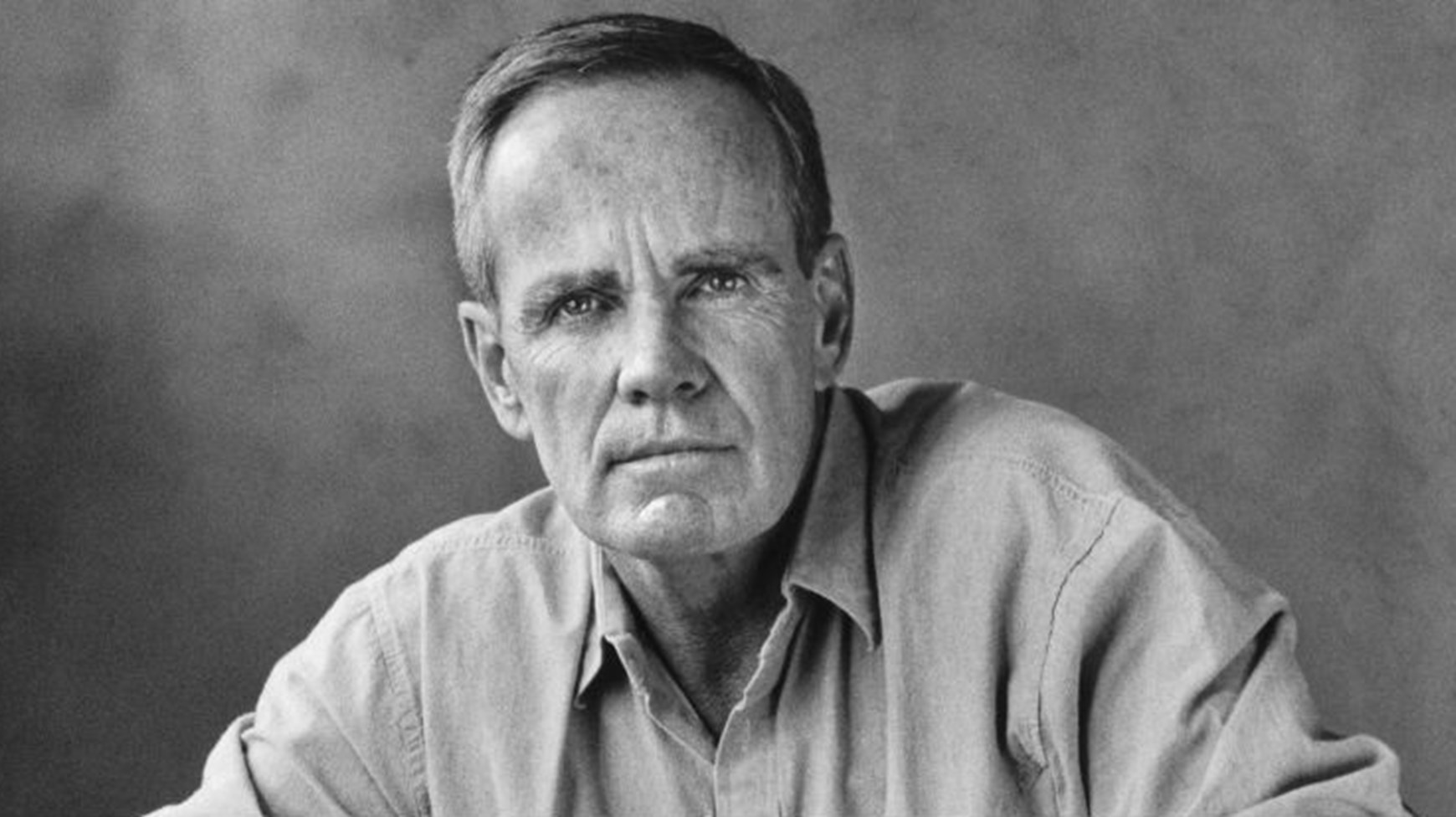
Cormac McCarthy – challenging us in our comfort zones

out15268763

You can read the novels of Cormac McCarthy and treat them like a bad dream. Or you can read them like a “Stephen King nightmare thriller with no cheap thrills” – as Kenneth Lincoln says in his study of McCarthy’s work. You can also treat his stories as you might treat those grotesque surrealistic narratives which sometimes invade our sleep and with which we then might entertain each other around the water-cooler. With some of them you would not even dare do that – lest your friends might call in the men in white coats.

Alternatively, you can take them seriously and come to the worrying conclusion that they are not just stories, but something akin to prophesies. As the five decades rolled by over which McCarthy worked on these fables – for two of those decades in relative obscurity – they became more and more like a mirror revealing to us the horrors lying beneath the facade of modernity. They tell us in the grimmest possible terms about the terrible things we have done to each other – and continue to do – and the terrible consequences of our failure to be what we really are and were meant to be.

Cormac McCarthy, although brought up a Catholic by his Irish-American family, does not avow any particular religion. But he is profoundly religious. The terrible contortions of humanity which we encounter in so many of his characters point to the same devastating end as do some of the lethally deranged characters which we find in the oeuvre of that profoundly Catholic writer, Flannery O’Connor. Those aberrations have all got the same gaping hole in their heart – the ignorance or wilful rejection of objective truth and a transcendental Creator.

In this, the second decade of the third millennium of the Christian era, the centre no longer seems to be holding. An apocalyptic vision of mankind’s fate, and the place to which our folly has brought this world, runs through every one of McCarthy’s ten novels. But he does not preach. He portrays the victims of our folly and the interplay of the forces of evil with our foolishness – and then implicitly leaves us with the simple exhortation, “he that has ears to hear, let him hear.”

He is not the only prophet of our time. Other Tiresian witnesses  “have foresuffered all enacted on this same divan or bed; … have sat by Thebes below the wall and walked among the lowest of the dead.” Surveying the excesses of modernity over the last century they have pointed to the same end: Alasdair McIntyre spelled out the philosophical roots and practical consequences of our flight from virtue and reason into the quagmire of emotionalism where our private lives and public policies now wallow in disastrous self-indulgence;  Charles Taylor and Brad Gregory take the story through its sociological and historical ramifications, while Rod Dreher now looks in desperation towards a neo-monastic solution for it all.

McCarthy depicts a world which has come apart at the seams. He does not spell out the reasons why this has happened. He does not tell us how to redeem ourselves. But neither does he tell us that we are irredeemable – despite his going within a hair’s breath of this in some narratives, particularly in the earlier portrayals of our plumbing the depths of depravity. In the last  instalment of his ten-novel output, The Road, the hope which is the basis of mankind’s salvation is burning ever so fragilely on its final pages.

“SPE SALVI facti sumus”—in hope we were saved, says Saint Paul to the Romans, and likewise to us (Rom 8:24). According to the Christian faith, “redemption”—salvation—is not simply a given. Redemption is offered to us in the sense that we have been given hope, trustworthy hope, by virtue of which we can face our present: the present, even if it is arduous, can be lived and accepted if it leads towards a goal, if we can be sure of this goal, and if this goal is great enough to justify the effort of the journey. (Pope Benedict XVI, encyclical, Spe Salvi, 1)

I am not suggesting any kind of link of mutual influence to be found between the author of The Road and the author of Spe Salvi, but in both we do find a signpost to the same truth. Hope is a sine qua non for our survival as it is for our salvation. The road travelled by the man and the boy in McCarthy’s novel is symbolic of our own journey. The devastated landscape through which they travel is akin to the desert  brought about by the scourge of relativism of which Pope Benedict frequently spoke. The total breakdown of law and order which constantly threatens their lives is the consequence of the same scourge which has destroyed the foundation of all morality.

“The  man” in The Road lives out the last years, months and days of his life on this earth because, he says, God has entrusted him with the life of “the boy”, his son. Hope is fragile in the world of The Road, a sunless world of grey ash which has been devastated by some cataclysmic disaster – man-made, we assume. But it is still there in the boy’s heart. After they find a well-stocked larder in an underground shelter the boy says a prayer for those who left it behind: “Dear people, thank you for all this food and stuff…and we hope that you’re safe in heaven with God.”

The man perseveres in the struggle to stay alive and protect the boy from the pursuing cannibals and other desperate human predators, the “bad guys” in the child’s language, for as long as he can. Dimly, he sees he has to, for the boy is humanity’s last hope. As he dies, that hope is still alive and with his last breath he tells the boy that goodness will find him, “It always has. It will again.” As the boy cries beside the body of his father, other fugitives, families, parents and children, find him.  They have been following them and now adopt the boy as their own. A woman tells him that God’s breath is his “yet though it pass from man to man through all time.”

All great novels probably constitute a kind of biography of their writers and tell us something of the story of their souls. The novels of F. Scott Fitzgerald, taken in sequence, tell a sad story of a young man’s struggle with the temptations of a degenerate age and his tragic surrender to vanity, ambition, infatuation and self-indulgence. McCarthy’s novels seem to tell a better story. It seems to be a story of a man’s struggle with the temptation to pessimism and despair about our flawed human condition and the state in which we have left the world. It might be too much to say that McCarthy has reached the point at which T.S. Eliot felt able to conclude The Waste Land with the three words “shantih, shantih, shantih”, the “peace which surpasseth human understanding”. But  the evolution of his soul as evidenced by the sequence of his novels suggests something like it.

In all McCarthy’s novels the element of evil is palpably present. In some it is the only element, in the same way in which it is the only element in the hell-centred books of Milton’s Paradise Lost when we are in the company of Satan and his diabolical legions plotting their revenge on the Creator. In two of the novels Satan himself is incarnate: in “The Judge” in Blood Meridian and in Chigurh in No Country for Old Men.

But the apparently unredeemable grimness of the early novels now has a counter-balance of goodness in the wings – without any loss of the power of the warning about what lies in store for mankind when truth is denied. Placed before us is the horror of a world laid waste when men and women, in wilful blindness or malice, exercise their choices in favour of things evil. McCarthy’s questions, stated or implied, are begging to be answered. Where do the “bad guys” come from? Where do the “good guys” come from? What drives the one, what drives the other? What he shows us is the lethal conflict in the heart of men and among men which follows from evil choices – untold suffering for the innocent and the guilty alike.

McCarthy’s fiction is much more than fiction. It is fiction which has a frightening truth at its heart  – the truth which tells us that by denying the essence of our humanity we are capable of destroying everything that mankind has achieved since the moment of his creation.

The words of Rod Dreher’s friend, a monk in the Benedictine Monastery of Norcia, imply the critical choice before mankind today when he says “Those who don’t do some form of what you’re talking about, they’re not going to make it through what’s coming.” That’s not fiction. It’s time to identify with the boy of McCarthy’s fiction, “the one”.

Kenneth Lincoln describes the boy’s final acceptance of his destiny like this:

The boy speaks guileless truth and still brushes his teeth in the morning. He knows there are not many good people left, if any, and the odds are against them, so he comes to the point for his father. “I don’t know what we’re doing, he said.” And still they do what they’re doing, leaving a thief naked in the road to die, the boy sobbing to help him. His father says that the boy is not the one who must worry about everything, and the boy mumbles something. “He looked up, his wet and grimy face. Yes I am, he said. I am the one.”

Comments on this post can be read on its MercatorNet posting here


We CAN know the truth

Charles Taylor explained it in his own way in A Secular Society. That was a difficult but rewarding read. Alasdair MacIntyre worried us all about it in his very sobering After Virtue. Then Brad Gregory took up the theme compellingly in The Unintended Reformation. But if you want to go for a very short and succinct treatment of what happened to our Christian Civilization over the past 500 years try Fr. Brian McKevitt’s version of the story in a short homily he delivered last month. Not only did he tell us how we got here but he very helpfully suggested to us what we might do to get ourselves back on track before we all eat ourselves alive.

Fr. Brian is an Irish Dominican priest who edits a monthly paper which some feel is one of the few things which is keeping Irish Catholics informed about the state of their religion in the world today. The paper plays all the tricks of the tabloids without being a tabloid and is read, standard systems of estimating these things would calculate, by at least a million people every month. Others feel that if there is one single organ keeping some semblance of Catholic orthodox belief in the country alive and kicking today it is Fr. McKevitt’s Alive!

If you like it please spread it around.