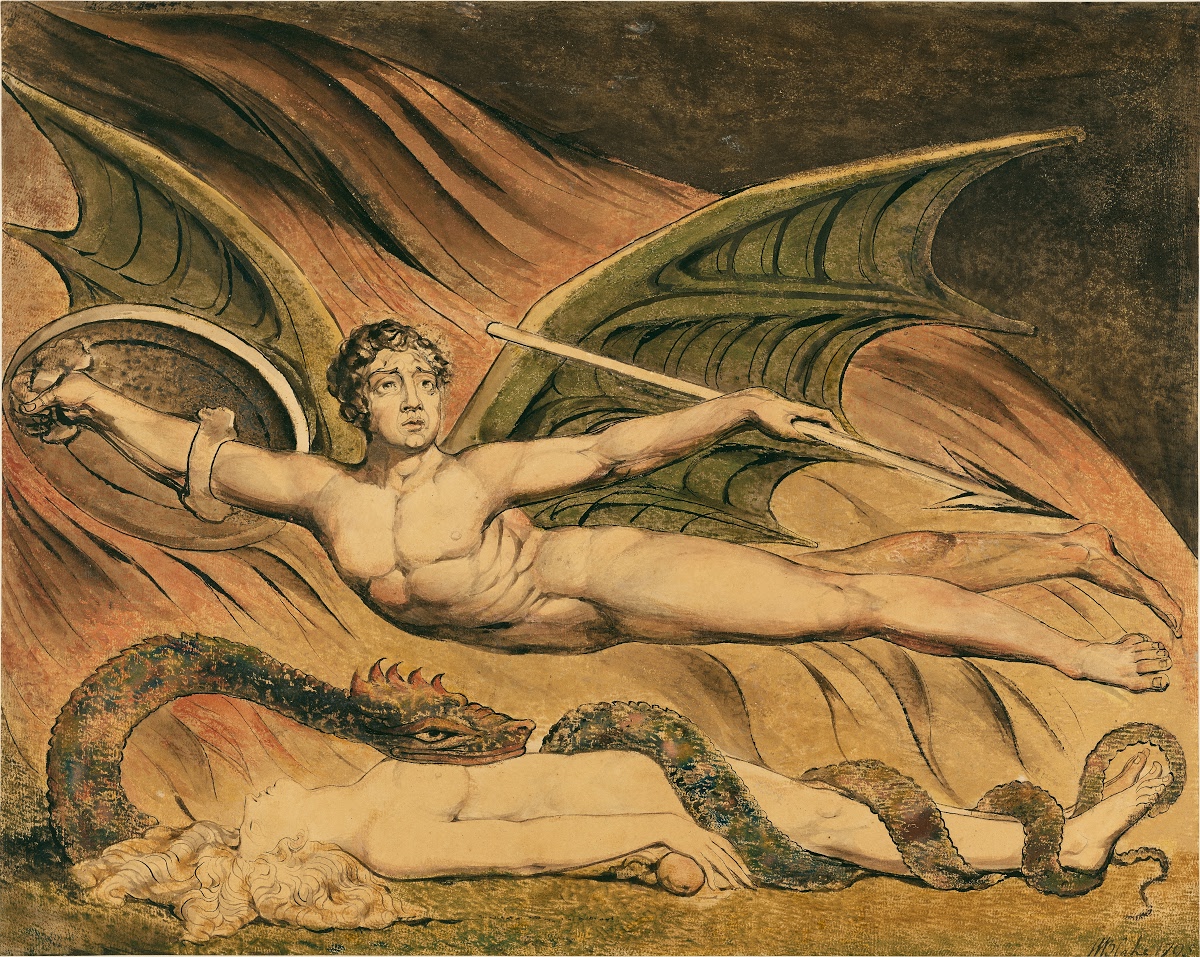
The reality of outer darkness in Dostoevsky and Cormac McCarthy

“No English novelist has explored man’s soul as deeply as Dostoevsky”, E. M Forster wrote in his wise little book, Aspects of the Novel.” Forster’s viewpoint was not much appreciated by some of his fellow countrymen. But he made no apologies for it. Any claim to the contrary was for him simply a mark of provincialism.

Describing Dostoevsky, Forster said, “He has penetrated-more deeply, perhaps than any English writer – into the darkness and goodness of the human soul, but he has penetrated by a way we cannot follow. He has his own psychological method and marvellous it is. But it is not ours.”

But there may be another novelist in the English language who now comes close to Dostoevsky in his searing power to expose the darkness into which our kind can enter and destroy ourselves. This is the Irish-American Cormac McCarthy, described by many now as the greatest American novelist of the late twentieth century.

Dostoevsky’s work is looked on by many as prophetic and in no novel is he more so that in his late masterpiece, Demons (also published under the titles The Possessed and The Devils). He did not live to see the Russian Revolution nor the horrors which it and its ideology brought to the world. But in Demons he described its roots and had no doubt that if those roots bore their bitter fruit, a human catastrophe would be the outcome. He was right, but he also knew that those roots had one primal origin, a demonic one.

One hundred years after Dostoevsky published Demons, Cormac McCarthy published what many consider to be his masterpiece, Blood Meridian. It is as dark and forbidding as Demonsand like that book is also rooted in actual records of man’s inhumanity to man. Furthermore, there is no question but that it can be interpreted as a record of demonic possession. Read in conjunction with the body of McCarthy’s work, especially Outer DarkNo Country for Old Men and The Road, one cannot but see that McCarthy’s preoccupations – never explicitly stated, but always lurking in the dark shadows of his work – are very similar to Dostoyevsky’s. Even central characters in Blood Meridianmight be read as reinterpretations of those in Demons.

In Demons, the “possession” described affects not one man or a few families, but an entire provincial town and all levels of its society. However the two central and  tragically evil characters are Nicolai Stavrogin and Pyotr Verkhovensky. They embody much of the preternatural demonic character of McCarthy’s “Judge” Holden in Blood Meridian. The hapless victim of the calculated vindictive cruelty of Pyotr Verkhovensky, would-be but reluctant student revolutionary, Ivan Shatov, in some way is mirrored by the equally hapless “Kid” in McCarthy’s novel. 

For much of the journey which Blood Meridian takes us on we are accompanying a murderous gang of US renegades – in which “Judge” Holden is the second in command – on a mission to exterminate native Americans south of the Mexican border. The smell of evil is palpable. A newspaper account of the historical personage on which McCarthy based his character, the “Judge”, reads as follows:

His desires was [sic] blood and women, and terrible stories were circulated in camp of horrid crimes committed by him when bearing another name, in the Cherokee nation and Texas; and before we left Frontereras a little girl of ten years was found in the chaparral violated and murdered. The mark of a huge hand on her little throat pointed him out as the ravisher as no other man had such a hand, but though all suspected, no one charged him with the crime.

In Demons, Nicolai Stavrogin, whose sensual brutality is mirrored in “Judge” Holden,has a similar catalogue of evil deeds on his record and in the end is driven to suicide with little other explanation for it than a demonic one. The cold and cruel ideology of Pyotr Verkhovensky is mirrored in the other side of Holden.

We hesitate, understandably, to preoccupy ourselves too much with the Evil One. Nevertheless, our Lenten season begins with an account of Christ’s encounter with Satan in the desert in the forty days he spent there before his public life began. Our failure to acknowledge the perpetual existence of the father of lies may be a dangerous habit of our age which considers the material world as the only real world.

One is reminded of the teaching of Joseph Ratzinger when he asked us to reflect on this:

Have not we also thought that spiritual realities are less real than the material? Is there not also a tendency to defer announcing the truth of God in order to do “more necessary” things first? In fact, however, we see that economic development without spiritual development is destroying man and the world. (Journey to Easter).

Denis Donoghue, probably the most learned literary critic Ireland has ever produced, when teaching Blood Meridian  to his students in the University of New York, recalled the words of another famous critic, Lionel Trilling, when he spoke of the “bitter line of hostility to civilisation” that runs through modern literature. Donoghue, however, does not bunch McCarthy’s work in that negative category, even though he appears to refuse to adjudicate any deed in his fiction (The Practice of Reading).

Donoghue writes, and taught his students, that while Blood Meridian appears to give privilege to primal, nonethical energies, and seems to endorse Nietzsche’s claim that art rather than ethics constitutes the essential metaphysical activity of man, McCarthy is not in fact endorsing that philosophy. Nietzsche, he points out, is “Judge” Holden’s philosopher, not McCarthy’s.

Donoghue admits that the experience of reading Blood Meridian is likely to be, for most of us, peculiarly intense and yet wayward. The book demands that we imagine forces in the world and in ourselves which we might  think we have outgrown. He concludes, “We have not outgrown them, the book challenges us to admit. These forces are primordial and unregenerate, they have not been assimilated to the consensus of modern culture or to the forms of dissent which that consensus recognizes and to some extent accepts. They are outside the law.”

That is, I think, outside the law as our world knows law. Human law is a flawed edifice. The truth is that those forces are more real than we want to admit. At the end of the novel the “Judge”, before crushing the Kid to death in his monstrous embrace – although that death is not explicitly stated – has this conversation with his victim with this Nietzschean rebuke:

You came forward, he said, to take part in a work. But you were a witness against yourself. You sat in judgment on your own deeds. You put your own allowances before the judgments of history and you broke with the body of which you were pledged a part and poisoned it in all its enterprise.

Hear me, man. I spoke in the desert for you and you only and you turned a deaf ear to me… For it was required of no man to give more than he possessed nor was any man’s share compared to another’s.

Only each was called upon to empty out his heart into the common and one did not.

This, Donoghue says, “is the gist of the judge’s complaint against the Kid: he should have voided in himself every scruple, every impulse of kinship with the defeated, He should have retained no will but the common will, so far as that was embodied in the work of war and killing.”

Those words might well have been spoken by Pyotr Verkhovensky to Ivan Shatov in Demons prior to Shatov’s murder. Verkhovensky’s hatred of Shatov was personal but he hid it under the fiction that Shatov would denounce his revolutionary cell. The members of that cell, however, were not fooled, Dostoevsky’s narrator tells us; they knew that  Pyotr Stepanovich was playing with them like pawns. They felt they had suddenly been caught like flies in the web of a huge spider; they were angry but quaking with fear. But that did not make them back away from their evil plan. Shatov’s fate was sealed.

With a resonance of Judas’ betrayal of Christ, Verkhovensky warns his accomplices, “Only just let anyone try slipping away now! None of you has the right to abandon the cause! You can go and kiss him if you like, but you have no right to betray the common cause. Only swine…act like that!” An allusion to the Gerasene demoniac whose demons ended up in the herd of swine.

It is at the scene of Shatov’s murder, after the deed is done, that the demon possessing one of the accomplices manifests himself openly, and in a way which is echoed in the murder of the Kid in Blood Meridian.

Lyamshin hid behind Virginsky, only peeping out warily from behind him every now and then, and hiding again at once. But when the stones were tied on and Pyotr Stepanovich stood up, Virginsky suddenly started quivering all over, clasped his hands, and cried fully at the top of his voice: “This is not it, this is not it! No, this is not it at all!”

He might have added something more to his so belated exclamation, but Lyamshin did not let him finish: suddenly, and with all his might, he clasped him and squeezed him from behind and let out some sort of incredible shriek. There are strong moments of fear, for instance, when a man will suddenly cry out in a voice not his own, but such as one could not even have supposed him to have before then, and the effect is sometimes even quite frightful. Lyamshin cried not with a human but with some sort of animal voice. 

Squeezing Virginsky from behind harder and harder with his arms, in a convulsive fit, he went on shrieking without stop or pause, his eyes goggling at them all, and his mouth opened exceedingly wide, while his feet rapidly stamped the ground as if beating out a drum roll on it. Virginsky got so scared that he cried out like a madman himself and tried to tear free of Lyamshin’s grip in some sort of frenzy, so viciously that one even could not have expected it of Virginsky, scratching and punching him as well he was able to reach behind him with his arms. 

Erkel finally helped him to tear Lyamshin off. But when, in fear, Virginsky sprang about ten steps away, Lyamshin, seeing Pyotr Stepanovich, suddenly screamed again and rushed at him. Stumbling over the corpse, he fell across it onto Pyotr Stepanovich and now clenched him so tightly in his embrace, pressing his head against his chest, that for the first moment Pyotr Stepanovich, Tolkachenko, and Liputin were almost unable to do anything. 

Pyotr Stepanovich yelled, swore, beat him on the head with his fists. Finally, having somehow torn himself free, he snatched out the revolver and pointed it straight into the open mouth of the still screaming Lyamshin, whom Tolkachenko, Erkel, and Liputin had already seized firmly by the arms; but Lyamshin went on shrieking even in spite of the revolver. Finally, Erkel somehow bunched up his foulard and stuffed it deftly into his mouth, and thus the shouting ceased. “This is very strange,” Pyotr Stepanovich said, studying the madman in alarmed astonishment.

He was visibly struck.

“I had quite a different idea of him,” he added pensively.

He simply did not recognise, blinded by his own demonic-nurtured atheism,  the nature of the monster which had confronted him. That was his first direct encounter with the Devil that evening. The next – I’ll spare you the detail – was with Kirillov, the atheist who wanted to be God and  whom Verkhovensky was complicit in seducing to commit suicide. The account of his death and the diabolical manifestations which accompanied it has been described as  “the most harrowing scene in all fiction”.

McCarthy’s fiction, as Donoghue says, makes no explicit adjudication on the evil deeds his characters perpetrate. That he leaves to us But in the character of the Kid we have an image of innocence lurking in the shadows and which the “Judge” realises he has failed to corrupt. Dostoevsky is much more explicit about redemption. One of the wonderful passages of the book is the deathbed conversion of Pyotr Verkhovensky’s father, Stepan Trofimovich.

Richard Pevear, one of Dostoevsky’s recent translators, comments in his introduction to Demons:

Here, in what many consider the darkest of his novels, Dostoevsky inscribes the fundamental freedom of Judeo-Christian revelation: the freedom to turn from evil, the freedom to repent. His vision is not Manichaean; he does not see evil as co-eternal with good. Evil cannot be the essence of any living person. The “possessed” can at any moment be rid of their demons, which are wicked but also false. The devil is a liar and the father of lies. And the lie here is the same as in the beginning: “you will be like God”.

One can only hope that the fracturing character of our own civilisation, penetrated as it has been again by a new Marxism, which we are rather naively branding with the silly label of “Wokeism”, is not the unfolding of a prophecy of the dehumanisation of our society as Dostoevsky’s was for Russian society at the turn into the twentieth century.

This article first appeared in the April, 2023, issue of the review, Position Papers.
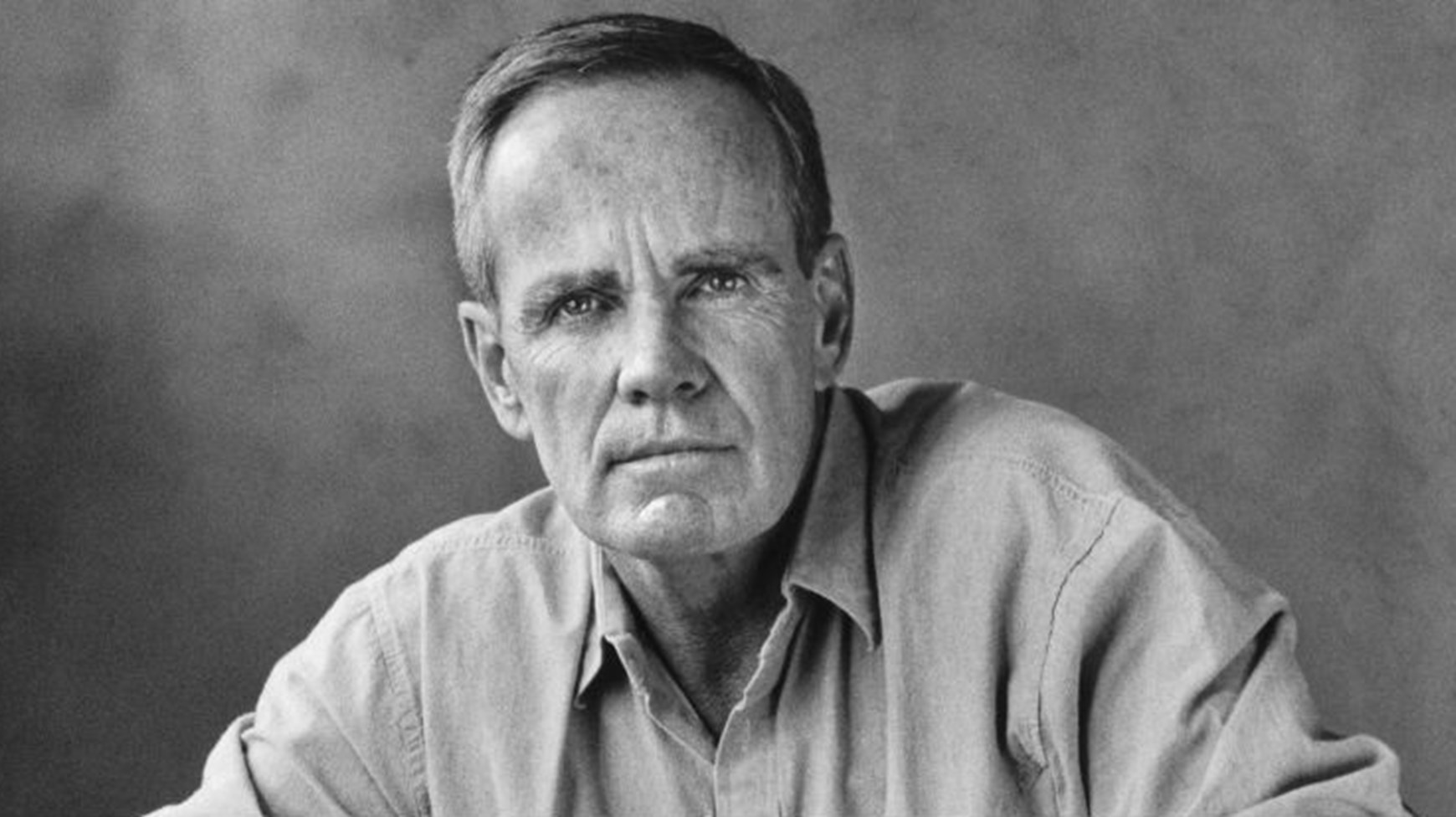
Cormac McCarthy – challenging us in our comfort zones

out15268763

You can read the novels of Cormac McCarthy and treat them like a bad dream. Or you can read them like a “Stephen King nightmare thriller with no cheap thrills” – as Kenneth Lincoln says in his study of McCarthy’s work. You can also treat his stories as you might treat those grotesque surrealistic narratives which sometimes invade our sleep and with which we then might entertain each other around the water-cooler. With some of them you would not even dare do that – lest your friends might call in the men in white coats.

Alternatively, you can take them seriously and come to the worrying conclusion that they are not just stories, but something akin to prophesies. As the five decades rolled by over which McCarthy worked on these fables – for two of those decades in relative obscurity – they became more and more like a mirror revealing to us the horrors lying beneath the facade of modernity. They tell us in the grimmest possible terms about the terrible things we have done to each other – and continue to do – and the terrible consequences of our failure to be what we really are and were meant to be.

Cormac McCarthy, although brought up a Catholic by his Irish-American family, does not avow any particular religion. But he is profoundly religious. The terrible contortions of humanity which we encounter in so many of his characters point to the same devastating end as do some of the lethally deranged characters which we find in the oeuvre of that profoundly Catholic writer, Flannery O’Connor. Those aberrations have all got the same gaping hole in their heart – the ignorance or wilful rejection of objective truth and a transcendental Creator.

In this, the second decade of the third millennium of the Christian era, the centre no longer seems to be holding. An apocalyptic vision of mankind’s fate, and the place to which our folly has brought this world, runs through every one of McCarthy’s ten novels. But he does not preach. He portrays the victims of our folly and the interplay of the forces of evil with our foolishness – and then implicitly leaves us with the simple exhortation, “he that has ears to hear, let him hear.”

He is not the only prophet of our time. Other Tiresian witnesses  “have foresuffered all enacted on this same divan or bed; … have sat by Thebes below the wall and walked among the lowest of the dead.” Surveying the excesses of modernity over the last century they have pointed to the same end: Alasdair McIntyre spelled out the philosophical roots and practical consequences of our flight from virtue and reason into the quagmire of emotionalism where our private lives and public policies now wallow in disastrous self-indulgence;  Charles Taylor and Brad Gregory take the story through its sociological and historical ramifications, while Rod Dreher now looks in desperation towards a neo-monastic solution for it all.

McCarthy depicts a world which has come apart at the seams. He does not spell out the reasons why this has happened. He does not tell us how to redeem ourselves. But neither does he tell us that we are irredeemable – despite his going within a hair’s breath of this in some narratives, particularly in the earlier portrayals of our plumbing the depths of depravity. In the last  instalment of his ten-novel output, The Road, the hope which is the basis of mankind’s salvation is burning ever so fragilely on its final pages.

“SPE SALVI facti sumus”—in hope we were saved, says Saint Paul to the Romans, and likewise to us (Rom 8:24). According to the Christian faith, “redemption”—salvation—is not simply a given. Redemption is offered to us in the sense that we have been given hope, trustworthy hope, by virtue of which we can face our present: the present, even if it is arduous, can be lived and accepted if it leads towards a goal, if we can be sure of this goal, and if this goal is great enough to justify the effort of the journey. (Pope Benedict XVI, encyclical, Spe Salvi, 1)

I am not suggesting any kind of link of mutual influence to be found between the author of The Road and the author of Spe Salvi, but in both we do find a signpost to the same truth. Hope is a sine qua non for our survival as it is for our salvation. The road travelled by the man and the boy in McCarthy’s novel is symbolic of our own journey. The devastated landscape through which they travel is akin to the desert  brought about by the scourge of relativism of which Pope Benedict frequently spoke. The total breakdown of law and order which constantly threatens their lives is the consequence of the same scourge which has destroyed the foundation of all morality.

“The  man” in The Road lives out the last years, months and days of his life on this earth because, he says, God has entrusted him with the life of “the boy”, his son. Hope is fragile in the world of The Road, a sunless world of grey ash which has been devastated by some cataclysmic disaster – man-made, we assume. But it is still there in the boy’s heart. After they find a well-stocked larder in an underground shelter the boy says a prayer for those who left it behind: “Dear people, thank you for all this food and stuff…and we hope that you’re safe in heaven with God.”

The man perseveres in the struggle to stay alive and protect the boy from the pursuing cannibals and other desperate human predators, the “bad guys” in the child’s language, for as long as he can. Dimly, he sees he has to, for the boy is humanity’s last hope. As he dies, that hope is still alive and with his last breath he tells the boy that goodness will find him, “It always has. It will again.” As the boy cries beside the body of his father, other fugitives, families, parents and children, find him.  They have been following them and now adopt the boy as their own. A woman tells him that God’s breath is his “yet though it pass from man to man through all time.”

All great novels probably constitute a kind of biography of their writers and tell us something of the story of their souls. The novels of F. Scott Fitzgerald, taken in sequence, tell a sad story of a young man’s struggle with the temptations of a degenerate age and his tragic surrender to vanity, ambition, infatuation and self-indulgence. McCarthy’s novels seem to tell a better story. It seems to be a story of a man’s struggle with the temptation to pessimism and despair about our flawed human condition and the state in which we have left the world. It might be too much to say that McCarthy has reached the point at which T.S. Eliot felt able to conclude The Waste Land with the three words “shantih, shantih, shantih”, the “peace which surpasseth human understanding”. But  the evolution of his soul as evidenced by the sequence of his novels suggests something like it.

In all McCarthy’s novels the element of evil is palpably present. In some it is the only element, in the same way in which it is the only element in the hell-centred books of Milton’s Paradise Lost when we are in the company of Satan and his diabolical legions plotting their revenge on the Creator. In two of the novels Satan himself is incarnate: in “The Judge” in Blood Meridian and in Chigurh in No Country for Old Men.

But the apparently unredeemable grimness of the early novels now has a counter-balance of goodness in the wings – without any loss of the power of the warning about what lies in store for mankind when truth is denied. Placed before us is the horror of a world laid waste when men and women, in wilful blindness or malice, exercise their choices in favour of things evil. McCarthy’s questions, stated or implied, are begging to be answered. Where do the “bad guys” come from? Where do the “good guys” come from? What drives the one, what drives the other? What he shows us is the lethal conflict in the heart of men and among men which follows from evil choices – untold suffering for the innocent and the guilty alike.

McCarthy’s fiction is much more than fiction. It is fiction which has a frightening truth at its heart  – the truth which tells us that by denying the essence of our humanity we are capable of destroying everything that mankind has achieved since the moment of his creation.

The words of Rod Dreher’s friend, a monk in the Benedictine Monastery of Norcia, imply the critical choice before mankind today when he says “Those who don’t do some form of what you’re talking about, they’re not going to make it through what’s coming.” That’s not fiction. It’s time to identify with the boy of McCarthy’s fiction, “the one”.

Kenneth Lincoln describes the boy’s final acceptance of his destiny like this:

The boy speaks guileless truth and still brushes his teeth in the morning. He knows there are not many good people left, if any, and the odds are against them, so he comes to the point for his father. “I don’t know what we’re doing, he said.” And still they do what they’re doing, leaving a thief naked in the road to die, the boy sobbing to help him. His father says that the boy is not the one who must worry about everything, and the boy mumbles something. “He looked up, his wet and grimy face. Yes I am, he said. I am the one.”

Comments on this post can be read on its MercatorNet posting here


Conscience sacrificed on the altar of personal choice and selfish convenience

“Excluding any known wishes of the patient or family to the contrary, a decision to preserve the life of a patient in a state of permanent unconsciousness based on respect for life itself is morally no more sound than a decision to take that life.”

Those words must surely send a shiver down the spine – or more likely, land a blow to the solar plexus – of any half sensitive moral conscience. They are reported on the Careful! blog of MercatorNet.com this morning and they come from an American doctor writing in the latest issue of the leading journal Bioethics.  There, Dr Catherine Constable, of New York University School of Medicine, tells us that artificial nutrition and hydration should be withdrawn from all patients in a permanent vegetative state – unless there is clear evidence that they want to be kept alive. She argues that the current presumption in favour of maintaining ANH is misguided. It is not in the interests of the patient nor, because of its cost, in the interest of society.

Surely we have reached the nightmare of moral chaos to which Joseph Conrad’s Mr. Kurtz, and his later incarnation, Francis Ford Coppola’s Col. Kurtz, descended in Heart of Darkness/Apocalypse Now when (in Coppola’s film) he confessed and protested his hellish vision of a judgement-free world – by which he meant the judgement of conscience –  in which the only criteria of choice is the selfish pursuit of our pragmatic ideologies and where the most sacred of all human gifts, life itself, is placed on the sacrificial altar of that merciless god.

“I’ve seen horrors… horrors that you’ve seen”, Kurtz – a rogue US Marine commander fighting the Viet Cong – expounded his confused and contradictory moral reasoning to Willard who has been sent to “terminate” him. “But you have no right to call me a murderer. You have a right to kill me. You have a right to do that… but you have no right to judge me. It’s impossible for words to describe what is necessary to those who do not know what horror means. Horror… Horror has a face… and you must make a friend of horror. Horror and moral terror are your friends. If they are not, then they are enemies to be feared. They are truly enemies!”

Kurtz (Marlon Brando), the heart of darkness

It is hard not to conclude, reading things like those written by Dr. Constable, that we have already surrendered to that horror. Because some living human beings are not able to express their intentions it is deemed that they are no longer interested in living. Therefore, “because of its cost,” their lives are no longer “in the interest of society.”

Kurtz recalled the moment he surrendered his conscience to the evil of a world freed from the restrictions imposed by that inner voice:

“I remember when I was with Special Forces… seems a thousand centuries ago. We went into a camp to inoculate some children. We left the camp after we had inoculated the children for polio, and this old man came running after us and he was crying. He couldn’t see. We went back there, and they had come and hacked off every inoculated arm. There they were in a pile. A pile of little arms. And I remember… I… I… I cried, I wept like some grandmother. I wanted to tear my teeth out; I didn’t know what I wanted to do! And I want to remember it. I never want to forget it… I never want to forget.

“And then I realized… like I was shot… like I was shot with a diamond… a diamond bullet right through my forehead. And I thought, my God… the genius of that! The genius! The will to do that! Perfect, genuine, complete, crystalline, pure. And then I realized they were stronger than we, because they could stand that these were not monsters, these were men… trained cadres. These men who fought with their hearts, who had families, who had children, who were filled with love… but they had the strength… the strength… to do that. If I had ten divisions of those men, our troubles here would be over very quickly. You have to have men who are moral… and at the same time who are able to utilize their primordial instincts to kill without feeling… without passion… without judgment… without judgment! Because it’s judgment that defeats us.”

Can we not say that  forces of “enlightenment” at work in the propagation of this new morality represented by Dr. Constable are driven by the same dreadful ethic which Kurtz adopted in which the judgement of conscience is seen as a hindrance to the proper running of this world of ours. Let us set aside all those “taboos”, they say, with which we clutter our proper judgement and let us act coldly, clinically and ruthlessly for the end we desire. Kurtz knew – and Conrad knew – in his heart where all that led, to the horror of a hell on earth. The leaders of our new enlightenment, sadly, do not seem to know.

Am I exaggerating? I don’t think so. It is all around us and is clearly manifested in the spectacle unfolding in the United States’ current political debate on the Obama “mandate”. The subtext of this entire proposal is the disregard and sacrifice of moral conscience – as understood for 2000 years in its fullest clarity, and for eons before that, albeit in a less clear way – on the altar of personal choice and convenience. It all emanates from a philosophy of freedom devoid of any judgement based on a rational and principled understanding of the truth of our nature. It is a philosophy of freedom where freedom is seen as the right to do what you like within the arbitrary bounds of the general will of a given group of people – which we know even from history can lead to the greatest atrocity. Slavery was once supported by such a general will. The deaths of millions of unborn human beings is now enjoying the same support.

Another more recent visit to the heart of darkness was Cormac McCarthy’s  No Country For Old Men, filmed by the Coen brothers in 2007. In the book, the wise and weary Sheriff Bell, who is pursuing the semi-mystical but diabolical Chigurh, reflects on the sorry state of our society in telling us of an encounter with a fully paid-up member of our brave new world.

The wise and weary Sheriff Bell (Tommy Lee Jones)

“Here a year or two back …I got set next to this woman, she was the wife of somebody or other. And she kept talkin’ about the right wing this and the right wing that. I ain’t even sure what she meant by it…. She kept on, kept on. Finally told me, said: I don’t like the way this country is headed. I want my granddaughter to be able to have an abortion. And I said well ma’m I don’t think you got any worries about the way the country is headed. The way I see it goin’ I don’t have much doubt but what she’ll be able to have an abortion. I’m goin’ to say that not only will she be able to have an abortion, she’ll be able to have you put to sleep. Which pretty much ended the conversation.”

The tragedy may be just this – that the conversation has ended. But perhaps there are a few more battles to be fought and with them the tide may be turned and sanity may return to the earth. If not, like Sherrif Bell said, we may all look forward to being put to sleep.