On recession, regression and renaissance

They said it would take ten years. It did, just about that. I’m no measurer of economic development and progress but it does seem that the Great Recession is over and the waters of a kind of prosperity are lapping the shore once more. In Ireland we are more or less on out feet again, if some recent headlines are to be taken at face value.

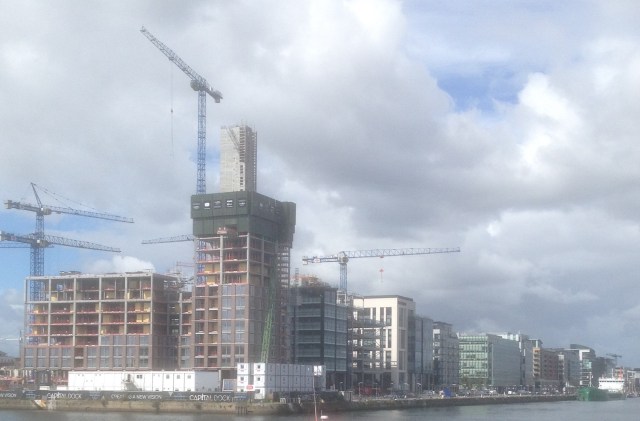
“New property millionaires are being created at a rate of a dozen a week. There are now close to 4,000 homeowners in Ireland whose property is worth €1m or more”. Not to mention the spectacle of cranes flying over the City of Dublin. It is now ranked fifth in the world for prime retail rent growth.

That headline and those cranes might be a two-edged sword and doubtless will be causing some to cross their fingers in the hope that it is not a sign of a boom before the next bust.
File_007 (1)
A Dublin skyline

But what about the more crippling recession – or rather, regression? Any sign of remission there? It is a regression wider, deeper and ultimately more damaging than any in the material order and it is still draining the blood from the living tissue our civilization. We now live in nations where values have become so fragmented and have been so weakened by their fragmentation that they no longer seem up to the task of holding our societies and communities together.

However, there are voices calling us to our senses. Eugene Vodvolaskyn, Russian academic philologist and novelist is one. Joseph Ratzinger, emeritus Pope Benedict XVII, is another. Philosopher Roger Scruton is a third. There are more – but where are their disciples, without whom they will just be voices crying in the wilderness.

rian_01481857_vodolazkin_468
Eugene Vodvolaskyn

All three of these see a two-fold development in our culture which is near the heart of the disintegration which threatens us: excessive individualism and secularization. It is twofold because the one leads to the other. Indeed, like malign cells in the body, they complement each other and feed off all around them. Excessive individualism has no room for the Other – and certainly no room for God. Secularism, by eliminating God, has nowhere to lead us except to worship the Self.

Scruton in his book, On Human Nature, reminds us of how Milton conjured the truth of our condition from the raw materials of Genesis, and in doing so set a standard for art which was truly human. We might add Dante, Shakespeare and Cervantes, like Milton, inheritors of the treasures of the High Middle Ages who have never been surpassed in their vision of what is is to be human and divine. Modern man and much of his literature, his philosophy, his politics, in his flight from God is a wrecker.

“Take away religion, take away philosophy, take away the higher aims of art,” Scruton writes, “and you deprive ordinary people of the ways in which they can represent their apartness. Human nature, once something to live up to, becomes something to live down to instead. Biological reductionism nurtures this ‘living down,’ which is why people so readily fall for it. It makes cynicism respectable and degeneracy chic. It abolishes our kind — and with it our kindness” (P.49).

Pinpointing these two maladies as key issues to be faced if our civilization is to be rescued from this regression, Vodvolaskyn traces the degeneration in this way:

“In the modern age, the individual required recognition. Faith required lack of faith so that the believer would have a choice and so that faith wouldn’t be a mere everyday habit. This train gathered speed but didn’t stop. It kept moving even after reaching its station. It now seems to have gone pretty far beyond its destination. The cult of the individual now places us outside divine and human community. The harmony in which a person once found himself with God during the Middle Ages has been destroyed, and God no longer stands at the center of the human consciousness.”

Vodvolaskyn echoes the words of Alexander Solzhenitsyn in his famous “Warning to the West“, given after his exile from Russia.  Humanism of the modern age, the former tells us, takes it that the human being is the measure of all things. While, he says, the same could be said of the Middle Ages, there is one vital qualification. “For medieval man there was one correction: The person is the measure of all things, if it is understood that the measure was given by God.”

Roger Scruton adds that thinkers in the eighteenth century compounded the degeneration. He rightly points out that our academic political philosophy has its roots in the Enlightenment, in the conception of Citiznship that emerged with the social contract. That contract replaced inherited authority with popular choice as the principle of political legitimacy. Not surprisingly, he says, it has had little time for piety, which—if acknowledged at all—is confined to the private sphere” (P 126).

The concept and definition of “person”, explored by Scruton in his book, is a key to the entire crisis. Our civilization has now such a garbled concept of the person, its nature and dignity, its unified essence as body and soul, that it has all but shipwrecked us on the rocks exposed by the receding waters.

Without the correction supplied by medieval man, in Vodvolaskyn’s view, humanism becomes inhuman. With excessive individualism, the rights set down for the individual multiply. The Russian foresees a demand inevitably coming for a right to cross the street against a red light. Take that literally or metaphorically. Ultimately, he argues, because our concept of rights is anti-humane at its core, it activates the mechanism for self-destruction. “The right to suicide turns out to be our most exemplary liberty.”

Ireland, not too long ago was still a safe place to negotiate the world, to raise a family, to pursue the good life. It was holding on, albeit somewhat superficially, to the more metaphysical world view characteristic of the Middle Ages which Vodvolaskyn identifies. It is no longer so, at least in the urbanised and materialistic sectors of its population. While there are still many there who feel that true value and virtue have been swept away by fickle modernity, there are many others rejoicing and celebrating the change.

What has happened to Ireland is what is likely to happen to any cluster of humanity whose moral compass is put in the hands of entertainers, celebrities and a political class whose members care more about their media image and so-called legacy than about the true good of the people.

Ireland may be fast approaching a cultural condition illustrated by Vodvolaskyn in the following anecdote. He recounts an encounter, some 20 years ago, with a Dutch pastor, an advocate of The Netherland’s culture of tolerance, who took him on a tour of Amsterdam.

“The Dutch people are tolerant, he told me, and hence in Amsterdam, there are no ethnic or religious minorities, an achievement made possible by the fact that although a majority of residents are of Dutch descent, only around 25 percent call themselves Christian. His enumeration of the achievements of Dutch tolerance concluded with an account of the removal of a stanza about the help of God from the national anthem of the Netherlands. As you can understand, explained the pastor, various people have various gods, and they can be offended that the anthem names only the Christian God. This is a triumph for tolerance, isn’t it? Listening to him, I thought, if this is a triumph, what would catastrophe be like?”

That was before the spectre of jihad made its appearance on Dutch soil. One wonders what the pastor is thinking today.

Vodvolaskyn, in an essay entitled ‘The New Middle Age’, published in First Things over a year ago, as a philologist might be inclined to do, identified the world as a text.

“As in the Middle Ages, the world itself is becoming a text, though the texts vary in these two cases. The medieval world was a text written by God that excluded the ill-considered and the accidental. The Holy Scripture, which gave meaning to the signs that were generously scattered in daily life, was this world’s key. Now the world is a text that has any number of individual meanings that can be documented. Think of the blogger who describes, minute by minute, a day that has passed.”

But the modern age, with its false humanism, centered exclusively on man, repudiated the Christian vision. The progressivist delusion clouded the picture and abandoned the vision of a unified world where the past and the present were one force.

Vodvolaskyn, being Russian, looks at the modern world from that perspective. But he is also profoundly Christian and fully aware of the historic unity of spirit which Christianity brought to what we call the West. He is also deeply optimistic about the potential which this spirit still has to transform and renew the now decaying civilization in which we find ourselves.

Both Vodvolaskyn and Joseph Ratzinger – surely not only one of the greatest popes of the modern age but also one of its wisest political philosophers – see that the changes that have to come have to take place in our hearts as well as in our culture and in our reason-based political institutions. For both of them utopian dreams are paths to disaster for mankind – as they have shown themselves to be from Cromwell’s time up to the age of ISIS.

Ratzinger points out in Values In A Time of Upheaval:

“The enthusiastic messianism of an eschatological and revolutionary character is absolutely foreign to the New Testament. History is, so to speak, the kingdom where reason rules. Although politics does not bring about the kingdom of God, it must be concerned for the right kingdom of human beings, that is, it must create the preconditions for peace at home and abroad and for a rule of law that will permit everyone to ‘lead a quiet and peaceable life, godly and respectful in every way’ (1 Tim. 2: 2). One could say that this also implies the demand of religious freedom. Similarly, the text is confident that reason can recognize the essential moral foundations of human existence and can implement these in the political domain.”

Scruton, for his part, warns us of the totalitarian traps which the modern philosophies of Peter Singer and Derek Parfit , both icons of progressivism, set for us with their consequentialist moral reasoning.

“Both philosophers overlook the actual record of consequentialist reasoning. Modern history presents case after case of inspired people led by visions of ‘the best,’ believing that all rational beings would adopt those visions if only they would think about them clearly. The Communist Manifesto is one such Vision. It gives a picture of ‘the best’ and argues that all would work for it, the bourgeoisie included, if only they understood the impeccable arguments for its implementation. Those who stand in the way of revolution are self-interested; but they are also irrational and would change sides if they thought seriously about principles that everyone could will to be laws. Since their interests prevent them from thinking in that way, violent revolution is both necessary and inevitable.”  (P97)

Vodvolaskyn argues for a conservative project and thinks that if the West is able to move beyond its geopolitical disagreements with Russia, it will see one possible future for our common European civilization. One of his fears, which he elaborates in another more recent essay, is that if Russia attempts this by means of a harsh dictatorship of the majority, then it will fail and destabilize society no less than, say, “the dictatorship of the minority that we can observe at times in the West.”

Today as ever, he holds,—contrary to progressive conceits—it is possible for a society to recognize a place for religion and uphold traditional notions of marriage and family. For Scruton it is not only possible. It is essential. In his book he subscribes to the “deep insight” shared by Burke, Maistre and Hegel, that the destiny of political order and the destiny of the family are connected. “Families, and the relationships embraced by them, are nonaccidental features of interpersonal life.”

Contemporary progressivism’s deconstruction of the family is at the heart of our society’s catastrophic regression.

But piling hope upon Vodvolaskyn’s hope, we look for a new Renaissance. But this renaissance will not be a rediscovery of the ancient world. It will be a rediscovery of the treasures of the Middle Ages, cast aside so dismissively by those who consider the word medieval just another expletive. Western Europe, Russia, and the United States, he maintains, represent various branches of a single tree. The basic systemic feature of this civilization is Christianity, both as a religious practice and as a specific kind of culture. If European civilization is fated to survive, it will require a rediscovery of Christianity. And that will, he says, take place both on the level of persons, of  nation-states and at a pan-European level.

Once more, we live in hope.

A tale of David and Goliath?

kapmerkel

It is not just Apple which is testing the loyalty and commitment of the Irish to the European project. Ireland is now, along with Apple, challenging the European Union’s demand that this Corporation pay a double-digit billion tax bill to Ireland. Strange as it may seem – although it is not at all strange – Ireland sees much more value in the employment Apple and multiple other giant investors bring to its economy than it does in a once-off windfall. Add to that the dilemma which Brexit has confronted Ireland with and the unthinkable is beginning to become more and more thinkable. Where ultimately does Ireland’s interest as a thriving economy and as an independent nation lie – inside or outside of the European Union?

Yesterday, in the Dublin paper, the Sunday Business Post (see here), an Irish diplomat and former Irish ambassador to Canada, Mr. Ray Basset, wrote of his worries about the path of least resistance which the Irish administration seems to be taking on the question of the terms of Britain’s exit from the Union.

Irish economist and journalist, David McWilliams, comments at length on the implications of what Basset is saying, implying as he does that the Irish government has decided that there is no special relationship with Britain, and that our attitude to Britain and Brexit will be subservient to the EU’s attitude.

“The idea that there is no special relationship”, McWilliams says, “is not only patently false (I’m writing this from Belfast, for God’s sake!), such a cavalier attitude to our nearest neighbour is extremely dangerous economically, verging on the financially treacherous.”

“Insane” is his description of the view that Ireland’s position with respect to Brexit is in any way similar to that of France or Germany or, worse still, to the likes of Hungary. Why? There are multiple reasons: “There are 500,000 Irish citizens living in England. We have a land border with Britain and a bilateral international treaty, the Good Friday Agreement, with London.

“We are umbilically attached to Britain in our two most labour-intensive industries, agriculture and tourism, where the British are by far our biggest clients. One-third of our imports come from Britain. The Dublin/London air corridor is the busiest route in Europe and one of the busiest in the world. In fact, the Irish airline Ryanair is the biggest airline in Britain, carrying far more British people every year than British Airways.”

McWilliams’ very perceptive comment lays out some of the details of the folly he perceives in what appears to be the Irish States’ status quo on negotiations. For him it is tantamount to a  government acting against the interest of its own economy. Apart altogether from the social and economic rupture between Ireland and Britain which the hard line which European negotiators are currently taking on Brexit would cause, there is the risk of a potential trade war with Britain where Ireland can only be damaged immeasurably.

McWilliam’s analysis and fears make a great deal of sense – up to the point where he goes on to protest that he is not himself a eurosceptic – or anything like it. Admittedly he is worried about Europe’s federalist agenda and its implications. Michel Barnier, the EU’s negotiator on Brexit, is a committed federalist.

“Under his federalist vision, the Irish consulate in Spain would be scrapped – so that if an Irish lad got a battering from the Guardia Civil, for example, there would be no Irish consulate to listen to his case and help him out. He also advocated in this report to close down all (Irish and other) consulates in non-EU countries and replace these with one EU consulate.”

McWilliam’s argument, however, is that we should stay in the EU, but draw the line at the present EU. “We shouldn’t embrace any further integrationist stuff nor sign up to any further federalist projects. This means doing precisely the opposite of the Brits. Rather than following the British out of the EU, we should vow never to leave it. The EU can’t kick us out. There is no mechanism. We should simply opt out of Mr Barnier’s plans. This means we have full access to the EU, but we don’t need nor want to go any further – not because of some cultural aversion, but because it’s not in our interest.”

But surely there is a great weakness in that argument, a weakness which the history of Ireland’s relationship with the Union screams out to us. There is no stopping the European juggernaut. When Britain tried to modify it, to bring it to a more common sense position and one which would show more respect for the sovereignty of the nations which make it up, it was in effect sent packing.

Consider the  negotiations of David Cameron when he tried to head off Brexit. Like a famous predecessor he proclaimed that he had plucked a flower from a bed of nettles – but what he got turned into the nightmare which destroyed his political career.

Ireland’s history of two referendums on European treaties where it said “no” to the path Europe was taking speaks for itself. It was soft-soaped, sent back to think again and came up with the “yes” which the juggernaut needed to go forward.

There are many who think that the juggernaut has already gone down the path of self-destruction. It may be so – and this may be the only way that a little country like Ireland will be able to find it own way and exercise the self-determination it needs to make its way in the wider world – which is where its future must surely lie.

Which is what Nigel Farage is essentially saying here.


“Parents are well aware a moving child in the womb is a human being”

IMG_0426

The fact that Irish Prime Minister Enda Kenny’s new minority Government is somewhat lame does not seem to be stopping him pushing ahead with what he thinks is a populist demand to further liberalise Ireland’s abortion laws. He has announced that he is going ahead with the  Citizens’ Assembly promised by the last Government – which he also led – to prepare the ground for this change.

For those who recognise the humanity of the child in the womb, awaiting birth, this is just another piece of window-dressing of shameless political manipulation. It is an attempt to sell to the Irish people something which in their hearts they abhor. A similar strategy was used three years ago with a hand-picked “expert group” was setup by health minister, James Reilly to give pre-ordained advice to him which resulted in an earlier liberalisation of the law.

The Irish Pro Life Campaign describes this decision to bring forward the setting up of the Assembly on abortion is “a knee-jerk reaction to the disgracefully one-sided report last week from the UN Human Rights Committee (UNHRC) which set the rights of the unborn child at zero and ignored the devastating after-effects of abortion for many women.”

Last week, the UN Human Rights Committee commented on a complaint brought by an Irish woman who was unable to have an abortion in Ireland when she was told that her baby would not survive to birth, or very long afterwards.  In those comments, the UNHRC said that the Irish State had subjected her to “intense physical and mental suffering”.

Commenting on yesterday’s announcement from the Government, Cora Sherlock of the Pro Life Campaign said:

“This Assembly is being set up with one purpose only and that is to pave the way for a referendum to strip the unborn child of its last remaining Constitutional protection. Every member of Cabinet knows that the UN Committee that commented on Ireland’s abortion laws last week has a track record in only pushing abortion and has never once taken a stand against the appalling abuses internationally in the abortion industry. For example, the UN Committee in question has never brought countries like England and Canada to task over the barbaric practice of refusing to give medical assistance to babies born alive after botched abortions.”

The public campaigning for this change in the Republic has been relentless since ‘liberal’ Ireland’s gay marriage victory last year. The pro-abortion pressure groups have the media in their pockets for this one as well. The ratio of pro-abortion stories being run on radio and in print is still in the region of the 30:1 bias exposed last year. It bears no relation to the actual balance of public opinion on the matter. The figure for that which is now routinely trotted out is a pro-abortion one from a poll run for Amnesty International. That organisation’s Irish arm is now the country’s highest profile campaigner for abortion. For some reason its fundraisers on the streets do not seem to as ubiquitous as they were heretofore. One wonders why? Could it be that too many shoppers are seeing them as collectors for Abortion International?

Colum Kenny, an Irish  Times columnist, in an balanced article in that paper earlier this month – a welcome but rare enough event for that paper – suggested that the “entry of Amnesty International into this domestic debate is problematic. Its rationale for sidelining the rights of the unborn, on the basis that human rights only begin after birth, is unconvincing.
Even permissive abortion regimes recognise it is not appropriate to terminate a foetus after a certain point sometime before birth. Parents are well aware a moving child in the womb is a human being. Has Amnesty no policy on the healthy but defenceless foetus that might be aborted only for personal or state convenience?”

A call to Ireland to take a stand against genocide

IMG_0534

The Irish Government will be called on this evening to formally recognise as genocide the persecution of Christians and other religious minorities at the hands of ISIS. John Pontifex, Head of Press and Information at Aid to the Church in Need (ACN) UK, a leading campaigner on behalf of the rights of persecuted Christians, will make the call at a talk he is giving on the topic tonight in Dublin.

He has just returned from a fact-finding trip to Syria, visiting Christians and others in Homs, Damascus and rural districts plagued by violence, persecution and extreme poverty. In his work with ACN, he has visited Iraq as well as other parts of the Middle East, Pakistan, China, Sudan, Nigeria and elsewhere in Africa.

“On trips to Syria and Iraq” he said today, “I have seen with my own eyes the churches that have been repeatedly desecrated by Islamic State, I have met the people driven from their homes and I have also spoken to those who have been kidnapped, their lives threatened. The evidence makes plain the intent of the persecutors to flush out individual sections of society; that is why the Irish government should join with others in recognising the actions in question as genocide according to the definition given under the UN Convention on Genocide. Nor is this genocide only against Christians; it recognises Yazidis and Shiite Muslims as victims too.”

The US House of Representatives recently voted by 373 votes to nil to recognise as genocide what is happening to religious minorities at the hands of ISIS. The European Parliament voted in favour of a similar resolution late last year.

The talk in Dublin takes place tonight at 8pm and is entitled ‘Genocide: how Christians are being killed and driven out of the Middle East for their faith’. It is being jointly hosted by Aid to the Church in Need Ireland and The Iona Institute. It is will chaired by historian and political activist, Dr Martin Mansergh. It takes places in the Alexander hotel, Dublin 2. Admission is free.

Hope for the powerless?


irish_parliament

Ireland’s parliament – Dáil Eireann

For most of the time ordinary people don’t want power. They just want to get on with their lives. Democracy relieved them of dictatorial, aristocratic and oligarchic abuses of power. In our democratic age we expect that all we have to do is choose, every few years, reasonable, just and capable people to look after our public affairs for us – and all will be well. That seems to be enough power to keep us going. But something radical has now happened. We do not seem to be in this comfortable place anymore.

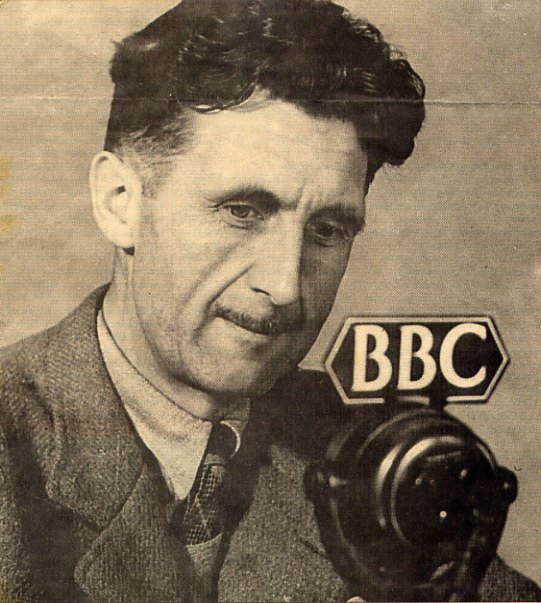
David Brooks reflected on “powerlessness” in a column in the New York Times last week, relating it to an essay by George Orwell reflecting on an incident in his time as a colonial policeman in Burma back in the 1930s.

“In his essay”, Brooks tells us, “nobody feels like they have any power. The locals, the imperial victims, sure didn’t. Orwell, the guy with the gun, didn’t feel like he had any. The imperialists back in London were too far away.” He thinks this is the way much of the world is today, with everyone afflicted with a widespread sentiment that power is somewhere other than where you are.

Suddenly, we are not so sure that anything we think, say or do matters anymore. If it did why do I have to suppress this sense of fear and loathing every morning as I make my way to work past the Irish parliament and the offices of the prime minister of my country?

Brooks, writing in the American context, speaks of the confusion he sees right across the social and political spectrum where every group feels it is being hard done by in the system. A Pew Research Center poll asked Americans, ‘Would you say your side has been winning or losing more?’ Sixty-four percent of Americans, with majorities of both parties, believe their side has been losing more.

“Sometimes”, Brooks says, “when groups feel oppressed, they organize by coming up with concrete reform proposals to empower themselves.” He cites the Black Lives Matter movement as an example of this kind of response.

orwellbbc

George Orwell

Here in Ireland some people afflicted by this “powerlessness” syndrome hope that new political parties might give some respite. Others despair even of that when they look at the options that new fledgling parties provide. They hope that the wave of independent  non-party representatives expected in the next Irish parliament – the general election for a new Dáil will take place in about five weeks from now – will at least throw up something to relieve their pain and their anxiety. Others just look on this as a vain hope, convinced that what they see as a mildly to severely corrupt political and media establishment will manipulate the system to keep themselves in power.

Brooks thinks that “the feeling of absolute powerlessness can corrupt absolutely. As psychological research has shown, many people who feel powerless come to feel unworthy, and become complicit in their own oppression. Some exaggerate the weight and size of the obstacles in front of them. Some feel dehumanized, forsaken, doomed and guilty.”

The ultimate stand of the hopeless is a defiant but pointless one and is made when they feel overwhelmed by isolation and atomization. Having lost all trust in their own institutions, they respond to powerlessness with pointless acts of self-destruction. Brooks cites what is happening in the Palestinian territories as a classic example. “Young people don’t organize or work with their government to improve their prospects. They wander into Israel, try to stab a soldier or a pregnant woman and get shot or arrested — every single time. They throw away their lives for a pointless and usually botched moment of terrorism.”

In the United States today, on a macro level, everyone seems to be scratching their heads and asking themselves how this particular electoral cycle leading to the election of their 45th President got so crazy. On a micro level they are agonizing over the strange dysfunction of their legal and law enforcement system which two Columbia University journalism graduates have exposed in their riveting documentary series on Netflix, Making a Murderer.

For Brooks the first is a perversion brought about by feelings of powerlessness. As regards the second, no one seems to have any answers. It all ends up compounding the despair.

Brooks sums up the American dilemma: “Americans are beset by complex, intractable problems that don’t have a clear villain: technological change displaces workers; globalization and the rapid movement of people destabilize communities; family structure dissolves; the political order in the Middle East teeters, the Chinese economy craters, inequality rises, the global order frays, etc.”

Irish citizens seldom agonize over all of these issues – because they don’t expect their chosen representatives to have to deal with them. Our hapless and helpless representatives had to rely of an international troika of the European Commission, the International Monetary Fund and the European Central Bank to dig it out of the mess they let the country fall into in the mid 2000s. The smug way in which the current political establishment now claims credit for the troika’s vigilance in having guided us to a reasonably safe haven fools some but angers others.

Is Ireland safe from the horrors of the unsafe verdicts and law enforcement shenanigans portrayed in Making a Murder? Irish radio last week was debating whether the dreadful scenario presented in the series could happen in their blessed land. Indeed it could – and from time to time there have been suspicious signs that something like it has.

On the political front, thirty-eight percent of the Irish electorate looked on in dismay last year as a united phalanx of political and media forces effectively consigned the already badly wounded natural institution of marriage to the rubbish heap of history by effectively redefining it out of existence. In the previous year the same coordinated forces took the first step in removing from Ireland’s laws and constitution the right to life of unborn children. It is now building up forces again to complete this work and get Ireland to join the world club of states which judicially take the lives of millions of innocent human beings every year. Ireland legislators will do this again with the help of hand-picked lackeys to form “expert groups” and “citizen forums”, the modern equivalent of the packed juries of former times which put the veneer of justice on the killing willed their masters.

The citizens who see these developments as catastrophes feel as powerless as victims confronted by an alien force from they know not where. Their fear is compounded by the fact that this force comes in the form of a human agency whose framework of values is totally out of sync with everything they know about human nature, human dignity and natural justice.

The consequences of the exercise of power by this agency – or agencies either under their control or influence – are the cause of the loathing that they feel. Among these consequences are the slaughter of the unborn, the termination of lives considered “limited”, whether youthful or aged, the destruction of family and the redefinition of human nature itself by the adoption of a crazy gender ideology.

Some but not all of these things have arrived in Ireland. But they surely will and the feeling of powerlessness to do anything about it in the face of an entrenched alien force is breeding despair. How ironic is this in the very year in which Ireland’s people “celebrate” the centenary of the rebellion which led to their winning independence from Britain?

For more than 700 years Ireland was subject to the British Crown. For much of three centuries of that era, up to the later part of the 18th century, her people suffered bitter and lethal persecution for adhering to the principles of their Catholic Faith. There are many who now fear that the Irish political and media establishment’s adherence to new definitions of humanity contrary to their Faith will usher in an new era of persecution.

In Ireland’s history, constitutional change and violent rebellion, sometimes one, sometimes the other, were resorted to as a way of rectifying injustice and of bringing persecution to an end. The hope is that the former will be the means of choice this time to restore to the powerless their democratic voice in the face of something which at times does not look too far removed from a new tyranny.

In looking for a solution to the problem in his country Brooks argues:

To address these problems we need big, responsible institutions (power centres) that can mobilize people, cobble together governing majorities and enact plans of actions. In the U.S. context that means functioning political parties and a functioning Congress.

Those institutions have been weakened of late. Parties have been rendered weak by both campaign finance laws and the Citizens United decision, which have cut off their funding streams and given power to polarized super-donors who work outside the party system. Congress has been weakened by polarization and disruptive members who don’t believe in legislating.

If we’re to have any hope of addressing big systemic problems we’ll have to repair big institutions and have functioning parties and a functioning Congress. We have to discard the anti-political, anti-institutional mood that is prevalent and rebuild effective democratic power centres.

david-brooks

David Brooks

So it may be for America – although I doubt it. In the Irish context is a party like Renua the solution? Or will it be the Social Democrats, or Sinn Fein? I doubt it even more. Why? Because none of these parties have anything of the vision of mankind which has in it the core truths which would enable it to frame consistent policies – social, political or economic – which will meet the needs of our nature and the aspirations which arise from that very nature. Some individuals within these movements have such a vision but these are dismissed by the establishment as “sanctimonious” dreamers. But these are the only hope that the powerless have. The fact is that there is no coherent collective voice in evidence yet which convinces the powerless that there is an alternative vision by which their country might be wisely and justly governed.

Until there is this substance in those currently hollow shells which pass for policies among all these alternatives, any new solution to our powerlessness will be fruitless. Until then the political and moral bankruptcy of our time will continue to plague us.

Reflections on Ireland’s Long Revolution Part 3

Regime Change or Revolution?

Be wary of commemoration. Be careful about what you celebrate. Not only may they be perniciously divisive but they may also grossly distort the truth which should first and foremost be the guide to authentic freedom and the ground on which we build our lives and our communities. When we commemorate what we call the Irish Revolution we should know that it was not really a revolution – certainly not at the time. It was a rebellion against the authority of the state and a rejection of its legitimacy. Those who rebelled were undeniably revolutionary in their intent – although their revolutionary agendas were not uniform.

While Ireland’s 1916 rebellion ultimately achieved regime change, for most of the century nothing else of a very radical nature happened. Ireland remained much the same culturally. The flowering of Irish literature, drama and the burning commitment to a Gaelic Ireland which had flourished in the two decades prior to the rebellion were in fact never matched again in the century which followed. In fact the new regime ultimately alienated many from the ideal of a Gaelic Ireland by seeking a compulsory imposition of Ireland’s native language on the people. Ireland is much less Gaelic at the beginning of the 21st century than she was at the beginning of the 20th. That is tragic. She is quintessentially Irish, no less now than she was then, although that Irishness is now heavily influenced and characterised by Anglo-American culture. Meanwhile, her Gaelic soul is on life-support.

Politically, Ireland continued to be ruled and administered through the time honoured institutions it had inherited from the old regime. That was no bad thing. They are the institutions, the machinery of state, that are envy of most of the world. In terms of political life, for many decades Ireland stagnated in the strait-jacket of the enmities generated in its post-rebellion Civil War. Only now, in the 21st century, does there seem to be any hope of escape from that. Escape to what? That remains a moot question.

For most of the 20th century the new Irish State sought to assert her sovereignty in the world and for a number of the early decades sought somewhat ineptly to do so economically. That came to an end with another Act of Union, union with the evolving entity which is now the European Union. Clearly there were differences between the terms and conditions which applied under this Act and the Act of 1801. Just as the terms and conditions of that first Act had evolved into a more benign character by 1900, so also the terms and conditions of our union with Europe are of a new order as well. By 1916 Home Rule for Ireland had been put on the statute books.

The modern British state has evolved by Burkean principles for more than two centuries. Its mode of change was and remains evolutionary and constitutional. This was not good enough for the Irish.  The Irish insurgents took the law into their own hands in a way which would be an anathema to that greatest of Irishmen, Edmund Burke.  The foolish violence which ensued, after the inept leader of the militants tried to call off the planned insurrection, begot more  and equally terrible counter-violence, including the foolish execution of the Insurrection’s leaders. Ireland has had to live with the consequences of that ever since.

One way or the other – and probably it had nothing to do with the act of rebellion in 19 16 – Ireland is now a society much closer to the mores and ideals of Rosamund Jacob, P.S. O’Hegarty and the Sheehy-Skeffingtons of that time. If it was a revolution, it really was a long revolution. What cannot be denied is that in what is now about to be celebrated there is much of the tragic – not least the loss of almost 6000 lives between its inception and its celebration 100 years later.

But human history will never be devoid of tragedy. How could it be otherwise if what Christian theology and divine revelation tell us is true? We are a fallen nature and on the level of nature much of what we touch does not turn to gold. This may be denied by the Jacobs and the O’Hegartys of the New Ireland – of whom there are now many more among us. That does not make it any less true.

Commemorate? Yes, perhaps. There was nobility and heroism in the lives of many of those who sought to carve a different identity for their country than the one they found it had in their time. Celebrate their actions and all their consequences? That path seems more problematic. Commemoration allows for a level of questioning of the wisdom of those we commemorate? Celebration seems not to do so.

Concluded

Veteran sociologist on the absurdity of redefining marriage in the Irish Constitution

Trinity College Dublin

WHY PEOPLE SHOULD VOTE NO TO SAME-SEX MARRIAGE

By Anthony Coughlan

Since history began the institution of marriage between men and women has existed in all societies to ensure that the next generation, children, are brought up wherever practicable by the mothers and fathers who are responsible for conceiving them, until those children reach adulthood.

This is ABC in any sociology textbook. Male-female marriage is the basis of the natural links between the generations. It antedates the great religions. No society anywhere, apart from a few in recent years in Latin America and Europe, has regarded marriage as covering homosexuals, because lesbian and gay couples cannot conceive or produce children.

What we are being asked to do on Friday is to amend Article 41 of the Constitution to change marriage and the family from the male-female-based institution that it has always been understood to be in Ireland’s Constitution and laws, into something profoundly different.

It is not a mere matter of EXTENDING THE SCOPE AND COVERAGE of the institution of marriage and the family to include LGBT people. It is TO TRANSFORM FUNDAMENTALLY THE SOCIAL, CONSTITUTIONAL AND LEGAL CHARACTER OF THE INSTITUTION ITSELF.

If people vote Yes it means that henceforth in Ireland families based on so-called “marriage” between two males or two females – who are incapable as couples of producing children – will be included among families that are stated in our Constitution as being  “the natural primary and fundamental unit group of Society . . . a moral institution possessing inalienable and imprescriptible rights antecedent and superior to all positive law. . . the necessary basis of social order and as indispensable to the welfare of the Nation and the State.”

That is a ludicrous proposition, as UCC Professor John A. Murphy has pointed out in the Irish Times.

If we agree to write such an absurdity into the Irish Constitution, it will surely make this country and those in our political class who are responsible for it, into an international laughing stock … And deservedly so.

There are some 198 States in the world. Fewer than one-tenth of them, 17 I understand, have introduced same-sex marriage – all of them by Parliamentary vote or Court order.

Writing same-sex marriage into one’s State Constitution however is permanent, irreversible and likely to have many unforeseen, unintended and unwanted consequences. No other country has done that.

A MUCH MORE EFFECTIVE WAY OF DOING JUSTICE to the 1-2% of the population who are permanently homosexual without transforming the nature of marriage for the 98-99% who are not, would be to give recognition in the Constitution to civil partnerships, which is not the case at present.

Such an obvious way of being fair to our homosexual fellow-citizens does not seem to have been considered by the Government in its rush to push through homosexual “marriage” without any teasing out of its likely complex consequences in a Green Paper or White Paper beforehand.

If Irish voters transform the nature of marriage in the Constitution by voting Yes on Friday they will be endowing gay and lesbian couples with exactly the same constitutional rights to “procreate”, to “found” a family and to have children as opposite-sex couples have.

How can two men “found” a family?

Gay and lesbian couples can only exercise their new constitutional right to “procreate as a family” by the use of eggs or sperm donated by others and the use of surrogate mothers who are willing to “rent out” their wombs to others for nine months at a time.

That is why surrogacy is a relevant issue. It is not an invention, as Yes-side people assert.

Surrogacy means more children being brought up without links to their genetic mothers. It means more exploitation of poor women in poor countries for the benefit of rich people.

Surrogacy is unregulated in Ireland now, but if we change the Constitution homosexual couples will be able to claim it in the Courts as essential to the exercise of their new constitutional rights to procreate and to found families as couples – on the ground of “equality”.

This is presumably the reason why the Government wants to get voters to change the Constitution first, and thereby clear a constitutional path to facilitating surrogacy for LGBT couples by ordinary statute law later.

CAN AMERICAN MONEY BUY AN IRISH REFERENDUM?

One of the many unconsidered consequences of voting to change the Constitution is that it would alter the legal-political effect of the first Lisbon Treaty Protocol, which the Government used to persuade Irish people to ratify the Lisbon Treaty in 2009, after they had rejected it in 2008.

The Lisbon Treaty, which establishes the EU Constitution, gives the EU the power to lay down human rights standards as a matter of supranational law across its 28 Member States. Article 9 of the EU Charter of Fundamental Rights allows for same-sex marriage and the right “to found a family” on that basis.

As it stands, Ireland’s Lisbon Treaty Protocol is an insurmountable legal barrier to supranational EU law on marriage, the family and education across the EU. If we remove that barrier by changing the Constitution ourselves, we clear the way for EU law on same-sex marriage in all EU countries by decision of the EU Court of Justice in due time.

Ireland would thus become a bridgehead in the EU for the powerful pharmaceutical companies that make up the donor-assisted human reproduction industry and the accompanying lucrative surrogacy business in America and Europe.

Can American money buy an Irish referendum? That is the question put in an Irish Times article (and further afield) last week under that title.

In it we were informed how key elements of the Yes campaign – Marriage Equality, the Gay and Lesbian Equality Network(GLEN), and the Irish Council for Civil Liberties, have received some $17 million in recent years from the American foundation, Atlantic Philanthropies, to help transform the position of marriage in the Irish Constitution.

The taxpayer-funded Irish Human Rights and Equality Commission(IHREC), the State’s official human rights body, wrongly advised the Government, the political parties and the general public that there is a right to same-sex marriage under the European Convention on Human Rights, even though the Court which interprets the Convention has laid down in the Hamalainen v.Finland case that there is no such right.

It turns out that the IHREC too got €2 million from Atlantic Philanthropies.

It has been calculated from Atlantic’s own web-site that this single American foundation invested €735 million in Irish projects in the past 13 years, of which €25 million has been devoted to agencies promoting change in the area of LBGT interests.

It is clear from its web-site also that the Board of this US-based body has had intimate relations with the Government and has determinedly exerted that influence in recent years to change Irish social policy  and the Irish Constitution as regards same-sex marriage. The money it provided has been responsible for the systematic lobbying of politicians of all parties on this matter.

We were also told last week that the withdrawal of Government funding of pre-marriage courses by the Catholic charity Accord, is mere coincidence. Then the next day we learned that the Government agency Tusla, which finances Accord, has just received €8 million from the same Atlantic Philanthropies. The coincidences get more curious.

Whether they are aware of it or not, it looks very much as if the key bodies on the Yes-side mentioned have become outriders for US-based Big Pharma, the American social media companies that are cheerleaders for this issue, and the accompanying gender-neutral ideology which seeks to legitimate same-sex marriage across Europe.

If voters change the Constitution on Friday the Irish State will become an ideological flag-bearer in the EU for the powerful economic interests involved in the donor-assisted human reproduction industry and the lucrative international surrogacy business that is its complement.

Worth mentioning in conclusion is that if people vote Yes it will become constitutionally impossible for future Irish public policy to support or favour male-female couples and their children in any way over the “families” of homosexuals.

That is what constitutional and legal “equality” will have to mean.

The new constitutional position of marriage and the family will then have to be taught in our schools, at least in civics classes.

THIS IN TURN IS LIKELY TO CAUSE FAR MORE PAINFUL CONFUSION REGARDING SEXUAL IDENTITY and orientation among vulnerable adolescent young people in the future than is the case at present or has been in the past.

Voters feel that they are being pressurized into voting Yes in order to do the decent thing by homosexuals.

They are told they should feel guilty by not voting for “equality” when the Constitution provides that all citizens are already equal before the law.

They are being deceived and misled by many people who should know better.

IRISH VOTERS SHOULD HAVE THE COURAGE OF FREE CITIZENS, THOUGHTFUL LIBERALS AND TRUE REPUBLICANS and give the nonsense that is currently being thrown at them from all sides a firm “No”.

The State can then take the creative social policy initiative of putting civil partnership into the Irish Constitution, setting a good international example in doing that.

That would give affectional shared-domicile relations between same-sex couples, whether homosexual, platonic friends or siblings who desire such, full constitutional recognition, while leaving marriage and the marriage-based family as it has always been.

But for that to happen voters must say No to same-sex “marriage” first.

A PERSONAL NOTE FROM THE AUTHOR

My views on marriage are not religiously based, but are grounded rather in the ABCs of sociology and anthropology. I do not belong to any of the No-side groups on this matter.

I have however taught social policy at TCD for over 30 years, and dealt a lot with family law and public policy on family issues over that time.

I have nothing personal to gain by giving my views on this issue.

I do so only because as a social science professional I believe that Irish voters will be making a mistake which many will come to regret if they vote on Friday to transform fundamentally the character of marriage and the family based on marriage in their State Constitution. No other country has done this.

Irish social policy can easily do justice to the interests of LGBT people by building upon Civil Partnership and putting that into the Constitution in some future referendum, without transforming the nature of marriage for everyone else in this one.

I set out my reasons for holding this view in the article above.

With reference to the point in the article about American money being used to buy an Irish referendum, I understand that Mr Chuck Feeney, who did outstanding work for the Irish Peace Process in the 1990s, has had no say for years in the funding decisions of the Board of the Atlantic Philanthropies foundation.

(John) Anthony Coughlan is Associate Professor Emeritus in the School of Social Work and Social Policy in Trinity College Dublin.

Intimations of impending tragedies in a divided nation

Sitting in the studio audience for a TV debate on Ireland’s Marriage Referendum last night in Dublin I could not suppress the sense of a multiple tragedy unfolding before me which this primeval battle induced.

Whatever way this plays out on May 22, it seems that a nemesis awaits us.
If this foolish and careless Government succeeds it will not kill the reality that is marriage. The reality that the word marriage gives institutional form to, that is, the coming together in conjugal union of man and woman, is beyond the manipulative control of governments. They can mess with the word which describes it as much as they like but as long as men and women exit, it will exist.

But this messing by governments with those things that nature designed does have consequences for human beings and their life in society. In this case, the Irish Government will become responsible for the clouding in people’s minds of what marriage really is. This in turn will have consequences for generations to come. This will be the first tragedy.

If the Irish Government drains the word marriage of its true meaning, its essential identity, by describing it as a bond between people regardless of their sex, homosexuals and heterosexuals will suffer equally and the victory which some homosexuals feel they will have won will prove to be, and will be seen to be, as hollow as the arguments now being advanced for it.

For those who understand that the essence of a thing remains the same no matter what we call it, marriage will remain what it is and always was – a lifelong bond between a man and a woman, open, where nature allows, to the begetting of future generations. “A Rose by any other name would smell as sweet.” For those who think that they have changed the thing because they have changed the name – or turned one thing into another by using the other’s name – there is the tragedy of delusion. This is the second tragedy.

This was the tragedy averted by Solomon who in his wisdom was able to resolve the folly of the woman who sought to relieve her pain of loss by dividing in two the child of her companion. But Irish Prime Minister Enda Kenny is no Solomon. He has succumbed to the foolish thinking of a militant group of culture warriors who have led the gay community astray into thinking that access to marriage is just a matter of manipulating language.

If the Irish Government wins this referendum everyone will wake up on the May 24 and find that nature has preserved this thing called marriage. But they will also find that in the futile attempt to meddle with nature they will have a meaningless human artefact posturing as “marriage” in their nation’s Constitution. This sham thing will be bringing with it a myriad of muddy legal complications. Bad laws impact on human lives, some with tragic consequences. There will be numerous personal tragedies as “motherless” and “fatherless” children search for their natural progenitors to try to rescue them from the limbo of those quotation marks. Some will succeed, more will never do so. This is the third tragedy.

And if this chaos is avoided and a “No” victory results, what nemesis awaits us? This will be the nemesis for a bitterly disappointed community which has been misled into thinking that this manipulation of language, spun by a Government which has in turn been manipulated by an international ideological movement backed by millions of dollars – scandalously ignored by a biased national media, – was going to bring it to a haven of happiness and contentment.

The utterly bewildering illusion being fed to people that this is a struggle for equality has been spun so effectively that the consequences of its inevitable evaporation will be tragic. A Government complicit in this charade is a truly bad Government. It is now compounding this crime by declaring that a rejection of their proposal – a proposal which declares that two things which are different from each other are in fact the same – will amount to a disdainful rejection of some of their fellow human beings by the majority of the electorate.

The gay community – as it is called, and isn’t there something wrong with the very idea of segregating people into communities on the basis of their sexuality? – has been deceived into thinking that redefining marriage is a solution to the difficulties they experienced in human societies in the past or present. They have been deceived into thinking that it will in some way compensate for wrongs done to them. It will not and it never do so, because it is a meaningless act. This deceit is just one more tragedy.

The final tragedy has already taken place. When we should be concentrating our efforts on the task – always necessary – of building up the cultivation of real civilizing values in our community we are distracted and divided by this unreal conflict. True equality should be our goal, true values of fraternity and justice should be our objective and not this false synthetic concoction of something that can never really exist.

This horrible and divisive battle, which ideologues have forced on a good-humoured and generally kind-hearted nation, may be leading it into a new – even if as yet low-level – era of civil strife. After last night’s debate, one member of the audience on the “Yes” side came over to the speaker for the “No” side and uttered with uncivil vehemence words of bitter reproach for what he had presented to all, in good faith, for consideration. The producers of the programme – which was rchesrated with exemplary skill and fairness by presenter Claire Byrne and her team, – in a departure from normal procedure before these debates, separated the “Yes” and “No” supporters into separate rooms. “No” participants wondered why, and in fact regretted the segregation and the loss of the chance to mix and share views. But it was a sign of the times.

The destruction of marriage is only a half-way house for gender ideologists

Bishop Brendan Leahy of Limerick warns that if the Irish referendum on marriage is passed, there could be legal challenges to school text books.

Of course there will be. It will be their next target.

Does anyone doubt that education is where they hope to have their final victory in the battle for a genderless society. This battle is not about the rights of gay people. It is a doom-laden vision of human nature held by ideologists who think that by controlling language and thought they can change human nature itself. A “yes” vote is not a vote for gay people’s rights. The gender ideologues are lying when they say it is.

A “No” vote is a vote for the preservation of our sense of what it is to be human. End of story.

.

Overcooking the “Equality” cake?

Ireland is now in the second last week of its liberal establishment’s tiresome campaign to get the country to radically change its understanding of marriage as an institution naturally fitted to the conjugal relationship between a man and a woman. All the opinion polls are still pointing to a triumph for them. But there are warnings of hubris. This morning’ mass-circulation Sunday Independent carries that warning in a no-holds-barred column by one of the country’s more open-minded journalists and TV hosts, Brendan O’Connor.

The Yes campaign, he muses, must be very nervous looking at what just happened in the UK. Everybody knew what the result in the UK election was going to be. Every poll was in agreement. Neck and neck. Hung parliament. Weeks of manoeuvring to try and create a Government. Everybody agreed. And, as usual, when everyone agrees so wholeheartedly on something, they were all wrong. The media was wrong, the polls were wrong; the whole establishment got it wrong.

The Yes side must be wondering this weekend if the same could be true here. What if the polls are wrong? What if the media is wrong? What if the whole political establishment has got this one wrong? On Friday morning, Antony Worrall Thomson, of all people, pointed out that a lot of Tory voters are his age and they tend not to admit their intentions in advance, saving the truth instead for the privacy of the ballot box. And lets face it, being a No voter in this country is even more shameful that being a Tory in the UK. So the likelihood is a lot more people are lying about their voting intentions in the upcoming referendum. And who could blame them?

O’Connor goes on to catalogue what might at first have looked like winning strokes by the Yes campaign – Twitter et al calling for a Yes vote, massive media support, 100% party political approval – but which reflection might suggest could turn out to be a poisonous concoction. He also mentions the abusive treatment of the opposite side but does not talk about public revulsion at the denial of freedom of expression which their tearing down of No posters is provoking

A friend of mine visited his barber yesterday. The barber told him that he had a few young people in with him earlier, potentially Yes voters, who spoke of their disgust at such hostile, negative and undemocratic tactics.

The thing about Irish people, O’Connor says, is that they don’t like being told what to think. They don’t like being told what to think by the media. They don’t like being told what to think by politicians. And they certainly don’t like being told what to think by the bosses of tech companies. It’s the kind of thing that is bound to get people’s backs up.

The No campaigners can only hope that the Yes campaigners do not read O’Connor’s warning and change their tactics to a more democratic one. Keep the own goals coming and they will be more than happy.

O’Connor’s full article can be read here.