Mephistopheles at Large?

Kit Harington, as Marlowe’s anti-hero Doctor Faustus 

Do we live in the best of times or do we live in the worst of times?

Ross Douthat of the New York Times seems to think we stand somewhere in between and has been mulling over the direction in which we might be heading.

His mulling is mainly in an American context but his spectrum encompasses the wider Western world as well. Ireland, as an offshore island for the driving forces of corporate America, is certainly not difficult to include in his exploratory analysis of the watershed our western civilisation now seems to straddle.

In some recent writing – in his weekly NYT column and his newsletter for subscribers – he admits to no more than “dabbling” in a peculiar kind of optimism about the American future, arguing that if we can avoid various forms of self-destruction over the next decade or two, we might find ourselves in a better position than almost any peer or rival — as an ageing world’s last bastion of dynamism and growth.

But he admits that dynamism and growth are a far cry from what ultimately matters or what can give any guarantee of even a semblance of human happiness.

Rod Dreher is an apostle preaching a more pessimistic vision of the direction in which he sees us currently hurtling. He is proposing a more radical and demanding solution to a decaying world than Douthat: cut yourself off from all that corrupts you in modernity – because it is irredeemable. Abandon it.

No matter how comfortable and cultured we might feel in this present dispensation, Dreher argues that if the human spirit is denied what it takes to fulfil the deepest longings of the soul: a sense of cosmic purpose beyond mere individualism, and common values beyond the whims and aspirations of the self, it will remain lost in a wilderness.

Douthat is a more optimistic apostle. He seems to suggest that we have a different kind of choice. His optimism rests on his reading of the history of mankind, right back to the Garden of Eden. In a certain way the choice before us is the same fatal choice which confronted Adam and Eve. Do we make a pact with Satan, as they attempted to do, or do we draw all the benefits we can from the second chance given to us and them by the Creator after their Fall?

Douthat reminds us how the serpent gave Eve and Adam some sort of forbidden knowledge, “yes – but it’s before that Fall, not afterward, that God tells humanity to fill the Earth and subdue it, and when Adam and Eve are cast out of Eden that mission carries on, just freighted with more suffering and pain.”

The great temptation confronting the modern world, Douthat suggests, is the temptation succumbed to by the legendary Doctor Faustus, who made a pact with Mephistopheles to gain the whole world and lost his soul in the process.

Douthat identifies a line of tension that runs through a lot of his own writing.

I’m a Catholic writer who often criticizes the decadence of the late modern world and urges it to rediscover dynamism and ambition. But if techno-capitalist ambitions are fundamentally Faustian, should a Catholic observer (or anyone else with similar commitments) really wish for them to rise again? In the Bible, after all, Promethean dreams are not always treated kindly. It’s the serpent who promises forbidden knowledge, the bloody-handed Cain who founds the first city (Genesis 4:17-18), the builders of Babel who are scattered to the winds. Maybe the Promethean spirit in America needs to be exorcised, not revived.

Douthat is looking for a way in which serious conservative or convinced religious believers can welcome a new American century not defined by the spirit of the famous doctor, whose impulse was to bargain for power with the very devil?

Douthat gently takes issue with some who would consider Christianity to be a religion exclusively concerned with bearing suffering in the present for the sake of the hereafter. In fact, he says, the dynamism of Christian cultures has usually reflected the working-through of the tensions between that conception of the faith and the equally powerful conception of Christianity as a religion of repair, reform, healing even revolution. He sees in the fabric of both the Old and New Testaments a weaving of this tension reflecting both a fallen world to be patiently endured and a fertile world that can be mastered and transformed.

The first murderer builds the first metropolis, yes, but the history of God’s people centers on Jerusalem, the holy city; the Bible culminates in a transformed and redeemed cosmopolis, not a return to a purely pastoral Eden. God lets Israel suffer invasions because of its unfaithfulness, he scatters his chosen people and sends them into exile – but in the rare moments when the Israelites have faithful leaders, faithful kings, they prosper in worldly as well as supernatural terms.

He reminds us that Jesus treats suffering, his own and that of others, as part of God’s unfolding plan, a cup to be drunk deeply no matter how strong the urge to let it pass. But then he also heals the sick and suffering everywhere he goes, rewards people seeking healing who take extraordinary steps to reach him, and sends his disciples out to heal more people.

Then there is the history of the Christian Church and its interface with the world of human culture and development.

Followers of Christ went into the desert and lived on pillars and built monasteries and accepted violent death in every form. But they also built and developed and invented, forging the medieval and early modern forms of civilization that carried us forward into the scientific and industrial revolutions that made our own global civilization possible.

He does take note of a certain doom-laden Catholic account of this dynamic modern history (which tracks with certain doom-laden left-wing accounts of modern industrial capitalism) in which the last few hundred years of technological breakthroughs and rising life expectancies and soaring skyscrapers are just one long Faustian bargain, carrying us toward the same self-destructive endpoint as the architects of Babel.

He doesn’t think this account really works: “There has been so much growth and vitality for Christianity within the long era of scientific and technological progress, so many surprising rebirths for different forms of Christian faith, and an underappreciated relationship between dynamism in the secular order and revival in the religious realm that if you’re any kind of providentialist you have to see a version of technological modernity as part of God’s unfolding plan.” He cites Kendrick Oliver’s  To Touch the Face of God, a study of  “The Sacred, the Profane, and the American Space Program, 1957–1975”, affirming his view.

He is not saying that there isn’t also a version that tends to corruption, dehumanization and ultimately our destruction. He agrees with Dreher and other pessimists that you can see that darkness visible along some of the tech frontiers that our society is currently exploring, and in those futurist worldviews that imagine humanity superseded or replaced.

But in American history he sees plenty of evidence of ambitious, developmentalist, exploration-oriented visions which seek humane forms of economic growth, the wise use of new technologies, a moral discernment about scientific achievements but not the rejection of their fruits: “However attenuated and fragmented, those impulses still exist – more so, I would say, in our country than in any rival power or alternative cultural redoubt – and I think they still offer the best chance to battle the chronic illness of decadence without bargaining our humanity away.”

In the context of all this we might leave the last word to Romano Guardini, writing more than eighty years ago – in a book published in German just before the cataclysm of World War II. He was much preoccupied with the modern world and the advance of technology, both with the good in it and with those aspects which seemed to threaten our very humanity. He wrote:

One day the Antichrist will come: a human being who introduces an order of things in which rebellion against God will attain its ultimate power. He will be filled with enlightenment and strength. The ultimate aim of all aims will be to prove that existence without Christ is possible – no, that Christ is the enemy of existence, which can be fully realized only when all Christian values have been destroyed. His arguments will be so impressive, supported by means of such tremendous power – violent and diplomatic, material and intellectual – that to reject them will result in almost insurmountable scandal, and everyone whose eyes are not opened by grace will be lost.

When he wrote those words that Antichrist had already arrived on his continent in two incarnations, Joseph Stalin and Adolf Hitler. Both were defeated but their progenitor, Mephistopheles, is still as present as ever. Guardini assures us, in the depths of his Christian faith, that no matter how often he returns he will never prevail over those living in the grace of God, those to whom it will be clear what the Christian essence really is: that which stems not from the world, but from the heart of God; victory of grace over the world; redemption of the world, for her true essence is not to be found in herself, but in God, from whom she has received it. When God becomes all in all, the world will burst into flower.

The way of resistance to and correction of evil – implicitly Douthat’s way – seems to offer us a better future than the way of abandonment and flight from the world suggested by the pessimistic option. All time, in Guardini’s reading of our life in the world, is not of the world but “from the heart of God”. Therefore, we live in the best of times.

First published in the March edition of Position Papers Review
No figment of the conservative imagination

Some people say that the so-called culture war is a figment of the conservative imagination. Wrong, wrong, wrong! Read this extract from a bulletin from the frontline of that war. Then read Rod Dreher’s entire piece. It is heartbreaking on two levels – first because it tells the story of helpless victims of crazy ideologues; second because it tells a story of intelligent people being corrupted wholesale by that same crazy “progressivist” ideology.

This morning, for the first time – it has been around for awhile – I watched a video which shows the appalling fulfilment of Allan Bloom’s terrible prophesy of nearly 40 years ago about the future of  American generations. We are now two generations on and this is what America and – God help us – the rest of the West following in its tracks, has left us with.


Now read this extract from Dreher’s snapshot report from the frontline. If you can take any more then read his full reflection.

 I read this op-ed piece from today’s New York Times, in which Katherine Stewart says that people like us — parents who have chosen to withdraw their kids from public schooling, or not to send them there in the first place — are Jesus-crazed racists who hate democracy, or at best useful idiots of said villains. It is liberal crackpottery at its purest. Andrew T. Walker responds:

Most public school parents I know see public schools as as place for their child’s learning, to know one’s neighbor, and to celebrate milestones whether through football games or proms.

In a parallel universe where pluralism and diversity are actual liberal values, this author [Steward] would prize and herald the virtues of school choice as part and parcel of ordered liberty. But not if you see public schooling primarily as a vehicle for social change. The whole op-ed is a shocking revelation of the moral imagination of modern-day progressives — bring your child before the state to receive the requisite social values or else the whole system is being undermined.

Confession: My child attends a classical Christian school. More confession: We chose this for our child because we believe that what public schools value as true, good, and beautiful do not align with what we believe is true, good, and beautiful. It’s a conflict of visions, and in America, we’re blessed to have options.

We teach our child about diversity and seek to live it out. We also want our child to have an education foundation that prioritizes our Christian faith, while also seeing its relevance to modern society’s deepest, metaphysical questions. That’s our personal conviction arrived at by prayer, study, and conscience. Others are free to disagree.

But this is a conclusion that people like Stewart cannot handle, because she cannot cast alternative models of education in any affirmative vision. She can’t conceive of a Christian education model, for example, that is pro-culture, deliberately non-fundamentalist, and one that seeks to nurture and incubate the pillars that propped up a free society — among them human dignity.

Read the whole thing. Then read David French’s response to Stewart, focusing on her demonizing the term “government schools” as a dog whistle. Excerpt:

Why do libertarians and Christians intentionally increasingly use the term “government schools” to describe public education? First, because it’s true. Public schools are government schools. Second, because it’s clarifying. Too many Americans are stuck in a time warp, believing that the local school is somehow “their” school. They don’t understand that public education is increasingly centralized — teaching a uniform curriculum, teaching a particular, secular set of values, and following priorities set in Washington, not by their local school board. The phrase is helpful for breaking through idealism and getting parents to analyze and understand the gritty reality of modern public education. The phrase works.

And so it must be squashed. And there’s no better way to discredit any modern idea than by tying it to a Confederate past. It’s certainly easier than addressing the core of the fundamental idea — that it’s better for America if more parents enjoy the educational choices that wealthy progressives take for granted.

Wealthy Americans have enormous educational advantages. They can afford private-school tuition (and many do just that). They can afford homes in the best school districts. They can employ private tutors and create the most lavish and interactive home-schooling experience. The rest of America? They’re typically reduced to no choice at all. There’s the mediocre public school in the moderately priced neighborhood or the dreadful school in the cheapest district. That’s it. There is nothing else.

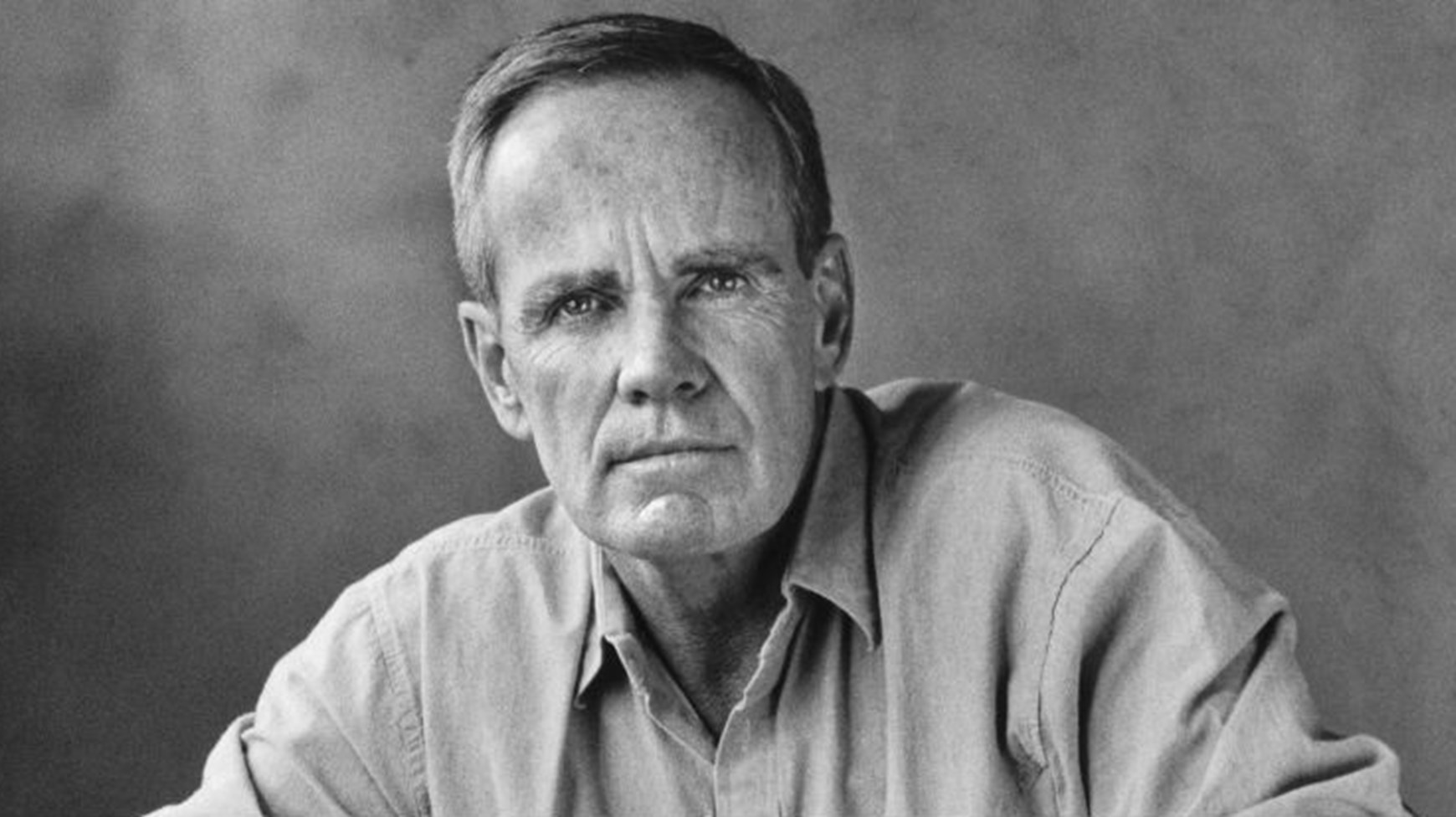
Cormac McCarthy – challenging us in our comfort zones

out15268763

You can read the novels of Cormac McCarthy and treat them like a bad dream. Or you can read them like a “Stephen King nightmare thriller with no cheap thrills” – as Kenneth Lincoln says in his study of McCarthy’s work. You can also treat his stories as you might treat those grotesque surrealistic narratives which sometimes invade our sleep and with which we then might entertain each other around the water-cooler. With some of them you would not even dare do that – lest your friends might call in the men in white coats.

Alternatively, you can take them seriously and come to the worrying conclusion that they are not just stories, but something akin to prophesies. As the five decades rolled by over which McCarthy worked on these fables – for two of those decades in relative obscurity – they became more and more like a mirror revealing to us the horrors lying beneath the facade of modernity. They tell us in the grimmest possible terms about the terrible things we have done to each other – and continue to do – and the terrible consequences of our failure to be what we really are and were meant to be.

Cormac McCarthy, although brought up a Catholic by his Irish-American family, does not avow any particular religion. But he is profoundly religious. The terrible contortions of humanity which we encounter in so many of his characters point to the same devastating end as do some of the lethally deranged characters which we find in the oeuvre of that profoundly Catholic writer, Flannery O’Connor. Those aberrations have all got the same gaping hole in their heart – the ignorance or wilful rejection of objective truth and a transcendental Creator.

In this, the second decade of the third millennium of the Christian era, the centre no longer seems to be holding. An apocalyptic vision of mankind’s fate, and the place to which our folly has brought this world, runs through every one of McCarthy’s ten novels. But he does not preach. He portrays the victims of our folly and the interplay of the forces of evil with our foolishness – and then implicitly leaves us with the simple exhortation, “he that has ears to hear, let him hear.”

He is not the only prophet of our time. Other Tiresian witnesses  “have foresuffered all enacted on this same divan or bed; … have sat by Thebes below the wall and walked among the lowest of the dead.” Surveying the excesses of modernity over the last century they have pointed to the same end: Alasdair McIntyre spelled out the philosophical roots and practical consequences of our flight from virtue and reason into the quagmire of emotionalism where our private lives and public policies now wallow in disastrous self-indulgence;  Charles Taylor and Brad Gregory take the story through its sociological and historical ramifications, while Rod Dreher now looks in desperation towards a neo-monastic solution for it all.

McCarthy depicts a world which has come apart at the seams. He does not spell out the reasons why this has happened. He does not tell us how to redeem ourselves. But neither does he tell us that we are irredeemable – despite his going within a hair’s breath of this in some narratives, particularly in the earlier portrayals of our plumbing the depths of depravity. In the last  instalment of his ten-novel output, The Road, the hope which is the basis of mankind’s salvation is burning ever so fragilely on its final pages.

“SPE SALVI facti sumus”—in hope we were saved, says Saint Paul to the Romans, and likewise to us (Rom 8:24). According to the Christian faith, “redemption”—salvation—is not simply a given. Redemption is offered to us in the sense that we have been given hope, trustworthy hope, by virtue of which we can face our present: the present, even if it is arduous, can be lived and accepted if it leads towards a goal, if we can be sure of this goal, and if this goal is great enough to justify the effort of the journey. (Pope Benedict XVI, encyclical, Spe Salvi, 1)

I am not suggesting any kind of link of mutual influence to be found between the author of The Road and the author of Spe Salvi, but in both we do find a signpost to the same truth. Hope is a sine qua non for our survival as it is for our salvation. The road travelled by the man and the boy in McCarthy’s novel is symbolic of our own journey. The devastated landscape through which they travel is akin to the desert  brought about by the scourge of relativism of which Pope Benedict frequently spoke. The total breakdown of law and order which constantly threatens their lives is the consequence of the same scourge which has destroyed the foundation of all morality.

“The  man” in The Road lives out the last years, months and days of his life on this earth because, he says, God has entrusted him with the life of “the boy”, his son. Hope is fragile in the world of The Road, a sunless world of grey ash which has been devastated by some cataclysmic disaster – man-made, we assume. But it is still there in the boy’s heart. After they find a well-stocked larder in an underground shelter the boy says a prayer for those who left it behind: “Dear people, thank you for all this food and stuff…and we hope that you’re safe in heaven with God.”

The man perseveres in the struggle to stay alive and protect the boy from the pursuing cannibals and other desperate human predators, the “bad guys” in the child’s language, for as long as he can. Dimly, he sees he has to, for the boy is humanity’s last hope. As he dies, that hope is still alive and with his last breath he tells the boy that goodness will find him, “It always has. It will again.” As the boy cries beside the body of his father, other fugitives, families, parents and children, find him.  They have been following them and now adopt the boy as their own. A woman tells him that God’s breath is his “yet though it pass from man to man through all time.”

All great novels probably constitute a kind of biography of their writers and tell us something of the story of their souls. The novels of F. Scott Fitzgerald, taken in sequence, tell a sad story of a young man’s struggle with the temptations of a degenerate age and his tragic surrender to vanity, ambition, infatuation and self-indulgence. McCarthy’s novels seem to tell a better story. It seems to be a story of a man’s struggle with the temptation to pessimism and despair about our flawed human condition and the state in which we have left the world. It might be too much to say that McCarthy has reached the point at which T.S. Eliot felt able to conclude The Waste Land with the three words “shantih, shantih, shantih”, the “peace which surpasseth human understanding”. But  the evolution of his soul as evidenced by the sequence of his novels suggests something like it.

In all McCarthy’s novels the element of evil is palpably present. In some it is the only element, in the same way in which it is the only element in the hell-centred books of Milton’s Paradise Lost when we are in the company of Satan and his diabolical legions plotting their revenge on the Creator. In two of the novels Satan himself is incarnate: in “The Judge” in Blood Meridian and in Chigurh in No Country for Old Men.

But the apparently unredeemable grimness of the early novels now has a counter-balance of goodness in the wings – without any loss of the power of the warning about what lies in store for mankind when truth is denied. Placed before us is the horror of a world laid waste when men and women, in wilful blindness or malice, exercise their choices in favour of things evil. McCarthy’s questions, stated or implied, are begging to be answered. Where do the “bad guys” come from? Where do the “good guys” come from? What drives the one, what drives the other? What he shows us is the lethal conflict in the heart of men and among men which follows from evil choices – untold suffering for the innocent and the guilty alike.

McCarthy’s fiction is much more than fiction. It is fiction which has a frightening truth at its heart  – the truth which tells us that by denying the essence of our humanity we are capable of destroying everything that mankind has achieved since the moment of his creation.

The words of Rod Dreher’s friend, a monk in the Benedictine Monastery of Norcia, imply the critical choice before mankind today when he says “Those who don’t do some form of what you’re talking about, they’re not going to make it through what’s coming.” That’s not fiction. It’s time to identify with the boy of McCarthy’s fiction, “the one”.

Kenneth Lincoln describes the boy’s final acceptance of his destiny like this:

The boy speaks guileless truth and still brushes his teeth in the morning. He knows there are not many good people left, if any, and the odds are against them, so he comes to the point for his father. “I don’t know what we’re doing, he said.” And still they do what they’re doing, leaving a thief naked in the road to die, the boy sobbing to help him. His father says that the boy is not the one who must worry about everything, and the boy mumbles something. “He looked up, his wet and grimy face. Yes I am, he said. I am the one.”

Comments on this post can be read on its MercatorNet posting here


Regrettable foolishness of Hilary Mantel?

IMG_0589.JPG

I don’t know if this makes me sad because of its arrogant vanity, its crass stupidity – in suggesting that the world’s greatest treasures of art, music and literature have been inspired by a “trashy religion”, – or the realisation that being a gifted writer is no guarantee of wisdom, or even common sense.

Rod Dreher, in theamericanconservative.com drew our attention some time ago to some of Hilary Mantel’s reasons for her rejection of the church of her baptism. His reading of her words of wisdom is that she considers Catholicism suitable only for trashy people, not respectable people like her and her friends.

The multiple prize-winning British novelist says of herself, “I’m one of nature’s Protestants. I should never have been brought up as a Catholic. I think that nowadays the Catholic Church is not an institution for respectable people.”

“Nowadays”? I suppose she doesn’t really mean that. As someone who has some familiarity with history she must surely be aware that there have always been people within the Catholic Church who have given scandal – and that with all our problems we now enjoy something of a golden age in comparison with certain epochs in the past. So, we can take it that her repulsion relates to any and every age.

We will take it on faith that her novels were worthy of their accolades. I have not read Wolf Hall on the basis that an apologia for Thomas Cromwell, the vicious persecutor of Thomas More, was on the other side of a line which I felt no inclination to cross. Catholics will undoubtedly pray for him – and leave him in God’s merciful hands. Mantel probably thinks that is a pretty trashy thing to do.

Hilary has lots or admirers of her work and doubtless the admiration of all the “respectable” company she keeps is enhanced by her rubbishing of Catholicism. I wonder does she consider the respectability of the BBC compromised in the same way for the blind eyes in that corporation which were turned on the rampant abuse of children there over a few decades?

Catherine Pepinster, editor of The Tablet, remarked in an article on Mantel’s confessions of infidelity,

I think she’s unwittingly come up with the best line possible for a new marketing campaign: “The Catholic church – not an institution for respectable people.” It reminds me of a priest a few years ago who told me that a young woman came to him who’d got pregnant and been thrown out by her parents. He told her story to one of his parishioners, saying he didn’t think the girl could cope on her own in a flat but wasn’t sure what to do to help. Simple, said the parishioner, she comes to live with me. And it makes me think of another priest I know who was trying to help some asylum seekers living in lousy accommodation, and in the end decided they might as well move in with him. Or the young kids living on the street, often with drug problems, who have been helped by charities such as The Passage and the Cardinal Hume Centre. None of these people are exactly respectable – with complicated, chaotic lives – but Catholics and their institutions have tried to do their bit and have welcomed them in.

Dreher, not a Roman Catholic, is with Pepinster on most of this. He says:

I certainly hope to be thought of as a member of a church that inspires sneers and hatred by cultured despisers like Hilary Mantel and The Respectable People. Given the way of the world these days, if you are a Christian and aren’t in some way hated by The Respectable People, you are doing something wrong. I suppose it has always and everywhere been the case, but I think that in Europe and in America in the very near future, orthodox Christians of all kinds will soon have to make a stark, clear decision about whether or not to be Respectable, with all the privilege and ease of life that entails, or be truly Christian.

The Irish writer, diplomat and politician, Conor Cruise O’Brien, a man of agnostic disposition, once made a very ugly remark about Pope John Paul II. In deference to Cruise O’Brien’s memory I will not repeat it because before he died the man was generous and noble enough to say that he regretted what he said. Mantel, in her recent diatribes against those who are her brothers and sisters in the faith – they still are, whether she likes it or not -has now built up quite a store of things to regret. We might hope for the wisdom of humility for her – but then, she is no Conor Cruise O’Brien.