The scramble for Africa – 21st century style

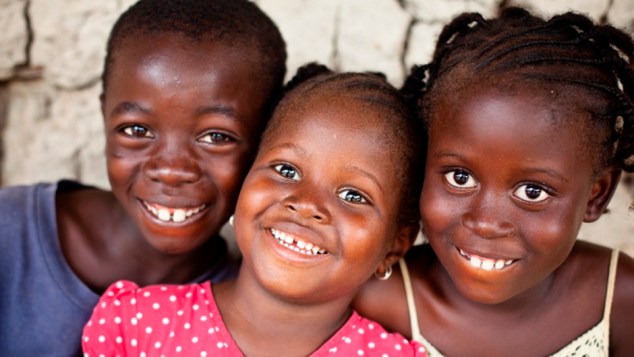
children-1

Nearly two hundred years ago, in the aftermath of what came to be known as the Peterloo massacre, Britain’s close shave with murderous revolution and mayhem, these lines of poetry were penned by Percy Bysshe Shelley.

I met Murder on the way –

He had a mask like Castlereagh –

Very smooth he looked, yet grim;

Seven blood-hounds followed him.

On the 16th of August 1819 the huge open area around what’s now St. Peter’s Square, Manchester, played host to an outrage against over 60,000 peaceful pro-democracy and anti-poverty protesters. An estimated 18 people, including a woman and a child, died from saber cuts and trampling. Over 700 men, women and children received extremely serious injuries.

The Massacre occurred during a period of immense political tension and mass protests. Fewer than 2% of the population had the vote, and hunger was rife with the disastrous corn laws making bread unaffordable. The elites of the time had their own views of how the world should be and ordinary people could and should have no say in the matter.

Move on another 150 years or so and another elite forces its will on a people.

On Jan. 22, 1973, the Supreme Court of the United States, by a 7-2 majority, discovered a sweeping constitutional right to terminate a pregnancy and struck down abortion laws across the country. Within five years, the number of abortions in America annually climbed above a million, where it would remain for 20 years.

To be pro-life, to regard abortion as obviously a form of murder and all those millions of dead unborn as its nameless victims, is to believe that the Roe v. Wade decision was a moment of deep moral rupture in the history of the republic.

These are the words of New York Times columnist, Ross Douthat, written in another context but in any context a valid description and judgement on what America has done to itself.

We are a long way from 1819 now, but we hope that our response to murder is no less one of outrage than it was for Shelley.

Now, not satisfied with perpetrating a “deep moral rupture in the history of the republic”, the forces of “progressive individualism” in America and its Western Allies – predominantly Great Britain and the European Union, with their captive bureaucracy at the United Nations, want to spread this contagion into the Third World. Their first big target is the continent of Africa. A modern Shelley might now write;

I met Murder on the way –

He had a mask like UNFPA –

Very smooth he looked, yet grim;

Seven blood-hounds followed him.

A few years ago a conference took place in Abuja, the capital of Nigeria.  This one conference attracted 11 very wealthy, and mostly western sponsors —  the UK Department for International Development, United States Agency for International Development, the Bill & Melinda Gates Foundation, the MacArthur Foundation, UNFPA – United Nations Population Fund, among them.

Any one of them could have single-handedly sponsored a conference in any part of the world. Why did 11 of these giants gather for one little conference in Nigeria. This conference was not convened out of great necessity and it was not conceived in Nigeria. Rather it was convened at the behest of what many now see as the forces of cultural imperialism. It was conceived in the hearts of powerful western social engineers who are the same people who are promoting abortion around the world.

Alongside these sponsors were also about 25 powerful organizations listed as the “corporate partners/planning committee” of the conference. These included major organizations well known in Europe and America for their single-minded radical pro-abortion and anti-life stance. These included International Planned Parenthood Federation, Marie Stopes International and Ipas – an international non-profit organization with a “mission to reduce maternal deaths and injuries due to unsafe abortion and to increase women’s ability to exercise their sexual and reproductive rights.”

Yes, all of them gathered in Abuja to nudge and prod Nigeria toward “family planning.”

American billionaire, Melinda Gates, and other Western philanthropists are now pouring astronomical amounts of money into projects that, at their roots, will drastically reduce the fertility in Africa.   Abortion legislative proposals have been introduced throughout Africa, and stringent population control measures are being strongly proposed around the continent under the influence of these powerful Western agencies.

In response to all this, when the Gates Foundation moved from its initial mission of targeting malaria, Nigerian-born Obianuju Ekeocha wrote an open letter to Melinda Gates opposing this initiative.  Her argument was that the underlying attitude towards human sexuality and life inherent in these programmes will “undoubtedly start to erode and poison the moral sexual ethics that have been woven into our societal DNA by our faith”.

Obianuju Ekeocha is a 32-year-old Nigerian woman who for the past six years has been living and working as a biomedical scientist in Canterbury, England. Most of her family and many friends still live in Nigeria.

Ekeocha has set up an organization, Culture of Life Africa, which is now one of the front-line defences for the continent in the face of this new colonisation, this 21st century version of the old 19th century imperialist “scramble for Africa”.

Speaking at a conference in Dublin, Ireland, earlier this week, she said she was inspired to write an open letter to Melinda Gates after learning of the Bill and Melinda Gates Foundation’s move to inject $4.6 billion worth of contraceptive drugs and devices into her homeland.

The moment these huge amounts of contraceptive drugs and devices are injected into the roots of our society, she said, they will undoubtedly start to erode and poison the moral sexual ethics that have been woven into our societal DNA by our faith. Even at a glance, anyone can see that the unlimited and easy availability of contraceptives in Africa will surely increase infidelity and sexual promiscuity as sex is presented by this multi-billion dollar project as a casual pleasure sport that can indeed come with no strings – or babies – attached. Think of the exponential spread of HIV and other STDs as men and women with abundant access to contraceptives take up multiple, concurrent sex partners.

And of course there are bound to be inconsistencies and failures in the use of these drugs and devices, so health complications could result; one of which is unintended abortion. Add also other health risks such as cancer, blood clots, etc. Where Europe and America have their well-oiled health care system, Ekeocha points out, “a woman in Africa with a contraception-induced blood clot does not have access to emergency response, an ambulance or a paramedic. No, she dies.”

“I see this $4.6 billion buying us misery. I see it buying us unfaithful husbands. I see it buying us streets devoid of the innocent chatter of children. I see it buying us disease and untimely death. I see it buying us a retirement without the tender loving care of our children.”

What Africa does need, she continued in her letter, suggesting that The Gates Foundation could provide for these, are:

– Good healthcare systems (especially prenatal, neonatal and paediatric care).

– Food programs for young children.

– Good higher education opportunities

– Chastity programs

– Support for micro-business opportunities for women

– Fortify already established NGOs that are aimed at protecting women from sex-trafficking, prostitution, forced marriage, child labour, domestic violence, sex crimes, etc.

Addressing Melinda she says, $4.6 billion dollars can indeed be your legacy to Africa and other poor parts of the world. But let it be a legacy that leads life, love and laughter into the world in need.

“The worst part is that no one in Africa (meaning the average African woman or man) knows that Melinda is about to bequeath us her ‘legacy’ which can and most probably will stifle love and life in our continent,” she said.

With reference to that aforementioned Abuja conference Ekeocha says “Family Planning” is a term that is (or should be) self-explanatory. It should mean the planning of one’s family. ”It should be a term that by default points to married couples who have a family to plan. It should be family-centred and it should connote self-mastery and self-discipline (for every good plan should undergirded by discipline).

“Family planning should be a good, healthy, pure and beautiful concept. Couples, guided by the spirit of openness to love and life, can plan their family together while understanding that any life conceived by their union is a gift of enormous value. Family planning should be natural and healthy for both husband and wife. It should not be destructive or detrimental to the health of mind and body, as many if not most of the artificial contraception available is.”

She warns that if Nigeria and other African nations do not wake up now, “we will surely fall off a cultural cliff and suffer the destruction of marriage and family life.

“We may be poor but we have our dignity.  So let us not fail or fall for what the 21st century cultural imperialists have surreptitiously labelled “family planning” or falsely imagined to be the most ‘unmet need’ of Africa.


Ekeocha speaking to the United Nations and appealing for respect for Africa’s nations and their people.

Morality, media ethics and the algorithm

lead_960

At a media conference in Dublin last weekend (@cleraunmedia) there was a great deal of talk about digital and data journalism, how to use it, – with the odd nod to how to abuse it – and how it was in some ways helping refine the whole process of keeping the world better informed.

This week the Columbia Journalism Review gives us another look at the process and raises complex ethical questions about where we are being led by this development. In all this, moral issues may arise as to what might happen if we surrender ourselves too blithely to the law of algorithms. Indeed the shadow of HAL 9000 might be already hovering over us and taking control of our far from simple world.

In those two great cinematic epics from the late sixties ad early seventies, 2001: A Space Odyssey and Solaris, the whole question of man and his machines, man as a moral being versus man as a scientific and technological being were raised. These two masterpieces, by Stanley Kubrick and Andrei Tarkovsky respectively, may only now be beginning to become critically relevant to our brave new world. You may remember that HAL derived its acronym from “Heuristically programmed ALgorithmic computer”.

The CJR raised these questions in the context of a BuzzFeed News probe earlier this year into suspicions about players fixing tennis matches. They called it “The Tennis Racket.” The piece featured an innovative use of statistical analysis to identify professional players who may have thrown matches. By analyzing win-loss records and betting odds at both the beginning and ending of a match, BuzzFeed identified cases where there was an unusually large swing (e.g. greater than 10 percent difference). If there were enough of these matches, it cast suspicion on the player.

They anonymized the data and didn’t publish the names of suspicious players. But a group of undergraduate students from Stanford University were able to infer and make public the names of players BuzzFeed had kept hidden.

The Review author, Nicholas Diakopoulos, feels the incident raises interesting questions about where to draw the line in enabling reproducibility of journalistic investigation, especially those that generate statistical indictments of individuals. “As newsrooms adapt to statistical and algorithmic techniques, new questions of media accountability and ethics are emerging.”

He notes how the news industry is rapidly adopting algorithmic approaches to production: automatically monitoring, alerting, curating, disseminating, predicting, and even writing news. This year alone The Washington Post began experimenting with automation and artificial intelligence in producing its Olympics and elections coverage, The New York Times published an anxiety-provoking real-time prediction of the 2016 presidential election results, the Associated Press is designing machine learning that can translate print-stories for broadcast, researchers in Sweden demonstrated that statistical techniques can be harnessed to draw journalists’ attention to potentially newsworthy patterns in data, and Reuters is developing techniques to automatically identify event witnesses from social media.

“While such technologies enable an ostensibly objective and factual approach to editorial decision-making, they also harbor biases that shape how they include, exclude, highlight, or make salient information to users.”

In “The Tennis Racket,” BuzzFeed decided to provide varying levels of transparency that would appeal to different levels of reader expertise. Each level of disclosure added additional nuance, so different stakeholders could access the “granularity” of information most relevant to their interests.

He then explains: “But the flip side of transparency is that, in the case of BuzzFeed, providing the source code and a detailed-enough methodology allowed students to de-anonymize the results relatively quickly and easily. The students re-scraped the data from the online source (though there was some uncertainty in identifying the exact sample used in the original story) with identities preserved, and then cross-referenced with the anonymized BuzzFeed data based on the other data fields available. This allowed them to associate a name with each of the 15 players identified in the original analysis.”

Transparency is now very high on the scale of values of the democratic world – not always adhered to without a degree of hypocrisy. The algorithm industry is well harnessed to provide tools for that. But, as this case shows, its instruments can be blunt and have a potential to perpetrate what might be injustice.

Diakopoulos points out that several prominent ethics codes employed by media organisations now emphasize transparency as a guiding norm. But transparency, he warns, is not a silver bullet for media ethics. It’s complicated.  “With so much machinery now being used in the journalistic sausage making, transparency is a pragmatic approach that facilitates the evaluation of the interpretations (algorithmic or otherwise) that underlie newswork.”

For many in the industry building computational products, Diakopoulos says, there are still concerns over algorithmic media production. We need a more accountable media system in which what he calls “these black boxes” are rendered more explainable and trustworthy.

Nicholas Diakopoulos is an assistant professor at the University of Maryland and a fellow at the Tow Center for Digital Journalism.

Living in fear in Ireland

Footnote to this morning’s presentation at #cmc16 Cleraun Media Conference in Dublin. Philip Gallagher @cleraunmedia took his audience through some of his investigative work on crime in rural Ireland. It is a real problem.

A story on one of Ireland’s newspapers earlier this year revealed something shocking about the Irish Republic’s crime scene.

An Independent.ie analysis of homicide rates over the last decade reveals that you are almost six times more likely to be shot and killed in the 26 counties as you are in England/Wales.

And, contrary to popular belief, the gun homicide rate in the Irish Republic was more than double that of Northern Ireland for the ten years from 2005 to 2015.

The per capita rate for Scotland was 0.064 per 100,000 per annum; Northern Ireland was 0.204; and England/Wales was 0.075. Incredibly the rate in the Republic at 0.437 (see above) was more than double that of the North and almost six times the English and Welsh figures.

God’s juggler?

695214

Bob Dylan’s in the news. I couldn’t help thinking of him the other day when I read this:

Then the sixth angel blew his trumpet, and I heard a voice from the four horns of the golden altar before God, saying to the sixth angel who had the trumpet, “Release the four angels who are bound at the great river Euphra’tes.” So the four angels were released, who had been held ready for the hour, the day, the month, and the year, to kill a third of mankind.

Dylan believes that. In his famous 1984 Rolling Stone interview he said, provocatively as he often is, and enigmatically as he also often is:

I believe in the Book of Revelation. The leaders of this world are eventually going to play God, if they’re not already playing God, and eventually a man will come that everybody will think is God. He’ll do things and they’ll say, “Well, only God can do those things. It must be him.”

That might remind you of something someone else said not so long ago – someone at a considerable remove from where you might expect to find Bob Dylan on the spectrum. This was what Republican Senator Rand Paul, (Kentucky) said in support of the pro life movement:

For 43 years, a few unelected men and women on the Supreme Court have played God with innocent human life.

They have invented laws that condemned to painful deaths without trial more than 61 million babies for the crime of being “inconvenient.”

In 1973, the U.S. Supreme Court’s Roe v. Wade ruling forced abortion-on-demand down our nation’s throat.

So, one wonders about those four demon angels at the Euphrates. Have they arrived? The valley of the Euphrates, or thereabouts, is one part of the world where there are men and women playing God just now. If we add a few more from around the world – well, maybe we will not get as far as a third of mankind killed, but we are certainly on a bad road trip.

Dylan is a truly special kind of human being. He deserves the Nobel Prize. If you don’t think so listen to him again. Forget the cant about him not writing poetry and start thinking outside the box. There is no Nobel Prize for music. There should be and perhaps this is the best place to start. In terms of lyrics Dylan’s worst efforts – and there are not too many in that category – can be pretty bad. But at his best he can really fill you with awe and wonder.

If the Nobel Commitee was going to look into the world of popular culture for creative souls who have opened windows, given people things to think about which will help them better understand the human condition, they could do much worse than this – they might have chosen the Rolling Stones.

In that long interview with Rolling Stone – I hope this is not getting confusing – he showed some of the depths of his spirit. He also showed how essentially humble the man is. He was asked about all the labels he’s been burdened with over the years.

People have put various labels on you over the past several years: “He’s a born-again Christian”; “he’s an ultra-Orthodox Jew.” Are any of those labels accurate?

Not really. People call you this or they call you that…. I would never call it that, I’ve never said I’m born again. That’s just a media term. I don’t think I’ve ever been an agnostic. I’ve always thought there’s a superior power, that this is not the real world and that there’s a world to come. That no soul has died, every soul is alive, either in holiness or in flames. And there’s probably a lot of middle ground.

What is your spiritual stance, then?

Well, I don’t think that this is it, you know — this life ain’t nothin’. There’s no way you’re gonna convince me this is all there is to it. I never, ever believed that. I believe in the Book of Revelation.”

You’re a literal believer of the Bible?

Yeah. Sure, yeah. I am.

Are the Old and New Testaments equally valid?

To me.

Do you actually believe the end is at hand?

I don’t think it’s at hand. I think we’ll have at least 200 years. And the new kingdom that comes in, I mean, people can’t even imagine what it’s gonna be like. There’s a lot of people walkin’ around who think the new kingdom’s comin’ next year and that they’re gonna be right in there among the top guard. And they’re wrong. I think when it comes in, there are people who’ll be prepared for it, but if the new kingdom happened tomorrow and you were sitting there and I was sitting here, you wouldn’t even remember me.

When you meet up with Orthodox (Jewish) people, can you sit down with them and say, “Well, you should really check out Christianity”?

Well, yeah, if somebody asks me, I’ll tell ’em. But, you know, I’m not gonna just offer my opinion. I’m more about playing music, you know?

There is something very attractive about that simplicity, that mixture with faith and unpretentiousness – harking back to another famous interview with a journalist away out of his depth. Dylan ended by saying something like, “I’m just a song and dance man”, God’s juggler, as it were.

It is not that Dylan doesn’t express his views. He does, and sometimes quite strongly. It’s that he does so with a readiness to pull back from any suggestion of arrogance. His lyrics have been prophetic but he will not accept the mantle of the prophet. He detaches himself from them, he will even say that in instances he did not really know what some lines meant when he wrote them. He leaves us to read them for ourselves and work out their meaning. In that there is something of the quality which a true artist, a true genius, often touches, the quality of mystery which is essential in all great art. The Academy has done well this time round.