

Allen Tate was a Southern American novelist, poet and literary critic, active in the first half of the 20th century. He was well known to the literary establishment of his time – Eliot, Auden, Hemingway and more. For a variety of reasons he is less well known today. There are suggestions that this might be because he converted to Catholicism.
For much of his life he was an atheist but deep down he felt the emptiness underlying his lack of faith. Then, in the 1950s, he converted to Catholicism. This was partly under the influence of Jacques Maritain, his friend at Princeton, where he was for a time Poet in Residence. Maritain was his Godfather. It was a conversion which unsettled the elite WASP establishment of his day.
Marshall McLuhan, a social critic in a slightly later time suggested that his embrace of Rome might equate him with John Henry Newman, making him ‘an American Newman’. Although he died in the faith of Rome his somewhat turbulent way of life bore little resemblance to that of the saintly Newman.
Nevertheless, there were similarities beyond the conversion story. Newman struggled in a very determined way against what he saw as the corrupting liberalism of his day. Tate, particularly after he became a Catholic, battled with corrupting secularism, a deformed child of liberalism, which he saw as an assault on all that was human and divine in our very being.
McLuhan’s great and gently prophetic legacy to the late 20th and early 21st centuries was his acute analysis of communication media, leaving us with the memorable catch-phrase, ‘the media is the message’. Tate, before him, held the view that modern communication was a dead end devoid of any of the character of communion which made human communication of value in the first place.
In Tate’s reading of where the decay began he brought us back to Descartes’ ground-breaking nonsense, ‘I think, therefore I am’. This drove a fatal wedge into the heart of our humanity, splitting our nature in two, separating our body and its power of thinking from our very soul.
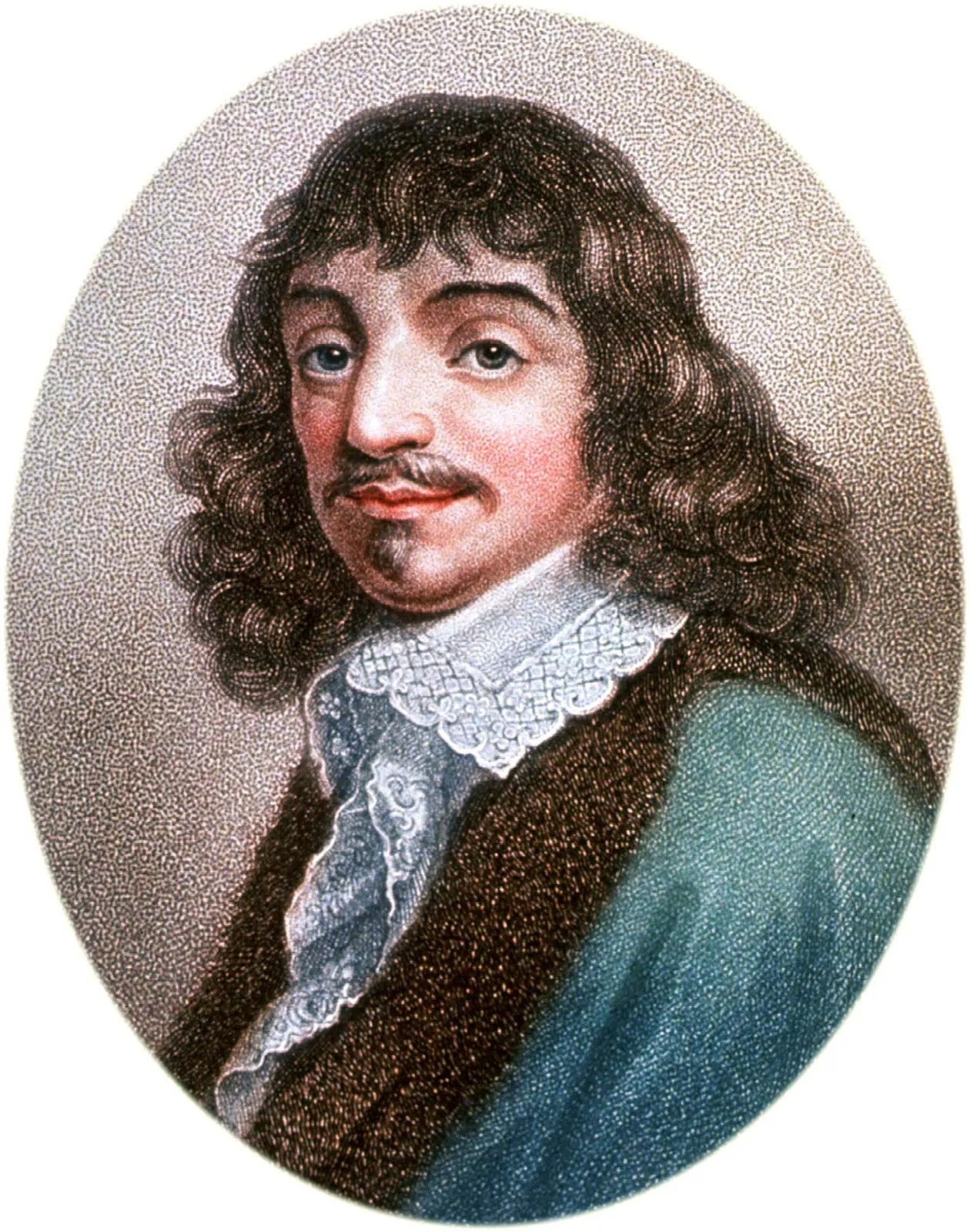
Tate held that “When René Descartes’ isolated thought from man’s total being he isolated him from nature, including his own nature; and he divided man against himself. The battle is now between the dehumanized society of secularism, which imitates Descartes’ mechanized nature, and the eternal society of the communion of the human spirit.”
In one of his most famous essays Tate addressed the question of what our society had to do to help our culture and our civilisation be everything that it should be and could be. He placed much of the burden of doing that on what he called “the man of letters” That essay, entitled ‘The Man of Letters in the Modern World’, was published in 1952.
He wrote, “To the question, what should the man of letters be in our time, we should have to find the answer in what we need him to do. He must do first what he has always done: he must recreate for his age the image of man, and he must propagate standards by which other men may test that image, and distinguish the false from the true.”
He might have said, he must be Austen, George Eliot, Dickens, Dostoyevsky, Tolstoy and more. But it was not just a question of the great stories and the great characters in literature by whom we grow in our understanding of ourselves. There was something more which faced us in his time with its technological revolution already well under way and governing the means of communication.
That was then, this is now when the grip of that governance is much stronger and as Anthropic’s boss, Dario Amodei says in relation to Artificial Intelligence, ”is growing exponentially”, when we don’t even know if we are in the middle of an existential crisis or not”
“But,” he said, “ at our own critical moment, when all languages are being debased by the techniques of mass control, the man of letters might do well to conceive his responsibility more narrowly. He has an immediate responsibility, to other men no less than to himself, for the vitality of language. He must distinguish the difference between mere communication…and the rediscovery of the human condition in the living arts. He must discriminate and defend the difference between mass communication, for the control of men, and the knowledge of man which literature offers us for human participation.”
His preoccupation here echoes the words of T.S. Eliot in The Four Quartets (Little Gidding) in what is interpreted as a conversation with the ghost of W.B. Yeats:
When I left my body on a distant shore.
Since our concern was speech, and speech impelled us
To purify the dialect of the tribe
And urge the mind to aftersight and foresight,…
Tate maintained that by these literary arts, one means the arts without which men can live, but without which they cannot live well, or live as men. To keep alive the knowledge of ourselves with which the literary arts continue to enlighten us, to separate them from other indispensable modes of knowledge, and to define their limits, is the intellectual and thus the social function of the writer. He asserted: “Men in a dehumanized society may communicate, but they cannot live in full communion.”
He went on to examine what he called the double retreat from the moral center, of the man of action and the man of letters, that we have completed in our time and suggested an alternative “which would have at least the virtue of recommending the full participation of the man of letters in the action of society….provided we think of society as the City of Augustine and Dante, where it was possible for men to find in the temporal city the imperfect analogue to the City of God.”
Writers, he argued, must reject secularism – which he identified as the idolatry of substituting means for ends. This idolatry had already permeated the culture of the West but it had not gone so far in Europe as it had in regimes eastward of Berlin and in Asia which were deliberately committed to the ideology, preferring barbarism to civilisation. However, even the West’s muddled surrender to means over ends had in his view provoked an intolerable psychic crisis expressing itself as a political crisis.
When he wrote this we were, remember, in the middle of the Cold War.
Man, Tate held, is a creature that in the long run has got to believe in order to know, and to know in order to do. For doing without knowing is machine behavior, illiberal and servile routine, the secularism with which man’s specific destiny has no connection.
Ultimately Tate recognises that communion for man must be the road to love for each other. This, however, as an objective is simply beyond us. It is something we can only reach through genuine religion leading to the love of God.
“I am not suggesting,” he wrote, “that we all have an obligation of personal love towards one another. I regret that I must be explicit about this matter. No man, under any political dispensation known to us, has been able to avoid hating other men by deciding that it would be a “good thing” to love them; he loves his neighbor, as well as the man he has never seen, only through the love of God. He that saith that he is in the light, and hateth his brother, is in darkness even until now. (1. John 2,9).
He continues on this theme by stating that he lays it down as a fact that” this is the only solution.” We must, he says, “ love one another or die,” as Auden wrote more than ten years ago. “I cannot believe that Mr. Auden was telling us that a secularized society cannot exist; it obviously exists. He was telling us that a society which has once been religious cannot, without risk of spiritual death, preceded by the usual agonies, secularize itself, – as totalitarian communism has shown us in Russia’s dismal experience. Tate calls on the man of letters to daily renew his dedication to this task. “I do not know who else may be expected to undertake it.”
“The man of letters has, then, in our time a small but critical service to render to man: a service that will be in the future more effective than it is now, when the cult of the literary man shall have ceased to be an idolatry.” This cult was for him the cult which was producing so much dismal writing in the 20th century. Men of letters and their followers, were like the parvenu gods and their votaries of decaying Rome, competing in the dissemination of distraction and novelty.
But the true province of the man of letters is nothing less (as it is nothing more) than culture itself. The state is the mere operation of society, but culture is the way society lives, the material medium through which men receive the one lost truth which must be perpetually recovered: the truth of what Jacques Maritain calls the “supra-temporal destiny” of man. It is the duty of the man of letters to supervise the culture of language, to which the rest of culture is subordinate, and to warn us when our language is ceasing to forward the ends proper to man. The end of social man is communion in time through love, which is beyond time.
We can find many parallels in our own time with what preoccupied Tate. Indeed Pope LeoXIV’s stark choice as to whether modern man, with all his technological progress, was building Babel or Jerusalem seems incipient in the poet-writer’s thoughts throughout this essay. Remember what happened in Babel? Language as we might have known it perished.
More than half a century after Tate wrote this landmark essay, Pope Francis’ Encyclical Letter, Dilexit Nos (24 October 2024),quoted in Pope Leo XIV’ Encyclical, Magnifica Humanitas, echoes his thoughts and preoccupations about the tragedy which ensues when one half of man’s nature, his human heart, his capacity for communion and love is denied: “If we devalue the heart, we also devalue what it means to speak from the heart, to act with the heart, to cultivate and heal the heart. If we fail to appreciate the specificity of the heart, we miss the messages that the mind alone cannot communicate; we miss out on the richness of our encounters with others; we miss out on poetry. We also lose track of history and our own past, since our real personal history is built with the heart. At the end of our lives, that alone will matter.”

