Michael Kirke was born in Co. Donegal and attended St. Eunan’s College in Letterkenny, 1957-1962. In 1966 he graduated from University College Dublin (History and Politics). In 1966 he began working on the editorial desk of The Evening Press in Dublin and in 1968 went to the newsroom of the Irish Press group of newspapers – contributing news and features to the group’s three titles, The Irish Press (morning paper), The Evening Press and The Sunday Press. In 1969 he went to Belfast and covered the initial unravelling of the Unionist hegemony in the province. Later that year he became the group’s education specialist. In 1973 took leave of absence to pursue postgraduate studies in education in Trinity College Dublin where he graduated in 1976. In 1978 he left journalism and moved into teaching. In 1981 was appointed headmaster of Rockbrook Park School in Dublin (www.rockbrook.ie). In 1994 resigned from that post and moved to live in the West of Ireland (Galway) where he began working part-time in media again. He is now back in Dublin working, among other things, as a freelance writer. His main interests are in political, cultural and educational affairs – as well as issues related to religious faith.
Some people say that the so-called culture war is a figment of the conservative imagination. Wrong, wrong, wrong! Read this extract from a bulletin from the frontline of that war. Then read Rod Dreher’s entire piece. It is heartbreaking on two levels – first because it tells the story of helpless victims of crazy ideologues; second because it tells a story of intelligent people being corrupted wholesale by that same crazy “progressivist” ideology.
This morning, for the first time – it has been around for awhile – I watched a video which shows the appalling fulfilment of Allan Bloom’s terrible prophesy of nearly 40 years ago about the future of American generations. We are now two generations on and this is what America and – God help us – the rest of the West following in its tracks, has left us with.
Now read this extract from Dreher’s snapshot report from the frontline. If you can take any more then read his full reflection.
I read this op-ed piece from today’s New York Times, in which Katherine Stewart says that people like us — parents who have chosen to withdraw their kids from public schooling, or not to send them there in the first place — are Jesus-crazed racists who hate democracy, or at best useful idiots of said villains. It is liberal crackpottery at its purest. Andrew T. Walker responds:
Most public school parents I know see public schools as as place for their child’s learning, to know one’s neighbor, and to celebrate milestones whether through football games or proms.
In a parallel universe where pluralism and diversity are actual liberal values, this author [Steward] would prize and herald the virtues of school choice as part and parcel of ordered liberty. But not if you see public schooling primarily as a vehicle for social change. The whole op-ed is a shocking revelation of the moral imagination of modern-day progressives — bring your child before the state to receive the requisite social values or else the whole system is being undermined.
Confession: My child attends a classical Christian school. More confession: We chose this for our child because we believe that what public schools value as true, good, and beautiful do not align with what we believe is true, good, and beautiful. It’s a conflict of visions, and in America, we’re blessed to have options.
We teach our child about diversity and seek to live it out. We also want our child to have an education foundation that prioritizes our Christian faith, while also seeing its relevance to modern society’s deepest, metaphysical questions. That’s our personal conviction arrived at by prayer, study, and conscience. Others are free to disagree.
But this is a conclusion that people like Stewart cannot handle, because she cannot cast alternative models of education in any affirmative vision. She can’t conceive of a Christian education model, for example, that is pro-culture, deliberately non-fundamentalist, and one that seeks to nurture and incubate the pillars that propped up a free society — among them human dignity.
Why do libertarians and Christians intentionally increasingly use the term “government schools” to describe public education? First, because it’s true. Public schools are government schools. Second, because it’s clarifying. Too many Americans are stuck in a time warp, believing that the local school is somehow “their” school. They don’t understand that public education is increasingly centralized — teaching a uniform curriculum, teaching a particular, secular set of values, and following priorities set in Washington, not by their local school board. The phrase is helpful for breaking through idealism and getting parents to analyze and understand the gritty reality of modern public education. The phrase works.
And so it must be squashed. And there’s no better way to discredit any modern idea than by tying it to a Confederate past. It’s certainly easier than addressing the core of the fundamental idea — that it’s better for America if more parents enjoy the educational choices that wealthy progressives take for granted.
Wealthy Americans have enormous educational advantages. They can afford private-school tuition (and many do just that). They can afford homes in the best school districts. They can employ private tutors and create the most lavish and interactive home-schooling experience. The rest of America? They’re typically reduced to no choice at all. There’s the mediocre public school in the moderately priced neighborhood or the dreadful school in the cheapest district. That’s it. There is nothing else.
I read this article, on my iPad, felt quite ashamed and then decided to post it. He concluded:
We’re engaged in a war, and technology wields the heavy weapons. Rod Dreher published a bestseller called The Benedict Option, in which he urged people of faith to retreat behind monastic walls as the Benedictines did—after all, they preserved literacy and culture during one of the darkest eras of human history. I don’t completely agree with Dreher, though I’m convinced that the preservation of reading will require something akin to the Benedict option.
As soon as I post it I’m going to close down my devices and open a book.
`Curiouser and curiouser!’ cried Alice (she was so much surprised, that for the moment she quite forgot how to speak good English).
Well, I’m afraid`Curiouser and curiouser!’ hardly seems up to describing our prediciment. ‘Frighteneder and Frighteneder’, or ‘frustrateder and frustateder’ seems a more apt corruption of the English language to describe our condition than does Alice’s mild aberration of our tongue. We truly are caught between the Devil and the deep blue sea.
Is there anyone out there who also feels like screaming out, “What the blazes is going on?” Something is happening, but you don’t know what it is, do you Mr. Jones? Dead right. Bob Dylan’s Ballad Of A Thin Man might have been written as a allegory for another era but it sure as hell seems to be phrophetic for ours.
She began by expressing her bewilderment about what was one of the strangest weeks in the politics of the United States. Stranger Things‘ world had nothing on it. But like that world, an even stranger upside-down world was lying beneath the surface. Our helpless bewilderment comes from the total failure of our media to instill any confidence in us that they are giving us any explanation of what is going on. They have become so much party to the opposition to the strange Trump administration that even when they are telling us the truth we are unable to take their word for it.
Her summing up of the week is this:
The sacking of the ineffective Reince Priebus was probably the right move – replacing him with the effective and focused Homeland Security head, retired General John Kelly. Trump’s public bullying of his Attorney-General Jeff Sesions as “weak” and “beleaguered” was appalling. The Scaramucci tirade was totally beyond the pale and besmirched both the office of president and the man who had appointed this verbal thug. The defeat of the Obamacare repeal bill was a serious setback. The questioning of Jared Kushner went precisely nowhere.
But then she calls out the mainstream media opposition to Trump for its partisan ignoring of what she sees as a major story waiting to get the media’s spotlignt – but doesn’t. A swamp from which it averts its gaze — “because this points to the fact that, rather than Team Trump being involved in situations that undermine the security and constitution of the United States, it is the Democratic Party that is increasingly in the frame.”
She is referring to the evidence given last week by financier, William Browder, the the Senate Judiciary Committee, revealing the connections between the shady media manipulator, Fusion GPS, Russian manipulators and the Democratic Party itself.
Phillips concludes:
Whatever concerns one may have about Trump’s character, this surely is the “swamp” from which he is trying to extricate his administration. He believes the Republican machine will prevent him from doing so, whether through inertia, incompetence or worse. The convulsions inside his administration, such as the ousting of Reince Priebus, are his attempt now to disengage it altogether from the Republican establishment. This is causing apoplexy amongst establishment types across the aisle, who regard the emergence of a presidential administration that slips its moorings in the party machine as the unleashing of a wild man.
But hey folks, that’s exactly what 63 million Americans elected Trump to do. He campaigned as someone absolutely outside all the normal rules and conventions of government; he was elected because that’s exactly what his voters wanted as their president since they had totally lost faith in the entire political establishment, including the wretched Republicans; and that’s exactly how he intends to govern. That’s how he will deliver on the promise he made to the people.
It’s called democracy; and at the end of it, America may emerge cleaner and stronger. Why? Because its ruling class is an Augean stables that needs to be cleansed and maybe only a wild man can do that. Uncomfortable? Without doubt. Distasteful? Certainly. Dangerous? You bet. Wild men always are. But the blame for this should be laid squarely at the door of all those in the Beltway and among its media sycophants who caused this to happen and have still not learned their lesson.
As Alice said, `Curiouser and curiouser!’ Or worse.
You walk into the room with your pencil in your hand
You see somebody naked and you say, “Who is that man?”
You try so hard but you don’t understand
Just what you will say when you get home
Because something is happening here but you don’t know what it is
Do you, Mr. Jones?
The announcement last weekend that the British Equalities Minister Justine Greening wants to change the law so that people are free to specify their gender on their birth certificate regardless of medical opinion, provoked dismay and outrage among conservative people. Not all liberal people were happy with it either – but for the libertarian gender-benders it was like the dawn of a new age.
Tim Stanley, in the Daily Telegraph, took a critical if sober view of it. He didn’t think it would really fly. I wouldn’t be so sure, given the extent to which the very foundations on which common sense and the politics of the common good have been so badly warped. Stanley acknowledged:
Life is messy and the individual should navigate it with free will. But it’s precisely out of deference to the complexity of the human experience that we cling on to certain principles – principles that reflect not just our ideals but the realities of our nature. Biology is one of those realities, and it helps define us as men and women. Because biology is so vital, if you try to rewrite the principles to please one tiny minority, you impact upon the lives of absolutely everybody.
He adds, The Tories are meddling in affairs that are well beyond their intellectual grasp or the country’s willingness or capacity to accept change. Greening is asking the British public not only to accept a radical notion that most will find exotic but to rewrite the daily narrative of their own lives – and behave as if nothing out of the ordinary were happening. It is, I suspect, too big an ask.
In The Times (London), Clare Foges struck a warning note suggesting that it would be unwise to be complacent. Storing up trouble for our children now and in future generations was what was on her mind.
Many of the adults among us may dismiss this with an inward roll of the eyes, too polite or too wearied by political correctness to demur. But children are increasingly presented with these complex and confusing ideas as unarguable fact. They are being led to believe, on social media and in schools, that gender is simply a lifestyle choice.
On Facebook, users can choose from a buffet of 71 gender options: polygender to two-spirit person. Last year the children’s commissioner sent a form to schoolchildren asking them to pick one of 25 genders that they identified with (withdrawn once the press started to take an interest). Girlguiding has said that boys as young as five who identify as girls can join the Rainbows or Brownies. Scores of schools have abolished “boys” and “girls” from their dress code. One of the country’s leading private schools, St Paul’s Girls’, now considers requests from students to be known either as gender-neutral or as boys. Pupils aged 11 to 15 “can have discussions at any time to explore their gender identity”. No doubt where St Paul’s leads many other schools will follow.
How did this happen, we might ask ourselves? What wrong turning led us to this Chaos? Losing our grip on the Cosmic reality that is God, denying the divine, must surely be somewhere near the heart of it.
Romano Guardini, puzzling over the paradox of an omnipotent God allowing himself to be ignored by his creatures, asks us rhetorically if man can actually turn his back on God? How come it is possible – if God is really the all-powerful One standing at the beginning and end of time, in history and in eternity, in us and above us in heart and heaven, – that he can be denied, blasphemed, even—incomprehensible mystery—overlooked and forgotten?
Frightening as the prospect is, he confirms:
It is possible—this and more. For it is also possible for God, the one Reality, to exist, and for man, his own creature to declare: God is dead! Man can behave as if God did not exist. He can act, judge, proceed as if nothing existed but himself, man, and the animal, and the tree and the earth. It is possible for man (who has a vital soul through which he exists as man, through which he is joyful or sorrowful) to insist that he is soulless. All this is possible because seeing and understanding, serious contemplation and acceptance of reality are vital processes, hence dependent on man’s will and profoundest disposition. Thus also his capacity for negation is illimitable.
And the consequences are what we have now got. Our capacity for negation is in overdrive.
Roger Scruton put his finger on it in his new book, On Human Nature, when he says:
Take away religion, take away philosophy, take away the higher aims of art, and you deprive ordinary people of the ways in which they can represent their apartness. Human nature, once something to live up to, becomes something to live down to instead. Biological reductionism nurtures this “living down,” which is why people so readily fall for it. It makes cynicism respectable and degeneracy chic. It abolishes our kind——and with it our kindness.
And it is precisely the milk of human kindness which Foges tells us we should be relying on in our efforts to deal with our differences and our diversity. She wants our guiding instinct in these matters to be kindness and warns that in seeking to support the tiny minority of children who feel trapped in the wrong body we run the risk of creating a world of confusion and anxiety for the rest.
But ultimately where does kindness come from? Even in a civilization which acknowledges the existence of God there is a struggle to maintain it against our inherent tendency to selfishness. But in any world we know of – contemporary or historical – where the existence of God is denied our record is horrific. Individuals who have lost their faith in God can be sustained in their humanity by the mores ingrained in them by a believing society, but when that society itself rejects God, and surrenders itself to the values of self-centred and utterly narcissistic individualism, then we all re-enter the tower of Babel. That is what is now threatening us.
Guardini contemplates this reality when he writes, in his reflection on the last chapters of the Revelation of St. John, that:
Unconverted man lives in the visible world judging all that is or may be by tradition’s experience and by the rules of logic. But when he encounters Christ, he must either accept him and his revolutionary approach to truth or lose him. If he attempts to judge also the Lord by the standards of common experience, he will soon notice that he is dealing with something outside experience. He will have to discard the norms of the past, and take Christ as his new point of departure. When he no longer attempts to subject Christ to immediate reason and experience, he will recognize him as the supreme measure of all possible reality.
A big part of modern man’s ‘problem’ with God is surely rooted in his refusal to accept God as God and not as something in his own image. Doing this is no risk to his innate pride and self-centredness. But God is not made in our image. We are made in his image, and made by him. Ignoring that spells big trouble. Guardini continues:
The intellect jealous for its own sovereignty rejects such recognition, which would put an end to its world-anchored self-glorification, and surrender it into the hands of the God of Revelation. This is the ‘risk’ any would-be Christian must take. If he takes it, a profound revolution begins…. And to the degree that the searching individual experiences such spiritual revolution, he gains an amplitude, a superiority, a synthesizing power of reason that no natural insight can match.
Those of us now facing this new Babel, this incomprehensible confusion in our society and in the hearts and minds of so many, have a difficult choice to make. We are being faced with a world-view which has attempted to compromise with the substance of our nature and identity because it has abandoned one of the defining truths about our existence – we are the creatures of the Living God. If there is to be any hope of rescue from this state, Guardini, back in the 1930s, told us what must be done:
The term ‘Christian culture’ must be purged of all that is questionable in it. The gulf between Revelation and the world must reopen. Perhaps a new period of persecution and outlawry must come to shake Christians back to a living consciousness of the values for which they stand.
Mankind, once again, has a great adventure before it.
They said it would take ten years. It did, just about that. I’m no measurer of economic development and progress but it does seem that the Great Recession is over and the waters of a kind of prosperity are lapping the shore once more. In Ireland we are more or less on out feet again, if some recent headlines are to be taken at face value.
“New property millionaires are being created at a rate of a dozen a week. There are now close to 4,000 homeowners in Ireland whose property is worth €1m or more”. Not to mention the spectacle of cranes flying over the City of Dublin. It is now ranked fifth in the world for prime retail rent growth.
That headline and those cranes might be a two-edged sword and doubtless will be causing some to cross their fingers in the hope that it is not a sign of a boom before the next bust.
A Dublin skyline
But what about the more crippling recession – or rather, regression? Any sign of remission there? It is a regression wider, deeper and ultimately more damaging than any in the material order and it is still draining the blood from the living tissue our civilization. We now live in nations where values have become so fragmented and have been so weakened by their fragmentation that they no longer seem up to the task of holding our societies and communities together.
However, there are voices calling us to our senses. Eugene Vodvolaskyn, Russian academic philologist and novelist is one. Joseph Ratzinger, emeritus Pope Benedict XVII, is another. Philosopher Roger Scruton is a third. There are more – but where are their disciples, without whom they will just be voices crying in the wilderness.
All three of these see a two-fold development in our culture which is near the heart of the disintegration which threatens us: excessive individualism and secularization. It is twofold because the one leads to the other. Indeed, like malign cells in the body, they complement each other and feed off all around them. Excessive individualism has no room for the Other – and certainly no room for God. Secularism, by eliminating God, has nowhere to lead us except to worship the Self.
Scruton in his book, On Human Nature, reminds us of how Milton conjured the truth of our condition from the raw materials of Genesis, and in doing so set a standard for art which was truly human. We might add Dante, Shakespeare and Cervantes, like Milton, inheritors of the treasures of the High Middle Ages who have never been surpassed in their vision of what is is to be human and divine. Modern man and much of his literature, his philosophy, his politics, in his flight from God is a wrecker.
“Take away religion, take away philosophy, take away the higher aims of art,” Scruton writes, “and you deprive ordinary people of the ways in which they can represent their apartness. Human nature, once something to live up to, becomes something to live down to instead. Biological reductionism nurtures this ‘living down,’ which is why people so readily fall for it. It makes cynicism respectable and degeneracy chic. It abolishes our kind — and with it our kindness” (P.49).
Pinpointing these two maladies as key issues to be faced if our civilization is to be rescued from this regression, Vodvolaskyn traces the degeneration in this way:
“In the modern age, the individual required recognition. Faith required lack of faith so that the believer would have a choice and so that faith wouldn’t be a mere everyday habit. This train gathered speed but didn’t stop. It kept moving even after reaching its station. It now seems to have gone pretty far beyond its destination. The cult of the individual now places us outside divine and human community. The harmony in which a person once found himself with God during the Middle Ages has been destroyed, and God no longer stands at the center of the human consciousness.”
Vodvolaskyn echoes the words of Alexander Solzhenitsyn in his famous “Warning to the West“, given after his exile from Russia. Humanism of the modern age, the former tells us, takes it that the human being is the measure of all things. While, he says, the same could be said of the Middle Ages, there is one vital qualification. “For medieval man there was one correction: The person is the measure of all things, if it is understood that the measure was given by God.”
Roger Scruton adds that thinkers in the eighteenth century compounded the degeneration. He rightly points out that our academic political philosophy has its roots in the Enlightenment, in the conception of Citiznship that emerged with the social contract. That contract replaced inherited authority with popular choice as the principle of political legitimacy. Not surprisingly, he says, it has had little time for piety, which—if acknowledged at all—is confined to the private sphere” (P 126).
The concept and definition of “person”, explored by Scruton in his book, is a key to the entire crisis. Our civilization has now such a garbled concept of the person, its nature and dignity, its unified essence as body and soul, that it has all but shipwrecked us on the rocks exposed by the receding waters.
Without the correction supplied by medieval man, in Vodvolaskyn’s view, humanism becomes inhuman. With excessive individualism, the rights set down for the individual multiply. The Russian foresees a demand inevitably coming for a right to cross the street against a red light. Take that literally or metaphorically. Ultimately, he argues, because our concept of rights is anti-humane at its core, it activates the mechanism for self-destruction. “The right to suicide turns out to be our most exemplary liberty.”
Ireland, not too long ago was still a safe place to negotiate the world, to raise a family, to pursue the good life. It was holding on, albeit somewhat superficially, to the more metaphysical world view characteristic of the Middle Ages which Vodvolaskyn identifies. It is no longer so, at least in the urbanised and materialistic sectors of its population. While there are still many there who feel that true value and virtue have been swept away by fickle modernity, there are many others rejoicing and celebrating the change.
What has happened to Ireland is what is likely to happen to any cluster of humanity whose moral compass is put in the hands of entertainers, celebrities and a political class whose members care more about their media image and so-called legacy than about the true good of the people.
Ireland may be fast approaching a cultural condition illustrated by Vodvolaskyn in the following anecdote. He recounts an encounter, some 20 years ago, with a Dutch pastor, an advocate of The Netherland’s culture of tolerance, who took him on a tour of Amsterdam.
“The Dutch people are tolerant, he told me, and hence in Amsterdam, there are no ethnic or religious minorities, an achievement made possible by the fact that although a majority of residents are of Dutch descent, only around 25 percent call themselves Christian. His enumeration of the achievements of Dutch tolerance concluded with an account of the removal of a stanza about the help of God from the national anthem of the Netherlands. As you can understand, explained the pastor, various people have various gods, and they can be offended that the anthem names only the Christian God. This is a triumph for tolerance, isn’t it? Listening to him, I thought, if this is a triumph, what would catastrophe be like?”
That was before the spectre of jihad made its appearance on Dutch soil. One wonders what the pastor is thinking today.
“As in the Middle Ages, the world itself is becoming a text, though the texts vary in these two cases. The medieval world was a text written by God that excluded the ill-considered and the accidental. The Holy Scripture, which gave meaning to the signs that were generously scattered in daily life, was this world’s key. Now the world is a text that has any number of individual meanings that can be documented. Think of the blogger who describes, minute by minute, a day that has passed.”
But the modern age, with its false humanism, centered exclusively on man, repudiated the Christian vision. The progressivist delusion clouded the picture and abandoned the vision of a unified world where the past and the present were one force.
Vodvolaskyn, being Russian, looks at the modern world from that perspective. But he is also profoundly Christian and fully aware of the historic unity of spirit which Christianity brought to what we call the West. He is also deeply optimistic about the potential which this spirit still has to transform and renew the now decaying civilization in which we find ourselves.
Both Vodvolaskyn and Joseph Ratzinger – surely not only one of the greatest popes of the modern age but also one of its wisest political philosophers – see that the changes that have to come have to take place in our hearts as well as in our culture and in our reason-based political institutions. For both of them utopian dreams are paths to disaster for mankind – as they have shown themselves to be from Cromwell’s time up to the age of ISIS.
“The enthusiastic messianism of an eschatological and revolutionary character is absolutely foreign to the New Testament. History is, so to speak, the kingdom where reason rules. Although politics does not bring about the kingdom of God, it must be concerned for the right kingdom of human beings, that is, it must create the preconditions for peace at home and abroad and for a rule of law that will permit everyone to ‘lead a quiet and peaceable life, godly and respectful in every way’ (1 Tim. 2: 2). One could say that this also implies the demand of religious freedom. Similarly, the text is confident that reason can recognize the essential moral foundations of human existence and can implement these in the political domain.”
Scruton, for his part, warns us of the totalitarian traps which the modern philosophies of Peter Singer and Derek Parfit , both icons of progressivism, set for us with their consequentialistmoral reasoning.
“Both philosophers overlook the actual record of consequentialist reasoning. Modern history presents case after case of inspired people led by visions of ‘the best,’ believing that all rational beings would adopt those visions if only they would think about them clearly. The Communist Manifesto is one such Vision. It gives a picture of ‘the best’ and argues that all would work for it, the bourgeoisie included, if only they understood the impeccable arguments for its implementation. Those who stand in the way of revolution are self-interested; but they are also irrational and would change sides if they thought seriously about principles that everyone could will to be laws. Since their interests prevent them from thinking in that way, violent revolution is both necessary and inevitable.” (P97)
Vodvolaskyn argues for a conservative project and thinks that if the West is able to move beyond its geopolitical disagreements with Russia, it will see one possible future for our common European civilization. One of his fears, which he elaborates in another more recent essay, is that if Russia attempts this by means of a harsh dictatorship of the majority, then it will fail and destabilize society no less than, say, “the dictatorship of the minority that we can observe at times in the West.”
Today as ever, he holds,—contrary to progressive conceits—it is possible for a society to recognize a place for religion and uphold traditional notions of marriage and family. For Scruton it is not only possible. It is essential. In his book he subscribes to the “deep insight” shared by Burke, Maistre and Hegel, that the destiny of political order and the destiny of the family are connected. “Families, and the relationships embraced by them, are nonaccidental features of interpersonal life.”
Contemporary progressivism’s deconstruction of the family is at the heart of our society’s catastrophic regression.
But piling hope upon Vodvolaskyn’s hope, we look for a new Renaissance. But this renaissance will not be a rediscovery of the ancient world. It will be a rediscovery of the treasures of the Middle Ages, cast aside so dismissively by those who consider the word medieval just another expletive. Western Europe, Russia, and the United States, he maintains, represent various branches of a single tree. The basic systemic feature of this civilization is Christianity, both as a religious practice and as a specific kind of culture. If European civilization is fated to survive, it will require a rediscovery of Christianity. And that will, he says, take place both on the level of persons, of nation-states and at a pan-European level.
I have been watching, over the past month, the superb series made under the aegis of that supreme documentarist, Ken Burns. It is the PBS series, ‘The West’.
It is a nine part series, most running for about an hour and 20 minutes each. In it the history of America’s westward expansion is chronicled, explored and described through the stories of many who lived, suffered and perished in what was an extraordinary mass movement of people across the land mass that we now know as the United States.
In the opening scenes a voice talks over the spectacular images of North America’s beautiful and sometimes terrifying landscapes. He tells us that the story we are about to hear is one which both makes the heart swell with pride and at the same time shrink in shame. It is an incredible story. But it is a story which – at one point in one of the nine episodes – we are reminded by former Texas governor, Ann Richards, follows the pattern of all conquests. It is replete with barbarism and injustice, with heroism and idealism – but above all, a kind of inevitability. Furthermore, it is a reminder of the fallibility of men, even of men who sincerely set for themselves the highest of ideals.
Everything in the story ‘The West’ tells us bears out and illustrates a reflective column by Michael Gerson in a recent edition of the Washington Post.
By definition, America can’t be a normal nation. It stands for more than getting and keeping. Its greatness is a greatness of spirit. And its failures — such as slavery, segregation and the shameful treatment of Native Americans — are not only legal but also spiritual failures. They are blasphemy against our country’s creed.
Does anyone think or talk like this now? They need to. There is so much dehumanization in our politics, and the main role of the Declaration is humanization. Its ideals are desperately needed and roundly ignored.
How do we measure our loss? It might be a useful exercise to take political arguments and apply the Declaration as a kind of suffix. So: We should fear Latino migrants as gang members and murderers . . . and all men and women are created equal. Or: Muslims are a threat and should be kept out of the country . . . and all men and women are created equal. Or: Spending on AIDS treatments for foreigners is a waste . . . and all men and women are created equal. Or: The human cost of a failing health or education system doesn’t matter . . . and all men and women are created equal. Or: Human beings can be dismembered up to the moment before birth . . . and all men and women are created equal.
Donal Trump rode to victory last year on the back of a slogan, ‘Make America Great Again’. Seeing ‘The West’ will make – or should make – every subscriber to that aspiration ask themselves about the cost that might be paid again if that greatness were to be pursued as ruthlessly and as incompetently as on the first path empire.
Hollywood’s heroic directors of romantic rowdiness, including Howard Hawks, John Ford, and Raoul Walsh, vied with each other to jam-pack movies of all genres (including war films and Westerns) with music, and Ford’s 1952 comedic drama “The Quiet Man” (Amazon, iTunes, and others) may be both the pinnacle of rowdy romance and of end-to-end music. It stars John Wayne as an American boxer fleeing a grim past with a return to his native village of Inisfree, in Ireland, and Maureen O’Hara as the local woman whom he hopes to marry and who will marry him—if he can overcome the hostility of his prospective brother-in-law (Victor McLaglen). The relentless brutality of a brawling barroom culture—the alcohol flows as freely as the fists fly—is matched by the full-throated, exuberant crooning of men deep in their cups. Yet for all the film’s hearty carousal, Ford catches the relentless struggle of subsistence farming and the layers of cultural adornment (drinking and music included) to humanize it, the charm of a deeply rooted community and the cruel narrowness that it fosters. It’s a virtually anthropological love story, and Ford’s lavish musical soundtrack is a folklorist’s virtual fieldwork.
Must take them up on it and watch it again. Gloriously incorrect and a masterpiece of cultural appropriation.
They were different times, times when men and women sometimes paid with their lives for their disagreement with the political establishment – or for trying to swim against the spirit of their age because of the evil they perceived in that spirit. Such was the time of Thomas More, Lord Chancellor of England, whose head rolled from the block on Tower Hill because he would not say that his king’s marriage to his wife, Catherine of Aragon, was invalid. Driven by pride and his lust for another woman, that king, Henry VIII, did away with More.
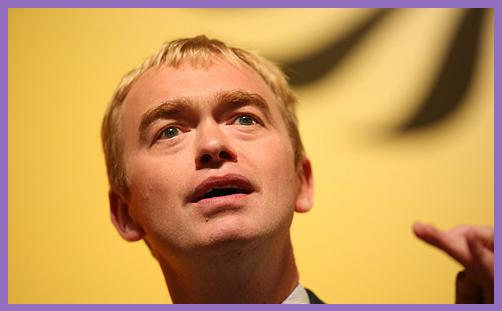
Tim Farron will not be taken to the Tower of London, tried by a kangaroo court and judicially murdered. Nevertheless, nearly 500 years after Thomas More suffered that fate, Farron has had his political career sacrificed on an almost identical pagan altar as his Christian predecessor.
Farron could not bring himself to say that human acts which Judaeo-Christian morality has deemed to be sinful for thousands of years, were not so. Farron refused to answer a politically irrelevant question – as to whether he thought gay sex is a sin. He also thinks abortion is wrong. For that, hounded by the agents of the sexual revolution and assisted by the neo-Cromwellian interrogators of the libertarian media, Farron has now been consigned to the margins of the public square.
The High Priests of the Sexual Reformation – call them the gay lobby, the abortion lobby, the gender benders, call them whatever you like – are now in control. They are the apostles of intolerance and their spies are everywhere. Their agents are policing thought. If those whose thoughts do not measure up to the new moral standards step into the public square they will be trampled on.
Farron has written in less dramatic terms than what has been outlined above about the predicament he faced. But the reality of his position is the same. He has been crushed by the thought police. In this week’s Spectator he put it like this:
From the very first day of my leadership, I have faced questions about my Christian faith. I’ve tried to answer with grace and patience. Sometimes my answers could have been wiser. At the start of this election, I found myself under scrutiny again – asked about matters to do with my faith. I felt guilty that this focus was distracting attention from our campaign, obscuring our message.
Journalists have every right to ask what they see fit. The consequences of the focus on my faith is that I have found myself torn between living as a faithful Christian and serving as a political leader. A better, wiser person than me may have been able to deal with this more successfully, to have remained faithful to Christ while leading a political party in the current environment.
The conclusion Farron has had to come to is a chilling one:
To be a political leader – especially of a progressive, liberal party in 2017 – and to live
as a committed Christian, to hold faithfully to the Bible’s teaching, has felt impossible for me.
That’s why I have chosen to step down as leader of the Liberal Democrats.
At every turn he found himself the subject of suspicion because of what he believes and who his faith is in. He says we are kidding ourselves if we think we yet live in a tolerant, liberal society.
Despite the sadness of this story, despite even the sordidness which lies at its root, in Farron’s concluding words in his Spectator piece, something beautiful, something ineffable shines through:
I joined our party when I was 16, it is in my blood, I love our history, our people, I thoroughly love my party. Imagine how proud I am to lead this party. And then imagine what would lead me to voluntarily relinquish that honour. In the words of Isaac Watts it would have to be something ‘so amazing, so divine, (it) demands my heart, my life, my all’.
Those words come from Watts’ 1707 hymn, When I Survey The Wondrous Cross.
When I survey the wondrous cross On which the Prince of glory died, My richest gain I count but loss, And pour contempt on all my pride.
Forbid it, Lord, that I should boast, Save in the death of Christ my God! All the vain things that charm me most, I sacrifice them to His blood.
See from His head, His hands, His feet, Sorrow and love flow mingled down! Did e’er such love and sorrow meet, Or thorns compose so rich a crown?
Were the whole realm of nature mine, That were a present far too small; Love so amazing, so divine, Demands my soul, my life, my all.
Civil wars often, very often, start when political factions abandon civilised democratic principles and practices.
Then someone starts shooting and the war of words gives way to the taking of life.
Partisans of the American Democratic Party are now, by their implicit rejection of the will of the American People who elected Donald Trump, treading dangerous ground. We can only hope that the shots which rang out in this Washington baseball field will not go down in history as the start of something much more terrible.
Wednesday, June 14, 2017 11:41 AM EDT, the New York Times flashed this across the world:
Steve Scalise Among 5 Shot at Baseball Field
A lone gunman opened fire on Republican members of the congressional baseball team at a practice field in a Washington suburb Wednesday, using a rifle to shower the field with bullets that struck five people, including Steve Scalise, the majority whip of the House of Representatives.
And The Hill now reports: Scalise shooter identified, was Sanders volunteer.
A 66-year-old Illinois man has been identified as the gunman who shot Rep. Steve Scalise (R-La.) and several others on Wednesday morning as they were practicing for the congressional baseball game.
Multiple media outlets citing law enforcement officials have reported that the gunman, who died after being shot by police, is James T. Hodgkinson of Belleville, Ill.
James T. Hodgkinson
The Facebook page of the shooter was steadily losing “friends” as news about the shooting mounted.
The Times adds, that the Virginia shooting suspect was an opponent of President Trump and “wasn’t happy with the way things were going,” his brother said.
The shooting is believed to have dragged on for 10 minutes or more, according to eye-witness accounts.
The violence was even more nerve-wracking given the political implications.
Bernie Sanders ‘sickened’ after learning campaign volunteer was shooter James Hodgkinson, according to The Washington Times
Sen. Bernard Sanders took to the Senate floor Wednesday to condemn the morning attack on Republican members of Congress, saying he was horrified to learn that the suspect had been a campaign volunteer for his presidential bid last year.
Bob’s in the news again, Bob Dylan, that is. He is eventually going to collect his Prize money, having finally paid his debt to the Nobel Committee by penning his truly Dylanesque lecture – a duty he had to fulfil before they could give him the money. He deserves it.
You could say it is all about three books. These are the books which he says have been central in his life and his music: Moby Dick, All Quiet on the Western Front, and Homer’s Odyssey.
Alexandra Schwartz in The New Yorker magazine touches the flavour of the lecture in her reflections on the man and his work in her piece in the magazine this week.
At the end of his lecture, Dylan describes the moment in the Odyssey when Odysseus visits Achilles in the underworld. Achilles tells him that trading a long life of peace for a short one of honor and glory was a mistake. He is dead for eternity; “if he could, he would choose to go back and be a lowly slave to a tenant farmer on Earth rather than be what he is—a king in the land of the dead,” Dylan says. “That’s what songs are, too. Our songs are alive in the land of the living.” Dylan never needed to make that trade. He has had more lives than a cat, and all of them add up to one long life of enough honor and glory to sustain a small nation. One day, he, too, will go down under the ground. But his songs will stay forever alive, up here.
Scott M. Marshall, the author of the soon-to-be-published book, Bob Dylan: A Spiritual Life, takes the eschatological theme a bit further.
As the lyric goes, may his song always be sung. It doesn’t appear that will ever not be the case, even long after he’s gone on — tryin’ to get to heaven before they close the door.
Marshall looks at the element of Faith in Dylan’s life and work and gives us an account of some short biographical anecdotes which tell their own story. This “song and dance man” is no ordinary song and dance man.
Miami, Florida, January 1974: A man in a hat in his early 30s pedals up on a 10-speed bike to a Jesus People rally. He wants to chat after the rally with Arthur Blessit, one of the speakers. Blessit, a man known for literally carrying a large cross around the world, is a Jesus freak if there ever was one. The man on the bike asks Blessit questions about his faith and Jesus. Their meeting lasts about 10 minutes, and is briefly cited by Rolling Stone magazine.
The man on the 10-speed bike is Bob Dylan, and he’s just returned to touring for the first time since 1966 — and happens to be in the middle of a wildly popular U.S. concert tour.
A few years prior, in autumn 1970, Dylan took in an Eric Clapton concert in New York and then found himself on a station wagon ride with Clapton and two old friends, Scott Ross and Al Aronowitz. Ross, married to former Ronettes singer Nedra Talley, had become a Christian since the two last met in 1965, and he shared his faith with Dylan after the singer inquired about it. Before the evening dissipated, Dylan stopped by his apartment to pick up and give Ross a copy of his then-current album, “New Morning.” Dylan referred Ross to its final song, “Father of Night,” a song that served up evidence that its composer, the utterly reluctant counter-cultural idol, had not forgotten there was a Creator.






 Garvan Hill