Veteran sociologist on the absurdity of redefining marriage in the Irish Constitution

Trinity College Dublin

WHY PEOPLE SHOULD VOTE NO TO SAME-SEX MARRIAGE

By Anthony Coughlan

Since history began the institution of marriage between men and women has existed in all societies to ensure that the next generation, children, are brought up wherever practicable by the mothers and fathers who are responsible for conceiving them, until those children reach adulthood.

This is ABC in any sociology textbook. Male-female marriage is the basis of the natural links between the generations. It antedates the great religions. No society anywhere, apart from a few in recent years in Latin America and Europe, has regarded marriage as covering homosexuals, because lesbian and gay couples cannot conceive or produce children.

What we are being asked to do on Friday is to amend Article 41 of the Constitution to change marriage and the family from the male-female-based institution that it has always been understood to be in Ireland’s Constitution and laws, into something profoundly different.

It is not a mere matter of EXTENDING THE SCOPE AND COVERAGE of the institution of marriage and the family to include LGBT people. It is TO TRANSFORM FUNDAMENTALLY THE SOCIAL, CONSTITUTIONAL AND LEGAL CHARACTER OF THE INSTITUTION ITSELF.

If people vote Yes it means that henceforth in Ireland families based on so-called “marriage” between two males or two females – who are incapable as couples of producing children – will be included among families that are stated in our Constitution as being  “the natural primary and fundamental unit group of Society . . . a moral institution possessing inalienable and imprescriptible rights antecedent and superior to all positive law. . . the necessary basis of social order and as indispensable to the welfare of the Nation and the State.”

That is a ludicrous proposition, as UCC Professor John A. Murphy has pointed out in the Irish Times.

If we agree to write such an absurdity into the Irish Constitution, it will surely make this country and those in our political class who are responsible for it, into an international laughing stock … And deservedly so.

There are some 198 States in the world. Fewer than one-tenth of them, 17 I understand, have introduced same-sex marriage – all of them by Parliamentary vote or Court order.

Writing same-sex marriage into one’s State Constitution however is permanent, irreversible and likely to have many unforeseen, unintended and unwanted consequences. No other country has done that.

A MUCH MORE EFFECTIVE WAY OF DOING JUSTICE to the 1-2% of the population who are permanently homosexual without transforming the nature of marriage for the 98-99% who are not, would be to give recognition in the Constitution to civil partnerships, which is not the case at present.

Such an obvious way of being fair to our homosexual fellow-citizens does not seem to have been considered by the Government in its rush to push through homosexual “marriage” without any teasing out of its likely complex consequences in a Green Paper or White Paper beforehand.

If Irish voters transform the nature of marriage in the Constitution by voting Yes on Friday they will be endowing gay and lesbian couples with exactly the same constitutional rights to “procreate”, to “found” a family and to have children as opposite-sex couples have.

How can two men “found” a family?

Gay and lesbian couples can only exercise their new constitutional right to “procreate as a family” by the use of eggs or sperm donated by others and the use of surrogate mothers who are willing to “rent out” their wombs to others for nine months at a time.

That is why surrogacy is a relevant issue. It is not an invention, as Yes-side people assert.

Surrogacy means more children being brought up without links to their genetic mothers. It means more exploitation of poor women in poor countries for the benefit of rich people.

Surrogacy is unregulated in Ireland now, but if we change the Constitution homosexual couples will be able to claim it in the Courts as essential to the exercise of their new constitutional rights to procreate and to found families as couples – on the ground of “equality”.

This is presumably the reason why the Government wants to get voters to change the Constitution first, and thereby clear a constitutional path to facilitating surrogacy for LGBT couples by ordinary statute law later.

CAN AMERICAN MONEY BUY AN IRISH REFERENDUM?

One of the many unconsidered consequences of voting to change the Constitution is that it would alter the legal-political effect of the first Lisbon Treaty Protocol, which the Government used to persuade Irish people to ratify the Lisbon Treaty in 2009, after they had rejected it in 2008.

The Lisbon Treaty, which establishes the EU Constitution, gives the EU the power to lay down human rights standards as a matter of supranational law across its 28 Member States. Article 9 of the EU Charter of Fundamental Rights allows for same-sex marriage and the right “to found a family” on that basis.

As it stands, Ireland’s Lisbon Treaty Protocol is an insurmountable legal barrier to supranational EU law on marriage, the family and education across the EU. If we remove that barrier by changing the Constitution ourselves, we clear the way for EU law on same-sex marriage in all EU countries by decision of the EU Court of Justice in due time.

Ireland would thus become a bridgehead in the EU for the powerful pharmaceutical companies that make up the donor-assisted human reproduction industry and the accompanying lucrative surrogacy business in America and Europe.

Can American money buy an Irish referendum? That is the question put in an Irish Times article (and further afield) last week under that title.

In it we were informed how key elements of the Yes campaign – Marriage Equality, the Gay and Lesbian Equality Network(GLEN), and the Irish Council for Civil Liberties, have received some $17 million in recent years from the American foundation, Atlantic Philanthropies, to help transform the position of marriage in the Irish Constitution.

The taxpayer-funded Irish Human Rights and Equality Commission(IHREC), the State’s official human rights body, wrongly advised the Government, the political parties and the general public that there is a right to same-sex marriage under the European Convention on Human Rights, even though the Court which interprets the Convention has laid down in the Hamalainen v.Finland case that there is no such right.

It turns out that the IHREC too got €2 million from Atlantic Philanthropies.

It has been calculated from Atlantic’s own web-site that this single American foundation invested €735 million in Irish projects in the past 13 years, of which €25 million has been devoted to agencies promoting change in the area of LBGT interests.

It is clear from its web-site also that the Board of this US-based body has had intimate relations with the Government and has determinedly exerted that influence in recent years to change Irish social policy  and the Irish Constitution as regards same-sex marriage. The money it provided has been responsible for the systematic lobbying of politicians of all parties on this matter.

We were also told last week that the withdrawal of Government funding of pre-marriage courses by the Catholic charity Accord, is mere coincidence. Then the next day we learned that the Government agency Tusla, which finances Accord, has just received €8 million from the same Atlantic Philanthropies. The coincidences get more curious.

Whether they are aware of it or not, it looks very much as if the key bodies on the Yes-side mentioned have become outriders for US-based Big Pharma, the American social media companies that are cheerleaders for this issue, and the accompanying gender-neutral ideology which seeks to legitimate same-sex marriage across Europe.

If voters change the Constitution on Friday the Irish State will become an ideological flag-bearer in the EU for the powerful economic interests involved in the donor-assisted human reproduction industry and the lucrative international surrogacy business that is its complement.

Worth mentioning in conclusion is that if people vote Yes it will become constitutionally impossible for future Irish public policy to support or favour male-female couples and their children in any way over the “families” of homosexuals.

That is what constitutional and legal “equality” will have to mean.

The new constitutional position of marriage and the family will then have to be taught in our schools, at least in civics classes.

THIS IN TURN IS LIKELY TO CAUSE FAR MORE PAINFUL CONFUSION REGARDING SEXUAL IDENTITY and orientation among vulnerable adolescent young people in the future than is the case at present or has been in the past.

Voters feel that they are being pressurized into voting Yes in order to do the decent thing by homosexuals.

They are told they should feel guilty by not voting for “equality” when the Constitution provides that all citizens are already equal before the law.

They are being deceived and misled by many people who should know better.

IRISH VOTERS SHOULD HAVE THE COURAGE OF FREE CITIZENS, THOUGHTFUL LIBERALS AND TRUE REPUBLICANS and give the nonsense that is currently being thrown at them from all sides a firm “No”.

The State can then take the creative social policy initiative of putting civil partnership into the Irish Constitution, setting a good international example in doing that.

That would give affectional shared-domicile relations between same-sex couples, whether homosexual, platonic friends or siblings who desire such, full constitutional recognition, while leaving marriage and the marriage-based family as it has always been.

But for that to happen voters must say No to same-sex “marriage” first.

A PERSONAL NOTE FROM THE AUTHOR

My views on marriage are not religiously based, but are grounded rather in the ABCs of sociology and anthropology. I do not belong to any of the No-side groups on this matter.

I have however taught social policy at TCD for over 30 years, and dealt a lot with family law and public policy on family issues over that time.

I have nothing personal to gain by giving my views on this issue.

I do so only because as a social science professional I believe that Irish voters will be making a mistake which many will come to regret if they vote on Friday to transform fundamentally the character of marriage and the family based on marriage in their State Constitution. No other country has done this.

Irish social policy can easily do justice to the interests of LGBT people by building upon Civil Partnership and putting that into the Constitution in some future referendum, without transforming the nature of marriage for everyone else in this one.

I set out my reasons for holding this view in the article above.

With reference to the point in the article about American money being used to buy an Irish referendum, I understand that Mr Chuck Feeney, who did outstanding work for the Irish Peace Process in the 1990s, has had no say for years in the funding decisions of the Board of the Atlantic Philanthropies foundation.

(John) Anthony Coughlan is Associate Professor Emeritus in the School of Social Work and Social Policy in Trinity College Dublin.
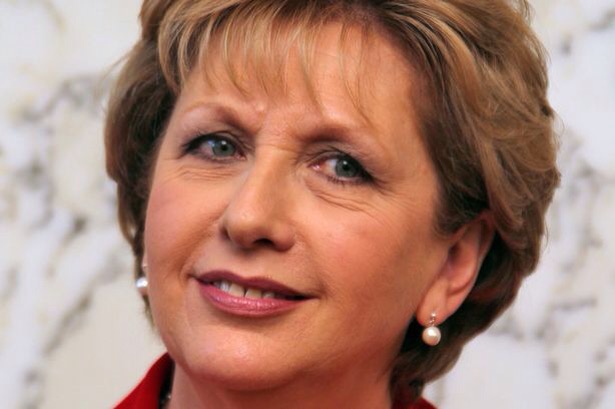
Former Irish President outrages her people with sectarian insult

  
Independent member of the Irish parliament, Mattie McGrath, has called on former President Mary McAleese to desist from characterising those advocating a No vote in the same sex marriage referendum as homophobic or bigoted. Deputy McGrath made his comments after Mrs McAleese yesterday referred to the “bog standard, Irish Catholic attitude to gay people,” as one full of bias and prejudice

“I think the kind of language that was used by Mary McAleese yesterday is incredibly offensive and patronising in the extreme”, McGrath said.
“To characterise a traditional view, even if one legitimately disagrees with that view, in such a grossly hurtful way is beneath the great dignity that one would normally associate with her. 

Referring to another notorious intervention in the debate last week by a psychologist, Maureen Gaffney, supporting the Yes campaign, the Deputy said, “It seems however that over the top and absurd descriptions are becoming par for the course since Dr Gaffney described those on the No side as morally equivalent to Nazi’s.” 

McGrath said he was alarmed that she has seen fit, as a member of the Council of State – a position she holds ex officio as a former President – to make such high profile and derogatory interventions with little or no regard to how that role will be undermined. 

“I accept entirely that as a mother of a gay son she is passionate about this issue, as we all are for different reasons, but that does not give us carte blanche  to use this kind of demeaning language. 

McGrath complained that McAleese has breached  “a long, noble and well established precedent for former Presidential Office Holders to maintain a prudent discretion about Government policy. 

“In contrast to Mrs McAleese we have heard nothing from former President Mary Robinson, who on the face of it is far more qualified to offer guidance on this matter given her role as UN Human Rights High Commissioner and who could confirm that no ‘right’ to marry a person of the same sex exists in UN Declarations or Protocols. 

He called on McAleese  “to immediately withdraw her remarks about bog standard catholic views, which if they were spoken in the north of Ireland could easily be characterised as sectarian and divisive”  

Two men who spoke up for children and defied the gender ideology establishment

The testimonies of two men which every voter should see before going out to the polling station in Ireland next Friday.

Keith Mills believes that it’s important for him, as a gay man, to speak out about his belief that children deserve a mother and a father whenever the circumstances of life allow, since too many people are being bullied into silence. He explains that the referendum is not about equality because already, through civil partnerships, we have a means of giving gay couples legal protection and recognition – in a ceremony that is almost identical to civil marriage, right down to saying the words “I do”.
Furthermore, Paddy Manning points out that a gay or lesbian relationship is simply a different thing to a marriage. “Marriage is, at its heart, about children and providing those children with their biological parents. Recognising difference is not discrimination.”

Keith agrees that the referendum is about children “because everyone knows marriage IS almost always about children – and because the government wants to change the section of the Constitution on the family.” But in order to have children, gay men like him either need to adopt or to use surrogacy. Surrogacy, he says, “turns children into commodities, putting adult desires above the rights of children, having babies made to order and wombs for rent.” If the referendum passes, as Mr Justice Kevin Cross, Chairman of the independent Referendum Commission, confirmed last week, it will make it very difficult for Irish law to give preference to motherhood and fatherhood compared with having two parents of the same sex.

A Yes vote pretends there is no “distinction” between the union of two men or two women and the union of a man and a woman. It also says it doesn’t matter if a child is deliberately deprived of either a father or a mother.

What will they do?

WILL THEY TURN THEIR BACK ON REASONED ARGUMENTS AND VOTE JUST WITH THE HEART?

I know enough young people who see through the Government’s fallacious “equality” spin to save me from total despair about the apparent incapacity of under-thirties to discern this deception. But it is a hard call.

People have equal rights because they share the same human nature, not because they share the same capacities – which they very evidently do not. The rights which they have to participate in some of the joys of life depend on their capacities, not on their equality as citizens, or their common human dignity. If I cannot sing more than one note it makes little sense for me to protest that I am being denied equality if I fail to make it into the local choral society. Okay, that’s not an exact analogy. I suppose I have a right to form a choir of tone-deaf people if that pleases me. But it doesn’t really make a lot of sense.

Love – as an emotional experience, which is the kind of love everyone seems to be taking about in the context of Ireland’s referendum next Friday, – is not in law a requirement for a valid marriage. Marriages exist without this emotional love, and always have done. Marriages may even exist without the deeper love of selfless commitment. The may not be considered the ideal, but they are still marriages without it. What is the essential element in marriage, what is that which consummates it? In other words, what is that which makes it a real valid marriage? It is what we call the marriage act. That act is only possible between one man and one woman.

In today’s Sunday Times, Conor Brady, former editor of the Irish Times, is posing the question that everyone should at least be asking themselves.

We are forced into a crude choice. A ‘yes’ vote will be hailed as generous and inclusive, but it will subvert the meaning of language. It will redefine an institution that has been fundamental to society down the ages, and it will purport to hold that biological differences mean nothing. Conversely a ‘no’ vote will be interpreted as discriminatory and an endorsement of inequality. Presented with these alternatives, each voter has to choose what seems to be the lesser evil. A great many people, including myself, have yet to decide what that may be.

Bruce Arnold, in today’s Sunday Business Post says “A yes vote will bring irrational chaos into the Constitution”

“Ireland has been told that ‘Same Sex Marriage” is a human right. No nation’s constitution, no international human rights convention has accepted this”. This debate, he adds, “has been bedeviled by emotional and even hysterical demands for an empty ‘equality’ for some, with no consideration given to the consequences for others, least of all for children”.

Add to this the apparent bewilderment of University College Cork’s Emeritus Professor of History, John A. Murphy, voiced last week in the Irish Times.

Thus, if the referendum is passed, Article 41, heretofore unambiguously and exclusively heterosexual, will also recognise a homosexual couple “as the natural primary and fundamental unit group of Society . . . a moral institution possessing inalienable and imprescriptible rights , antecedent and superior to all positive law”. Moreover such a couple will be guaranteed protection by the State “as the necessary basis of social order and as indispensable to the welfare of the Nation and the State” (Article 1.2).

Because I reject this grotesque nonsense, I will be voting No.

That the bulk of a whole generation has found it impossible to see these distinctions is bewildering and – almost – brings one to the point of despair. That the future of our world might be in the hands of people who cannot see this is truly worrying.

Please, please convince me that I am not seeing unfold before me what I think see. Surely millennials, so-called generation Y, on which so much depends, will show us that they are capable of more than blind and blinding emotion, surely they will show us that enough of them are capable of reasoning and assure us of our future.

An eloquent call to the Christian conscience on question of future of marriage

One of Ireland’s Catholic bishops this evening preached in his cathedral in Sligo, calling for a free and responsible reflection on the vital question facing Ireland’s citizens next Friday in the country’s referendum on marriage. The call comes as three new opinion polls on the likely result of the referendum show further slippage in inittialy strong support for the Government’ s proposal to redefine marriage. One newspaper describes the support as “plummeting”.

The opposition to the proposal, centering largely on the belief that it will result in bad laws leading to children – through surrogacy, assisted human reproduction and adoptions – being deprived of the knowledge and love of their biological parents. Mothers and Fathers Matter is the cri de coeur of the campaign.

Every citizen and long-term resident has a vested interest in how society defines and protects marriage and the family founded on marriage, said Dr.Kevin Doran
Bishop of Elphin, As Christians, you HAVE received the Holy Spirit. You are called to exercise the gifts of wisdom and right judgement and to be witnesses to Jesus Christ. As citizens, you are the people with the vote and you have a responsibility to use it, for the common good. Nobody else can exercise that responsibility on your behalf.

I would hope that, over the past few months, you have thought carefully about this question and that you have also reflected on the content of the two statements issued by the Irish Catholic Bishops, one before Christmas and the other in March. If you have not read them, then I believe you should do so before Friday. You can get copies of them either here in the Church or online.

There are a few points that I would ask you to consider carefully in making your own decision before God.

1. The Constitution is the document which underpins our whole legal system. To define marriage in the Constitution as a relationship between two people without distinction as to their sex, would be a major change. It would mean that family law could no longer give preference to a mother and father relationship as the form of parenthood best suited to the needs of children. It would make it increasingly difficult to speak in public about marriage being between a man and a woman. In the absence of any conscience clause, I would be concerned, for example, at what teachers might be expected to teach our children.

2. I would ask you to consider carefully how a same sex union, however loving, can be said to be the same as marriage. It is true, of course, that all people are equal. Reason, however, points to the truth about human sexuality that makes the relationship of man and woman unique. This uniqueness has been recognised in every culture and has always been associated with the openness of marriage to the gift of life. That is why society has always sought to “guard with special care the institution of marriage”. Why would we suddenly want to change that now?

3. During these past few months, many commentators have described same-sex marriage as a human right. I would ask you to take account of the fact that the European Court of Human Rights, which is not a religious organisation, issued a statement only last Summer making it clear that same-sex marriage is not a human right.

There is one final point that I want to make. It comes straight from our second reading[1] this Sunday. St. Paul encourages the people of Ephesus: “to preserve the unity of the Spirit by the peace that binds you together”. We need to acknowledge that the issue of same sex-relationship is a reality for many in our society and, among them, families in our own parishes. We need to remember that we are “all called into one and the same hope”. This is a challenge for the Church, both now and for the years ahead.

As far as the referendum is concerned, however, I believe that the truth is quite clear. I also believe, quite honestly, that society can respond to the human rights of all who live together in committed relationships, without changing the meaning of marriage.

I encourage you to reflect carefully, to pray for wisdom from God’s Spirit and then to go out and vote on Friday.

The ‘spiral of silence’ which makes Ireland’s referendum result unpredictable


Frank Furedi in Spiked.com reflects on the deeper reasons which might lie behind the collapse of the opinion polls’ authority and reliability in the British General Election. There was nothing wrong with their system of polling. The source of the problem the pollsters now have is the fear, distrust and uncertainty the people have in relation to each other and the bureaucratic idepolgy which is dominating their lives. What he say of Britain may well be reflected to an even higher degree in the outcome of Ireland’s marriage referendum which takes place this day week.

The pressure to conform and the fear of social isolation can lead to what the German social scientist Elisabeth Noelle-Neumann identified in 1974 as a ‘spiral of silence’. According to this theory, people’s assessment of the opinions held by the majority influences and modifies the way they express their own views. Some individuals feel anxious about expressing sentiments that differ from the consensus outlook, as expressed in the political and media realm, and it is thought that, ‘prompted by a “fear of social isolation”’, some are ‘less likely to express their own viewpoint when they believe their opinions and ideas are in the minority’. Typically, the fear of negative social sanctions influences the way people express attitudes about numerous morally charged ‘threats’, such as foreigners, crime or terrorism.

Of course, in virtually every social setting there is always an element of self-censorship. But in contemporary Britain, the all-too-understandable impulse to conform is continually reinforced by the message ‘You can’t say that!’. Regrettably, the only time these insecure voices feel confident enough to express their true opinions is in the secrecy of the polling booth. This is why, from time to time, a seemingly predictable election campaign can result in a surprising outcome.

Sadly, significant sections of the political and cultural establishment would rather that the people always felt that ‘We are not allowed to say that’. This is the 21st-century version of the old oligarchical ideal, ‘Know your place’. Which is why fighting for a culture of tolerance and open debate, and above all for freedom of speech, is so important today.


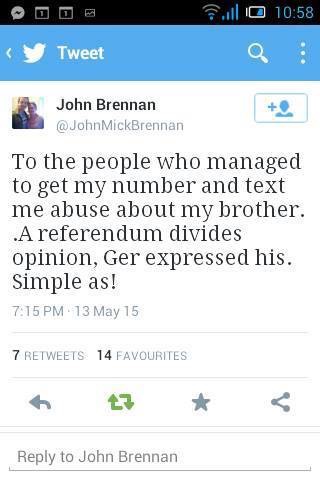
This tweet says a great deal about this – from the brother of a star footballer who dared to put pen to paper explaining his reasoned convictions which are making him defend marriage as we have known it from time immemorial:


Read all Frank Furedi has to say here.

Oranges, cherries and equality

For many of a certain generation in Ireland oranges are a special fruit. They bring back a memory from their schooldays – to an essay in the prose anthology on their English literature course. It was A.A. Milne’s short dissertation on this tasty fruit – entitled “Golden Fruit”.

Today, in our very confused way of thinking about equality we would probably proscribe rather than prescribe this quirky little essay if anyone ever suggested that it might be put back on the school curriculum. You see, it discriminates. It tells us that for A.A. Milne – he of Winnie the Pooh – “of the fruits of the year I give my vote to the orange” and concludes his first paragraph by saying that “Bread and butter, beef and mutton, eggs and bacon, are not more necessary to an ordered existence than the orange”. Heavy discrimination indeed.

But don’t get him wrong. He values other fruits and puts the wonderful little cherry second only to the orange. But he does make a choice – although for many the cherry’s pleasures will be their thing. For others it will be the ultra-healthy banana, the fruit that they say has everything.

However, the big problem with all this is that we are discriminating between things when we should, by virtue of post-modern ideology, be treating them all as equal – and equality understood as signifying that there is not an iota of difference between them.

They are equal in one sense, in that they are all fruits. They are not equal insofar as they are each their own sweet, juicy, somewhat bitter thing respectively. By virtue of those differences we treat them differently. We peel and orange. Try peeling a cherry and you will look rather silly. Some people eat their kiwis, skin and all. Others prefer not to. Try eating a banana without removing its jacket and you will know all about it.

And so to marriage. The most fundamental bond between us all in this world should be love – and there are, thankfully, some blessed people among us who truly do love everyone. But if they do, they do so in an ordered way and discriminate between each of those they love according to their nature and needs. The expression of their love follows on that discrimination in ways appropriate to each – loving their husband or wife in one way, their children in another, close friends in another and their neighbours in yet another. Discrimination is not a dirty word. It is a product of human reasoning. The dirt comes if the particular outcome is unkind, unjust and unreasonable.

The love of two people of the same sex can probably have the same emotional intensity as that between couples of the opposite sex. When, however, it is sexually expressed there is no parallel between the potential biological consequences of the two. Both may have a powerful unitive force but only one has the potential for procreation of the species. This makes all the difference and demands that we distinguish between them, for the sake of individuals and for the good of society.

This differentiation is not based on what we might call an “equalitative” discrimination. It is, however, a difference which we will ignore at our cost. If our language ignores these realities by calling the formal recognition which societies give to each by the same name of “marriage”, we will cripple our intelligence and our capacity to think reasonably about things, and these things in particular.

Oranges are not the only fruit, as Jeanette Winterson reminded us. Despite A.A. Milne’s expressed preference for them, they are not even necessarily the best fruit, but if we insist on calling cherries oranges what kind of pickle are we all going end up in?

Might the sky fall in on the Irish Government?


The question being asked in Ireland this morning is not whether the Government will win its ill-considered referendum asking its people to redefine marriage as a bond between people regardless of their sex, but whether it can long outlive the defeat of this proposal.

The Irish people are a warm-hearted lot but they are not irrational. Among the countries of Europe most tried by the debacle of the financial melt-down in the last decade, they were the ones who resisted the emotional response and knuckled down to sort it out. All observers now give them credit for this. The only rage which they gave vent to was in the face of another piece of gross mismanagement by their Government when it muddled its way through the realignment of the country’s water utility.

Despite what very suspect opinion polls – conducted through cell-phone users in many cases – are telling us, the writing on the wall for the Enda Kenny and his ministers is ominous. It has been a bad week for them – and it is still only Wednesday.

On Monday their star spokesman and campaign leader, Minister Simon Coveney, was pummelled on television by the reasoned legal and social policy arguments of his podium opponent, Senator Ronan Mullen, and pro-marriage supporters in the studio audience. He could not answer any questions convincingly and was left plucking emotional strings. His efforts, combined with similar responses from the pro-redefinition segment of the audience, did nothing but show that there simply are no rational arguments which can be advanced for this proposal, riddled as it is with inconsistencies.

Yesterday the Irish Times – now beginning to redeem itself in some eyes as an even-handed communicator of news and opinion – carried op-eds on the issue from two expert witnesses – to employ a legal metaphor – exposing the deep flaws in Government policy. Emeritus Regius Professor of Law in Trinity College, Dublin, William Binchy, exposed the fallacies in the Government’s arguments that the passing of this referendum would have no impact of the State’s child welfare laws. In the other piece, another former Trinity academic, sociologist and constitutional expert, Dr. Anthony Coughlan, argued that the impact of a ‘Yes’ vote would have repercussions beyond Ireland’s shores. By effectively nullifying a protocol won by Ireland under the Lisbon EU Treaty, the passing of the referendum could lead to same-sex marriage becoming an undeniable human right throughout all 28 EU states. For many this suggests that the entire project, funded as it is by international gender ideologists, is a Trojan Horse designed to destroy marriage across the European continent.

That was yesterday. Today we have news of another own-goal by the Government itself. The lead story in the online Irish Times this morning covers the retrospective withdrawal by a Government quango of funding for the Catholic Church’s marriage advisory council, ACCORD. Despite the attempt to dress this up as routine cost-cutting, the ineptly handled decision makes the Government look every inch the draconian agents that they are. People have been reminded that the Minister for Children – whose brief this comes under – is the same man who as Minister for Health two years ago shepherded the Government’s abortion legislation through parliament. After a thoroughly undemocratic exercise, he reminded Catholic hospitals that their funding would be cut if they did not implement that legislation as law required. He is now trying to tell people that the cutting of ACCORD’s funding has nothing to do with plans to redefine marriage. Good luck to him.

Add to this the truly scathing letter in this morning’s Irish Times from one of the country’s leading liberals, Emeritus Professor of History in University College Cork, John A. Murphy. It is not just the razor-sharp content of this letter which will dismay the Government. It is the fact that it comes from one of the country’s most respected historians, that he is one who has often been highly critical of the Catholic Church, and that his liberal credentials are impeccable.

Finally – although probably not, because it is still only 11.30 as this is written, – after a flood of ‘Yes’ endorsements from a range of celebrity sports stars, media people and pop stars, most of it mindless gushing of emotion, comes a very reasoned argument from one of the stars of Ireland’s most popular and most participative sport, Gaelic Football, the first cousin of Australian Rules Football. This comes from Dublin star, Ger Brennan, and again makes front page news in the largest circulation morning paper in the country, the Irish Independent.

Brennan writes, “The Universal Declaration of Human Rights proclaims that everybody is equal in dignity and it holds that marriage is a male-female union. I don’t think the Declaration of Human Rights is homophobic. I’m voting ‘No’”. Brennan’s well argued declaration, exuding respect for his gay friends and playing companions, will speak to his generation in a way that will worry a Government that thought it had that constituency in its grasp. This will put a serious dent in the Dublin metropolitan vote, as will Murphy’s in the second largest metropolitan area, Cork.

But the most significant element in all these interventions in the debate is not just that they question this proposal. It is that they place a massive question mark in people’s minds about the general competence of this Irish Government.

Intimations of impending tragedies in a divided nation

Sitting in the studio audience for a TV debate on Ireland’s Marriage Referendum last night in Dublin I could not suppress the sense of a multiple tragedy unfolding before me which this primeval battle induced.

Whatever way this plays out on May 22, it seems that a nemesis awaits us.
If this foolish and careless Government succeeds it will not kill the reality that is marriage. The reality that the word marriage gives institutional form to, that is, the coming together in conjugal union of man and woman, is beyond the manipulative control of governments. They can mess with the word which describes it as much as they like but as long as men and women exit, it will exist.

But this messing by governments with those things that nature designed does have consequences for human beings and their life in society. In this case, the Irish Government will become responsible for the clouding in people’s minds of what marriage really is. This in turn will have consequences for generations to come. This will be the first tragedy.

If the Irish Government drains the word marriage of its true meaning, its essential identity, by describing it as a bond between people regardless of their sex, homosexuals and heterosexuals will suffer equally and the victory which some homosexuals feel they will have won will prove to be, and will be seen to be, as hollow as the arguments now being advanced for it.

For those who understand that the essence of a thing remains the same no matter what we call it, marriage will remain what it is and always was – a lifelong bond between a man and a woman, open, where nature allows, to the begetting of future generations. “A Rose by any other name would smell as sweet.” For those who think that they have changed the thing because they have changed the name – or turned one thing into another by using the other’s name – there is the tragedy of delusion. This is the second tragedy.

This was the tragedy averted by Solomon who in his wisdom was able to resolve the folly of the woman who sought to relieve her pain of loss by dividing in two the child of her companion. But Irish Prime Minister Enda Kenny is no Solomon. He has succumbed to the foolish thinking of a militant group of culture warriors who have led the gay community astray into thinking that access to marriage is just a matter of manipulating language.

If the Irish Government wins this referendum everyone will wake up on the May 24 and find that nature has preserved this thing called marriage. But they will also find that in the futile attempt to meddle with nature they will have a meaningless human artefact posturing as “marriage” in their nation’s Constitution. This sham thing will be bringing with it a myriad of muddy legal complications. Bad laws impact on human lives, some with tragic consequences. There will be numerous personal tragedies as “motherless” and “fatherless” children search for their natural progenitors to try to rescue them from the limbo of those quotation marks. Some will succeed, more will never do so. This is the third tragedy.

And if this chaos is avoided and a “No” victory results, what nemesis awaits us? This will be the nemesis for a bitterly disappointed community which has been misled into thinking that this manipulation of language, spun by a Government which has in turn been manipulated by an international ideological movement backed by millions of dollars – scandalously ignored by a biased national media, – was going to bring it to a haven of happiness and contentment.

The utterly bewildering illusion being fed to people that this is a struggle for equality has been spun so effectively that the consequences of its inevitable evaporation will be tragic. A Government complicit in this charade is a truly bad Government. It is now compounding this crime by declaring that a rejection of their proposal – a proposal which declares that two things which are different from each other are in fact the same – will amount to a disdainful rejection of some of their fellow human beings by the majority of the electorate.

The gay community – as it is called, and isn’t there something wrong with the very idea of segregating people into communities on the basis of their sexuality? – has been deceived into thinking that redefining marriage is a solution to the difficulties they experienced in human societies in the past or present. They have been deceived into thinking that it will in some way compensate for wrongs done to them. It will not and it never do so, because it is a meaningless act. This deceit is just one more tragedy.

The final tragedy has already taken place. When we should be concentrating our efforts on the task – always necessary – of building up the cultivation of real civilizing values in our community we are distracted and divided by this unreal conflict. True equality should be our goal, true values of fraternity and justice should be our objective and not this false synthetic concoction of something that can never really exist.

This horrible and divisive battle, which ideologues have forced on a good-humoured and generally kind-hearted nation, may be leading it into a new – even if as yet low-level – era of civil strife. After last night’s debate, one member of the audience on the “Yes” side came over to the speaker for the “No” side and uttered with uncivil vehemence words of bitter reproach for what he had presented to all, in good faith, for consideration. The producers of the programme – which was rchesrated with exemplary skill and fairness by presenter Claire Byrne and her team, – in a departure from normal procedure before these debates, separated the “Yes” and “No” supporters into separate rooms. “No” participants wondered why, and in fact regretted the segregation and the loss of the chance to mix and share views. But it was a sign of the times.

The destruction of marriage is only a half-way house for gender ideologists

Bishop Brendan Leahy of Limerick warns that if the Irish referendum on marriage is passed, there could be legal challenges to school text books.

Of course there will be. It will be their next target.

Does anyone doubt that education is where they hope to have their final victory in the battle for a genderless society. This battle is not about the rights of gay people. It is a doom-laden vision of human nature held by ideologists who think that by controlling language and thought they can change human nature itself. A “yes” vote is not a vote for gay people’s rights. The gender ideologues are lying when they say it is.

A “No” vote is a vote for the preservation of our sense of what it is to be human. End of story.

.