Michael Kirke was born in Co. Donegal and attended St. Eunan’s College in Letterkenny, 1957-1962. In 1966 he graduated from University College Dublin (History and Politics). In 1966 he began working on the editorial desk of The Evening Press in Dublin and in 1968 went to the newsroom of the Irish Press group of newspapers – contributing news and features to the group’s three titles, The Irish Press (morning paper), The Evening Press and The Sunday Press. In 1969 he went to Belfast and covered the initial unravelling of the Unionist hegemony in the province. Later that year he became the group’s education specialist. In 1973 took leave of absence to pursue postgraduate studies in education in Trinity College Dublin where he graduated in 1976. In 1978 he left journalism and moved into teaching. In 1981 was appointed headmaster of Rockbrook Park School in Dublin (www.rockbrook.ie). In 1994 resigned from that post and moved to live in the West of Ireland (Galway) where he began working part-time in media again. He is now back in Dublin working, among other things, as a freelance writer. His main interests are in political, cultural and educational affairs – as well as issues related to religious faith.
In a superb column in today’s Daily Telegraph Charles Moore lays bare the callous and selfish motivation at play in our culture’s narcissism. Children are the victims and if the narcissism of our generation is not arrested the number of victims is going to increase exponentially.
The fallacy at the heart of the narcissists pursuit of self is rights-related, rights untethered to any reasonable anthropology, tethered only to what you feel like when you get up in the morning. This is the fruit of the new Age we live in, the Age of Feeling. In this Age compassion is all. But compassion without reason is corrupting and it is this very corruption which is now producing the intolerance, the ugliness and the unhappiness beginning to unfold in the lives of countless of our kind in the generations which will follow us.
Moore writes:
If you follow this rights-based way of thinking, children are an afterthought. You identify your sexuality. You assert your rights. You decide that your rights include children. As with abortion, you are not encouraged to ask, “What about the child herself?” And if someone else asks that question of you, you start shaking with rage.
These strange ideas have now been around just long enough for the children raised in such a culture to be finding their voice. There is a growing online community of people brought up by gay couples who describe how difficult it was for them. In particular, they talk of their innate desire, which their situation could not satisfy, for the real parent – father or mother, known or unknown – who was not there. We shall hear a lot more of this, and we shall learn that the era of liberation was not always so good for those who never asked to be liberated.
“They f— you up, your mum and dad”, the poet Philip Larkin famously wrote. Alas, it is too often true. But as we abandon Mum and Dad’s primacy, we shall find out, too late, that every other way f—s children up a great deal more.
The unintended consequence of the selfish attitudes and acts of the ascendent establishment of this Age will be the creation of a nightmare society in the future where thousands of young people will grow into adulthood not knowing some of the most fundamental things about their identity nor about the motivations which brought them into the world.
The grand mufti of Saudi Arabia has called for the destruction of all churches in the Arabian Peninsula, claiming that the move is in line with Islamic law.
The call comes days after Islamic State militants published images on Twitter showing jihadists attacking an ancient church and cemetery in Mosul, northern Iraq, and weeks after an MP in the Gulf state of Kuwait announced plans to introduce a bill forbidding the construction of new churches.
The senior Sunni cleric, Sheikh Abdul Aziz bin Abdullah, told a delegation from Kuwait on Tuesday that it was “necessary to destroy all the churches of the region,” according to the Arabian Businesses news website.
The sheikh is head of the Supreme Council of Ulema [Islamic scholars] and of the Standing Committee for Scientific Research and Issuing of Fatwas. He is seen as the highest official of religious law in the Sunni Muslim kingdom.
Last month, Kuwaiti MP Osama Al-Munawer announced plans to submit a bill calling for the removal of all churches in the countr. Mr Al-Munawer later clarified that the law would only apply to new churches, while old ones would be allowed to stay erect.
The Gulf is home to around 2 million Christian migrant workers, and new churches have been built to accommodate them. Around 1.5 million Catholics live in Saudi Arabia, but church-building is strictly forbidden there.
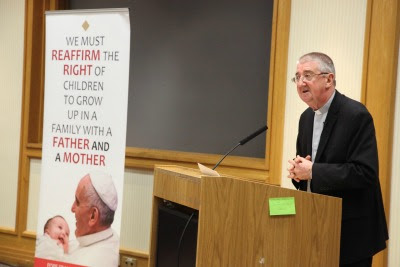
Last night Archbishop Diarmuid Martin of Dublin addressed a meeting of Ireland’s Iona Institute attended by over 200 people. His topic was ‘The Teaching of the Church on Marriage Today’. In the course of the talk he addressed the topic of the nature of marriage.
Among his main points were the following:
There is something “irreplaceable in that relationship between a man and a woman who commit to one another in love and who remain open to the transmission and the nurturing of human life”
“We are all the children of a male and a female and this must have relevance to our understanding of the way children should be nurtured and educated”
“An ethics of equality does not require uniformity”
“In the current debate [on marriage and the family] normal parliamentary procedures seem rushed”
“The debate [on marriage] must be carried out respectfully without the use of intemperate language”
In question time afterwards Archbishop Martin was asked about the conscience rights of Christians such as photographers, printers and bakers who do not believe in same-sex marriage.
Archbishop Martin described freedom of conscience and religion as one of the most “fundamental” of all human rights. He said politics must respect freedom of conscience.
Archbishop Martin’s speech in full can be found here.
The New York Times reports today that after three decades of debate over its stance on homosexuality, members of one of the largest Presbyterian denominations in the United States voted on Tuesday to change the definition of marriage in the church’s constitution to include same-sex marriage.
The vote amends the church’s constitution to broaden marriage from being between “a man and a woman” to “two people, traditionally a man and a woman.”
John Henry Newman reflected once on the way in which Churches hold on to – or fail to hold on to – the doctrines which marked out the interpretations of the teaching of Christ on which they made their stand:
Forms, subscriptions, or Articles of religion are indispensable when the principle of life is weakly. Thus Presbyterianism has maintained its original theology in Scotland where legal subscriptions are enforced, while it has run into Arianism or Unitarianism where that protection is away. We have yet to see whether the Free Kirk can keep its present theological ground.
What might he think today with this news from America about that Church’s ‘evolution’?
He identified the Catholic Church as the one Church which had the ‘inherent vigour’ which enabled her to maintain her true identity while at the same time developing her doctrines. This was derived in part from her faithfulnessto the principle of tradition and to her rootedness in the living idea of her foundation. Is she now the only Christian Church left which holds to the teaching on the nature and pupose of human sexuality enshrined in the Judaeo-Christian vision of mankind?
The stronger and more living is an idea, that is, the more powerful hold it exercises on the minds of men, the more able is it to dispense with safeguards, and trust to itself against the danger of corruption. As strong frames exult in their agility, and healthy constitutions throw off ailments, so parties or schools that live can afford to be rash, and will sometimes be betrayed into extravagances, yet are brought right by their inherent vigour.
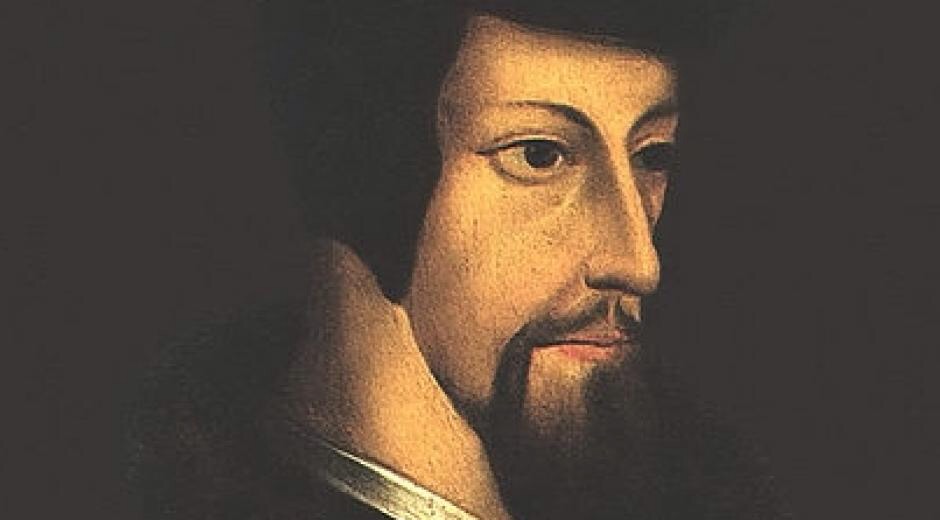
Sadly, for whatever reason, the Presbyterian Church – in America – has now moved well beyond Arianism and is now re-reading the Decalogue itself in ways which must surely have Jean Calvin and John Knox spinning in their graves.
Correction: The original version of this story incorrectly described the Presbyterian Church (USA). It is the largest Presbyterian denomination in the U.S.
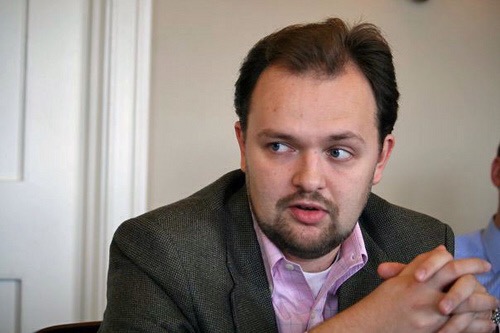
Ross Douthat talks (more) common sense to the permissive society in today’s New York Times. Read it all there yourselves. As usual, of course, the mocking foot soldiers of the hedonism load on their stock responses to any common sense in their comments on the article. Why can these people not debate the substance of what he says?
After outlining the evidence for a deeper malaise behind the social dysfunction being experienced among the poor and relatively poor in the US, Douthat concludes:
So however much money matters, something else is clearly going on.
The post-1960s cultural revolution isn’t the only possible “something else.” But when you have a cultural earthquake that makes society dramatically more permissive and you subsequently get dramatic social fragmentation among vulnerable populations, denying that there is any connection looks a lot like denying the nose in front of your face. But recognizing that culture shapes behavior and that moral frameworks matter doesn’t require thundering denunciations of the moral choices of the poor. Instead, our upper class should be judged first — for being too solipsistic to recognize that its present ideal of “safe” permissiveness works (sort of) only for the privileged, and for failing to take any moral responsibility (in the schools it runs, the mass entertainments it produces, the social agenda it favors) for the effects of permissiveness on the less-savvy, the less protected, the kids who don’t have helicopter parents turning off the television or firewalling the porn. This judgment would echo Leonard Cohen:
Now you can say that I’ve grown bitter but of this you may be sure / The rich have got their channels in the bedrooms of the poor.
And without dismissing money’s impact on the social fabric, it would raise the possibility that what’s on those channels sometimes matters more.
But, of course, nobody wants to believe this. It would be too threatening to their selfish and self-indulgent life-styles to do so.
Last night in Dublin a crowd of thousands gathered outside the Irish parliament to protest against media bias on the issue of abortion in the country. The Irish Times this morning reported “several hiundred”. How about that for a sample of bias? The crowd listened with subdued anger for an hour as speaker after speaker told them stories about the saving of lives, stories exposing the culture of destruction of the unborn and stories of harm suffered by women which national media in the country have ignored.
A section of the crowd at last night’s demonstration in Dublin
Ireland’s Pro-Life campaign late last year analysed a sample of two weeks’ mainstream media coverage of health-related stories and found a ratio of 33:1 stories favouring the culture of abortion as opposed to a culture of life. While the demonstration – attended by people from all over the country – focussed on media bias related to the life issue it might equally have shone the light on a number of other social issues where slanted media coverage is angering that percentage of the Irish public which still places value on the common good over rampant individualism.
Some wondered why the demonstration was held outside the Irish parliament. There are probably two answers to that. Firstly, media bias is so rampant across all national general newspapers and broadcasting organisations that selection of the offices of just one would have been invidious. Secondly, the elected represenatives are perceived by the frustrated Irish public as being cowed into submission to political correctness by the pundits who dominate the newpaper colums, the chat shows and current affairs programmes.
Currently a very flawed Children and Family Relationships Bill is being rushed through the Dåil (the Irish parliament’s lower house) with backing from all parties. The Bill is the darling of the media and has been allowed to get to this stage without the normal scrutiny given to proposed legislation.
Over the past two months there was general media moaning because a proposal from pro-abortion deputy, Clare Daly for the abortion of children diagnosed with “fatal feotal abnormalities” was rejected – depuies had no choice but to reject it because it would have been unconstitutional. It would have passed easily had Ireland’s Constitution not given its protection to the unbond child’s right to life. No one is under any illusions about the real intentions of Ms. Daly – the overturning of this right.
This group of Irish families taking the issue to the UN is flying directly in he face of this contrary campaign. Last night’s meeting heard numerous stories of instances where unborn children were diagnosed with feotal abnormalities and yet were born, treated, and now live normal happy lives.
The Geneva Declaration, which is the centerpiece to a a global campaign to end disability discrimination caused by the ‘incompatible with life’ label, has already been signed by more than 200 medical practitioners and researchers and 27 disability and advocacy NGOs. It aims to improve care for mother and baby where a life-limiting condition has been diagnosed before or after birth.
At the Geneva event, entitled ‘Achieving excellence in Perinatal care; Babies with a illness and disability deserve better than abortion’ families from Ireland, Northern Ireland, Canada, Spain, and Switzerland said that the label ‘incompatible with life’ was not a medical diagnosis and was causing “lethal discrimination against children diagnosed with severe disabilities, both before and after birth”.
The conference was addressed by Dr Ana Martin Ance an expert in perinatal hospice care, who said that, in her experience, families benefited hugely from supportive care which allowed them to spend time with their children, whose short lives had meaning and value.
Barbara Farlow, whose ground-breaking research led to a new understanding of the experiences of families where children had a life-limiting condition, said that the label ‘incompatible with life’ had been shown to lead to sub-optimal care after birth and that the phrase dehumanised children.
In a moving presentation, Grace Sharp, Derbhille McGill, Sarah Nugent and Sarah Hynes from Ireland spoke about the love and joy their children had brought to them in their short lives.
“My daughter, Lilly Joy, was alive and kicking inside of me and then she fought so hard to have four hours with us after birth before slipping peacefully away. All she knew was love,” Grace Sharp told the conference.
They were joined by Spanish family Francisco Lancha & Macarena Mata who said the right to life of children with disabilities had been seriously eroded.
The Independent TD from Tipperary , Mattie Mc Grath, said that he was delighted to support the global campaign and welcomed news that politicians in Spain, the US and Northern Ireland had expressed support for the initiative.
Professor Giuseppe Benegiano , former director of special programmes for the UN, said that the UN should give support for this important initiative against disability discrimation.
Prof Bogdan Chazan, an eminent obstetrician from Poland said that babies with a challenging diagnosis deserved better care than abortion.
Tracy Harkin of ELC who launched the Declaration states that: ‘As medical practitioners and researchers, we declare that the term “incompatible with life” is not a medical diagnosis and should not be used when describing unborn children who may have a life-limiting condition’. It also calls for better perinatal care for families.
Ms Harkin said that the families wanted to challenge the United Nations to recognise the dignity and value of all children with terminal illness and disability.
The UN Convention states that ‘States Parties shall take all necessary measures to ensure the full enjoyment by children with disabilities of all human rights and fundamental freedoms on an equal basis with other children’. The Preamble to the UN Convention on the Rights of the Child also states that a child ‘needs special safeguards and care, including appropriate legal protection, before as well as after birth’.
“Yet studies show that up to 90% of children with disabilities are aborted before birth. In particular, children with life-limiting conditions are subject to discriminatory language and attitudes which deny them their humanity and their human rights. Families who are told that their baby may not live for long after birth need our full support and holistic perinatal care, but this can only be achieved if misleading and offensive language and attitudes are discontinued,” said Ms Harkin.
Ireland’s Iona Institute has helpfully highlighted some important words from Pope Francis – written when he was the leader of the Catholic Church in Argentina. In two months from now Ireland’s electorate will be voting on whether or not to change the country’s constitution and radically redefine marriage in the same way which Argentina’s legislators (but not its people) did five years ago.
In 2010, Argentina legalised same-sex marriage. At the time, Pope Francis was Archbishop of Buenos Aires. He voiced his strong opposition to the proposal. This is quite contrary to the common misconception that he is silent on the issue.
Since becoming Pope, Francis has reiterated many of the things he said in Argentina.
The Iona Institute has reproduced (below) that letter which Cardinal Bergoglio sent to the head of the Argentine Department of the Laity, expressing his support for a pending march for the family.
In the letter he sets out his reasons for opposing same-sex marriage. “We highlight what we believe are the most pertinent arguments.”
Letter dated July 5, 2010, sent by Cardinal Jorge Mario Bergoglio, S.J., Archbishop of Buenos Aires, to Dr Justo Carabajales, director of the Argentine Bishops’ Conference (CEA)’s Department of the Laity, lending his support to the March for Family and Life on July 13, 2010 outside Congress.
Dear Justo,
The CEA’s Commission for the Laity, in its role as citizens, has taken the initiative of organizing a rally in response to the possible legalisation of the same-sex marriage law, and of reaffirming, at the same time, the right of children to a father and mother for their upbringing and education. By means of this letter I would like to lend my support to this expression of the laity’s responsibility.
I know, because you have told me, that this will not be against anyone, for we do not want to judge those who think and feel differently. However, now more than ever, on the eve of the bicentenary, and determined to build a nation that embraces the plurality and diversity of its citizens, we also want to state clearly that we cannot make the same that which is different: social co-existence demands the acceptance of difference.
This is not a question of mere terminology, nor is it about the formal conventions of a private relationship; we are talking here of a bond of an anthropological nature. The essence of the human being tends towards the union of man and woman in reciprocal fulfillment, attention and care, and as the natural path of procreation. This confers on marriage both social transcendence and a public character. Marriage precedes the state: it is the basis of the family, the basic cell of human society, and as such is prior to all laws and the Church itself. That is why the passage of the Bill would constitute a real and grave anthropological step backwards.
A marriage (made up of man and woman) is not the same as the union of two people of the same sex. To distinguish is not to discriminate but to respect differences; to differentiate in order to discern is to value appropriately, not to discriminate. At a time when we place emphasis on the richness of pluralism and social and cultural diversity, it is a contradiction to minimize fundamental human differences. A father is not the same as a mother. We cannot teach future generations that preparing yourself for planning a family based on the stable relationship between a man and a woman is the same as living with a person of the same sex.
Let us also be aware that, in seeking to advance a supposed claim on behalf of the rights of adults, we may be setting aside the far greater right of children (who are the only ones who should be privileged in this situation) to rely on models of father and mother, mum and dad.
I ask that both in your language and in your heart you show no signs of aggression or violence against any of our brothers. Let us Christians act as servants of truth, not its masters. I ask the Lord that He accompany your event with his gentleness, a gentleness that he asks of us all.
I ask you, please, to pray for me and ask others to do the same. May Jesus bless you and the Holy Virgin take care of you.
Some Irish people are a little dismayed this morning, opening their newspapers or listening to their radios, finding a priest asking them to vote for the redefinition of marriage in the forthcoming referendum on the issue. They shouldn’t be.
The early history of Christianity should help any modern Christians trying hard to live by the authentic teaching of Christ in dealing with the disappointment occasioned by the utterances of Fr. Iggy O’Donovan. O’Donovan may not be Gnostic and may be small fry when taken in the context of what authentic Christianity was up against in those first centuries. But he is cut from the same cloth as the likes of Valentinius, Marcion and Tatian. Pedigree, or association with faithful Christians, is no gaurantor of orthodoxy.
Blessed John Henry Newman reminds us, intially quoting another source:
“When [the reader of Christian history] comes to the second century,” says Dr. (Edward) Burton, “he finds that Gnosticism, under some form or other, was professed in every part of the then civilized world. He finds it divided into schools, as numerously and as zealously attended as any which Greece or Asia could boast in their happiest days. He meets with names totally unknown to him before, which excited as much sensation as those of Aristotle or Plato. He hears of volumes having been written in support of this new philosophy, not one of which has survived to our own day.”[221:1] Many of the founders of these sects had been Christians; others were of Jewish parentage; others were more or less connected in fact with the Pagan rites to which their own bore so great a resemblance. Montanus seems even to have been a mutilated priest of Cybele; the followers of Prodicus professed to possess the secret books of Zoroaster; and the doctrine of dualism, which so many of the sects held, is to be traced to the same source. Basilides seems to have recognized Mithras as the Supreme Being, or the Prince of Angels, or the Sun, if Mithras is equivalent to Abraxas, which was inscribed upon his amulets: on the other hand, he is said to have been taught by an immediate disciple of St. Peter, and Valentinus by an immediate disciple of St. Paul. Marcion was the son of a Bishop of Pontus; Tatian, a disciple of St. Justin Martyr.
The Church has had to contend with this kind of thing throughout its history and will always have to do so. But if the gates of Hell will not prevail against it why should a few turbulent clerics worry it?





 Garvan Hill