Deadly guidelines for doctors in Ireland

Irish Prime Minister, Enda Kenny
Ireland’s ironically designated Department of “Health” took a further step today in prescribing death for countless children awaiting birth in their mothers’ wombs.  It has published its guidelines for doctors to follow when women come to them seeking abortion on the pretext that they are about to commit suicide because of an unwanted pregnancy.
This time last year the Fine Party led by Prime Minister Enda Kenny forced legislation through the Irish parliament, bludgeoning many of his party’s members into submission to support the bill against their consciences. He did so to keep his ideologically-driven socialist partners on board in his coalition government.
He did this in the face of massive public street protests from the pro-life movement in the country and has since paid a considerable electoral price for this. Independent candidates were victorious in the local and European elections in May and with the defenders of the unborn continuing to mobilize support he has every reason to be edgy about his political future.
The Pro Life Campaign today issued a statement accusing  the Government of misleading the public “every step of the way” over abortion. Deputy Chairperson, Cora Sherlock said:

” The law introduced last year was presented as emergency legislation needed to save women’s lives. If this were true, it wouldn’t have taken a full year to draw up the guidelines. The truth is the legislation was never about life-saving treatments. It was always about Fine Gael capitulating to the Labour Party, who had campaigned for 20 years for an abortion regime in Ireland. The assurances sought by some Fine Gael TDs prior to the passage of the legislation have now been shown to be worthless.”

Ms Sherlock added that the guidelines “confirm that all it takes to sign the life of an unborn baby away is for two like-minded psychiatrists to sanction the abortion without having to produce a shred of medical evidence that it would help save the life of the mother. Abortion is now legal in Ireland up to birth, based on a threat of suicide, even though the Government knew before the law was passed that abortion is not a treatment for suicidal feelings. No amount of spin from the Taoiseach or anyone else can change this sad reality.”

“Though they may try and play it down, Fine Gael knows that their support for abortion was a significant issue with voters in the recent local and European elections. I can assure them it will be an even bigger issue come the next General Election.”

If the Irish government coalition regime does not unravel before then, Kenny will be facing the electorate again in early 2016. Recent polls have shown that the socialist partners in the coalition are at their lowest  level in living memory. Their leader, Eamon Gilmore, has resigned and one of their top ministers, Ruairi Quinn, has also announced his resignation.

Harry Potter was just more time wasted

20140701-210531-75931878.jpg

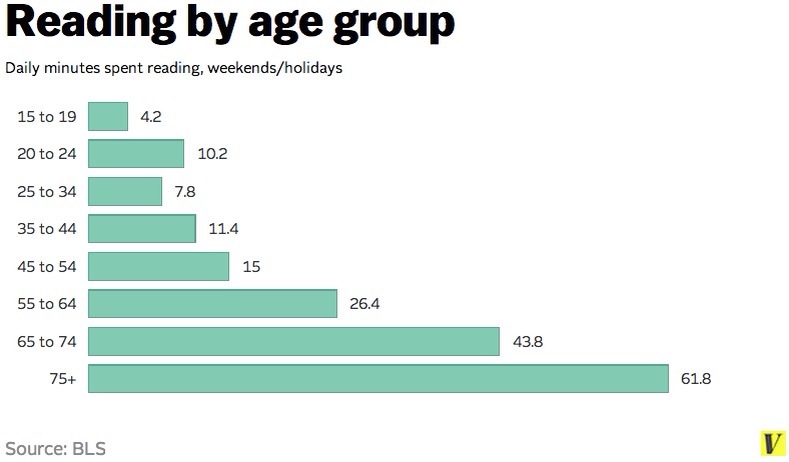
They said Harry Potter had started a revolution and had got kids across the world back to reading books. It doesn’t look like it if this chart for American kids can be relied on.

20140701-204900-74940927.jpg

Is this disturbing? Surely it is. Is it not regression for us to be going back to infancy – before the time when we could read and think about what we read? Is it not a frightening thought to reflect on – that our society is slowly becoming illiterate?

This frightening trend is reported in an article in Vox.com on the general question of how Americans spend the 24 hours of their day. Sadly it looks like another battlefield in the culture wars where western civilisation is having the ground cut from under its feet.

The way forward…

8de43-105664227_efb4141a1e-jpg

In a conversation with some friends recently about the perilous state of our world and its social institutions, the very elements which hold it together this side of chaos – especially the family and marriage – the following point was made:

We know that reason is on our side when we argue for the protection of the family, and for the institution of marriage which is one of its most important pillars. We know that the natural family has been crippled with things like divorce, the normalization of cohabitation and the latest paralysing threat to it – the removal of the complementarity of the sexes as one of the defining elements of marriage. We can explain all this in rational terms. But we also know that none of the explanations we offer is helping us turn the tide.

Christians know these things on two levels and they have two powerful sources on which they can base their convictions and present their case – faith and reason. With reason they can win the argument but seldom change the heart. They should rely far more on their faith, and its beauty, to win, not just the argument, but the heart as well. That will be when the tide will begin to turn.

The case was made that while the campaigns now in progress in the culture wars – the campaign for the human rights of the children in the womb who are awaiting birth, any campaign to protect children for the plague of divorce which shatters their homes, any campaign to disabuse those who think that the best way to marriage is the experimental one of cohabitation, a way which is leaving millions of children without fathers – all these have reason on their side but there would be no campaign at all if there were not people of faith behind them. Christian faith is the motive power behind them all.

The conclusion was that the surest way to bring the world back to its senses on all these issues was to try to bring people back to the faith. In so doing the world will then again be breathing with two lungs rather than one. Then, and only then, will we grasp the complete vision of humanity and all things truly human, enlightened by the beauty of that mysterious thing which faith is. Only when such a vision is restored will we find a way of living which is truly human.

Shortly after having this conversation I read an article, a personal testimony which seemed to be, on the one hand, a portrait of our self-destructing society, and on the other hand, an illustration of transforming power of faith. It was posted some days ago on Garvan Hill’s Twitter platform and on Garvan Hill’s Facebook page. It is so good, so powerful, that it deserves maximum exposure for it impels us to be courageous about speaking the truth, the whole truth and nothing but the truth when we set out to bring western civilization back from the brink of suicide.

It is the somewhat frightening but very moving and very revealing story of an American woman, Catherine Quinn. Read it here and listen to an interview with her here.

Waiting for the aftershock

An electoral earthquake took place in Europe last week, we are told by media across the world. And in Ireland? A severe tremor perhaps, but it will be the aftershock from that tremor in two years from now that will change the Irish political landscape. It is on its way and the dead hand of historical mythologies which has crippled Irish political life –  for half a century at least – will at last lose its grip. Real political choices will then be open to the Irish electorate once again.

The tremor which Ireland felt last weekend brought its casualties and there was little mourning for them. The deputy prime minister (Taniste), Eamon Gilmore,  bit the dust and resigned as leader of his left-wing party. The electorate’s preferences swung wildly towards independent politicians and it was clear that they were not to worried about the kind of independents they chose – it was a matter of anyone but the political establishment in power.

Why all this happened and what we may expect in the future was well analysed by Professor Ray Kinsella in one of the country’s daily newspapers yesterday.

“Voters observed, up close and personal, what happens to individual TDs of real ability and principle when they voted with their conscience on the Coalition’s Abortion Act. It sent a message: this Government will not tolerate individuals who think for themselves and dissent from ‘The Party Line’. This message was further reinforced by the Coalition’s effort to consolidate political control by abolishing the quasi-independent Seanad. It is not so easy to push around Independents and threaten grown-up legislators with the Party Whip system.

“Voters observed that Fine Gael abandoned its foundational values, based on supporting families and fairness, while the Labour Party ditched the ethos of solidarity with working people struggling to make ends meet. Voters could not understand how Labour would enact the procession of cuts and charges on families and the self-employed. What they also saw was how both parties acquiesced in a deeply flawed ‘adjustment process’ that delivered a reduction in the fiscal deficit but at a terrible cost, including an ongoing debt burden that will stifle growth for the next two generations.”

In this hard-hitting article in the Cork-based Irish Examiner, Kinsella, Professor of Banking and Finance in the Michael Smurfit Graduate School of Business, UCD analyses the Irish election results.

Voters observed that Fine Gael abandoned its foundational values, based on supporting families and fairness, while Labour ditched the ethos of solidarity with working people

The outcome of the local council and EU Parliament elections demonstrated just how far the Coalition partners had become detached from the day-to-day experiences of families and, also, from their own foundational values.

The immediate response to the results equally showed how little they have learned. The Labour Party stated that: “The Irish people have sent the Government and the Labour Party a message…” Really?

Does the Government really need to be sent a message about what has been happening to living standards and to public services across the country: the scale of emigration, the dreadful legacy of long-term unemployment and the impact of cutbacks in healthcare and education?

The old stock alibis won’t work:

‘We’ve taken the hard decisions’. No. They were the wrong decisions.

‘We didn’t communicate our policies’ — well, the six austerity budgets gave the Coalition plenty of scope to ‘communicate’.

‘The country was bankrupt’ — so you put more than $17bn from the National Pension Reserve Fund into a malign ‘bailout’, skewed towards the interests of those who contributed to the crisis in the first place.

The medical card shambles is, as the feature in the Irish Examiner last Friday demonstrated, a potent symbol of the insensitivity of policy and the arbitrary manner in which cards have been removed. What makes this worse is the ‘retrospective spin’ by government — featured in that same article — as the medical card debacle continued to unfold.

The medical card shambles was a flawed and arbitrary process, based on ‘Management by Press Release’, long after the damage had been done. It was a metaphor for the wider health system. It was a pity more attention wasn’t paid to the press release of the heads of four Dublin hospitals, who publicly warned about the threat to patient safety, of what was happening, and continues to happen, in hospitals around the country.

And these pressures have been driven by the troika.

Voters have observed the deference to overseas interests who contributed to the banking crisis, against the background of the escalating number of orders for repossession of Irish homes.

The acquiescence by the Coalition in ‘troikanomics’ — a blinkered and short-sighted strategy criticised many times in this column — is the reason for their rejection by the electorate. It is at the heart of the breakdown in public trust in mainstream party politics. Instead, voters have turned to Sinn Féin and to Independents.

The political system itself is skewed in favour of established parties, making it very difficult for new entrants with fresh ideas.

The result of this is that shifts in the percentage support for these parties do not necessarily reflect anything other than a lesser dislike of one, compared with the other. Hence the relative performance of the two members — Labour compared with Fine Gael — of the Coalition.

It would be a great mistake to dismiss the increased support for Independents as simply a ‘protest vote’. The contribution of Independents, such as the late Tony Gregory, to value-based community politics can hardly be overstated.

Long serving and hard-working MEPs stood for re-election this time around. The growth in support for Independents is not alone a reaction against hegemony of the ‘old politics’ which young adults, in particular, do not understand — because they have no way of knowing what they stand for, other than power.

It is, more importantly, a statement about the loss of trust in mainstream politics.

Voters observed, up close and personal, what happens to individual TDs of real ability and principle when they voted with their conscience on the Coalition’s Abortion Act. It sent a message: this Government will not tolerate individuals who think for themselves and dissent from ‘The Party Line’. This message was further reinforced by the Coalition’s effort to consolidate political control by abolishing the quasi-independent Seanad. It is not so easy to push around Independents and threaten grown-up legislators with the Party Whip system.

oters observed that Fine Gael abandoned its foundational values, based on supporting families and fairness, while the Labour Party ditched the ethos of solidarity with working people struggling to make ends meet. Voters could not understand how Labour would enact the procession of cuts and charges on families and the self-employed. What they also saw was how both parties acquiesced in a deeply flawed ‘adjustment process’ that delivered a reduction in the fiscal deficit but at a terrible cost, including an ongoing debt burden that will stifle growth for the next two generations.

It is two years until the next scheduled General Election.

This is too long for people numbed by austerity and a ‘recovery’ about which they read but have not experienced. It is hardly long enough for a Coalition that is in office but has lost any claim to legitimacy to truly re-engage with their foundational values.

There are three priorities for whatever new political consensus emerges from the radically different political landscape.

Firstly, demand from the eurozone establishment a €60bn debt write-off. There is broad consensus among international economists that such a write off is justified and appropriate. Peter Mathews TD, perhaps Fine Gael’s most qualified and professionally experienced banking expert, has continually made this point. But, of course, he was expelled from his party (and from the Banking Inquiry) for having a mind of his own.

The Coalition simply hasn’t got the debt-write off message. It is now too divided and jaded — too cosy with ‘our friends and partners’ in the eurozone — to deliver the demand for a write-off with any conviction. Independents and Sinn Féin are unlikely to be similarly inhibited.

The second is this: both Fine Gael and Labour have been willing, in the interest of power, to ditch their traditional values. At a time when the focus of Government should have been on the economy, they engaged in a damaging, divisive and wholly unnecessary campaign to legislate for abortion on the X case. For anyone who actually took the trouble to read the ECJ judgement on the ABC cases — or who listened to the informed views of the medical and psychiatric evidence — this was an exercise in ideological ‘power broking’ and one that the country could ill-afford.

Their proper responsibility was to support families, struggling with the consequences of six regressive austerity budgets and cutbacks in services and supports that hit primarily those on the outside — including single parents and the homeless.

Later in this year the Coalition will be at the same crack; pushing the same ideology and pressing for changes in the Constitutional status of marriage and the natural rights of children to a mother and a father. This would be bizarre to traditional Fine Gael.

In fact, the fundamental freedoms that every citizen have are not the gift of governments; they are the result of the courage of individuals from outside of the establishment, people like Raymond Crotty, Patricia McKenna, Mark McCrystal, and Kathy Synott; individuals who were brave enough to go to the Supreme Court to vindicate these freedoms and to hold government to account, over and over again.

This should encourage ‘new democrats’ because the research shows that the integrity of public institutions is fundamental to growth and development.

The third challenge for the emerging political forces is to get their head around how best to adapt the Irish economy to an external environment that is heavy with risk.

The EU, and particularly the eurozone, is mired in financial repression. Forecasts for growth continually fall short of outcomes.

Any momentum rests on the assertion two years ago by Mario Draghi that the ECB would ‘do what it takes’ — when, in fact, Mr Draghi had no mandate to make such a pledge.

In the markets, sovereign spreads have declined — but it will take something more than an adventurous pledge to sustain economies mired in sovereign debt There are also significant risks, including political risks and a ‘liquidity trap’ stymieing monetary policy.

The Coalition’s post-bailout strategy, published earlier this year, is simply not robust to these challenges. That is why securing debt write-off is absolutely central in the new political consensus.

In the run-up to 2016 (if the Coalition lasts that long) an emerging values-based ‘new coalition’, to counter the old failed orthodoxy, may have to be built.

Such a grouping is now likely to comprise of Sinn Féin, a ‘new’ Fianna Fáil — and a much stronger and more assertive group of Independent TDs.

They should begin their dialogue with the eurozone establishment by declaring that they would like our country back.

Meanwhile, Cora Sherlock of the Irish Pro Life Campaign writes on LifeNews.com that Fine Gael’s losses a direct result of betraying pro-lifers on abortion.

As the dust settles from Ireland’s European and Local elections, it’s a good opportunity to examine what the results mean from the pro-life perspective.  While there is always the temptation to overstate the political implications for a single issue, the results of recent days have far-reaching consequences for the life issue.

Read what she says here.

The Guinness is good – but is it good for you?

Edward Snowden

American Public Broadcast Service (PBS) last week launched, on its investigative flagship, Frontline, a two part series entitled The United States of Secrets. In the globalised world in which we live its subject matter is of interest to every one of us – and our fascination with it must be heavily shaded with dark forebodings.

Are we now caught up in a world in which the word “privacy” is as meaningless as the word “family”, or the word “marriage” are threatening to become? In our headlong surrender to the means of modern communication, information technology and the internet – beguiled by all they have given us, and continue to promise us – should we see a Godzilla on a scale not even Hollywood could imagine, arising out of the ocean and trampling all over us.

The first part of the series began with footage of the 9/11 atrocity, the security nightmare it created for the American administration, and the desperate efforts to plug the gaping holes in the intelligence and security services which it revealed. Then, moving to a level  more like a John le Carré plot, Edward Snowden’s equally desperate response to what the administration eventually put in place, the notorious surveillance “programme”, unfolded. It did so  in a tale of coded messages, off-radar flights linking media men and women in Rio, Washington and London and eventually ending up with secret rendezvous in Hong Kong. Ewen MacAskill of the Guardian, among those meeting Snowden, was given the phrase by his US bureau which was to indicate over the phone if the story was everything they hoped it might be. He was to tell them “the Guinness is good”. And so it was.

The first part in the series then went back to “the programme” – as the massive surveillance operation was called – its design, its implementation and the horrible compromises with the truth which everyone, from the President (Bush) down, had to make. It then dealt with the exceptional few who had misgivings and who eventually blew the whistle and paid the price. But even though they blew the whistle no one wanted to hear it – not even the New York Times emerged uncompromised.

The most disturbing thing about the layers of revelation put before us by Frontline was the moral confusion of the protagonists. Principle after principle was compromised as the main players abandoned morality in the search for legal legs to stand on to justify what they were doing. They allowed themselves to be driven into a deceitful secrecy, authorising universal surveillance and victimisation of whiltleblowers in their pursuit of security. But as we watched the revelation of the inner workings of  government we could not honestly put a hand-on-heart and say that we might have been clever enough, brave enough and  resourceful enough to do any differently. This government was confronting the threat of multiple 9/11 massacres – because after the Twin Towers had come Madrid and London to strike more panic into those whose job it was to try to protect us. Desperation is a terrible thing.

As Robert Lloyd said in his review in the Los Angeles Times, it may have come to our attention, sometime in the last several years, that the government of the United States makes an expensive habit of spying on its citizens in ways that have often been illegal, quasi-legal or formerly illegal until the law was changed to make them legal.  But it was  the kind of awareness that — like global warming — can feel too huge to grasp, especially when Johnny is down with the flu and Sally has soccer practice and your editor would like to know when he’ll get that review you promised him.

It takes something as stark as what this series reveals to jolt us out of our complacency. The Frontline series will not answer all the questions, will not even pass a final judgement on the case. What it does is reveal a great deal of the truth about what went on and how men responded. We will have to draw the lessons from it ourselves.

We will have to say “yes” or “no” to surrendering our privacy to Google, Facebook, Twitter – which we have probably done already. If we have and did not really want to, then we will have to withdraw to a quieter and less well connected social environment to keep that word meaning something.

We will have to scrutinise our laws more carefully and see what powers they actually give to those whom we have elected to government. We will have to examine our system of government to see if it is fit for purpose – because if the big boys can create a mess like this, so can the little ones. I think of the small island in which I write and look with dismay at the Irish electorate which tomorrow is expected to ineffectively tell its political establishment – a plague on all your houses. Even if they do, very little will happen, so sclerotic is the creaking Irish political set-up.

Part two of Frontline’s series examined the worryingly close relationship between the government and Silicon Valley. It left everyone wondering if this bastion of information technology, instead of enhancing our freedom, has in fact been leading us on a road to a kind of Nineteen Eighty-Four  slavery?

John Doyle, writing in the Toronto Globe and Mail, wryly commented that while he assumed – like most of us – “that somebody, somewhere, has the ability to look at what I write, even privately. What would the snoopers see? Well, sarcastic remarks about English soccer players and even more sarcastic remarks about the Canadian Broadcasting Corporation. Expressions of worship for FC Barcelona. Sometimes, civil and literate discussion of matters Irish – writers, books, plays. All of it boring babble, really”, he thought.

He continued, “Part of the issue with the snooping is that we have become accustomed to being followed online by commercial enterprises. Last year when I realized that a certain favourite type of Jockey underwear was being taken off the market, I did some online looking for it. And, for months, it seemed, Jockey underwear followed me as I surfed the Internet, researching all kinds of things. Not an unnerving experience, but amusing. It just happens.”

The United States of Secrets made him think a bit more about all this. “There is nothing amusing about what Edward Snowden revealed. The mass invasion of privacy, the constant, mind-boggling collection of data, is the biggest issue of our time. We should never underestimate what Snowden did.”

For Doyle the meat of the program is an attempt to answer these questions – “how did tech giants react when the government asked them to turn over data on millions of ordinary American citizens? And how much do companies like Google, Facebook and Yahoo really know about you? The answers are deeply troubling. It emerges that such companies as AT&T and Verizon see themselves as in partnership with the U.S. government. As one tech expert says, ‘No one at these companies is losing sleep about this issue’.”

Doyle says: This Frontline is must-see TV. Disturbing and creepy, it forces you to rethink what social media is and where it takes us. There we are, being all chatty and catty and flippant. And very foolish as we do it.

Perhaps this cartoon, published in The Week after the NSA story broke, says it all.


Peruke & Periwig – Dublin’s newest bar

rjmackin's avatarbig mac and whys

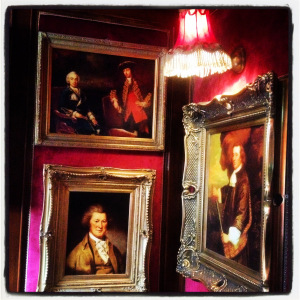
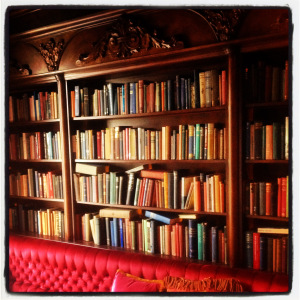
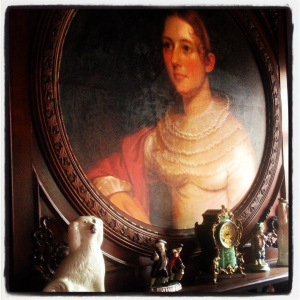
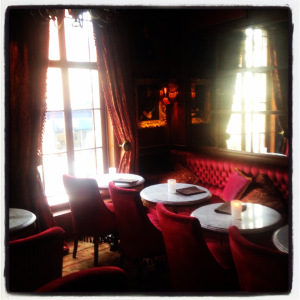
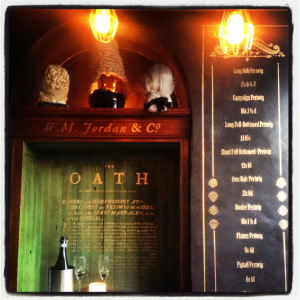
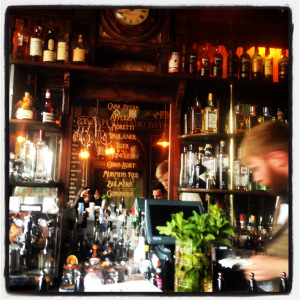
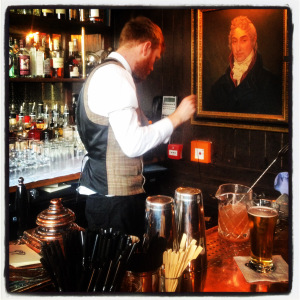
Peruke & Periwig portraits Peruke & Periwig bookshelves Peruke & Periwig mantlepiece Peruke & Periwig restaurant Peruke & Periwig downstairs Peruke & Periwig bar counter Peruke & Periwig barman Peruke & Periwig cocktail

We’d like to think we’re still down with the kids, have our fingers on the pulse, are fashion forward, so when we learned that Dublin’s newest, hippest venue has been open a good 6 weeks already we were a little chagrined!

Peruke and Periwig, named apparently for the wig shop that first occupied the premises (31 Dawson Street) back in Victorian times, lives up to the hype.

Set over 3 floors including a bar, restaurant and cocktail lounge, it feels like it has always been there. It has an old-world feel without descending into tweeness and it’s cosy without feeling cluttered.

The cocktail menu is extensive and varied. The manager used to run the Exchequer and the influence shows.

We tried their take on a mojito, followed by some type of margarita and after that it all got a bit hazy. They offer a range of bar snacks and a…

View original post 25 more words

If you can’t beat them, gag them

An odd, silly and dangerous movement has now taken a poisonous hold in the public square. The result is that free speech, hand in hand with freedom of religion, is now an endangered species.

Back in the 1980s the British National Union of Students initiated its No Platform policy. They adopted the very ‘liberal’ line of banning union affiliates from debating with members of what they called ‘extremist’ groups. No one paid that much notice. It was all a matter of students being students and what they were doing did not have that much baring on mainstream society. Has something changed? Yes it has, with a vengeance.

In a speech given at King’s College London as part of  the new and very healthy ‘Down With Campus Censorship!’ campaign, Tom Slater, assistant editor at Spiked.com, sees in this the greatest threat of all to the very idea of the university.

In the United Kingdom the University of Derby’s student union, Tom Slater tells us,“has attempted to ban the entirety of UKIP on the grounds that the burble of the notoriously gaffe-prone party poses a threat to student safety.”What kind of democratic mentality wants to gag its opponents rather than debate the truth with them?The same kind of mentality as that of the University of Cardiff’s student union which keeps trying to pass a motion that would effectively outlaw ‘pro-life’ societies and demonstrations on campus.

Anna Furedi is a leading UK opponent of all those who maintain that life begins at conception and of those who maintain that it deserves protection, as all human life does, from that moment. She found herself turned on recently by her own supporters, becoming a high-profile target of the No Platform brigade.

She arrived at Cambridge University’s Trinity College to take part in a discussion on abortion. For the first time in her life she encountered a political protest asking people not to attend a debate. For her it was a sad sign of the times. The debate was organised by Cambridge Students for Life, who oppose abortion, and Cambridge Medicine Society. The motion was: ‘Genetics and disability should not be used as grounds for abortion.’

It was all too much for the Cambridge University Student Union Women’s Campaign which was out in force to persuade people not to attend the debate. Anna tried to reason with them that their time would be better spent IN the hall, arguing for women’s reproductive choice. They were having none of it. Their reasons:

‘The motion is biased’

Yes, she responded, that’s because it’s a debate and one side supports the motion and the other opposes it, and so a neutral motion wouldn’t work very well. The irony was lost on them. They then tried with:

‘The speakers are biased because they’ve been selected by the anti-abortion side. They will have deliberately asked weaker people to oppose it.’

“Ouch. That hurt”, commented Anna, one of the UK’s most formidable proponents of abortion as a woman’s right.

They finally told her that No Platform polices exist so that people don’t hear their opponents’ arguments. She countered this by saying it might suggest that they want to silence their opposition because they can’t match their arguments? “In other words, you don’t want to let them speak out because you’re afraid you can’t convince people that they are wrong.”

‘Well, we are afraid of that.’ They admitted.

Understandably that left Anna speechless.

“That students at one of Britain’s leading universities”, she reflected, “should sink to such intellectual depths is nothing short of tragic. Had the protesters attended the debate they would have seen an intelligent discussion between people with different views about morals and principles, the nature of human life and its value. The debate was fair, the speakers were considered, and the questions and points from the audience deserved to be answered. This was a sensible and respectful discussion. I listened to my opposition, and I learned. I came away with none of my pro-choice convictions diluted – just a better sense of how to present what I believe in a way that may be more convincing.

“Abortion is a political issue that causes us to consider metaphysics and moral values, definitions of life, the limits of personal autonomy, and the limits on women’s equality. It is absurd to claim that debate is, by its nature, ‘violent’. Pitting your arguments against someone who disagrees with you is one of the best ways to learn to be more clear, concise and precise. Frankly, taking on able and informed opponents of my views was a challenge, but my opponents in the debate were far less hostile than the row of protesters who purported to agree with me about women’s rights but whose signs told me explicitly to ‘Fuck off’.

“You don’t have to be a Cambridge intellectual to understand why debate and discussion should be encouraged. When you try to silence someone, you simply tell the world that you fear what they might say.”

We might ask ourselves if this is what is really happening here? Have the arguments of the liberal left run into the ground, leaving nothing but froth on the surface? Have they become so aware of the shallowness of the metaphysical and moral value of their view of mankind that they can now only see one option – gag the voices of their opponents?

Tom Slater believes that of all the supposedly dangerous ideas running rampant on university campuses at the moment, the idea that restricting what students can say, read or listen to is in any way a positive step poses the greatest threat of all to the very idea of the university. As far as he is concerned the truth is that when student unions ban a speaker they are not challenging dodgy ideas, they are not helping to push for a more progressive society – they are merely saying that the students are too fragile and stupid to listen to sense.

Linked to the challenge to free speech is the challenge to freedom of religion. Where this challenge is appearing increasingly aggressive is within the school system – right across the Christian world. Three recent headlines tell part of the story:

“Teachers cannot opt out of teaching gay ‘marriage’ in school sex-education classes” – that is in Scotland. “No parental opt-out from any course, including sex-education. Teachers cannot opt out of teaching gay ‘marriage’ in school” – that is in Manitoba, Canada. While in Toronto the school board also tells parents they can’t opt kids out of pro-homosexual classes.

In Wakefield Rhode Island in the US, controversy has erupted at a Roman Catholic school after students and parents reacted with outrage to Church teaching on sexuality as presented at a school assembly. This follows the same pattern as events at a school in Charlotte, North Carolina some weeks earlier.

Meanwhile in Paris a French government minister accused those who assert the teaching of the Catholic Church of trying to wage an ideological war from another era. In all cases the story seems to be the same. Read more about these stories here.

Where is it all going to end? Well, one place it might end is with a renewal of the determination of all Christians stand by the teaching which marks them out as such and to teach it to others, whether opportunely or inopportunely.

As Anna Furedi said, “When you try to silence someone, you simply tell the world that you fear what they might say.” Surely that is one of the most despicable fears of all? Alliance Vita, Father Francis “Rocky” Hoffman, Sister Mary Tracy in Seattle and Sister Jane Dominic Laurel in North Carolina are an example to us all.

Grim reminders

20140513-160959.jpg

Today marks the first anniversary of the conviction of late-term abortionist Kermit Gosnell, who was found guilty of murdering living babies after botched abortion procedures. Justice was served in that courtroom on May 13, 2013, but many Americans are appalled to find themselves barred from debating this vital health issue on the floor of the U.S. Senate.

A stalled Senate bill with 40 co-sponsors, called the Pain-Capable Unborn Child Protection Act, would limit abortions in the United States after 20 weeks – the point at which studies have shown the unborn child has the ability to feel pain. The House passed a similar measure in June of last year, and several states have enacted their own version of the law.

But Senate Majority Leader Harry Reid isn’t bringing it to the floor for debate.

In a little over two months the Irish will be marking an equally dark event – the passing of a bill in the Dail-Seanad (parliament) allowing the abortion of a child right up to the moment of birth. The abortion will be performed on the basis of a mother’s declaration, signed off by two medics, that she will take her own life unless she is allowed to abort the child. Both houses passed this legislation by a big majority of the parties forming the coalition government – albeit under a rigourous party whip. The few who voted according to conscience found themselves forced from their parties.

The Irish pro-life constituency is now gearing itself up to challenge the established parties and the party system which has now shown itself to be a strangler of conscience. Last week saw a demonstration of up to 20000 outside the parliament buildings reminding Taoiseach Enda Kenny that one year on, they hadn’t gone away. They were reminding him that as far as they were concerned he was no better than Kermit Gosnell. Under the law he passed, late-term abortions will carry no penalties. The majority of the charges on which Gosnell was convicted would be dismissed in an Irish court under the new law.

As far as a majority of Irish people is concerned Harry Reid callous disregard for the pain of the unborn child is well-matched by Enda Kenny.
Many look forward to going to the polls over the next few years so that they can tell him so.

20140513-161305.jpg
Taoiseach Enda Kenny