Folly and deceit in hot pursuit of abortion on demand

The folly and the duplicity behind the drive of the Irish pro-abortion machine is well and truly exposed in an article by a lawyer and psychiatrist in today’s Irish Times, so much so that one just wants to cry out to them, “why don’t you just come clean and tell us that your demand for legislation to allow abortion on the grounds of threatened suicide is because this is the surest way to get abortion on demand.” This is what is very clear from Enda Hayden’s article and if the other Enda (Kenny, Ireland’s prime minister) cannot see the trap he is being walked into by his socialist deputy, Eamon Gilmore, then he is either very stupid or pretending to be stupid.

Hayden states, after reviewing all the professional expertise on the matter, that “even following comprehensive assessment and reassessment by highly experienced and competent psychiatrists, it is not possible to confirm, on balance of probabilities, that threats of suicide due to an unwanted pregnancy will lead to completed suicide. Any perceived real and substantial threat to the life of the pregnant mother, by suicide, is not a permanent state, but rather a crisis that will resolve and is amenable to intervention.”

Furthermore, an added fallacious element in the pro-abortionists campaign is expose by Hayden when he observes that the clinical realities he explores in his article do not lend themselves to restrictions imposed by any statute providing for threat of suicide as a ground for abortion. For example, he points out, if threat of suicide in pregnancy were to be accepted as posing a real and substantial risk to the life of the mother, why should any time limit apply in respect of abortion if the spirit of such statutory provision is to save the life of the mother?

“If a time limit were to be imposed on provision of abortion in such circumstances, how would this accord due recognition to the time required for comprehensive multifactorial assessment including assessment of response to treatment interventions? Should statutory provision for assessment of response to treatment be dispensed with in order to expedite and simplify matters?

“Assuming statutory provision for a second opinion by a suitably qualified professional in respect of the suicidality assessment process, what implications might this have for compliance with time limits, assuming such were to be provided for by statute? In the event of a “psychiatric emergency”, would the opinion of just one medical practitioner that abortion is immediately necessary to save the life of the mother suffice in order to procure an abortion?

“What is the legal capacity of a pregnant mother to provide informed consent to an abortion in situations where she is emotionally overwhelmed to the extent that her judgment is impaired, and how is this addressed and over what time period? This is not a theoretical question but a common clinical reality for psychiatrists treating patients with a diagnosis of emotionally unstable personality disorder, a diagnosis particularly associated with risk of crises during pregnancy. The absence of informed consent is fertile ground for litigation.”

All of which goes to place a huge question-mark over the work of the so-called “expert” group on which the Irish State is now basing its legislation. That group, if it had been expert in any way, would have analysed all these things and would have questioned the entirely spurious Irish Supreme Court judgement on the “X” case which set this suicide threat up as an unquestioned medical principle – without any medical evidence to back it up.

But the truth is – and this would probably be exposed if any media organisation interested in the truth took the trouble to query its deliberations under freedom of information legislation – that this expert group was a tool of a government and its Health Service Executive which wanted, by hook or by crook, to get legislation for abortion on demand on Ireland’s statute books, ignoring its own formal terms of reference to ensure that it gave its masters the results they wanted.

Twenty years after – an unfolding conflict

“It was twenty years ago today” – well perhaps not today, but certainly this year – that Samuel P. Huntington published his seminal article in Foreign Affairs and set the world thinking again about new rumours of war. Just a year earlier Francis Fukuyama had published The End of History and the Last Man. That book was an expansion of his essay in the summer issue of The National Interest in 1989, months before the fall of the Berlin wall on the night of 9 November in the same year.

 What we may be witnessing” he wrote, is not just the end of the Cold War, or the passing of a particular period of post-war history, but the end of history as such: that is, the end point of mankind’s ideological evolution and the universalization of Western liberal democracy as the final form of human government.

 That was a very controversial view and for most people it was read – or perhaps misread – as an oversimplification of the consequences of the events of the 1980s. But on a positive interpretation we did seem to be witnessing the end of three hundred years of conflict – sometimes dynastic, sometimes nationalistic, sometimes nakedly imperial and latterly a conflict between two ideologies, the one socialist and totalitarian, the other liberal and capitalist. There did seem to be a basis for optimism that there was now nothing really powerful enough to divide the human race and drive its factions into a war which if unleashed in our day and age might render the very planet itself incapable of sustaining human life.

That optimism was short-lived and the first wake-up call came from Samuel Huntington, the late Professor of the Science of Government at Harvard University, with the publication of his Foreign Affairs article, The Clash of Civilizations. With that our cosy reading of history came to an end and we were confronted with the prospect of new and even more intractable conflicts rooted in the deepest recesses of human consciousness, supra-rational and sometimes irrational, depending on your point of view. These conflicts would be much less susceptible to negotiation and compromise than conflicts rooted in political and economic differences.

In Huntington’s view the world had more or less now returned to the pre-Westphalian condition when wars of religion plagued Europe, or to the age of the Islamic conquests and the reconquista of Spain in the late Middle Ages. Once again the primary axis of global and regional conflicts was going to be cultural and religious.

Twenty years on, how does his thesis stand up? Without its oversimplifications, pretty well. At the time of his writing that essay there is no doubt but that Islamic militants were already on the move. But they were still not perceived as the global threat to peace that they have now become, necessitating a global protective security shield which in its own way matches anything that had to be put in place by western democracies to protect themselves from the threat of communism.

While the range of potential clashes he proposed for consideration looks a little too extensive, nevertheless the emergence of militant Islamic movements is enough to validate his central thesis. This clash has well and truly re-splattered red markings along the “bloody borders of Islam”, both the external ones and the internal ones where Shia and Sunni factions slaughter each other on a daily basis.  It is hard to find a location along those borders where there is not currently some jihadist group at work – from western to eastern Africa, or among the Mediterranean nations of north Africa, the Middle to the Far East and into those western societies where substantial Islamic immigration has taken place.

This is a war-in-progress and it is likely to continue into the foreseeable future. By and large it seems to bear out Huntington’s main thesis. The intractability of the conflict can be seen in the  bleakness of the prospects for peace negotiation in one of the many theatres in which this war is being played out in full battle dress – that of Afghanistan and the conflict with the intransigent Taliban.

But there is another war brewing which also has all the characteristics of the clashes predicted by Huntington. This is not one to which he paid much attention but it is brewing nonetheless. It will probably remain a largely cold war but it promises to be war just the same and will bring its quota of victims and suffering in its wake. It is the war which has already broken out within the old West to which we have already pinned the term, “culture wars”, making it seem with that soft word “culture”, a little more benign than it actually is.

It is in fact, largely, a new war of religion although few dare to call it so as yet. Cardinal Francis George of Chicago, a robust defender of what he holds to be inalienable human rights – like the right to life from conception to natural death – and the moral teaching of his Catholic Church, said last year that he expected to die in his bed. He thought, however, that his successor would probably die in prison while the man who would succeed his successor would die the death of a martyr.

Within western civilization there are now two separate civilizations developing and the fault line between them is deepening with each year that passes. On the one hand are the adherents of the central Christian beliefs and moral laws. On the other are the nominal Christians for whom these beliefs and laws are a relative thing, susceptible to change and for whom the will of the majority is the guiding principle of life. These latter are allied with many who hold no religious belief and for whom all truth is essentially relative. These have bought into the version of modernity which exalts individualism over the common good, where marriage is redefined to eliminate the principle of indissolubility and its basis in the complementarity of the sexes is ignored, where sex itself is as much about recreation as it is about procreation and where the notion of equality is no longer linked to liberty or fraternity.

Huntington maintained that cultural conflicts were inevitable when adherents of the major religions – Christianity and Islam – found themselves confronted by a society dominated by the irreligious. Conflict became inevitable when the agents of government in that society begin to control and organise it in ways which change the very meaning of life itself and a people’s understanding of what the pursuit of happiness is all about.

His focus on all this was more in the context of conflicts between already constituted geographical blocks and much less about struggles between segments of populations within existing societies. It is in these theatres that this new cold war has now begun to break out.

Within Western societies – which are still largely but at best nominally Christian – there are now two emerging blocks. There are those who are essentially nominal in their allegiance to the ideals of Christian belief and practice and there are those who are actually committed to the effort, albeit sometimes failing,  of living their lives according to the principles enshrined in those beliefs and practices. This latter fits Huntington’s categorization of the type of civilization which is likely to provoke hostility and conflict. Its adherents are missionary, universal and teleological, that is: they seek conversions (mission), they see themselves in possession of the whole (universal) truth and that truth is where the end (telos) and destiny of mankind is revealed.

When, as is the case now in Western societies, laws begin to be put in place by one group – in this case the now dominant nominally Christian group under the influence of an irreligious version of modernity – which contradict and deny fundamental principles by which the other groups seeks to live, trouble is in store. What we call the “culture war” is in fact a clash of these two civilizations on a series of issues ranging through principles of religious freedom, freedom of conscience, principles governing the beginning and end of life, the nature of family, marriage as a social institution and the nature and purpose of human sexuality. For one group these are matters governed by expediency and a lassiez faire approach; for the other group they are non-negotiable issues founded in an immutable human nature and – for a believer in a divine creator – revealed in the teachings of their religion.

The conscientious Christian cannot, for example, accept as a basis for political legislation the principle enunciated by many politicians in all these societies, that while they see a particular human act as morally wrong they must still legislate to facilitate others to carry out such acts if they so choose. The following segment of a correspondence between a constituent and an elected representative in one Western democratic jurisdiction – Ireland – on the issue of abortion legislation illustrates the impasse between these two civilizations.

In the context of the lassiez faire  political approach to human abuse “the citizen” put the case to “the citizen’s representative” as follows:

In the case of deliberate abortion, the abuse is on the mother, on the child in the womb, and indirectly on the wider community. You didn’t say it, but I often hear other people say “It will happen anyway, so let’s legislate to allow it under certain circumstances.” Again, I’ve never heard this said about any other kind of crime (tax fraud, bank robberies, dangerous driving, drug dealing).

 There is enormous pressure worldwide to allow abortion, backed by a mighty industry and driven by so many people’s desire to have complete control of their lives, complete freedom in choice of lifestyle, escape from all suffering, escape from all constraints. These desires, often fostered by commercial interests, are based on illusions and ultimately lead to despair.

 The proposed change in (Irish) law seems very restricted, but in fact it would be taking a giant leap. It would be allowing people to decide which life is worth (preserving), and which life can be deliberately terminated. This is clearly pulling up an ethical and moral anchor, with drastic consequences.

 One day societies will look back in horror at the idea that they once used to kill their young, in much the same way as we now look back in horror at slavery. We can have the chance to take the enlightened approach, of resisting the pressure to conform in something which is inherently repulsive, no matter how it is dressed up.

 To this “the citizen’s representative” replied:

For an elected representative, one’s own feelings on a matter must not generally supersede what might be considered to be appropriate for the population as a whole. Where they are in common with each other, it is of course easier, but where there is a conflict the elected member must decide where the general interest lies – to attempt as best he/she can find the objective view.

 While I might not like the idea or practice of abortion, is it for me to impose these beliefs on the population as a whole? What is the balance between the State’s responsibilities and the individual’s rights? This is the debate that plays out.

 Therein lies the very fragile fault line between two civilizations, the one pragmatic in the extreme, responsive not to any principle but to the will of a majority – regardless of what that majority should wish. For those on the other side, rooted in firm and time-tested ethical principles, this is the philosophy which allowed and determined such human atrocities as slavery and the holocausts of the twentieth century. For them this is much more than a “debate that plays out”, it is a matter of life death and the destiny of mankind. It is something that in the last analysis they will be prepared to give their lives for – in one way or another. It is not a comfortable thought but Huntington’s explorations of the issue of the clash of civilizations twenty years ago cannot be seen as anything other than prescient.

Pope Benedict and “the ultimate purpose of Catholicism”

Here is a very perceptive summing up of the legacy of Pope Benedict from Damian Thompson on his  Daily Telegraph blog. He says, for example, that

Benedict’s central achievement was that he began – but came nowhere near finishing – the “purification” of the Catholic Church that was his most pressing concern. This necessitated the reform both of the liturgy and of the behaviour of the clergy entrusted with its performance. It might seem strange to yoke together the two, but Ratzinger has always emphasised that liturgy – properly orientated worship of God – is the ultimate purpose of Catholicism, requiring a holy priesthood and laity.

Benedict saw himself as continuing the mission of his predecessor, John Paul II, to restore the divine dignity of the Eucharist by renewing the celebration of Mass and encouraging adoration of the Sacrament. The extraordinary scenes in Hyde Park during his visit to Britain in 2010 testified to his success – but his reluctance to bully bishops into following his suggestions meant that the mission was not fully fulfilled. (A little example that infuriates me: the Pope encouraged priests to celebrate Mass facing a standing crucifix. He himself did so at Westminster Cathedral, but the tall cross was quickly removed after he’d gone. Why?) Benedict also restored Catholics’ freedom to attend the Tridentine Mass, suppressed in the 1970s – but, again, many bishops did their “la-la-la-can’t-hear-you-Holy-Father” act and Summorum Pontificum has yet to be enforced.

Add to that this prescient interview of the the then Cardinal Ratzinger in 2003 with Raymond Arroyo of EWTN and you get a measure of the achievement of this Papacy in terms of the vision of the Church shared by two of the greatest popes in modern history.

When the cure is worse than the disease

Bread and circuses

Juvenal was a sharp and refined satirist who drew us upwards from our follies  When he cut, he cut with the purpose of civilising. One path alone leads to a life of peace: The path of virtue, he said, and everything he wrote matched that goal. He also warned us, Fortune can, for her pleasure, fools advance, and toss them on the wheels of Chance.

 How painful the difference is today. Ricky Gervais has certainly been advanced by Fortune and with his sharp and cutting tongue seems to rule the world just now. He does not lack intelligence, at times he does not lack wisdom, but oh how he lacks any kind of dignity. He cuts us down and draws us further downward.

 He did not, it seems, as some allege, call all Catholics morons – but even to call “some” morons is hardly worthy of a practitioner of the art of satire. To explain the right to free expression of beliefs and opinions is a useful exercise in this bewildering day and age but to do so in terms like this is impoverishing our language and conversation: Everyone has the right to hold whatever beliefs they want. And everyone else has the right to find those beliefs f*****g ridiculous.

 Have we come to the point in our civilisation to which the Romans arrived nineteen hundred years ago when Juvenal wrote: The people that once bestowed commands, consulships, legions, and all else, now concerns itself no more, and longs eagerly for just two things – bread and circuses! With us, TV, Oscar nights, belly-laughs and sterile mockery?

 He may not care what he leaves his children with as a heritage but perhaps some other words of Juvenal might be worth his consideration: Refrain from doing ill; for one all powerful reason, lest our children should copy our misdeeds; we are all too prone to imitate whatever is base and depraved.

 Would it not be better for us all to observe the advice of that other great satirist, Jonathan Swift when he wrote, One of the best rules in conversation is, never to say a thing which any of the company can reasonably wish had been left unsaid.

 Of course, to a great number of people these older expressions of wisdom to be found in utterances of the great satirists of the past might be “boring” – but beware, admission of boredom is very often evidence of ignorance, at best, and at worst, simple stupidity.

And for the latest sleight of hand…

The Irish Times reports today that a “pro-choice Abortion Rights Campaign” has launched  “10 days of abortion rights action”  in an effort to get legislation introduced by the Irish parliament before the summer.

Read that another way and please tell me if it is not an accurate re-phrasing: “10 days campaign for the right to terminate the life of a child in its mother’s womb”. Can that really be a right – just because you call it by another name?

At a press conference in Dublin yesterday, the spokeswoman for this campagn, Sinéad Redmond, said there were 142 days until the Oireachtas (the Irish legislature) summer recess. “That’s 142 days when women’s lives in this country are at danger.”

As part of the campaign, 30,000 postcards reading “Greetings from Ireland, failing to take action on abortion since 1992. Legislate for X” will be sent to TDs and Senators.

 The group urged the Government to ensure that suicide be included in any legislation as a grounds for abortion, saying its exclusion would be “highly discriminatory”.

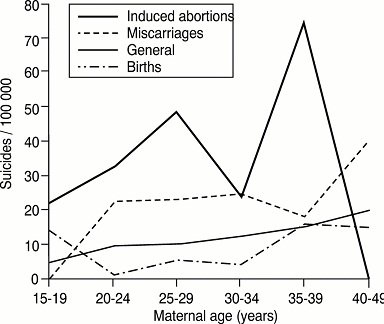
A request to Ms. Redmond: Please give us the comparative statistics for women (per 100,000 pregnancies) who have died in Ireland – either by suicide as a result of pregnancy or in giving birth to their child – and women who have died  having “legitimate” abortions in other jurisdictions where “legal” abortion services are provided.

There is plenty of information out there on this topic. The TDs and senators who are going to be bombarded by Ms. Redmond and her friends should be provided with some information rather than slogans and sound bytes. Try this source to start with. This was reported in the British Medical Journal on the basis of Finnish studies. The graph speaks for itself.

F1.medium

The pro-abortion activists are clutching at straws on this. Why do they not state the simple truth which is that they want abortion on demand and argue the case on whatever legitimate grounds they can find for this? Meaningless slogans implying some kind of victimhood just makes no sense at all. 

The corruption of political and social discourse

Brendan O’Neill has done it again with another spot-on column in the Telegraph. He writes:

I have a dream that one day I will open a newspaper and not see any articles about pervy priests or leering politicians. I know what you’re thinking: if only priests would stop perving and politicians would stop leering then perhaps we wouldn’t have to read about them. I think it’s more complicated than that. I think the omnipotence of sexual abuse scandals in public and political debate is not down to the fact that men in positions of power are now more wicked and warped than they were at any point in history. Rather it reflects the extent to which accusations of sexual impropriety have become the key currency of political and moral infighting, the main means through which one dents institutions and people that one detests.

Read more here.

Northern light – Iceland to attack the porn plague

Has the penny dropped at a last? Are we all about to wake up to the fact that our tolerance of the porn industry – or at best, our inept efforts to deal with it – is the greatest and most devastating cooperation in the evil of child abuse that the world has ever seen. Are we at last ready to accept that if a blatant act of showing pornographic images to a child is a form of child abuse, then so also is the broadcast of such images through film, TV, or over the Internet – at any hour of the day – also effectively the destruction of innocence.

Last week police in Australia gave a stark warning to parents to wake up to this. Now the government of Iceland is drafting legislation in an attempt to confront the plague. It is probably a bonus that it is liberal-minded Iceland doing this. Were it some Catholic country attempting to lead the way the cries of “censorship” and moans about “conservative reactionaries” would have been the inevitable result. With Iceland taking the vanguard position the project stands a much better chance of success.

The current issue of The Week reports that Iceland could become the first Western democracy to attempt to ban internet porn under radical new proposals announced last week. It already has laws forbidding the printing and distribution of porn (and bans lap dancing and strip clubs) but these laws have not been updated to cover the internet. Under the legislation being drafted by Interior Minister Ögmundur Jónasson, Iceland would introduce internet filters and firewalls similar to those used by China. It is also looking at other ways to enforce the proposed law, such as making it illegal to use Icelandic credit cards to access pay-per-view sex sites. The rationale for the ban is the damaging effects internet porn is held to have on children and on attitudes towards women.

Inevitably sceptics – and those with other agendas – argue that it would be impossible to enforce. Bravo for Iceland for at least trying.

Meanwhile, as though providing a preliminary statement for the prosecution of pornographers, a member of Australia’s Online Child Exploitation Squad (OCES), Detective Senior Sergeant Lindsay Garratt, said in an interview following the recent arrests of a sports coach and teacher whom police believe had been operating as online predators: “It wasn’t too many years ago that we were talking about stranger danger, the offender down at the playground” but now the internet “has brought the offenders into the house without parents being aware of it.

“Parents need to be aware of the enormity of the issues and do what they can to protect their own children. Parents need to take a lead role and educate kids.”

Advances in technology, he said, had expanded the dimensions of this problem enormously.

“We’re now in an environment where child exploitation material is really rife,” he said.

“In the early ’90s we were talking in megabytes and now we’re talking in gigabytes and terabytes and it won’t be long before we’re talking petabytes (one million gigabytes).”

He said that despite several warnings, “sexting” continued to be a major issue among teenagers and he was aware of cases involving children as young as 10 and 11. “As soon as a child is given access to a computer, the internet or a mobile phone, they really need to have a clear understanding of the risks,” he said.

If you want to weigh up suicide risks read this

20130218-201243.jpg

Context: the Irish parliament’s proposal to legislate for abortion on the basis of the risk of an expectant mother committing suicide.
The real-life story of Oscar winner, Rita Moreno (West Side Story), recounted in her autobiography and reported in today’s Daily Telegraph, show where the real risks of suicide lie.

After her relationship with (Elvis) Presley ended, she discovered she was pregnant with (Marlon) Brando’s child. “To my shock and horror, Marlon immediately arranged for an abortion,” she writes. It was this episode, she says, that prompted her suicide attempt at Brando’s home.
“I went to bed to die,” she writes. “This wasn’t a revenge suicide, but a consolation, an escape-from-pain death.”
Moreno was rushed to hospital to have her stomach pumped and her therapist begged her and Brando – who died in 2004 – never to see one another again.

Is there room for heroes when this ethic rules the roost?

Sad, even terrifying, but true: James Delingpole in his Telegraph blog this weekend:

I’ll tell you what I fear. I think we have now reached that stage of last-days-of-the-Roman-Empire intellectual and moral depravity where almost no one in our dominant corporate/political/financier/lawyer class believes it’s worthwhile or even possible to do the right thing any more. Some of them may be vaguely aware that, yes, the only way the world is ever going to recover from the economic mess we’re in is through a radical agenda of cost-cutting, contraction of the state, sound money, and lower taxes. But they’ve made up their minds that none of this is a votewinner in our heavily socialised Western economies and that therefore the only hope is simply to grab what you can while you still can – and forget any fancy, idealistic notions you may have had about making the world a better place.

Read the whole piece here.