A rudderless ship on a treacherous sea

One of the many, many revealing things which historian Tom Holland brings to our attention in his important book, Dominion, (reviewed by James Bradshaw in last December’s issue of Position Papers) is the distinction between the secular and the religious which Christianity brought to our Civilization.

Properly understood, this distinction is embodied in Christ’s own words, “Render to Caesar the things that are Caesar’s, and to God, the things that are God’s.” Philosophically the great elaboration of this teaching is rendered to us by St. Augustine in his City of God, where the journey of humankind in this world is described in terms of our harmonious – or otherwise – engagement with the affairs of the planet in the Earthly City and the life of the spirit in the Heavenly City.

What this distinction does not mean, of course, is that these two realms do not mix and merge with each other. They do, but ultimately do so in the consciences of each one of us, either well or badly – a good conscience requires that our actions in one realm are at peace with our actions, beliefs and understanding in the other. If not, our lives will be on a short road to the horror of rank hypocrisy.

All of which brought me back to reflect on a book written about two years ago by Isabel Hardman, now assistant editor of The Spectator. Why We Get the Wrong Politicians is a worrying book. It places before us a picture which tells us that all is not well in the affairs and workings of the Earthly City. She wrote this book in the context of British political life but our own everyday observation makes it clear, however, that the malaise in that system is one which is mirrored in many if not most western democracies. Nor is it just the rise of what we rather lazily call “populism” which is at the heart of our current winter of discontent. That is just a symptom of the deeper problem infecting our political souls.

Hardman’s book is the fruit of more than two years research carried out largely in the heart of the mother of parliaments. Essentially, the concerns she raises about modern political life stem from the breakdown of that vital connection between the governed and the governing. This crucial element in the structure of a functioning political system has been damaged to the degree that it no longer seems fit for purpose. The challenge which Hardman lays before us now is that of finding a solution to this rift.

It is a good book, descriptive and anecdotal rather than severely analytical. Despite its provocative title, it is a very balanced and honest examination of the workings of British parliamentary democracy, a kind of limited version of de Tocqueville’s 19th century masterpiece, Democracy in America.

On the one hand the elected governors have to be wise enough and willing enough to address both the deficiencies in the system and the personal inertia which for decades – if not for the best part of a century – has prevented them from doing so to date. On the other hand, the governed have also to be wiser and more willing to appreciate the very nature and limitations of the system they expect to serve their common good. As a consequence they must demand integrity and better leadership from their politicians. .

Among the things she highlights as blighting the judgment of all those who are seeking – or who should be seeking – the common good in the earthly city is the debilitating phenomenon which we now call the “bubble” effect.

The Westminster Bubble, she tells us, was first identified in the late 1990s. It was a description of the tight community of politicians, researchers, think tanks and journalists around Parliament. “It has gained increasingly negative connotations as an insular community in which insignificant things seem enormous and the things that matter to everyone else are ignored. Bubble members are out of touch with the rest of the world, and their lack of understanding of the people they purport to represent leads them to make serious mistakes on a regular basis.”

It is this which is at the root of the distrust which so many now harbour about the assemblies of their representatives in many jurisdictions, including Ireland. Hardman observes that MPs are the least trusted professional group, surveys tell us – below estate agents, bankers and journalists – with just 21 per cent of Britons saying they’d trust an MP to tell the truth.

A YouGov poll Hardman commissioned for her book asked those who wouldn’t even consider standing for Parliament what put them off. Forty-one per cent of them said, ‘I don’t like politicians and the way politics works’, and 16 per cent said, ‘none of the main political parties reflects my views’.

This is serious and is, to an extent, a form of disenfranchisement. If 16 per cent is bad, think of the 30 plus percent of the Irish who now consider themselves disenfranchised. Over 90 per cent of Irish legislators passed an extremely liberal abortion law (they deny that it is extreme, of course) with the effect that the 33 percent who clearly opposed abortion in a referendum in 2018 now consider that they have no effective representation in parliament.

In the Irish context two major factors have produced this chronic dysfunction in that country’s political life.

The first is the fatal three-way nexus which characterises politics there. The system is essentially one where a group of, at best, marginally trusted parliamentarians, locked into a rigid party system, represents the people. In her book Hardman does a great job of describing how the “necessary evil” – de Tocqueville’s term – of the party system militates against genuine choice in the British system. It is even more limiting in Ireland.

That group is assisted in the work of government by a cadre of elite public servants – particularly in departments with a brief for social policy – seriously infected with the left-leaning ideology dominating the Irish universities in which they were educated. This elite has been perpetuating itself in that ideological image for decades. Both these elements in turn are manipulated by a media establishment of the same essential colour. This part of the machine cheerleads when things are going according to its ideological principles. When they veer off course, pressure is applied to bring them back by seeking to mould public opinion to the desired shape. This is done partly by the cultivation of a range of pressure groups driven by the self-same secular liberal principles.

The second factor behind this effective disenfranchisement is effectively the child of the first – the collapse of trust in anything said by any of the people in power within this nexus. Surveys of this trust factor don’t exist in Ireland – suggesting perhaps the extent of control which the protagonists in this story have over the narrative about themselves.

Almost twenty years ago the late David Foster Wallace summed up what he saw as a major factor behind the killing of political interest among the young in America. Guess what? It was distrust. Things have moved on inexorably since then but there is little doubt but that what America is now experiencing politically is the direct descendant of what Wallace drew attention to.

Wallace was commissioned by Rolling Stone magazine to cover the late Senator John McCain in the primaries for the US election of 2000. At that time McCain, rightly or wrongly, was the face of honesty in US politics. As such he seemed to electrify youth with a promise of integrity. Eventually his campaign was snuffed out by his party’s power-brokers, but before that happened Wallace explained McCain’s appeal in terms of his express commitment to telling the truth. McCain often finished his rallies with this refrain:

“I’m going to tell you something. I may have said some things here today that maybe you don’t agree with, and I might have said some things you hopefully do agree with. But I will always. Tell you. The truth.” (sic)

Wallace did not think it was that simple. “But you have to wonder,” he wrote. “Why do these crowds from Detroit to Charleston cheer so wildly at a simple promise not to lie? Well, it’s obvious why. When McCain says it, the people are cheering not for him so much as for how good it feels to believe him. They’re cheering the loosening of a weird sort of knot in the electoral tummy. McCain’s résumé and candour, in other words, promise not empathy with voters’ pain but relief from it. Because we’ve been lied to and lied to, and it hurts to be lied to. It’s ultimately just about that complicated: it hurts. We learn this at like age four —- it’s grownups’ first explanation to us of why it’s bad to lie ‘How would you like it if. . . ?’”.

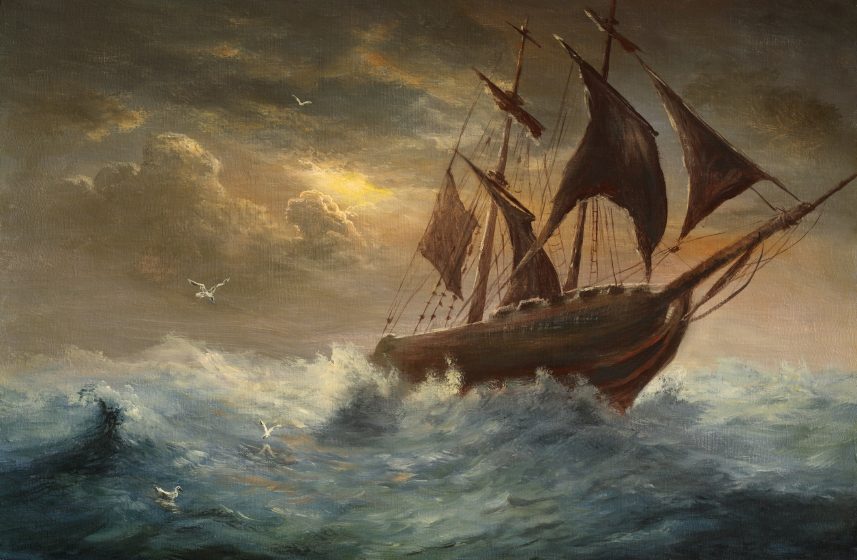
“Render to Caesar…” The truth, a foundational truth of our Christian civilization, is that without each of us rendering to God that which God asks us to render – honouring truth, serving justice and loving each other as children of a Father who is God himself – rendering to Caesar will be a meaningless sham. A world without God, as Nietzsche tragically foretold, will be a world of misery and barbarism. A political life in which political activists work as if God did not exist will be grim indeed. For as long as the earthly city lasts it needs to be inhabited by souls whose consciences tell them the difference between truth and falsehood, justice and injustice – and ultimately between good and evil. The secular world, devoid of the perceptions which the City of God brings to it, is like a rudderless ship on a treacherous sea.

This article incorporates material from earlier Garvan Hill posts and in this form has now been published in the print and online August/September edition of Dublin based magazine, Position Papers.

The heroic legacy of John Hume

Posted on MercatorNet this morning:

A mural created in Derry to honour John Hume along with fellow Nobel Peace Prize laureates Martin Luther King Jr., Nelson Mandela and Mother Teresa

It was a cold, cold night in the city of Derry on February 9, 1969. The world’s media had descended on the province of Ulster. There were no barricades, bombs or bullets yet, but after months of street protests, police harassment and auxiliary police brutality against civil rights demonstrators, Northern Ireland had something of the whiff of a powder-keg about it. Earlier that week, prime minister Terrence O’Neill had dissolved the Stormont parliament and declared a general election.

Everyone knew that this election had the promise of being the beginning of the end of an ancien regime but no one would have guessed that the end was going to take so long — or to be so pain-soaked and murderous. The election itself solved nothing but it did mark one truly significant event in the history of Ireland — the entry of John Hume into the political life of his country. From the moment on that cold Saturday night in the old City Hotel, under the shadow of the Guild Hall clock tower, when Hume decided he was going to contest the parliamentary seat for the city, he never left the political limelight. He was to remain center-stage throughout the long and bitter slow-burn civil war which Ulster was to experience for the next 30 years. 

It was a war, euphemistically called “The Troubles”, which for those 30 years was to unsettle the peace of those green and pleasant lands which make up that historic archipelago to the north west of Europe. When peace eventually came, Hume was among its architects — probably its chief architect — and for his heroism and his constancy in forging that peace, he was deservedly awarded a Nobel Prize. On that wintry night in 1969, peace and justice in his land was already his goal.

I sat with him in the bar of the hotel that evening as the local civil rights activists of the city congregated there to discuss and take the measure among themselves as to what should be done in the light of the political development which had just occurred. The sitting member of parliament for the constituency was the veteran Nationalist Party leader, Eddie McAteer. Nationalist ideology had not become irrelevant in Ireland but the issue of the Unionist government’s denial of basic civil rights to a large minority of people — distrusted because they were Catholics — was now the political problem to be resolved.

Read the full post here.

John Hume, the man who asked for mirac

Today, on MercatorNet, I write about an Irish hero, John Hume, beginning with my account of a personal encounter back in 1969.

It was a cold, cold night in the city of Derry on February 9, 1969. The world’s media had descended on the province of Ulster. There were no barricades, bombs or bullets yet, but after months of street protests, police harassment and auxiliary police brutality against civil rights demonstrators, Northern Ireland had something of the whiff of a powder-keg about it. Earlier that week, prime minister Terrence O’Neill had dissolved the Stormont parliament and declared a general election.

Everyone knew that this election had the promise of being the beginning of the end of an ancien regime but no one would have guessed that the end was going to take so long — or to be so pain-soaked and murderous. The election itself solved nothing but it did mark one truly significant event in the history of Ireland — the entry of John Hume into the political life of his country. From the moment on that cold Saturday night in the old City Hotel, under the shadow of the Guild Hall clock tower, when Hume decided he was going to contest the parliamentary seat for the city, he never left the political limelight. He was to remain center-stage throughout the long and bitter slow-burn civil war which Ulster was to experience for the next 30 years. 

It was a war, euphemistically called “The Troubles”, which for those 30 years was to unsettle the peace of those green and pleasant lands which make up that historic archipelago to the north west of Europe. When peace eventually came, Hume was among its architects — probably its chief architect — and for his heroism and his constancy in forging that peace, he was deservedly awarded a Nobel Prize. On that wintry night in 1969, peace and justice in his land was already his goal.

I sat with him in the bar of the hotel that evening as the local civil rights activists of the city congregated there to discuss and take the measure among themselves as to what should be done in the light of the political development which had just occurred. The sitting member of parliament for the constituency was the veteran Nationalist Party leader, Eddie McAteer. Nationalist ideology had not become irrelevant in Ireland but the issue of the Unionist government’s denial of basic civil rights to a large minority of people — distrusted because they were Catholics — was now the political problem to be resolved.

John Hume, whom I was interviewing for my paper, talked with me late into that night and was clearly anguishing over whether or not he should run for the seat. For him, however, it was not a question of whether he might win or lose — he was certain to win the seat if he ran. It was a question of loyalty to McAteer, a man who was a friend and who had faithfully served the people of Derry, for a quarter of a century. But it was also clear to Hume that the old politics of the province had to change and the historic preoccupations of the Nationalist Party were no longer fit for purpose. In the end he saw that he had no choice. He decided to contest the seat. On Monday, 10 February, he launched his campaign.

Read my full post here.

THE GREAT CHALLENGE OF OUR TIME

children

I recently watched a conversation between Richard Dawkins and the redoubtable Cardinal George Pell. As you might expect, given that dramatis personae, it revolved around the “God question”. It was not a recent encounter. It dated back about a decade or so, but already within it there were signals of what was to come in terms of the unjust persecution of George Pell which was to unfold over the years since then. It was hosted by the Australian Broadcasting Corporation. The abysmal dereliction of ABC’s media responsibilities in the saga of that prosecution could already be sensed in the uneven-handed role of their chosen moderator for this encounter. That, however, is a topic for another time. 

Just now what is of interest is the discussion itself between these two  and the the lights which it throws on our world, our faith and the enduring struggles of our race to see and understand what our lives and our existence mean. The protagonists in that little drama represented in a real way the two choices which mankind as a whole is faced with – that of choosing between the two paths on offer to us in our passage through this world – revealing the hopeless and tragic nature of one as opposed to the hopeful and joy-filled prospect opened up by the other.

The contrast between the two men was striking indeed. The easily agitated Dawkins, while not quite his usual arrogant self, but bordering on it, did not seem as comfortable in his skin as the calm and assured Pell. The latter was unruffled and quietly confident with his vision of the divine and the divinely balanced harmony of the natural and supernatural worlds. His vision was grounded in his grasp of that one thing which Dawkins found incomprehensible – that there might be, paraphrasing Hamlet, more things in heaven and earth than are dreamt of in his philosophy. Any man for whom Aristotelian metaphysics is little more than gobbledygook is a man lost at sea in the world occupied by a man like George Pell.

It can only be with sadness that we contemplate the limited vision of our fellow men and women of whom Dawkins is a type. He is the type of the “scandalised” man explained to us by Romano Guardini in his book, The Humanity of Christ, when he speaks to us of the tragedy of the “antithesis of faith”. He recalls the words of Christ when he responded to John the Baptist’s question addressed to him through his disciples, “Art thou he that is to come that is to come, or look we for another?” At the end of his answer to the Baptist, Christ adds, “And blessed is he that shall not be scandalised in me” (Mat. 11. 3, 6)

Christ, by his incarnation, was the like of which had never been seen before – he was, is, “the beginning” of something utterly new and as such made an astounding demand on those who would choose to follow him. It was a choice to be made in full freedom but a freedom which if exercised wrongly, deprived the denier of all access to the Truth itself. As Guardini put it,

The possibility that people would be scandalised by him was part of his nature, for the very reason that he is the beginning. He expected men to give up the certainties of this world and risk everything for his sake. If a man was able to accept these terms, then the new relationship of grace and of faith emerged and a new life began. But if the man shut up his heart and  refused, then he rebelled against the notion that Christ  was expecting this of him; and this constitutes being scandalised.

Faith or scandal: these are the only real attitudes caused in man by Christ. Faith sees him as the beginning and takes its stance there. It is prepared to think and live as from Christ, to submit to his judgement and appeal to his grace. Scandal affirms that he is the enemy of life, the world’s adversary, and declares on him a war the like of which is unknown. Perhaps the only clearly defined lesson of history is to the effect that this cleavage becomes more and more pronounced. More and more  obviously the world is becoming divided into those  who believe in Christ and those who find him a scandal. (The Humanity of Christ, pp 125-6).

This is the tragedy – and the challenge – of our time. It is not new. It is indeed both triumph and tragedy, just as the events on Golgotha two thousand years ago were, and still are, both triumph and tragedy. Similarly, the story of each man’s salvation or otherwise is triumph or tragedy, every day. And for each man and woman seeking salvation herein lies the challenge, a challenge which was playing out before our eyes as George Pell sought to dialogue with Richard Dawkins in that hostile television studio ten years ago.

It is also the challenge foreseen by Karl Adam when he wrote in his book “The Son of God”, many decades ago, of the immense danger facing European Christians of his time. Then, he said, – and the danger is even more acute in our time – “not only individual thinkers but thought itself has consciously turned from God and become atheistical; and this is even true of Christian thought in Europe. All our thoughts and opinions move in ruts which only have a meaning on purely naturalistic presuppositions, in as much as they  are deliberately and on principle limited to sensual experience.” G. K. Chesterton, he recalled, said, “The natural can be the most unnatural of all things to a man.” A vision of the world, the great apologist was arguing, which deliberately confines itself to natural occurrences is actually unnatural, for it takes the smallest section of reality to be the whole reality, and ignores or denies the ultimate roots of this reality, its profoundest relations, its connection with the invisible, the super-terrestrial, the divine. 

Adam described how our thought is now divorced from the totality of being, from the wealth of all the possibilities, since it has isolated itself from the creative thought of God. Modern man, in his view, in breaking away from faith, thought he could emancipate all human thought from the creative thought of God; he artificially mapped out a particular field of reality and called it Nature,  encouraging “the evil illusion” that the other reality, the supernatural, was  a more or less secondary reality – or worse, a delusion. The consequence was that nature was secularised by being released from its actual union with the supernatural, and the fiction was favoured that Nature was a thing per se capable of complete and independent explanation.

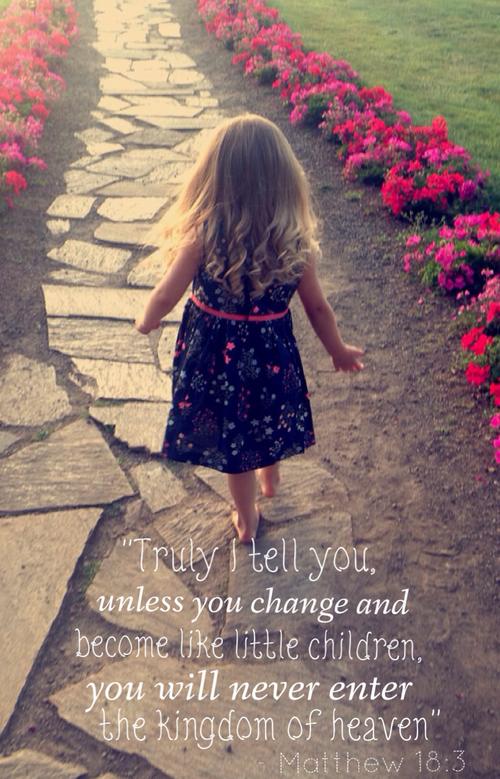
The way out of our impasse, he maintained was to again take seriously the truth that the possibilities of modern man do not exhaust God’s possibilities, and that our thought is conditioned and bounded in time and therefore in no sense comparable with the absolute thought of God. To do this wmust again become little before God and abandon our arrogant autonomy and autocracy, our narrow-minded rationalism and “sickly enlightenment”. He wrote that we must again return to ourselves, to our true nature, to the child in us. “Never in the whole history of the West was the word of Jesus so full of significance, so charged with fate as it is today, that word which he spoke to his own disciples: Unless  you … become as little children, you shall not enter into the kingdom of heaven.” (Matt. 18:3)

And this huge gap in the vision of modern man is at core of the heart-breaking tragedy unfolding itself in the lives of Richard Dawkins and all campaigning atheists and their fellow travellers. It is as a virus in the soul, more deadly than any in the physiological order, deadly for us as persons and deadly for our civilisation which has never looked more decadent than it does today. This scandalising and blinding virus calls for a response from all those with the vision of truth which Cardinal George Pell, by the grace of God, has. They also can do as he does: calmly, and with clarity and affection, try to bring them to a vision of the truth – but all the time realising also that in this endeavour, without the grace of God accompanying them, all the words in the world are as so much hot air. For those now living among the fragments of what we call Western Civilisation, this is the great challenge of our time.

The Christian future – resurgence or ruin?

img_0205

In the cover story of the Easter edition of The Spectator, Luke Coppen, lately editor of the Catholic Herald and currently London correspondent for the Catholic News Agency, contemplated the strange ghostly panorama of worship around the world just now. For Christians it was, he said, an Easter like no other. It was, in some ways. However, it did resemble another Easter – the very first Easter.  

Coppen went on to look at the two interpretations which are now being offered on the subject of the future of Christianity in the light of this strange social, economic and religious landscape which we currently find ourselves inhabiting. 

He found Christian thinkers split into two broad camps: those who believe the crisis will lead to a religious revival and those who think it will hasten the demise of organised religion. Ruination or resurgence, which one will it be? 

The first of those outcomes, ruination, is not an option for Christianity because ruination and the divine are incompatible. The unbelievers around the foot of the Cross on that first Easter weekend scoffed with words that sceptics have continued to parrot ad nauseam down through the centuries:  

And those who passed by heaped abuse on Him, shaking their heads and saying, “Aha! You who are going to destroy the temple and rebuild it in three days, come down from the cross and save Yourself!” In the same way, the chief priests and scribes mocked Him among themselves, saying, “He saved others, but He cannot save Himself!… 

But He did – and He saved us as well. 

The second option, resurgence, is a more credible outcome. But as a hope, particularly in the terms in which we think about it, it is tainted with superficiality. History is really not such a fickle thing to allow itself to be turned on events of the ultimately passing kind as is this temporary terror.  

If we are looking for a resurgence of the kind which were imagined to have occurred in the so-called Great Revivals of the past, resurgences filled with, and built on, a dreamy enthusiasm for the Kingdom of God on earth, we will be foolish – and disappointed. The work which has to be done and the power which will bring that resurgence about requires a deeper supernatural outlook and a more profound appreciation of the ways of God than are contained in this kind of philosophy. It will also require a better grasp of the long view of history and of where the false turnings of mankind have brought us. 

We might begin by reflecting on a penetrating analysis of the state of Christianity by the young Fr Joseph Ratzinger in a 1958 lecture. In that famous – long and indeed difficult – lecture, he gave us a map of what a deep and genuine resurgence of the Christian Church might look like.  

According to religious statistics at that time, he pointed out, old Europe was still a part of the earth that was almost completely Christian. But, he said, that statistic is false: “This so-called Christian Europe for almost four hundred years has become the birthplace of a new paganism, which is growing steadily in the heart of the Church, and threatens to undermine her from within.” That was 1958. We now know how the grip of that new paganism has tightened and indeed strangled whole swathes of the Christian West.   

His analysis was as stark as it was startling:

The outward shape of the modern Church is determined essentially by the fact that, in a totally new way, she has become the Church of pagans, and is constantly becoming even more so. She is no longer, as she once was, a Church composed of pagans who have become Christians, but a Church of pagans, who still call themselves Christians, but actually have become pagans. Paganism resides today in the Church herself, and precisely that is the characteristic of the Church of our day, and that of the new paganism, so that it is a matter of a paganism in the Church, and of a Church in whose heart paganism is living. 

  Summing up his description of how he saw things back in 1958, he said: 

One should speak rather about the much more characteristic phenomenon of our time, which determines the real attack against the Christian, from the paganism within the Church herself, from the “desolating sacrilege set up where it ought not to be” (Mk 13:14). 

In the lecture he took us through the historical process in which the Church’s mission grew and developed – the path to the era in which we now find ourselves, and from which, if there is to be a meaningful resurgence, we must emerge with a renewed co-redemptive response to God’s call to both increase and multiply and preach the Gospel to all men.  

When the Church had her beginning, he explained, it rested on the spiritual decision of the individual person to believe. There was an act of personal conversion. The Church was a community of believers, of men and women who had adopted a definite spiritual choice. Because of that, they distinguished themselves from all those who refused to make this choice. In the common possession of this decision, and based on the strength of the conviction with which it was held, the true and living community of the faithful was founded, and also its certainty. Furthermore, because of this, as the community of those in the state of grace, they knew that they were separated from those who closed themselves off from grace. Grace, and the sacraments through which grace was channelled to believers, was the sine qua non of this community. But it was a community which reached out, constantly, to evangelise those not sharing their treasures. 

But by the Middle Ages, as Fr Ratzinger described in his lecture, this dynamic changed. The Church and the world now became identical, and so to be a Christian fundamentally no longer meant that a person made his own decision about the faith. Being a Christian became, a political-cultural presupposition. Today, this outward identity of Church and world has remained. What has disappeared is the conviction that in this, that is, in the “unchosen” belonging to the Church, also that a certain divine favour, a heavenly redemption lies hidden. By which I think he meant, so called nominal Christians have neither an interest in nor any sense of grace. 

What he proposed back in 1958 is as pertinent today as it was then:

It must become clear that Sacraments without faith are meaningless, and the Church here will have to abandon gradually and with great care, a type of activity, which ultimately includes a form of self-deception, and deception of others. In this matter, the more the Church brings about a self-limitation, the distinction of what is really Christian and, if necessary, becomes a small flock, to this extent will she be able, in a realistic way, to reach the second level, that is, to see clearly that her duty is the proclamation of the Gospel.  

In short, resurgence will be a matter of depth before it becomes a matter of   expansion. He added to this the ideal that, naturally, among the faithful,

… gradually something like the brotherhood of communicants should once again be established who, because of their common participation in the Lord’s Table in their private life, feel and know that they are bound together. This is so that in times of need, they can count on each other, and they know they really are a family community. This family community, which the Protestants have, and which attracts many people to them, can and should be sought, more and more, among the true receivers of the Sacraments. The individual Christian will strive more earnestly for a brotherhood of Christians, and, at the same time, try to show his shared humanity, to unbelievers around him, in a truly human and deeply Christian way. 

In other words, it will become a resurgence of evangelisation, of mission, as well as of personal conviction and commitment of love. This, of course, echoes what Karl Adam wrote in The Son of God back in 1934 (Scepter Publishers, Princeton, N.J. 1992, p 14):

The third mark of Christianity is its sociological  form. Because the Man Jesus, the personified “ We ” of the redeemed, embraces in his Person the whole multitude of those needing redemption, Christianity is essentially a union of the members with their Head, a Holy Community, a Holy Body. There is no such thing as an isolated and solitary Christian, for there is no isolated and solitary Christ. This interior and invisible union of the members with the Head necessarily presses for an exterior unity equally close-knit. Hence Christianity in the world of time and space has existed always as an exterior unity, as a visible community, as a Church. Christianity has always demanded that its interior unity should be embodied and exhibited in an exterior unity. Christianity has ever been an ecclesiastical Christianity; it has never been anything else.  

 So, post-Corona will there be a resurgence? There will, but it will be so because resurgence is in the DNA of Christianity. Resurrection is something Christians profess and proclaim every time they attend Mass. But it will be a resurgence founded on more than the simple goodness and generosity, wonderful though that may be, of the thousands, hundreds of thousands indeed, now responding so heroically to the needs of their fellow-human beings in this Covid-crisis. 

The salvation of mankind is a divinely wrought-thing – with which everything that is human in us must cooperate. But without our recognition and acceptance of that divine intervention – and the sacramental signs it has gifted to us – Christianity has no meaning. Without this, our lives and our actions might for a time remain christian but they will not be Christian. 

The terms and conditions for a Christian resurgence are encompassed by the words and spirit of the collect prayer of the Mass of Divine Mercy Sunday: 

God of ever-living mercy, who, in the very recurrence of the paschal feast, kindle the faith of the people you have made your own, increase, we pray, the grace you have bestowed, that all may grasp and rightly understand in whose font they have been washed, by whose Spirit they have been reborn, through whose Blood they have been redeemed.

(This post was first published in the May edition of Position Papers)

THE THIRD HORSEMAN OF THE APOCALYPSE

It was an eerie sight. The lone figure of the Vicar of Christ on earth standing under a canopy in the rain-drenched esplanade of St Peter’s Basilica in Rome addressing the world, Urbi et orbi. A little short of one year earlier he imparted the same traditional blessing to something in the region of a hundred thousand pilgrims gathered in the same esplanade. What apocalyptic event had brought this about? We know the answer well enough – and few will argue that the ‘A’ word is overstating reality.

For some, perhaps for many, thinking and talking about death betrays a morbid obsession. For others it is a truly liberating preoccupation, for it is an engagement with a reality, a gate through which we enter on the Way to nothing less than Truth and Life itself.

The message of that evening was about hope; hope in the face of fear – for fear is what now is predominantly in the hearts of mankind, the fear of death. But the message of hope was centred on the answer to that question asked by Christ of those fearful disciples in the sinking boat who called out to be saved from what looked to them like certain death. Why are you afraid? Have you no faith?

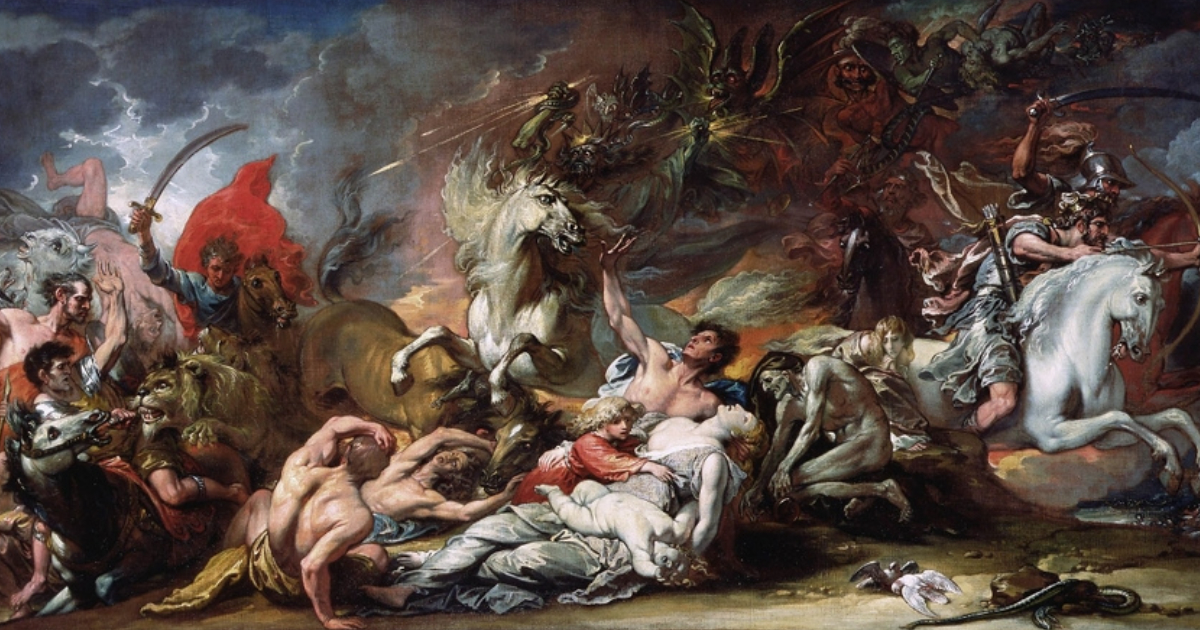
The Scriptural apocalyptic vision of death describes it as coming accompanied by and through the three-fold agency of Famine, War and Pestilence. In the lifetimes of those of us present on this planet today the former two have been, sadly, familiar enough. The latter, in the terms in which it threatens us today and now – the prospect that it would bear away, as some experts estimate, forty million of us were it to get out of control – is a new experience. But in all this there is also an invitation to each one of us to reflect on the true nature of that fourth horseman – is he friend or is he foe?

He is friend for he is the bringer of wisdom. Don’t be afraid of death. Accept it from now on, generously … when God wills it, where God wills it, as God wills it. Don’t doubt what I say: it will come in the moment, in the place and in the way that are best: sent by your Father-God. Welcome be our sister death! (The Way, 739) These are the words of St Josemaría Escrivá.

The wisdom which the Christian life embodies encompasses both a glorious rejoicing in the gift of life and a peaceful acceptance of the inevitable moment in which we will pass from this temporary sojourn to an eternal joy. What Pope Francis reminded us of emphatically was that faith is the antidote to fear. His words were also a reminder and an encouragement to fight together those three humanly engineered real enemies of mankind, War, Famine and Pestilence. We know that Death came into the world through the willful folly of our race. But we also know that the act and witness of Christ’s death on a Cross, followed by his Resurrection, has totally changed its meaning for mankind and is now in itself a reminder to us of the true meaning and ultimate end of our existence.

Napoleon Bonaparte, approaching death on the bleak South Atlantic Island of St Helena, reflected on his self-absorbed life and the turbulent events of his time. In doing so, with the help of his sister Death, he finally and peacefully saw the true measure of the significance of life, fame and human glory.

St John Henry Newman recalled – in The Grammar of Assent – that in the solitude of his imprisonment, and in the view of death, Napoleon was said to have reflected on the motivations of his years in pursuit of glory.

“I have been”, he said, “accustomed to put before me the examples of Alexander and Cæsar, with the hope of rivalling their exploits, and living in the minds of men for ever. Yet, after all, in what sense does Cæsar, in what sense does Alexander live? Who knows or cares anything about them? At best, nothing but their names is known; for who among the multitude of men, who hear or who utter their names, really knows anything about their lives or their deeds, or attaches to those names any definite idea?”

“But, on the contrary” he is reported to have continued, “there is just One Name in the whole world that lives; it is the Name of One who passed His years in obscurity, and who died a malefactor’s death. Eighteen hundred years have gone since that time, but still it has its hold upon the human mind. It has possessed the world, and it maintains possession.” 

“Amid the most varied nations, under the most diversified circumstances, in the most cultivated, in the rudest races and intellects, in all classes of society, the Owner of that great Name reigns. High and low, rich and poor acknowledge Him. Millions of souls are conversing with Him, are venturing on His word, are looking for His presence. Palaces, sumptuous, innumerable, are raised to His honour; His image, as in the hour of His deepest humiliation, is triumphantly displayed in the proud city, in the open country, in the corners of streets, on the tops of mountains. It sanctifies the ancestral hall, the closet, and the bedchamber; it is the subject for the exercise of the highest genius in the imitative arts. It is worn next the heart in life; it is held before the failing eyes in death.”

“Here, then, is One who is not a mere name, who is not a mere fiction, who is a reality. He is dead and gone, but still He lives, – lives as the living, energetic thought of successive generations, as the awful motive-power of a thousand great events. He has done without effort what others with life-long struggles have not done. Can He be less than Divine? Who is He but the Creator Himself; who is sovereign over His own works, towards whom our eyes and hearts turn instinctively, because He is our Father and our God?”

And it was to Him, two hundred years after Napoleon uttered those wise words, that Pope Francis once again drew the city of Rome and all the cities of the world to ask for help today as we face the rampaging Third Horseman of the Apocalypse, asking for help to deal with the multiple devastations he will bring in his wake. But the miraculous crucifix which was so central in the images relayed from St Peter’s on March 27 reminded us powerfully of the truth that death itself is not a fearful thing, but is the true beginning of all Wisdom and Life.

(First published in Position Papers, April 2020. http://www.positionpapers.ie)

Staring us in the face…

Going hand in hand to an uncertain future

Michel Barnier continues to huff and puff about what he clearly considers to be a reincarnation of Perfidious Albion while Europe itself, that is the entity that is the European Union rather than the real thing – from Ireland to the Urals – faces what many diagnose as an existential malady. And that’s not Covid19.

The editor of The Week, Theo Tait, in the current issue of the magazine, asks, ‘What is the “existential problem” facing the EU? The euro’s many crises? The bloc’s democratic deficit? Immigration in the Mediterranean? The coronavirus apocalypse? 

None of the above, he suggests, taking up the theme of the current EU President, Andrej Plenkovic, the PM of Croatia – which currently holds the EU presidency.

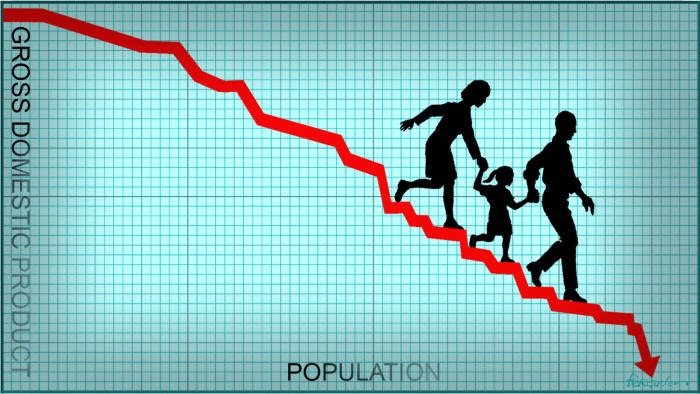
It is none of these,  Plenkovic maintains. it’s the depopulation of large parts of eastern and southern Europe, due to migration and low birth rates. 

The demographic reality is that since 1989, the population of the Baltic republics has declined by almost a third; Bulgaria lost 20% of its people, and is projected to lose 20% more in the coming 30 years. Romania’s population fell from 22.4 million in 2000 to 19.5 million in 2018. Between 2013, when Croatia joined the EU, and 2017, some 5% of its people moved to other member states. Since the financial crisis in 2008, Greece and Spain have also seen great waves of emigration to other parts of the EU.

It is a startling picture and there is no sign of a swing in any other direction just now. The UK, which suffers from the same malady has just revealed that it kills one in every four children who begin life in the wombs of their mothers. It is – apart from its immorality – demographic and economic madness rooted in myopic selfishness, blinding the carriers of the virus to the fate they will be facing in thirty of forty years from now.

In the shorter term the migration of populations is showing what will be happening decades from now in whole countries left with just elderly people living on diminishing incomes and in economic wildernesses.

As Tait points out, in relation to migration, in most cases, it’s the young and well-educated that leave. “This drives a pan-European version of the regional inequality that we see in the UK: profitable companies and younger, highly-skilled people cluster together in thriving cities, leaving older, less successful areas far behind. A recent Guardian study found a series of “youth deserts” across the continent: in eastern Germany and rural Spain, Romania and Greece. It’s demoralising for those who stay, and it changes the politics too: older areas skew to the right. The EU appointed a new commissioner for “democracy and demography”, Dubravka Šuica, last year. She has a great deal of work to do.”

She will be wasting her time unless the wholesale destruction of future populations is tackled. A culture and its supporting education system which glorifies selfish individualism will never provide anything other than a quicksand foundation for the work that has to be done.

Overblown?‬

‪Courtesy of The Spectator:‬

‪”Is climate change making it more windy? Average UK wind speed in knots:‬
‪Mean 2002-2011 8.9‬
‪2012 8.2‬
‪2013 8.6‬
‪2014 8.7‬
‪2015 9.4‬
‪2016 8.4‬
‪2017 8.7‬
‪2018 8.5‬
‪2019 8.2‬
‪Source: Dept for Business, Investment and Industrial Strategy”‬

Young, smart and really rather wonderful

From Neil McCormick of the Daily Telegraph

There is a boldness to Eilish’s persona that reflects the environment in which her talent has been nurtured. Although very pretty, she has avoided the sexualised way most young female pop stars are presented. Not for her acres of flesh and body-hugging clothes, or borderline pornographic videos. Her unique style tends towards flamboyantly baggy sportswear and vivid goth makeup, everything oversized, overloud and impishly androgynous. She has called fashion “a defence mechanism” that allows her to avoid “body shaming.” For a social media selfie generation where such body dysmorphia issues are a growing concern, Eilish’s refusal to play the glamour game has become defiantly inspirational. “Nobody can be, like, ‘she’s got a flat ass’, ‘she’s got a fat ass’,” she has remarked. “Nobody can say any of that, because they don’t know.”

In common with many teenagers, Eilish has grappled with depression and anxiety. These are the subjects and emotions her songs explore, rather than diverting towards romantic pop clichés. Yet her lyrics are not morose or self-indulgent but full of wit and empathy, with a strong streak of irreverent black humour. On album track All The Good Girls Go To Hell, Eilish takes the role of “God herself” pondering the fate of mankind. “Your cover-up is caving in/ Man is such a fool, why are we saving him?/ Poisoning themselves now/ Begging for our help, wow/ Hills burn in California / My time to ignore ya/ Don’t say I didn’t warn ya.” Her sassy brand of provocative pop is leagues ahead of her contemporaries. Young, smart and really rather wonderful, Billie Eilish is the pop star the world needs right now.

Read Neil McCormick’s full article here.

The eve of destruction?

Ross Douthat is giving us more to worry about in this weekend’ New York Times. He writes about a package of essays he has read which seem to confirm everything Eliot grumbled about in The Waste Land.

The package’s title is a single word, ‘Endgame’, and its opening text reads like the crawl for a disaster movie. ‘The academic study of literature is no longer on the verge of field collapse. It’s in the midst of it.’ Jobs are disappearing, subfields are evaporating, enrollment has tanked, and amid the wreckage the custodians of humanism are ‘befuddled and without purpose.’”

Simon During’s “essay is very shrewd, and anyone who has considered secularization in a religious context will recognize truths in the parallels it draws. But at the same time they will also recognize the genre to which it belongs: a statement of regretful unbelief that tries to preserve faith in a more attenuated form (maybe “our canon does not bear any absolute truth and beauty,” but we don’t want to live with an “empty heritage” or “disown and waste the pasts that have formed us”) and to make it useful to some other cause, like the wider left-wing struggle against neoliberalism.

“And if there’s any lesson that the decline of Christianity holds for the painful death of the English department, it’s that if you aspire to keep your faith alive even in a reduced, non-hegemonic form, you need more than attenuated belief and socially-useful applications.

“A thousand different forces are killing student interest in the humanities and cultural interest in high culture, and both preservation and recovery depend on more than just a belief in truth and beauty, a belief that “the best that has been thought and said” is not an empty phrase. But they depend at least on that belief, at least on the ideas that certain books and arts and forms are superior, transcendent, at least on the belief that students should learn to value these texts and forms before attempting their critical dissection.”

Read Douthat’s full column here.