She was a superstar

Sister Clare Theresa Crockett, 33, the young Irish nun who died with five others in the Ecuador earthquake as she tried to lead them to safety throws a light on an Ireland which we do not see very often. Her death reveals a heroism, as her life itself did. She was the last to be dug out of the rubble after a stairwell collapsed in the school where she taught in Playa Prieta in the western province of Manabi.

“She was a superstar. Everybody loved her,” her cousin Emmet Doyle said to The Daily Mail.

She was with six Ecuadorian postulants, in the early stages of joining the order, when the disaster struck.
“She was trying to get them down the stairs and the staircase collapsed.
“She died as she lived, helping others.”

Sr Clare, from the Brandywell area of Derry city, was a nun with the Servant Sisters of the Home of the Mother and taught 400 children in the Colegio Sagrada Familia school, including how to play the guitar.

Her vocation, what she did and how she lived  are portrayed in this brief video.

The five dead postulants were named by the Order as Jazmina, Mayra, Maria Augusta, Valeria and Catalina .
Two others were pulled from the rubble after their voices were heard.

Sr Clare joined the Order aged 18 and worked in Spain, the US and other parts of the world before going to Ecuador.
“Her death has shocked and saddened the entire community in Derry and further afield.”

The parish of her family, Long Tower in her native Derry, opened a book of condolence in memory of Sister Clare Crockett, on Friday night.
Father Brendan Collins C.C., quoted in The Derry Journal, said that parishioners from the Long Tower where Sister Clare lived and grew up, wanted to show their support and sympathy to the family.

Describing Sister Clare as an “inspirational young woman of the parish,” Father Brendan said the community would come together tonight at 7.30 p.m. for Mass, followed by the rosary.
“Sister Clare was well known locally and since her death people who knew her have been sharing memories and stories.
“Young people who hear of Sister Clare’s story, particularly in this modern world, can associate with her. She found real contentment in her life and she died as she lived, helping other people.”
The Derry priest encouraged as many people as possible to come to pray for Sister Clare, and her family and that her remains will be returned to her family as soon as possible.

Camille Paglia bursting the PC bubble – again

Camille Paglia has been talking sense for decades and she is still doing so – but it appears that no one has been listening. Here she talks about her desperation at the state of America’s youth culture – which will be tomorrow’s general culture.

At its root is an appalling ignorance about the world, Camille says:

“They have no sense of the great patterns of world history, the rise and fall of civilisations like Babylon and Rome that became very sexually tolerant, and then fell. If you’ve had no exposure to that, you can honestly believe that ‘There is progress all around us and we are moving to an ideal state of culture, where we all hold hands and everyone is accepted for what they are … and the environment will be pure…’ – a magical utopian view that we are marching to perfection. And the sign of this progress is toleration – of the educated class – for homosexuality, or for changing gender, or whatever.

“To me it’s a sign of the opposite, it’s symptomatic of a civilisation just before it falls: ‘we’ are very tolerant, not passionate, but there are bands of vandals and destroyers circling around the edge of our civilisation who will bring it down.”

And she thinks Hilary Clinton is “absolutely corrupt”.

See more, a great deal more, at Spiked.com or MercatorNet here.


Much ado about nothing?

Ireland – at least Ireland south of what used to be the border between ‘the North’ and the Republic – will have no say in ‘Brexit’ on June 23. The majority here would probably vote ‘remain’ if there was a choice. However, Christopher Booker’s colum in today’s Sunday Telegraph might give us a few reasons to think that the whole issue is all a bit anachronistic. The world has a habit of moving on and making us all look a bit foolish about the things we make a fuss over. This is what Booker had to say:

Scarcely a sentence in that creepy government leaflet telling us to vote to stay in the EU does not cry out for factual correction. But one is particularly disingenuous – concealing a colossal shift in how we are governed which is scarcely being noticed in this campaign. Among the ways it claims the EU is “improving our lives” is a reference to how, as from next year, “roaming charges will be abolished across the EU”. This will save users of mobile telephones “up to 38p a minute on calls”.
The EU was first asked to abolish roaming charges by a global body called the International Telephone Users Group (INTUG) way back in 1999. But it so dragged its feet that eventually INTUG approached another global body, the Organisation for Economic Co-operation and Development (OECD). The OECD then involved a third global body, the International Telecommunications Union, which used the rules of a fourth, the World Trade Organisation, to ensure that by 2013 roaming charges were being abolished right across the world with the EU right at the back of the queue.

What everyone has been missing, although it should be highly relevant to this referendum, is the astonishing scale on which the making of our laws has been passed up to a global level, to scores of mysterious organisations which then hand down rulings to be implemented by lesser regional bodies, such as the EU.

One after another, groups campaigning to “Remain” have been claiming as benefits of our membership of the EU things which have, in fact, been handed down by this fast-emerging network of global governance. There has been much talk, for instance, of how the EU is playing a key part in ending wholesale tax avoidance by multi-national corporations. But one reason why they have been getting away with this for so long is that the EU had enshrined in its treaty that right to the “free movement of capital” originally laid down by the OECD.

Only when this became an embarrassing international scandal was it taken up by the G20, which is now acting with the UN Conference on Trade and Development to change the rules. Thus the steps being made to address the problem are due entirely to our new system of “global government”, in which the EU is only a subordinate player.

Stronger in Europe, the group leading the “Remain” campaign, claims that, if we were to leave the EU, disabled people would somehow lose their rights. But these are enshrined in the 2010 Equality Act putting into UK law the UN Convention on the Rights of the Disabled which, as the EU’s own website makes clear, must be implemented by all member states.

The BBC was recently having fun with a lamentably inadequate history of all those long-controversial EU regulations laying down the required marketing standards for fruit and veg, such as cabbages, cucumbers and bananas. The point it wanted to make was that Brussels had finally recognised these rules as being “a little bit daft”, and so very sensibly repealed them. 

But what the BBC failed to tell us was that the reason they were all scrapped was that they have now been replaced by new standards handed down from another global body: the United Nations Economic Commission for Europe (UNECE) based not in Brussels but in Geneva.

In many ways UNECE plays a greater part in making our laws than Brussels, over everything from marketing standards to vehicle design. 

One reason why the EU is able to boast that it has been cutting back on its tens of thousands of directives and regulations is simply that it has been replacing them with new rules handed down from higher bodies such as UNECE, the International Standards Organisation, the International Maritime Organisation and scores of others, many also based in Geneva.

Two years ago, in the week David Cameron gave his Bloomberg speech announcing the referendum, I wrote about this under the heading “Forget Brussels: now we are ruled by the giants of Geneva”. But so parochial are the mantras being repeated ad nauseam by both sides of the campaign, that neither has noticed this revolution in the way the world is governed. The implications are immense. It is time we woke up to the fact that, in very significant respects, the EU has become an irrelevance.

Something special, something personal

wm_rockbrook20house20edmondstown2021-1-13
Then…

A very special reunion is going to take place in Rockbrook Park School on Saturday-week, 30 April. This year the school celebrates the 40th anniversary of its foundation. A very happy birthday, Rockbrook.

I will be there for the occasion. In 1994 I ended my 16-year association with Rockbrook. They were great and happy years. I look forward very much to the prospect of renewing contact with as many as possible of the former students and their parents whose lives intersected with mine over for a handful of those 16 happy years. They were certainly happy for me and hopefully fruitful for them – and as happy as schooldays can be for schoolboys.

Over the past few years, courtesy of social media, contact with many of those who rubbed shoulders with me from ’78 to ’94 has been touching and at times lively. Although social media can often be anything but social and might be better described as anti-social, this has never been my experience in these exchanges.

LBR (Life Before Rockbrook) for me, as some of you may know or remember, was centred in a late-lamented newspaper office on the banks of the Liffey at Burgh Quay in Dublin, the editorial offices of The Irish Press group. They were also great years and leaving Burgh Quay to take up work in a school was not without regrets. Moving from being poacher – the group’s education correspondent – to being gamekeeper was how the late Christina Murphy described it in her Irish Times article on the school. Leaving Rockbrook after 16 years was no easier.

But I’m a restless soul and an addiction to the clattering keyboard brought me back to where I started in a certain sense. Now the old media is dying – or dead, as in the case of The Irish Press. But the new media of the internet age, badly paid as it is, is perfectly adequate to feed my addiction. Over 500 posts – or fixes – to Garvan Hill and MercatorNet are evidence enough of that, not to mention Position Papers and other outlets for my hallucinations.

One of the consolations of the new media is its semi-permanence – at least until some cyber-war shatters the edifice to smithereens. In the old days there was something dispiriting about walking home in the early hours of Sunday morning, having put the final edition of The Sunday Press to bed, and finding yourself picking up the early edition from the pavement. There, trampled underfoot, was your by-line on the piece you had spent the earlier part of the week sweating over to enlighten or entertain your fellow countrymen. Rockbrook boys never treated you with ingratitude like that, I like to think.

Occasionally the old life of those years on that hill overlooking Dublin and my present life intersect again, most recently just a few weeks ago. Online I made some reference to Bach’s St. Matthew Passion and by coincidence a former student of Rockbrook contacted me to say he had just attended a live performance of the same. He spoke of the feelings of gratitude it stirred in him – which I took, I hope not too self-indulgently, to refer to my faltering efforts inculcate some love for great music in young hearts when we were together as teacher and pupil on that hill in South Dublin.

Enough meandering! To those who read this who are Rockbrookinans, I’m looking forward in hope to seeing you on the evening of 30 April.

schools-usp01
…and now

Complicated bedfellows – myth and reality

Irish President visiting Windsor Castle – it took 100 years (approx.)

There’s no better way, Rowan Light writes of W. B. Yeats’ famous poem, Easter 1916, to understand the history and people of Ireland, or rather of many “ Irelands”.
The poem tells us of Ireland’s 1916 revolt which led to the sundering of the United Kingdom of Great Britain and Ireland:

All changed, changed utterly  

A Terrible beauty is born.

The “ terrible beauty” of 1916 is its raw imaginative power, Light writes in a very perceptive and balanced essay on the subject of that revolt and the current commemoration of it in Ireland, just posted on MercatorNet.com. He describes it as “a tabula rasa which provides for the myriad interpretations as presented during the centenary.
”
This myriad incorporates: “the duality of republicanism and constitutional nationalism; the rebels of Easter 1916 and the soldiers of the Somme; victims of British colonialism and willing partners in the building of empire; the traditions of the north and south; and so forth. The Easter Rising was as much a conflict between these many Irelands – a foreshadowing of the civil war – than it was a rejection of British rule.”
He finds it very appropriate “that the centenary commemorations were inaugurated by a rendition of Danny Boy, symbolising both reconciliation – a song written by an Englishman beloved by nationalists and unionists, Catholics and Protestants alike – and the shattering of modern life; the haunting lyrics of tragedy and doomed love – ‘tis you must go and I must bide – speaking eloquently of a fragmented people, long riven by violence, diaspora, and history itself.”
He might also have noted some irony in the fact that the music which accompanies this lyric is an old traditional Irish melody – known to the Gaelic Irish as the Derry Air, but to the Unionist Irish as the Londonderry Air. The Londonderry/Derry divide is still a potent symbol of the 17th century colonisation of Northern Ireland, from which Ireland’s still-lingering discontents derive their origin.
This fragmentation, he writes perceptively, “is also symbolic of Ireland today: politically and morally fragmented. The country’s main political parties originate from the two sides of the civil war, and remain too bitter to negotiate a stable government in the national interest. Taoiseach Kenny, the leader of Fine Gael, a party of conservative, Mass-going Catholics, pursues an agenda of gay marriage and abortion liberalisation (One parliamentarian admitted that the rebel leaders “ would have probably been perplexed” by the marriage referendum). Notions of republican sovereignty strain under the increasingly tenuous economic and political union of Europe.”
Finally he asks:
“What then is the significance of the Easter Rising? Clearly, it’s complicated. The centenary tells us a lot about the crisis of modern life as much as the uncertain foundations of Irish nationhood. When people are less and less able to agree on common values, they look for salvation in founding fathers and their Proclamations, Declarations and Constitutions. Modern commemoration is an attempt to claim that space, created by the state but given its imaginative power by the people, for a new conversation, a retrieval, of what it means to be human; to be connected to community and the world around us. If the centenary of 1916 has taught us anything, it is this: what that world will be is up for debate.”
Recalling T. S. Elliot’s The Waste Land we might apply these lines from
The Fire Sermon:

Hardly aware of her departed lover;

Her brain allows one half-formed thought to pass:

‘Well now that’s done: and I’m glad it’s over.’

As Light says, evaluating the significance of Ireland’s revolt “is compicated”. For some there was so much ambivalence in this celebration of its centenary that it leaves them uneasy – wanting to commemorate something that had elements of the heroic but also something in which there was a serious moral ambiguity; something that for the majority represented their national myth but for a minority was a symbol of a threatened oppression. Hopefully we can now get back to real life again and recognise that, whether you liked it or did not like it, it happened and cannot be changed. The truth is that Ireland’s fortunes are still intricately tied to the future and the fortunes of the United Kingdom and the new threat to her well-being and prosperity – and the unity of the Island of Ireland – again hinges on what the British are going to decide on 23 June.
Read Light’s full analysis here.
Rowan Light is a post-graduate student in history at the University of Auckland, in New Zealand.

– See more at: http://www.mercatornet.com/articles/view/what-does-the-terrible-beauty-mean/17905#sthash.9trrDTOZ.dpuf

The not-so-little Sisters of the Poor

On Monday last, William McGurn, columnist with the Wall Street Journal, wrote a powerful oped piece about the battling Little – or not so little, it now seems – Sisters of the Poor whom he describes as “front and center” in the battle for freedom of conscience in America.

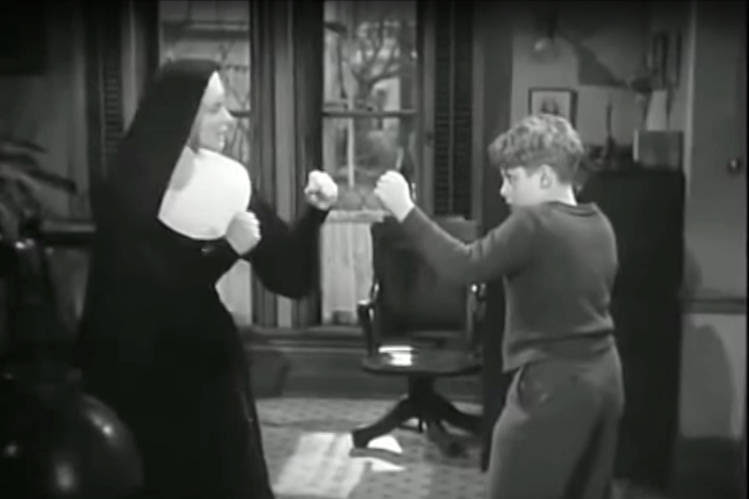
He recalls the Bing Crosby classic “The Bells of St. Mary’s,” where a nun teaches a bullied boy to fight back, even though she herself believes in turning the other cheek.

Today (April 9), when they will be at Notre Dame to accept an award from the Center for Ethics and Culture for their work upholding the worth and dignity of every human life, the Little Sisters have an opportunity to do the same. Two weeks ago, they were in the US Supreme Court battling the Obama administration’s contraceptive mandate. Front and centre? Dead on.

Perhaps while on campus, McGurn suggests, the Little Sisters could take a page from Hollywood—and put some fight back into the Fighting Irish. He wrote:

Sister Mary Benedict (Ingrid Bergman) gives a boxing lesson in ‘The Bells of St. Mary’s’ (1945).

The Little Sisters are front and center in the challenge to the Affordable Care Act mandate that requires them to change their health-care plan to offer employees contraceptives, sterilization procedures and abortion-inducing drugs—all contrary to Catholic teaching. The Little Sisters argue the administration is forcing them to choose between their faith and the loving care they provide men and women too old or too poor to care for themselves.

Notre Dame faces the same mandate. There, alas, the similarities end.

At the heart of the government’s case is a phony accommodation for objecting nonprofits. All it wants from the Little Sisters or Notre Dame, it says, is a signed “opt-out.”

In fact, the notice the Obama administration demands is not an opt-out (which the Little Sisters would happily sign) but the legal authorization to have their health plan commandeered. Remember, if the federal government wanted to distribute contraceptives on its own, there would be no Supreme Court fight.

The fight has been joined for two reasons. First, the Obama administration insists on having these contraceptives distributed through the Little Sisters’ own plan. Second, it has at the same time underestimated the pluck and mettle of these women.

For even with courts ruling against them and the threat of fines of $70 million a year, the Little Sisters consistently refused to bend.

And Notre Dame? Big ol’ shake-down-the-thunder Notre Dame, with its $10 billion endowment? Under pressure, the Irish signed.

It wasn’t the only mixed signal. In July 2013, when the White House announced its final rules for its fake accommodation, most objectors who had their earlier suits dismissed because they were not ripe simply refiled. But Notre Dame dithered, and didn’t refile until just three weeks before the mandate’s requirements were to take effect. When they lost on appeal they signed the form to avoid the fines while the litigation proceeded.

Is it any wonder that some observers, such as the trial judge who heard the case, say Notre Dame’s actions suggest it doesn’t really believe what it claims it believes?

Cue to the more recent announcement from Notre Dame that it will bestow on Joe Biden its Laetare Medal, the oldest award in American Catholicism. Not only does Vice President Biden have a long and loud public record in opposition to Catholic teaching on abortion and marriage, he is the second-highest official in an administration that Notre Dame has accused in court of forcing it to “violate its own conscience.”

Mr. Biden will receive the Laetare at commencement alongside former House Speaker John Boehner, a Republican. In choosing the duo, Notre Dame’s president, Father John Jenkins, says the school is striking a blow against the “toxic political environment.”

Presumably contributors to our toxic environment include the local bishop, who has spoken out against the award. For Notre Dame is doing the one thing the bishops have asked Catholic institutions not to do: give those who act in defiance of the church’s fundamental moral principles “awards, honors or platforms which would suggest support for their actions.”

How thoroughly Obamalike Notre Dame has been here, coupling an in-your-face award with the suggestion that anyone who has an argument to the contrary must be uncivil. On top of this, the university gets a prince of the church—Washington’s Cardinal Donald Wuerl—to come out for an honorary degree, providing an imprimatur that effectively big-foots the local bishop and, as the National Catholic Reporter gleefully notes, undermines the bishops’ own 2004 statement on Catholics in public life.

And the intellectual defense of the claim that Mr. Biden’s “genius,” as the Laetare news release puts it, has “illustrated the ideals of the Church”? That there is no connection between a politician and his policy record.

All in all, it’s a sad message Notre Dame sends: Principles are a fine thing—just don’t let them get in the way of a comfortable place in society.

The good news is, the Little Sisters do not punt. And if freedom does prevail over this mandate, it will be in good part because these women put it all on the line when others—far wealthier and better connected—took the road more timid.

Originally at: http://www.wsj.com/article_email/the-little-sisters-vs-notre-dame-1459811818-lMyQjAxMTI2MDA3NTYwNzU2Wj

A call to Ireland to take a stand against genocide

IMG_0534

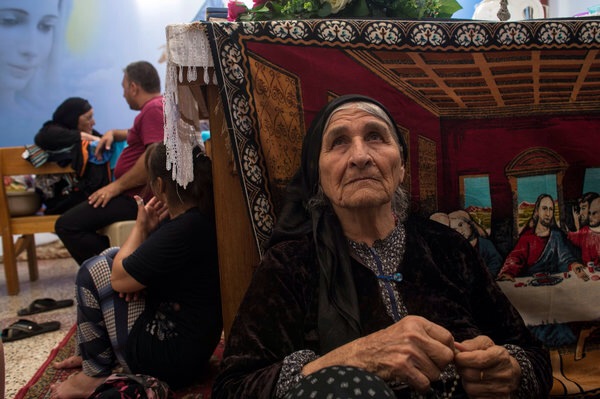
The Irish Government will be called on this evening to formally recognise as genocide the persecution of Christians and other religious minorities at the hands of ISIS. John Pontifex, Head of Press and Information at Aid to the Church in Need (ACN) UK, a leading campaigner on behalf of the rights of persecuted Christians, will make the call at a talk he is giving on the topic tonight in Dublin.

He has just returned from a fact-finding trip to Syria, visiting Christians and others in Homs, Damascus and rural districts plagued by violence, persecution and extreme poverty. In his work with ACN, he has visited Iraq as well as other parts of the Middle East, Pakistan, China, Sudan, Nigeria and elsewhere in Africa.

“On trips to Syria and Iraq” he said today, “I have seen with my own eyes the churches that have been repeatedly desecrated by Islamic State, I have met the people driven from their homes and I have also spoken to those who have been kidnapped, their lives threatened. The evidence makes plain the intent of the persecutors to flush out individual sections of society; that is why the Irish government should join with others in recognising the actions in question as genocide according to the definition given under the UN Convention on Genocide. Nor is this genocide only against Christians; it recognises Yazidis and Shiite Muslims as victims too.”

The US House of Representatives recently voted by 373 votes to nil to recognise as genocide what is happening to religious minorities at the hands of ISIS. The European Parliament voted in favour of a similar resolution late last year.

The talk in Dublin takes place tonight at 8pm and is entitled ‘Genocide: how Christians are being killed and driven out of the Middle East for their faith’. It is being jointly hosted by Aid to the Church in Need Ireland and The Iona Institute. It is will chaired by historian and political activist, Dr Martin Mansergh. It takes places in the Alexander hotel, Dublin 2. Admission is free.

Truly great thoughts…

  
Today’s Back Back Story, courtesy of The New York Times encourages us to get out and walk more.
“All truly great thoughts are conceived by walking.”

That quotation by the philosopher Friedrich Nietzsche was included in a Stanford University study in 2014 that showed how walking can fuel creative thought.

It’s no mystery that walking enhances health. But researchers have found that it also improves the flow of oxygen to the brain, helping with mental awareness and memory.

Today is National Walking Day, and many cities are participating. The annual event was introduced by the American Heart Association about 10 years ago because people, it says, spend too much time sitting in front of screens at work and home.

Regularly placing one foot in front of the other, ideally briskly, for at least 30 minutes a day can offset that inactivity and reduce the risk of obesity, heart disease and stroke. And more good news: Researchers have found that walkers are most likely burning more calories than they think.

There is a lot of advice out there about the types of shoes to buy, how to stretch and the pros and cons of activity trackers.

But no philosophizing is needed to figure out the first step: Get off your behind.

I’m now off for a brisk walk.

A raw deal for some?

5/4/2015. Easter Rising Commemorations

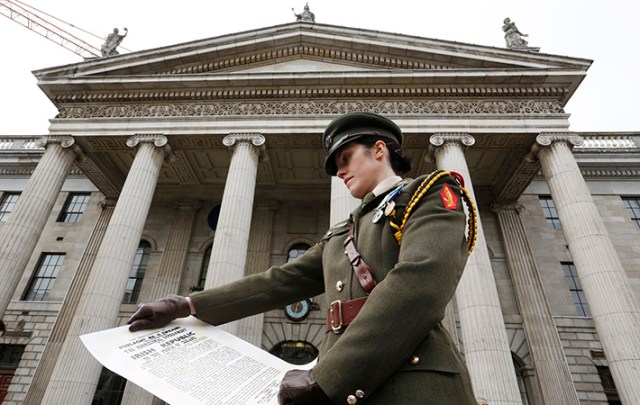
The symbolism and the irony were striking. This was the day which Irish people gathered in their thousands, probably over one hundred thousand of them, to commemorate the rebellion which Northern Irish unionists saw and resisted as the violent harbinger of Rome Rule on the island of Ireland.

Nevertheless, as Irish Catholics searched through their native broadcast channels for a transmission of the Easter message Rome’s ruler, Pope Francis, to the city and the world, Urbi et orbi, they failed to find one. The message was ignored by the Irish broadcast media this morning. Anyone who wanted to see and hear it had to go to the Internet service provided by that quintessential British medium, the Daily Telegraph.

If the aspirations of those men and women in 1916 was at heart Catholic – and for not a few of them it was an important part of the mix in their hot heads – it has surely now proved to be an abysmally fruitless one. The policy decisions of Ireland’s broadcast media certainly seem to underline the apostate stance now being vaunted by Ireland’s establishment. If the hearts and minds of the Irish people are not quite there yet we cannot say. But if they are not it is no fault of the country’s mainstream media and the sheepish political class which dances to their tune.

On Irish television this evening, at a prime viewing time for young and old, one of Ireland’s national television channels is broadcasting a film called The Queen of Ireland, a transvestite romp fronted by the sometimes-man-sometimes-woman, Rory O’Neil a.k.a. Panti Bliss. Another Irish television channel broadcast its post gay marriage referendum analysis/celebration programme from his/her gay bar in the centre of Dublin last year. This is the face of Ireland’s insurrection one hundred years on. It cannot be said for sure that everyone celebrating on the streets this weekend knows that this may be what is being celebrated. But it is certainly at the heart of the ambivalence of some about the whole elaborate event.

Up north in the six counties of Northern Ireland, faithful Protestant Christians look on and wonder how their forebears go it so wrong. Either way, they are probably thinking, we are better off not to be associated with that lot. They are thankful that they kept their allegiance to a jurisdiction which is tolerant and happy to provide as fair a service as it can to all its citizens – in broadcasting and in other fields . Meanwhile, Catholics in the res publica which comprises the rest of the island wonder, quietly, if they got a bit of a raw deal 100 years ago.

Given their experience this morning, as they searched through their native broadcast channels for the message of peace from the Vicar of Christ in Rome, maybe there weren’t many other conclusions they could come to?

The death penalty “does not do justice to the victims, but foments vengeance”

splash

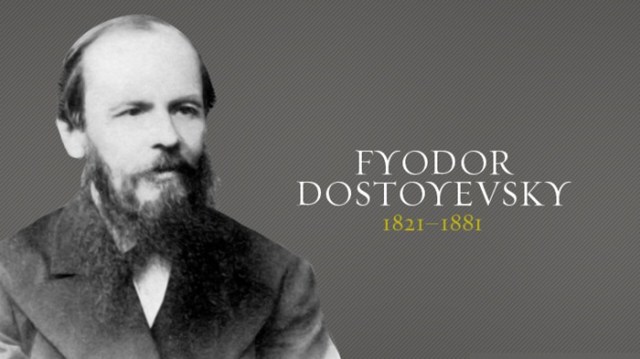
“Justice will never be reached by killing a human being”, Pope Francis, quoting Dostoevsky,  tells campaigners for the end of the death penalty.

In this letter to the President of the International Commission Against the Death Penalty, Federico Mayor, he outlines loudly and clearly the Christian case against the state’s taking on itself the right to end the life of human beings as a punishment or a way of doing justice to the victim of a crime. He writes in the letter:


The Magisterium of the Church, beginning with Sacred Scripture and the centuries-old experience of the People of God, defends life from conception until natural death, and supports full human dignity in as much as image of God (Cf. Genesis 1:26).

Human life is sacred because from its beginning, from the first instant of conception, it is fruit of the creative action of God (Cf. Catechism of the Catholic Church, n. 2258), and from that moment, man, the only creature God loves for itself, is the object of personal love on the part of God (Cf. Gaudium et spes, 24).

Life, especially human life, belongs to God alone. Not even the murderer loses his personal dignity and God himself makes himself its guarantor. As Saint Ambrose teaches, God did not want to punish Cain for the murder, as He wants the repentance of the sinner, not his death (Cf. Evangelium vitae, 9).

On some occasions it is necessary to repel proportionally an aggression underway to avoid an aggressor causing harm, and the necessity to neutralize him might entail his elimination: it is the case of legitimate defense (Cf. Evangelium vitae, 55). However, the assumptions of legitimate personal defense are not applicable to the social milieu, without risk of distortion. Because when the death penalty is applied, persons are killed not for present aggressions, but for harm caused in the past. Moreover, it is applied to persons whose capacity to harm is not present but has already been neutralized, and who find themselves deprived of their freedom.

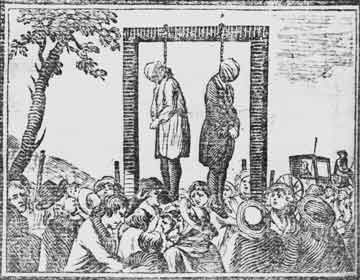
Today the death penalty is inadmissible, no matter how serious the crime of the condemned. It is an offense against the inviolability of life and the dignity of the human person that contradicts God’s plan for man and society and His merciful justice, and it impedes fulfilling the just end of the punishments. It does not do justice to the victims, but foments vengeance.

For a State of Law, the death penalty represents a failure, because it obliges it to kill in the name of justice. Dostoevsky wrote: “To kill one who killed is an incomparably greater punishment than the crime itself. Killing in virtue of a sentence is far worse than the killing committed by a criminal.” Justice will never be reached by killing a human being.

The death penalty loses all legitimacy given the defective selectivity of the criminal system and in face of the possibility of judicial error. Human justice is imperfect, and not to recognize its fallibility can turn it into a source of injustices.

With the application of capital punishment the condemned is denied the possibility of reparation or amendment of the harm caused; the possibility of Confession, by which man expresses his interior conversion; and contrition, gateway of repentance and of expiation, to comer to the encounter of the merciful and healing love of God.


As I expressed in my allocution of last October 23, “the death penalty implies the denial of love to enemies, preached in the Gospel. All Christians and all men of good will are obliged not only to fight for the abolition of the death penalty, legal or illegal, and in all its forms, but also for prison conditions to be better, in respect of the human dignity of the persons deprived of freedom.”

67444

The full text of the letter is here.