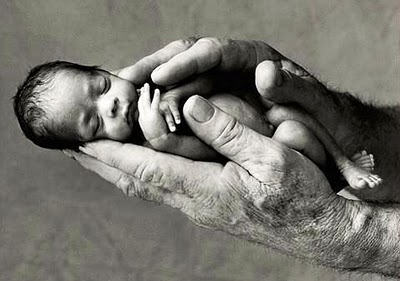
Is intransigence at the heart of Kenny’s faux democratic machine a sign of panic ?

This blog post from political scientist Derek Lynch suggests that there might be folly or panic – or perhaps both – behind Enda Kenny’s denial of freedom of conscience to his parliamentary party. Implicitly it also raises the question that if the street opposition to the sham democracy now being played out in the Irish parliament seemed to threaten him more than it does at present, would he go down the same road as Erdogran and Rousseff?

A decision to stamp on dissent when such a move was neither technically nor politically necessary is a dramatic statement indeed. It is an aggressive kick in the face to those of other opinions. The leadership line is that there has been lengthy debate: this is simply closing that process according to the rules. Technically, that may be true. But when such an aggressive shutdown is not really required, it takes on an entirely different character. It is like Premier Erdogan ordering the riot police to charge or President Rousseff saying “show no mercy.” Endless debate on such sensitive matters is not surprising. It is no harm either if the numbers are in the bag and the actual legislation is safe.

This assertive line suggests a Government or a Taoiseach that feels the need to be assertive. It is a sort of machismo effect. But what lies behind it? And what will be the lasting impact?

Enda Kenny shares the widespread frustration at the behavior of the Church in the child abuse scandals. He believes very firmly in the unity and longevity of this present coalition with Labour. He may also be advised, not so much by “pragmatic” conservatives as by social democrat Fine Gaelers schooled in the Garrett FitzGerald years. While Kenny built his support by persuading Fine Gael conservatives that he was moving in a different direction, he now finds his interests “pragmatically” aligned with FG social democrats and a militantly secularist Labour Party. The assumption is that his conservative base will stick around because they have nowhere else to go and value personal loyalties anyway.

Crisis

But all is not well with this assertive Enda Kenny. The surge of machismo reveals a panic at the heart of the machine. In fact, politicians in both major parties are experiencing the same phenomenon. They would like social policy to go away. For, it is very unlike economics. With economics, there is a whole constellation of variables always in flux: growth rates, exports, Asian markets, U.S. elections, Middle East wars, the price of onions, SARS … politicians cannot credibly promise to produce this or that result without qualification. But, with social policy, voters can ask – what do you believe? Do you believe that marriage is intrinsically a celebration of heterosexual love and commitment? Do you believe a foetus in the womb is a living human being? Of course, some will be able to say – it depends. But, listening to the debates, on all sides, it is clear that participants have direct answers to many of these questions. And these answers translate into policy choices that must ultimately be addressed by politicians. There is no external environment to reference.

It is this fact that has Irish politicians, especially in the center-right parties, in a state of absolute fear and pandemonium. They are challenged to show courage and personal honesty.

All pointing, might we dare to hope, to a new and meaningful alignment in Irish politics and a re-enfranchising of a sizeable swathe of the electorate who currently have no party to which the can in good conscience give their support?

Dreadful contradictions of the proposed Irish abortion law

This is from a very clear article in today’s Irish Independent. What hope is there that any of those we have empowered to make decisions about our lives and deaths will open their ears to reason, even just to listen and try to answer instead of spouting out meaningless spin?

Our Constitution upholds the right to life of the unborn as well as the born. This helps keep notions of death as a treatment for any condition out of our healthcare services. The other heads of this bill go to great lengths to reaffirm our commitment to the lives of pregnant women and the unborn. The approach taken to suicide during pregnancy contradicts these commitments and questions the legitimacy of the proposed approach.

International medical evidence shows that abortion is not a safe treatment for suicide. Those parts of the bill should be removed, and a commitment given to provide the most effective, evidence-based treatments for pregnant women with suicidal ideation. That would better serve the health and rights of pregnant women and their unborn children.

Read the full article by Dr. Donal O Mathuna  here.

The voice of experience, compassion and conscience

Ireland’s Rubicon moment

The stark choice, a choice in which each one faces a lifetime of guilt depending on the decision made, now confronts Ireland’s elected representatives. The voices of reason, experience and compassion are loud and clear. The Irish Government has refused to listen to them. It now remains to be seen if the joint houses of the Irish parliament will rubber stamp a proposed law which will put unborn babies and their mothers at the mercy of unscrupulous medical practitioners. The evidence from across the world shows that there is no shortage of these in every jurisdiction. Why would Irish politicians think that the situation would be any different there?

It’s is now all down to conscience and the letter from a good nun which appeared in yesterday’s Irish Times speaks clearly to the consciences of every Irish man and woman – but above all to each and every elected representative who will have to get up from his seat in the chamber next July and walk to the division lobby. On that day they will take Ireland across a Rubicon. What that journey will lead to is in their hands. Sr. Consilio Fitzgerald is very clear about what their choice involves. Would that they were all so clear. She writes,

Many of the distressed women who came to Cuan Mhuire over the past 50 years, came because they were suffering distress having undergone an abortion. Our mission at Cuan Mhuire is to help them understand their own goodness and their infinite value before God. They tell us of the difficulties they encountered at the time of their decisions. Despite all of our support and encouragement to help them rebuild their lives and relationships, many find it exceedingly difficult – almost impossible – to cope with their sense of loss.

It has long been accepted practice in Ireland that there are rare occasions where intervention may be necessary to save a mother’s life. This sometimes results in the unintended death of the child. This causes deep grief for the parents but mothers intuitively understand the reasons and may come to accept them.

The Government seeks to make abortion available in Ireland on the grounds of a “threat of suicide”. Medical and psychiatric evidence does not indicate abortion as an appropriate treatment for suicidal tendencies. In my experience abortion has never proved to be the appropriate response to the threat of a suicide. On the other hand we have helped many, many women who had abortions and had subsequently developed suicidal tendencies. Many of them did not really understand the consequences of an abortion and the devastation it causes. They needed love and care and non-judgmental support.

We – all of us – will have to live with our conscience if we allow, or acquiesce, in the enactment of this legislation. It is for this reason that all political representatives should be free to follow their individual conscience in deciding how to vote. Our medical, nursing and midwifery professions are central to the values, loving culture and quality of our society. They have long protected the right of an unborn child to live and fulfil God’s plan. Let us recall the words of Christ: “What does it prophet a man to gain the whole world and lose his soul”.

I am writing this letter – the first such letter I have ever written – in defence of the unborn child and the welfare of the mother. Also, I will know on my death bed that I have done all that I can to speak out on their behalf and on behalf of so many more were such legislation to be enacted in our name by our political representatives.

Options now for Ireland’s defenders of human life?

Senator Ronan Mullen

The defenders of children in the womb are still reeling in Ireland today after the majority of their political representatives have clearly abandoned them and are proceeding with legislation which will legalise the killing of the unborn in Ireland for the first time.

They are now looking at what options remain to them to defend those whom they see as the most defenceless, children awaiting birth – those whom the pro-abortion camp refuses to call human at all and insistently and disparagingly refer to as simply “ fetuses”.

The first option is the intensification of lobbying of the members of the Oireachtas (the two houses of the Irish parliament). But other options are also on the agenda. Earlier this year between 25 and 30 thousand pro-life people from all over the island gathered at the parliament building to demand that the majority party in the Coalition Government keep its election promise not to legislate for abortion. That party is now seen as having blatantly has broken that promise. No one doubts that it did so in order stay in power by keeping faith on the deal it made with its socialist partners in Government.

There will be more street demonstrations between now and the time this legislation comes before the two houses for debate. Unless there is a major shift in the balance of support for it within the parties the bill will become law in the summer.

What options exist after that? Well they can launch a major campaign for the repeal of the legislation leading up to the next general election. “Repeal” is a word with enormous historic significance in Irish history. For the decades stretching from the 1830s up to the final violent struggle for Irish independence from the United Kingdom beginning in 1916, repeal of the Act which held that union together was the centrepiece of all Irish politics. No Irish politician would want to be seen facing down a new Repeal Movement of the scale and with the emotional potential which this one would have.

For those for whom this is a matter of faith as well as a matter of moral social policy in purely human terms, people from all over Ireland are gathering for a Vigil for Life in Knock, Co Mayo tomorrow (Saturday, 4th May). It will be the first major demonstration on the issue since the Government’s approval on Tuesday. Knock is the Irish national shrine of the Blessed Virgin and ironically is situated on the home turf of the Taoiseach, Enda Kenny. Not many expect to see him there tomorrow, however.

The language of opposition to this proposed legislation is already gathering momentum and strength. Senator Ronan Mullen, independent of parties, said yesterday that It is clear already that the Taoiseach and his Government are proposing a dangerous and destructive thing – the legalization of abortion on the ground of threatened suicide. There is no credible evidence that abortion is any kind of treatment for suicidal ideation in women. We know the consequences for the unborn child. And we know what this kind of legislation has started elsewhere.

Legislating for abortion on the suicide ground, he explained, is not required by the European Court judgment. This was a Court ruling in 2010 which many see as fig-leaf being disingenuously used by the government to justify the pursuit of this legislation forced by the socialists on the major party as a condition for entering government with them. The European Court simply required that the Irish government would “clarify” the legal situation for women with regard to its abortion laws. We could, Senator Mullen said, provide the necessary clarity by introducing guidelines which would protect women in pregnancy by re-affirming that they receive all necessary life saving treatments in pregnancy and requiring that we also exercise a duty of care towards the unborn.

Ireland has one of the best records in the world when it comes to a question of maternal health.

He also clarified that legislation for abortion on the suicide ground is not required by the X-case. When he was Taoiseach, John Bruton said he would not introduce legislation in line with the X-case because that would have the effect of bringing abortion into Ireland. The Oireachtas has the prerogative of not legislating for a Supreme Court decision if it believes it would be harmful to do so. Mr. Bruton, who was leader of the same party as the current Taoiseach, spoke out last weekend in opposition to this proposed legislation.

Mullen went on to say that this legislation will not be about ‘life-saving’ treatment but, in fact, the opposite. The Government has produced no evidence to show that abortion is ever beneficial in the treatment of the mental health of women. We know from the latest review of the evidence (Fergusson et al.) that abortion is not associated with any mental health benefit for women. In fact, it is associated with a low to moderate increased risk for women’s mental health. And, of course, we know a child always dies. So it is dishonest to pretend that this proposal is about saving life.

That is why over 100 psychiatrists last week signaled their opposition to being involved in certifying women as needing abortion to save their lives because this is not evidence-based medicine. International experience shows that provision for abortion on the mental health ground will be abused. It is hard to see how things could be different in Ireland, given the nature of what is proposed today.

The big question for many is of course who will choose the medical team to assess whether or not an abortion is “warranted”. Everyone in Ireland knows that in Britain two doctors are needed to sign off for abortions and that in many cases this is done without any scrutiny. Last year the Daily Telegraph uncovered widespread and totally unscrupulous ethical behaviour by doctors.

The third path being mulled over by activists defending life is the constitutional one. Ironically just this week a judgement was handed down by the Irish Supreme Court which some think has a bearing on the proposed legislation.

In a case where a woman was seeking confirmation of constitutional right to commit suicide – and be assisted in doing that by her husband – the Supreme Court held that there is no constitutional right to commit suicide or to arrange for the determination of one’s life at a time of one’s choosing. This decision follows from the constitutional obligation to respect life and to refrain from taking away the life of another.

The Court rejected the ‘autonomy’ argument to the contrary, ruling that  “It is also possible to construct a libertarian argument that the State is not entitled to interfere with the decisions made by a person in respect of his or her own life up to and including a decision to terminate it. However, it is not possible to discern support for such a theory in the provisions of the Constitution, without imposing upon it a philosophy and values not detectable from it.”

Pro life legal experts are now suggesting that if the mother of an unborn child does not have a constitutional right to willfully end her own life, a fortiori she can have no constitutional right to take away the life of her unborn child, or to obtain assistance in that regard.

There are some who think that contradictions are inherent here between two Supreme Court rulings and that in this they may find an Achilles’ heel in the proposed legislation to render it null and void should it get into the statute books.

One way or another Ireland is heading into protracted political and constitutional warfare which may wreak havoc on more than a few political careers and reputations. This has even the potential to radically shake up the tired old political landscape, possibly leaving Ireland with a party structure reflecting the real divisions of opinion in the country. “They are all the same” is the helpless cry of many Irish electors going to the polls in recent years – followed by “one is worse than the other but I can’t trust any of them”. Apart from the tragedy of the unborn which this current debacle represents, there is for many the further erosion of all trust in the political class.

On the personal level Enda Kenny is already smarting under his newly earned title as “the abortion Taoiseach”. The long culture war ahead for the life of the unborn in Ireland will only serve to harden it for posterity. For a large segment of Irish people Kenny is now joining Quisling, Petain and some others in history’s Hall of Infamy.

An immodest, “dangerous” and deeply “dishonest” proposal

Ireland’s Pro Life civil rights politics back on the streets?

Following the Irish Government’s publication last night of the Heads of the Bill – preliminary draft for legislation – on abortion, the country’s Pro Life Campaign has dismissed the Prime Minister Enda Kenny’s reassurances that the law will be restrictive.

The Bill provides for abortion on the ground of threatened suicide with three doctors certifying the abortion.

Cora Sherlock, Deputy Chairperson of the Ireland’s Pro Life Campaign reminded the Campaign’s followers this morning that it was a very sad day  for her country. “For the first time an Irish Government has launched a proposal to introduce abortion.”

But, rallying the Campaign’s troops, she reminded them that the law had not yet been passed. “They haven’t succeeded yet. And so our job remains the same. Together we must redouble our efforts, never lose heart and continue our engagement with politicians, the media and the wider public. We will be dignified, respectful but insistent at all times.

“On days like this, we remember the nobility of the pro-life cause. There will be irritants, provocations and frustrations. But the more dignified and persistent we are in these days, the more our cause will benefit into the future.

“Don’t be disheartened. Each of us has a part to play. Today is the first day of a new and sustained fight on behalf of the unborn and their mothers.”

Commenting on the release of the Heads of the Bill, Caroline Simons of the Pro Life Campaign said:

“The Taoiseach and Minister Reilly have been talking up the proposal as very restrictive. But, in reality, these reassuring noises are empty and misleading. What matters is what’s contained in the Bill and what’s in the Bill is dangerous. For the first time an Irish government is proposing to introduce a law that provides for the direct intentional targeting of the life of the unborn child.

“Talk of the legislation being ‘life-saving’ is simply dishonest. There is no evidence that abortion ever helps women’s mental health and in fact it may damage women. It’s astounding that the Fine Gael leadership has caved in to Labour, allowing ideology to win out over evidence.

“The two-panel six-doctor proposal for signing off on abortions is utter nonsense. All it takes is three pro-choice doctors to sign off on every request and all restrictiveness is gone. It is an insult to women and their unborn babies to pretend that it could operate in an evidence-based manner.

“The Government has claimed all along that there is no option but to legislate. This is untrue. If the Government were really concerned about protecting women’s lives and respecting the unborn, we would have appropriate guidelines drawn up to assist doctors in various cases. The law already protects good medicine and life-saving treatments.

“If the Government continues to press ahead with the proposed legislation, we cannot continue to airbrush the reality of what abortion entails in countries where it is legal. There has been a huge spotlight on Ireland’s abortion laws but the public deserves to know what’s going on in other countries before any final decision is taken on the matter.”

It is “a debate about the humanity of the unborn child”

20130430-095319.jpg
If only Eamon Gilmore, Enda Kenny and company would acknowledge some of these facts and their relevance to the treachrous path they are trying to lead Ireland along.

The New York Times reports on the Gosnell trial summing up:

PHILADELPHIA — They are known as Baby Boy A, Baby C, Baby D and Baby E, all of whom prosecutors call murdered children and the defense calls aborted fetuses — the very difference in language encapsulating why anti-abortion advocates are so passionate about drawing attention to the trial of Dr. Kermit Gosnell, which wrapped up here on Monday with summations by both sides.
To anti-abortion leaders, the accounts have the power to break through decades of hardened positions in the abortion wars, not just because of the graphic details but because they raise the philosophical issue of why an abortion procedure performed in utero is legal, but a similar act a few minutes later, outside the womb, is considered homicide.
The distinction “is maybe a 15-minute or half-hour time frame and 10 inches of physical space,” said Michael Geer, the president of the Pennsylvania Family Institute, an anti-abortion group. “I think it’s going to resurrect a debate about the humanity of the unborn child.”

The most lethal euphemism of all?

Is this the most lethal euphemism of all? We have had ethnic “cleansing”, a clinical-sounding term for numerous and variously bloody instances of forced migration. We have had “cultural revolution” for mindless communist barbarities. We have even the benign-sounding term “re-education” veiling the gulags of soviet Russia. There was, of course – until now – the daddy of them all: the “final solution” covering the Nazi attempt to exterminate the Jewish people.

But how about “planned parenthood”? We are fast reaching a stage where that very term, suggesting an acute sense of responsibility and connected with the most elemental and sublime of all human experiences, must send a shiver through us. But despite the horrendous evidence from the Gosnell trial in Philadephia, illustrating just the tip of the iceberg of human depravity which the abortion industry represents, and industry which is itself the very flagship of Planned Parenthood, we have the leader of the “free” world championing this “cause”.

This industrial health-service complex – which has nothing to do with health and less to do with service –  has accounted for the deaths of millions and millions of human beings, children and women, across the world in the past 50 years. You can take any approach to statistics you like and the figures will still come out showing that this is the single greatest human disaster that the world has ever seen. Don’t get distracted by the statistics but just for the record, one source cites

approximately 42 million abortions occurring every year worldwide. The same source calculates that abortion killed 73 times more Americans than died in battle in their last 12 wars combined.

There seems to be little doubt that the local Planned Parenthood group had been aware of complaints about what Dr. Gosnell was up to but did not intervene. The Philadelphia Daily News quoted the local group’s leader as saying that women had complained to the group about conditions at Dr. Gosnell’s clinic, and that the group would encourage them to report their complaints to the health department. That’s responsibility?

In the context of Obama’s shameless support for Planned Parenthood, show most recently by his going out of his way to celebrate with them last week, Marjorie Dannenfelser, the president of the Susan B. Anthony List, an antiabortion group said: “President Obama blatantly ignored this inconvenient truth about the abortion industry’s horrific lack of oversight and disparaged the pro-life advocates who wake up each morning with the goal of saving the lives of unborn children and women from the pain of abortion,” said.

Mr. Obama at the dinner last week ignored the Gosnell case but condemned lawmakers who have targeted Planned Parenthood. “When politicians try to turn Planned Parenthood into a punching bag, they’re not just talking about you, they’re talking about the millions of women who you serve,” he told the group’s gathering, at a Washington hotel. “And when they talk about cutting off your funding, let’s be clear they’re talking about telling many of those women you’re on your own.”

He pledged his loyalty to the group. “You’ve also got a president,” he said, “who’s going to be right here with you fighting every step of the way.” Now they are chilling words.

Matt Barber in his TownHall.com column pulls no punches when he confronts these horrors.

 I mean, why are we surprised that an abortionist and his staff would, behind the walls of an always-lethal abortion clinic, commit one of the most horrific serial killings in American history? What did you think abortionists do, heal people?

 Why are we taken aback that there was no oversight, no regulation, or that Planned Parenthood, though privy to the clinic’s filthy, medieval conditions, refused to report it to the Department of Health? After all, Planned Parenthood, Barack Obama and the DNC have vehemently opposed all laws – such as those in Virginia, Mississippi and elsewhere – designed to prevent exactly the same kind of squalid conditions found in Gosnell’s clinic (and others), laws that simply direct abortion mills to meet the same minimal safety standards required of all other medical facilities.

 You didn’t really buy that whole “women’s health” nonsense, did you?

 We live in bewildering times. The President of the United States won his second term by a slender enough margin of the popular vote. But he is not just the President of the United States. He is the most powerful man in the world and for the old West he is effectively the unelected primus inter not-so-pares. As we were reminded during his last election campaign, had the peoples of Europe had a vote in  that election he would have won by a landslide.  Frightening.

Adding once more to the follies of four thousand years

“What are they thinking”, we sometimes cry out in near despair as we look on at the folly of governments and their agents, here and around the world, dismantling and destroying before our eyes the very substance of our social and economic fabric.

The economic fabric is, in most if not all western societies, the patient currently in intensive care. The medical teams are furiously arguing with each other about the treatments being applied to bring the wounded subject back to some level of well-being. The austerity faction has the upper hand but no one is really sure – with the exception of the opposing team – what history’s verdict is going to be on that. We are hoping for the best.

What there is no doubt about in anyone’s mind is what the judgement of history will be on why we got here. Everyone now knows that the folly of greed brought the house down about our ears.

But while we worry and fret over this patient, a deeper and more sinister folly remains rampant and untrammelled in the corridors of the powerful and is tearing apart something which will be much more difficult to restore to health. Every day – and for some decades now – the people entrusted with the care of the common good are putting new measures in place which are one by one destroying the very core elements which sustain our human and social well-being.

Booms and busts have been and will always be, we are told, part of the economic cycle. They come and go and as we muddle through them we learn a little each time – and then promptly seem to forget it again, falling back to some earlier position as in a game of snakes and ladders. But generally our muddling along seems to work out on average like three steps forward and two steps backwards.

With our social fabric the story is frighteningly different. For some reason, probably because the process of collapse is more silent and slow-moving, we are being lead onwards blindly into what a a growing clamour of voices is warning us will be a morass of social dysfunction and disintegration.

How is this happening? Part of the answer may be found in a wise and sobering book by one of the great popular historians of the Twentieth century, Barbara Tuchman. In The March of Folly, she dissects the “wooden-headedness” of the world’s leaders – of every political persuasion, from tyrannical despots to dedicated democrats – in their pursuit of public policy. This is a book which makes sober but certainly not consoling reading and explains something of the riddle we are forced to contemplate in our own day and age.

 A phenomenon noticeable throughout history, she writes, regardless of place or period is the pursuit by governments of policies contrary to their own interests. Mankind, it seems, makes a poorer performance of government than of almost any human activity. In this sphere, wisdom, which may be defined as the exercise of judgment acting on experience, common sense and available information, is less operative and more frustrated than it should be. Why do holders of high office so often act contrary to the way reason points and enlightened self-interest suggest? Why does intelligent mental process seem so often not to function?

 Tuchman wrote her book in the early nineteen eighties so she did not have a chance to witness or comment on the economic follies of the late twentieth and early twenty-first centuries. She did not need to. Her case is watertight without them. From the lesson on man’s folly shown to us in the mythological tale of the wooden horse of Troy, through the follies of Rehoboam, the son of Solomon, down through to the follies of any number of empire builders who ended up destroying their own work, to any number in our own day, the embarrassment of the powerful should be assured.

The mystery she puts before us is why can mankind, elsewhere than in government – and in government she includes all agencies engaged in the shaping of public affairs, like trade unions, representative organisations, and others – accomplish such marvels: inventions to harness wind and electricity, raising earth-bound stones into soaring cathedrals, construct the instruments of music, and so much more, and yet make such a mess of government. She quotes John Adams, the second President of the United States who had just witnessed one of the greatest follies of the 18th century – Britain’s blundering loss of her extension into the North American continent. Adams wrote in a letter to Thomas Jefferson, “While all other sciences have advanced, government is at a stand; little better practiced now than three or four thousand years ago.”

Indeed, if we look at the United States today and compare it with the achievement of its founding fathers, we would have to question whether its governance is a “little better” or a good deal worse than in John Adams’ day.

No country or state has a monopoly of the commodity we call folly when it comes to public policy. The Chinese state is forging ahead to economic world-dominance while at the same time it is cutting its own throat with a one-child policy which will cripple it in the not too distant future as pampered spoiled brats grow into selfish adult males who will wreak havoc on a limited female population brought about by the whole-scale culling through sex-selective abortion. India, another state promising itself great achievements in the economic sphere, is silently destroying itself with its unlimited sex-selective abortion on demand.

Meanwhile in Europe the old countries which began their domination of the planet a millennium ago are slowly dying under the weight of their self-indulgence, aided and abetted by governments at every turn. Rampant divorce rates are wrecking families. Marriage is being destroyed in the rush to facilitate homosexual self-indulgence in the name of a concept of equality rooted in an utterly flawed anthropology.  Marriage has been further weakened by fiscal arrangements which facilitate cohabitation without commitment. The unintended consequence of this: rampant child abuse – where mothers seek to nurture multiple children begotten serially by nameless fathers.

All of this is fostered in one way or another by governments.

Tuchman qualifies her concept of folly in a way which makes it more than just idiocy but makes it culpable. Idiots can be excused. Culpable fools should not be excused.

To qualify as folly the policy adopted by a government or a representative agency must meet three criteria, she says. Firstly, it must have been perceived as counter-productive in its own time, not merely by hindsight. Judging a past era by the standards is a rampant modern practice which generates its own kind of folly. The injury which is perpetrated by the folly must be something recognised and predicted and warned against by contemporaries. Secondly a feasible alternative course of action must have been available.  Thirdly, to remove the problem from reasons of personality, a third criterion must be that the policy in question should be that of a group, not an individual ruler, and should persist beyond any one political lifetime.

The follies we fret over and predict above, as the harbingers of social disaster, fulfil all these criteria.

President Obama and his administration are constantly being warned of the legacies they are bequeathing to their society as a consequence of the destruction of the institution of marriage in which they are currently engaged. The same is true of the Dutch, the French, the British and now the Irish. David Cameron – with his government – is proceeding relentlessly with his redefinition of marriage in spite of a petition from well over half a million of his citizens to stop his folly – not to mention the wise and solemn warnings from the leaders of all the main religious denominations.

In relation to another folly, the world’s legislators were well warned by the teachers of the Catholic Church about the consequences, moral and social, which would follow the generation of a contraceptive mentality by the whole-scale ignoring of its teaching on human life and human sexuality in Humanae Vitae and the provision of contraception services to all and sundry. There are plenty of warnings on record to both the Chinese and the Indians about the folly of the abortion and semi-eugenicist practices which their policies are generating.

The governments of the world’s oldest states, and some relatively new ones, are verifying once again the truth placed before us by Barbara Tuchman and John Adams. Tuchman concludes:

 If John Adams was right, and government is “little better practiced now than three or four thousand years ago,” we cannot reasonably expect much improvement. We can only muddle on as we have done in those same three or four thousand years, through patches of brilliance and decline, great endeavour and shadow.

 That is a worrying thought, for the stakes involved in our current follies seem much more serious than any since the follies she listed which lead to the tragic religious rupture of Europe in the sixteenth century. The injuries which mankind will sustain from our current follies will require much more than some geo-political adjustment or economic tweaking to put them right. The consequences may require much more than a bit of muddling on.

Is this how Kenny’s reinvention of himself came about?

Lest Enda Kenny get carried away by the shameless self-promotion and the consequent adulation he received on his recent bout of surfing the St.Patrick’s Day waves of Irish American euphoria, one of that country’s conservative magazines, the Weekly Standard, has given us something of a counter balance.

Author and senior editor of the Standard, Christopher Caldwell, in an in-depth and long article entitled “Irish Stew”, examines – among other strange metamorphoses in modern Ireland – the transformation of Kenny. He explores and suggests why the Irish Taoiseach moved in a matter of weeks from being a conservative rural Catholic into “an outright anticlerical politician”  and a comfortable fellow-traveller with the ultra-liberal socialist party to which he has hitched his own mildly right of centre Fine Gael party.

Of Kenny’s now notorious and still, for many, baffling attack on the Holy See and the petulant penny-pinching rupture of the historic diplomatic links between the Irish State and the Papacy, he says it was much more suggestive of Cromwellian England than of twentieth-century Ireland.

The main substance of Caldwell’s article is concerned with the impending debate on abortion legislation in Ireland. That issue, however, he sees as intrinsically linked with the political ramifications of post-boom Ireland.

 The present Irish government, he says, shares a peculiarity with many Western governments (including the American one): Like them, it came to power primarily because it was not in power when the bottom fell out of the world economy in 2008. All these governments claimed a mandate to act with unprecedented force to set their countries’ finances to rights. But the complexity of the crisis stymied them, and they failed to come up with anything in the way of economic innovation. They did notice, though, that the Bubble Era ruling parties had been reduced to a smoldering political wreck, wholly unable to act as an effective opposition. So with a combination of zeal and self-delusion, these new governments clung to their mandate to act forcefully, diverting it from the purpose for which it had been granted—the economy—and towards a variety of long-cherished partisan (or interest-group) projects. Barack Obama passed health reform in the United States.

He sees David Cameron’s  gay marriage manoeuvres in England fitting into the same pattern.

 This, he thinks, is how Kenny’s reinvention of himself came about and led to Kenny tacking in line with his Labour coalition partners on the abortion issue rather than with his own mildly anti-abortion party. The European Court of Human Rights offered him a way to do this with the decision it issued in December 2010 asking Ireland to “clarify” the circumstances in which women could have an abortion under the X case.

 Kenny, he thinks, may have calculated that those he describes as the “scoundrels of Fianna Fáil” were now so discredited by their “wallet-stuffing greed” and their financial incompetence that he would face no viable opposition anytime soon. If so, Caldwell says, he was mistaken. In the months since Kenny embarked on the path for abortion legislation, he notes, Fine Gael’s support in the general public dropped like a rock, from 34 percent to about 25. Left for dead as recently as last fall, Fianna Fáil found itself restored this spring to its position as the country’s most popular party. Twenty-five thousand people demonstrated against Fine Gael in front of the legislature—not as impressive as the crowds that came to protest the Iraq war in 2003 or austerity in 2009, but far more impressive than anything the opposing side could muster.

Caldwell now thinks the expectation that Ireland, after a brief political to-do, will settle into a European-style consensus about abortion is probably wrong. Ireland, he suggests, is more likely to resemble the United States where the abortion issue, recklessly addressed at the outset, has done decades’ worth of damage to the political system.

He interviewed Clare Daly for his article, describing her as “an ebullient, forthright, charismatic North Dublin radical who advanced a groundbreaking abortion bill last year. A veteran of Labour and the country’s small Socialist faction, she has yet to find a party she cannot get herself kicked out of for being too left-wing.”

Daly was very honest with him, in a way that suggests that those introducing the crucial abortion legislation are less than honest. She accepts, recognises, that the change that Fine Gael is trying to pass off as a mere tweak is nothing of the sort. “Symbolically it changes everything,” she told him. “And once you’ve legislated one circumstance, well, then, you’re immediately dealing with fatal fetal abnormalities, rape, incest, blah-blah. That’s why they’re all kicking so much. That’s why they’re going mad. That’s why they have the campaign that they have.”

She means the pro-lifers. I say, rather hesitantly, “So the Rónán Mullens of the world—”

“They know!” Daly interrupts. “They’re right!”

Taking Sinn Fein to task on abortion

Donegal South-West’s Sinn Fein TD – where does he stand on the question of the life of children before birth?

Arthur L. Gallagher posted an interesting piece yesterday. In the light of this one wonders how, west of the “border” in predominantly pro-life Donegal, the good people there have returned two Sinn Fein members to the Irish Republic’s parliament in Dublin? They will soon be asked to vote on legislation which, all signals seem to indicate, will put legal abortion on the Republic’s statute books.

Gallagher reported:
29 women from across Northern Ireland have staged a dramatic protest on the steps of the Northern Ireland Assembly today (Monday 11 March 2013) calling on Sinn Fein to protect unborn babies from abortion. The 29 women handed in a letter to Sinn Fein. A spokeswomen for the group said, “We represent women from all the six counties of Northern Ireland. We are here to tell Sinn Fein’s 29 Assembly members that we want unborn babies and their mothers protected. We don’t want the Marie Stope’s private abortion centre in Northern Ireland. We say to Sinn Fein we will never accept abortion – not in our country and NOT IN OUR NAME.” Sinn Fein are opposing an amendment coming before the Assembly that would make it illegal for private abortion centres – such as Marie Stopes International – to operate in Northern Ireland. The amendment to the Criminal Justice Bill is due to be debated and voted on in the Assembly tomorrow. A “Petition of Concern” to block the amendment is circulating at Stormont, which requires 30 Assembly Members signatures. Director of Precious Life, Bernadette Smyth said, “The attempt to block the amendment is an abuse of the democratic process. Sinn Fein are committing political suicide by supporting Marie Stopes – a private institution which exploits vulnerable women by charging them up to £1900 to kill their unborn babies. Sinn Fein’s support for Marie Stopes and abortion is in direct opposition to the views of the vast majority of people in Northern Ireland who say – “abortion – not in our name!” http://www.preciouslife.com/?va=1&vc=1232