Pro-aborton fifth column strikes again?

What a strange report by LORNA SIGGINS in today’s Irish Times.

“Expert highlights legislative vacuum faced by obstetricians”, the headline tells us. We wonder what exactly she is highlighting and how revealing her apparently alarming observations might be. All we are told, however, is this:

 A leading US expert on treating high-risk pregnancies has said that the legislative vacuum in which Irish obstetricians have to work is “an enormous problem”.

 Prof Mary E D’Alton of Columbia University’s College of Physicians and Surgeons in New York said the lack of legal clarity here on circumstances for terminating pregnancies was “very unsatisfactory”.

 Basically that is the end of the story. We are given no further details as to how this “enormous problem” manifests itself. In the rest of the story she seems to be congratulating Ireland on doing such a good job in the field of maternal care.

I would love to see the copy submitted to the news-desk by Ms. Siggins. Perhaps I’m wrong, but my suspicion is that the cabal of pro-abortion subeditors in the Irish Times got to work again to plug their own line for abortion legislation in Ireland. I wonder is Professor D’Alton (above) a willing or unwilling instrument in their campaign?

Folly and deceit in hot pursuit of abortion on demand

The folly and the duplicity behind the drive of the Irish pro-abortion machine is well and truly exposed in an article by a lawyer and psychiatrist in today’s Irish Times, so much so that one just wants to cry out to them, “why don’t you just come clean and tell us that your demand for legislation to allow abortion on the grounds of threatened suicide is because this is the surest way to get abortion on demand.” This is what is very clear from Enda Hayden’s article and if the other Enda (Kenny, Ireland’s prime minister) cannot see the trap he is being walked into by his socialist deputy, Eamon Gilmore, then he is either very stupid or pretending to be stupid.

Hayden states, after reviewing all the professional expertise on the matter, that “even following comprehensive assessment and reassessment by highly experienced and competent psychiatrists, it is not possible to confirm, on balance of probabilities, that threats of suicide due to an unwanted pregnancy will lead to completed suicide. Any perceived real and substantial threat to the life of the pregnant mother, by suicide, is not a permanent state, but rather a crisis that will resolve and is amenable to intervention.”

Furthermore, an added fallacious element in the pro-abortionists campaign is expose by Hayden when he observes that the clinical realities he explores in his article do not lend themselves to restrictions imposed by any statute providing for threat of suicide as a ground for abortion. For example, he points out, if threat of suicide in pregnancy were to be accepted as posing a real and substantial risk to the life of the mother, why should any time limit apply in respect of abortion if the spirit of such statutory provision is to save the life of the mother?

“If a time limit were to be imposed on provision of abortion in such circumstances, how would this accord due recognition to the time required for comprehensive multifactorial assessment including assessment of response to treatment interventions? Should statutory provision for assessment of response to treatment be dispensed with in order to expedite and simplify matters?

“Assuming statutory provision for a second opinion by a suitably qualified professional in respect of the suicidality assessment process, what implications might this have for compliance with time limits, assuming such were to be provided for by statute? In the event of a “psychiatric emergency”, would the opinion of just one medical practitioner that abortion is immediately necessary to save the life of the mother suffice in order to procure an abortion?

“What is the legal capacity of a pregnant mother to provide informed consent to an abortion in situations where she is emotionally overwhelmed to the extent that her judgment is impaired, and how is this addressed and over what time period? This is not a theoretical question but a common clinical reality for psychiatrists treating patients with a diagnosis of emotionally unstable personality disorder, a diagnosis particularly associated with risk of crises during pregnancy. The absence of informed consent is fertile ground for litigation.”

All of which goes to place a huge question-mark over the work of the so-called “expert” group on which the Irish State is now basing its legislation. That group, if it had been expert in any way, would have analysed all these things and would have questioned the entirely spurious Irish Supreme Court judgement on the “X” case which set this suicide threat up as an unquestioned medical principle – without any medical evidence to back it up.

But the truth is – and this would probably be exposed if any media organisation interested in the truth took the trouble to query its deliberations under freedom of information legislation – that this expert group was a tool of a government and its Health Service Executive which wanted, by hook or by crook, to get legislation for abortion on demand on Ireland’s statute books, ignoring its own formal terms of reference to ensure that it gave its masters the results they wanted.

And for the latest sleight of hand…

The Irish Times reports today that a “pro-choice Abortion Rights Campaign” has launched  “10 days of abortion rights action”  in an effort to get legislation introduced by the Irish parliament before the summer.

Read that another way and please tell me if it is not an accurate re-phrasing: “10 days campaign for the right to terminate the life of a child in its mother’s womb”. Can that really be a right – just because you call it by another name?

At a press conference in Dublin yesterday, the spokeswoman for this campagn, Sinéad Redmond, said there were 142 days until the Oireachtas (the Irish legislature) summer recess. “That’s 142 days when women’s lives in this country are at danger.”

As part of the campaign, 30,000 postcards reading “Greetings from Ireland, failing to take action on abortion since 1992. Legislate for X” will be sent to TDs and Senators.

 The group urged the Government to ensure that suicide be included in any legislation as a grounds for abortion, saying its exclusion would be “highly discriminatory”.

A request to Ms. Redmond: Please give us the comparative statistics for women (per 100,000 pregnancies) who have died in Ireland – either by suicide as a result of pregnancy or in giving birth to their child – and women who have died  having “legitimate” abortions in other jurisdictions where “legal” abortion services are provided.

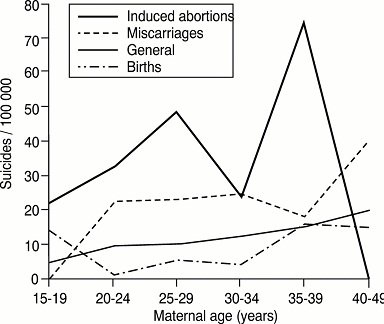
There is plenty of information out there on this topic. The TDs and senators who are going to be bombarded by Ms. Redmond and her friends should be provided with some information rather than slogans and sound bytes. Try this source to start with. This was reported in the British Medical Journal on the basis of Finnish studies. The graph speaks for itself.

F1.medium

The pro-abortion activists are clutching at straws on this. Why do they not state the simple truth which is that they want abortion on demand and argue the case on whatever legitimate grounds they can find for this? Meaningless slogans implying some kind of victimhood just makes no sense at all. 

If you want to weigh up suicide risks read this

20130218-201243.jpg

Context: the Irish parliament’s proposal to legislate for abortion on the basis of the risk of an expectant mother committing suicide.
The real-life story of Oscar winner, Rita Moreno (West Side Story), recounted in her autobiography and reported in today’s Daily Telegraph, show where the real risks of suicide lie.

After her relationship with (Elvis) Presley ended, she discovered she was pregnant with (Marlon) Brando’s child. “To my shock and horror, Marlon immediately arranged for an abortion,” she writes. It was this episode, she says, that prompted her suicide attempt at Brando’s home.
“I went to bed to die,” she writes. “This wasn’t a revenge suicide, but a consolation, an escape-from-pain death.”
Moreno was rushed to hospital to have her stomach pumped and her therapist begged her and Brando – who died in 2004 – never to see one another again.

Blind and shameless collusion in abortion news coverage

We are of course rejoicing at the success of the phenomenal pro-life demonstration in Dublin on Saturday. It was achieved in the face of what one could only describe as a media blackout of the event in the weeks leading up to it. It must surely have given both the conscientious and the crowd-following public representatives something to think about. The conscientious will have had their convictions reinforced by the platform speakers who sent out loud and clear statements and illustrations of the crime that the killing of the unborn is. For the populist crowd-followers it gave evidence that pro-life people power is on the move and for them this is a chilling signal that their cosy parliamentary seats might also be on the move.

More than 25,000 people from all over the country gathered in Merrion Square to protest at the coalition government’s proposal to legislate for abortion within the jurisdiction of the Irish Republic. Abortion is currently prohibited under the terms of a constitutional amendment passed overwhelmingly by the people 30 years ago. An estimated 150 pro-abortion demonstrators presented themselves at the venue as well.

But we are also once again confronted with the story-within-a-story. The story of the shameless bias of the media which spells out one fact over all others: the majority of those in the positions of influence in the media in this country are openly and unapologetically campaigning for the pro-abortion cause.

If anyone needed confirmation that there is collusion between the Irish media – orchestrated, one suspects, from behind the closed doors of sub-editing rooms – and the international press one has only to scan the reports of the Vigil in the newspapers over the following days. It did not make the front page of a single broadsheet on Monday. The Irish Times reported on it without the slightest allusion to its significance. Even RTE managed to rise to using the term “game-changer” in its Saturday evening report. That this surprised us speaks for itself. Can you imagine what we would have been reading and listening to had such numbers turned out for a pro-abortion rally? Try. You won’t find it very taxing.

How did Independent Newspapers report this the following day? The opening paragraph of a report attributed to Sarah Stack and the Press Association was this:

PROTESTERS for and against abortion have staged separate rallies in Dublin as each side step up their campaigning. The Pro-Life Campaign urged people to stand up for “the right of the unborn child” at its Unite for Life Vigil but were (sic) accused of going against legislation that would save the lives of women. Note that “right of the unborn child” in inverted commas.

The Government, we were reminded, has committed to legislate and introduce regulations to allow abortion if there is a real and substantial risk to a woman’s life, including the threat of suicide.

The report then entered even-handed mode when Pro-life spokeswoman Caroline Simons’ words were reported. She told the crowd, the biggest Dublin has seen for a decade or more, that the Government’s argument that abortion is needed to treat threatened suicide in pregnancy was demolished at the hearings on abortion held in the parliament over a week ago.

“The psychiatrists who addressed the hearings were unanimous that abortion is not a treatment for suicidal ideation”, Simons said. “But there is evidence that abortion increases the risk of future mental health problems for a significant number of women.

“The facts are simple. Where a pregnant woman’s life is at risk, Irish law and current Irish medical practice allows doctors to intervene to ensure women receive whatever treatments are necessary to safeguard their lives, even where this unavoidably results in the death of the baby.”

But that was as even-handed as it was going to get. Separately, Stack then told us, – without mentioning the number protesting – that pro-choice campaigners staged a counter-demonstration nearby and said pro-life groups are protesting against the introduction of legislation that would save the lives of women living in Ireland.

“They’re protesting against legislation that the majority have voted for in a referendum. They’re protesting against a supreme court decision. They’re protesting directly against what the ECHR (European Court of Human Rights) says Ireland needs to do to protect the human rights of pregnant women,” a spokesperson for this group complained about the 25, 000.

Then came the red-herring inbthevform of a report of a two-day-old story about the opening of an inquest into the death of Indian dentist Savita Halappanavar on October 28 after she suffered a miscarriage. The international media has – with the help of its Irish fellow-travellers – sat in judgement on this and has decreed that Savita died because she was refused an abortion. On the information currently available there is absolutely no basis whatsoever for that conclusion.

Stack’s report then goes over the background to that case – all in the context of the demonstration in Dublin. No mention is made of the multiple statements made by gynaecologists, and by speakers at yesterday’s demonstration, that there is no evidence that an abortion need ever be resorted to as a solution to a complication which might arise in pregnancy.

Stack then proceeded to report on the formation of a new pro-choice group, Abortion Rights Campaign, being established in the country.

She reported that Clare Daly TD said the campaign is not a sprint but a marathon. “We’re here for the long haul,” she said. “In the meantime, we want the immediate introduction of legislation for the right to safe, legal abortion when a woman’s life is at risk, including from suicide.

“We also want the simplest, broadest legislation that includes the right to abortion in the case of fatal foetal abnormality. We will keep the pressure on until we get this.”

She did not say what everyone knows, that the pro-abortion campaign wants abortion on demand, and knows that prime minister Enda Kenny’s “restrictive” legislative proposal is the best way to get it.

The entire report devoted about 150 words to the demonstration by 25,000 people while the cause being promoted by the pro-choice group got the lion’s share of attention with over twice that. Shameless. Admittedly another report, seen online, by two reporters from the group’s newsroom did carry more of the content of what was said at the demonstration. But it was not much more and it also laboured the Halappanavar case which in the end of the day may have nothing at all to do with abortion and be revealed as a sad case of a woman dying from the effects of an infection.

For some serious coverage of the demonstration a more balanced report can be read here. See this short YouTube video for an atmospheric snapshot of the event.

All this is happening in Ireland while conscientious Americans are mourning the more than 55 milion lives sacrificed on the twin altars of, on the one hand, false compassion, and on the other of selfishness and self-indulgence. This is the toll of lives taken over the 40 years since the US Supreme Court conceded the right to life of the unborn in Roe V Wade.

Enda Kenny, the Irish prime minister, keeps telling his people that he is not entering the same road as this. He offers no plausible reasons for this assertion, no reasons at all in fact, but instead moans about receiving abusive letters among which are some which suggest that he is “worse than Herod” who slaughtered the Holy Innocents. Well, he may not be worse than Herod. But if he presides over the passing of legislation which will lead to the intentional killing of babies in the womb, even one baby in the womb, then he will bear responsibility for that act and will join a significant number of public representatives who are running Herod a close scond. Is there any other moral reasoning which will deny that? These babies are the new Holy Innocents.

The US picture is truly horrendous. Since that fateful decision by nine men on the Supreme Court in 1973, there have been approximately 55,772,015 abortions that have destroyed the lives of unborn children. Looked at another way, that is 1,392,500 abortions each and every year, 116,191 abortions each and every month in all 50 states. The math breaks down to 26,813 abortions each and every week nationwide. And every day, that’s 3,820 abortions.

Almost 4,000 children have died in America from abortions each and every day since.

Irish proposal for abortion law riddled with wishful thinking

Irish Taoiseach Enda Kenny

What looks like the beginning of open warfare ensued in the Republic of Ireland yesterday with the announcement by the Coalition government there that it is going to prepare legislation for “limited” abortion in the State.  In the aftermath of the announcement, the four Catholic Archbishops have issued their strongest ever condemnation of abortion as a moral evil. Meanwhile another bishop describes the proposal as the “first step on the road to a culture of death”. The main government party in the Coalition is also divided on the proposal.

The legislation is seen by all pro-life groups in the country as the first step towards abortion on demand in that the threat of suicide is being accepted as a ground for granting an abortion. The pro-abortion activists and those who support the proposed legislation – even though they say they are not pro-abortion – are failing to answer the question why these grounds for abortion will not lead to abortion on demand as it has done so in all other jurisdictions where it has been introduced.

Currently abortion in any form is prohibited by an act of parliament. This ban was confirmed as the will of the people in a constitutional referendum in 1983 which prohibits legislation to introduce abortion. This provision, however, was compromised by a judgement of the Supreme Court in the 1990s when it ruled that a woman threatening to commit suicide had a right to have an abortion since this was taken to be a threat to her life.

That judgement has been heavily criticised by psychiatrists who consider that threats of suicide are far too complex to be made the basis for a decision to end the life of an unborn child – even if that were ever to be considered a morally defensible act.

The Taoiseach (Prime Minister) Enda Kenny and his senior Ministers are planning to reassure members of his party that allowing the threat of suicide as a ground for termination will not lead to abortion on demand. He has not, however, offered any kind of coherent reasoning to back up this assertion.

Minister for Health James Reilly last night said that “legislation supported by regulations will inform us to ensure that suicide will not be abused as it is perceived to be in other jurisdictions”. He has  given no clues as to why pro-life campaigners should not consider this as any more than wishful thinking.

Irish radio reported him as saying that the legislation would have to cover suicide as the Supreme Court had been very clear in its judgment on the issue. He would try to create as much consensus as possible on the issue and hoped the legislation would be passed before next summer if not sooner.

Dr Berry Kiely of Ireland’s Pro Life Campaign said if the threat of suicide is included in any legislation to give legal clarity on abortion it will radically change medical practice in Ireland and the Irish legal system. Speaking on Irish radio Dr Kiely said it would introduce, for the first time, the direct and intentional killing of the unborn into Irish law.

She said there was a difference between medical treatment, which may result in the death of a foetus, and abortion, which is intended to end the life of the unborn. “This is where the whole issue of suicide comes into it, because a woman who says she’s suicidal because of being pregnant with this baby, what she’s saying is she doesn’t want a living baby at the end of this procedure,” Dr Kiely said. “You’re actually, in that situation, proposing to directly and intentionally ensure the death of her baby. That’s a very radical change for medical practice in Ireland, for our legal system, for whatever.”

The Government statement yesterday did not mention the matter but it is accepted that the grounds for a legal termination will include the risk of suicide or self-destruction. The legislative scheme will not, however, incorporate, or make legal, abortion in other in extremis situations, such as rape, sexual abuse, or rare fatal foetal abnormalities. However, the admission of legitimacy on any grounds – and particularly on grounds as open to manipulation as a threat of suicide – is seen as the thin end of the wedge to bring abortion on demand to Ireland.

Minister for Communications Pat Rabbitte has said he is surprised by the vigour of the language used by the Archbishops statement. However, he has not on this occasion suggested that the representatives of the Catholic Church had no right to speak on a matter like this. The Bishop of Kilmore, Leo O’Reilly, said that the Government’s decision to introduce legislation and regulations on the abortion issue is the “first step on the road to a culture of death”.

The four Archbishops in their statement encouraged “all to pray that our public representatives will be given the wisdom and courage to do what is right”.

They state categorically that “If what is being proposed were to become law, the careful balance between the equal right to life of a mother and her unborn child in current law and medical practice in Ireland would be fundamentally changed. It would pave the way for the direct and intentional killing of unborn children. This can never be morally justified in any circumstances.

“The decision of the Supreme Court in the ‘X’ case unilaterally overturned the clear pro-life intention of the people of Ireland as expressed in Article 40.3.3 of our Constitution. To legislate on the basis of such a flawed judgement would be both tragic and unnecessary.

“The dignity of the human person and the common good of humanity depend on our respect for the right to life of every person from the moment of conception to natural death. The right to life is the most fundamental of all rights. It is the very basis for every other right we enjoy as persons.

“The lives of untold numbers of unborn children in this State now depend on the choices that will be made by our public representatives. The unavoidable choice that now faces all our public representatives is: will I choose to defend and vindicate the equal right to life of a mother and the child in her womb in all circumstances, or will I choose to licence the direct and intentional killing of the innocent baby in the womb?”

The government parties have declared that in the vote on this issue – when it comes to a decision on legislation – will not be a free vote. On this also the Archbishops had strong words on the moral implication of such a ruling. “Moreover,” they said, “in a decision of such fundamental moral importance every public representative is entitled to complete respect for the freedom of conscience. No one has the right to force or coerce someone to act against their conscience. Respect for this right is the very foundation of a free, civilised and democratic society.”

The husband of the late Savita Halappanavar says he would welcome any legislation that would prevent another death in the circumstances in which his wife died. Mrs Halappanavar (31) died in Galway University Hospital in October. She was found to be miscarrying her 17-week pregnancy. This sad case has provided a very emotional context to the legislation issue although this proposal to legislate has been on the agenda of the Government since a negative European Court ruling in 2010. However, there is no confirmation that Mrs. Halappanavar’s death would have been prevented had he baby been deliberately killed by the medical team dealing with her miscarriage. Praveen Halappanavar has said she was repeatedly refused a termination.  No corroborating evidence of this has come to light as yet. The report of two investigations on what actually happened in the days leading to her death are currently awaited.

Answering a deceptive apologia

Professor William Reville

In a very useful, polite but authoritative rebuttal of an apologia for the killing of the unborn in an Irish newspaper late last month, the distinguished Irish scientist, William Reville, concludes that while science remains a very long way from a fundamental understanding of how the embryo automatically unfolds so unerringly along the long developmental pathway from zygote to adult human it has already demonstrated that conception is the start of a biological continuum for each individual life that extends in an unbroken line until it terminates in death at the other end of the continuum.

“At every stage along this continuum each individual life has the full human properties appropriate to that stage. Pro-choice advocates refer to the early embryo as a potential human being. But in my understanding, this definition is wrong.  In my opinion, the correct description of the embryo is a human being with potential.”

Read the full article in the Irish Catholic newspaper here.

William Reville is an Emeritus Professor of Biochemistry at University College Cork.

Irish legislation on abortion could be psychiatrists’ “nightmare”

The Chairman of the Irish Association of Suicideology has said that legislation based on the X Case – as proposed to the Fine Gael-Labour coalition government in Ireland – would create a ‘logistical nightmare’ for psychiatrists if implemented. Dr Justin Brophy, a consultant psychiatrist with Wicklow Mental Health Service said this in an interview with an Irish language newspaper, Gaelscéal.

The proposal for this has come from an expert set up by the Government to propose options to it for meeting an obligation placed on it by the European Court of Human Rights to clarify the country’s law on abortion. This group has been described as flawed in its composition by pro-life activists in Ireland.

Part of the complaint about the expert group’s work is that it is alleged to have misrepresented the judgement of the ECHR judgement. The Court did not oblige the Irish Government to legislate for any form of abortion in Ireland; it simply obliged it to “clarify” its laws with regard to the position of pregnant women who might be demanding abortions. The group has proposed options for legislation to the government which prolife people say will inevitably lead to abortion on demand because of its acceptance of the terms of the X case admitting threats of suicide as a definition of a threat to the life of the mother.

Dr Brophy said that medical judgements can be wrong and psychiatrists will be on a “hiding to nothing” if asked to adjudicate in these cases. He added if a law were passed allowing for abortion on the terms of the X case that there would be public outrage if a pregnant woman took her own life after a being refused an abortion based on a psychiatrists view that she was not suicidal.” Suicidal intent, he said, is an ‘easily fabricated’ condition.

Meanwhile, public protests against the stated intent of the Government to legislate on this matter and the perception that it will do so on the basis of the X case is mounting. Catholic Church leaders are also giving very clear indications that its voice will be heard giving a very clear account of Catholic moral teaching on the issue.

In their statement issued yesterday the bishops said:

A society that believes the right to life is the most fundamental of all rights cannot ignore the fact that abortion is first and foremost a moral issue.

As a society we have a particular responsibility to ensure this right is upheld on behalf of those who are defenceless, voiceless or vulnerable.  This includes our duty as a society to defend and promote the equal right to life of a pregnant mother and the innocent and defenceless child in her womb when the life of either of these persons is at risk.

By virtue of their common humanity the life of a mother and her unborn baby are both sacred.  They have an equal right to life.  The Catholic Church has never taught that the life of a child in the womb should be preferred to that of a mother.  Where a seriously ill pregnant woman needs medical treatment which may put the life of her baby at risk, such treatments are morally permissible provided every effort has been made to save the life of both the mother and her baby.

Abortion, understood as the direct and intentional destruction of an unborn baby, is gravely immoral in all circumstances.  This is different from medical treatments which do not directly and intentionally seek to end the life of the unborn baby.

Current law and medical guidelines in Ireland allow nurses and doctors in Irish hospitals to apply this vital distinction in practice. This has been an important factor in ensuring that Irish hospitals are among the safest and best in the world in terms of medical care for both a mother and her unborn baby during pregnancy.  As a country this is something we should cherish, promote and protect.

The Report of the Expert Group on the Judgement in A, B and C v Ireland has put forward options that could end the practice of making this vital ethical distinction in Irish hospitals. Of the four options presented by the Report, three involve abortion – the direct and intentional killing of an unborn child.  This can never be morally justified.  The judgement of the European Court of Human Rights does not oblige the Irish Government to legislate for abortion.

Other aspects of the Report also give rise to concerns.  These include, but are not limited to the fact that:

The judgement of the European Court of Human Rights permits options on this matter of fundamental moral, social and constitutional importance that are not offered by this Report.  This includes the option of introducing a constitutional prohibition on abortion or another form of constitutional amendment to reverse the ‘X-case’ judgement.

The Report provides no ethical analysis of the options available, even though this is first and foremost a moral issue and consideration of the ethical dimension was included in the Terms of Reference.

The Report takes no account of the risks involved in trying to legislate for so-called ‘limited abortion’ within the context of the ‘X-case’ judgement.  The ‘X-case’ judgement includes the threat of suicide as grounds for an abortion.  International experience shows that allowing abortion on the grounds of mental health effectively opens the floodgates for abortion.

The Report also identifies Guidelines as an option.  It notes that Guidelines can help to ensure consistency in the delivery of medical treatment.  If Guidelines can provide greater clarity as to when life-saving treatment may be provided to a pregnant mother or her unborn child within the existing legislative framework, and where the direct and intentional killing of either person continues to be excluded, then such ethically sound Guidelines may offer a way forward.

A matter of this importance deserves sufficient time for a calm, rational and informed debate to take place before any decision about the options offered by the Expert Group Report are taken.  All involved, especially public representatives, must consider the profound moral questions that arise in responding to this Report. Abortion is gravely immoral in all circumstances, no matter how ‘limited’ access to abortion may be.

Irish abortion story begins to unravel

https://i0.wp.com/cf.broadsheet.ie/wp-content/uploads/2012/11/Screen-Shot-2012-11-14-at-09.23.4112.jpg

While the Irish Government – an unhappy coalition of a socialist pro-abortion party and a traditionally conservative party – staggers under the onslaught of international media-driven opprobrium for its prolife constitution and laws, the story which generated this frenzy is now beginning to unravel.

Kitty Holland, the Irish Times journalist who broke the story of Savita Halappananvar’s tragic death, now says that the story may be ‘muddled’ and that it may be found that there was ‘no request for a termination’.

In an interview with the Irish journalist Marc Coleman on an independent radio station, Newstalk 106, Holland was asked why she said, in a story in the London Observer  newspaper four days after her Irish Times story, that “the fact that Savita had been refused a termination was a factor in her death has yet to be established”, when she omitted that caution from the Irish Times story that provoked the world reaction to Savita’s death.

Coleman then quizzed her on crucial discrepancies in her and other Irish Times reporting as to when Savita was started on antibiotics in Galway University Hospital where she died on October 24th last.

She then said: “All one can surmise is that his (Savita’s husband Praveen) recollection of events — the actual timeline and days — may be a little muddled… we only have Praveen and his solicitor’s take on what was in or not in the notes ….we’re relying all the time on their take on what happened… ”

Of course, the solicitor is a red herring. His recollection can only be of what Praveen told him after the event. This is single-source journalism of the most critical kind.

“Oh, I’m not satisfied of anything. I’m satisfied of what he told me, but I await as much as anyone else the inquiry and the findings. I can’t tell for certain — who knows what will come out in that inquiry? They may come back and say she came in with a disease she caught from something outside the hospital before she even arrived in, and there was no request for termination.., ” Holland told Coleman.

Meanwhile the political bandwagon of the pro-abortion activists in Ireland is rolling on and the Government-in-conflict is preparing to pass judgement on a biased report presented to it by an expert group, consisting of people who proved to be essentially pro-abortion in their views, with possibly one exception.  The group was set up to study the demands made on Ireland by the European Court of Human Rights to clarify the legal position of any woman in Ireland who might request an abortion in that jurisdiction. This was not a demand to legislate for abortion but every option presented to the Government by the group has ended up providing for just that.

The death of Savita and the exploitation of its treatment by Kitty Holland in the Irish Times has fed into this scenario creating something of a “perfect storm” threatening Ireland’s existing pro-life legislation. Against the background of the hysteria created by the alleged circumstances of Savita’s death the Government is now planning to publish its legislative proposals by December 20.

The media in Ireland has played a very ambiguous – at best – role in this with both the Irish Times and the national broadcaster, Radio Telefis Eireann (RTE), outraging pro-life readers and listeners and adding one more element to the creation of this storm. This weekend a national opinion poll was published by one of the newspapers, the Sunday Business Post.

This was reported on RTE over the weekend as indicating that 85 percent of the sample of 1000 wished to see legislation passed on a basis of the notorious ‘X Case’, an Irish Supreme Court judgement  20 years ago which, if legislated for, would essentially give Ireland abortion on demand. The poll was completely misread by the broadcaster.

Following the publication of the poll, Ireland’s Pro-Life Campaign pointed out its flawed and confusing nature, arguing that a distinction needs to be made between medical treatment for the mother, which may result in the death of an unborn child, and abortion in circumstances where there is no threat to the mother’s life.

Up to 85% said they would favour abortion laws in line with the ‘X-Case’ ruling where the life of the woman is at risk, including suicide, while 63% favour excluding threat of suicide as grounds for abortion, the PLC pointed out.

Cora Sherlock, Deputy Chairperson of the Pro-Life Campaign, said the poll results are not reliable.

Ms Sherlock said: “I think it’s very clear that there is no basis for using this poll to claim that there is any sort of majority of people who want abortion legislation in Ireland, because the contradictions that are coming through in the poll are just too evident.

“It is too unreliable, there is a clear contradiction there, some people want legislation for X and some people want a referendum to amend X.”

Tomorrow the pro-life activists throughout Ireland are planning to converge on Dublin to demand that the Irish government resists the pressure, both national and international, to introduce what would be, in effect, abortion on demand within the jurisdiction of the Irish Republic. The abortion Act of 1967, which brought abortion on demand in Great Britain, does not apply in Northern Ireland which is also part of the UK.