Do we really have to swim in this sludge?

“Something is happening, but you don’t know what it is, do you, Mr. Jones.” That was Bob Dylan back in the 1965, with the “sexual revolution” just getting into its stride.  Dylan at that time may have been, at best, ambivalent about what was happening. He wasn’t innocent but I venture to think that he wasn’t a fully paid up subscriber to everything that Mr. Jones was confused by. He was no Mick Jagger.


Has the revolution finally run its course? Certainly the news stories by the day recount casualty after casualty among those who are or were its fully paid up members. The stories come not as single spies but in battalions now.

On Wednesday the fallout of the scandal involving The Presidents Club gala dominated the headlines after an undercover reporter for the Financial Times revealed hostesses had been subject to groping and lewd comments. “Sexists and the City” was Metro’s take, while the Guardian reported that guests have “rushed to distance themselves” from the event.  The Sun called the gala the “sleaze ball” and the Times reported that the prime minister was expected to take action over the “gagging orders” women were allegedly forced to sign before “hosting” the all-male paying guests at the event. Yesterday the story was all over the world. Mercifully, The Presidents Club has announced it is closing.

A British Government minister was reprimanded for attending the gala. He apparently left the fundraiser event early but tweeted that he had “felt uncomfortable” He said he had not seen any of the “horrific” events reported. Why was he uncomfortable if he had not seen anything, we might ask?

But we still have a long way to go to clear up the mess left in the wake of that ground-breaking “liberation” which the ‘sixties brought us. As a sign of the contradictions embedded in our confused culture, on Wednesday the BBC World Service gave full coverage to the FT’s scoop. The day before, it had carried a very “non-judgemental” interview with a spokesperson for those who are now routinely described as “sex workers”.  She explained in detail the difficulties they encounter in fulfilling their role in our society.

While we are not in the business of changing human nature, we do need to get into the business of clearing up Mr. Jones’ confusion about it. The poisonous essence of the sexual revolution was not that it told us what mankind has known forever but that it told us that “anything goes”,  and that if it does, the more the merrier.

A recent article in The Atlantic pointed to one of the prime movers of that revolution which is still in full swing and is creating mayhem with the confusion it has been spreading, generation after generation – at least since hedonism became respectable in the ‘sixties. As yet there is little sign that the so-called  #MeToo backlash has touched this pulsating nerve.

“Entertainment glorifying or excusing predatory male behaviour is everywhere—from songs about ‘blurred lines’ to TV shows where rapists marry their victims”, writes Julie Beck.

She lists a few examples: Edward Cullen. Chuck Bass. Lloyd Dobler. Spike from Buffy the Vampire Slayer. That guy from Love Actually with the sign. The lead singers of emo – short for “emotional hardcore” – bands with their brooding lyrics. “Many of the romantic heroes that made me swoon in my youth”, she reflects, “followed a pattern and, like a Magic Eye picture, only with a little distance did the shape of it pop out to me. All of these characters in some way crossed, or at least blurred, the lines of consent, aggressively pursuing women with little or no regard for their desires. But these characters’ actions, and those of countless other leading men across the pop-culture landscape, were more likely to be portrayed as charming than scary”.

Is that all over? Not yet.

I grew up watching movies in which women found it flattering when their pursuers showed up uninvited to hold a boombox under their window, or broke into their bedrooms to watch them sleep, or confessed their feelings via posterboard while their love interest’s husband sat in the next room. So I found it flattering, too. I sang along with The Killers’ “Change Your Mind” (“If the answer is no, can I change your mind?”) and Fall Out Boy’s “7 Minutes in Heaven” (“I keep telling myself I’m not the desperate type, but you’ve got me looking in through blinds”) without a second thought about what the lyrics implied.

She cites, for example, the first season of Game of Thrones, where the relationship between Daenerys Targaryen and Khal Drogo—which is portrayed as a great love, one through which Daenerys eventually comes into her own as a ruler—begins with a wedding night on which the teenage girl cries and tries unsuccessfully to keep Drogo from undressing her.  Beck continues:

Even more pervasive than the redeemed rapist is the romantic hero whose efforts at seduction look more like harassment. In the Twilight series, the brooding vampire Edward Cullen not only breaks into his love interest Bella’s house in the first book to watch her sleep, but later on, in the third book, he also disassembles her car engine to keep her from leaving her house. But readers are supposed to see it as a protective gesture: He did it because he loves her, because he wants her to be safe.

In music, too, there’s no shortage of songs that glorify a man’s threatening overtures, from “Baby, It’s Cold Outside” (“Say, what’s in this drink?”), to “Every Breath You Take” (“I’ll be watching you”), to “Blame It (On the Alcohol)” (“I hear you saying what you won’t do / But you know we’re probably gon’ do”). And of course, there’s Robin Thicke’s literal anthem for the “Blurred Lines” I’m talking about (“I know you want it … Just let me liberate you”).

For six decades at least, all of that has been, and is still, pervading pop culture – through Hollywood, its off-shoots and the pop music industry. How could we not expect that the human agents driving those industries would not themselves be corrupted by the content they generated? Will the feminist-driven rage against personal assault, disrespect and offensive behaviour get to these root sources of the problem? What strategy, what change of attitude to the nature of sexuality, has to be effected to bring about a change in a culture in which its artefacts do not simply help us to understand our human condition but glorify and advocate behaviours which corrupt us, cause untold pain and which may ultimately destroy us.

Beck’s colleague at The Atlantic, Megan Garber, has described our current era as “a time in which feminism and Puritanism and sex positivity and sex-shaming and progress and its absence have mingled to make everything, to borrow Facebook’s pleasant euphemism, Complicated.”

Beck concludes that our culture is beginning to complicate things, to question the value of romanticizing stories where one person chases another, or wears her down, or drags her along against her will. She adds, “But recognizing the flaws in these ideas doesn’t make them go away. They still float in the spaces between people; they are the sludge through which we have to swim as we try to see each other clearly.”

Well, we do our best to sort out problems with actual sludge when it interferes with our quality of life. Why can’t we have the prudence and fortitude and engage our brains to deal with this metaphorical sludge which is probably doing us much more harm?

…but a good week for art and history

bayeux

So, was it a hoax? But I do like the conclusion to this observation from Micah Mattix‘s Prufrock:

You may recall that last week French president Emmanuel Macron agreed to loan the Bayeux Tapestry to Britain. (The work depicts the Battle of Hastings and other events.) Like many young technocrats eager to appear nice, he may have promised too much, too quickly. Curators said that in order to move the 224-foot and extremely fragile embroidery “a host of major technical and conservation issues” would have to be overcome: “Curator Pierre Bouet, who cares for the tapestry at the museum, said he thought ‘it was a hoax’ when he first heard of the plan.” Still, a week that finds heads of state and journalists discussing history and art is a good one.

That goodness continues this week, with Emily A. Winkler providing a history of the embroidery and a brief discussion of its varying interpretations: “It was probably commissioned by Odo of Bayeux – famous as William the Conqueror’s half-brother, Earl of Kent and Bishop of Bayeux – and made in Canterbury by English seamstresses. The Bayeux Tapestry is not, in fact, a tapestry (a woven textile) but an embroidery made of linen and wool yarn. Some art historians have campaigned to rename it the ‘Canterbury Embroidery’, to acknowledge its probable place of production. Both within and beyond the scholarly world, the Bayeux Tapestry has attracted varying interpretations. Taking sides – or trying to determine the degree of Englishness or Normanness it conveys – has been difficult to resist. The tapestry was long thought to be a piece of Norman propaganda, celebrating a Norman achievement. Wolfgang Grape’s The Bayeux Tapestry (trans. David Britt, 1994) proclaimed the tapestry to be a Monument to a Norman triumph. On the other hand, more recent work has stressed its English production, revealing the subtle English sentiments in the tapestry’s artwork. The historian Stephen D. White has recently cautioned against reading it as an English or Norman story, showing how the animal fables visible in the borders may instead offer a commentary on the dangers of conflict and the futility of pursuing power.”

A sane voice in a zany bubble

Beta plus to the Washington Post for giving us this alternative judgement on the President of the United States one year into his term. I suppose calling it his first depends on whether or not there will be a second. Within the framework of what we normally get from the Post by way of analysis of This administration, this is refreshing. We can only hope that it might be a sign that the media paranoia about Trump is abating and that we will enjoy a little more balance in year two of this presidency.

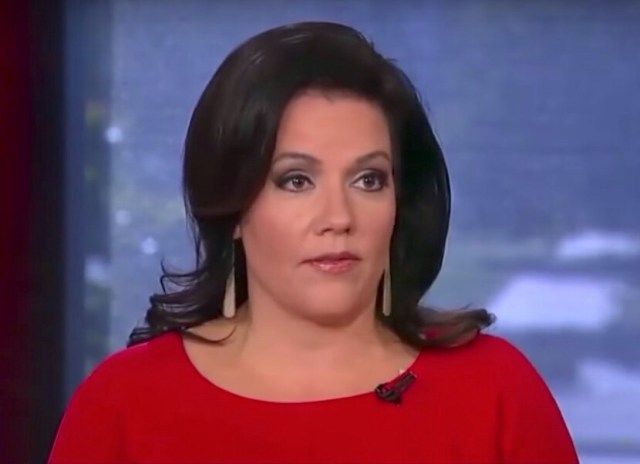
Molly Ziegler Hemingway (picture) is a sane voice in the zany world of US political journalism where opinions about the President are so predictable that reading them is a pointless exercise. No matter what he does, you know what they are going to say.

Like most people, I don’t particularly like Trump’s rhetorical style, juvenile insults and intemperate disposition — on full display in recent days. At the same time, having followed his career for decades, I am not surprised that he wakes up each morning as Donald Trump. And that boorish attitude has come in handy after decades of media bullying of conservatives. Ironically, the very lack of conservative bona fides that worried me two years ago means he’s less beholden to a conservative establishment that had grown alienated from the people it is supposed to serve and from the principles it ostensibly exists to promote. His surprising conservatism might also be the result of the absolutism and extremism of his critics, whether among the media, traditional Democratic activists or the anti-Trump right. If Trump were ever inclined to indulge his liberal tendencies after winning the election, the stridency and spite of his opponents have provided him with no incentives to do so. My expectations were low — so low that he could have met them by simply not being President Hillary Clinton. But a year into this presidency, he’s exceeded those expectations by quite a bit. I’m thrilled.

Read her article here.

Making history and unmaking humanity

A war for the heart and soul of Ireland is currently waging and the battle for the right to life of the unborn is revealing a divide in its people of the most fundamental kind. The very nature of humanity is at issue.

It is amazing that what Maria Steen points out here needed to be said in a public debate. The Marxism implicit in the determinism of those who tell us we are on “the wrong side of history” is frightening.

We are a free people and we make history. History does not make us. History is the record of our greatness and our folly, of our capacity for good and our dreadful capacity for evil. To surrender ourselves and our freedom to ‘History’ as some blind force is to abandon our humanity. To surrender ourselves and our freedom to ‘History’ without questioning the human choices which made it what it is have left us is to is to abdicate moral responsibility. To define our freedom as simply a matter of making choices without asking ourselves about the good or evil character of what we choose is the way to a hell on earth.


Stop this trivial pursuit

Well said. Brendan O’Neill hits the nail on the head again. We are being badly served by the politics of rage. This is what makes our world a really dangerous place.

It’s a year since Trump was inaugurated and, amazingly, the world hasn’t ended. The West hasn’t been plunged into 1930s-style extremism, the American constitution hasn’t been trampled under goose-steps, and Muslims haven’t been marched off to camps. That’s what we were told would happen. Cast your mind back to early 2017: liberal circles fizzed with warnings of a ‘New Hitler’, even whispers of another Holocaust. This spectacularly irresponsible posturing against Trump had two terrible impacts. First, it trivialised historic events like the rise of Nazism, chasing historical accuracy and reason itself out of political debate. And secondly it made criticising Trump more difficult. The Trump of Guardianistas’ rash nightmares came to dominate public discussion, making the real Trump – the man who is politically problematic but not Hitler – more difficult to see, and analyse, and oppose. This year, can we please park the shrill historical illiteracy and get back to grounded debate?

Coping with digital guilt

A little bit of irony (or is it?) from The Spectator’s agony aunt, Mary Killen.

Q. Further to your advice to F.B. (9 December) regarding the annoyance of people getting out their smartphones during lunch, may I pass on a tip? The person I most enjoy having lunch with is 20 years older than me but knows how addictive smartphones can be. During a lull in conversation, she will say: ‘Shall we have an iPhone break?’ and the two of us will spend guilt-free minutes scrolling through messages and Instagram likes that have piled up. We then put our phones away and enjoy each other’s company, free of the anxiety that (regrettable but true) builds up after no ‘screen time’.

-— M.B., Florence

A. It is appalling that your advice needs to be taken seriously. However it presents a reasonable compromise in this age of addiction where so many people feel anxious if they can’t monitor their screen. We need look no further for the reason behind the drop in church attendance figures.

Response to Iran uprising: shallowness or wilful hypocrisy?

403893
(Reuters)

Brendan O’Neill in Spiked.com once again exposes the shallowness – where it is not simply blatant self-serving hypocrisy – of liberal progressive (what misnomers they are) media in its response to the Iranian uprising. The Islamist mullahs seem now about to crush resistance to their regime as ruthlessly as soviet communism crushed the uprisings in Hungary and Czechoslovakia in the Fifties and Sixties respectively – while the rest of the world just looked the other way.

This is O’Neill’s take on our latest perfidy:

‘Where is the world media?’, asked Iranian-heritage actress Nazanin Boniadi this week as people across Iran continued to confront the theocratic authorities. It’s a good question. Iran has been rocked by brave, liberty-demanding revolts, and its Islamist rulers have responded with severe, fatal repression, yet much of the Western media has looked the other way. Liberal hacks in Britain have been too busy poring over Toby Young’s tweets from eight years ago to think about Iranian women fighting for the right to wear what they want and live as they please. Some media outlets, including the HuffPost, have churned out protester-shaming reports that could have been authored by the Ayatollah himself. We are now seeing the extent of Western observers’ disdain for the idea of democracy in this era of Brexit and Trump: they’ve become so convinced that politics is better done by wise, expert cliques, rather than by grubby, ‘low-information’ little people, that they are unmoved, and probably a little horrified, by ordinary Iranians’ democratic revolt against the theocrats and the Guardian Council and the Assembly of Experts. Having demeaned democracy at home, they cannot cheer it overseas.

The great manipulator strikes again

img_0774

In spite of all the blustering tweets, conservatives in America – and indeed across the world – probably feel that President Trump hasn’t actually done anything to harm us yet. The tone of his regime is bit of a problem but our culture is probably robust enough to recover its decorum. The rawer end of mainstream media, Hollywood and elements operating in social media bear far more responsibility for the coarsening our our discourse that the Donald has.

The rhetoric of his foreign policy is hopefully very different from the actual policy being pursued. As rhetoric, it is pretty unerving. For the people across the world who took the risk of pinning their flags to his mast, he has not – as yet – done anything to really make them regret doing that. He kept the Clinton dynasty out of the White House and for that alone they are still happy to live with a bit of risk.

Fraser Nelson in today’s Daily Telegraph puts the whole Trump project in a sensible context. As he sees it, Trump just wants to keep people talking about the things which he feels they need to talk about. The most recent twitter outrage is one perpetrated to get Europe thinking about an immigration problem which no one – with the exception of Douglas Murray – seems to accept for what it really is – an invasion.

Fraser’s assessment should allay the worries which some might have – for another few months at least. He also estimates that the Trump risk may be something that all of us will have to live with for another seven years. Fasten your seat belts. He writes, in his concluding remarks:

A few weeks ago, I met an American fund manager who calculated that his father – who quarried sand in Long Island – would be paid 45 per cent less today if he was still working. This, he said, was why Trump won: because globalisation, immigration and automation are conspiring against the ordinary American and no one else (other than the vanquished Bernie Sanders) seemed to care. The aim of the Trump project, from the get-go, was to convey this anger, a sense that they understood the desperation (a word that those around Trump often use) of the American working class.

Team Trump’s other working assumption is that partisanship now governs American politics. That the Reagan era was the last one with politicians who fought in wars together, and were bound together by a shared experience. Today, it’s tribal – and the winner is the one that best enthuses their core supporters. Much is made of Trump’s low national approval ratings but among Republicans they’re pretty high: 81 per cent, at the last count. So it’s probable that he’ll be a two-term president.

It’s very rare for any American president, no matter how unpopular, to lose a bid for reelection in a growing economy – and even now, there are no signs that the Democrats will find a decent candidate to pit against Trump. He might tire of the job, fake an illness or implode for some other unthinkable reason. But we might well have to live with The Donald for another seven years. The trick will be to take him seriously, but not literally – and as far as is decently possible, ignore those tweets.

Stranger Things – an even more daring interpretation

millie-bobby-brown-on-stranger-things

This is a far more daring – and much more interesting interpretation of the Netflix series which is shaking up the world than I offered a few days ago. If the range and depths of possible interpretations is a sign of a masterpiece then perhaps we do have one on our hands.

It comes from Donna Provencher,  a writer, actor, director, toddler wrangler, caffeine enthusiast, and recent Catholic revert originally hailing from the Washington, D.C. area.

In the week in which someone in this world has paid $450 million for Leonardo da Vinci’s Salvator Mundi this interpretation seems to make even more sense. Great Art continues to be wonderful and mysterious – still challenging our vain pretences that we know everything.

brown

“Fairy tales do not give the child his first idea of the bogey. What fairy tales give the child is his first clear idea of the possible defeat of bogey. The baby has known the dragon intimately ever since he had an imagination. What the fairy tale provides for him is a St. George to kill the dragon. Exactly what the fairy tale does is this: it accustoms him . . . to the idea that . . . limitless terrors [have] a limit, that these shapeless enemies have enemies in the knights of God, that there is something in the universe more mystical than darkness, and stronger than strong fear.” –G. K. Chesterton.

It’s no surprise to anyone that I love Stranger Things. Like, a lot. Probably too much.

I initially resisted the phenomenon, believing the show to be more sci-fi (which is not my jam) than horror (which is). But I eventually let myself be talked into sitting on my then-boyfriend’s couch in northern New York and binge-watching Season 1 in one fell swoop over the course of several days. And I was hooked.

I was also a “happily” lapsed Catholic at the time, a self-proclaimed agnostic and secular hedonist, so I was simultaneously in love with the show and repulsed by my own love for it, for reasons I could not articulate. With each subsequent episode, I felt more and more afflicted by uncomfortable truths – truths I pretended to have forgotten, but had forgotten I remembered. All my life I have been haunted by God, as Dostoevsky and Dorothy Day before me have said – and the summer of 2016 was no different.

Spoiler alert: I started talking about coming back to the Church about three months after the show premiered on Netflix and finally came back in September 2017.

“In reading Chesterton,” C.S. Lewis writes in Surprised by Joy, “as in reading MacDonald, I did not know what I was letting myself in for. A young man who wishes to remain a sound atheist cannot be too careful of his reading. God is, if I may say it, very unscrupulous.”

I wasn’t careful enough in my viewing habits. Stranger Things was God playing fast and dirty with my soul – a private gamble that, although I lost, I still took home the winnings.

THE THEOLOGY OF STRANGER THINGS

Eleven, the waffle-loving heroine of Stranger Things who has so captured our cultural consciousness, is the most conspicuous Christ figure in modern art since Aslan first breathed on Narnia. The similarities are unmistakable: Everything from Eleven’s mysterious origin story to the nickname, “El” (“God” in Hebrew), that the boys affectionately bestow on her, to the ultimate sacrifice she makes for Will’s friends while battling the Demogorgon in the Season 1 finale, to her long-awaited resurrection in Season 2, looks suspiciously Christlike upon examination. She even bears a stigmata of sorts in the form of a tattooed “011” on her wrist – a visible manifestation of the suffering she has endured.

Despite the debt of ‘80s childhood nostalgia Stranger Things owes to E.T. and the Stephen King oeuvre, writes Thomas P. Harmon in “The Strangeness of Stranger Things,” Eleven is no impish, whimsical Spielberg alien: she is a child abuse victim.

She is tortured, exploited, cast out, rejected by society, betrayed by her own friends, descends into hell (the ultimate Upside Down) to free the souls entrapped there, sacrifices herself for the good of humanity, and rises again. O Death, where is thy sting? O grave, where is thy victory? (1 Cor. 15:55)

“Eleven would get it. She always did,” says Mike in Season 2. “Sometimes I feel like I still see her. Like she’s still around, but she never is.”

And yet she is: Lo, I am with you always: even to the end of the world. (Matthew 28:20)

It is equally hard to miss the Marian imagery surrounding Joyce Byers, flawed though she may be. One can easily imagine the Blessed Mother pleading with her own Son on Calvary – much like Joyce Byers as Chief Hopper performs CPR compressions on Will – “I love you so much, please, please come back to me,” and the fleeting frames of Joyce cradling Will after his “resurrection” resemble nothing so much as a Pieta for the 21st century. That scene in particular – as well as the moment in Season 1 where she holds and comforts Eleven, who has never known a mother, after a particularly brutal experiment trying to contact the Upside Down – give us a show a little too Catholic for comfort: a show about a Mother’s love that conquers even death.

Donna writes for the San Antonio Express-News and is a former columnist for the Watertown Daily Times in northern New York. Her work can also be found on Scary Mommy, XOJane, and the Stop Abuse Campaign. She invites us to check out the inside of her brain over at www.donnasguidetothegalaxy.com.

“Write one true sentence. Write the truest sentence that you know.”

Read her full post on Stranger Things here.


Curiouser and curiouser – “Stranger Things” and the Culture Wars

stranger-things-poster

(Spoiler alert if you have not seen the series yet)

Past ages, and the institutional powers of other ages – spiritual and temporal – were much less tolerant of free interpretations of influential texts in our culture. Our freedoms now are more respected.

However, as one cultural critic (Michel de Certeau) has observed,

“Today, it is the socio-political mechanisms of the schools, the press or television that isolate the text controlled by the teacher or the producer from its readers. But behind the theatrical décor of this new orthodoxy is hidden (as in earlier ages) the silent, transgressive, ironic or poetic activity of readers (or television viewers) who maintain their reserve in private and without the knowledge of the masters.”

It is with this freedom, and in this spirit, that I have watched and been enthralled by Matt and Ross Duffer‘s runaway Netflix success, Stranger Things.

What we read, hear and see in the artefacts of our civilization depends not only on the genius of the creators of those artefacts. It is also often determined by our own experiences and by the power, character and developed state of our own creative imaginations.

What Alice in Wonderland, Animal Farm or Lord of the Rings says to us is not only what their authors’ intended to say but it may also be elaborated and enriched for us by what our own thoughts, sensibilities and experience of life bring to the creative table.

Stranger Things is, I think, one of those artefacts which is giving us much more to think about than we realise. Before you shout out in outrage, be assured that I am not – yet – bracketing this contribution to popular culture among the great artefacts of our civilization. It has its flaws but it also has its great moments.

After the first series of Stranger Things was streamed on Netflix last year, the Duffer brothers, its creators, had a conversation with Dawn Bonker, a senior writer on the website of their alma mater, Chapman University.

It’s about much more, they say, than the story of a small town turned on a tilt when a young boy named Will disappears, a strange little girl (Millie Bobby Brown) arrives and a paranormal mystery unfolds. Tantalisingly, and disappointingly, Bonker does not explore what that “much more” might be – with the exception of an observation by Ross that the story is about friendship.

As the plot unfolds the boys teach the little girl, called “Eleven” – because all they know about her is that she has 11 branded on her wrist – how to be a friend, how to trust people, and that “friends never tell each other lies”. The truly sinister and deeper layer of meaning of the story centres on the origin and treatment of this little girl and her mother. Their persecutors are the genetic and mind-bending scientists at work in the government laboratory on the edge of the town. “Eleven” has been raised in this laboratory, manipulated and physically abused. The boys she stumbles across when she escapes from her murdering manipulators help her on the road back to normal humanity.

Ross: There’s something so innocent and sweet about how central friendship is to them. When you really boil it down, that’s what really matters. It’s those very simple life lessons – being a good friend can go a long way.

Matt: On television there’s been this huge avalanche of shows with antiheroes. A lot of our characters are goodhearted people. And they have a lot of compassion.

Bonker asks, was that your universal truth, or a theme you were trying to convey?

Ross: I hope so.… Even when there’s darkness, people leave the show feeling a bit of hope there.… It’s about these friends that are there for each other no matter what, that there’s this mom (Winona Ryder) that’s there for her son no matter what. And to us there’s something both universal, and hopeful, about that.… That’s where we wanted to go.

Yes, but I think they go much farther than that. The darkness he talks about is really dark. Indeed it is as dark as the hell of Paradise Lost or the land of Mordor. This is the “upside-down world” of the plot, intimately and terrifyingly known to “Eleven” and into which characters stray and in which some lose their lives, others lose their minds and which throughout the series encroaches on the real world. Its hidden forces are seeking to infiltrate and possess our world for their own grotesque and malign purposes.

On the surface these are natural forces manipulated by humans. Netflix, not quite accurately in its promotional material, speaks of supernatural powers. But in fact what we are shown is the work of vile  power-hungry people and their mal-functioning experiments. The preternatural evil may emanate from the Father of Evil but if it does it does so like most of the evil in the world – through the medium of mankind.

Back in the 1950s we had the Red Scare. This in its turn spawned the monster of McCarthyism. We look back on that now and see it all as so much paranoia. But as the old joke goes, just because I’m paranoid doesn’t mean they are not out to get me. McCarthyism revolted us and was essentially an instrument as capable of perpetrating injustice as what it railed against. More effective antidotes of the age were the fables and fictions which countered the threat – ranging from those of Orwell, Huxley and others, to the productions of Hollywood’s own fable-factory – like Invasion of the Body Snatchers (1956), described as one of the greatest science-fiction films of all time. The original version (there have been several remakes) captures better than any other film the fears of that era.

So, if the Duffer Brothers are warning us about a threat to our civilization wrapped up in a piece of ‘eighties nostalgia with echoes of E.T. and The Goonies, what might it be? I can’t say what it is for them, but I know what it is for me.

There are two strands of evil at work in the US Department of Energy’s Hawkins National Laboratory. In what way they are connected or were originally connected is not clear. I does not matter. One has resulted, through the manipulation of mothers and their children, in the development of human beings with super powers which the super State clearly intends to use for its own ends. The other has resulted in the creation of a super virus which controls carnivorous dog-like monsters and which can also take possession of humans. The scientists in HNL have lost control of the virus and now it is threatening to overrun the planet, leaving us with an “upside-down world” as terrifying as anything Cormac McCarthy laid out before us in The Road.

The dystopia of Stranger Things may be read as a metaphor for many things: a world wrecked by man-made climate change; a world destroyed by the genetic manipulation of our food supply; a world mirroring that in which the laboratories of Planned Parenthood trades the body parts of human babies it aborts “for the good of humanity”. Take your pick.  It may also be a warning that the nonsense of gender ideology and the attempted manipulation of our biological selves is destroying the very essence of our humanity. This indeed is, for me, the most compelling interpretation and seems to be underlined by the fight-back of two of the characters who are among HNL’s victims – Eleven and her sister – as well as the mother who fights for the body and soul of Will who has been possessed by the virus to end all viruses.

It seems to be further supported by the juxtaposition of the murdering evil men and women of HNL with the semi-innocent adults and the wholly innocent dungeons-and-dragons besotted twelve-year-old kids of a sleepy Midwest town.

For anyone with the slightest trace of paranoia about malign cultural forces running amok in our society, this speaks volumes. Is there a day, certainly not a week, which goes by without some new grim warning about what our gender-bending ideologists are asking the scientific and medical community to do for them. Take just one example from a recent Daily Telegraph headline, “Sex change regret: Gender reversal surgery is on the rise, so why aren’t we talking about it?”

The accompanying article spelled out a disturbing scenario and related allegations of cover-up and manipulation surrounding it. Echoes from Stranger Things were loud and clear.

In it we are told that around five years ago, Professor Miroslav Djordjevic, the world-leading genital reconstructive surgeon, received a visit at his Belgrade clinic: a transgender person who had undergone surgery at different clinics to remove male genitalia – and since changed their mind.

That was the first time Prof Djordjevic had ever been contacted to perform a so-called gender reassignment “reversal” surgery. Over the next six months, another six people also approached him, similarly wanting to reverse their procedures. They came from countries all over the western world, united by an acute sense of regret.

But these stories are taboo, they are not being heard. Over a week ago, it was alleged that Bath Spa University turned down an application for research on gender reassignment reversal because it was a subject deemed “potentially politically incorrect”. James Caspian, a psychotherapist who specialises in working with transgender people, suggested the research after a conversation with Prof Djordjevic in 2014 at a London restaurant where the Serbian told him about the number of reversals he was seeing, and the lack of academic rigour on the subject.

Djordjevic’s real nightmare is this: while the World Professional Association for Transgender Health guidelines currently state that nobody under the age of 18 should undergo this surgery, he fears this age limit could soon be reduced to include minors.

Were that to happen, he says, he would refuse to abide by the rules. “I’m afraid what will happen five to 10 years later with this person,” he says. “It is more than about surgery; it’s an issue of human rights. I could not accept them as a patient because I’d be afraid what would happen to their brain and mind.”

Add to that, the story, also in the Telegraph (November 13), that the Church of England has issued advice for teachers in church schools, fully supported by the Archbishop of Canterbury, which said that primary school-age boys and girls should be allowed to dress up in whatever they choose, regardless of their gender, including a “tutu, princess’s tiara and heels and/or the fireman’s helmet, tool belt and superhero cloak”.

Rev Nigel Genders, The Archbishop’s Chief Education Officer, speaking about advice says: “Our guidance is practical. It says that children should be able to explore their identities as they grow up.

“For smaller children this may involve getting the dressing box out. For older pupils it might mean having informed conversations to grow in knowledge and respect for each other.”

I haven’t seen anything yet about a third series of Stranger Things coming down the tracks. The Duffer Brothers ended series two… Well, I better not say anything. But there seemed to be a nod to something ominous, suggesting that the “upside-down world” hadn’t gone away.

Indeed it hasn’t – and from news like that above it seems that the Archbishop of Canterbury might even be leading us there.