That ugly face again

IMG_0583.JPG

TROUBLED URBAN LANDSCAPES

The ugly face of sexual ‘liberation’ was flagged on Channel 4 again last night and will be revealed in all it lurid detail today. This so-called liberation – unrestrained lust – was only ever going to end in slavery. Slaves enslaving the vulnerable.

The report: ‘More child abuse allegations in northern England’

‘Another day, another city – same old horrifying problem: child abuse. Ahead of a report tomorrow into child protection in the North of England – commissioned in the wake of the Rochdale grooming case in 2012 – we hear from a mother who says her daughter was repeatedly abused yet no-one has ever been prosecuted. The report is expected to be hard-hitting, revealing that grooming became the social norm on some Manchester estates.’

Misreading the heart and head of Pope Francis

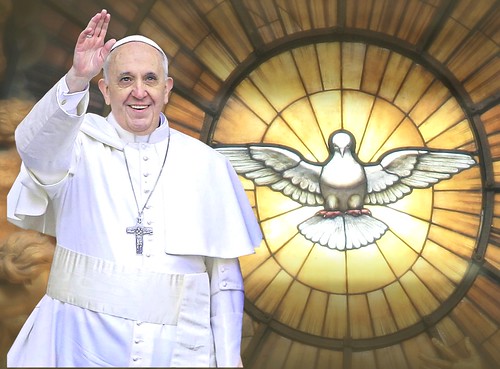
David Quinn is, like a lot of us, amazed to read and listen to reports that essentially pit Pope Francis against the teachings of his own church. Writing in Friday’s Irish Independent, he parses the words of the Pope and equates his papacy more with that of Pope John XXIII, seen by many as a “liberal”, than with that of his two predecessors.

But was John XXIII a liberal? He was a Vicar of Christ, faithful in every detail to his Master’s teaching and the Tradition of His Church – that is tradition with a capital “T”, which should not be confused with tradition with a small “t” – just as his successors were and just as Francis most emphatically is. Both of them, John XXIII and Francis, very clearly distinguish between the two. Nor is there any evidence to show that any of the three popes (the short reign of the fourth, John Paul I, we leave aside for the purposes of this consideration)  who occupied the Chair of Peter between these two were in thrall to tradition with a small “t” either.

Is there any word more corrupted by usage than the word “liberal”? If liberal were really understood to mean what it is supposed to mean we could avoid a  great deal of confusion.  We would have no difficulty in accepting the actions of those who wish to preserve traditions that are good as equally free – in other words liberal  – as the actions of those who are prepared to discard traditions which have passed their sell-by date. Christ was a liberal in the truest sense of the word and anyone who claims to follow him should also be a liberal. He is the very ground of freedom, he is its author. It is on this ground that all five popes who are now the focus of so much speculation stand.

David Quinn attributes a great deal of the confusion which is now rampant to the “wishful thinking” of the liberals. But these “liberals” seem to live in a world, a fantasy world, where the word liberal means in many cases the contrary of what it really means. It really signifies a kind of slavery to their own ideological perceptions of the truth. It must be said that conservatives are guilty of a similar distortion of language and end up enslaved to the act of conserving regardless of the value of what they might be conserving. The liberality of valuing a free and open discussion is not the same as a “liberality” of compelling the endorsement of change driven by one particular ideology or way of seeing this world or the next.

John XXIII, David Quinn writes, was happy enough to see various aspects of church life and teachings discussed openly and a new approach adopted in certain areas but he was in no way a radical who supported a radical transformation of the church’s essential message.

The public are receiving an extremely skewed version of Francis. They hear that he said he does not judge gay people who are “seeking God”, but they do not hear that in the very next breath he said the Catechism explains the church’s teaching on homosexuality very well.

Whenever he criticises people in the church who are “rigid” it is widely reported. But when he criticises the opposite tendency, it receives far less coverage.

In his speech closing the synod on the family last weekend in Rome, the Pope spoke of both tendencies.

 On the one hand, he spoke of “a temptation to hostile inflexibility” which is “the temptation of the zealous, of the scrupulous, of the solicitous and of the so-called – today – ‘traditionalists’ and also of the intellectuals.”

Did he mean John Paul II by this? Did he mean Benedict XVI? No, he did not. After all, he recently presided over the canonisation of John Paul. Would he have presided over the canonisation of a man he believes was guilty of “hostile inflexibility”?

On the other hand, he spoke of, “The temptation to a destructive tendency to goodness that in the name of a deceptive mercy binds the wounds without first curing them and treating them; that treats the symptoms and not the causes and the roots. It is the temptation of the ‘do-gooders,’ of the fearful, and also of the so-called ‘progressives and liberals.'”

David catalogues some of the positions held by the “liberals” who would see themselves as allies of Francis – or, more likely, see him as their ally. In doing so he shows how far removed many of them are from reality. The positions they hold are profoundly at variance with the teaching of the Church which has been so clearly preached in countless sermons by this pope, even in his short reign so far. David Quinn explains:

They don’t believe in the hierarchy. They don’t believe that the church is “One, Holy, Catholic and Apostolic”.

They don’t believe Jesus founded an ordained priesthood, even indirectly.

They don’t believe that the bread and wine become the Body and Blood of Christ at the Consecration.

They don’t believe marriage is indissoluble, despite what Jesus taught. They don’t believe that marriage is by its very nature the sexual and emotional union of a man and a woman.

Some don’t even believe in the Incarnation. They don’t believe that Jesus rose literally and physically from the dead.

They dismiss all the miracles performed by Jesus and explain them away in purely naturalistic terms. (Question: if you believe God created the universe, isn’t it fairly trivial to then believe in the miracles of Jesus? After all, if God can create the universe, don’t you think he could turn water into wine, or multiply the loaves and fishes?)

Pope Francis is absolutely not a liberal in this sense. What he is simply trying to do is make the church’s message more convincing, that is, to present the Gospel of Jesus in a new way.

He knows that when many people think about the church’s teaching on relationships and sexuality, they think “harsh and judgmental”, even though you would be extremely hard pressed on any given Sunday to hear a priest preach about the family in a way that is even remotely harsh and judgmental.

You would also be hard pressed to find many people who even understand the church’s teaching on the family and why it thinks marriage is so important and why weakening that teaching, far from being an act of “mercy”, would in fact do a huge disservice to society.

The model for all Christians is Christ. The model for the Vicar of Christ on earth is, par excellence, the Good Shepherd. That model, preached explicitly by Christ, was lived in practice by him and that living example was recorded for us in a number of instances.

One was when he scandalized the Pharisees by dining with sinners – and we are not told that they were just considered to be sinners. He even dined with arrogant Pharisees. The scandal of the Pharisees many not be that far removed from the scandal of those shocked by the merciful words of Francis towards us in our struggles to live up to our faith.

Another was when he rescued the woman about to be stoned for adultery. In neither case did Christ say a sin was not a sin. In one he explained that he came to heal the sick, not the healthy. In the other, while he said “neither do I condemn you”, he also exhorted the woman to “go an sin no more”. He “welcomed” and loved all these people.

Pope Francis, in our time, is giving us all the living example of Christ. He is, as St. Catherine of Sienna said, “the sweet Christ on earth”. He is saying to us, “Go and do likewise.” He is giving us a great deal to think about – and for a bonus he has galvanised the attention of the world to the Word of God in a positive manner we have not seen since the early days of the pontificate of St. John Paul II.

Good reasons and, well, not-so-good reasons for reading great literature

This interesting article in Spiked.com overstates, I think, the case against literature as a valuable moral eye-opener. It may not be the purpose of Art, nor the reason for its existence – no more that it is the purpose or meaning of our own existence. It may not open everyone’s eyes but nevertheless, the insights it gives us to the human condition should not be written off as useless.

Just as we know that a work of art can be corrupting – remember Dorian Gray’s appeal to Sir Henry Wotton: promise me that you will never give that book to anyone again? – we can assume that art may also influence for the good.

In the past, if you asked someone why you should read Shakespeare, they’d probably give you two reasons: his work is beautiful; and it makes demands of us, prompting us to think a bit harder, a bit more deeply. These reasons remain true today. But there are also two bad reasons to read Shakespeare. And, unfortunately, it is these reasons that are increasingly being advocated today.

Bad reason number one: Shakespeare’s good for activating neural activity. That’s right, certain academics have been conducting all manner of neuroscientific experiments on Shakespeare readers – they’ve even come up with a piece of research entitled Event-Related Potential Characterisation of the Shakespearean Functional Shift in Narrative Sentence Structure. I kid you not. By observing the amount and location of neural activity in people’s brains while reading Shakespeare compared to lesser playwrights, the study found that, lo and behold, there’s more going on in the brain when people read the bard. Apparently, this is because he uses words in unusual and unexpected combinations.

You don’t need to be a neuroscientist or literary expert to see that this insight is banal at best. There are easier and quicker ways, I’m sure, to boost your neural activity if that’s what you really want to do.

Bad reason number two: reading great literature can make us better people, more empathetic and more compassionate. For example, psychologists David Comer Kidd and Emanuele Castano applied ‘theory-of-mind techniques’ to people who had been randomly assigned either popular and non-fiction books or literary classics. They ‘found’ that the latter group was better at identifying emotions in others.

This is a very self-flattering idea for those of us who like reading literature. Unfortunately, it’s just not true. In Literary Education: A Revaluation (1963), James Gribble argued convincingly against the literature-makes-you-more-empathetic fallacy. He points out that a direct correspondence between how we feel about characters when reading, and how we feel about people in real life, ignores the efforts and talents of the writer. It is through the art of writing literature that a writer can make it easy for us to feel sympathy for a character who, if we encountered them in real life, we may well struggle to give the time of day to. Empathy and compassion arise from a moral sense we all have, irrespective and independent of any knowledge of literature.

An important and worthwhile aspect of reading literature is that it demands we interpret the work. This involves considering both its objective form and the contents of our subjectivity. It involves making judgements based on our interpretations. This capacity to interpret and understand for ourselves, rather than take something as given, is something we can bring to bear on other areas of life, including attempts by academics to justify art in terms of science or moral virtue. If we permit these bad reasons to dominate the way we understand and justify reading Shakespeare, we go against his own profound humanism.

Alka Sehgal Cuthbert is reading for a PhD in the philosophy of education. She is a member of the Institute of Ideas Education Forum.

How significant is this?

LifeSiteNews reported yesterday (Friday) that on Tuesday, Pope Emeritus Benedict XVI’s private secretary read out a speech written by the retired pope at the Pontifical Urbaniana University in Rome.  In it, Pope Benedict emphasizes that the mission of the Church is to preach the truth of Christ even though the tendency today in the interests of realism and peace is to renounce the truth. This, says Benedict, “is nevertheless lethal to faith.”

According to Francis X. Rocca of the Catholic News Service, Benedict recalled that despite the Christian vocation to preach the truth of Christ, “many inside and outside the church ask themselves today” if we should not change. “Would it not be more appropriate to meet in dialogue among religions and serve together the cause of world peace?’”

“In fact, many today think religions should respect each other and, in their dialogue, become a common force for peace,” wrote Benedict. “According to this way of thinking, it is usually taken for granted that different religions are variants of one and the same reality.”

“It is assumed that the authentic truth about God is in the last analysis unreachable and that at best one can represent the ineffable with a variety of symbols,” he continued. “This renunciation of truth seems realistic and useful for peace among religions in the world. It is nevertheless lethal to faith. In fact, faith loses its binding character and its seriousness, everything is reduced to interchangeable symbols, capable of referring only distantly to the inaccessible mystery of the divine.”

For more see Rocca’s article here.

The powers that corrupt us

Julia Holcomb and Aerosmith’s Steve Tyler

Suppressing anger was the most difficult thing – anger about injustice, dishonesty and manipulation of people and the truth itself. Generating hope was the second – not that the thrust of the conference was ignoring the vital need we all have to sustain our hope.

The conference in question was the recent think-in of Ireland’s Pro Life Campaign on the greatest evil of our time – the wholesale slaughter of the innocent, already a reality across much of the globe. Forget ISIS, forget the local spat in Ukraine, forget the untold evil being perpetrated in North Korea. No, don’t forget them. That would also be evil. But do get them in perspective. The loss of life being inflicted through the world’s abortion agencies has now put Genghis Khan in second place. Despite the denials of abortionists, we are talking about loss of life. The irrationality of those who try to maintain that the creature awaiting delivery from its mother’s womb is an inanimate collection of tissues is astounding. They offer nothing more than slogans and mantras in answer to the wealth of scientific evidence showing that what is awaiting birth is a human being. Their repeated use of the word ‘fetus’ is just one example of their attempt to brain-wash the truth away. Not only are they the  enemies of the unborn. They are also the enemies of reason.

There was some comment last week on a slogan scrawled by the Taliban on the walls of the ministry of justice in Kabul: “Throw reason to the dogs, it stinks of corruption.” We know that this is the modus operandi of one strain of Islam and we see every day where this corrupted vision of human nature has landed that sorry part of the world. When reason is thrown to the dogs then you end up in the doghouse. The “pro-choice” movement is a movement based on a false premise, using corrupted language – their premise is that the unborn child is not a human being.

The Dublin conference was told that Ireland’s politically corrected power-elite has now injected one of the most virulent strains of this evil into the country’s laws. Ireland had already been infected with this virus – with between three and four thousand babies being shipped for termination to Great Britain every year by abortion counselling agencies – euphemistically called family planning clinics of one kind or another. But Ireland’s new abortion law – which will forever be known as Kenny’s Law after the wise and wonderful Taoiseach, Enda Kenny – is potentially among the most lethal in the world, permitting the termination of a baby’s life right up to the moment before its natural birth.

It was hard not to be angry listening to descriptions of this injustice and the catalogue of political shenanigans which went into its perpetration. But there was hope. It came in the form of some human stories. Essentially they were redemptive stories of conversion and the transformative power of  simple reflection and contemplation on the treasure that is human life, seen in the face of a new-born baby, seen in the ultrasound image of a baby’s beating heart, even perceived through the painful experience of the loss of a child at the hands of manipulating and selfish third parties.

This latter story came from Julia Holcomb. It is a harrowing story of family dysfunction, child abuse at the hands of a rock star, attempted murder and forced abortion – but ultimately of conversion and forgiveness. Julia’s story – available to view and read on the Internet on the LifeSiteNews website – tells us not just a story of abortion but shows us the trail of unhappiness, disorder, and pain left by a society given over to selfishness and the untrammeled pursuit of pleasure.

Steve Tyler, the rock star in question, himself not unconscious of his guilt, is quoted as saying in the aftermath of the act where he forced the abortion on Julia, “It was a big crisis. It’s a major thing when you’re growing something with a woman, but they convinced us that it would never work out and would ruin our lives. … You go to the doctor and they put the needle in her belly and they squeeze the stuff in and you watch. And it comes out dead. I was pretty devastated. In my mind, I’m going, Jesus, what have I done?” That is how grim it all is.


Then came more anger. This was a roller-coaster of a conference. The vice-chair of the Pro-Life Campaign, Cora Sherlock, was upbeat and optimistic in outlining the achievements and plans of  the movement. But when she got around to talking of what she saw as the single biggest challenge facing them in their struggle for the unborn, anger and frustration began to mount. The number-one enemy of the unborn in Ireland is the country’s mainstream media.

From playing a role as an even-handed communicator of the facts and opinions of both sides in this undoubtedly divisive debate, it has become the number-one advocate in the campaign to bring abortion into Ireland. I have a Google alert set up for news stories on the topic. About 90% of what is flagged to me from Irish media is pro-abortion. On the day following this conference I could find no report of it in the main Sunday paper – but there was a feature by one of its specialist writers arguing for a change in legislation to allow the killing of babies with “fatal fetal abnormalities”. We know what that has led to in other jurisdictions – the wholesale killing of babies with Down syndrome.

Clearly the mainstream media in Ireland has set its face against life and has espoused, lock, stock, and barrell, the culture of death – firstly death for the unborn whom any among those already born, with a say in the matter, wish to dispose of; secondly, death as a valid choice for any who wish to terminate their own lives. That is not where we are yet, but what reason is there to think that this is not where we are headed?

All this is, sadly, the inevitable conclusion of any philosophy which sees man as the measure of all things and at the centre of the material world – for there is no other world for anyone espousing this belief. This is the dominant vision in mainstream media – and it is fast conquering public opinion. While it would behove public representatives to think hard and long about where this is leading us, they are not doing so. Public representatives and so-called public intellectuals are in thrall to the advocates of this philosophy. They are all getting on the same bandwagon and leading the people, bit by bit, away from a society where the dominant vision is one preoccupied with the common good, virtue as a value, life as a gift given by a greater power and something which, once given, we are obliged to treasure and care for.

The words of wisdom uttered recently by that towering Irish public intellectual, Gay Byrne, represent the latest example of the salvos being fired in the softening-up strategy of moving our culture of life slowly but surely to a culture of death. The veteran broadcaster has said that he would “have to consider” assisted suicide if he was faced with “a drawn-out illness of great pain”. Pro-choice rules the roost, OK?

The power now in the hands of mankind in so many fields of human endeavour is truly awesome. In relation to human life and the issue of our entry and our exit from the stage we now seem unprepared to brook any interference from the dramatist. With regard to our coming into the world we are at the mercy of the whims of those who should welcome us and care for us in the delicate stages of gestation and birth. They now select at will who may and who may not come through those stages. We are also fast moving to an exit strategy offering the same freedom of choice. Today we are being offered the option of making our exit when we chose to. Tomorrow – indeed it is already there in some jurisdictions, where terminally ill children may be euthanized – others will be making the decision for us.

Remember the words of Lord Acton – “all power corrupts and absolute power corrupts absolutely”.How could we forget, when we have seen the principle fulfilled in so many terrifying instances throughout history? Why should we exclude ourselves from its operation. Our assumption of the powers which modern technology, modern medicine and a truly perverse modern philosophy have put in our hands, while not quite absolute is still unrestrained to the point where our absolute corruption is all but inevitable.

Earthquake – what earthquake?

IMG_0564.JPG

Calm down everybody. Even Time magazine, in a very sensible take on this “earthquake”, is telling us to calm down.

“Looking for revolution,” it tells us, “can be misleading. It can mar the actual story of what is and what is not happening. Casual Vatican observers—especially those in the United States, where conversations about sexuality have a different trajectory than in the Vatican or in many developing countries—should be careful to not read into the conversation what they want to hear. The interest in a relatio, a relatively obscure document, does however point to another shift: people actually care about what a group of bishops is doing.”

Taxation and families – an Irish perspective

IMG_0264.JPG

This is posted for the benefit and interest of those who may not be subscribers to Ireland’s Iona Institute website. It reveals the startling way in which the country’s tax system is penalising the traditional family – and what hurts the family ultimately hurts society.

The Institute has commissioned this paper and it should shame those who are victimising families where one parent opts to stay at home and follow the surest way of building an affectionate, attractive and healthy family environment. The ideology which has left us with this iniquitous system is as stupid as it is unjust. Judge for yourself.

We CAN know the truth

Charles Taylor explained it in his own way in A Secular Society. That was a difficult but rewarding read. Alasdair MacIntyre worried us all about it in his very sobering After Virtue. Then Brad Gregory took up the theme compellingly in The Unintended Reformation. But if you want to go for a very short and succinct treatment of what happened to our Christian Civilization over the past 500 years try Fr. Brian McKevitt’s version of the story in a short homily he delivered last month. Not only did he tell us how we got here but he very helpfully suggested to us what we might do to get ourselves back on track before we all eat ourselves alive.

Fr. Brian is an Irish Dominican priest who edits a monthly paper which some feel is one of the few things which is keeping Irish Catholics informed about the state of their religion in the world today. The paper plays all the tricks of the tabloids without being a tabloid and is read, standard systems of estimating these things would calculate, by at least a million people every month. Others feel that if there is one single organ keeping some semblance of Catholic orthodox belief in the country alive and kicking today it is Fr. McKevitt’s Alive!

If you like it please spread it around.

Playing with a scorpion: do it properly or don’t do it at all

20130322-155418.jpg

To grip this nettle danger, wise and experienced heads are telling us, we will have to stop playing “make-believe”.
“If western boots were on the ground,” General David, now Lord Richards tells Mehdi Hasan, “Isil could be defeated “in six months”. The former Chief of the Defence Staff sat down with the Huffington Post (read it here). The PM shares something of the same attitude as his predecessor-but-one, Tony Blair, says Lord Richards. “There are bad things happening in the world and they would like, with others, to do something about it. I think they do enjoy being influential, feeling that together with others they are making a difference. It’s quite a drug. What I have been saying is that if you want to do that, for goodness sake, please do it properly, full-bloodiedly. Don’t play at it.”

Confirmed – the tip of the iceberg

Channel 4 in Britain tonight revealed what many had already expected – the child abuse revelations which emerged earlier this year after the investigations in Rotherham in South Yorkshire were only the tip of the iceberg of the abuse epedemic in the country. Rotherham was not an isolate black spot.
News

The scale of abuse in Rotherham shocked many, but depressingly few of those working at the frontline of child sexual exploitation (CSE). As one support worker told me: “Rotherham is not the exception, it is more likely to be the norm.”

But what was different about Rotherham, was a number – 1,400. That is 1,400 childhoods stolen and families broken. It is hard to conceive in a town of around 250,000 people.

Victims and parents were ignored and at times, treated with contempt by the authorities. It rightly prompted questions about who knew what and why they did not act.

We saw young girls in the early hours of the morning coming in and out of buildings with different men.

But while the victims, now young women, wait to see if their cases will make it to court, grooming continues.

Channel 4 News has obtained figures that show high levels of children at risk of CSE in England in the first six months of this year – in fact, thousands of children are at risk, including in some cases, babies. What we found surprising was the admission by some councils that they only started recording CSE referrals last year.

The data includes a range of abuse and it is recorded in different ways by different councils. However, we wanted to look at grooming and the picture beyond Rotherham.

There have been great strides made by police, social services and charities in some parts of the UK. In Keighley, in a project run by The Children’s Society, former victims of grooming are now acting as mentors to other vulnerable girls and boys. They are taught to spot warning signs and recognise what is unhealthy behaviour. It is significant progress in a town where in 2002, the Labour MP Ann Cryer became the first public figure in Britain to speak out about allegations of “young Asian lads” grooming underage white girls in the West Yorkshire town.

The clock is ticking

But there is no one national support programme, nor is there one single pattern to the abuse or abusers. And the clock is ticking. I was told by one woman working with affected families that a referral to a specialist CSE team within the first six months of the abuse starting is vital. Otherwise the child can become trapped in the abuse, distorting their perspective of a healthy relationship and leading to further trauma that can affect brain development.

We spent three nights in Bradford, one of the towns with the highest number of CSE referrals in England in 2014. We spoke to young people and tried to observe what was happening on the streets. Some of the young girls from Rotherham say they were trafficked to Bradford. It is a lively and multicultural city, but young people told us the reporting of grooming cases has created racial tension.

It is hard to define what we saw, but there were unsettling moments. Within minutes of arriving, we spotted a police officer looking for a missing 14-year-old. He said: “This happens all the time in Bradford and the girl goes missing two or three times a month.”

Rotherham is not the exception, it is more likely to be the norm.Support worker

It is a familiar feature in grooming cases around the UK. Minutes later, we saw young girls in the early hours of the morning coming in and out of buildings with different men. It is difficult to know their age, but they looked like vulnerable teenagers. In the red light area, we also witnessed a group of men abusing a sex worker.

But there is division in the way people describe the situation in Bradford and in many other cities where sexual abuse has been identified. We met a group of young people that in some ways symbolise that divide. A 15-year-old girl told us her mother had moved her out of nearby Keighley because she and her sister were approached a number of times by older white and Asian men. But the girl’s friend, who is Asian, says the media has unfairly focused on grooming gangs with Pakistani heritage. He claims to have been stopped by police simply because he was walking with a white girl.

His concern is backed up by some of the parents we spoke to in the rest of the country. We met one, called Jenny, whose daughter Sarah (not their real names) was abused by a group of white boys from the age of 12. The perpetrators were teenagers – something she feels is often overlooked.

Our film, broadcast on Channel 4 News at 7pm tonight, is only a snapshot of a hugely complex issue. But we hope it goes beyond the issues raised in Rotherham and reflects some of the current challenges and successes in tackling grooming.