Moved by the muse…

20130912-141441.jpg

Simon Schama, currently exploring the history of the Jews on BBC Two, is the guest contributor to Prospect Magazine’s quirky column, “If I ruled the world” this month.

While saying emphatically that he does not want the job he does give us a short wish-list of some of the trivial and not so trivial challenges he would take up if forced to put on the mantle of world leader.

In the latter category is the not very surprising but highly commendable desire to make it compulsory for people to study history up to 16 years of age – and for a minimum of two hours a week. His reflections on the subject are worth relaying, as also are his take on religious tolerance.

“It’s important for children to learn history because if you don’t know where we’ve come from, you don’t have much of an anchorage for the present. For example, once upon a time, Britain was a compulsively, ferociously Christian country. We fought the Civil War over religion and our religious wars didn’t stop until the 18th century. Because of that, we should be in a position to understand when religion, for better or worse, becomes political, as it is in a large part of the world.

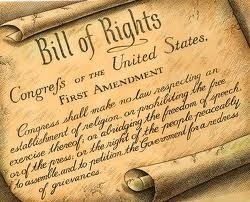
“If I ruled the world, I would make it impossible to make “sin” a crime. I would make it a matter of international human rights that nobody should ever be prosecuted, much less punished, for blasphemy. Jefferson argued for that in 1770 but it doesn’t seem to have come about. I’m not an atheist, but I do think that everybody should be allowed with absolute impunity to profess whatever religion they have, or none.”

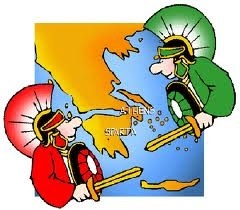
“History”, he concludes, “is a tragic muse. One of its great founding moments is the Peloponnesian War and the whole majestic, terrifying drama of that builds up to the expedition against Syracuse that sees Athens sailing into massive hubris. That is good, honest, western history. It should never be self-congratulation; it should keep people awake at night.”

Ruairi Quinn, Ireland’s Minister for Education, who is killing any real history teaching in Irish schools, and other totalitarians or would-be totalitarians masquerading as liberals, please take note.

Also in this month’s Prospect, A. C. Grayling touches on the uses and abuses of history – for there is no doubt but that the greatest villians have put history in shackles to serve their nefarious ends.

He writes of the abuse of history to serve the ends of “the arrant nonsense we call nationalism, patriotism and other dangerous absurdities”. Noting that most borders between states were drawn in the blood of wars and are highly artificial things, “a fiction of history” – in other words, not really history but only imagined history – “an uneven line on a map turned into a fetish.”

“All over the planet”, he notes, “there are claims by one country to ownership of part or even the whole of another. One of the more comical is Spain’s claim to Gibraltar – comical because Spain possesses about a dozen Gibraltars on and around the North African coast and even inside France… Yet Spain wants Gibraltar ‘back’. It has about as much right to it as Turkey has to Spain itself, through the historical link of the Caliphate.”

He talks a lot of sense. Why can’t we all grow up and preoccupy ourselves about the things that really matter?

The threatening conflagration of the Islamic world

David Brooks had an interesting – and worrying – article in the New York Times on August 29, in which he quoted this assessment of the Arab crisis which – in more optimistic times – we used to call the Arab Spring.

The strife appears to be spreading. Sunni-Shiite violence in Iraq is spiking upward. Reports in The Times and elsewhere have said that many Iraqis fear their country is sliding back to the worst of the chaos experienced in the last decade. Even Turkey, Pakistan, Bahrain and Kuwait could be infected. “It could become a regional religious war similar to that witnessed in Iraq 2006-2008, but far wider and without the moderating influence of American forces,” wrote Gary Grappo, a retired senior Foreign Service officer with long experience in the region.

“It has become clear over the last year that the upheavals in the Islamic and Arab world have become a clash within a civilization rather than a clash between civilizations,” Anthony Cordesman of the Center for Strategic and International Studies wrote recently. “The Sunni versus Alawite civil war in Syria is increasingly interacting with the Sunni versus Shiite tensions in the Gulf that are edging Iraq back toward civil war. They also interact with the Sunni-Shiite, Maronite and other confessional struggles in Lebanon.”

The borders of Islam remain bloody but the heartlands of the Middle East and North Africa now seem far more threatening. The dimensions, the character, and the irrationality of this conflict are such that the rest of the world may have little option other than looking on in horror.

A voice from an age of innocence – and wisdom

Contending with the Waste Land

Certainly, if the headlines are anything to go by – and it’s better not to go too far beyond the headlines on this one – August was a wicked month for teenagers and their reputation for any kind of propriety and common sense this year.

Did “Slanegirl” and Miley Cyrus really say it all? Hopefully not. Nevertheless, something I found among some old papers – harking back to the month of August, precisely, 110 years ago – made me feel a little like old Tiresias contemplating more young men carbuncular than even he had to perceive. It was the contrast which hit home.

On an August day in 1903, a young 18-year-old girl was passing the time in her family home in Donegal when an inconsequential idea struck her. The house may have been undergoing repairs – or at least some floorboards were loose. She got the idea, executed it and then, probably forgot all about it. It took nearly a hundred years for her idea, in terms of the request which it embodied, to have any consequence at all.

Annie Brigid – for that was her name – wrote a message, put it in a bottle, and placed it under the floorboards in her house. Her little trick only came to light in 1997 when workmen with the National Parks and Wildlife Service – which now owns the house – discovered her bottle and its message.

That a young girl should do this in an idle moment is not what is particularly interesting. What her message reveals about herself and her time is what is remarkable. It is remarkable in the stark contrast it shows between her preoccupations, her vision of life and its ultimate destiny, and those reflected in the behaviour of our contemporaries of a similar age.

Annie’s message was this: “I, Annie Brigid Evangeline MacGlinchey, aged 18, write this on 27th day of August, 1903, and intend putting it in a bottle under the floorboards upstairs. Whoever finds it, I ask that person to pray for my soul. If not, my ghost will walk about upstairs. Annie B. E. MacGlinchey, Undergraduate, R.U.I.” (Royal University of Ireland).

A jest? Yes, but like many jests, revealing more than they may mean to reveal. The poignancy for us comes with the question, would any teenager in a thousand today, in a 100 thousand even, think of writing a message like this? Among the few million on Copacabana beach this summer would we have found even a few who might think it important to ask someone to pray for their soul?

I wonder what Annie Brigid might have thought of the preoccupations of contemporary Ireland this summer when a Bishop was heaped with sanctimonious opprobrium for failing to feel the pain of those who saw their relatives and friends pass from this life. He had the temerity to try to bring his Catholic people back to an understanding of what funeral Masses were supposed to be about, intercession with God for the souls of the departed. Annie knew, and we might remember her request in gratitude for reminding us of what we foolishly choose to forget.

Addendum – in case you don’t feel my Tiersian pain, read this from the Washington Post today.

Campaigning journalism has corrupted our media

BRENDAN O’NEILL writes in the current post fro Spiked.com,
This week there was international outrage over the questioning of a Guardian journalist’s partner by anti-terrorism police at Heathrow. But there was no outrage, zilch, over the revelation on Thursday that a Sun journalist who was arrested in a dawn raid and subsequently spent 13 months on bail on suspicion of handling a stolen mobile phone had in fact never set eyes on the phone. Nine hours’ questioning of a friend of the Guardian provokes a storm; the placing of scores of tabloid journalists on year-long bail, often on very flimsy charges, causes no storm. Double standards have never been as explicit as this, and it’s press freedom that suffers – for that requires moral consistency, a willingness to defend redtop as well as respectable hacks from the long nose of the state.

Has international media ever been as blind as this? Add the persecution of Christians in Egypt to this, not to mention the shameless non-coverage of the Gosnel trial, the gay agenda support without even a shadow of serious analysis, and you can only conclude that journalism has surrendered itself to blind campaigning at the expense of telling the simple truth.

“Stark reality” of what Irish lawmakers have done begins to unfold

Irish media reported today that the first abortion has been carried out in a Dublin maternity hospital under its new law. The reports, it transpired, were inaccurate and a government agency spokesperson clarified in the course of the day that the law has not yet come into force. The significance of the reports, however, is that they show the blurring of the lines between what is ethical medical practice and the muddled practice that is likely to follow from this legislation and which may be anything but ethical.

The Irish Times once again enraged readers with its heavily nuanced report in which it was not difficult to detect, reading between the lines, its triumphal view that this was more evidence that the march of progress in Ireland was well under way.

The Pro Life Campaign (PLC) issued a statement in response to the reports. Dr Ruth Cullen, its chairperson, said: “While the precise circumstances surrounding the intervention in this tragic case are unknown, what is clear is that the Government’s abortion legislation permits doctors to blur the distinction between necessary life-saving interventions in pregnancy and induced abortion (where no effort whatsoever is made to save the life of the baby).

“Now that the blurring of such important ethical distinctions is permitted in law, it is inevitable that abortions directly and intentionally targeting the life of the unborn child will take place, even on the threat of suicide ground, where there is no medical evidence to justify an intervention.

“This is the stark reality of what members of the Oireachtas voted for recently and why the pro-life movement was so vocal in its opposition to the Bill.

“The new abortion law was not needed to safeguard women’s lives in pregnancy. The tragedy reported today of a mother losing two children has been used again to give the misleading impression that the recent abortion legislation was needed to safeguard women’s lives.

“The HSE confirmed today that the law has not yet come into force. On foot of this, one has to ask is The Irish Times suggesting that the law was broken by the doctors in Holles Street or does it now accept that the new law was not needed to protect women’s lives?

“In truth, life-saving interventions have always been in place. Ireland, without abortion, is a recognised world leader in safety for pregnant women. It is a tragedy that those campaigning for abortion legislation have been successful in creating the opposite impression,” she said.

Dr Cullen also expressed concern at the way The Irish Times today repeated the claim that Savita Halappanavar died because she was denied a termination of pregnancy.

“The Irish Times has obviously decided to ignore the conclusions of the coroner’s inquest into the tragic death of Savita and decided instead to stick rigidly to its original misleading presentation of what happened. This is most regrettable,” Dr Cullen concluded.

Court Ruling Against Christian Photographer

20130823-121716.jpg

In shreds?

WASHINGTON, D.C.- August 22, the New Mexico Supreme Court in Elane Photography v. Willock, ruled against a Christian photographer who, citing her deeply held religious beliefs, declined to work a same-sex commitment ceremony. New Mexico law does not recognize gay marriage or gay civil unions. A recent Rasmussen survey found that 85 percent of Americans support the right of a photographer to refuse participation in a same-sex “wedding.”

Ken Klukowski, Family Research Council’s Director for the Center for Religious Liberty released the following statement:

“The New Mexico Supreme Court’s decision is profoundly disturbing. That court explicitly declares that a person’s sincerely-held religious beliefs–in this case, traditional and orthodox Christian beliefs–do not permit them to run their privately-owned business in accordance with their religious beliefs. This decision would stun the Framers of the U.S. Constitution, is a gross violation of the First Amendment, and should now be taken up by the U.S. Supreme Court to reaffirm the basic principle that the fundamental rights of free speech and the free exercise of religion do not stop at the exit door of your local church, and instead extend to every area of a religious person’s life.

“This decision may bring to Americans’ attention the serious threat to religious liberty posed by overbearing government agencies when it comes to redefining marriage. Rather than live-and-let-live, this is forcing religious Americans to violate the basic teachings of their faith, or lose their jobs,” concluded Klukowski.

Who’s the smart one then?

20130822-114906.jpg

Sean Thomas, a novelist, journalist and travel writer who also publishes thrillers under the name Tom Knox, has now entered the fray of the intelligence-and-atheism debate. He concludes, on the basis of a “vast” range of research, that whatever about intelligence, they seem to have serious mental health problems. No wonder they’re happy, he says. Well, are they? Richard Dawkins never looked very happy to me.

I am a former subscriber to Prospect magazine. I’m not any more and although it is admirable in many ways, the last straw was when its readers chose Dawkins, the world’s leading public atheist as the world’s leading public intellectual as well. To be a subscriber to club in which that was the dominant view was more than I could take. What were they thinking? Maybe it was a joke.

Thomas asked on his Daily Telegraph blog last week, not who is more intelligent, the atheist or the believer, but “who is living more intelligently?”

And guess what, he told us, with his tongue only slightly to one side: “it’s the believers. A vast body of research, amassed over recent decades, shows that religious belief is physically and psychologically beneficial – to a remarkable degree.”

After citing all the research – which you can read for yourself here – he then asks: So which is the smart party, here? Is it the atheists, who live short, selfish, stunted little lives – often childless – before they approach hopeless death in despair, and their worthless corpses are chucked in a trench (or, if they are wrong, they go to Hell)? Or is it the believers, who live longer, happier, healthier, more generous lives, and who have more kids, and who go to their quietus with ritual dignity, expecting to be greeted by a smiling and benevolent God?
Obviously, it’s the believers who are smarter. Anyone who thinks otherwise is mentally ill.
And I mean that literally: the evidence today implies that atheism is a form of mental illness. And this is because science is showing that the human mind is hard-wired for faith: we have, as a species, evolved to believe, which is one crucial reason why believers are happier – religious people have all their faculties intact, they are fully functioning humans.
Therefore, being an atheist – lacking the vital faculty of faith – should be seen as an affliction, and a tragic deficiency: something akin to blindness. Which makes Richard Dawkins the intellectual equivalent of an amputee, furiously waving his stumps in the air, boasting that he has no hands.

Thomas says he is currently writing a memoir of his extremely misspent youth, and similarly misspent adulthood, and tweets under the name @thomasknox.

The fifth horseman of the apocalypse

20130821-105520.jpg
Mark Ruffalo

If these ‘Top Stories’ on LifeNews.com don’t tell us that our civilization is deep in the mire of the culture of death, what do they tell us? It is hard not to think that we are in the age of an apocalypse. The barefaced aggressiveness of the advocates of this slaughter is increasing by the hour. What is it going to take to bring mankind to its senses?

Top Stories
• Actor Mark Ruffalo Proud of His Mother for Aborting His Sibling
• Neighbor Tells Mom: Kill Your Autistic Teen Because He’s Annoying Me
• Police: Letter Asking Mom to Kill Her Autistic Son Not a Hate Crime
• $1 Million in Obamacare Funding to Planned Parenthood Just the Beginning.

But, thankfully there are other voices. Today’s Irish Independent reports one of them: Daniel Day Lewis speaking movingly about his latest project. No, not a film project this time.

Day Lewis (56), who won his third Oscar for historical drama ‘Lincoln’, told the Irish Independent: “There are many ways of measuring the evolution of a society but one of them is the way we treat the most vulnerable in a community.

“Newborns, children, the sick, the disabled, the dying…  if we do not make them a priority we have not right to respect ourselves as a society.

“As much as it is personal for us to have these facilities in Wicklow it is also important for us to be doing things of value in this country when we are so often led to believe that the doldrum will finish us all off.”

Us and them, or all for one and one for all?

20130820-125926.jpg

Reflecting on the end of an 18 year tour of duty for the New York Times in London, Sarah Lyall writes about English people’s search for identity and meaning: “Who are we, and what is our place in the world? It wasn’t until the opening ceremony of the Olympic Games last summer, with its music medleys and dancing nurses and quotes from Shakespeare and references to Mary Poppins and sly inclusion of the queen and depictions of the Industrial Revolution and compendiums of key moments in British television history, that the country seemed to have found some sort of answer.

It was a bold, ecstatic celebration of all sorts of things — individuality, creativity, quirkiness, sense of humor, playfulness, rebelliousness and competence in the face of potential chaos — and more than anything I have ever seen, it seemed to sum up what was great about Britain.”
What she does not tell us is that this particular answer was the masterwork of the son of Irish immigrants, Danny Boyle.

Which might seem to suggest that stereotypes are funny things and should always be taken with a pinch of salt. Taken to extremes they can even poison us.

Sarah Lyall’s full article, full of sharp insight, is here.