“When I use a word,” said Humpty-Dumpty Kenny “it means just what I intended it to mean, and neither more nor less.”

Paraphrasing Lord Hartley Shawcross: “The Dáil is sovereign; it can make any laws. It could ordain that all blue-eyed babies should be destroyed at birth, and because the Dáil so declared it, it would be legal.” More or less, setting aside the small complication of a Supreme Court appointed by the same sovereign and a Head of State who owes his position to the manipulation of the Fourth Estate. We will have legal abortion in Ireland in a matter of weeks.

Legal, but utterly immoral. It is not enough that Parliament “reflect” society. Parliament’s duty is seek justice and legislate according to the principles of that justice and right reason. In the Irish parliament’s debate on abortion – and debate was all it was, a debate without any determining effect – one member spoke of Ireland’s old law prohibiting the destruction of children awaiting birth as being “out of kilter with society”. Well, that parliament has now changed this and by an abuse of the spirit and letter of its Constitution has legalized the snuffing out of those lives.

Abuse? Yes. The party system, governed by a whip regime, the exercise of which in this case proved to be nothing short of totalitarian, has lead to this immoral law being passed and in the process of so doing  has denied the representatives of the people their fundamental right of personal political judgement and freedom of conscience.

But what was more frightening about the entire process which has led to the passing of this bad law was the abuse of language. Yesterday’s statement from the Pro Life Campaign  outlines some of it – the questions which the Parties-in-Power refused to answer or answered with blatant untruths. But it went much farther that this. It was indeed surreal. It reminded one of Alice in Wonderland.

‘“When I use a word,” said Humpty-Dumpty “it means just what I intended it to mean, and neither more nor less.”

“But,” said Alice, “the question is whether you can make a word mean different things.”

“Not so,” said Humpty-Dumpty,” the question is which is to be the master. That’s all”.’

Taoiseach Enda Kenny kept telling the Irish people that he was not changing Irish law, that he was not introducing abortion to Ireland, etc, etc. Yet the international Press, the pro-abortion lobbies across the world were rejoicing at what he was trying to do and are celebrating today. They grasped the truth of all this. Is he stupid? does he think the Irish people are stupid? Or is he Humpty Dumpty?

But Humpty-Dumpty had a great fall. Mr. Kenny’s natural political life is coming to an end. Most people expect that he will not contest another general election. Some regret that because they would like to see him fall like Humpty Dumpty.

“My end is my beginning”, Mary Queen of Scots, is reported to have said before she went to the block. Ex-Minister Lucinda Creighton will not go to the block but had she lived in the age of Mary she might have. Nevertheless, very many Irish people hope that Queen Mary’s words will apply to her – that Kenny’s taking of her political life will be just the beginning of a political life free from a system as corrupt as that which he sought to impose on her. She and the four party colleagues who broke from the straitjacket their leader tried to force them into – along with the senators of the party who will do the same over the next few hours – stand tall among the sad members of that party who professed themselves to be pro-life and then voted for abortion.

Ireland needs a new politics. Lucinda Creighton and her honourable colleagues offer a new hope that the disenfranchised Irish might get this.

A world gone mad

The Week’s Daily Briefing reports: “The decline in couples getting married means that the number of children born out of wedlock hit a record 47.5% last year. If the trend continues, the figure will pass 50% by 2016. Data from the Office for National Statistics also shows a record number of women having children over the age of 40 – up to 29,994 last year from 6,519 in 2002.” And David Cameron persists with his gay “marriage” plan on the pretext that it will strengthen the institution. The world has gone mad.

The peril of forsaking private conscience for the sake of public duty

Should human life be protected in all stages and conditions? Or should abortion and euthanasia be permitted and even promoted as “best” (or “least bad”) solutions to personal difficulties and social problems? Should we preserve in our law and public policy the historic understanding of marriage as a conjugal union-the partnership of husband and wife in a bond that is ordered to procreation and, where the union is blessed by children, naturally fulfilled by their having and rearing offspring together? Or should we abandon the conjugal understanding of marriage in favour of some form of legally recognized sexual-romantic companionship or domestic partnership between two (or more) persons, irrespective of gender, to which the label marriage is then reassigned?

Coming to terms with modernity is one of the fundamental issues of our age and the choices we make in facing this challenge are of such importance that the future of our civilization is truly at stake with the choices we make. The questions posed above are not the only ones which we have to face up to in meeting this challenge – they are currently the frontline questions across many jurisdiction and in the Irish parliament today, one of them is being voted on marking a stage in that nation’s answer to modernity.

But there is a more fundamental Rubicon facing the all those who undertake the care of the Common Good of their peoples in the public square and it is the question of their attitude to that one universal guiding principle which has kept mankind safe from chaos from time immemorial. It is that principle which when he has resisted it, fudged it or abandoned it, has reduced to rubble the community for which he has taken charge or control. This is the principle of conscience.

For over the half of the past decade the world has been grappling with economic chaos. We are still suffering – whether innocent or guilty of the acts which brought it about – in the midst of that chaos. But the common denominator among the primary perpetrators of this disaster was the abandonment of private conscience in relation to their acts. When Gordon Geko declared that “greed is good” he was thought outrageous. But nevertheless, millions followed his example and abandoned the principle of conscience which told them the “No, greed is not good. It is evil”.

The opening paragraph is a quotation from Robert George’s new book, Conscience and its Enemies. In it, mainly in an American context, he says that disputes surrounding those questions posed in relation to life’s beginning and end, and the institution of marriage in between, reflects the profound chasm that separates opposing worldviews. People on the competing sides use many of the same words: justice, human rights, liberty, equality, fairness, tolerance, respect, community, conscience, and the like. But they have vastly different ideas of what those terms mean. Likewise, they have radically different views of human nature, of what makes for a valuable and morally worthy way of life, and of what undermines the common good of a justly ordered community.

There is a truth all too rarely adverted to in contemporary “culture war” debates-namely, that deep philosophical ideas have unavoidable and sometimes quite profound implications for public policy and public life. Anyone who takes a position on, say, the ethics of abortion and euthanasia, or the meaning and proper definition of marriage, is making philosophical (e.g., metaphysical and moral) assumptions- assumptions that are contested by people on the other side of the debate.

It is precisely here that conscience is betrayed and where the phenomenon of groupthink – without our even noticing it – takes control. Once that happens, conscience is diminished or obliterated completely. In that surrender of the free will to the will of some spirit of the age, some party apparatus, or even some leader – be he charismatic or bullying – that personal integrity, supported by an informed and articulate conscience, is forfeited.

All this is not a question of modernity, good or bad? It is simply a question of what kind of modernity? Modernity resting on the truth of our nature as free rational beings and beings whose acts will be guided by reasonably exercised free will, not guided simply by naked and untrammelled emotions, or by the dictate of party apparatchiks.

This is what Ireland faces today. This is what the entire world has to contend with or we will all take that perilous road predicted in the words which Robert Bolt put in the mouth of Thomas More, “Any public servant who would forsake his private conscience for the sake of his public duty leads his country down the short road to ruin.”


Science off the rails

Harald Eia – bewildering stuff

If you did nothing else today but take the 30+ minutes you will need to watch this video your day will be well-spent. It gives a light-hearted but also a chilling example of how intelligent people allow ideology to corrupt both science and our political life and culture. In it we see a bewildered handful of serious scientists trying to come to terms with another group blinded by the politically correct ideology which is currently the driving force behind social policy in the West.

Unintended consequences of Kenny’s final solution to an Irish problem?

Needing a radical shake-up

In view of the seismic rumblings now taking place in the lower strata of the political earth in Ireland, as the unintended consequences of the  Irish coalition government’s “ final solution” abortion legislation begin to unfold, it seems like time to look at the political future.

The quartet of rebel Fine Gael TDs expelled for voting against the Abortion Bill were promised yesterday at Ireland’s biggest ever public street demonstration that they will receive the full backing of the pro-life movement in the next election if they decide to run as independents.

The big political question now is what strategy will be best to bring about the formation of a new political landscape – the pre-election formation of a new party or the flooding of the Dail chamber with a new wave of independent, conscientious and intelligent members who will then put their heads together and collectively and  freely deliberate on the needs of the country and the common good of its people.

The Sunday Independent speculated today that the four deputies who have been whipped out of their party and other Fine Gael dissenters could be attracted to run for a new political party, now being actively advocated by a group led by Libertas founder, businessman Declan Ganley. It is another option but somewhat more complicated than getting new and better blood into Dail Eireann on the wave of revulsion against the old politics now sweeping the country.

That wave became stronger yesterday with the revelations about the emails and other messages which were doing the rounds before the last election, exposing further the barefaced audacity of the Taoiseach’s U-turn on abortion legislation.

The Independent reported:  In the run-up to election 2011, a “direct approach from Enda”, which was unsolicited, was made to the PLC, (Pro Life Campaign), seeking to associate Fine Gael with the views of the pro-life movement.

 One pro-life source said that once FG had made contact “they wouldn’t stay away from us, they were insatiable, they kept on coming back for more and more”.

 The claims are backed up by a series of e-mails, where on Saturday February 19, Fine Gael noted its strong pro-life stance and added: “We would be most appreciative of your support in spreading this message to your supporters at your earliest convenience.”

 A day later, another e-mail from Mr Kenny’s then legal adviser said the party would be “obliged if you would send to your supporters and post on your Facebook page” the FG position.

 One PLC source told the Sunday Independent they were told the hierarchy were “very anxious the message got out, that it would be put on Facebook as quickly as possible after that e-mail. Fine Gael headquarters made several calls over a period of days to ensure that the message was getting out on Facebook and on e-mail to pro-life supporters”.

 A spokesperson for PLC, Cora Sherlock, said: “Fine Gael went to extraordinary lengths, they courted us. It was made clear Enda Kenny was centrally involved and willing it on.”

 Fine Gael was not entirely united, though. At one point the pro-life camp was told: “Alan Shatter was trying to hold it up but he was told by the Taoiseach’s men to back off. Shatter stayed quiet – for once he knew what side his bread was buttered on.”

  Others were more supportive. One PLC source claimed the then Fine Gael front bencher Leo Varadkar “followed his letter up with a call to assure us how committed he was to the cause”.

 Fine Gael TD Simon Harris also sent an anxious e-mail in the final week of the campaign assuring PLC that: “I am happy and proud to assure you I am pro-life.”

New best friends, Harris and his leader, Kenny

 Mr Harris added the nervous plea of: “Please be assured of my support. I need No1 votes on Friday so I can be in a position to support these positions in Dail Eireann.”

 “I’ll smile and smile and be a villain” Richard III said to himself – according to William Shakespeare – on his way to medieval murder and mayhem before finally being butchered on the battlefield at Bosworth. Smiling young Mr. Harris may soon get his comeuppance

Is the Irish Government’s justification for its abortion bill now in tatters?

Ireland’s Supreme Court

Judge Hugh O’Flaherty, a member of the Irish Supreme Court which handed down the judgement on the X-case back in 1983, seems to have pulled the rug from under the feet of Enda Kenny in an interview in today’s Irish Times. In the interview he ranks the judgement as little more than an obiter dictum from the judges.

This must put the onus on the Government to go back and look at its reasoning on the whole legislation issue again. If not then it seems inevitable that the constitutional case against the law the government is proposing to pass on Wednesday will end up facing a challenge in the courts which it would be very unlikely to survive.

“If the Supreme Court struck down an act as unconstitutional,”, O Flaherty said, then “that would be the end of that debate. There would be no two ways about it. But when it gives an opinion on a case, [and] that doesn’t work out as submitted to it, then it’s really an obiter dictum” – meaning that it is merely an incidental but not binding remark or opinion by a judge in deciding a case.

Asked if he thought the Government was obliged to include the suicide clause, he replied that this was not necessarily the case “for the reason that the case wasn’t as binding as a different type of case would have been”.

Judge O’Flaherty said In relation to the X case: “Until legislation is enacted to provide otherwise, I believe that the law in this State is that surgical intervention which has the effect of terminating pregnancy bona fide undertaken to save the life of the mother where she is in danger of death is permissible under the Constitution and the law.”

Judge Niall McCarthy said in giving judgement for the Court in 1983:

“Legislation may be both negative and positive: negative, in prohibiting absolutely or at a given time, or without meeting stringent tests: positive by requiring positive action. The State may fulfil its role by providing necessary agencies to help, to counsel, to encourage, to comfort, to plan for the pregnant woman, the pregnant girl or her family. It is not for the courts to programme society; that is partly, at least, the role of the legislature. The courts are not equipped to regulate these procedures.”

Judge O’Flaherty’s interview may well prove to be a turning point in the entire saga of this Government’s very confused efforts to bring in legislation for abortion. Certainly public representatives will have to examine the implications of what he has said and those who are backing the Bill with little or no reservation will have to burn some midnight oil on their decision. Otherwise they will run the risk of looking very foolish indeed in the months to come when the constitutional lawyers begin to get to work on it.

Conscience-free politics – truly bizarre

Two faces of Irish politics – Creighton and Kenny

Irish TAOISEACH (prime minister) Enda Kenny thinks politics is all about fixing things. He is a mechanic without a clue when it comes to principles – either philosophical or anthropological, not to talk of his bizarre theology. He is now is facing an unprecedented party rebellion for the very reason that he has failed on all these counts. Those who rebelled against him in the Irish parliament – and those who will do so over the next two weeks – know that there is more to life and the pursuit of the common good than “arranging things” so that those who want to can do what they like – regardless of its consequences.

This abortion Bill which the Irish parliament is about to pass into law will be the undoing of Kenny’s reputation as any kind of statesman. It may also be the undoing of his party and many are hoping that it may be the catalyst which will bring about a realignment of Irish political forces into a meaningful one where the illiberal ideologues of the left, and their populist followers, will be confronted with a politics guided by a true perception of humankind and its common good.

Kenny – and the governments of whatever party mixes which have been in power for the last 20 years – inherited a constitutional mess created by a rogue Supreme Court decision, the notorious “X” case decision, based on faulty evidence. This decision compromised the Irish Constitution’s guarantee of the right to life of children in their first nine months of life. Kenny and his acolytes’ ham-fisted effort to “fix” this mess is even more flawed than what it tried to fix.

Mr Kenny has adopted a hardline stance against those who voted against the Government’s legislation last night. He expelled all four members from the parliamentary party immediately, promising to end their political careers. But Irish people looking on at this debacle can now see a handful of principled politicians who are prepared to think about what they are being asked to sign their names to. On the other side they see a crowd of sheep following a leader who ordered them to vote with him, regardless of their conscience.

Both Ireland’s main political parties – whose origins go back to Ireland’s Civil War over 90 years ago – now look like unravelling. The Fianna Fail party leader, Michéal Martin, supports the legislation and if principled voices within the party had not prevailed he would also have denied its members freedom of conscience on this matter. Potentially the Irish parliament has now been divided into two camps, those from who conscience counts for something and those for who it clearly counts for nothing – for it it doesn’t pertain to matters of life and death what does to what does it pertain?

This unravelling will be no bad thing. There is every hope now that the women and men of principle – of any and no party – inside and outside the parliament might now come together to give an effective voice to a disenfranchised electorate disillusioned for at least a decade by a political culture devoid of anything other than a “fix-it-up-at-any-cost” mentality.

Lucinda Creighton, a Minister in Kenny’s government, whom all observers expect will take her stand against him on the issue next week, made a powerful defence of the dissidents’ case in the parliament yesterday and would be the natural leader if a new political force were it to emerge. If it does this will be no single issue movement but a movement based on a vision of human society and the true nature of humankind within it – just, free and enterprising. There are many currently outside the formal politics of the country who would have been ashamed to stand beside those currently in power but who would be very happy to cooperate and support those who are now revealing themselves as politician with principles.

Ms. Creighton put her cards on the table in the parliament in a long, articulate and detailed speech on Monday. At one point she told us that I’ve had people contact me in recent months condemning me for having a ‘moral’ or ethical concern about abortion. Some demanded that I leave my morals or conscience aside in order to support abortion. Now I must say that I find this bizarre.

There is an emerging consensus in Ireland which suggests that having a sense of morality has something to do with the Catholic Church. It is automatically assumed that if you consult your conscience, you are essentially consulting with Rome. This is deeply worrying. It is a lazy way of attempting to undermine the worth of an argument, without actually dealing with the substance. This is not just a Catholic issue, any more than it is a Protestant or Muslim issue. This is not a religious issue. It is a human rights issue.

This was nothing less than a veiled criticism of her leader who has been proclaiming his peculiar brand of religion and politics around the country over the past few months – a very bizarre political philosophy indeed.

I wonder what one should consult when voting on a fundamental human rights issue such as this, Ms. Creighton continued, if not one’s own conscience? My personal view is that all I can do, when making a decision on life and death, and that is what we are considering here, is consult my conscience, which is based on my sense of what is right and what is wrong. What else can I consult? The latest opinion poll? The party hierarchy? The editor of the most popular newspaper?

I mentioned groupthink, which is a corrosive affliction in this country. We saw it in the Haughey era, we saw it during the Celtic Tiger era, and we see it on this question of abortion. It is easy to understand why people in positions of responsibility want thorny issues to simply disappear. It is far easier than risking conflict, unpopularity or worse; paying the price for speaking up…

Some were very offended by her groupthink remark. Well, they would, wouldn’t they? ‘Groupthinkers’ never see themselves as such.

This is a voice we have not heard in Irish politics for many years. This represents a political philosophy of depth and substance worthy of Ireland’s greatest political thinker, Edmund Burke. Hopefully this will be the beginning of a new era in Irish politics in which cant, posturing and “fixing” will be a thing of the grim past.

A further six Fine Gael may follow Ms. Creighton next week. With two thirds of Michéal Martin’s party voting contrary to his line and without any substantial policy differences between them and the Fine Gael rebels on other issues, there is every hope that the old outdated party structure might finally crumble.

Green shoots of an Irish Spring?

09c28-37077_10151429033962363_1934346932_n

In the New York Times today Thomas Friedman raises a question posed by a former C.I.A. analyst which roused my curiosity and made me half wonder if it might not be a lead-in to a piece about our current discontents here in Ireland.

Why are we seeing so many popular street revolts in democracies? OK, our generally polite demonstrations on the pro-life issue have hardly been revolts. Nevertheless, the underlying anger and resentment which they reveal do not seem to be too far short of something more serious and do suggest that in them there might be a suggestion of the green shoots of an Irish Spring.

In mulling over the analyst’s question Friedman describes a political response which will be familiar to all in a Brazilian, Turkish or Russian context. But it also has a resonance in the context of many political conversations which I’m sure many of us have had on the island of Ireland. The rising discontent is palpable since it became clear that the bigger partner in our current government nakedly betrayed the trust which a sizeable portion of its electorate placed in it at the last general election on the issue of abortion.

The American analyst, Paul R. Pillar, in a recent essay in The National Interest, asks: “The governments being protested against were freely and democratically elected. With the ballot box available, why should there be recourse to the street?”

Friedman believes that the convergence of three phenomena provides an answer. Whatever about the other two, the first certainly has an uncomfortably familiar ring in the Irish contect. It is what he describes as the rise and proliferation of illiberal ‘majoritarian’ democracies. “In Russia, Turkey and today’s Egypt, we have seen mass demonstrations to protest ‘majoritarianism’ — ruling parties that were democratically elected (or “sort of” in Russia’s case) but interpret their elections as a writ to do whatever they want once in office, including ignoring the opposition, choking the news media and otherwise behaving in imperious or corrupt ways, as if democracy is only about the right to vote, not rights in general and especially minority rights.”

Rights is what is vexing the Irish electorate just now – not just any ordinary rights but what most people consider basic fundamental rights, like the right to life and the right of freedom of conscience. The discontented among the Irish consider that these rights are now being trampled on by their government. Not all politicians are ignoring what many consider to be the high-handed and deeply undemocratic behaviour or the ruling parties in government.  Some are resisting being dragooned into supporting the pro-abortion legislation now being pushed through the parliament.

One, who just yesterday declared his rebellion against the Party, summed up the basis for his revolt as follows:

“This bill is not in line with Fine Gael values and some of our long-term supporters are very distressed with the current state of affairs,” Fine Gael TD Terence Flanagan has told the Sunday Independent newspaper. “I am totally in favour of women getting all necessary supports during pregnancies,” he said, but added: “Most people would not be impressed with a TD who voted for something that they believed to be fundamentally wrong.”

Flanagan has declared that in the new law which will require Irish hoppitals to perform abortions there is “real and significant cultural change” being engineered in those institutions.

Highlighting one of the things which is driving pro-life Irish people to despair in their government, he pointed to the way in which the parliament has been simply going through the motions of debate and ignoring the arguments put before it. He said: “Over the course of two sets of hearings conducted by the Joint Committee on Health and Children, we were presented with compelling evidence that abortion is not a treatment for suicidal intent; in fact, it may even contribute to it.”

The Fine Gael TD said: “It gives me no pleasure to dissent from my party, but prior to the last general election, Fine Gael gave a commitment to the electorate that it was ‘opposed to the legalisation of abortion’. In deciding how to legislate on such a uniquely life-or-death issue as abortion, a legislator must have the freedom to follow his or her own conscience on the matter.” He added that he did not agree “with those who say we should set aside our own beliefs when we deal with so grave an issue”. As a legislator he considers that “I am constitutionally free to oppose this bill and I am conscientiously obliged to do so”.

What the protesters in Turkey, Russia and Egypt all have in common, Friedman argues, is a powerful sense of “theft,” a sense that the people who got elected are stealing something more than money: the people’s voice and right to participate in governance. Nothing can make a new democrat, someone who just earned the right to vote, angrier, he wrote. The Irish are not exactly “new democrats”. They have struggled against governments which imposed unjust laws before. They are angry now because they have to do what they never thought they might have to do – give vent to extra-parliamentary rage against their own elected government.

As Egyptian satirist Bassem Youssef wrote in the Egyptian daily Al Shorouk last week, on the first anniversary of the election of President Mohamed Morsi of the Muslim Brotherhood’s party: “We have a president who promised that a balanced constituent assembly would work on a constitution that everyone agrees on. We have a president who promised to be representative, but placed members of his Muslim Brotherhood in every position of power. We have a president and a party that broke all their promises, so the people have no choice but to take to the streets.”

The Irish now have a prime minister leading his party toward legislation which is the very opposite of what he promised them to get elected. Furthermore, he is doing so in spite of all the expert evidence being given to him that his proposed legislation is deeply flawed. He is seen as not even attempting to address this evidence with any kind of counter-argument. His actions are seen as having all the subtlety of a steamroller. It is the same fuel which is driving all discontented democracies.

Friedman’s second converging element is in the economic sphere and this is not absent from the Irish scene either. The rising anger he sees across democracies comes, he thinks, from the failure of governments to level with their electorates on what is really going on and in particular about all those things which are squeezing the middle class and the aspiring middle class, the working backbone of all electorates.

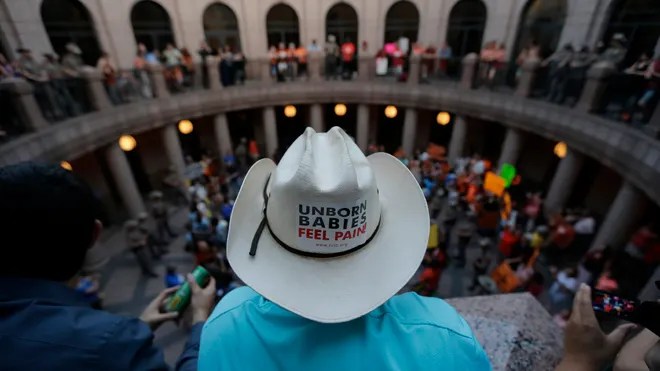
The last element contributing to this convergence is the crucial one of means to an end. Democracies now have new weapons in their arsenals. “Thanks”‘ Friedman says, “to the proliferation of smart-phones, tablets, Twitter, Facebook and blogging, aggrieved individuals now have much more power to engage in, and require their leaders to engage in, two-way conversations — and they have much greater ability to link up with others who share their views to hold flash protests. As Leon Aron, the Russian historian at the American Enterprise Institute, put it, ‘the turnaround time’ between sense of grievance and action in today’s world is lightning fast and getting faster.” All this is also playing out in the Irish body-politic, playing a big part in bringing 40,000 demonstrators on to Dublin’s street in the beginning of June, the biggest pro-life demonstration in the country’s history.

The net result of Friedman’s convergence across the world is this: “Autocracy”, Friedman writes, “is less sustainable than ever. Democracies are more prevalent than ever — but they will also be more volatile than ever. Look for more people in the streets more often over more issues with more independent means to tell their stories at ever-louder decibels.” Why should Ireland be an exception?

Journalism “unfair in content, tone, choice of language, prominence of play.”

In a splendid article on the Real Clear Politics website the media’s greatest sacred cow is put under the microscope for our consideration. It presents us with a wretched story of gross injustice in the name of rights, rights perceived through the tinted glasses of global group-think and it will make – or should make – those complicit in its perpetration blush with shame when the history of our age is written.

Ireland’s working journalists should read this and put their hands on their hearts and tell the truth about the part they play in this self-righteous charade. They collectively, through the country’s major media organisations, if not necessarily individually – there are honourable exceptions, – tick all the boxes in this sorry catalogue of dishonesty and wilful blindness.

Carl M. Cannon, in an article posted on Real Clear Politics just over two months ago, recalls the recent history of journalism’s flight from the truth and responsibility for even-handedness which should be the hallmark of all reporting media. The history of journalism is not wanting in other aberrations of this kind down the decades of two centuries or more. But has any aberration been as persistent as this one?

In America’s newsrooms of the 1970s and 1980s, Cannon observes, a general consensus emerged on two fraught political issues. The first, affirmative action, was understandable. Expanding the pool of what had been a white male-dominated profession was not only a laudable social goal, it was a logical business imperative for newspapers seeking to expand their reach. And it was even more than that. If you worked for any major news organization, including the sprawling newspaper chains that dominated the landscape, it was also official corporate policy.

 The second issue, in a sense, grew out of the first. That issue was abortion, or in the vernacular adopted by the media, “abortion rights.” To say that big city editors and reporters were “pro-choice” is to understate the case. Mostly, it went without saying: Roe v. Wade was the law of the land, and any reporter or editor who harboured doubts about it — and those who voiced them aloud — was considered a sexist, or perhaps a religious nut.

 Editorially, most newspapers supported abortion rights. Two studies done in the late 1980s showed an overwhelming majority of U.S. journalists personally supported legalized abortion, numbers that were almost certainly higher among elite news organizations. And after the Newspaper Guild formally endorsed “freedom of choice,” journalists began marching in pro-choice rallies.

 He speaks of a former editor whom he worked for in those years, James R. Bettinger, city editor of the San Jose Mercury News, who now remembers the nagging feeling that his paper’s coverage of demonstrations by those opposed to abortion suffered because of the monolithic views of the reporting staff.

We might wish that some of the editors serving the Irish public today were afflicted with even a little of this nagging feeling.

 Bettinger, now the longtime director of the Knight Journalism Fellowship program at Stanford University, says “I was convinced there were stories we were missing and nuances we were trampling on because we weren’t hearing [the pro-life] perspective voiced in the newsroom. For all I know, there may have been reporters and editors who felt strongly on the issue, but it wasn’t getting voiced. It felt to me like a failing.”

 Cannon then quotes, influential Los Angeles Times media critic David Shaw who tackled this issue in 1990 with a 5,000-word opus that began on Page One. It pulled no punches, Cannon says. Shaw noted that it is certainly possible for reporters and editors to put aside their personal beliefs and follow the obligation of their chosen profession to be fair and impartial. But, he said, that wasn’t happening on this issue.

 “A comprehensive Times study of major newspaper, television and newsmagazine coverage over the last 18 months, including more than 100 interviews with journalists and with activists on both sides of the abortion debate confirms that this bias often exists,” Shaw wrote. “Careful examination of stories published and broadcast reveals scores of examples, large and small, that can only be characterized as unfair to the opponents of abortion, either in content, tone, choice of language or prominence of play.”

 In the years between 1973, when Roe v. Wade was decided, and the publication of Shaw’s opus, “viability” — i.e., the amount of time a fetus had to develop before being able to survive outside the womb — had steadily been shrinking. For journalists who ridiculed conservatives’ supposed hostility to science, this should have been a huge warning flag. Cutting-edge science and traditional religion were in sync. In the press, we were mainly in sync with Democrats.

 In 2008, at a joint appearance with John McCain at Saddleback, the sprawling Southern California mega-church founded by evangelical pastor Rick Warren, Barack Obama was asked, “At what point does a baby get human rights, in your view?”

 “Well,” Obama replied, “I think that whether you’re looking at it from a theological perspective or a scientific perspective, answering that question with specificity, you know, is above my pay grade.”

 This answer prompted widespread ridicule of Obama among social conservatives — and of the mainstream press for accepting such a dodge. But the exchange between Warren and Obama succinctly illustrates how the sides in this debate talk past one another. Those opposed to abortion frame the question as being about the rights of the unborn. Those who defend it talk about abortion as being integral to a woman’s right to control her own body, a necessity that trumps theological teaching or scientific advancement.

 Because it had long ago chosen sides in this debate, the media collaborated with the pro-choice side to sanitize this debate to the point where the details of the procedure abortion are almost never mentioned and the word “abortion” itself extraneous. Who is so sexist they can oppose “a woman’s right to choose”? How un-American to oppose “choice.”

 The ‘pro-choice’ movement has corrupted language and made choice a weasel word. The media has colluded in this corruption and in doing so has undermined the very principles of truth and honesty on which its credibility, its right to respect and its very raison d’être rests. Pay grade? For what?

Cannon has much more to say, and it is all profoundly unsettling.

Another front opens in the battle against Kenny abortion Bill

Colm Keaveney, T.D.

Another front has now emerged in the battle against Enda Kenny’s forces which just 24 hours ago seemed unstoppable. In a dramatic twist in the battle to prevent the introduction of abortion services to Ireland, a cross-party group of dissident Fine Gael, Labour and independent TDs and senators are proposing to invoke a little-known constitutional provision to force a referendum on the Government’s proposed legislation.

This is reported in the Irish Independent today. The paper’s political editor, John Drennan reports rebel Labour member of parliament and party chairman, Colm Keavney, who lost the party whip for dissent on another issue several months ago, as saying “This is a politically neutral initiative involving pro-life, pro-choice and non-committed figures. It is about those who are concerned about the escalating democratic deficit in the country.”

Drennan says that the petitioners are confident of securing a majority of the Seanad; however, the Dail is somewhat more problematic given the divided state of the opposition. The Sunday Independent has been told, however, that while “it will be difficult, it is achievable”.

The proposal is somewhat complex. Keaveney has pointed pointed out that the article in the Irish Constitution on which the initiative would be based, Article 27, would not provide a Constitutional referendum on abortion as such. In fact, it can only be applied to a Bill that does not contain a proposal for the amendment of the Constitution.

For the provision to be successful, a majority of sitting Senators (30) and at least one-third of the members of Dáil Eireann (55) are required to sign a petition, addressed to the President within days of the Bill being passed through the Dáil. The petition will ask Michael D Higgins not to sign the Bill into law until a referendum has been held. The referendum would not be about abortion services directly, but would ask if people wanted the Bill to be enacted or not. The process has never been used and the government has plans to scrap it altogether.

In a comment piece in the paper Drennan forsees troubled water ahead for Kenny in his own party and seems to see an inevitable fading of Kenny’s support if he forces reluctant members of parliament through the “yes” lobby to vote on this legislation.  Drennan paraphrases another former Irish Taoiseach, Garret FitzGerald, speaking of a similar scenario: heavy indeed will be the hearts and even more reluctant still will be the steps of those who will be dragooned through the Yes lobby.

“They will vote “Ta” but not in spirit and they will resent Enda for it and the Taoiseach will have little to offer them in the way of worldly rewards to ease their pain. Ultimately, the most dangerous faction of all, if they stay, is the rogue white elephant of Enda’s embittered senators.” Kenny is proposing to abolish the Senate, the second house of the Irish parliament.

And, ironically, Drennan adds, whilst self preservation is Enda’s only core value, everything Enda is now doing to secure his power base only causes it to crumble a little further. The Taoiseach has carefully constructed a ‘chairman of the board’-style nodding, winking, broth of a cheery Western playboy political front. It took a while but Enda’s theatre of illusions is starting to fracture.