Blindly stumbling back to square one?

Sandra Bullock, in some desperation, uttered the complaint that “no one taught me how to pray” as she faced what looked like certain death in the film Gravity. Did she symbolize the present state of helplessness and hopelessness of Western civilization? But she did pray, and in doing that did she also show that in some way, when the human soul is confronted with what looks like the last space station, it can still be redeemed by the still small voice and what it whispers to it?

Arnold J. Toynbee once wrote that “Civilizations die from suicide, not by murder.” Toynbee is not currently the highly thought of historian that he once was but there is no doubt but that his ideas, ideas on the grand scale, can still remind us of some things we might prefer to forget. Civilizations do die.

Equally, cyclical theories of history are taken less seriously now than they once were. Nevertheless, they also often can have an ominous ring of truth about them. The phenomenal changes which the world has seen in material progress over the past half century – and indeed social progress, by some measures at least, –  have tended to lull the popular imagination into accepting something like a false sense of the inevitability of progress and a feeling that the job of history is simply to record that progress.

Some historians, perhaps a good few, still take a more open-ended view of history. But, like the economists who were wise enough – there were a few – to see the path of folly which lead to this century’s economic turmoil, we might wonder who is listening to them? There are still, fortunately, some social commentators who remind us of the all-important relationship between cause and effect, that ideas have consequences, and that mankind can regress as well as progress.

Ferdinand Mount wrote a very sobering book a few years ago. He called it  Full Circle and its central thesis was that something has happened to Western civilization which modern man finds very hard to accept – that our glorious, seemingly all-conquering Western civilization, in its flight from its Christian roots, may not actually be progressing but may in fact be regressing to its pre-Christian state. However, the idea of progress has now got such grip of the popular imagination that the modern mind refuses to acknowledge it.

This is blindness, a culpable and dangerous blindness which will lead to the death by suicide of what we call Western civilization. Mount’s Full Circle is a description of a process at work in which our society is heading back to where we started. To him it seems clear that the era in which we now find ourselves is one in which we foolishly clap ourselves on the back for being modern and liberated while we are in fact blindly stumbling back to square one. He does not predict that it is going to end in our civilization’s suicide but it should be more than clear that we are in terminal decline and are headed for our inevitable fall, destroyed by our  own navel-gazing excesses, just as surely as the old classical world was some 1500 years ago.

We pride ourselves in the Pax Americana which is now filtering out around the world. Yes, the world is now a more peaceful place than it has ever been. News media will always report wars and rumours of war so it may not always appear that most of us are at peace with each other more than at any time in recorded history. But don’t be deceived by this ‘peace’. The Pax Americana is no better an indicator of the health of our civilization than the Pax Romana was. The Pax Romana was in fact the calm before the storm in which the Roman Empire crumbled under the weight of its own decadence.

Mount presents us with a catalogue of the decadence of the present age, too lurid in some of its detail even to recount. It is remarkable how accurately it mirrors what went on in ancient Rome at the height of what seemed to be its imperial achievement of pacifying the world. Mount connects the dots for us. In our own ultra-modern preoccupations with health, the body beautiful, the body animal, the culinary arts, nature, fame and celebrity, the revolt against God and more, he sees parallels with the Roman baths, the circus, the Dionysian cults and the lip-service to the old gods whom no one believed in anymore.

The blindness we suffer from has been induced by the myth of progress. Mount at one point puts it like this:

“We are now hard-wired to expect history to deliver progress, jerky, flawed progress marred by horrors usually of our own making, but progress nonetheless. We look back primarily in order to see how far we have moved on. And one central element in that ever-growing sense of self-confidence was the gradual exclusion of religion from the picture. Man has wriggled free of the divine plan.” We no longer see ourselves, he says, as the creation of the mind of God but the product of natural development.

But as he sees it, we are, all the time, retracing our steps. Mount concludes his odyssey on an ambiguous note. He discusses Cicero’s reflections on the likely fate of Rome and the famous dream of Scipio in De Re Publica. Vision, Cicero held, and the need for vision is central to the preservation of civilization. Mount observes that “we have adopted some high principles from Athens and Rome: tolerance and civility and equality and democracy. And we have picked up some agreeable habits. But we seem to have mislaid Scipio’s dream. And the search parties are still out there looking for it.”

That is about as far as he seems to want to take it.

The fact is that the Romans lost it, and lost it in the same way in which we have lost it. When the worship of man – and all the self indulgence which follows on its heels – takes centre stage, civilization, as Solzhenitsyn  reminded us in his famous Nobel address, is on a short road to ruin by its own collective wilful decision. In a word, by suicide.

We may be witnessing the end of what we have called Western Civilization.  But we would be wrong to think that this means the end of all civilization. The heart of our civilization may have been torn from its body but its soul is immortal. That soul is Christianity.

Christian civilization is not co-terminus with Western civilization.  The civilization we have know in the West for a millennium and a half has been Christian in character. It will cease to be what history has known it as for those 1500 plus years when it ceases to be Christian. But Christian civilization itself will not cease to be – not so long as its values, way of life, live on in the millions throughout the world who bond together in it. As Mount suggests, from the vantage point of the end of this civilization, and as Cicero did from the vantage point of his decaying world, the abandonment of God,  religion and the vision of the transcendent is the fatal flaw.
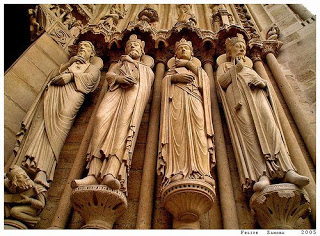
However, against the relentless assaults of the civilization-without-god brigades which have been decade by decade transplanting a materialist heart into our civilization we have to consider the following. In a 2005 issue of The New Criterion, David Bentley Hart, author and Eastern Orthodox theologian teaching in Providence College, Rhode Island, took issue with the pessimism of the English writer, A. N. Wilson. Wilson’s view was that we are now living in the waning days of the Christian religion. “Here we are”, writes Bentley Hart, “living in an age when Christianity is spreading more rapidly and more widely than at any point in the two millennia of its history – throughout the global South and East – and yet, because the Church languishes in the sterile cultures of a small geological apophasis (with a few appertinent isles) at the western edge of continental Asia, Wilson concludes that the faith is in its death throes.”

The reality is that Christian civilization is in robust health. Furthermore is is fully alert to the slings and arrows which are being thrown at it and has within itself all the resources needed to counter the assault on a global scale, the scale on which we now live daily. A few centuries ago Christian civilization was much more dependent on its Western base than it is today. With the waning of the West, with its lemming-like pursuit of extinction – look only at what the culture of death and selfishness which is endemic in the West is now storing up for it on the demographic front – Christian culture will eventually reassert itself from those territories and those populations which have not lost the vision of the transcendental.

These words from the leader of the world’s Catholics speak to all Christians and all men and women who are prepared to raise their eyes above the merely material. They alert us to danger but they also point to a bright future:

 “The great danger in today’s world, pervaded as it is by consumerism, is the desolation and anguish born of a complacent yet covetous heart, the feverish pursuit of frivolous pleasures, and a blunted conscience. Whenever our interior life becomes caught up in its own interests and concerns, there is no longer room for others, no place for the poor. God’s voice is no longer heard, the quiet joy of his love is no longer felt, and the desire to do good fades. This is a very real danger for believers too. Many fall prey to it, and end up resentful, angry and listless. That is no way to live a dignified and fulfilled life; it is not God’s will for us, nor is it the life in the Spirit which has its source in the heart of the risen Christ.”

“Sometimes we are tempted to find excuses and complain, acting as if we could only be happy if a thousand conditions were met. To some extent this is because our “technological society has succeeded in multiplying occasions of pleasure, yet has found it very difficult to engender joy” [Pope Paul VI]. I can say that the most beautiful and natural expressions of joy which I have seen in my life were in poor people who had little to hold on to.”

These words come from the Catholic Church’s exhortation to all Christians to get out there and save our civilization by simply telling the truth about man – which Christian believe only they have in its fullness. They reminds us that we become fully human when we become more than human, when we let God bring us beyond ourselves in order to attain the fullest truth of our being. Christians, the Pope tells us, cannot but do this. “For if we have received the love which restores meaning to our lives, how can we fail to share that love with others?”

 “Goodness always”, he goes on to explain, ”tends to spread. Every authentic experience of truth and goodness seeks by its very nature to grow within us, and any person who has experienced a profound liberation becomes more sensitive to the needs of others. As it expands, goodness takes root and develops. If we wish to lead a dignified and fulfilling life, we have to reach out to others and seek their good.”

This is the force which drove the same embryonic civilization to pick up the pieces of the failed pagan civilization of ancient Greece and Rome after it abandoned “Scipio’s dream”, a dream so powerful that one thinks Cicero would have become a Christian had he had to opportunity to receive the grace to do so. The first Christians did so and gave the world a relatively glorious for 1500 years.

From the time of King David – and who knows how long before – the adherents of the Judaic-Christian faith have been contemplating these words and seeing their palpable truth lived out from generation to generation:

His kingdom is a kingdom of all ages, and all kings shall serve and obey him.

Why this tumult among nations, among peoples this useless murmuring?

They arise, the kings of the earth, princes plot against the Lord and his Anointed.

“Come, let us break their fetters, come let us cast off their yoke.”

 “Ask and I shall bequeath you the nations, put the ends of the earth in your possession.”

Who would be foolish enough to say that they will cease seeing it now? There may be limits to the cyclical theory of history, but don’t look for them in this quarter.

De-legitimising the authority of mothers and fathers

20140315-211400.jpg

Frank Furedi has just posted this very perceptive and disturbing article on Spiked.com. I would like to hear a comment on it from Frances Fitzgerald (Irish Minister for Children). In it he says this:
“The unthinking and uncritical embrace of children’s rights since the 1970s has had a corrosive impact on community life. The promotion and cultural glorification of this right helped to de-legitimise the authority of the mother and father. ‘Regrettably, a leading characteristic of the children’s rights movement is the propensity to separate children’s interest from their parents’’, wrote Martin Guggenheim in his compelling study, What’s Wrong With Children’s Rights (1). Children’s rights do not empower children; rather, they disempower parents. They provide an ideological rationale for perceiving parent-child relations as fundamentally contradictory.
“Outwardly, the worldview of children’s liberation and that of the contemporary child-protection industry appear opposed to one another. Liberationists and PIE want to erode the distinction between childhood and adulthood, while the current child-saving lobby wants to keep adults out of the lives of children. These are temperamentally very different attitudes toward childhood. But what they share is a suspicion of parents and families. And what therefore binds these two different approaches is the assumption that the advocates of these approaches have the moral authority to decide what is in the best interests of other people’s children.”
The full story is here: http://www.spiked-online.com/newsite/article/what-pie-and-the-nspcc-have-in-common/14763#.UyS_WScgGSM

The Christian roots and character of liberal secularism

Framing the American Constitution


What is the difference between the Muslim call for sharia law and the Christian aspiration that no civil law should be contrary to the core moral principles of the Christian faith? Answer: liberal secularism.

Not however, that destructive brand of secularism which is now at the heart of the cold culture war which is rupturing the civil and religious tolerance which the western world has enjoyed, on and off, for two centuries or more. We are talking about the secularism which has its roots in the development of the Christian church’s own teaching.

It is a fact of history that down through the centuries there has been a kind of law operating by which much of the development of Christian teaching – by which, I suppose, we mean our understanding of all the implications of Christ’s teaching – takes place in a context of conflict. This conflict comes from challenges from without or within to the practices and beliefs of any given time or place which are deemed to be consistent with and even central to what Judeo-Christian Scriptures and Tradition teach. Out of these conflicts comes a constantly developing thought about and practical approach to the journey on which Christian “wayfarers” are embarked and which in any given age seeks to meet the needs of this pilgrim people and the entire race to which they belong.

So, in the early centuries the true identity of Christ as God and Man became clearer, as did the special character of his mother’s identity and holiness. In later centuries the purpose, nature and structure of the government of the Church which he founded became clearer. In the early modern age – the epoch of the Reformation, Protestant and Catholic – that Church, weakened by the corruption of its all-too-human members, was challenged. That challenge threatened both its teaching and its very form. But in its response to that challenge and threat came a new understanding, hand in hand with its reaffirmation of its original foundational teaching.

Over 200 years ago a new framework began to take shape in the public square for the more peaceful coexistence of the city of God and the city of Man. The previous hundred and fifty had been pretty horrendous for both. The founding fathers of the United States of America searched for and found a formula which would free the city of Man of the charge of religious persecution and free the city of God of the charge and scandal of religious intolerance and denial of human freedom. It might not be perfect but it was a massive improvement on what went before. It has served us well – until now. It at least served the Anglophone world well. The French, with their Revolution did not buy into it and slaughtered the Christian faithful; the Germans with their Kulturkampf did their best to push the city of God into the obscure margins of society but in the end failed. The Communists and the National Socialists of course, wherever they raised their heads, thought they could kill off religion altogether but also failed.

Wrong turning: French revolution enthroned “reason” on the High Altar of Notre Dame Cathedral

The development of Christian doctrine which has occurred over the past 200 years in the light, it has to be said, of the wisdom of these men, means that words like those of Omar Ahmad, the co-founder of CAIR (Council on American-Islamic Relations), speaking to a Muslim audience in California in 1998, could not now be spoken by a believing mainstream Christian. He said: “Islam isn’t in America to be equal to any other faith, but to become dominant. The Koran should be the highest authority in America, and Islam the only accepted religion on earth.”

But, we may ask, is the culture of tolerance, even in the Anglophone world, now beginning to unravel? Unravel, not on the Christian side, but on the side of militant secularists. Has the spirit of tolerance which moved the Founding Fathers to safeguard their society from the horrors of religious wars and religious persecution finally died?  Are we being alarmist if we cite Ross Douthat’s recent observation in his New York Times column on the Arizona governor’s refusal to sign a bill protecting marriage as an indication of where America’s political elite is now taking it. He said that “what makes this response particularly instructive is that such bills have been seen, in the past, as a way for religious conservatives to negotiate surrender — to accept same-sex marriage’s inevitability while carving out protections for dissent. But now, apparently, the official line is that you bigots don’t get to negotiate anymore.” Is traditional liberal secularism now dead? Has it been replaced with the militant secularism’s own version of sharia law?

But what were the roots of the Founding Fathers’ search for a new way. They were in fact Christian roots and had there been no Christianity it is very doubtful if we would ever have got to the reasonably tolerable place where we now are. Just as the American revolt itself was not a revolt against the culture and way of life in the British Empire of that time – but was an assertion of that very ethos which they felt privileged to enjoy – so their declaration of a new way of accommodating religious belief in the public square was not a rejection of Christian religion itself but was an affirmation of some of the deepest principles underpinning that belief, albeit not understood in all their depth – the rights of man, freedom of conscience and innate human dignity. The majority of the Founding Fathers were acting on the principles and ideas which had been emerging in Christian thought for more than a millennium. This is not something that neo-secularists are very willing to admit.

Larry Siedentop is an American intellectual historian and political philosopher who has worked in Oxford University for most of his academic life.  For him one of the tragedies of our age is the mistaken identification of “secularism” with non-belief, with indifference and materialism. In an article which he wrote for the February issue of Prospect magazine he discusses this in the context of what he calls “Europe’s undeclared civil war”, which he describes as being  “as tragic as it is unnecessary”. However, everything he says can also be seen unfolding in every jurisdiction where those who seek to adhere to the moral norms which have been the binding elements of western civilization for over 2000 years are now being challenged. In many jurisdictions those norms themselves are now being forcibly unraveled under the pressure of this hostile neo-secularism.

For Siedentop a flawed analysis leads to the view that liberalism and secularism did not have their fundamental roots in the Christian religion. He daringly asserts that this secularism can in fact, properly understood, be seen as “Europe’s noblest achievement and Christianity’s gift to the world”.

He explains, for example, that the most distinctive thing about Greek and Roman antiquity – to which the neo-secularists look as their source and inspiration – is what might be called “moral enclosure”. In this culture the limits of personal identity were established by the limits of physical association and from this they inherited unequal social roles. Those social roles pervaded their civilization from top to bottom. Then Christianity came along with its emphasis on the “moral equality” of humans and broke through these limits. Where does this “moral equality” come from? The Greeks didn’t have it. The Romans didn’t have it. It came from the very essence of Christianity itself. Siedentop explains how, with the advent of Christianity,

Social roles and rules became secondary. They came to be understood as subordinate to a God-given status shared equally by all human beings. Christians, therefore, were expected to live in “two cities” simultaneously, a dualism that would later be expressed in the distinction between the private and public spheres.

We can see this breaking out of moral enclosure everywhere in the New Testament. For St Paul, the love of God revealed in the Christ imposes obligations on the individual, that is, on the individual conscience. Paul refers constantly to “Christian liberty” and downgrades rule-following—the Hebraic “law”—in favour of action governed by conscience. In this way, the Christian conception of God provided the foundation for a new and unprecedented form of human society.

He argues, in this article and in his new book, Inventing the Individual: the Origins of Western Liberalism, that in contrast to most other cultures, western beliefs are informed by the assumption of “moral equality”, which underpins the secular state and the idea of fundamental or “natural” rights. Christianity played a decisive part in the emergence of this culture. Yet the idea that liberalism and secularism have religious roots is not widely understood, he says.

He cites the great medieval historian from the last century, Richard Southern, who extensively explored this same connection between medieval Christian thought – that of Anselm of Canterbury, Dominic Guzman and Thomas Aquinas, to name but three – and our modern sensibilities about relations between Church and State. It should not be very difficult for us to appreciate what Siedentop and Southern before him are talking about when we look at the view of humanity and nature preached by that deepest of deep Christian souls, Francis of Assisi.

The separation of church and state within the context of a healthy and Christian-friendly secularism has now been re-imagined in a manner which has drawn attention away from those religious roots – and makes secularism anything but friendly to religion. Now, religious belief and “godless” secularism are conceived as irreconcilable opponents and Siedentop speaks of the growing perception of a profound conflict being reawakened between secularism and people of faith – of the kind seen in the past, for example, in the unfolding of the French Revolution. For most of the millennium and a half since its foundation Islam was an external force besieging the borders of Christendom.  Now things have changed and  Sidentop observes that in recent years, with the insertion of Muslim populations into the Western mix of cultures a new dimension is added to the problem of harmonizing church and state:

In Europe, massive immigration and the growth of large Muslim minorities have widened the range of non-Christian beliefs dramatically—with significant consequences. Quite apart from the acts of terrorism which invoke—more or less dubiously—the name of Islam, Muslims are frequently encouraged by their religious leaders to look forward to replacing the laws of the nation-state with those of sharia. Islam appears to cohabit uneasily with secularism.

He adds to this mix the development on the North American continent of a militant fundamentalist Christian response to materialistic secularists. He does not put it in these terms exactly but what is now occurring there is that the children of the new hedonism of the Western world – abortion, euthanasia and an aggressive homosexuality are lining up for battle with those who want to live a Christian life. Secularism is becoming again, as he puts it, the enemy of the Christian rather than the companion.

In effect what is of course happening is that this kind of secularism has invaded the area of conscience and is setting up for itself dogmas of faith – redefining everything in its own image, declaring its full range of anathemas with a vehemence which will match any fundamentalist in any religion. Siedentop concludes his reflections with these words:

This is a strange and disturbing moment in the history of the west. Europeans, out of touch with the roots of their tradition, often seem to lack conviction, while Americans may be succumbing to a dangerously simplistic version of their faith. If we in the west do not understand the moral depth of our own tradition, we cannot hope to shape the conversation of mankind.

Understanding the moral depths of its own traditions must be, for any civilization, a sine qua non for survival. It is a beginning. But honesty, sincerity and simple rational intelligence are also sine qua non in this process. When a leader in a predominantly Christian country expresses the view that those who promote and carry out the killing of millions children awaiting birth should be blessed by God  – as President Barak Obama did when he ended a combative speech to the nation’s largest abortion provider last April by saying, “Thank you Planned Parenthood. God bless you,” then he cannot but risk triggering a tsunami of fundamentalism. The wave of Islamic fundamentalism which has been sweeping the world owes no small measure of its force to the scandalisation of Sayyid  Qutb, martyr for the Muslim Brotherhood, when he encountered, firsthand, the hedonism of segments of United States society in the two years he spent in colleges there in the 1940s.  We cannot doubt that the hedonistic follies of some of the Renaissance popes – considered by Barbara Tuchman in The March of Folly – and the complicity of the clerical establishment in the corruption of the aristocracy in seventeenth century France, contributed to the waves of destruction provoked by these excesses.  We are undoubtedly at a “strange and disturbing moment in the history of the west”. Whether we will come through it without another deluge in which much of what we know and love about out time will be swept away with the dross which surrounds us remains to be seen.

A version of this article has already appeared on MercatorNet.

Tanks approaching from the Tiber

From Tienanmen Square to the Via della Conciliazione?

Brendan O’Connor, writer with the Dublin paper, the Sunday Independent went on the rampage against the Catholic Church – again – last weekend  A little in the mold of  The Skibereen Eagle, he is threatening to send  tanks into the Vatican on behalf of the United Nations.

On a more serious level, he is one of growing band of virulently anti-Catholic journalists infecting western media in this new century whose tirades match anything that the anti-Catholic writers of 19th century have left on record. They bring to mind something from the last century which we might have thought was the swan-song of that breed: the contributions to religious debate and ecumenism in the 1960s which used to appear regularly in the Rev. Ian Paisley’s Protestant Telegraph – things like a series entitled “Love Affairs of the Vatican”. Nice bedfellow for Mr O’Connor.

Of course O’Connor had an axe to grind, having been hauled over the coals by the Irish broadcaster, RTE, for landing them in an €80,000+  bowl of soup for defamation. The naivety of the man was astounding, inviting the campest of camp transvestites to name and defame on live television a number of Irish pro-marriage writers and campaigners as being “homophobic”.

In the aftermath of that debacle O’Connor decided to launch into a defence of the United Nation’s latest own goal – its outrageous, arrogant and ignorant rebuke of the Catholic Church which effectively called on it to reformulate the Ten Commandments in the name of the UN’s brand of justice and equality.

Truth is and always has been the first casualty of war and the culture wars are not exception to that particular law of human frailty. Of course the injuries which mark this casualty are more often than not inflicted by way of half-truths and gross exaggerations than by the downright lie. The partial truth missile launched at a target is harder to deflect than the easily refuted barefaced untruth.

Of course there were wretched and renegade clerics at large among the Catholic faithful in the decades following the much vaunted sexual revolution who preyed on vulnerable children as readily as Jimmy Saville and other pop artists and celebrities preyed on the underage groupies who followed in their train; of course there were clerics in authority whose response to the discovery of these aberrations was grossly inadequate – just as were the responses of police and social service personnel; of course the approach of another age to finding solutions to the needs of children thought to be at risk may have failed both children and their parents in terms of principles of justice and charity which are much clearer in our age.

As Caroline Farrow said when she appeared on BBC television to discuss the issue on BBC1′s The Big Questions programme, No right-thinking Catholic wishes to deny or downplay the terrible harm that was caused to victims, a harm that was compounded by the attitude of those within authority who in many cases ignored or disbelieved their claims and some even went so far as to attempt to smear and discredit victims. All of this was contemptible and inexcusable – childhood abuse destroys lives and sets people up with a lifetime of mental health issues.

But truth, she went on to say, is the bedfellow of justice and without it, justice cannot be served. This report lets down the victims by serving a false narrative of orchestrated abuse and a centralised deliberate policy of cover-up, whereas the truth is that the Catholic church is massively decentralised, individual Catholic bishops have a lot more direct canonical power than their Anglican counterparts. Where there were failings this was due to the ineptness at a local level, and if we want to prevent any sort of recurrence then we have to be able to look at what happened and analyse matters objectively. Blaming the Vatican directly is far too glib and simplistic, as well as being erroneous and it lets too many people off the hook, including those members of the laity who colluded with the abuse.

O’Connor begins his diatribe by saying that there wasn’t much new in the UN report. That bit was true. But then he goes on to give his own utterly outrageous take on the whole thing:

The church has a history of trafficking babies, of discriminating against children based on their sexuality or that of their parents, and of allowing children to be abused, of protecting their abusers from the law, of moving abusers around – allowing them to abuse again, and when it came to abuse, of “consistently placing the preservation of the church and the protection of the perpetrators above children’s best interests”. The church has even protected priests from their own children, denying children the right to know the identity of their fathers and “only agreeing payments from the church until the child is financially independent only if they [the mothers] sign a confidentiality agreement not to disclose any information”.

Then he goes on to show not only his own ignorance but swallows wholesale the ignorant utterances of the United Nations Committee which produced this piece of shameless vitriol which with barefaced arrogance called for a response to it from the Holy See.

The UN report is important, he says, because it treats the church as what it is – a de facto state, geographically dispersed throughout the world certainly, but a metaphysical and legal entity, and therefore, “a sovereign subject of international law having an original non derived legal personality independent of any territorial authority of jurisdiction.”

Make no mistake, if the Holy See was an actual country, we would be at the least boycotting its fruit and at the most sending in the tanks. Here is a state that has institutionalised homophobia, discrimination against women and children, that has systematically overseen the protection of the abusers of tens of thousands of children, protecting abusers from the laws of their host countries. Here is a state that has overseen mass scale trafficking of babies, a state that opposes modern health and sexual education for young women, a state that forces secrecy on children, even those who are victims of sexual abuse.

These guys are up there with China or the worst of Africa in terms of their human rights record. And when you look at it coldly and clearly like that, your blood runs cold. Because instead of shunning this rogue state, we have invited it into the very heart of all our countries, and into the heart of our families.

Wisdom after the event is a dangerous potion. The rash and unjust judgements now being meted out, a la O’Connor and company, to the entire Catholic Church and to the entire spectrum of religious organisations which sought to and did serve the Church and society for centuries, is now perpetrating further injustice.

History will, hopefully, look at this era and see this travesty for what it is, a hate-filled campaign – not for justice for the wronged individual children and adults who suffered in the past. This is a campaign whose objective (foolish and as sure to fail as was the campaign of the pagan Roman Empire against Christianity two thousand years ago) is the destruction of the Christian religion and its removal from the face of the earth.

The Goldfinch

The Goldfinch

By Donna Tartt

Little, Brown, 2013, London

This novel is a real challenge. It is not for the faint-hearted, depicting as it does, the dysfunctional youth culture which gave us tragedies as far apart as that of Philip Seymour Hoffman and the invasion of rural Ireland by the silly, and for some, self-destructive fad of “neknomination” – and all the aberrations of the post-modern adult world in which they have their roots.

Hoffman, a 46-year-old actor, was found dead in his New York apartment after injecting himself with a dose of Ace of Spades, a lethal mix of heroin and a powerful anti-cancer drug which has already claimed dozens of lives. There has been a huge rise in heroin use in the United States, and particularly the boosted materials like Ace of Spades – used by the young, the affluent and the middle class. On the other side of the Atlantic two Irish lives were sacrificed on the altar of youth hedonism in the latest instance of the ‘neknomination’ game. The craze originally began in Australia and involves social media users ‘downing’ drinks – which are sometimes lethal cocktails – on camera, before nominating a friend to do the same.

But despite its depiction of this disturbing contemporary American underworld this is a superb novel. If its author tells us that the reason it took her 11 years to write it is that this is how long takes her to do justice to what she wants to write, then we will take her at her word. Our regret is that it probably means that we will only get two or three more novels of this quality in her writer’s lifetime. She began her first novel, The Secret History, at 19 years of age and finished it about ten years later in 1992. The next, The Little Friend, appeared in 2002. Both of these have been translated into over thirty languages. They are both great books but neither of them rises to the level of transcendence of The Goldfinch.

Read the full review, posted to MercatorNet this morning.

Not even the Soviet Union tried this

Catholic Voices tells us that the UN watchdog on children’s rights which recently hauled the Vatican over the coals for its handling of sex abuse has today released its recommendations. What is the United Nations up to? Just imagine if this organisation had power to match its arrogance and ignorance. Prepare for Diocletian Mark II.

With breathtaking arrogance, Catholic Voices’ Austen Ivereigh writes, the UN Report tries to change church teaching to bring it line with gender ideologies. In (25) and (26) it peddles the secularist myth that the Church’s teaching that sex is ordained by God for the possibility of procreation within marriage encourages homophobia, and patronisingly suggests that the Holy See condemn all forms of discrimination against gay people — which it does and has done for decades.

The Committee then criticizes contemporary Catholic teaching on sexuality, regretting how “the Holy See continues to place emphasis on the promotion of complementarity and equality in dignity, two concepts which differ from equality in law and practice provided for in Article 2 of the Convention.” In other words, where the Catechism of the Catholic Church fails to comply with the ideology of gender, it must be amended.

Amazingly, the Report also calls (36.) on the Holy See to provide — to whom, it does not say; perhaps via a helpline manned by monsignors? — what it calls “family planning, reproductive health and adequate counselling” to prevent “unplanned pregnancies.” Where this is going becomes clear in (55.), where the Holy See is told to change its teaching on abortion and even to amend canon law “with a view to identifying circumstances under which access to abortion services can be permitted.”

Lastly, the Report even lectures the Holy See on how it should interpret Scripture. In (39d) the Holy See is told to “ensure that an interpretation of Scripture as not condoning corporal punishment is reflected in Church teaching”.

Have we reasons to fear this organisation? In a word, on this evidence, “Yes”.

High tide of religious intolerance beginning to turn?

20140203-111734.jpg

Are the high tides and violent winds which have in recent times been battering the coastal defences of religious freedom beginning to abate? A sign of hope that religious tolerance might be making a comeback is contained in the latest post from the United Kingdom based media agency, Catholic Voices.

It tells us that the Glasgow-based Catholic adoption service, St Margaret’s, can keep its charitable status while continuing to operate a policy that prioritizes married heterosexual couples following a landmark decision by the Scottish Charity Appeals Panel. At the heart of the ruling is a recognition of the charity as a Catholic organization with the right to manifest its religious belief.

Austen Iverigh’s commentary gives the full story here.

Amanda Knox in a wider perspective

Channel Four’s (British television channel) take on the latest twist in the Amanda Knox debacle – with a 1500 year perspective. Is that a Justinian reference – or should it be 2500 years?

“Italian job: a justice system under the spotlight.

“The Amanda Knox story has come back to fascinate and appal us, thanks in large part to the Italian legal system which is longwinded and complex.
In the latest stage of this tortured judicial journey, an Italian court has overturned the appeal which overturned the first sentence against Amanda Knox and Raffaele Sollecito. This means that Ms Knox and her ex-boyfriend could each spend another 25 years at least in jail.

“But there is bound to be another appeals stage and then Italy’s supreme court has its final say. In the case of Amanda Knox that will then lead to extradition hearings which may or may not result in the young American spending time behind Italian bars.

“As for Mr Sollecito, he was discovered near the border with Austria this morning, and because he poses a flight risk, the Italian Carabinieri have seized his passport. Apart from the obvious human drama, this story highlights the judicial culture clash between the country that gave us the foundations of modern law 1500 years ago and the country that thinks it has perfected the system in the 21st century.”

An Open Letter to Ireland’s Reform Alliance


In the aftermath of the Reform Alliance’s first National Conference in Dublin, Ireland, on Saturday 25 Junaury 2014:

To Deputies Lucinda Creighton, Peter Matthews, Terence Flanagan, Billy Timmins, Denis Naughten, Senators Fidelma Healy-Eames and Paul Bradford.

Firstly, congratulations on a wonderful conference – first in a series we hope. It was very well-organised, sharp and insightful. The hopes of your supporters were already high but this raised them even higher.

The media response was so bad it was good. The cynicism and the hostility which oozed from it were so obvious that it only made them look pathetic. It simply shows that they are, apparently incorrigibly, still locked in the closed circle of the group think of the pseudo-liberal establishment.

The reform movement which you have begun is, I think and hope, in the spirit of these paraphrased words which I encountered just this morning and which I immediately read in the context of the mission you have undertaken. This is the spirit which should be in the heart of any citizen who is properly conscious of his social responsibilities, and especially in the heart of anyone engaging actively in the public square. This man’s words are for us all when speaks of a

…mission of being in the heart of the people,…not just a part of my life or a badge I can take off; it is not an “extra” or just another moment in life. Instead, it is something I cannot uproot from my being without destroying my very self. I am a mission on this earth; that is the reason why I am here in this world.

He writes of the need for us all to

regard ourselves as sealed, even branded, by this mission of bringing light, blessing, enlivening, raising up, healing and freeing.

If this vision of the world and its people were to become a reality then might we not see

All around us … nurses with soul, teachers with soul, politicians with soul, people who have chosen deep down to be with others and for others. But once we separate our work from our private lives, everything turns grey and we will always be seeking recognition or asserting our needs, we stop being a people.

This, surely, is the key to integrity in public life which has been lost – not only in Ireland but in a great swathes of all Western democracies. If, on the contrary, he writes,

 we are to share our lives with others and generously give of ourselves, we also have to realize that every person is worthy of our giving. Not for their physical appearance, their abilities, their language, their way of thinking, or for any satisfaction that we might receive, but rather because they are God’s handiwork, his creation. Appearances notwithstanding, every person … deserves our love. Consequently, if I can help at least one person to have a better life, that already justifies the offering of my life… We achieve fulfilment when we break down walls and our heart is filled with faces and names!

These are in fact the words of the new “hero” of Eamon Gilmore and David Norris, none other than Pope Francis. You can read these in a secular context – almost, and certainly as Gilmore would – or you can read them in a religious context. It doesn’t matter. They ring true in both and I would say that for the vast majority of the people who came to support the Reform Alliance on Saturday they are at the heart of their hopes for a new politics in Ireland.

The practical policies and suggestions which were emerging on Saturday were interesting and valuable but they will only really be different from anything that has gone before if they are grounded in this spirit, in this vision of a mission of true service to our people. If not it will be back to what you have all thankfully set your faces against, a return to the “perpetuation of party politics”.

Over 1300 attended from all over Ireland