A flower by any other name…

SONY DSC
The answer to this riddle?

There is a very strange row going on over on the other side of the Irish Sea. It is one of those rows that makes you scratch your head in something like frustration and despair. Apart from the sheer vanity of it all, we are left asking ourselves not only how could people behave so stupidly but are left wondering what strange demon has turned rational and intelligent people into such irrational imbeciles.
Could the answer be hidden in the animated movie, Zootopia? There the peace and harmony of the allegorical eponymous city is left facing a nightmare where some animals, by means of a magic flower cultivated by the villains of the piece, are turned into ultra vicious predators.
On Sunday night, on a Sky Television news programme, a usually useful and informative segment of the show turned into a bewildering farce. It shouldn’t have been a farce because the discussion was on the Orlando atrocity. But farce it was, and the farce did not end with the show. It has been going on since. The trolls of the Internet have now responded to the hue and cry. God knows where it will end – although one thing is certain: for ordinary rational mortals, if we count ourselves among them, we can only conclude that the best we can do is keep our mouths shut when any one of a number of contentious topics comes up for public discourse.
Julia Hartley-Bewer, one of the protagonists in this row – the others are Guardian columnist, Owen Jones, and Sky anchor, Mark Longhurst – put her side of the story in today’s  Daily Telegraph.

But this stupid row isn’t about my feelings or Owen Jones’s feelings or Sky News or even about the Orlando massacre, she sums up in her bewilderment. It’s about what is happening to our fundamental right to freedom of speech in this country.
This whole sorry saga says a lot about the state of public debate in Britain when a grown man feels the need to storm off a TV set simply because other people decline politely to agree with every word he says.
This is peak Generation Snowflake: I don’t like what you say or the way that you say it so I’m going to scream and scream until you give in, say sorry for offending me and shut the heck up.
Owen seems to think that the hate-fest against me and against Mark Longhurst is the proof that he was right. It isn’t.
It’s proof that there are now thousands – if not millions – of people in Britain who regard the taking of offence as not just their hobby but their full time job. They seek out offence and hidden insults wherever they may be, and even where (as in this case) there are none and then they shout long and hard until their designated target gives in and agrees to be shut down.
Well, sorry to disappoint you but no one is shutting me down or silencing my voice. I don’t claim to speak for anyone but myself so I get to choose the words I want to use, not Owen Jones or random people on Twitter or anyone else. That’s how this whole “free speech” thing works.
If you don’t like what I have to say then either don’t listen or debate with me using facts rather than resorting to abuse and lies. And don’t ever presume to tell me what I can and cannot say. This is, last time I looked, a free country where I am as entitled as anyone else to give my opinion.
If Owen Jones wants to live in a world where people can only say what is on the officially approved list of platitudes, then perhaps he has more in common with Islamic State than he thinks.

Well, Julia, I wish you luck in your battle. It’s going to be a tough one – and it’s a world war as well. I attended a lecture in Dublin last week and it told the same story, but with a different dramatis personae. We are at the Mad Hatter’s tea party.

More about this sadness from Spiked.com.

The loud and clear solution


Groupthink factory?

I was at a meeting in Dublin last night – publicly advertised. The Establishment’s media would have been welcome to report every word uttered had they been at all interested. They probably were but reporting it would not have served their groupthink agenda. So they were not there – because it was an Iona Institute event, addressed by one of the thorns in their side, the redoubtable John Waters.
Waters’ subject was how, in Ireland today, debate on many of the most important issues has been brought to a virtual halt.
He gave multiple illustrations of how so-called ‘liberal’ assumptions are almost entirely unquestioned and those who do question them are demonised. The result of all this, he said, was the drastic reduction of the range of opinions ‘respectable’ people are allowed to hold. If they do not hold what the ‘liberal intelligentsia’ consensus holds they are expected to be silent.
We saw this in last year’s marriage referendum in Ireland when the nearly three-quarters of a million people who voted against redefining marriage, and with it human sexuality, were practically invisible in the referendum debate. The ‘Yes’ side, Waters said, almost completely controlled the public space. The media organisations were given over to media celebrities who shamelessly campaigned for one side when their professional and civic role should have been to present a balanced account of the arguments from both sides.
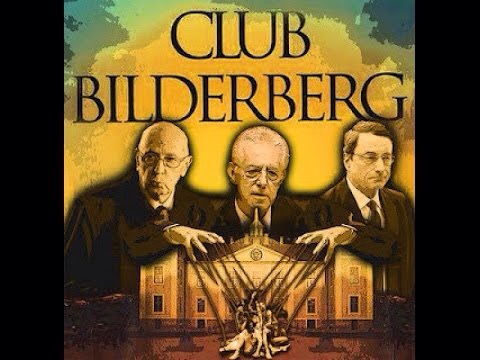
In the Q and A following the lecture a speaker asked Waters whether or not we should be paying attention to the Bilderberg meeting currently in progress in Dresden. The impression given by his answer was that he considered that particular phenomenon as a symptom of our predicament rather than a cause. Head on confrontation with that kind of thing was unlikely to be productive of any useful result.
Speaking the truth, loudly and clearly, constantly, was the way to make progress. Quoting Joseph Ratzinger he said “the truth always has a future.” Go on, and be proud going on, he added.
Coincidentally, in a post this morning on the website, The Conversation, Matthew Parker, Leicester University’s Professor of Organisation and Culture raises the question of Bilderberg. Like Waters, Parker sees the whole project as just another reinforcement of ‘groupthink’. Conspiracy? Yes and no.
Conspiracy theorists give conspiracy theories a bad name, he says


Conspiracies do exist, and this is one of them. Politics, at this sort of elite level, is precisely a conspiracy in the sense that Adam Smith meant it. When these people gather once a year, they do not engage in withering self-criticism, but instead reinforce the assumptions that they collectively make about the best sort of economic and political order. This is exactly the sort of process that the psychologist Irving Janis described as “groupthink”, where dissent is marginalised and consensus amplified.
If the participants at Bilderberg really want to explore global challenges, talking to each other is the last thing that they should be doing. We already know that the powerful organise the world for us – it is common knowledge. What Bilderberg exposes is that what goes on at endless summits and conferences across the globe is a mountain of smugness that is much more frightening than anoraks muttering about the Illuminati.

Adam Smith’s astute observation was that “People of the same trade seldom meet together, even for merriment and diversion, but the conversation ends in a conspiracy against the public, or in some contrivance to raise prices.”
But taking Waters’ approach is the best line of defence against this – the truth, boldly proclaimed. The blindness induced by the crass and irrational sentimentality which the Irish public is being served up by its politically correct establishment will be temporary. It will pass if the truth is spoken clearly and often enough, even if it is by just a few brave souls like John Waters.

A ‘tide of silliness’


Ireland is not a particularly radical country. Despite its much lauded passing of a referendum last year which opened the institution of marriage to homosexual couples, its electorate has shown itself to be a fairly conservative one. That vote was passed more on a wave of sentiment cooked up by a powerfully funded lobby and a notoriously biased media rather than by any deeply thought-out radicalism. The same electorate in a general election this year thrashed its socialist Labour Party and sent its fellow-travelling coalition partners, the Fine Gael Party, limping back into parliament. It took it longer to form a makeshift minority government than on any other occasion in the history of the state.

The frustrating thing about Ireland is that while it is at heart conservative, it is pathologically ashamed of being so. It has no popular conservative media voices, no political party which is not terrified of being called conservative, and the left-wing minority in the country have organised themselves in the media so that conservative voices are immediately either mocked or intimidated when they speak. 

A few voices are heard in the media which question this unthinking subservience to the left in Irish public opinion and one of them was heard this weekend in the Sunday Independent. This was the voice of columnist Eilis O’Hanlon writing about Ireland’s strange attitude to the United States of America.

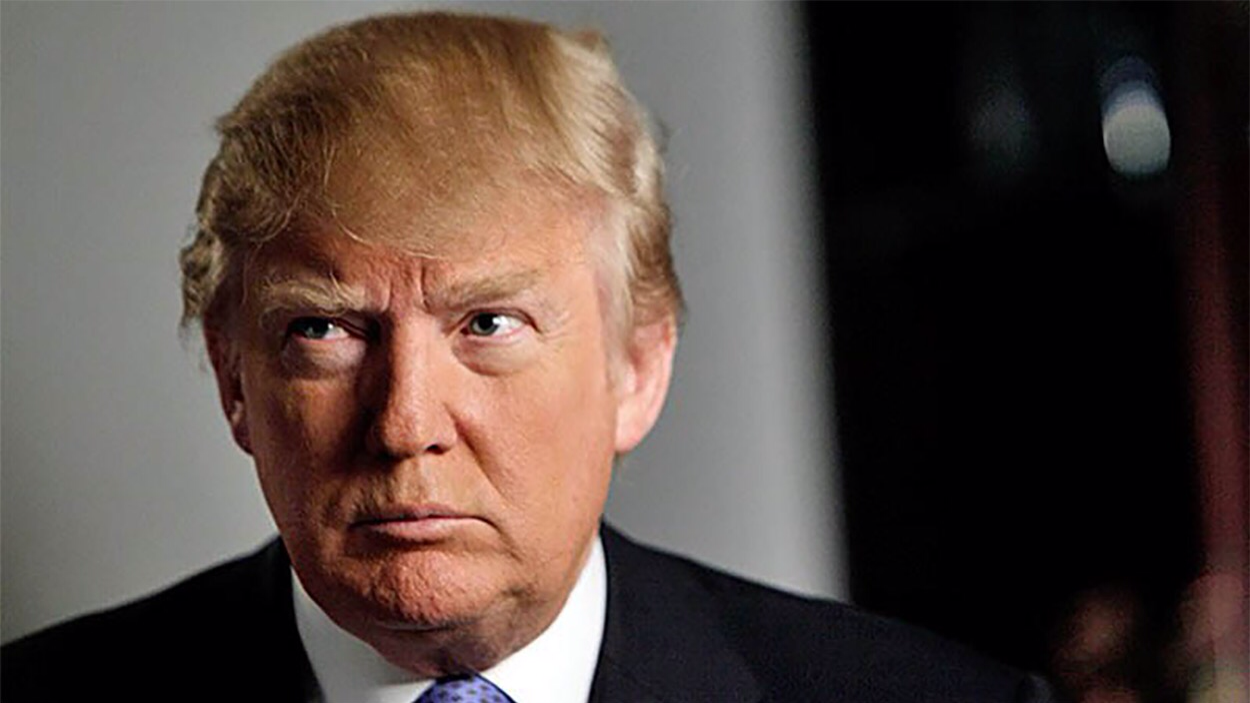
Donald Trump is certainly an unusual presidential candidate – if he succeeds in becoming the Republican choice. His speeches and comments have on occasion, on many occasions, appeared to defy rational analysis. But that defiance bears no comparison to the irrationality of the fear and ill-boding generated by the response to his candidacy. Nowhere is this more prevalent that in Ireland.

O’Hanlon writes of the rising tide of silliness which has allowed Salon magazine to compare the growing popularity of Trump to that of Hitler in the Weimar Republic, and connects this to an artificial row in Ireland last week around whether government ministers would or should meet him when he visits his golf club at Doonbeg in Co. Clare in a few weeks. 

She is not surprised by any of this. Why not? She explains:

She writes that Richard Boyd Barrett, leftest of the leftists, speaking in the Dail on the issue, had hit on the one topic that tickles the fancy of every middle-class social justice warrior – the iniquity of the United States “war machine”. They’re as obsessed with America as Sinn Fein is with the Brits, and even they’ve toned down the rhetoric these days, having learned that it doesn’t travel outside the republican heartland. She continues:

The Left doesn’t need to bother, because, as Barrett said in the Dail: “Everybody recognises what a dangerous man Donald Trump is.”

Well, obviously not everybody, or he wouldn’t be running neck-and-neck with Democratic candidate Hillary Clinton in the polls, but certainly everybody who matters in Irish public opinion.

People in this country have always had an innate bias towards democratic presidents, from John Kennedy onwards. If we had a vote, Hillary would be the runaway winner.

It’s still worth examining how “dangerous” Donald Trump really is, however. Taking 1993, the year that Mrs Clinton’s husband first took office, as a base, what dangerous things has Donald Trump done in the intervening years?

Let’s see. He presented The Apprentice. He bought, and later sold, the Miss Universe organisation. He built Trump Tower. He launched Trump Ice bottled water. He bought some golf courses. He was inducted into the World Wrestling Federation Hall of Fame. He appeared on Sex And The City.

In the same period, for her part, Hillary Clinton was fully supportive at her husband’s side as he launched bombing raids in Afghanistan, Iraq and Yugoslavia; as a senator, she backed war in Afghanistan and Iraq; as Secretary of State under President Obama, she pushed hard for the so-called “Afghanistan surge” and was a key mover for the failed US intervention in Libya which exacerbated the migrant tragedy in the Mediterranean.

Whether she was right or wrong to take these positions is not the point (Clinton herself later said that her support for the Iraq War was a mistake). The point is that Hillary is, by any reckoning, a hawk when it comes to military action, whereas Trump is a businessman who has never signed a single order for any action that led to bloodshed.

Yet it’s he who is called “reckless”, “dangerous”, “terrifying”, frightening”, despite also saying the US has “destabilised the Middle East”, berating the coalition forces for lying about weapons of mass destruction in Iraq, and using Libya as a warning against further action in Syria.

Many of the remarks he’s made about US foreign policy and Nato could have come from People Before Profit.

So who’s the real “warmonger” – Trump or Clinton?


Read her Sunday Independent article here.

Long live the Queen

image

This might irritate some, but it shouldn’t. In reality it is all about reminding a people where they have come from, what their history is and how it has unfolded. It reminds them how it has given them the stable, even if imperfect, political system they – and much of the world – benefits from today.

Back Story, courtesy of the New York Times:

Queen Elizabeth II will announce Prime Minister David Cameron’s legislative program for the next year at the state opening of Parliament in London today.
Hours before her arrival, the royal bodyguards perform a ceremonial search of the basement of the Palace of Westminster, where the two houses of Parliament meet.

It’s a throwback to the discovery of the Gunpowder Plot in 1605, when Guy Fawkes tried to murder England’s king and its ruling classes by blowing up the House of Lords.

Led by parading soldiers, the Queen arrives in a gilded carriage drawn by four Windsor Greys and guarded by coachmen who are still called bargemen because the monarch used to come by river.

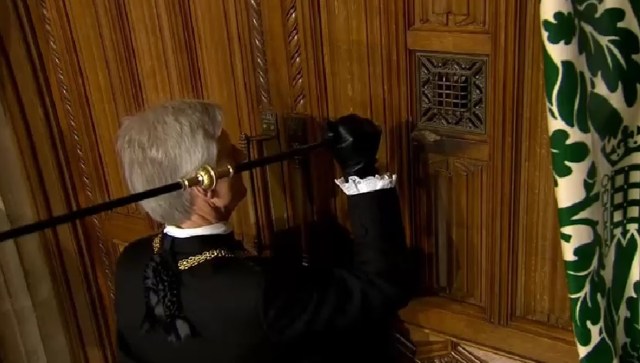
Members of Parliament are ceremonially summoned to the House of Lords by her representative, known as the Gentleman Usher of the Black Rod.

In one of the more colorful rituals, he approaches the doors of the House of Commons, only to have it slammed in his face. The custom dates to the English Civil War and symbolizes Parliament’s independence from the crown.

Only after knocking three times with his ebony stick is he let into the chamber, where he announces, “The Queen commands this honorable house to attend her majesty immediately.”

Everyone then heads to the House of Lords, where the Queen recites the speech from her throne and wearing her diamond-encrusted Imperial State Crown.

Your Morning Briefing is published weekdays at 6 a.m. Eastern and updated on the web all morning.

The ghost of Edmund Burke at the Vatican?

edmund-burke-portrait-006

A pearl of wisdom from Pope Francis’ Exhortation, Amoris Laetitia:

The lack of historical memory is a serious shortcoming in our society. A mentality that can only say, “Then was then, now is now”, is ultimately immature. Knowing and judging past events is the only way to build a meaningful future. Memory is necessary for growth: “Recall the former days” (Heb 10:32). Listening to the elderly tell their stories is good for children and young people; it makes them feel connected to the living history of their families, their neighborhoods and their country. A family that fails to respect and cherish its grandparents, who are its living memory, is already in decline, whereas a family that remembers has a future. “A society that has no room for the elderly or discards them because they create problems, has a deadly virus”; “it is torn from its roots”. Our contemporary experience of being orphans as a result of cultural discontinuity, uprootedness and the collapse of the certainties that shape our lives, challenges us to make our families places where children can sink roots in the rich soil of a collective history.

It echoes the writing of Edmund Burke so closely in his great debate with that apostle of isolationist individualism, Thomas Paine, that we might even think that the ghost of that greatest of Irishmen was among the Pope’s advisers before he presented us with this splendid document about life and love.

Jesse Norman, one of Burke’s most recent biographers, sums up Burke’s thinking:


As Burke shows us, the individual is not simply a compendium of wants; human happiness is not simply a matter of satisfying individual wants; and the purpose of politics is not to satisfy the interests of individuals living now. It is to preserve a social order which addresses the needs of generations past, present and future.

In his own life, Burke was devoted to an ideal of public duty, and deplored the tendency to individual or generational arrogance, and the “ethics of vanity”. His thought is imbued with the importance of history and memory, and a hatred of those that would erase them. He insists on the importance of human allegiance and identity, and social institutions and networks.


An interstellar option?

interstellar-670x440-141022

Back in the 1960s there was a hit musical – well, perhaps a minor hit musical – running in the West End in London called Stop the World – I Want to Get Off! Things were not half as bad then as they are now. But if that ever – ever since Noah built himself an ark – looked like the best option for any members of the human race who still have a head on their shoulders, it must be now.
The big hit from the show was What Kind of Fool Am I? It contained the lines,

What kind of man is this?

An empty shell

A lonely cell in which

An empty heart must dwell

Allister Heath sums up our predicament rather well in this morning’s Daily Telegraph, centering it fairly and squarly in the context of the apparent political disaster unfolding in the most powerful country in the world. Emptiness is abiding sense we get looking across the Atlantic today.


It is remarkable,
Heath observes, how a country that is so good at business, science, the arts and just about everything else can be so bad at politics. There are now 318 million Americans, including many of the world’s most creative and brilliant people: the US electorate ought by rights to be spoilt for choice when it comes to choosing its president.
Yet from this immense talent pool, the American political system has managed to narrow the race down to two supremely flawed human beings, neither of whom remotely deserves to be in the White House.
On the one hand we have Hillary Clinton, a scandal-ridden, uninspiring candidate whose Left-wing policies would destroy what is left of US exceptionalism; on the other is Donald Trump, a demagogue who specialises in whipping up hate and threatening cataclysmic trade wars.

The West End show ran for more than a year and ran on Broadway for 555 performances. It’s revival on Broadway 20 years later was a flop and it suffered a similar fate in Lonon in the late 80s. Perhaps it needs another revival now to remind us of the consequences of the selfish follies of our time
Read Allister Heath’s full article here.

A professor’s probing challenge

robert-p-george-reception

Professor Robert George of Princeton tells us on his Facebook page of  a fascinating challenge he makes to his students and of the somewhat depressing response he gets. Perhaps it was always like this? Has every generation been as myopic, as unschooled in any sense of the realities of historic time and place as this one? It again seems to confirm a everything that Professor Paglia fumed about in a post here a few days ago. Frighteningly it seems to be more evidence of the fulfillment of Allan Bloom’s dismal predictions of 30 years ago about the consequences of the ‘closing of the American mind‘.

Professor George writes:

Undergraduates say the darndest things. When discussing the history of racial injustice, I frequently ask them what their position on slavery would have been had they been white and living in the South before abolition. Guess what? They all would have been abolitionists! They all would have bravely spoken out against slavery, and worked tirelessly in the cause of freeing those enslaved. Isn’t that special? Bless their hearts.

Of course, it is complete nonsense. Only the tiniest fraction of them, or of any of us, would have spoken up against slavery or lifted a finger to free the slaves. Most of them—and us—would simply have gone along. Many would have supported the slave system and, if it was in their interest, participated in it as buyers and owners or sellers of slaves.

So I respond to the students’ assurances that they would have been vocal opponents of slavery by saying that I will credit their claims if they can show me evidence of the following: that in leading their lives today they have stood up for the rights of unpopular victims of injustice whose very humanity is denied, and where they have done so knowing (1) that it would make THEM unpopular with their peers, (2) that they would be loathed and ridiculed by wealthy, powerful, and influential individuals and institutions in our society; (3) that they would be abandoned by many of their friends, (4) that they would be called nasty names, and (5) that they would possibly even be denied valuable educational and professional opportunities as a result of their moral witness.
In short, my challenge to them is to show me where they have at significant risk to themselves and their futures stood up for a cause that is unpopular in elite sectors of our culture today.

There are those who may say, “well this is America” and “you cannot say the same for Europe or the rest of the anglophone world.” Oh yes you can. This myopia, this non-sense of history is endemic in much of our culture. All you have to do is look at the documentation of it by the British-based Spiked Online campaign for freedom of speech and related freedoms from ignorance.

20100201_princeton_560x375
Princeton – where some at least are opening minds against the odds.


Donald the victim?

donald-trump-portrait

The American – sorry, the United States – electoral system has never looked so chaotic as it does in this election. If it were not for its relatively wise and sophisticated constitutional arrangement for balancing power within the overall political system, it might make the rest of us in the world very nervous indeed.

It has, of course shown its capacity for chaos before. Remember those dimpled chads of the Bush-Gore battle? The New York Times newsletter’s “Back Story” today reminds us that Donald Trump’s allegations of “rigging” the Republican Convention is not a new charge.

At the Republican National Committee’s spring meeting, despite Mr. Trump’s advantage in delegates, his opponents are arguing that it is not too late to stop him. If they are able to do so it will be thanks to the complex system of rules for choosing convention representatives. Those rules are why Mr. Trump is calling it “a rigged” nominating process.

Party conventions have faced those accusations before, the Times tells us, with one of the most famous examples occurring in 1960.

Former President Harry Truman resigned as a delegate to the Democratic National Convention, calling the event “a prearranged affair,” fixed to give the nomination to John F. Kennedy.

Although Mr. Kennedy arrived in Los Angeles as the front-runner, having won each of the seven primaries he entered, his selection was not a done deal.

He didn’t reach the necessary vote total for the nomination until Wyoming, the final state scheduled in the roll call, pushed him over the top.

The political jockeying continued to the very end, with the convention floor briefly taken over by nondelegates who had slipped into the hall to support Adlai Stevenson, the Democrats’ nominee in 1952 and 1956.

The top Democratic Party official said the protest was “the best answer to charges of rigging for Jack Kennedy.”

What the top Republican Party official will be saying after July 18–21, when the Convention concludes in Quicken Loans Arena in Cleveland, Ohio, is anyone’s guess.

She was a superstar

Sister Clare Theresa Crockett, 33, the young Irish nun who died with five others in the Ecuador earthquake as she tried to lead them to safety throws a light on an Ireland which we do not see very often. Her death reveals a heroism, as her life itself did. She was the last to be dug out of the rubble after a stairwell collapsed in the school where she taught in Playa Prieta in the western province of Manabi.

“She was a superstar. Everybody loved her,” her cousin Emmet Doyle said to The Daily Mail.

She was with six Ecuadorian postulants, in the early stages of joining the order, when the disaster struck.
“She was trying to get them down the stairs and the staircase collapsed.
“She died as she lived, helping others.”

Sr Clare, from the Brandywell area of Derry city, was a nun with the Servant Sisters of the Home of the Mother and taught 400 children in the Colegio Sagrada Familia school, including how to play the guitar.

Her vocation, what she did and how she lived  are portrayed in this brief video.

The five dead postulants were named by the Order as Jazmina, Mayra, Maria Augusta, Valeria and Catalina .
Two others were pulled from the rubble after their voices were heard.

Sr Clare joined the Order aged 18 and worked in Spain, the US and other parts of the world before going to Ecuador.
“Her death has shocked and saddened the entire community in Derry and further afield.”

The parish of her family, Long Tower in her native Derry, opened a book of condolence in memory of Sister Clare Crockett, on Friday night.
Father Brendan Collins C.C., quoted in The Derry Journal, said that parishioners from the Long Tower where Sister Clare lived and grew up, wanted to show their support and sympathy to the family.

Describing Sister Clare as an “inspirational young woman of the parish,” Father Brendan said the community would come together tonight at 7.30 p.m. for Mass, followed by the rosary.
“Sister Clare was well known locally and since her death people who knew her have been sharing memories and stories.
“Young people who hear of Sister Clare’s story, particularly in this modern world, can associate with her. She found real contentment in her life and she died as she lived, helping other people.”
The Derry priest encouraged as many people as possible to come to pray for Sister Clare, and her family and that her remains will be returned to her family as soon as possible.

Camille Paglia bursting the PC bubble – again

Camille Paglia has been talking sense for decades and she is still doing so – but it appears that no one has been listening. Here she talks about her desperation at the state of America’s youth culture – which will be tomorrow’s general culture.

At its root is an appalling ignorance about the world, Camille says:

“They have no sense of the great patterns of world history, the rise and fall of civilisations like Babylon and Rome that became very sexually tolerant, and then fell. If you’ve had no exposure to that, you can honestly believe that ‘There is progress all around us and we are moving to an ideal state of culture, where we all hold hands and everyone is accepted for what they are … and the environment will be pure…’ – a magical utopian view that we are marching to perfection. And the sign of this progress is toleration – of the educated class – for homosexuality, or for changing gender, or whatever.

“To me it’s a sign of the opposite, it’s symptomatic of a civilisation just before it falls: ‘we’ are very tolerant, not passionate, but there are bands of vandals and destroyers circling around the edge of our civilisation who will bring it down.”

And she thinks Hilary Clinton is “absolutely corrupt”.

See more, a great deal more, at Spiked.com or MercatorNet here.