A kinder light on a disturbing event

With the passage of time – just a matter of a little over four months in this case – the sense of bewilderment and disappointment of what looked like a radical change in the Irish people’s understanding and commitment to the values enshrined in marriage and the family has mellowed.

To help us understand that things might not be as bleak as they seemed on the afternoon of 23 May last, the words of the Archbishop of Dublin, Dr. Diarmuid Martin, to the Synod of Bishops in Rome yesterday set what looked like a revolution in a more balanced and kinder context.

Dr. Martin made his remarks about the Irish situation in the context of the social culture of marriage, the culture in which he said our young people grow up and the culture which influences their understanding of almost every dimension of marriage and family life.  He made the crucial point that society often uses the same words as the Church does, however with a radically different meaning. He continued:

Many ask what happened at the recent referendum on same-sex marriage in Ireland.   Has an authentic Christian culture of marriage disappeared in Ireland?  It is not as simple as that.   Ireland after the referendum is still marked by a very strong family culture.  The numbers who get married – and who get married in Church – are high and divorce statistics are among the lowest in Europe.  Families are strong and generous. That has not changed substantially.

The referendum was debated within a social culture where people struggle to understand abstract moral principles.  What they do understand is the predicament of individuals whom they wish to see happy and included.  It is a very individualistic culture, but not necessarily an uncaring one. Indeed those in favour of same-sex marriage based their campaign on what was traditionally our language:  equality, compassion, respect and tolerance.

Our young people make their decisions on marriage and the family within the context of a flawed and antagonistic social culture.  It is however not enough to condemn that culture.  We have somehow to evangelise that culture.  The Synod is called to revitalise the Church’s pastoral concern for marriage and the family and to help believers to see family life as an itinerary of faith.  But simply repeating doctrinal formulations alone will not bring the Gospel and the Good News of the Family into an antagonistic society.  We have to find a language which helps our young people to appreciate the newness and the challenge of the Gospel.

Where do we find that language?  Certainly it cannot be a language which reduces the fullness of the Church’s teaching. We have to find a language which is a bridge to the day-to-day reality of marriage – a human reality, a reality not just of ideals, but of struggle and failure, of tears and joys. Even in within a flawed social culture of the family there are those who seek something more and we have to touch their hearts.

Allow me to give an example.   We talk about indissolubility. Most families would not feel that they live indissolubility; they live fidelity and closeness and care in ways we underestimate.  As a student, I worked in a centre for prisoners which held a space for women who had to travel long distances before going to visit their spouses in prison.  These women were not models of respectable society. They would hardly have been able to pronounce indissolubility. But these women never missed a weekly visit.  They understood fidelity, even to a husband who might have betrayed them.  And their visit humanised even for a few moment the life of a man whose hope was low.

What the Irish referendum showed was a breakdown between two languages.  It showed also that when the demanding teaching of Jesus is presented in a way which appears to lack mercy, then we open the doors to a false language of cheap mercy.

A threshold has been crossed in Ireland. There is no doubt about that. Whether, however, it is a threshold to a future of social decline and disintegration depends on the acceptance of a challenge, the challenge implicit in Dr. Martin’s remarks. The Church, and those of good will throughout this island and across western society as a whole, must seek to touch the hearts and minds of all those who are seeking something more than is currently available to sustain their spirit in our flawed social culture.

– See more here.

Remembering the pioneers

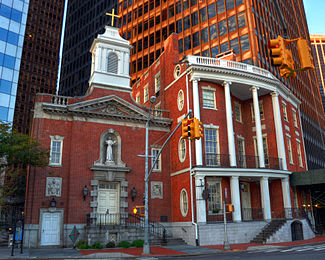
The Seton home in New York City was located at the site on which a church now stands in her honor.

Today’s BACK STORY from the New York Times:

When Pope Francis visits the U.S. next week for the first time, his itinerary will include stops in New York and Philadelphia, the birthplaces of the only Roman Catholic saints born in the 13 original American colonies or 50 states.

The first, Mother Elizabeth Ann Bayley Seton of New York, was canonized 40 years ago today by Pope Paul VI.

Mother Seton was born in 1774, two years before the signing of the Declaration of Independence.

She started the first Catholic girl’s school in the nation, in Emmitsburg, Md., and the first American congregation of religious sisters, the Sisters of Charity.

Mother Katharine Drexel, a Philadelphia nun who spent her life and her share of a family fortune on the network of schools for Native Americans and blacks that she started, is the first saint who was an American citizen from birth.

Mother Drexel died in 1955, and Pope John Paul II declared her a saint in 2000 — speedy, by modern church standards.

In his nearly 27-year papacy, John Paul II signed off on more canonizations (482) than all of his modern predecessors combined.

And if Catholicism is all it’s supposed to be we must hope there are a lot more who could be ‘signed off’.

The new global dictator – on your desk, or in your pocket

Courtesy of The Week magazine  we get this intriguing assessment of the Internet and our relationship with it from novelist, Jonathan Franzen.

Franzen detests the internet even though, like a lot of us, he uses it.

In his new book, Purity, he compares it to communist East Germany – equating it to a new form of totalitarianism.

“You can’t not have a relation to, in the case of East Germany, the socialism of the state,” he says. “In the case of the internet, you can ignore it or you can abet it. Either way, you are in a relation to it. And that’s what’s totalitarian.”

Franzen is adamant that social media is not his milieu. Novelists, he told The Sunday Times, spend years trying to get things right. “The kind of person who tweets is someone who doesn’t care about getting it right and is willing to shoot from the hip under a space constraint that doesn’t even allow a subordinate clause… People who give sustained attention to something, let themselves have a full experience and then respond to it thoughtfully – I like that kind of person better.”

The novelist has a talent for riling people, says Emma Brockes in The Guardian. He famously fell out with Oprah Winfrey in 2001, and since then has been involved in numerous spats with feminist writers who accuse him of being the beneficiary of white, male privilege. Franzen doesn’t necessarily disagree – but since he already works hard to champion female writers and to create interesting female characters, he’s not sure what he can do about it, “except die – or, I suppose, retire and never write again”.

Some pillow fight!

For generations, freshmen cadets at the United States Military Academy have marked the end of a grueling summer of training with a huge nighttime pillow fight that is billed as a harmless way to blow off steam and build class spirit.

But this year the fight on the West Point, N.Y., campus turned bloody as some cadets swung pillowcases packed with hard objects, thought to be helmets, that split lips, broke at least one bone, dislocated shoulders and knocked cadets unconscious. The brawl at the publicly funded academy, where many of the Army’s top leaders are trained, left 30 cadets injured, including 24 with concussions, according to West Point.
In interviews, cadets who asked that their names not be used for fear of repercussions in West Point’s strictly controlled culture, said the fight had left one cadet with a broken leg and dislocated shoulders in others. One cadet was knocked unconscious and taken away in an ambulance and had not returned to school, they said. But a spokesman for the academy, Lt. Col. Christopher Kasker, said all cadets had returned to duty.

New York Times

How do we cope with this hell on earth?

IMG_0534

When we read something like John Allen’s grim reminder of what is going on in the Middle East – going on as you read this – we wonder in shame how some of the things which preoccupy us in our media are allowed the time and space given to them. It seems that it is not a matter of not knowing what to do about this and more a matter of just not caring about this appalling human suffering and the barbarity in our midst which is causing it.

What will it take to awaken the consciences of those who exercise power on our behalf to come to the defence of the innocent victims of this atrocity?

Yesterday we saw images of Malala Yousafzai on our Facebook and Twitter feeds, etc, celebrating her stellar British high school grades. There she was, witnessing her Islamic faith wearing her headscarf. How do we balance the sincere commitment of a girl like this to her beliefs with the barbarities committed by her coreligionists in Nigeria, Syria, Yemen and other places on the globe? A barbarism of which she herself was a victim when the Taliban brutally left her within an inch of losing her life. Catholics and Protestants in Ireland were ashamed of the atrocities committed by fellow Catholics and Protestants in the late 20th century in Northern Ireland. But those atrocities were not committed in the name of God, they were ultimately tribal atrocities. ISIS, Boko Haram and the Taliban do what they do very explicitly in the name of Allah, the same God worshiped by Malala.

Charles Moore made an important distinction recently in his Daily Telegraph column.

Islamism, he said, though not the same thing as Islam itself, will have a strong pull on discontented Muslims. It allows grievance to brandish the scimitar of righteousness. It is really a political doctrine about power, but its pseudo-holiness drags in believers. This means that the extremists are, to use another (Tony) Blair phrase, part of “a spectrum not a fringe”.

Moore went on to point out that the distinction between violent and non-violent extremism is merely operational: Islamists feel morally free to achieve their aims peacefully or violently, publicly or secretly, whichever suits. They follow a revolutionary doctrine, so there are no moderates. Islamism is declaredly determined to overthrow our way of life. Recent years prove its determination is matched by actions almost every day, almost everywhere. Like the Bolsheviks between 1905 and 1917, Islamists have moved fast from ranting to ruling, and they preach their creed globally. The phrase “existential threat” fits.

This was the phrase used by David Cameron in his statement of intent with regard to the threat Islamic extremists posed on the Island of Britain. But no man is an island, and no island can consider itself immune from the wider contagion which Islamism now poses for the civilized world.

But John Allen’s implicit appeal is not to our self-interest. It is made on behalf of the suffering victims of Islamism wherever they are to to be found. What callous laziness is afflicting our public representatives and our media organizations from focusing their intelligence and their policy-making apparatus on this problem and finding a solution?

Allen writes:

On the Catholic liturgical calendar, Aug. 6 is the feast of the Transfiguration of the Lord, recalling a Biblical scene when Christ became radiant with glorious light on a mountaintop alongside the Old Testament prophets Moses and Elijah.

For Iraqi Christians, however, Aug. 6 this year brings to mind anything but radiance or glory.

Instead, Thursday marks the one-year anniversary of one of the greatest calamities to fall upon Christians anywhere on the planet in the early 21st century — an ISIS offensive in the Plains of Nineveh in northern Iraq that broke out on Aug. 6-7, 2014, and left thousands of Christians and Yazidis dead.

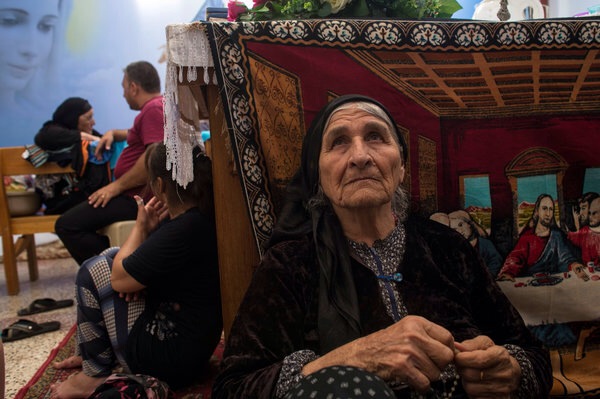
It also drove an estimated 120,000 Christians into exile either inside the country, in places such as Kirkuk and Erbil, or outside in refugee camps in nations such as Turkey and Jordan.

Read his full commentary in Crux here.

The ranking of evil

Dr. Mary Gatter, council president of the Planned Parenthood Federation of America’s Medical Directors – in the business of trading body parts

Here’s a simple exercise in basic reasoning. On a spectrum of bad things to do, theft is bad, assault is worse and murder is worst. There’s a similar texture of ill will connecting all three crimes, but only a very confused conscience would equate thieving and homicide. Both are serious matters. But there is no equivalence. The deliberate killing of innocent life is a uniquely wicked act. No amount of contextualizing or deflecting our attention to other issues can obscure that.

These are the words of Archbishop Charles Chaput in his diocesan website this week. They are help-ful, very helpful. With a bit of luck they will help clear the muddled minds of those who see something evil but fail to recognise it as such because a politically correct world’s group think has clouded their vision.

Archbishop Chaput is asking Catholics to reaffirm their commitment to their Church’s social teaching, “a seamless garment of respect for human life, from conception to natural death”. It makes no sense, he says, to champion the cause of unborn children if we ignore their basic needs once they’re born. Thus it’s no surprise that – year in and year out – nearly all Catholic dioceses in the United States… devote far more time, personnel and material resources to providing social services to the poor and education to young people than to opposing abortion.

But that does not mean that objectively and on the scale of personal wilfulness there is not a ranking of evil which every person has to attend to. “Children need to survive the womb before they can have needs like food, shelter, immigration counselling and good health care. Humanity’s priority right – the one that undergirds all other rights – is the right to life.” He quotes the American bishops of 1998:

“Opposition to abortion and euthanasia does not excuse indifference to those who suffer from poverty, violence and injustice. Any politics of human life must work to resist the violence of war and the scandal of capital punishment. Any politics of human dignity must seriously address issues of racism, poverty, hunger, employment, education, housing, and health care . . . But being ‘right’ in such matters can never excuse a wrong choice regarding direct attacks on innocent human life.

“Indeed, the failure to protect and defend life in its most vulnerable stages renders suspect any claims to the ‘rightness’ of positions in other matters affecting the poorest and least powerful of the human community. If we understand the human person as the ‘temple of the Holy Spirit’ — the living house of God — then these latter issues fall logically into place as the crossbeams and walls of that house.

“All direct attacks on innocent human life, such as abortion and euthanasia, strike at the house’s foundation. These directly and immediately violate the human person’s most fundamental right — the right to life. Neglect of these issues is the equivalent of building our house on sand.”

Chaput attacks the double-thing of those who say that abortion is mainly a cultural and moral issue, and politics is a poor solution to the problem. He finds it curious that some of the same voices that argue against political action on the abortion issue seem quite comfortable urging vigorous political engagement on issues like health care, homelessness and the environment. He defines politics in practice, as the application of moral conviction to public discourse and the process of lawmaking.

“Law not only constrains and defends; it also teaches and forms. Law not only reflects culture; it shapes and reshapes it. That’s why Christians can’t avoid political engagement. Politics is never the main content of Christian faith. It can never provide perfect solutions. But no Christian can avoid the duty to work for more justice and charity in our life as a nation, a task that inescapably involves politics. Thus the recent Senate vote to defund Planned Parenthood was not only right and timely, but necessary. And the failure of that measure involves a public failure of character by every Catholic senator who voted against it.”

He closes with a word of thanks to Ruben Navarette, Jr. Navarette is a veteran “pro-choice” voice, but in his August 10 column at the Daily Beast he expresses his revulsion at the whole, ugly, system-wide barbarism of Planned Parenthood’s fetal trafficking. Chaput thinks his column’s best lines come in quoting his prolife wife:

Those are babies that are being killed. Millions of them. And you need to use your voice to protect them. That’s what a man does. He protects children – his own children, and other children. That’s what it means to be a man.

Here is the latest video released by the Center For Medical Progress after after its 3-year investigation into Planned Parenthood:

Judge No Wine Before It’s Time – consolation for parents and teachers

There was a man who had four sons. He wanted his sons to learn not to judge things too quickly. So he sent them each on a quest, in turn, to go and look at a pear tree that was a great distance away.
The first son went in the winter, the second in the spring, the third in summer, and the youngest son in the fall.

When they had all gone and come back, he called them together to describe what they had seen.

The first son said that the tree was ugly, bent, and twisted. The second son said no it was covered with green buds and full of promise.

The third son disagreed; he said it was laden with blossoms that smelled so sweet and looked so beautiful, it was the most graceful thing he had ever seen.

The last son disagreed with all of them; he said it was ripe and drooping with fruit, full of life and fulfillment.

The man then explained to his sons that they were all right, because they had each seen but only one season in the tree’s life.

He told them that you cannot judge a tree or a person, by only one season and that the essence of who they are and the pleasure, joy and love that come from that life can only be measured at the end, when all the seasons are up.

If you give up when it’s winter, you will miss the promise of your spring, the beauty of your summer, fulfillment of your fall.

Courtesy of: morningstoryanddilbert.wordpress.com

A little bit of history…

image

Bill Haley

Today’s New York Times gives us a briefing that:

Sixty years ago tonight, what’s thought to be the first performance of a rock ’n’ roll song on national television helped kick off the rock era.“Rock Around the Clock,” originally recorded by the band Bill Haley and His Comets, swept the U.S. in the summer of 1955. It was the theme song of the film “Blackboard Jungle.”

The band’s Aug. 7 TV performance, at Ed Sullivan’s “Toast of the Town” concert in Stratford, Conn., helped clinch its members’ fame in the U.S. and Europe.

The song also became the first rock single to hit No. 1 on the pop charts. (“Rock Around the Clock” became a hit again when it was included on the 1973 soundtrack of “American Graffiti.”)

“Blackboard Jungle” was notable, too, for being Hollywood’s first serious treatment of urban schools, and for having the first rock soundtrack.

The song was an important influence on the Beatles and other rock performers in the 1960s and ’70s. Rock was said to be in trouble during discomania, but it never died.

So how long will the genre last? Demand is hard to predict, but there’s plenty of supply. As Mick Jagger once said, “There is no future in rock ’n’ roll, only recycled past.”

The moment when the wheels come off the tumbril?

As the horror of the Planned Parenthood’s exposure in the USA gathers momentum we wonder if this might not be the Harriet Beecher Stowe / Frederick Douglass moment which will lead to the end of the mass killing of human beings which our civilization has not only condoned but has also massively funded for the past few generations.

The wheels seem to be well and truly coming  the tumbrils of this reign of chilling slaughter. This is nowhere more evident than in the total lack of moral coherence – not to mention logical coherence – in the scramble to defend this extraordinarily  callous organisation by its liberal camp followers in recent weeks. “Care no matter what” is the organizations mantra. We now know that a great deal of things matter to Planned Parenthood, and that they have nothing to do with care for anyone. It’s big business.

In his superb post in the New York Times over the past few days Ross Douthat does not mince his words in calling them to order, even shaming them for their little better than infantile efforts to defend the indefensible.

He concludes with these words:

So let’s be clear about what’s really going on here. It is not the pro-life movement that’s forced Planned Parenthood to unite actual family planning and mass feticide under one institutional umbrella. It is not the Catholic Church or the Quorum of the Twelve Apostles or the Southern Baptist Convention or the Republican Party that have bundled pap smears and pregnancy tests and HPV vaccines with the kind of grisly business being conducted on those videos. This is Planned Parenthood’s choice; it is liberalism’s choice; it is the respectable center-left of Dana Milbank and Ruth Marcus and Will Saletan that’s telling pro-life and pro-choice Americans alike that contraceptive access and fetal dismemberment are just a package deal, that if you want to fund an institution that makes contraception widely available then you just have to live with those “it’s another boy!” fetal corpses in said institution’s freezer, that’s just the price of women’s health care and contraceptive access, and who are you to complain about paying it, since after all the abortion arm of Planned Parenthood is actually pretty profitable and doesn’t need your tax dollars?

This is a frankly terrible argument, rooted in a form of self-deception that would be recognized as such in any other context. Tell me anything but this, liberals: Tell me that you aren’t just pro-choice but pro-abortion, tell me that abortion is morally necessary and praiseworthy, tell me that it’s as morally neutral as snuffing out a rabbit, tell me that a fetus is just a clump of cells and that pro-lifers are all unhinged zealots. Those arguments, as much as I disagree with them, have a real consistency, a moral logic that actually makes sense and actually justifies the continued funding of Planned Parenthood.

But to concede that pro-lifers might be somewhat right to be troubled by abortion, to shudder along with us just a little bit at the crushing of the unborn human body, and then turn around and still demand the funding of an institution that actually does the quease-inducing killing on the grounds that what’s being funded will help stop that organization from having to crush quite so often, kill quite so prolifically – no, spare me. Spare me. Tell the allegedly “pro-life” institution you support to set down the forceps, put away the vacuum, and then we’ll talk about what kind of family planning programs deserve funding. But don’t bring your worldview’s bloody hands to me and demand my dollars to pay for soap enough to maybe wash a few flecks off.

Read the full column here.