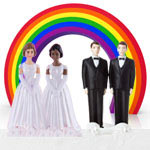
An Orwellian future for Ireland too?

If it happened there, why do we think it will not happen in Ireland as well? What happened?

Freedom of speech, press, religion, and association have suffered greatly due to government pressure. The debate over same-sex marriage that is taking place in the United States could not legally exist there today. Because of legal restrictions on speech, if you say or write anything considered “homophobic” (including, by definition, anything questioning same-sex marriage), you could face discipline, termination of employment, or prosecution by the government. That country is Canada.

Canada used to be one of the most democratic countries in the world, and one of the countries which was regularly ranked as one of the best countries in the world in which to live. Is it so anymore? Canada is now one of the countries in the world which is leading the charge to the totalitarianism of political correctness, which is threatening the treasured values of freedom of speech, freedom of religion and the rights and duties of parents to raise and educate their children. Communist ideology in the heyday of its practical application will be very much in the historic shade if democratic countries fail to stop this new totalitarian juggernaut.

Dawn Stefanowicz is an internationally recognized speaker and author. She is a member of the Testimonial Committee of the International Children’s Rights Institute. In a recent essay, posted on the website of the Princeton-based Witherspoon Institute, she gives a chilling picture of not just where Canada is headed but of where it has already arrived.

I am one of six adult children of gay parents who recently filed amicus briefs with the US Supreme Court, asking the Court to respect the authority of citizens to keep the original definition of marriage: a union between one man and one woman to the exclusion of all others, so that children may know and may be raised by their biological parents. I also live in Canada, where same-sex marriage was federally mandated in 2005.

I am the daughter of a gay father who died of AIDS. I described my experiences in my book: Out From Under: The Impact of Homosexual Parenting. Over fifty adult children who were raised by LGBT parents have communicated with me and share my concerns about same-sex marriage and parenting. Many of us struggle with our own sexuality and sense of gender because of the influences in our household environments growing up.

We have great compassion for people who struggle with their sexuality and gender identity—not animosity. And we love our parents. Yet, when we go public with our stories, we often face ostracism, silencing, and threats.

I want to warn America to expect severe erosion of First Amendment freedoms if the US Supreme Court mandates same-sex marriage. The consequences have played out in Canada for ten years now, and they are truly Orwellian in nature and scope.

Canada’s Lessons

In Canada, freedoms of speech, press, religion, and association have suffered greatly due to government pressure. The debate over same-sex marriage that is taking place in the United States could not legally exist in Canada today. Because of legal restrictions on speech, if you say or write anything considered “homophobic” (including, by definition, anything questioning same-sex marriage), you could face discipline, termination of employment, or prosecution by the government.

Why do police prosecute speech under the guise of eliminating “hate speech” when there are existing legal remedies and criminal protections against slander, defamation, threats, and assault that equally apply to all Americans? Hate-crime-like policies using the terms “sexual orientation” and “gender identity” create unequal protections in law, whereby protected groups receive more legal protection than other groups.

Having witnessed how mob hysteria in Indiana caused the legislature to back-track on a Religious Freedom Restoration Act, many Americans are beginning to understand that some activists on the Left want to usher in state control over every institution and freedom. In this scheme, personal autonomy and freedom of expression become nothing more than pipe dreams, and children become commodified.

Children are not commodities that can be justifiably severed from their natural parentage and traded between unrelated adults. Children in same-sex households will often deny their grief and pretend they don’t miss a biological parent, feeling pressured to speak positively due to the politics surrounding LGBT households. However, when children lose either of their biological parents because of death, divorce, adoption, or artificial reproductive technology, they experience a painful void. It is the same for us when our gay parent brings his or her same-sex partner(s) into our lives. Their partner(s) can never replace our missing biological parent.

The State as Ultimate Arbiter of Parenthood

Over and over, we are told that “permitting same-sex couples access to the designation of marriage will not deprive anyone of any rights.” That is a lie.

When same-sex marriage was legalized in Canada in 2005, parenting was immediately redefined. Canada’s gay marriage law, Bill C-38, included a provision to erase the term “natural parent” and replace it across the board with gender-neutral “legal parent” in federal law. Now all children only have “legal parents,” as defined by the state. By legally erasing biological parenthood in this way, the state ignores children’s foremost right: their immutable, intrinsic yearning to know and be raised by their own biological parents.

Mothers and fathers bring unique and complementary gifts to their children. Contrary to the logic of same-sex marriage, the gender of parents matters for the healthy development of children. We know, for example, that the majority of incarcerated men did not have their fathers in the home. Fathers by their nature secure identity, instill direction, provide discipline, boundaries, and risk-taking adventures, and set lifelong examples for children. But fathers cannot nurture children in the womb or give birth to and breast-feed babies. Mothers nurture children in unique and beneficial ways that cannot be duplicated by fathers.

It doesn’t take a rocket scientist to know that men and women are anatomically, biologically, physiologically, psychologically, hormonally, and neurologically different from each other. These unique differences provide lifelong benefits to children that cannot be duplicated by same-gender “legal” parents acting out different gender roles or attempting to substitute for the missing male or female role model in the home.

In effect, same-sex marriage not only deprives children of their own rights to natural parentage, it gives the state the power to override the autonomy of biological parents, which means parental rights are usurped by the government.

Hate Tribunals Are Coming

In Canada, it is considered discriminatory to say that marriage is between a man and a woman or that every child should know and be raised by his or her biological married parents. It is not just politically incorrect in Canada to say so; you can be saddled with tens of thousands of dollars in legal fees, fined, and forced to take sensitivity training.

Anyone who is offended by something you have said or written can make a complaint to the Human Rights Commissions and Tribunals. In Canada, these organizations police speech, penalizing citizens for any expression deemed in opposition to particular sexual behaviors or protected groups identified under “sexual orientation.” It takes only one complaint against a person to be brought before the tribunal, costing the defendant tens of thousands of dollars in legal fees. The commissions have the power to enter private residences and remove all items pertinent to their investigations, checking for hate speech.

The plaintiff making the complaint has his legal fees completely paid for by the government. Not so the defendant. Even if the defendant is found innocent, he cannot recover his legal costs. If he is found guilty, he must pay fines to the person(s) who brought forth the complaint.

If your beliefs, values, and political opinions are different from the state’s, you risk losing your professional license, job, or business, and even your children. Look no further than the Lev Tahor Sect, an Orthodox Jewish sect. Many members, who had been involved in a bitter custody battle with child protection services, began leaving Chatham, Ontario, for Guatemala in March 2014, to escape prosecution for their religious faith, which conflicted with the Province’s guidelines for religious education. Of the two hundred sect members, only half a dozen families remain in Chatham.

Parents can expect state interference when it comes to moral values, parenting, and education—and not just in school. The state has access into your home to supervise you as the parent, to judge your suitability. And if the state doesn’t like what you are teaching your children, the state will attempt to remove them from your home.

Teachers cannot make comments in their social networks, write letters to editors, publicly debate, or vote according to their own conscience on their own time. They can be disciplined or lose any chance of tenure. They can be required at a bureaucrat’s whim to take re-education classes or sensitivity training, or be fired for thinking politically incorrect thoughts.

When same-sex marriage was created in Canada, gender-neutral language became legally mandated. Newspeak proclaims that it is discriminatory to assume a human being is male or female, or heterosexual. So, to be inclusive, special non-gender-specific language is being used in media, government, workplaces, and especially schools to avoid appearing ignorant, homophobic, or discriminatory. A special curriculum is being used in many schools to teach students how to use proper gender-neutral language. Unbeknownst to many parents, use of gender terms to describe husband and wife, father and mother, Mother’s Day and Father’s Day, and “he” and “she” is being steadily eradicated in Canadian schools.

Which Is More Important: Sexual Autonomy or the First Amendment?

Recently, an American professor who was anonymously interviewed for the American Conservative questioned whether sexual autonomy is going to cost you your freedoms: “We are now at the point, he said, at which it is legitimate to ask if sexual autonomy is more important than the First Amendment?”

Under the Canadian Charter of Rights and Freedoms, Canadian citizens were supposed to have been guaranteed: (1) freedom of conscience and religion; (2) freedom of thought, belief, opinion, and expression, including freedom of the press and other media of communication; (3) freedom of peaceful assembly; and (4) freedom of association. In reality, all of these freedoms have been curtailed with the legalization of same-sex marriage.

Wedding planners, rental halls, bed and breakfast owners, florists, photographers, and bakers have already seen their freedoms eroded, conscience rights ignored, and religious freedoms trampled in Canada. But this is not just about the wedding industry. Anybody who owns a business may not legally permit his or her conscience to inform business practices or decisions if those decisions are not in line with the tribunals’ decisions and the government’s sexual orientation and gender identity non-discrimination laws. In the end, this means that the state basically dictates whether and how citizens may express themselves.

Freedom to assemble and speak freely about man-woman marriage, family, and sexuality is now restricted. Most faith communities have become “politically correct” to avoid fines and loss of charitable status. Canadian media are restricted by the Canadian Radio, Television, and Telecommunications Commission (CRTC), which is similar to the FCC. If the media air anything considered discriminatory, broadcasting licenses can be revoked, and “human rights bodies” can charge fines and restrict future airings.

An example of legally curtailed speech regarding homosexuality in Canada involves the case of Bill Whatcott, who was arrested for hate speech in April 2014 after distributing pamphlets that were critical of homosexuality. Whether or not you agree with what he says, you should be aghast at this state-sanctioned gagging. Books, DVDs, and other materials can also be confiscated at the Canadian border if the materials are deemed “hateful.”

Americans need to prepare for the same sort of surveillance-society in America if the Supreme Court rules to ban marriage as a male-female institution. It means that no matter what you believe, the government will be free to regulate your speech, your writing, your associations, and whether or not you may express your conscience. Americans also need to understand that the endgame for some in the LGBT rights movement involves centralized state power—and the end of First Amendment freedoms.

Dawn Stefanowicz’s book, Out From Under: The Impact of Homosexual Parenting, is available at http://www.dawnstefanowicz.org. Dawn, a full-time licensed accountant, is married and has two teenaged children.


Irish political class defying language, truth and logic

It is a mind-boggling experience to walk through the streets of Dublin these days. Left, right and centre, posters are screaming at us, “Yes to equality”, “Yes to equality”, “Yes to equality”. But when we ask ourselves what does this mean we are confronted with a choice of two very worrying conclusions. The first is that the members of our political establishment  – across all party divides – have no grasp of the English language, nor of the logic which normally guides human reasoning. The second, probably more plausible – since they are all reasonably well-educated men and women – is that they are deliberately attempting to deceive and manipulate the electorate which put them into power, all for some unfathomable reason.

The starting point of their error – or deception – is the fundamental error of thinking that equality, fairness, and justice can be achieved by obliterating or ignoring the differences which distinguish one thing from another.

Men love women in one way, men love men in another way – generally, but not always, in the disinterested love we call friendship. The same is true for women. Arguably the love found in friendship, be it between people of opposite sexes or of the same sex, is the purest and most generous form of love there is. But the love of a man for a woman, given the full complementarity of their sexual natures, is a truly unique expression of love. No other love is like it, in either its form of expression or in its potential consequences. This makes it very special both for them, for the human life which that love can generate and for human society as a whole. This is the only love which generates new love as well as new life, not just the love of man and woman, but the love of children and parents, the love of siblings, the love of uncles and aunts, the love of generations down through the centuries, our love for our ancestors – and for those of faith, their everlasting love for us.

This love is very special. It is special not simply because it is expressed sexually but special because of how it is expressed sexually and because of the potential consequences which its physical expression has. It has its own unique form of communication and which come from both nature and society. Its rules of engagement have been refined and developed over millennia but rest on one constant element – the complementary sexual gifts of male and female. Remove that element from the relationship between two people and we have something entirely different. You may have love but you do not have the raison d’etre for the institution we call marriage.

Marriage is the name we give to this structure, these rules of engagement which we have created around this unique relationship. Marriage is the name which society and its laws give to this venerable edifice. It is not only there in statute law but also used to be there in common law – when a man and a woman, outside of the laws of society, independently established a mutual sexual bond with each other, we called it ‘a common law marriage’. When two people got married but then discovered that the male partner was unable to perform the “marriage act” our understanding was that no marriage existed. Marriage is no fluffy, luvvie dovey thing. It is a fundamental building block of our civilization.

Society has taken on itself the task of establishing the rules for this relationship because of the multiple implications it has for its members in general and for the flourishing of individuals, generation after generation, who come into society by virtue of the acts of love of its married members. It is not the love itself that demands this. The love of friendship, sexually expressed or not, does not require society to manage it, the love of siblings, aunts and uncles does not require it. The sexual expression of the love of a man and woman does. The management of love is not the business of society. The management of procreation – and many of its consequences – is. That is why marriage exists.

What has happened to create in our world today this demand of a redefinition of marriage which takes from under it the very foundation on which it is based. It is the emergence of another demand, the demand for a social recognition and approval of the sexual expression of the love of friendship between men themselves and between women themselves. This expression of love has been disapproved of in most societies in varying degrees down through history. That is a matter of fact on which we make no judgement. What we can judge is that there is no question but that this disapproval has been accompanied by appalling injustices.

However, the efforts now being made to win approval for this physical expression of love, by seeking to equate it with the love of a man for a woman and a woman for a man, and to apply to it all the structures which nature and society place around that relationship for the protection of families and society, is profoundly misguided.

To suggest, to argue, that maintaining the traditional definition of marriage is to deny equality to two men or two women who want to love each other and be committed to each other’s company for life is a denial of equality is deeply flawed.

The nature of things must always be taken into account when a judgement is being made about the fairness or otherwise of their distribution among people. The different nature of the way in which love can be expressed – as between a man and a woman and between two of the same sex – make the application of the test of equality in this case meaningless. Think of these different forms of expression as a language. They are different forms of communication. We do not need to go into detail. It is obvious. Now consider two people seeking a diplomatic post in a foreign country. They are equally qualified in all respects except one: one of them does not speak the language of the country he wishes to be posted to; the other does. Is the obvious preference of one over the other an unjust discrimination? Is it an unjust denial of equality? No. The reality is that they are not equal in this respect. In the same way the relationship between two men or two women is not equal to the relationship between a man and a woman. Nature, not society has determined that.

The longing for respect, recognition and approval by homosexual people needs to follow a path other than that being pursued at present, the path of redefining marriage. The pursuit of this end can only result in the ultimate destruction of the very thing they wrongly identify as the panacea for the injuries suffered in the past, or which they anticipate in the future.

Why worry about a few turbulent clerics?

gay-marriage-image
Some Irish people are a little dismayed this morning, opening their newspapers or listening to their radios, finding a priest asking them to vote for the redefinition of marriage in the forthcoming referendum on the issue. They shouldn’t be.
 
The early history of Christianity should help any modern Christians trying hard to live by the authentic teaching of Christ in dealing with the disappointment occasioned by the utterances of Fr. Iggy O’Donovan. O’Donovan may not be Gnostic and may be small fry when taken in the context of what authentic Christianity was up against in those first centuries. But he is cut from the same cloth as the likes of Valentinius, Marcion and Tatian. Pedigree, or association with faithful Christians, is no gaurantor of orthodoxy. 
 
Blessed John Henry Newman reminds us, intially quoting another source:
 

“When [the reader of Christian history] comes to the second century,” says Dr. (Edward) Burton, “he finds that Gnosticism, under some form or other, was professed in every part of the then civilized world. He finds it divided into schools, as numerously and as zealously attended as any which Greece or Asia could boast in their happiest days. He meets with names totally unknown to him before, which excited as much sensation as those of Aristotle or Plato. He hears of volumes having been written in support of this new philosophy, not one of which has survived to our own day.”[221:1] Many of the founders of these sects had been Christians; others were of Jewish parentage; others were more or less connected in fact with the Pagan rites to which their own bore so great a resemblance. Montanus seems even to have been a mutilated priest of Cybele; the followers of Prodicus professed to possess the secret books of Zoroaster; and the doctrine of dualism, which so many of the sects held, is to be traced to the same source. Basilides seems to have recognized Mithras as the Supreme Being, or the Prince of Angels, or the Sun, if Mithras is equivalent to Abraxas, which was inscribed upon his amulets: on the other hand, he is said to have been taught by an immediate disciple of St. Peter, and Valentinus by an immediate disciple of St. Paul. Marcion was the son of a Bishop of Pontus; Tatian, a disciple of St. Justin Martyr.

The Church has had to contend with this kind of thing throughout its history and will always have to do so. But if the gates of Hell will not prevail against it why should a few turbulent clerics worry it?

The domino effect of same-sex ‘marriage’

2015/01/img_0624.jpg As Ireland prepares for a referendum which proposes to remove from its Constitution any obstacle to the redefinition of marriage the advocates of same-sex marriage say it is a simple matter of officially recognising the love of two people. This case in Britain shows that it is no such thing and that the cultural change it will bring about threatens the freedom of thought and expression of all. On Irish Television on Monday night the issue was debated for almost an hour. The fear and loathing which a British marriage campaigner spoke of as now prevailing in that state for those who resist the new culture is perfectly illustrated by this case. Richard Page, a 68-year-old British Justice of the Peace and evangelical Christian, has been condemned by the country’s highest legal authorities, suspended, and subjected to a day-long re-education session to rid him of the dangerous belief that a child would be better off being adopted by a family with a mother and a father than by a same-sex couple. Page sat on a family court tribunal last summer to consider a social worker’s recommendation that a foster child be adopted by a gay couple. “I raised some questions in private with the other judges, including that I thought that because a baby comes from a man and a woman it made me think the child would be better off with a father and a mother than with single-sex parents. The other judges didn’t agree at all,” he told LifeSiteNews. Worse, the other judges complained. A review committee concurred, suspended him from the bench and recommended he be kicked off the lowest rung of the judiciary (but which handles 90 percent of all criminal crime, plus youth and family cases). “They said I had a closed mind because of my Christian beliefs,” he said. “They said I could not put my Christian beliefs above the rights of single-sex couples. They said I had to open my mind. But I think when you order someone to open their mind, then you are the one with a closed mind.” In the end, the Lord Chancellor, cabinet minister Chris Grayling, and the Chief Justice John Thomas, decided to issue a reprimand and a day-long re-education order. “Mr. Page, while sitting in Family Court,” it stated in part, “was found to have been influenced by his religious beliefs and not by evidence.” The pair rated his behaviour “a serious misconduct” and added, “Mr. Page should have recused himself from the matter.” But there is evidence that Page is correct. Simon Fraser University economics professor Douglas Allen, for example, studied thousands of homosexual and heterosexual couples drawn at random from Canadian census data to find that a third fewer of the children from same-sex households graduated from high school than those from natural families. One speaker on Monday’s Irish television programme described the effect of what the change in the Irish Constitution would be as a domino effect. Justice Page is just one little domino in the game in progress across the Irish Sea. Soon to be played in a casino in Dublin?

De mortuis nil nisi bonum, but…

In a virtuous world human beings forgive each other. Some do so unconditionally even while they remain set up on by those they forgive. Others do so conditionally when forgiveness is asked for with repentance by those offending. The dividing line between them is probably the dividing line between heroic goodness and a more ordinary goodness. In the moral order forgiveness is obligatory. Forgetting is probably an optional extra.

Forgiveness, however, has no part to play in the recording of history and not forgetting is what it is all about. The honest recording of memory has its own moral imperative.

The death of Ian Paisley gives us an occasion to reflect on these two important moral obligations and in the torrent of words which his passing has provoked there are many lapses of both in evidence.

Let us begin by exhorting that he be forgiven, even though he never asked for forgiveness. But let us not eulogise. Let us do justice in recording honestly what he did, what he said, and note as accurately as we canwhat the dreadful consequences were of both.

There has been speculation since his death – and before his death – as to his motives for his actions in the last ten or so years of his life. Was he really a peacemaker or did he finally come to the conclusion that the road on which he had spent his life had come to a dead end? Was coming to terms with his enemies and getting what seemed the best deal possible all that he could do? Unless we get a personal diary, or a reliable personal account of a conversation revealing his intimate thoughts on the matter, we are unlikely to be able to answer this question. An important fact of history, however, is that he did, willingly or unwillingly, play a critical role in returning Northern Ireland to the tolerable normality which its people now enjoy. But another fact of history, unpalatable though it may be, is that it was he who played an absolutely central role in the whole process, from its very beginning, by which Northern Ireland descended into the abyss of civil war and remained there for over 30 years with the loss of over 3000 lives, many of them totally innocent.

This morning I took from a small archive of cuttings which I keep, an article about Ian Paisley which I wrote back in December 1968 or early 1969. Just then he was no more that moderator of the small fundamentalist Free Presbyterian Church of which he was the founder. I re-read this with some apprehension as to whether it would stand up as any kind of a prophetic anticipation of what was going to unfold in the years between then and now. On that count I am afraid it was mixed. On the other hand, it does stand as a permanent record of what this inflamatory man thought and said up to that time. When taken along with subsequent accounts of what he later did, it bears out the judgement that he was a key catalyst in provoking the suffering endured in Northern Ireland for those 30+plus years.

In the late 1960s, with the emergence of the Northern Irish Civil Rights Movement, a certain naive optimism led people to believe that rational politics, real economic opportunities, even simple pragmatism, would bring Ireland a more settled future in which North and South, Catholics and Protestants would live and work peacefully for the good of the whole people of Ireland. In 1968 the prime ministers of Northern Ireland and the Irish Republic met for the first time since the establishment of the two political entities back in the early 1920s. The symbolism of this, the mutual good intentions of Terence O’Neill and Sean Lemass, the two in question, lead Irish people to imagine what was heretofore unimaginable.  It looked like the end of Ireland’s own Cold War.

Our imaginations, however, did not comprehend the hidden power of Ian Paisley nor the law of unintended consequences which his unimaginable bigotry was going to unleash in the form of the resurgence of the Irish Republican Army which it provoked.

The simple chain of events which unfolded between 1965 and 1969, for which his leadership was the catalyst, set in train all the events which followed for the next 30 years. That chain was as follows: The rapprochement of North and South initiated by Sean Lemass and Terence O’Neill, combined with the peaceful pursuit of civil rights for Catholics in Northern Ireland, set Ian Paisley on the warpath; in doing so he mobilised the extreme Protestant elements in the province to oppose both O’Neill and the civil rights marches; violent clashes ensued while the Northern Irish police and its auxiliary force, the notorious “B Specials”, were clearly not only failing to protect peaceful protesters but were aiding and abetting those attacking them; at this point enter the IRA as a counter force to provide this protection;  with the two communities now at loggerheads, enter the British Army to try to keep them apart – which then becomes the number one target for the IRA. The Thirty Year War is now on. Things would not have gone down this road without the Paisley factor.

Back in December, 1968, in his Protestant Telegraph, he told his followers: “Essentially the ‘struggle’ in Ulster as we know it is a spiritual one. There are those in our province who suffer from guilty conscience; their attitude of mind is that we Protestants are invaders and have no right to be here. The Almighty does not make mistakes; He alone is infallible. Our presence in Ulster is no accident of history. We are a special people, not of ourselves but of divine mission.”

Does all that not sound a little like the ranting of the leader of the so-called Islamic State?

“Ulster”, Paisley continued, “is the last bastion of Evangelical Protestantism in Western Europe; we must not let drop the torch of Truth at this stage of the eternal conflict between Truth and Evil. Ulster arise and acknowledge your God.”

The arch enemy is, of course, the Roman Catholic Church, I wrote in that article in 1969. Allied to it Paisley saw the ecumenical movement of that time, and people like Terence O’Neill whom he saw as liberal unionists. The article continued: “The terror at the prospect of a liberalised and tolerant community which is reflected in the pages of the Protestant Telegraph is based on the fear that a liberalised community will bring about the destruction of the moral and religious standards of Bible Protestantism, the purity of its doctrine will be lost through the growth of tolerance. This is the basis of the intolerance of the Free Presbyterianism mentality.”

Paisley’s war required a myth. He had no difficulty embellishing the “Rome Rule” myth which already existed. “In 1955,” runs a Protestant Telegraph editorial, “Rome chose the IRA and guerrilla warfare as the means of achieving the goal. Today the process is not so blatant, but nonetheless dangerous; her current policy is peaceful penetration.” The Civil Rights Movement was categorised in this way: “The objects of the movement can be listed as follows: 1. To make evil seem righteous. 2. To display bloodstained Popery as democracy. 3. To show Irish republicanism as a British way of life.” It made little sense but it set the fires burning.

Terence O’Neill called him a dinosaur in the political campaign which followed within two months of those words being written. And so he was. But this dinosaur went on to bring O’Neill to his knees and then to found the political party which virtually wiped O’Neil’s Unionist Party off the political map. The religious rhetoric was toned down but that same fundamentalist religious spirit was at the heart of all that Ian Paisley did throughout his career.

Naively, in those months before the opposing floodgates of sectarian and republican violence opened, that article predicted that the end was then not far away for Ian Paisley, Ronal Bunting (his right-hand man at that time) and their movement. “There is a terrible hopelessness about the cause which they are supporting, and its whole basis is as relevant as the basis on which the (IRA) activists in the late 1950s were working” in their futile and furtive raids on border police stations. Hopeless it was, but that hopelessness did not prevent the chain of unintended consequences spinning out that dreadful story for another thirty years. The article concluded, “But although Paisleyism is doomed as the irrational movement that it is, it can still do grievous damage; it can wreck the political life of the province and the country with all the meaningless ferocity which any irrational monster can destroy the work of sincere and rational human endeavours.”

Paisleyism – he had added a new word to the lexicon of religion and politics – was doomed even though its remnants still persist. In his hearts of hearts Paisley himself may have accepted that.  In its virulent form, however, it lasted much longer than any of us ever dreamed it would back in 1968 or 1969. May he now rest in peace, at last.

Unfounded or well-founded suspicions about the latest pro-abortion narrative?

Would we be unfairly or unreasonably suspicious – given what we know about the ethical universe inhabited by the Irish Family Planning Association, and its parent organisation, International Planned Parenthood – to surmise the following as part of the scenario for the latest human tragedy emanating from the battle over abortion in that country.

Would it be fair to suspect that we are not been given the full story – even given the restrictions on reporting for legal reasons – in Ireland’s ultra pro-abortion media?

The mainstream media tells us that concerns for the psychological welfare of the young woman at the centre of the tragedy were brought to the HSE at the end of May. By that time she was 16 weeks pregnant. She maintains that she was pregnant as a result of rape before she came to the country and first asked for an abortion when she was eight weeks and four days pregnant, at the beginning of April. She was referred to the Irish Family Planning Association (IFPA) for counselling.

When told that the cost of travelling for an abortion could be as high as €1,500 at an IFPA counselling session in late May, she said she would rather die than continue with the pregnancy. She was then referred to the HSE.

She says she was suicidal after she was refused a termination under Ireland’s new abortion legislation. She told a reporter that she attempted to take her own life but was interrupted when she was making the attempt.

This begs a lot of questions. What went on in the conversation between the woman and the IFPA in the several weeks prior to her presentation to the HSE? What was the advice given by the IFPA? The IFPA is an organisation whose main activity is to organise facilities for people to prevent birth – either by providing contraceptive services or to facilitate abortion. The latter task has until now been mainly concerned with giving advice on how to procure abortions in Britain. Ireland’s new legislation has now opened the door to them to advise on procuring abortion within the country’s borders. But what advice can they give – under the terms of this legislation? The legislation allows for an abortion up to term for a woman whose live is at risk from suicide. Therefore the “best” advice that the IFPA could give to a woman looking for an abortion is to feign suicidal thoughts – and even better, to feign an attempt at suicide.

If this was the advice of the IFPA, happily it did not work in this case. Because the legislation is muddled the medical people involved could not agree and the woman’s child was delivered by Caesarean section earlier this month, at 25 weeks gestation. If this was not the advice given by the IPFA they can allay our suspicions by publishing a transcript of the conversations in question.

These are horrible thoughts – but we live in horrible times. This is not evidence. It is a strong suspicion about what went on in those conversations over those weeks between people who have no scruples about taking the life of an unborn child. It is founded, reasonably, on a perception of the cultural and ethical norms which are clearly dominant in the universe of a segment of the dramatis personae of this tragedy.

Investigative videos from pro-life organization Live Action show Planned Parenthood facilities in Denver, Colorado offer evidence of disturbing and dangerous advice given to what staffers think are underage girls.

The counsellors lay out in graphic detail a spectrum of sadistic sexual behaviours to the investigators, including “whipping,” “tying up,” and “asphyxiation.”

An example of the kind of thing all this can lead to is the police discovery, in January last, of 16-year-old Jessica Burlew with the corpse of 43-year-old Jason Ash, whom Burlew had strangled to death and mutilated with razor blades in the midst of “a sex game.” More of this organisation’s nefarious activities can be seen here.

Planned Parenthood is an organisation which regularly get plaudits from the current leader of the Western World, Barak Obama. The IFPA occupies the same space. There is no deception, no hypocrisy – their self-proclaimed cause is “women’s health” when in fact the end result of their work is women’s enslavement – to which they will not stoop. Wake-up, world.

Kenny’s Irish Abortion Act on the rocks?

Caroline Simons

In the context of the battle over abortion in Ireland, this radio exchange of views between the legal spokesperson for the Irish Pro Life Campaign, Caroline Simons, and Irish Labour Party Senator, Ivanna Bacik, reveals the cold and callous position which this pro abortion Party takes on the life of the unborn.

Among other things it exposes the deceptoion of the pro abortionists in their persistent use of the term fetus to describe a child in its mother’s womb.. Bacik is at it again in this interview. They clearly want to deny the humanity of the unborn – against all the evidence we now have that the beating heart of the child in the womb is a real human heart. They think that they will in this way dull the public’s perception of this reality.

Prime Minister Enda Kenny thought he had dealt with the abortion controversy with his Orwellian entitled Protection of Life During Pregnancy Act 2013 last summer. The deep flaws in the legislation became apparent with the revelations last weekend that because of the crudeness of the provisions of this Act a baby’s life was put at risk when it had to be delivered prematurely.

The PLC deputy chairperson, Cora Sherlock, in a statement yesterday, spoke of the outrage Irish people were feeling at the way the Labour Party – the socialist tail wagging the dog in the coalition government on all matters of social policy – is exploiting a mother and her new-born child in this latest skirmish between those who want to number Ireland among the abortion nations of the world and those who don’t.

Pro-life campaigners in Ireland knew from the start that this legislation was seen by the Labour Party as a stepping-stone to abortion-on-demand. Although theoretically it gives a right to abortion up to the moment of birth they knew that this would be too hit and miss in practice. They want a law which will give water-tight assurance that any person seeking an abortion can have it. Commenting on the calls by the Party for wider access to abortion in the wake of this case, Ms. Sherlock said:

“This is a tragic story for both mother and baby. There is a premature baby clinging to life in a Dublin Hospital as a direct result of last year’s abortion legislation and all some Labour TDs can do is exploit the situation to push for more abortion. It is obscene the way they are using this case to whip up support for their agenda.

“The Labour TDs in question should be ashamed of themselves for knowingly introducing a law that wasn’t evidence-based and that puts the lives of unborn babies at grave risk. The new law was always about introducing abortion and never about providing life-saving treatments. Those who voted for it in the Dáil also chose to ignore all the peer-reviewed evidence pointing to the negative mental health consequences of abortion for women.

“Of course it suits the agenda of pro-choice activists to portray the new law as restrictive. It’s just a ploy to build support for the deletion of Article 40.3.3 of the Constitution. Pro-choice advocates talk about the new law not providing for situations like rape and incest but they know this isn’t true. The tragic story that emerged over the weekend proves that the new law is not restrictive. The truth is the psychiatrists on the panel deciding the case wanted to sign off on an abortion even though they knew it was not a treatment for suicidal feelings.

“Pro-choice activists are in effect saying that the baby at the centre of this tragic case should never have been born. It is a chilling and disturbing reminder of the cruel and inhumane reality of legalized abortion.

“Instead of playing politics with this tragedy, we should all be focused on the best outcome for the mother and baby at the centre of this very difficult case.With this tragedy, we should all be focused on the best outcome for the mother and baby at the centre of this very difficult case.”

“A chilling aberration of law and medicine”

One lucky baby…

Just one year after Ireland’s parliament passed legislation to introduce abortion on the grounds of a credible claim by a woman that she is suicidal, details of the first test of the law are emerging.

Happily, mother and child have both escaped with their lives in the case in question – but only because they were lucky enough to have at hand the services and judgement of an obstetrician who valued both their lives equally.

The details of the case, insofar as legal restrictions permit their being reported, are here in Ireland’s Independent newspaper.

In summary, a young immigrant woman discovered that she was pregnant. She was admitted to hospital and asked for an abortion because if her pregnancy were discovered in her community she said that her live would be in danger. However, the pregnancy was found to be in its second trimester and the obstetrician judged that the baby could be safely delivered. The woman insisted she wanted an abortion and said she would take her life if refused. Under the terms of Ireland’s new law – which places no restriction on abortion right up to the end of the third trimester –  two psychiatrists were asked to judge on her threat. They are understood to have recommended an abortion – euphemistically and hardly accurately described by the Irish Health Service Executive as a “treatment” for suicide. Her logic – of taking her life to prevent her life being taken – did not seem to have been questioned. The obstetrician, however, stood his or her ground in the belief that both lives could be saved. The mother was persuaded to accept a Caesarean, and the baby was safely delivered.

The Irish HSE would not comment on the case but gave this reply to the Independent journalist:

“In response to your query the Protection of Life During Pregnancy Act 2013 commenced on 1st January 2014. Its purpose is to confer procedural rights on a woman who believes she has a life-threatening condition, so that she can have certainty as to whether she requires this treatment or not,” a spokesman said.

Lucky baby, lucky mother. Under this new law it is now clear that life and death for some of those awaiting birth in their mother’s wombs in Ireland will now be decided by the lottery which determines which obstetrician’s hands they fall into – those who value life, all life, or those who are selective about the lives they value.

The Irish Pro Life Campaign commented on yesterday’s media reports on this story that it highlights the “horror and deep seated flaws” in the Government’s legislation.

The PLC’s Dr Ruth Cullen said: “It is agreed on all sides that abortion is not a treatment for suicidal feelings yet the Government pressed ahead and railroaded through legislation that is not evidence-based and provides for abortion based on a threat of suicide. We now have the situation where doctors are placed in the position of making decisions knowing there is not a shred of evidence to back any of them up.

These reports, she said, that an unborn baby was recently delivered at 25 weeks, citing provisions in the new abortion Act, underline the horror and deep seated flaws of the Government’s legislation. “To induce a pregnancy at such an early stage inevitably puts the baby at risk of serious harm, such as brain damage, blindness or even death.

“To put a defenceless baby through all this, and to pretend the intervention is medically indicated when it is known that there is no evidence to back it up, is a chilling aberration of law and medicine. The fact that the panel could just as easily have sanctioned an abortion in this case also brings home everything that is wrong about the new law.  

“The Government successfully packaged the law as a life-saving measure even though it is nothing of the sort. Although it is going to take time, as more and more people begin to realise what the law actually provides for, support for it to be repealed will grow and grow.”

The Irish pro life organisations have been campaigning against this legislation since it was first introduced to the Irish parliament and, since it was passed into law, have continued to do so unrelentingly, bringing tens of thousands of protesters against on to the streets. The history of this case can only underline the argument for the repeal of the law which is now bound to become an issue in the next Irish general election due early in 2016.

Deadly guidelines for doctors in Ireland

Irish Prime Minister, Enda Kenny
Ireland’s ironically designated Department of “Health” took a further step today in prescribing death for countless children awaiting birth in their mothers’ wombs.  It has published its guidelines for doctors to follow when women come to them seeking abortion on the pretext that they are about to commit suicide because of an unwanted pregnancy.
This time last year the Fine Party led by Prime Minister Enda Kenny forced legislation through the Irish parliament, bludgeoning many of his party’s members into submission to support the bill against their consciences. He did so to keep his ideologically-driven socialist partners on board in his coalition government.
He did this in the face of massive public street protests from the pro-life movement in the country and has since paid a considerable electoral price for this. Independent candidates were victorious in the local and European elections in May and with the defenders of the unborn continuing to mobilize support he has every reason to be edgy about his political future.
The Pro Life Campaign today issued a statement accusing  the Government of misleading the public “every step of the way” over abortion. Deputy Chairperson, Cora Sherlock said:

” The law introduced last year was presented as emergency legislation needed to save women’s lives. If this were true, it wouldn’t have taken a full year to draw up the guidelines. The truth is the legislation was never about life-saving treatments. It was always about Fine Gael capitulating to the Labour Party, who had campaigned for 20 years for an abortion regime in Ireland. The assurances sought by some Fine Gael TDs prior to the passage of the legislation have now been shown to be worthless.”

Ms Sherlock added that the guidelines “confirm that all it takes to sign the life of an unborn baby away is for two like-minded psychiatrists to sanction the abortion without having to produce a shred of medical evidence that it would help save the life of the mother. Abortion is now legal in Ireland up to birth, based on a threat of suicide, even though the Government knew before the law was passed that abortion is not a treatment for suicidal feelings. No amount of spin from the Taoiseach or anyone else can change this sad reality.”

“Though they may try and play it down, Fine Gael knows that their support for abortion was a significant issue with voters in the recent local and European elections. I can assure them it will be an even bigger issue come the next General Election.”

If the Irish government coalition regime does not unravel before then, Kenny will be facing the electorate again in early 2016. Recent polls have shown that the socialist partners in the coalition are at their lowest  level in living memory. Their leader, Eamon Gilmore, has resigned and one of their top ministers, Ruairi Quinn, has also announced his resignation.

Waiting for the aftershock

An electoral earthquake took place in Europe last week, we are told by media across the world. And in Ireland? A severe tremor perhaps, but it will be the aftershock from that tremor in two years from now that will change the Irish political landscape. It is on its way and the dead hand of historical mythologies which has crippled Irish political life –  for half a century at least – will at last lose its grip. Real political choices will then be open to the Irish electorate once again.

The tremor which Ireland felt last weekend brought its casualties and there was little mourning for them. The deputy prime minister (Taniste), Eamon Gilmore,  bit the dust and resigned as leader of his left-wing party. The electorate’s preferences swung wildly towards independent politicians and it was clear that they were not to worried about the kind of independents they chose – it was a matter of anyone but the political establishment in power.

Why all this happened and what we may expect in the future was well analysed by Professor Ray Kinsella in one of the country’s daily newspapers yesterday.

“Voters observed, up close and personal, what happens to individual TDs of real ability and principle when they voted with their conscience on the Coalition’s Abortion Act. It sent a message: this Government will not tolerate individuals who think for themselves and dissent from ‘The Party Line’. This message was further reinforced by the Coalition’s effort to consolidate political control by abolishing the quasi-independent Seanad. It is not so easy to push around Independents and threaten grown-up legislators with the Party Whip system.

“Voters observed that Fine Gael abandoned its foundational values, based on supporting families and fairness, while the Labour Party ditched the ethos of solidarity with working people struggling to make ends meet. Voters could not understand how Labour would enact the procession of cuts and charges on families and the self-employed. What they also saw was how both parties acquiesced in a deeply flawed ‘adjustment process’ that delivered a reduction in the fiscal deficit but at a terrible cost, including an ongoing debt burden that will stifle growth for the next two generations.”

In this hard-hitting article in the Cork-based Irish Examiner, Kinsella, Professor of Banking and Finance in the Michael Smurfit Graduate School of Business, UCD analyses the Irish election results.

Voters observed that Fine Gael abandoned its foundational values, based on supporting families and fairness, while Labour ditched the ethos of solidarity with working people

The outcome of the local council and EU Parliament elections demonstrated just how far the Coalition partners had become detached from the day-to-day experiences of families and, also, from their own foundational values.

The immediate response to the results equally showed how little they have learned. The Labour Party stated that: “The Irish people have sent the Government and the Labour Party a message…” Really?

Does the Government really need to be sent a message about what has been happening to living standards and to public services across the country: the scale of emigration, the dreadful legacy of long-term unemployment and the impact of cutbacks in healthcare and education?

The old stock alibis won’t work:

‘We’ve taken the hard decisions’. No. They were the wrong decisions.

‘We didn’t communicate our policies’ — well, the six austerity budgets gave the Coalition plenty of scope to ‘communicate’.

‘The country was bankrupt’ — so you put more than $17bn from the National Pension Reserve Fund into a malign ‘bailout’, skewed towards the interests of those who contributed to the crisis in the first place.

The medical card shambles is, as the feature in the Irish Examiner last Friday demonstrated, a potent symbol of the insensitivity of policy and the arbitrary manner in which cards have been removed. What makes this worse is the ‘retrospective spin’ by government — featured in that same article — as the medical card debacle continued to unfold.

The medical card shambles was a flawed and arbitrary process, based on ‘Management by Press Release’, long after the damage had been done. It was a metaphor for the wider health system. It was a pity more attention wasn’t paid to the press release of the heads of four Dublin hospitals, who publicly warned about the threat to patient safety, of what was happening, and continues to happen, in hospitals around the country.

And these pressures have been driven by the troika.

Voters have observed the deference to overseas interests who contributed to the banking crisis, against the background of the escalating number of orders for repossession of Irish homes.

The acquiescence by the Coalition in ‘troikanomics’ — a blinkered and short-sighted strategy criticised many times in this column — is the reason for their rejection by the electorate. It is at the heart of the breakdown in public trust in mainstream party politics. Instead, voters have turned to Sinn Féin and to Independents.

The political system itself is skewed in favour of established parties, making it very difficult for new entrants with fresh ideas.

The result of this is that shifts in the percentage support for these parties do not necessarily reflect anything other than a lesser dislike of one, compared with the other. Hence the relative performance of the two members — Labour compared with Fine Gael — of the Coalition.

It would be a great mistake to dismiss the increased support for Independents as simply a ‘protest vote’. The contribution of Independents, such as the late Tony Gregory, to value-based community politics can hardly be overstated.

Long serving and hard-working MEPs stood for re-election this time around. The growth in support for Independents is not alone a reaction against hegemony of the ‘old politics’ which young adults, in particular, do not understand — because they have no way of knowing what they stand for, other than power.

It is, more importantly, a statement about the loss of trust in mainstream politics.

Voters observed, up close and personal, what happens to individual TDs of real ability and principle when they voted with their conscience on the Coalition’s Abortion Act. It sent a message: this Government will not tolerate individuals who think for themselves and dissent from ‘The Party Line’. This message was further reinforced by the Coalition’s effort to consolidate political control by abolishing the quasi-independent Seanad. It is not so easy to push around Independents and threaten grown-up legislators with the Party Whip system.

oters observed that Fine Gael abandoned its foundational values, based on supporting families and fairness, while the Labour Party ditched the ethos of solidarity with working people struggling to make ends meet. Voters could not understand how Labour would enact the procession of cuts and charges on families and the self-employed. What they also saw was how both parties acquiesced in a deeply flawed ‘adjustment process’ that delivered a reduction in the fiscal deficit but at a terrible cost, including an ongoing debt burden that will stifle growth for the next two generations.

It is two years until the next scheduled General Election.

This is too long for people numbed by austerity and a ‘recovery’ about which they read but have not experienced. It is hardly long enough for a Coalition that is in office but has lost any claim to legitimacy to truly re-engage with their foundational values.

There are three priorities for whatever new political consensus emerges from the radically different political landscape.

Firstly, demand from the eurozone establishment a €60bn debt write-off. There is broad consensus among international economists that such a write off is justified and appropriate. Peter Mathews TD, perhaps Fine Gael’s most qualified and professionally experienced banking expert, has continually made this point. But, of course, he was expelled from his party (and from the Banking Inquiry) for having a mind of his own.

The Coalition simply hasn’t got the debt-write off message. It is now too divided and jaded — too cosy with ‘our friends and partners’ in the eurozone — to deliver the demand for a write-off with any conviction. Independents and Sinn Féin are unlikely to be similarly inhibited.

The second is this: both Fine Gael and Labour have been willing, in the interest of power, to ditch their traditional values. At a time when the focus of Government should have been on the economy, they engaged in a damaging, divisive and wholly unnecessary campaign to legislate for abortion on the X case. For anyone who actually took the trouble to read the ECJ judgement on the ABC cases — or who listened to the informed views of the medical and psychiatric evidence — this was an exercise in ideological ‘power broking’ and one that the country could ill-afford.

Their proper responsibility was to support families, struggling with the consequences of six regressive austerity budgets and cutbacks in services and supports that hit primarily those on the outside — including single parents and the homeless.

Later in this year the Coalition will be at the same crack; pushing the same ideology and pressing for changes in the Constitutional status of marriage and the natural rights of children to a mother and a father. This would be bizarre to traditional Fine Gael.

In fact, the fundamental freedoms that every citizen have are not the gift of governments; they are the result of the courage of individuals from outside of the establishment, people like Raymond Crotty, Patricia McKenna, Mark McCrystal, and Kathy Synott; individuals who were brave enough to go to the Supreme Court to vindicate these freedoms and to hold government to account, over and over again.

This should encourage ‘new democrats’ because the research shows that the integrity of public institutions is fundamental to growth and development.

The third challenge for the emerging political forces is to get their head around how best to adapt the Irish economy to an external environment that is heavy with risk.

The EU, and particularly the eurozone, is mired in financial repression. Forecasts for growth continually fall short of outcomes.

Any momentum rests on the assertion two years ago by Mario Draghi that the ECB would ‘do what it takes’ — when, in fact, Mr Draghi had no mandate to make such a pledge.

In the markets, sovereign spreads have declined — but it will take something more than an adventurous pledge to sustain economies mired in sovereign debt There are also significant risks, including political risks and a ‘liquidity trap’ stymieing monetary policy.

The Coalition’s post-bailout strategy, published earlier this year, is simply not robust to these challenges. That is why securing debt write-off is absolutely central in the new political consensus.

In the run-up to 2016 (if the Coalition lasts that long) an emerging values-based ‘new coalition’, to counter the old failed orthodoxy, may have to be built.

Such a grouping is now likely to comprise of Sinn Féin, a ‘new’ Fianna Fáil — and a much stronger and more assertive group of Independent TDs.

They should begin their dialogue with the eurozone establishment by declaring that they would like our country back.

Meanwhile, Cora Sherlock of the Irish Pro Life Campaign writes on LifeNews.com that Fine Gael’s losses a direct result of betraying pro-lifers on abortion.

As the dust settles from Ireland’s European and Local elections, it’s a good opportunity to examine what the results mean from the pro-life perspective.  While there is always the temptation to overstate the political implications for a single issue, the results of recent days have far-reaching consequences for the life issue.

Read what she says here.