Michael Kirke was born in Co. Donegal and attended St. Eunan’s College in Letterkenny, 1957-1962. In 1966 he graduated from University College Dublin (History and Politics). In 1966 he began working on the editorial desk of The Evening Press in Dublin and in 1968 went to the newsroom of the Irish Press group of newspapers – contributing news and features to the group’s three titles, The Irish Press (morning paper), The Evening Press and The Sunday Press. In 1969 he went to Belfast and covered the initial unravelling of the Unionist hegemony in the province. Later that year he became the group’s education specialist. In 1973 took leave of absence to pursue postgraduate studies in education in Trinity College Dublin where he graduated in 1976. In 1978 he left journalism and moved into teaching. In 1981 was appointed headmaster of Rockbrook Park School in Dublin (www.rockbrook.ie). In 1994 resigned from that post and moved to live in the West of Ireland (Galway) where he began working part-time in media again. He is now back in Dublin working, among other things, as a freelance writer. His main interests are in political, cultural and educational affairs – as well as issues related to religious faith.
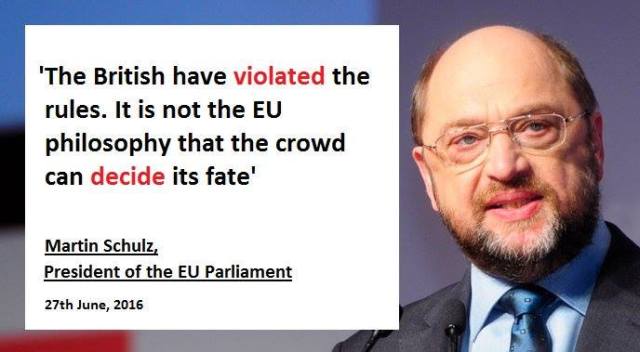
Plain talking (below) by an Irish parliamentarian about why Europe is coming off the rails.
The truth is that it has turned into a bureaucratic juggernaut dazzled by its own ‘wisdom’. It is not only out of touch with the millions it purports to serve but disdains them. When they hear a voice like this I can see them shaking their all-knowing heads in pity. What we have now is a cadre of pseudo-democratic front-men posing as leaders when in fact they are no more than mouthpieces for the Brussels elite. There are no bad intentions on the part of any of them. They are all lost in a system which they created but which has now taken possession of their souls. EU2016 = HAL1000?
Until we get democratic representatives who will again openly and intelligently question and challenge the system which purports to serve us we cannot consider ourselves as living in a democracy.
Michael Fitzmaurice exemplifies the kind of voice we need to hear more of.
We need a break from the culture wars. In the Middle Ages the Church tried on occasion to get the warring feudal kings, princes and barons – or whatever – to take time out from their seemingly endless wars. They tried to promote what in my Irish language history class was called a ‘sos cogadh’, if my memory, and my Irish, serve me right. It was a kind of ceasefire, literally a rest from warfare, like we tried to have between the IRA and the British security forces in our local Irish ‘troubles’ here at end of the last century.
So a unilateral ‘sos cogadh’ it is, for a few days at any rate. We will take a break from Abortion – sorry, Amnesty – International, same-sex marriage, Donald Trump Vs Hillary Clinton, corrupted education systems, ISIS, European football and all those stressful topics.
We will take a dive into the deep end of the cultural reservoir and reflect for a little on the deep, deep cinema of Terrence Malick.
I was moved to do this by a piece I read some time ago on the Aleteia website, posted on the occasion of the fifth anniversary of the release of Malick’s magnum opus, The Tree of Life.
There, Matthew Becklo reminded us that when The Tree of Life hit movie theatres the responses were all visceral. “Some hailed it as an instant classic; others dismissed it as pretentious garbage; and a whole lot of people left the theatre scratching their heads.” He himself is in the first category and in an effort to win over those who either hated it, or were just plain confused by it, he gives us a few reasons to give this beautiful artefact another look in 2016.
His first reason is the verdict of that authoritative voice, the late Roger Ebert. Before he died, Ebert included it in his list of the ten greatest films ever made. Ebert said “I believe it’s an important film,” and will only increase in stature over the years.”
Not only has the film done so but it has done so because with the passage of time and the opportunity that this gives for revisiting it, not just once or twice but many times, you will see further into its depth with each viewing. The real reason for this is that Malick’s later films are not just rooted in the human. They connect us in some way with the divine. They are in fact prayers. They do not shy away from the sensual, albeit with delicacy. Neither does the Song of Songs. In all this Malick’s work bears a great affinity with those other masters – whose influence has had a bearing on his art – Robert Bresson and Andrei Tarkovsky. Ebert in fact wrote, “Terrence Malick‘s new film is a form of prayer. It created within me a spiritual awareness, and made me more alert to the awe of existence.”
Malick’s two films since The Tree of Life do exactly the same thing, each one taking a different angle on our existence. To the Wonder explores the mystery of love, not just human love but divine love as well – and the mysterious point where the two meet. The Knight of Cups takes us through the terrifying capacity of our kind to destroy ourselves in the pursuit of pleasure – with Hollywood as the metaphor for evil. The evil is not so much in what it produces as in the environment into which it sucks all those who participate within it.
But it is not just the spiritual meaning of Malick’s work, not just the way in which he explores the connections between our actual existence and our struggles with our destiny, which spell-bind us. It is the visual presentation of this. Here his co-artist plays his part. He was Emmanuel Lubezki, the first person to win the cinematography Oscar three years in a row: for Gravity (2013), Birdman (2014), and The Revenant (2015). He was nominated for his work on The Tree of Life – but the Academy was a bit off that year so he did not get it, nor did they. Lubezki has been Malick’s cinematographer since The New World, that other metaphorical work which explores in the tale of Pocahontas the complexities of the troubling reality of colonisation and multiculturalism.
For Matthew Becklo another compelling reason for revisiting the film is that its meaning is easier to follow the second time around. He observes that “The visual grandeur of The Tree of Life was enough to distract anyone from its storyline. But Malick also experimented freely with his characters and their locations, creating what many saw as an overly loose narrative. Even Sean Penn was displeased, remarking that ‘clearer and more conventional narrative would have helped the film’.”
“Malick,” he says, “does ask his viewers to keep their eyes (and minds) open, but he won’t leave them in the dust when they do. On a second viewing, the storyline becomes crystallized, and separated out from the more poetic sequences. This opens the door to a deeper dive into the meaning of the film as a whole.”
Robert Barron has produced a short YouTube essay on The Tree of Life in which he explores and comments of the themes of this visual and poetic masterpiece of cinema. Barron shows us how it is also a deep reflective work of natural theology. Perhaps The Tree of Life might be the best way of bringing us to a permanent ‘sos cogadh’ in our infernal culture wars?
Who gives the UN the right to lecture the Irish on their laws protecting the life of an unborn child? Is our Government cowering before a group of self-important UN busy-bodies who just speak for themselves?
These are questions which need to be answered. At last it seems as if someone is prepared to speak up on behalf of our sovereignty as a nation. When will someone show us the faces of these arrogant bureaucrats at the UN Human Rights Committee who last week declared that Ireland’s protection of the equal right to life of women and their unborn children amounted to “cruel, inhuman and degrading treatment” and instructed us to remove this provision from our Constitution. Are these people nothing more than agents of Abortion International, who are abusing the agency of this useful but flawed organization to try to snuff out the lives of human beings on the pretext of a very partial definition of human rights.
Here at last we have someone from within the political establishment calling this out for the outrage it is. He is Barry Walsh, a member of the Fine Gael Executive Council who was president of Young Fine Gael from 2007-2010. We are told that he writes in a personal capacity. That’s OK. We can live with that. He has the courage to challenge his party on this. “It is high time, he says, “that our ministers, TDs and Senators had the courage and the sense of leadership to stand over our record as a society that respects the right to life and which provides a standard of care for mothers and their babies which is second to none in the developed world.”
He adds that unfortunately the Government has made no public attempt to defend Ireland against this arrogant UN quango, let alone to query what legal basis or moral authority it has to make them.
The pro-life organizations have been complaining about this self-appointed tribunal’s dangerous posturing since it issued its obiter dicta over a week ago. The political establishment just goes on ignoring them. Now, however, perhaps we see a chink in the dark facade of Fine Gael’s cowardly behaviour surrounding this whole issue.
Let us have a proper media investigation as to who exactly these 18 UNHRC people are. Let us examine their back stories so that we might get a better understanding of what their agenda is. Then we can ask them fairly and squarely how exactly they define humanity and see what the basis of their argument is for excluding millions of human beings from that definition – sending them to the charnal houses of abortion clinics worldwide. If your understanding of human life is flawed how can you even begin to talk about human rights?
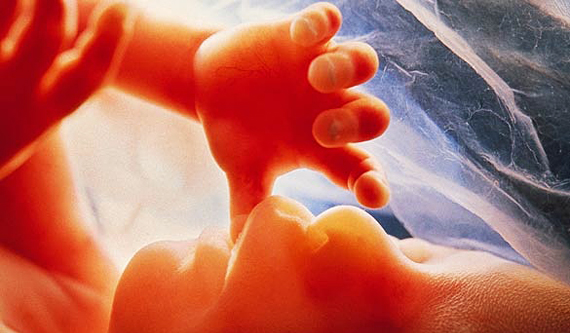
The muddled thinking which allows this woolly definition of humanity to persist is what allows our society to continue to accept this human carnage. If we just cleared our heads and let the scientific evidence speak for itself we would bring this lethal confusion to an end. The fingers before me, hitting this keyboard, were already there in my mother’s womb. This “I” to which these fingers, moved to do what they are now being guided to do by whatever intelligence I have, was there from the moment of “my” conception. What is so difficult about that? Hello!
Is this something we should be worried about? If even a fraction of what Camille Paglia is saying here is true, it is hard to argue that it is not a matter which should deeply concern us. Our universities, more than ever before, are where the minds of the future are forming themselves – and a true university will always see that the most important work being done there is the work the students themselves do. But if they can form themselves then the reverse is also true. They can deform themselves.
Cultures have become degenerate in the past. Civilizations have disintegrated and vanished. Somehow new civilizations emerge eventually – but the human cost, the loss and the suffering which human kind experiences in the trough between these two peaks can be the stuff of nightmares. Will some scholars in centuries from now, perhaps even millennia from now, find these words of Paglia – and God only knows what medium they will find them in – and say here was the Cassandra or the Tiresias of the 20th and 21st century, Tiresias, old man with wrinkled dugs, (who) perceived the scene, and foretold the rest…
The fact that Irish Prime Minister Enda Kenny’s new minority Government is somewhat lame does not seem to be stopping him pushing ahead with what he thinks is a populist demand to further liberalise Ireland’s abortion laws. He has announced that he is going ahead with the Citizens’ Assembly promised by the last Government – which he also led – to prepare the ground for this change.
For those who recognise the humanity of the child in the womb, awaiting birth, this is just another piece of window-dressing of shameless political manipulation. It is an attempt to sell to the Irish people something which in their hearts they abhor. A similar strategy was used three years ago with a hand-picked “expert group” was setup by health minister, James Reilly to give pre-ordained advice to him which resulted in an earlier liberalisation of the law.
The Irish Pro Life Campaign describes this decision to bring forward the setting up of the Assembly on abortion is “a knee-jerk reaction to the disgracefully one-sided report last week from the UN Human Rights Committee (UNHRC) which set the rights of the unborn child at zero and ignored the devastating after-effects of abortion for many women.”
Last week, the UN Human Rights Committee commented on a complaint brought by an Irish woman who was unable to have an abortion in Ireland when she was told that her baby would not survive to birth, or very long afterwards. In those comments, the UNHRC said that the Irish State had subjected her to “intense physical and mental suffering”.
Commenting on yesterday’s announcement from the Government, Cora Sherlock of the Pro Life Campaign said:
“This Assembly is being set up with one purpose only and that is to pave the way for a referendum to strip the unborn child of its last remaining Constitutional protection. Every member of Cabinet knows that the UN Committee that commented on Ireland’s abortion laws last week has a track record in only pushing abortion and has never once taken a stand against the appalling abuses internationally in the abortion industry. For example, the UN Committee in question has never brought countries like England and Canada to task over the barbaric practice of refusing to give medical assistance to babies born alive after botched abortions.”
The public campaigning for this change in the Republic has been relentless since ‘liberal’ Ireland’s gay marriage victory last year. The pro-abortion pressure groups have the media in their pockets for this one as well. The ratio of pro-abortion stories being run on radio and in print is still in the region of the 30:1 bias exposed last year. It bears no relation to the actual balance of public opinion on the matter. The figure for that which is now routinely trotted out is a pro-abortion one from a poll run for Amnesty International. That organisation’s Irish arm is now the country’s highest profile campaigner for abortion. For some reason its fundraisers on the streets do not seem to as ubiquitous as they were heretofore. One wonders why? Could it be that too many shoppers are seeing them as collectors for Abortion International?
Colum Kenny, an Irish Times columnist, in an balanced article in that paper earlier this month – a welcome but rare enough event for that paper – suggested that the “entry of Amnesty International into this domestic debate is problematic. Its rationale for sidelining the rights of the unborn, on the basis that human rights only begin after birth, is unconvincing.
Even permissive abortion regimes recognise it is not appropriate to terminate a foetus after a certain point sometime before birth. Parents are well aware a moving child in the womb is a human being. Has Amnesty no policy on the healthy but defenceless foetus that might be aborted only for personal or state convenience?”
There is a very strange row going on over on the other side of the Irish Sea. It is one of those rows that makes you scratch your head in something like frustration and despair. Apart from the sheer vanity of it all, we are left asking ourselves not only how could people behave so stupidly but are left wondering what strange demon has turned rational and intelligent people into such irrational imbeciles.
Could the answer be hidden in the animated movie, Zootopia? There the peace and harmony of the allegorical eponymous city is left facing a nightmare where some animals, by means of a magic flower cultivated by the villains of the piece, are turned into ultra vicious predators.
On Sunday night, on a Sky Television news programme, a usually useful and informative segment of the show turned into a bewildering farce. It shouldn’t have been a farce because the discussion was on the Orlando atrocity. But farce it was, and the farce did not end with the show. It has been going on since. The trolls of the Internet have now responded to the hue and cry. God knows where it will end – although one thing is certain: for ordinary rational mortals, if we count ourselves among them, we can only conclude that the best we can do is keep our mouths shut when any one of a number of contentious topics comes up for public discourse.
Julia Hartley-Bewer, one of the protagonists in this row – the others are Guardian columnist, Owen Jones, and Sky anchor, Mark Longhurst – put her side of the story in today’s Daily Telegraph.
But this stupid row isn’t about my feelings or Owen Jones’s feelings or Sky News or even about the Orlando massacre, she sums up in her bewilderment. It’s about what is happening to our fundamental right to freedom of speech in this country. This whole sorry saga says a lot about the state of public debate in Britain when a grown man feels the need to storm off a TV set simply because other people decline politely to agree with every word he says. This is peak Generation Snowflake: I don’t like what you say or the way that you say it so I’m going to scream and scream until you give in, say sorry for offending me and shut the heck up. Owen seems to think that the hate-fest against me and against Mark Longhurst is the proof that he was right. It isn’t. It’s proof that there are now thousands – if not millions – of people in Britain who regard the taking of offence as not just their hobby but their full time job. They seek out offence and hidden insults wherever they may be, and even where (as in this case) there are none and then they shout long and hard until their designated target gives in and agrees to be shut down. Well, sorry to disappoint you but no one is shutting me down or silencing my voice. I don’t claim to speak for anyone but myself so I get to choose the words I want to use, not Owen Jones or random people on Twitter or anyone else. That’s how this whole “free speech” thing works. If you don’t like what I have to say then either don’t listen or debate with me using facts rather than resorting to abuse and lies. And don’t ever presume to tell me what I can and cannot say. This is, last time I looked, a free country where I am as entitled as anyone else to give my opinion. If Owen Jones wants to live in a world where people can only say what is on the officially approved list of platitudes, then perhaps he has more in common with Islamic State than he thinks.
Well, Julia, I wish you luck in your battle. It’s going to be a tough one – and it’s a world war as well. I attended a lecture in Dublin last week and it told the same story, but with a different dramatis personae. We are at the Mad Hatter’s tea party.
I was at a meeting in Dublin last night – publicly advertised. The Establishment’s media would have been welcome to report every word uttered had they been at all interested. They probably were but reporting it would not have served their groupthink agenda. So they were not there – because it was an Iona Institute event, addressed by one of the thorns in their side, the redoubtable John Waters.
Waters’ subject was how, in Ireland today, debate on many of the most important issues has been brought to a virtual halt.
He gave multiple illustrations of how so-called ‘liberal’ assumptions are almost entirely unquestioned and those who do question them are demonised. The result of all this, he said, was the drastic reduction of the range of opinions ‘respectable’ people are allowed to hold. If they do not hold what the ‘liberal intelligentsia’ consensus holds they are expected to be silent.
We saw this in last year’s marriage referendum in Ireland when the nearly three-quarters of a million people who voted against redefining marriage, and with it human sexuality, were practically invisible in the referendum debate. The ‘Yes’ side, Waters said, almost completely controlled the public space. The media organisations were given over to media celebrities who shamelessly campaigned for one side when their professional and civic role should have been to present a balanced account of the arguments from both sides.
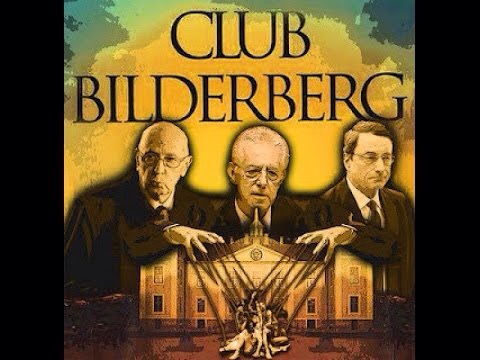
In the Q and A following the lecture a speaker asked Waters whether or not we should be paying attention to the Bilderberg meeting currently in progress in Dresden. The impression given by his answer was that he considered that particular phenomenon as a symptom of our predicament rather than a cause. Head on confrontation with that kind of thing was unlikely to be productive of any useful result.
Speaking the truth, loudly and clearly, constantly, was the way to make progress. Quoting Joseph Ratzinger he said “the truth always has a future.” Go on, and be proud going on, he added.
Coincidentally, in a post this morning on the website, The Conversation, Matthew Parker, Leicester University’s Professor of Organisation and Culture raises the question of Bilderberg. Like Waters, Parker sees the whole project as just another reinforcement of ‘groupthink’. Conspiracy? Yes and no.
Conspiracy theorists give conspiracy theories a bad name, he says
Conspiracies do exist, and this is one of them. Politics, at this sort of elite level, is precisely a conspiracy in the sense that Adam Smith meant it. When these people gather once a year, they do not engage in withering self-criticism, but instead reinforce the assumptions that they collectively make about the best sort of economic and political order. This is exactly the sort of process that the psychologist Irving Janis described as “groupthink”, where dissent is marginalised and consensus amplified.
If the participants at Bilderberg really want to explore global challenges, talking to each other is the last thing that they should be doing. We already know that the powerful organise the world for us – it is common knowledge. What Bilderberg exposes is that what goes on at endless summits and conferences across the globe is a mountain of smugness that is much more frightening than anoraks muttering about the Illuminati.
Adam Smith’s astute observation was that “People of the same trade seldom meet together, even for merriment and diversion, but the conversation ends in a conspiracy against the public, or in some contrivance to raise prices.”
But taking Waters’ approach is the best line of defence against this – the truth, boldly proclaimed. The blindness induced by the crass and irrational sentimentality which the Irish public is being served up by its politically correct establishment will be temporary. It will pass if the truth is spoken clearly and often enough, even if it is by just a few brave souls like John Waters.
Ireland is not a particularly radical country. Despite its much lauded passing of a referendum last year which opened the institution of marriage to homosexual couples, its electorate has shown itself to be a fairly conservative one. That vote was passed more on a wave of sentiment cooked up by a powerfully funded lobby and a notoriously biased media rather than by any deeply thought-out radicalism. The same electorate in a general election this year thrashed its socialist Labour Party and sent its fellow-travelling coalition partners, the Fine Gael Party, limping back into parliament. It took it longer to form a makeshift minority government than on any other occasion in the history of the state.
The frustrating thing about Ireland is that while it is at heart conservative, it is pathologically ashamed of being so. It has no popular conservative media voices, no political party which is not terrified of being called conservative, and the left-wing minority in the country have organised themselves in the media so that conservative voices are immediately either mocked or intimidated when they speak.
A few voices are heard in the media which question this unthinking subservience to the left in Irish public opinion and one of them was heard this weekend in the Sunday Independent. This was the voice of columnist Eilis O’Hanlon writing about Ireland’s strange attitude to the United States of America.
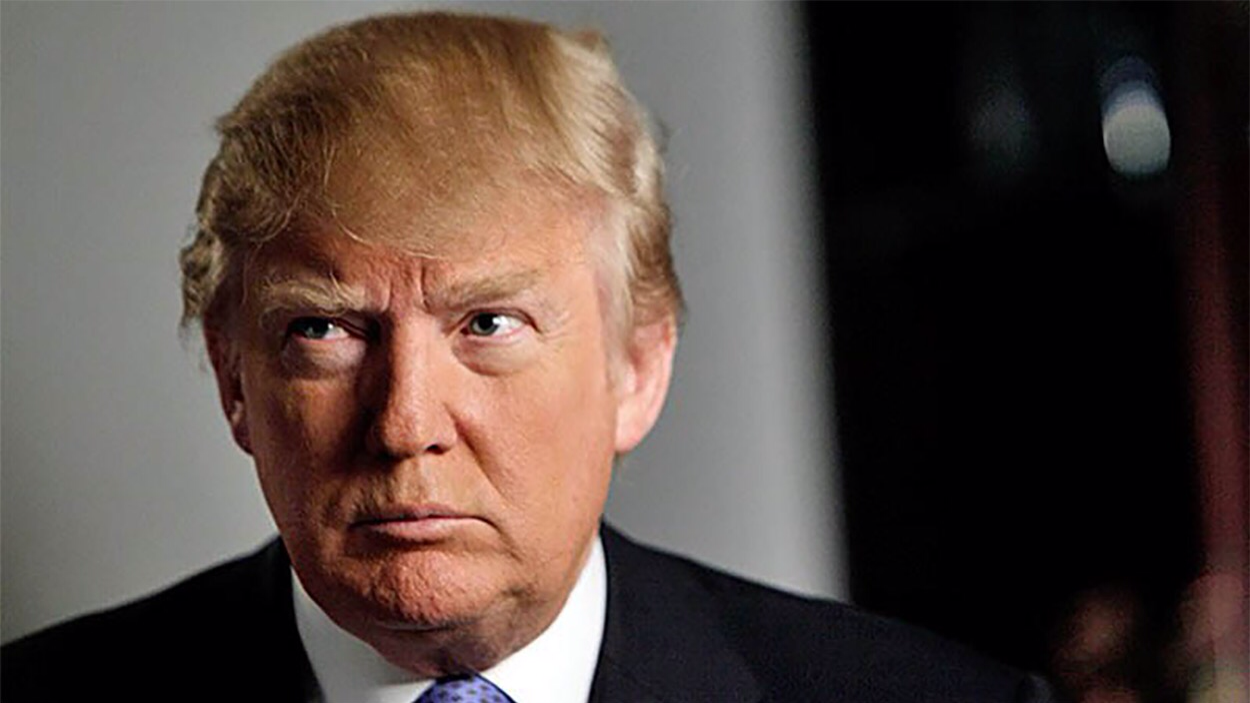
Donald Trump is certainly an unusual presidential candidate – if he succeeds in becoming the Republican choice. His speeches and comments have on occasion, on many occasions, appeared to defy rational analysis. But that defiance bears no comparison to the irrationality of the fear and ill-boding generated by the response to his candidacy. Nowhere is this more prevalent that in Ireland.
O’Hanlon writes of the rising tide of silliness which has allowed Salon magazine to compare the growing popularity of Trump to that of Hitler in the Weimar Republic, and connects this to an artificial row in Ireland last week around whether government ministers would or should meet him when he visits his golf club at Doonbeg in Co. Clare in a few weeks.
She is not surprised by any of this. Why not? She explains:
She writes that Richard Boyd Barrett, leftest of the leftists, speaking in the Dail on the issue, had hit on the one topic that tickles the fancy of every middle-class social justice warrior – the iniquity of the United States “war machine”. They’re as obsessed with America as Sinn Fein is with the Brits, and even they’ve toned down the rhetoric these days, having learned that it doesn’t travel outside the republican heartland. She continues:
The Left doesn’t need to bother, because, as Barrett said in the Dail: “Everybody recognises what a dangerous man Donald Trump is.”
Well, obviously not everybody, or he wouldn’t be running neck-and-neck with Democratic candidate Hillary Clinton in the polls, but certainly everybody who matters in Irish public opinion.
People in this country have always had an innate bias towards democratic presidents, from John Kennedy onwards. If we had a vote, Hillary would be the runaway winner.
It’s still worth examining how “dangerous” Donald Trump really is, however. Taking 1993, the year that Mrs Clinton’s husband first took office, as a base, what dangerous things has Donald Trump done in the intervening years?
Let’s see. He presented The Apprentice. He bought, and later sold, the Miss Universe organisation. He built Trump Tower. He launched Trump Ice bottled water. He bought some golf courses. He was inducted into the World Wrestling Federation Hall of Fame. He appeared on Sex And The City.
In the same period, for her part, Hillary Clinton was fully supportive at her husband’s side as he launched bombing raids in Afghanistan, Iraq and Yugoslavia; as a senator, she backed war in Afghanistan and Iraq; as Secretary of State under President Obama, she pushed hard for the so-called “Afghanistan surge” and was a key mover for the failed US intervention in Libya which exacerbated the migrant tragedy in the Mediterranean.
Whether she was right or wrong to take these positions is not the point (Clinton herself later said that her support for the Iraq War was a mistake). The point is that Hillary is, by any reckoning, a hawk when it comes to military action, whereas Trump is a businessman who has never signed a single order for any action that led to bloodshed.
Yet it’s he who is called “reckless”, “dangerous”, “terrifying”, frightening”, despite also saying the US has “destabilised the Middle East”, berating the coalition forces for lying about weapons of mass destruction in Iraq, and using Libya as a warning against further action in Syria.
Many of the remarks he’s made about US foreign policy and Nato could have come from People Before Profit.
This might irritate some, but it shouldn’t. In reality it is all about reminding a people where they have come from, what their history is and how it has unfolded. It reminds them how it has given them the stable, even if imperfect, political system they – and much of the world – benefits from today.
Back Story, courtesy of the New York Times:
Queen Elizabeth II will announce Prime Minister David Cameron’s legislative program for the next year at the state opening of Parliament in London today.
Hours before her arrival, the royal bodyguards perform a ceremonial search of the basement of the Palace of Westminster, where the two houses of Parliament meet.
It’s a throwback to the discovery of the Gunpowder Plot in 1605, when Guy Fawkes tried to murder England’s king and its ruling classes by blowing up the House of Lords.
Led by parading soldiers, the Queen arrives in a gilded carriage drawn by four Windsor Greys and guarded by coachmen who are still called bargemen because the monarch used to come by river.
Members of Parliament are ceremonially summoned to the House of Lords by her representative, known as the Gentleman Usher of the Black Rod.
In one of the more colorful rituals, he approaches the doors of the House of Commons, only to have it slammed in his face. The custom dates to the English Civil War and symbolizes Parliament’s independence from the crown.
Only after knocking three times with his ebony stick is he let into the chamber, where he announces, “The Queen commands this honorable house to attend her majesty immediately.”
Everyone then heads to the House of Lords, where the Queen recites the speech from her throne and wearing her diamond-encrusted Imperial State Crown.
Your Morning Briefing is published weekdays at 6 a.m. Eastern and updated on the web all morning.
A pearl of wisdom from Pope Francis’ Exhortation, Amoris Laetitia:
The lack of historical memory is a serious shortcoming in our society. A mentality that can only say, “Then was then, now is now”, is ultimately immature. Knowing and judging past events is the only way to build a meaningful future. Memory is necessary for growth: “Recall the former days” (Heb 10:32). Listening to the elderly tell their stories is good for children and young people; it makes them feel connected to the living history of their families, their neighborhoods and their country. A family that fails to respect and cherish its grandparents, who are its living memory, is already in decline, whereas a family that remembers has a future. “A society that has no room for the elderly or discards them because they create problems, has a deadly virus”; “it is torn from its roots”. Our contemporary experience of being orphans as a result of cultural discontinuity, uprootedness and the collapse of the certainties that shape our lives, challenges us to make our families places where children can sink roots in the rich soil of a collective history.
It echoes the writing of Edmund Burke so closely in his great debate with that apostle of isolationist individualism, Thomas Paine, that we might even think that the ghost of that greatest of Irishmen was among the Pope’s advisers before he presented us with this splendid document about life and love.
Jesse Norman, one of Burke’s most recent biographers, sums up Burke’s thinking:
As Burke shows us, the individual is not simply a compendium of wants; human happiness is not simply a matter of satisfying individual wants; and the purpose of politics is not to satisfy the interests of individuals living now. It is to preserve a social order which addresses the needs of generations past, present and future.
In his own life, Burke was devoted to an ideal of public duty, and deplored the tendency to individual or generational arrogance, and the “ethics of vanity”. His thought is imbued with the importance of history and memory, and a hatred of those that would erase them. He insists on the importance of human allegiance and identity, and social institutions and networks.